talk-data.com talk-data.com

Topic

data

5765

tagged

Activity Trend

3 peak/qtr
2020-Q1 2026-Q1

Activities

5765 activities · Newest first

Oracle Database 11g SQL

Write powerful SQL statements and PL/SQL programs Learn to access Oracle databases through SQL statements and construct PL/SQL programs with guidance from Oracle expert, Jason Price. Published by Oracle Press, Oracle Database 11g SQL explains how to retrieve and modify database information, use SQL Plus and SQL Developer, work with database objects, write PL/SQL programs, and much more. Inside, you'll find in-depth coverage of the very latest SQL features and tools, performance optimization techniques, advanced queries, Java support, and XML. This book contains everything you need to master SQL. Explore SQL Plus and SQL Developer Use SQL SELECT, INSERT, UPDATE, and DELETE statements Write PL/SQL programs Create tables, sequences, indexes, views, and triggers Write advanced queries containing complex analytical functions Create database objects and collections to handle abstract data Use large objects to handle multimedia files containing music and movies Write Java programs to access an Oracle Database using JDBC Tune your SQL statements to make them execute faster Explore the XML capabilities of the Oracle Database Master the very latest Oracle Database 11 g features, such as PIVOT and UNPIVOT, flashback archives, and much more

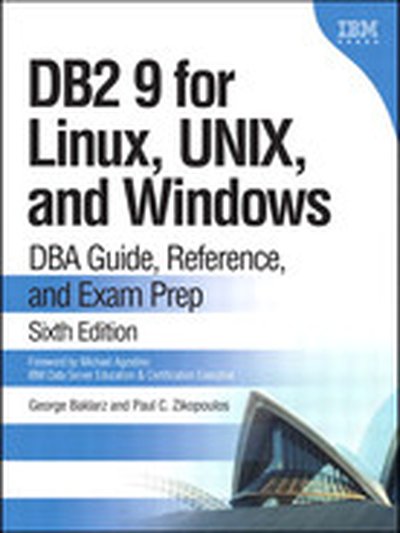
DB2® 9 for Linux®, UNIX®, and Windows®: DBA Guide, Reference, and Exam Prep, Sixth Edition

DB2 ® 9 builds on the world's number one enterprise database to simplify the delivery of information as a service, accelerate development, and dramatically improve operational efficiency, security, and resiliency. Now, this new edition offers complete, start-to-finish coverage of DB2 9 administration and development for Linux ®, UNIX ®, and Windows ® platforms, as well as authoritative preparation for the latest IBM DB2 certification exam. Written for both DBAs and developers, this definitive reference and self-study guide covers all aspects of deploying and managing DB2 9, including DB2 database design and development; day-to-day administration and backup; deployment of networked, Internet-centered, and SOA-based applications; migration; and much more. You'll also find an unparalleled collection of expert tips for optimizing performance, availability, and value. Coverage includes: Important security and resiliency enhancements, including advanced access control; fine-grained, label-based security; and the new security administrator role Breakthrough pureXML ™ features that make it easier to succeed with service-oriented architecture Operational improvements that enhance DBA efficiency--including self-tuning memory allocation, automated storage management, and storage optimization Table-partitioning features that improve scalability and manageability Powerful improvements for more agile and rapid development, including the new Eclipse-based Developer Workbench and simple SQL or XQuery access to all data Whatever your role in working with DB2 or preparing for certification, is the one book you can't afford to be without. DB2 9 for Linux, UNIX, and Windows, Sixth Edition Download Complete DB2 V9 Trial Version Visit ibm.com/db2/9/download.html to download a complete trial version of DB2, which enables you to try out dozens of the most powerful features of DB2 for yourself: everything from pureXML support to automated administration and optimization. Straight from IBM, the ultimate guide to running DB2 9 and preparing for the latest IBM DB2 certification exam! Covers powerful DB2 9 enhancements ranging from automated management to improved compression Covers the full spectrum of DBA responsibilities, including server management, data placement, XML concepts, activity analysis, high availability, and security Presents expert tips and best practices from the DB2 customer support organization

IBM Tivoli Configuration Manager and Tivoli Provisioning Manager for Software Coexistence and Migration Considerations

This IBM® Redbooks® publication focuses on migration of a data center from a Tivoli® Framework environment and a Tivoli Configuration Manager-based management model to the new Service-Oriented Architecture (SOA), provided by Tivoli Provisioning Manager for Software V 5.1. In addition to migration, we also discuss the coexistence environment, where Tivoli Provisioning Manager for Software drives the Tivoli Management Framework environment. Because Tivoli Provisioning Manager for Software shares its roots with Tivoli Provisioning Manager 5.1, all of the migration scenarios we describe in this book apply to Tivoli Provisioning Manager 5.1, as well. To give you ideas for various migration possibilities, we describe several customer environments and then describe the suggested approach for moving to a Tivoli Provisioning Manager environment. We also tell you how the two environments can coexist during the migration process. We provide a feature-by-feature comparison between common Frameworks, Tivoli Configuration Manager operations, and their equivalent in Tivoli Provisioning Manager. This book is a reference for IT Specialists who implement data center migration from a Tivoli Management Framework and Tivoli Configuration Manager-based management model to Tivoli Provisioning Manager for Software V 5.1 or Tivoli Provisioning Manager V 5.1.

Special Edition Using FileMaker 9

Special Edition Using FileMaker 9 The only FILEMAKER 9 book you need We crafted this book to grow with you, providing the reference material you need as you move toward FileMaker® 9 proficiency and the use of more advanced features. If you buy only one book on FileMaker® 9, Special Edition Using FileMaker® 9 is the only book you need. Make the most of FileMaker 9: • Integrate the Web with FileMaker using the new Web Viewer • Use the new external data sources techniques with SQL and ODBC • Discover how to add supplemental fields in FileMaker to external SQL data sources • See how the major changes in script editing and debugging can help you • Learn new layout techniques, including conditional formatting and auto-resizing layout objects • Find out how to use the new FileMaker Server Admin Console to administer databases • Publish FileMaker databases on the Web using Instant Web Publishing, and use Custom Web Publishing with PHP or XML/XSLT “The new FileMaker 9 product line is the most dramatic new offering in years with over 30 ease-of-use breakthroughs; and Special Edition Using FileMaker 9 is an excellent desk reference and companion resource for all FileMaker professionals!” –Rick Kalman, Senior Product Manager, FileMaker, Inc. Jesse Feiler is a member of the FileMaker Business Alliance. He regularly consults on FileMaker and develops FileMaker solutions for small businesses, non-profits, art, retail point-of-sale, publishing, marketing, and other markets. He has created a number of video training courses, including one on FileMaker 7 and appears regularly on WAMC Northeast Public Radio’s Roundtable and Vox Pop shows. ON THE WEB Download modified FileMaker Starter solutions with added fields, scripts, and layouts to illustrate techniques in the book, along with other materials, from www.quepublishing.com and www.northcountryconsulting.com. Category Database Covers FileMaker 9 User Level Intermediate–Advanced

Oracle Database 11g: New Features for DBAs and Developers

Oracle Database 11g : New Features for DBAs and Developers is a comprehensive, example-laden review of the most significant new features and improvements offered by the latest release of Oracle Corporation's flagship database product. Learn what's new in Oracle that really counts See actual examples and test run output Make sound decisions on new feature adoption Sift the gold from the silt and discover which new features of the latest release of Oracle's flagship database product are really worth adopting. Years of database administration experience from authors Sam Alapati and Charles Kim are combined with sound, step-by-step testing and a heart-felt emphasis on what matters in the real-world to help you get the most out of Oracle Database 11 g.

Availability Management: Planning and Implementing Cross-Site Mirroring on IBM System i5

In this IBM® Redbooks® publication, we introduce the concept of cross-site mirroring (XSM) as implemented in IBM OS/400® or i5/OS® at V5R3M0 and later. XSM describes the replication of data at multiple sites. It involves the use of clustering, cluster resource groups (CRGs), independent auxiliary storage pools (IASPs), and other components. In this updated version, we include the new i5/OS V5R4 functions of Administrative Domain and Source Site Tracking. We also include preview information of the Target Site Tracking function. An additional component of this highly available technology is that XSM keeps two identical copies of an independent disk pool at two sites to provide high availability and disaster recovery. These sites can be geographically close to one another or far apart, depending on the needs of the business. This book is written for IBM technical professionals, Business Partners, and customers who are considering, planning, and implementing a highly available solution on the IBM System i5™ platform.

Excel® 2007 PivotTables and PivotCharts

Though many consumers know the basics of using Excel, few users understand the powerful capabilities of the PivotTable and PivotChart features. These tools can help turn long lists of unreadable data into dynamically generated, easy-to-read tables and charts that highlight useful and pertinent business information. Companies rely on this type of data from marketing, accounting, and finance to help make better decisions about products, sales and even human resources. Charts are interactive, allowing the consumer to tweak results with the click of a mouse and PivotTables allow you to fuse data from several sources into one document. This book shows users how to work with PivotTables and PivotCharts to make sense of their data. It covers features such as: understanding PivotTable benefits and uses; creating and customizing PivotTables; using PivotTables to analyze business data; building custom calculations; linking to external data sources, including Access databases, Word tables, Web pages, XML data, SQL Server databases, and OLAP cubes; publishing PivotTables to the Web; multiple consolidation of data, for example, summarizing annual fiscal data by quarters; preparing financial reporting, budgeting, and data analysis across departments; and using VBA to create macros that automate frequently used PivotTable tasks.

Expert Access™ 2007 Programming

Expert Access 2007 Programming shows experienced developers how to create professional-level Access database applications. The authors—software engineers on the Access development team at Microsoft—show how to apply software engineering methodologies to Access application development. The book is organized to cover all phases of Access development. The authors demonstrate techniques for creating Access controls, forms, and reports that help streamline development and produce more user-friendly applications. They also cover such overlooked areas as custom deployment and documentation. The book contains many useful code examples designed so they can be used with minimal modification.

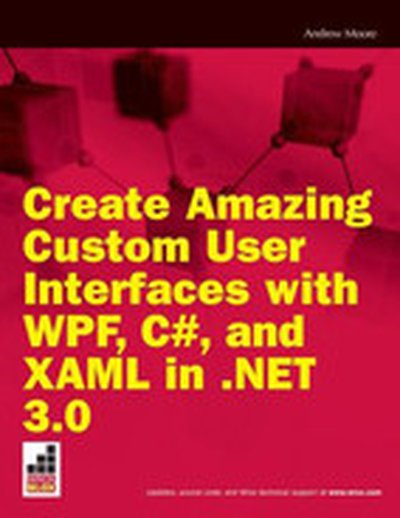
Create Amazing Custom User Interfaces with WPF, C#, and XAML in .NET 3.0

This Wrox Blox presents WPF along with the Extensible Application Markup Language (XAML), showing developers how to customize existing user interface controls such as the Button, Progress Bar, CheckBox, Radio Button, and Label along with creating two new custom controls. The Windows Presentation Foundation (WPF) released with the .NET 3.0 SDK provides a rich foundation for developing and customizing user interfaces. Unlike existing user interface development tools like GDI and GDI+, WPF is entirely vector-based, offering the developer enhanced two-dimensional and even three-dimensional rendering in the presentation layer. The author customizes these existing controls using XAML to: Create control templates to define their appearance and behaviors. Create two new custom controls, one derived from System.Windows.UserControl and the second from System.Windows.Control. Illustrate the interoperability of WPF content in Windows Forms and Win32 applications. Create the code samples using Microsoft Visual Studio 2005 with extensions for .NET 3.0 and the .NET 3.0 SDK. These code samples contain four projects: A C# WPF control library that contains the control templates and a User Control containing the customized Windows controls and the two new custom controls; a C# WPF application to host the WPF User Control; a C# Windows Forms application to host the WPF User Control; and a C++ Win32 application to host the WPF User Control. Usage Rights for Wiley Wrox Blox Any Wrox Blox you purchase from this site will come with certain restrictions that allow Wiley to protect the copyrights of its products. After you purchase and download this title, you: Are entitled to three downloads Are entitled to make a backup copy of the file for your own use Are entitled to print the Wrox Blox for your own use Are entitled to make annotations and comments in the Wrox Blox file for your own use May not lend, sell or give the Wrox Blox to another user May not place the Wrox Blox file on a network or any file sharing service for use by anyone other than yourself or allow anyone other than yourself to access it May not copy the Wrox Blox file other than as allowed above May not copy, redistribute, or modify any portion of the Wrox Blox contents in any way without prior permission from Wiley If you have any questions about these restrictions, you may contact Customer Care at (877) 762-2974 (8 a.m. - 5 p.m. EST, Monday - Friday). If you have any issues related to Technical Support, please contact us at 800-762-2974 (United States only) or 317-572-3994 (International) 8 a.m. - 8 p.m. EST, Monday - Friday).

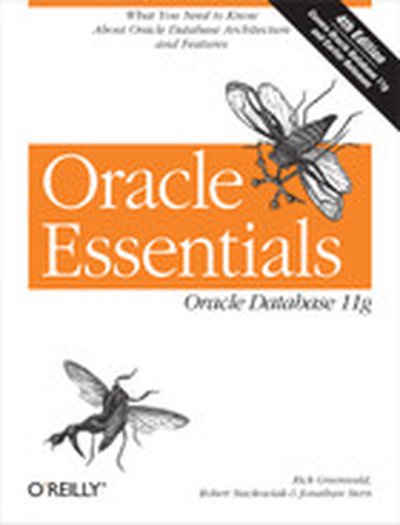
Oracle Essentials, 4th Edition

Oracle is an enormous system, with myriad technologies, options, and releases. Most users--even experienced developers and database administrators--find it difficult to get a handle on the full scope of the Oracle database. And, as each new Oracle version is released, users find themselves under increasing pressure to learn about a whole range of new technologies. The latest challenge is Oracle Database 11g. This book distills an enormous amount of information about Oracle into a compact, easy-to-read volume filled with focused text, illustrations, and helpful hints. It contains chapters on: The latest Oracle Database 11g features: query result set caching, Automatic Memory Management, the Real Application Testing, Advanced Compression, Total Recall, and Active Data Guard Option Options, changes to the OLAP Option (transparently accessed and managed as materialized views), the Flashback transaction command, transparent data encryption, the Support Workbench (and diagnosability infrastructure), and partitioning enhancements (including interval and new composite types) Oracle products, options, data structures, and overall architecture for Oracle Database 11g, as well as earlier releases (Oracle Database 10g, Oracle9i, and Oracle8i) Installing, running, managing, monitoring, networking, and tuning Oracle, including Enterprise Manager (EM) and Oracle's self-tuning and management capabilities; and using Oracle security, auditing, and compliance (a new chapter in this edition) Multiuser concurrency, data warehouses, distributed databases, online transaction processing (OLTP), high availability, and hardware architectures (e.g., SMP, clusters, NUMA, and grid computing) Features beyond the Oracle database: Oracle Application Express, Fusion Middleware (including Oracle Application Server), and database SOA support as a Web services provider For new Oracle users, DBAs, developers, and managers, Oracle Essentials provides an invaluable, all-in-one introduction to the full range of Oracle features and technologies, including the just-released Oracle Database 11g features. But even if you already have a library full of Oracle documentation, you'll find that this compact book is the one you turn to, again and again, as your one-stop, truly essential reference. " Oracle Essentials gives a clear explanation of the key database concepts and architecture underlying the Oracle database. It's a great reference for anyone doing development or management of Oracle databases." --Andrew Mendelsohn, Senior Vice President, Database Server Technologies, Oracle Corporation

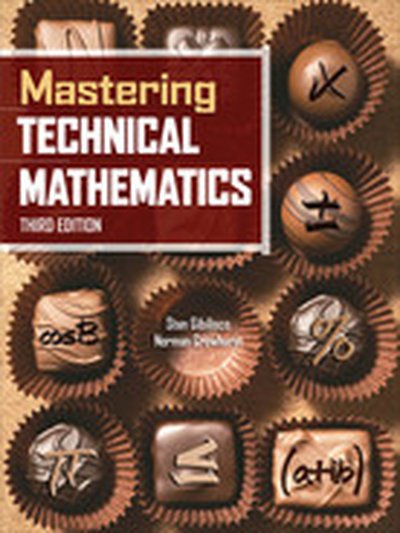
Mastering Technical Mathematics, Third Edition, 3rd Edition

A thorough revision of the classic tutorial of scientific and engineering mathematics For more than fifteen years, Mastering Technical Mathematics has been the definitive self-teaching guide for those wishing to boost their career by learning the principles of mathematics as they apply to science and engineering. Featuring the same user-friendly pedagogy, practical examples, and detailed illustrations that have made this resource a favorite of the scientific and technical communities, the new third edition delivers four entirely new chapters and expanded treatment of cutting-edge topics.

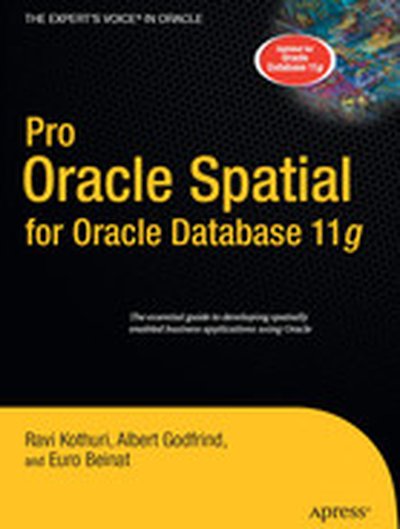
Pro Oracle Spatial for Oracle Database 11g

Pro Oracle Spatial for Oracle Database 11g shows how to take advantage of Oracle Database's built-in feature set for working with location-based data. Authors Ravi Kothuri and Albert Godfrind address the special nature of spatial data and its role in professional and consumer applications. They also detail issues in spatial data management, such as modeling, storing, accessing, and analyzing spatial data, as well as the Oracle Spatial solution and the integration of spatial data into enterprise databases. In addition, they cover how spatial information is used to understand business and support decisions, to manage customer relations, and to better serve private and corporate users. When you read Pro Oracle Spatial for Oracle Database 11g, you're learning from the very best. Ravi Kothuri is a key member of Oracle's Spatial development team. Albert Godfrind consults widely with Oracle clients on the implementation of Oracle Spatial, develops training courses, and presents frequently at conferences. Together they have crafted a technically sound and authoritative fountain of information on working with spatial data in the Oracle database.

Special Edition Using Microsoft® Office Visio® 2007

THE ONLY VISIO 2007 BOOK YOU NEED “This book makes Visio as much fun as a video game.” Bob and Joy Schwabach, “On Computers,” Universal Press Syndicate We crafted this book to grow with you, providing the reference material you need as you move toward Visio® 2007 proficiency and the use of more advanced features. If you buy only one book on Visio® 2007, Special Edition Using Microsoft Office Visio® 2007 is the only book you need. • Working with shapes, stencils, and themes • Using the Data Graphics feature for extra customization • Importing content from Microsoft Excel and Microsoft Project • Displaying data as text, data bars, icons, and color-coding using Data Graphics • Creating custom stencils, icons, and templates • Storing and displaying employee information in organization charts • Customizing the layout of organization charts • Creating database models, flowcharts, and Gantt charts • Connecting shapes in network drawings • Using digital ink and animation • Creating macros • Handling guides and rulers • Working with layers • Getting the most from ShapeSheets

Migrating to IBM System Storage DS8000

Data migration has become a mandatory and regular activity for most data centers. Companies today need to migrate data not only when a technology replacement is due, but also for other purposes such as consolidation, load balancing, and disaster recovery.

Oracle PL/SQL Language Pocket Reference, 4th Edition

The fourth edition of this popular pocket guide provides quick-reference information that will help you use Oracle's PL/SQL language, including the newest Oracle Database 11g features. It's a companion to Steven Feuerstein and Bill Pribyl's bestselling Oracle PL/SQL Programming. This concise guide boils down the most vital PL/SQL information into an accessible summary of: The new edition describes such Oracle Database 11g elements as PL/SQL's function result cache, compound triggers, the CONTINUE statement, the SIMPLE_INTEGER datatype, and improvements to native compilation, regular expressions, and compiler optimization (including intra-unit inlining). In addition, this book now includes substantial new sections on Oracle's built-in functions and packages. Fundamental language elements (e.g., block structure, datatypes, declarations) Statements for program control, cursor management, and exception handling Records, procedures, functions, triggers, and packages Calling PL/SQL functions in SQL Compilation options, object-oriented features, collections, and Java integration When you need answers quickly, the Oracle PL/SQL Language Pocket Reference will save you hours of frustration.

Oracle PL/SQL Best Practices, 2nd Edition

In this compact book, Steven Feuerstein, widely recognized as one of the world's leading experts on the Oracle PL/SQL language, distills his many years of programming, teaching, and writing about PL/SQL into a set of best practices-recommendations for developing successful applications. Covering the latest Oracle release, Oracle Database 11gR2, Feuerstein has rewritten this new edition in the style of his bestselling Oracle PL/SQL Programming. The text is organized in a problem/solution format, and chronicles the programming exploits of developers at a mythical company called My Flimsy Excuse, Inc., as they write code, make mistakes, and learn from those mistakes-and each other. This book offers practical answers to some of the hardest questions faced by PL/SQL developers, including: What is the best way to write the SQL logic in my application code? How should I write my packages so they can be leveraged by my entire team of developers? How can I make sure that all my team's programs handle and record errors consistently? Oracle PL/SQL Best Practices summarizes PL/SQL best practices in nine major categories: overall PL/SQL application development; programming standards; program testing, tracing, and debugging; variables and data structures; control logic; error handling; the use of SQL in PL/SQL; building procedures, functions, packages, and triggers; and overall program performance. This book is a concise and entertaining guide that PL/SQL developers will turn to again and again as they seek out ways to write higher quality code and more successful applications. "This book presents ideas that make the difference between a successful project and one that never gets off the ground. It goes beyond just listing a set of rules, and provides realistic scenarios that help the reader understand where the rules come from. This book should be required reading for any team of Oracle database professionals." --Dwayne King, President, KRIDAN Consulting

The Berkeley DB Book

The Berkeley DB Book is a practical guide to the intricacies of the Berkeley DB. This book covers in-depth the complex design issues that are mostly only touched on in terse footnotes within the dense Berkeley DB reference manual. It explains the technology at a higher level and also covers the internals, providing generous code and design examples. In this book, you will get to see a developer's perspective on intriguing design issues in Berkeley DB-based applications, and you will be able to choose design options for specific conditions. Also included is a special look at fault tolerance and high-availability frameworks. Berkeley DB is becoming the database of choice for large-scale applications like search engines and high-traffic web sites.

Microsoft® SQL Server 2005 Management and Administration

Microsoft SQL Server 2005 Management and Administration, based on Service Pack 2, addresses the challenges database administrators regularly encounter on SQL Server 2005 by providing detailed guidance in the areas of management, administration, security, and monitoring. With coverage of the new features and functionality of SQL Server 2005 Service Pack 2, this book is designed to be comprehensive, resulting in something for all database administrators—from simple tips to tactical solutions. Microsoft SQL Server 2005 Management and Administration goes far beyond the basic installation and setup information found in many other resources. The book looks at day-to-day administration, best practices, tips, and step-by-step configurations based on real-world examples found in the industry. Unlike others, this book includes not only administration and management details on the Database Engine, but also coverage of other SQL Server 2005 components often overlooked, including Analysis Services, Reporting Services, and more. Understand how to… Configure and tune the Database Engine, Reporting Services, Analysis Services, Integration Services, and Notification Services Harden a SQL Server implementation Implement SQL Server highavailability alternatives, such as Failover Clustering, Log Shipping, Database Mirroring, and Replication Monitor a SQL Server 2005 infrastructure with Operations Manager 2007, including how to configure the SQL Server Management Pack and install Operations Manager 2007 Automate SQL Server routine maintenance Encrypt SQL Server data and communications, including setting up a Certificate Authority Performance tune and troubleshoot a SQL Server environment Create Integration Services packages and transfer data On the Web: Download bonus chapters from www.informit.com/title/9780672329562 Introduction 1 Part I Administering SQL Server Components 1 Administering SQL Server 2005 Database Engine 11 2 Administering SQL Server 2005 Analysis Services 67 3 Administering SQL Server 2005 Reporting Services 99 4 Administering SQL Server 2005 Notification Services 149 5 Administering SQL Server 2005 Integration Services 183 6 Administering SQL Server Replication 209 Part II Managing SQL Server 2005 7 Conducting a SQL Server 2005 Health Check 261 8 SQL Server 2005 Maintenance Practices 289 9 Managing and Optimizing SQL Server 2005 Indexes 317 10 Managing Full-Text Catalogs 353 11 Creating Packages and Transferring Data 387 Part III Securing the SQL Server Implementation 12 Hardening a SQL Server 2005 Environment 435 13 Administering SQL Server Security 469 14 Encrypting SQL Server Data and Communications 509 The following chapters are located online: Part IV SQL Server 2005 Overview (located online) 15 SQL Server 2005 Technology Primer 537 16 Tools of the Trade 571 Part V Disaster Recovery and High Availability (located online) 17 Backing Up and Restoring the SQL Server 2005 Environment 597 18 Administering and Managing Failover Clustering 647 19 Administering and Managing Database Mirroring 691 20 Administering and Managing Log Shipping 721 Part VI Monitoring and Troubleshooting SQL Server (located online) 21 Monitoring SQL Server 2005 753 22 Performance Tuning and Troubleshooting SQL Server 2005 787 Appendix SQL Server 2005 Management and Administration 821

Data Analysis Using SQL and Excel

One of the leading experts on business data mining shows managers how to leverage SQL and Excel to perform sophisticated types of business analysis without the expense of data mining tools and consultants Explains how to use the relatively simple tools of SQL and Excel to extract useful business information from relational databases Each chapter discusses why and when to perform a particular type of business analysis to obtain a useful business result, how to design and perform the analysis using SQL and Excel, and what the results look like in SQL and Excel Presents hints, warnings, and technical asides about Excel, SQL, and data analysis/mining