talk-data.com talk-data.com

Topic

data

5765

tagged

Activity Trend

3 peak/qtr
2020-Q1 2026-Q1

Activities

5765 activities · Newest first

SAS Certification Prep Guide, 5th Edition

Prepare for the SAS Base Programming for SAS 9 exam with the official guide by the SAS Global Certification Program. New and experienced SAS users who want to prepare for the SAS Base Programming for SAS 9 exam will find this guide to be a valuable resource that covers all of the objectives tested on the exam. Now in its fifth edition, the guide has been extensively updated and revised to streamline explanations. Major topics include importing data, creating and modifying SAS data sets, and identifying and correcting data syntax and programming logic errors. The chapter quizzes have been thoroughly updated and full solutions are included at the back of the book. In addition, links are provided to the exam objectives, practice exams, and other helpful resources, such as the updated Base SAS glossary and an expanded collection of practice data sets.

Displaying Time Series, Spatial, and Space-Time Data with R, 2nd Edition

This book will provide methods to display space-time data using R. The code of each method will be detailed and commented through practical examples with real data. The second edition will discuss new interactive R packages and Add introductory sections with easier examples to show the basics of the most important packages and functions.

GIS Fundamentals, 2nd Edition

Aimed at readers with a knowledge of geographic information systems (GIS) but no formal training in computer science, this book provides a clear and accessible introduction to how GIS store and process spatial data. This updated edition includes two new chapters on databases and heuristics, substantial additional material on indexing and raster imagery, and revisions throughout that incorporate up-to-date applications such as GPS on mobile devices and Internet-based services.

Graphical Data Analysis with R

This book focuses on why one draws graphics to display data and which graphics to draw (and uses R to do so). Graphical data analysis is useful for data cleaning, exploring data structure, detecting outliers and unusual groups, identifying trends and clusters, spotting local patterns, evaluating modelling output, and presenting results. All the datasets are available in R or one of its packages and the R code is available online. Color graphics are used throughout the book.

Healthcare Informatics

This book provides an understanding of the different types of healthcare service providers, corresponding information technologies, analytic methods, and data issues that play a vital role in transforming the healthcare industry. A follow-up to Healthcare Informatics: Improving Efficiency and Productivity, this latest book includes new content that examines the evolution of Big Data and how it is revolutionizing the healthcare industry. Presenting strategies for achieving national goals for the meaningful use of health information technology, the book describes how to enhance process efficiency by linking technologies, data, and analytics with strategic initiatives.

Location-Based Services Handbook

Meeting the demands of the rapid growth of wireless Internet subscribers and the development of the world location-based services (LBS) market, this volume introduces and comprehensively discusses various location based applications such as buddy finder and proximity and security services. The material is organized in three major sections: applications, technologies, and security. Written by experts from across the globe, the articles in each of the sections range from basic concepts to research grade material and include discussions of future directions. An extensive bibliography is included with each chapter.

Microarray Image and Data Analysis

This book is a compilation of the latest microarray image and data analysis methods from the multidisciplinary international research community. Delivering a detailed discussion of the biological aspects and applications of different types of microarrays, it examines the current state of microarray technology and describes the key stages of image processing, gridding, segmentation, compression, quantification, and normalization. Featuring cutting-edge approaches to clustering and the reconstruction of regulatory networks, the book explains how data generated by microarray experiments are analyzed to obtain meaningful biological conclusions.

Nonlinear Digital Filtering with Python

This book discusses important structural filter classes including the median filter and a number of its extensions (e.g., weighted and recursive median filters), and Volterra filters based on polynomial nonlinearities. Using results from algebra and the theory of functional equations to construct and characterize behaviorally defined nonlinear filter classes, the text first introduces Python programming, and then proposes practical, bottom-up strategies for designing more complex and capable filters from simpler components in a way that preserves the key properties of these components.

Nonlinear Systems Stability Analysis

Using a Lyapunov-based approach, this book introduces advanced tools for the stability analysis of nonlinear systems. It first discusses standard stability techniques and their shortcomings and then introduces recent developments in stability analysis that can improve the applicability of standard techniques. Finally, the book proposes the stability analysis of special classes of nonlinear systems. Coverage includes the stability of ordinary time-invariant differential equations and time-invariant systems as well as the stability analysis of time-delayed systems and fuzzy linguistic systems models.

R and MATLAB

This book is designed for users who already know R or MATLAB® and now need to learn the other platform. The author covers essential tasks, such as working with matrices and vectors, writing functions and other programming concepts, graphics, numerical computing, and file input/output. He highlights important differences between the two platforms and explores common mistakes that are easy to make when transitioning from one platform to the other.

SQL Server 2017 Query Performance Tuning: Troubleshoot and Optimize Query Performance

Identify and fix causes of poor performance. You will learn Query Store, adaptive execution plans, and automated tuning on the Microsoft Azure SQL Database platform. Anyone responsible for writing or creating T-SQL queries will find valuable the insight into bottlenecks, including how to recognize them and eliminate them. This book covers the latest in performance optimization features and techniques and is current with SQL Server 2017. If your queries are not running fast enough and you’re tired of phone calls from frustrated users, then this book is the answer to your performance problems. SQL Server 2017 Query Performance Tuning is about more than quick tips and fixes. You’ll learn to be proactive in establishing performance baselines using tools such as Performance Monitor and Extended Events. You’ll recognize bottlenecks and defuse them before the phone rings. You’ll learn some quick solutions too, but emphasis is on designing for performance and getting it right. The goal is to head off trouble before it occurs. What You'll Learn Use Query Store to understand and easily change query performance Recognize and eliminate bottlenecks leading to slow performance Deploy quick fixes when needed, following up with long-term solutions Implement best practices in T-SQL to minimize performance risk Design in the performance that you need through careful query and index design Utilize the latest performance optimization features in SQL Server 2017 Protect query performance during upgrades to the newer versions of SQL Server Who This Book Is For Developers and database administrators with responsibility for application performance in SQL Server environments. Anyone responsible for writing or creating T-SQL queries will find valuable the insight into bottlenecks, including how to recognize them and eliminate them.

Using R for Numerical Analysis in Science and Engineering

This practical guide shows how to use R and its add-on packages to obtain numerical solutions to complex mathematical problems commonly faced by scientists and engineers. Providing worked examples and code, the text not only addresses necessary aspects of the R programming language but also demonstrates how to produce useful graphs and statistically analyze and fit data to linear and nonlinear models. It covers Monte Carlo, stochastic, and deterministic methods and explores topics such as numerical differentiation and integration, interpolation and curve fitting, and optimization.

Data Science with SQL Server Quick Start Guide

"Data Science with SQL Server Quick Start Guide" introduces you to leveraging SQL Server's most recent features for data science projects. You will explore the integration of data science techniques using R, Python, and Transact-SQL within SQL Server's environment. What this Book will help me do Use SQL Server's capabilities for data science projects effectively. Understand and preprocess data using SQL queries and statistics. Design, train, and evaluate machine learning models in SQL Server. Visualize data insights through advanced graphing techniques. Deploy and utilize machine learning models within SQL Server environments. Author(s) Dejan Sarka is a data science and SQL Server expert with years of industry experience. He specializes in melding database systems with advanced analytics, offering practical guidance through real-world scenarios. His writing provides clear, step-by-step methods, making complex topics accessible. Who is it for? This book is tailored for professionals familiar with SQL Server who are looking to delve into data science. It is also ideal for data scientists aiming to incorporate SQL Server into their analytics workflows. The content assumes basic exposure to SQL Server, ensuring a straightforward learning curve for its audience.

Hands-On Dashboard Development with Shiny

"Hands-On Dashboard Development with Shiny" provides a focused and practical guide for developing polished and professional dashboards using R and the Shiny framework. Through applied examples, you'll explore techniques in HTML, CSS, and Bootstrap to elevate your Shiny apps' interface and functionality. The book ensures a comprehensive learning experience by focusing on creating custom interfaces and layouts. What this Book will help me do Create Shiny interfaces using pure HTML to achieve full customization Enhance your R Shiny dashboards with powerful layout functions for professional designs Utilize Bootstrap themes in Shiny for consistent and aesthetically pleasing interfaces Generate interactive dashboards complete with icons and notification elements Develop and distribute R Markdown reports directly from Shiny applications Author(s) Chris Beeley is an experienced data scientist and a frequent R Shiny practitioner. With years of experience building Shiny applications and working on data visualization in professional settings, Chris brings practical and precise teaching to this book. He is passionate about making knowledge accessible and guiding learners through hands-on and engaging content. Who is it for? This book is ideally suited for developers and data analysts who have prior experience with Shiny and wish to delve deeper into customizing their applications' design. If you want to extend your Shiny apps using HTML, CSS, and layouts via Bootstrap, this book is perfect for you. It equips you with the skills to build advanced dashboards efficiently. Whether you're looking to create more visually appealing apps or enhance your UI skills, this resource caters to your needs.

Pentaho Data Integration Quick Start Guide

Pentaho Data Integration Quick Start Guide offers a comprehensive introduction to Pentaho's Extract-Transform-Load (ETL) tools. Through this book, you will learn to design, execute, and monitor data transformations and seamlessly integrate data across various sources. It is designed to simplify and streamline the process for developers and analysts. What this Book will help me do Understand the functionality and usage of Pentaho Data Integration tools to manage your ETL workflows. Utilize tools like Spoon to design, execute, and manage transformations effectively. Learn to connect to and process data from diverse data sources, including files and databases. Develop skills in transforming data using various techniques provided by PDI to create meaningful outcomes. Master creating jobs to sequence tasks and automate data workflows efficiently. Author(s) The author, Carina Roldán, is an experienced professional specializing in data integration and ETL processes using Pentaho tools. She leverages her extensive experience to craft this book with clarity and accessibility, making it simple for readers to grasp key concepts. Her instructional style is straightforward and geared toward minimizing beginners' challenges. Who is it for? This book is ideal for data analysts, business intelligence developers, and software engineers who want to utilize Pentaho Data Integration for ETL tasks and data workflows. No prior in-depth experience with Pentaho is necessary, but familiarity with basic data concepts is recommended. Readers will benefit most if they are seeking practical skills in data integration to solve real-world problems and streamline data processes.


Qlik Sense Cookbook - Second Edition

With "Qlik Sense Cookbook," you will gain practical knowledge to harness the capabilities of Qlik Sense for effective business intelligence. This book is packed with step-by-step recipes that guide you in leveraging this powerful tool's data analytics features to create intuitive interactive dashboards and derive actionable insights. What this Book will help me do Master the process of sourcing, previewing, and distributing data through efficient interactive dashboards. Utilize the latest visualization options and learn best practices for creating impactful visuals. Develop scripts for automation and customize functionality using Qlik Sense subroutines. Enhance your Qlik Sense dashboard with advanced UI customizations and interactive elements. Leverage Qlik Sense's advanced aggregation functions like AGGR to perform multidimensional insights. Author(s) The authors of "Qlik Sense Cookbook" bring years of professional expertise in business intelligence and analytics. They have extensive experience working with Qlik platforms and have authored numerous industry-relevant resources. With a practical and accessible writing style, they thrive in breaking down complex concepts into manageable, actionable knowledge. Who is it for? This book is perfect for data analysts, business intelligence specialists, and Qlik Sense practitioners who want to advance their skills. It's suitable for beginners aiming to develop proficiency in Qlik Sense, as well as for professionals experienced with other tools like QlikView. Basic business intelligence knowledge is recommended for getting the most out of this book.

Data Where You Want It

Many organizations have begun to rethink the strategy of allowing regional teams to maintain independent databases that are periodically consolidated with the head office. As businesses extend their reach globally, these hierarchical approaches no longer work. Instead, an enterprise’s entire data infrastructure—including multiple types of data persistence—needs to be shared and updated everywhere at the same time with fine-grained control over who has access. This practical report examines the requirements and challenges of constructing a geo-distributed data platform, including examples of specific technologies designed to meet them. Authors Ted Dunning and Ellen Friedman also provide real-world use cases that show how low-latency geo-distribution of very large-scale data and computation provide a competitive edge. With this report, you’ll explore: How replication and mirroring methods for data movement provide the large scale, low latency, and low cost that systems demand The importance of multimaster replication of data streams and databases Advantages (and disadvantages) of cloud neutrality, cloud bursting, and hybrid cloud architecture for transferring data Why effective data governance is a complex process that requires the right tools for controlling and monitoring geo-distributed data How to make containers work for geo-distributed data at scale, even where stateful applications are involved Use cases that demonstrate how telecoms and online advertisers distribute large quantities of data

Business Analytics, Volume I

Business Analytics: A Data-Driven Decision Making Approach for Business-Part I,/i> provides an overview of business analytics (BA), business intelligence (BI), and the role and importance of these in the modern business decision-making. The book discusses all these areas along with three main analytics categories: (1) descriptive, (2) predictive, and (3) prescriptive analytics with their tools and applications in business. This volume focuses on descriptive analytics that involves the use of descriptive and visual or graphical methods, numerical methods, as well as data analysis tools, big data applications, and the use of data dashboards to understand business performance. The highlights of this volume are: Business analytics at a glance; Business intelligence (BI), data analytics; Data, data types, descriptive analytics; Data visualization tools; Data visualization with big data; Descriptive analytics-numerical methods; Case analysis with computer applications.

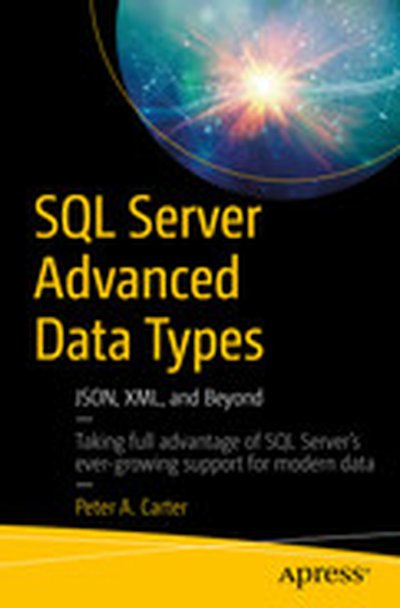
SQL Server Advanced Data Types: JSON, XML, and Beyond

Deliver advanced functionality faster and cheaper by exploiting SQL Server's ever-growing amount of built-in support for modern data formats. Learn about the growing support within SQL Server for operations and data transformations that have previously required third-party software and all the associated licensing and development costs. Benefit through a better understanding of what can be done inside the database engine with no additional costs or development time invested in outside software. Widely used types such as JSON and XML are well-supported by the database engine. The same is true of hierarchical data and even temporal data. Knowledge of these advanced types is crucial to unleashing the full power that's available from your organization's SQL Server database investment. SQL Server Advanced Data Types explores each of the complex data types supplied within SQL Server. Common usage scenarios for eachcomplex data type are discussed, followed by a detailed discussion on how to work with each data type. Each chapter demystifies the complex data and you learn how to use the data types most efficiently. The book offers a practical guide to working with complex data, using real-world examples to demonstrate how each data type can be leveraged. Performance considerations are also discussed, including the implementation of special indexes such as XML indexes and spatial indexes. What You'll Learn Understand the implementation of basic data types and why using the correct type is so important Work with XML data through the XML data type Construct XML data from relational result sets Store and manipulate JSON data using the JSON data type Model and analyze spatial data for geographic information systems Define hierarchies and query them efficiently through the HierarchyID type Who This Book Is For SQL Server developers and application developers who need to store and access complex data structures