talk-data.com talk-data.com

Topic

Databricks

big_data analytics spark

1286

tagged

Activity Trend

515 peak/qtr
2020-Q1 2026-Q1

Activities

1286 activities · Newest first

What's New and What's Next: Building Impactful AI/BI Dashboards

Ready to take your AI/BI dashboards to the next level? This session dives into the latest capabilities in Databricks AI/BI Dashboards and how to maximize impact across your organization. Learn how data authors can tailor visualizations for different audiences, optimize performance and seamlessly integrate with Genie for a unified analytics experience. We’ll also share practical tips on how business users and data teams can better collaborate — ensuring insights are accessible, actionable and aligned to business goals.
AI-Assisted BI: Everything You Need to Know

Explore how AI is transforming business intelligence and data analytics across the Databricks platform. This session offers a comprehensive overview of AI-assisted capabilities, from generating dashboards and visualizations to integrating Genie on dashboards for conversational analytics. Whether you’re a data engineer, analyst or BI developer, this session will equip you to leverage AI with BI for better, smarter decisions.

A Practical Roadmap to Becoming an Expert Databricks Data Engineer

The demand for skilled Databricks data engineers continues to rise as enterprises accelerate their adoption of the Databricks platform. However, navigating the complex ecosystem of data engineering tools, frameworks and best practices can be overwhelming. This session provides a structured roadmap to becoming an expert Databricks data engineer, offering a clear progression from foundational skills to advanced capabilities. Acadford, a leading training provider, has successfully trained thousands of data engineers on Databricks, equipping them with the skills needed to excel in their careers and obtain professional certifications. Drawing on this experience, we will guide attendees through the most in-demand skills and knowledge areas through a combination of structured learning and practical insights. Key takeaways: Understand the core tech stack in Databricks Explore real-world code examples and live demonstrations Receive an actionable learning path with recommended resources

Sponsored by: Anomalo | Reconciling IoT, Policy, and Insurer Data to Deliver Better Customer Discounts

As insurers increasingly leverage IoT data to personalize policy pricing, reconciling disparate datasets across devices, policies, and insurers becomes mission-critical. In this session, learn how Nationwide transitioned from prototype workflows in Dataiku to a hardened data stack on Databricks, enabling scalable data governance and high-impact analytics. Discover how the team orchestrates data reconciliation across Postgres, Oracle, and Databricks to align customer driving behavior with insurer and policy data—ensuring more accurate, fair discounts for policyholders. With Anomalo’s automated monitoring layered on top, Nationwide ensures data quality at scale while empowering business units to define custom logic for proactive stewardship. We’ll also look ahead to how these foundations are preparing the enterprise for unstructured data and GenAI initiatives.

Sponsored by: MathCo | Powering Contextualized Intelligence with NucliOS, MathCo’s Databricks-Native Platform

In today's fast-paced digital landscape, context is everything. Decisions made without understanding the full picture often lead to missed opportunities or suboptimal outcomes. Powering contextualized intelligence is at the heart of MathCo’s proprietary platform — NucliOS, a Databricks-Native Platform leveraging Databricks features across the data lifecycle like Unity Catalog, Delta Lake, MLFlow, and Notebooks. Join this session to discover how NucliOS reimagines the data journey end-to-end: from data discovery and preparation to advanced analysis, dynamic visualization, and scenario modeling, all the way through to operationalizing insights within business workflows. At every step, intelligent agents act in concert, accelerating innovation and delivering speed at scale.

Founder discussion: Matei on UC, Data Intelligence and AI Governance

Matei is a legend of open source: he started the Apache Spark project in 2009, co-founded Databricks, and worked on other widely used data and AI software, including MLflow, Delta Lake, and Dolly. His most recent research is about combining large language models (LLMs) with external data sources, such as search systems, and improving their efficiency and result quality. This will be a conversation coverering the latest and greatest of UC, Data Intelligence, AI Governance, and more.

Summit Live: Data Sharing and Collaboration

Hear more on the latest in data collaboration, which is paramount to unlocking business success. Delta Sharing is an open-source approach to share and govern data, AI models, dashboards, and notebooks across clouds and platforms - without the costly need for replication. Databricks Clean Rooms provide safe hosting environments for data collaboration across companies, also without the costly duplication of data. And the Databricks Marketplace is the open marketplace for all your data, analytics, and AI needs.

AI-Powered Profits: Smarter Order and Inventory Management

Join this session to hear from two incredible companies, Xylem and Joby Aviation. Xylem shares their successful journey from fragmented legacy systems to a unified Enterprise Data Platform, demonstrating how they integrated complex ERP data across four business segments to achieve breakthrough improvements in parts management and operational efficiency. Following Xylem's story, learn how Joby Aviation leveraged Databricks to automate and accelerate flight test data checks, cutting processing times from over two hours to under thirty minutes. This session highlights how advanced cloud tools empower engineers to quickly build and run custom data checks, improving both speed and safety in flight test operations.

Bridging BI Tools: Deep Dive Into AI/BI Dashboards for Power BI Practitioners

In the rapidly-evolving field of data analytics, (AI/BI) dashboards and Power BI stand out as two formidable approaches, each offering unique strengths and catering to specific use cases. Power BI has earned its reputation for delivering user-friendly, highly customisable visualisations and reports for data analysis. On the other hand, AI/BI dashboards have gained good traction due to their seamless integration with the Databricks platform, making them an attractive option for data practitioners. This session will provide a comparison of these two tools, highlighting their respective features, strengths and potential limitations. Understanding the nuances between these tools is crucial for organizations aiming to make informed decisions about their data analytics strategy. This session will equip participants with the knowledge needed to select the most appropriate tool or combination of tools to meet their data analysis requirements and drive data-informed decision-making processes.

Building Responsible AI Agents on Databricks

This presentation explores how Databricks' Data Intelligence Platform supports the development and deployment of responsible AI in credit decisioning, ensuring fairness, transparency and regulatory compliance. Key areas include bias and fairness monitoring using Lakehouse Monitoring to track demographic metrics and automated alerts for fairness thresholds. Transparency and explainability are enhanced through the Mosaic AI Agent Framework, SHAP values and LIME for feature importance auditing. Regulatory alignment is achieved via Unity Catalog for data lineage and AIBI dashboards for compliance monitoring. Additionally, LLM reliability and security are ensured through AI guardrails and synthetic datasets to validate model outputs and prevent discriminatory patterns. The platform integrates real-time SME and user feedback via Databricks Apps and AI/BI Genie Space.

Collaborative Innovation: How to Spur Innovation While Driving Efficiency

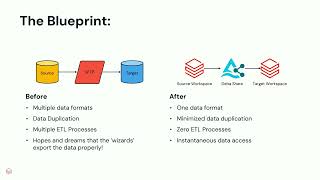
Collaboration is redefining efficiency in insurance. This session explores how technologies such as Databricks Delta Sharing, secure data clean rooms, and data marketplaces are empowering insurers to securely share and analyze data across organizational boundaries—without exposing sensitive information. Discover how these solutions streamline operations, enhance risk modeling with real-time data integration, and enable the creation of tailored products through multi-party collaboration. Learn how insurers are leveraging these collaborative data ecosystems to reduce costs, drive innovation, and deliver better customer outcomes, all while maintaining strong privacy and governance standards. Join us to see how embracing collaborative frameworks is helping insurers operate smarter, faster, and more efficiently.

Databricks in Action: Azure’s Blueprint for Secure and Cost-Effective Operations

Erste Group's transition to Azure Databricks marked a significant upgrade from a legacy system to a secure, scalable and cost-effective cloud platform. The initial architecture, characterized by a complex hub-spoke design and stringent compliance regulations, was replaced with a more efficient solution. The phased migration addressed high network costs and operational inefficiencies, resulting in a 60% reduction in networking costs and a 30% reduction in compute costs for the central team. This transformation, completed over a year, now supports real-time analytics, advanced machine learning and GenAI while ensuring compliance with European regulations. The new platform features a Unity Catalogue, separate data catalogs and dedicated workspaces, demonstrating a successful shift to a cloud-based machine learning environment with significant improvements in cost, performance and security.

Democratizing Data Engineering with Databricks and dbt at Ludia

Ludia, a leading mobile gaming company, is empowering its analysts and domain experts by democratizing data engineering with Databricks and dbt. This talk explores how Ludia enabled cross-functional teams to build and maintain production-grade data pipelines without relying solely on centralized data engineering resources—accelerating time to insight, improving data reliability, and fostering a culture of data ownership across the organization.

DSPy 3.0 — and DSPy at Databricks

The DSPy OSS team at Databricks and beyond is excited to present DSPy 3.0, targeted for release close to DAIS 2025. We will present what DSPy is and how it evolved over the past year. We will discuss greatly improved prompt optimization and finetuning/RL capabilities, improved productionization and observability via thorough and native integration with MLflow, and lessons from usage of DSPy in various Databricks R&D and professional services contexts.

Elevate SQL Productivity: The Power of Notebooks and SQL Editor

Writing SQL is a core part of any data analyst’s workflow, but small inefficiencies can add up, slowing down analysis and making it harder to iterate quickly. In this session, we’ll explore our powerful features in the Databricks SQL editor and notebook that help you to be more productive when writing SQL on Databricks. We’ll demo the new features and the customer use cases that inspired them.

Embracing Unity Catalog and Empowering Innovation With Genie Room

Bagelcode, a leader in the social casino industry, has utilized Databricks since 2018 and manages over 10,000 tables via Hive Metastore. In 2024, we embarked on a transformative journey to resolve inefficiencies and unlock new capabilities. Over five months, we redesigned ETL pipelines with Delta Lake, optimized partitioned table logs and executed a seamless migration with minimal disruption. This effort improved governance, simplified management and unlocked Unity Catalog’s advanced features. Post-migration, we integrated the Genie Room with Slack to enable natural language queries, accelerating decision-making and operational efficiency. Additionally, a lineage-powered internal tool allowed us to quickly identify and resolve issues like backfill needs or data contamination. Unity Catalog has revolutionized our data ecosystem, elevating governance and innovation. Join us to learn how Bagelcode unlocked its data’s full potential and discover strategies for your own transformation.

How do you transform a data pipeline from sluggish 10-hour batch processing into a real-time powerhouse that delivers insights in just 10 minutes? This was the challenge we tackled at one of France's largest manufacturing companies, where data integration and analytics were mission-critical for supply chain optimization. Power BI dashboards needed to refresh every 15 minutes. Our team struggled with legacy Azure Data Factory batch pipelines. These outdated processes couldn’t keep up, delaying insights and generating up to three daily incident tickets. We identified Lakeflow Declarative Pipelines and Databricks SQL as the game-changing solution to modernize our workflow, implement quality checks, and reduce processing times.In this session, we’ll dive into the key factors behind our success: Pipeline modernization with Lakeflow Declarative Pipelines: improving scalability Data quality enforcement: clean, reliable datasets Seamless BI integration: Using Databricks SQL to power fast, efficient queries in Power BI

Healthcare Interoperability: End-to-End Streaming FHIR Pipelines With Databricks & Redox

Redox & Databricks direct integration can streamline your interoperability workflows from responding in record time to preauthorization requests to letting attending physicians know about a change in risk for sepsis and readmission in near real time from ADTs. Data engineers will learn how to create fully-streaming ETL pipelines for ingesting, parsing and acting on insights from Redox FHIR bundles delivered directly to Unity Catalog volumes. Once available in the Lakehouse, AI/BI Dashboards and Agentic Frameworks help write FHIR messages back to Redox for direct push down to EMR systems. Parsing FHIR bundle resources has never been easier with SQL combined with the new VARIANT data type in Delta and streaming table creation against Serverless DBSQL Warehouses. We'll also use Databricks accelerators dbignite and redoxwrite for writing and posting FHIR bundles back to Redox integrated EMRs and we'll extend AI/BI with Unity Catalog SQL UDFs and the Redox API for use in Genie.

How to Migrate From Snowflake to Databricks SQL

Migrating your Snowflake data warehouse to the Databricks Data Intelligence Platform can accelerate your data modernization journey. Though a cloud platform-to-cloud platform migration should be relatively easy, the breadth of the Databricks Platform provides flexibility and hence requires careful planning and execution. In this session, we present the migration methodology, technical approaches, automation tools, product/feature mapping, a technical demo and best practices using real-world case studies for migrating data, ELT pipelines and warehouses from Snowflake to Databricks.