Meridian Energy, New Zealand’s leader in 100% renewable generation, adopted Denodo as a unified semantic data layer to accelerate the delivery of diverse use cases across its lakehouse environment. From security risk modelling to incident management, ESG compliance and more, Denodo enables governed, real-time access to data without replication – reducing ETL overhead, empowering self-service, and ensuring consistent metrics. Business teams are continuing to explore and advance data-driven solutions, supporting Meridian’s shift to a governed lakehouse architecture.
 talk-data.com
Topic
ETL/ELT
ETL/ELT
data_integration
data_transformation
data_loading
480
tagged
Activity Trend
40
peak/qtr
2020-Q1
2026-Q2
Top Events
Data Engineering Podcast
175
O'Reilly Data Engineering Books
70
Databricks DATA + AI Summit 2023
46
Data + AI Summit 2025
35
O'Reilly Data Science Books
21
AWS re:Invent 2024
14
Google Cloud Next '25
8
Airflow Summit 2025
7
Airflow Summit 2021
6
Microsoft Ignite 2025
6
Big Data LDN 2025
5
Airflow Summit 2020
5
As compute warehouses become more commonly used, they become more cost efficient. At Pfizer, business domains at first had their own compute warehouses, and distinct functions (such as ETL, reporting, etc.) within each domain had their own dedicated warehouses. Pfizer has since switched to one set of common warehouses, one of each size and a larger value for MAX_CLUSTERS so that the warehouse handles many concurrent queries. Learn how Pfizer has seen cost savings of 30% without any performance degradation by using this approach.
Learn how to easily find, access, share and maximize the value of data across your organization. Explore the latest innovations from Snowflake Horizon Catalog and Internal Marketplace, delivering secure, zero-ETL data sharing to eliminate bottlenecks, drive a data-driven culture and accelerate growth. Join us for product overviews, best practices and live demos on data sharing to drive collaboration across your organization.
Join us for an insightful Ask Me Anything (AMA) session on Declarative Pipelines — a powerful approach to simplify and optimize data workflows. Learn how to define data transformations using high-level, SQL-like semantics, reducing boilerplate code while improving performance and maintainability. Whether you're building ETL processes, feature engineering pipelines, or analytical workflows, this session will cover best practices, real-world use cases and how Declarative Pipelines can streamline your data applications. Bring your questions and discover how to make your data processing more intuitive and efficient!
This is an overview of migrating from Apache Airflow to Lakeflow Jobs for modern data orchestration. It covers key differences, best practices and practical examples of transitioning from traditional Airflow DAGs orchestrating legacy systems to declarative, incremental ETL pipelines with Lakeflow. Attendees will gain actionable tips on how to improve efficiency, scalability and maintainability in their workflows.
Building scalable, reliable ETL pipelines is a challenge for organizations managing large, diverse data sources. Theseus, our custom ETL framework, streamlines data ingestion and transformation by fully leveraging Databricks-native capabilities, including Lakeflow Declarative Pipelines, auto loader and event-driven orchestration. By decoupling supplier logic and implementing structured bronze, silver, and gold layers, Theseus ensures high-performance, fault-tolerant data processing with minimal operational overhead. The result? Faster time-to-value, simplified governance and improved data quality — all within a declarative framework that reduces engineering effort. In this session, we’ll explore how Theseus automates complex data workflows, optimizes cost efficiency and enhances scalability, showcasing how Databricks-native tools drive real business outcomes.

Drawing on BDO Canada’s deep expertise in the electricity sector, this session explores how clean energy innovation can be accelerated through a holistic approach to data quality. Discover BDO’s practical framework for implementing data quality and rebuilding trust in data through a structured, scalable approach. BDO will share a real-world example of monitoring data at scale—from high-level executive dashboards to the details of daily ETL and ELT pipelines. Learn how they leveraged Soda’s data observability platform to unlock near-instant insights, and how they moved beyond legacy validation pipelines with built-in checks across their production Lakehouse. Whether you're a business leader defining data strategy or a data engineer building robust data products, this talk connects the strategic value of clean data with actionable techniques to make it a reality.
Bagelcode, a leader in the social casino industry, has utilized Databricks since 2018 and manages over 10,000 tables via Hive Metastore. In 2024, we embarked on a transformative journey to resolve inefficiencies and unlock new capabilities. Over five months, we redesigned ETL pipelines with Delta Lake, optimized partitioned table logs and executed a seamless migration with minimal disruption. This effort improved governance, simplified management and unlocked Unity Catalog’s advanced features. Post-migration, we integrated the Genie Room with Slack to enable natural language queries, accelerating decision-making and operational efficiency. Additionally, a lineage-powered internal tool allowed us to quickly identify and resolve issues like backfill needs or data contamination. Unity Catalog has revolutionized our data ecosystem, elevating governance and innovation. Join us to learn how Bagelcode unlocked its data’s full potential and discover strategies for your own transformation.
Redox & Databricks direct integration can streamline your interoperability workflows from responding in record time to preauthorization requests to letting attending physicians know about a change in risk for sepsis and readmission in near real time from ADTs. Data engineers will learn how to create fully-streaming ETL pipelines for ingesting, parsing and acting on insights from Redox FHIR bundles delivered directly to Unity Catalog volumes. Once available in the Lakehouse, AI/BI Dashboards and Agentic Frameworks help write FHIR messages back to Redox for direct push down to EMR systems. Parsing FHIR bundle resources has never been easier with SQL combined with the new VARIANT data type in Delta and streaming table creation against Serverless DBSQL Warehouses. We'll also use Databricks accelerators dbignite and redoxwrite for writing and posting FHIR bundles back to Redox integrated EMRs and we'll extend AI/BI with Unity Catalog SQL UDFs and the Redox API for use in Genie.
Migrating your Snowflake data warehouse to the Databricks Data Intelligence Platform can accelerate your data modernization journey. Though a cloud platform-to-cloud platform migration should be relatively easy, the breadth of the Databricks Platform provides flexibility and hence requires careful planning and execution. In this session, we present the migration methodology, technical approaches, automation tools, product/feature mapping, a technical demo and best practices using real-world case studies for migrating data, ELT pipelines and warehouses from Snowflake to Databricks.
Octave is a Plotly Dash application used daily by about 1,000 Hydro-Québec technicians and engineers to analyze smart meter load and voltage data from 4.5M meters across the province. As adoption grew, Octave’s back end was migrated to Databricks to address increasingly massive scale (>1T data points), governance and security requirements. This talk will summarize how Databricks was optimized to support performant at-scale interactive Dash application experiences while in parallel managing complex back-end ETL processes. The talk will outline optimizations targeted to further optimize query latency and user concurrency, along with plans to increase data update frequency. Non-technology related success factors to be reviewed will include the value of: subject matter expertise, operational autonomy, code quality for long-term maintainability and proactive vendor technical support.
HP Print's data platform team took on a migration from a monolithic, shared resource of AWS Redshift, to a modular and scalable data ecosystem on Databricks lakehouse. The result was 30–40% cost savings, scalable and isolated resources for different data consumers and ETL workloads, and performance optimization for a variety of query types. Through this migration, there were technical challenges and learnings relating to the ETL migrations with DBT, new Databricks features like Liquid Clustering, predictive optimization, Photon, SQL serverless warehouses, managing multiple teams on Unity Catalog, and others. This presentation dives into both the business and technical sides of this migration. Come along as we share our key takeaways from this journey.
In today’s digital economy, real-time insights and rapid responsiveness are paramount to delivering exceptional user experiences and lowering TCO. In this session, discover a pioneering approach that leverages a low-latency streaming ETL pipeline built with Spark Structured Streaming and Databricks’ new OLTP-DB—a serverless, managed Postgres offering designed for transactional workloads. Validated in a live customer scenario, this architecture achieves sub-2 second end-to-end latency by seamlessly ingesting streaming data from Kinesis and merging it into OLTP-DB. This breakthrough not only enhances performance and scalability but also provides a replicable blueprint for transforming data pipelines across various verticals. Join us as we delve into the advanced optimization techniques and best practices that underpin this innovation, demonstrating how Databricks’ next-generation solutions can revolutionize real-time data processing and unlock a myriad of new use cases in data landscape.
Unity Catalog puts variety of schemas into a centralized repository, now the developer community wants more productivity and automation for schema inference, translation, evolution and optimization especially for the scenarios of ingestion and reverse-ETL with more code generations.Coinbase Data Platform attempts to pave a path with "Schemaster" to interact with data catalog with the (proposed) metadata model to make schema translation and evolution more manageable across some of the popular systems, such as Delta, Iceberg, Snowflake, Kafka, MongoDB, DynamoDB, Postgres...This Lighting Talk covers 4 areas: The complexity and caveats of schema differences among The proposed field-level metadata model, and 2 translation patterns: point-to-point vs hub-and-spoke Why Data Profiling be augmented to enhance schema understanding and translation Integrate it with Ingestion & Reverse-ETL in a Databricks-oriented eco system Takeaway: standardize schema lineage & translation
Traditionally, spam emails are messages a user does not want, containing some kind of threat like phishing. Because of this, detection systems can focus on malicious content or sender behavior. List bombing upends this paradigm. By abusing public forms such as marketing signups, attackers can fill a user's inbox with high volumes of legitimate mail. These emails don't contain threats, and each sender is following best practices to confirm the recipient wants to be subscribed, but the net effect for an end user is their inbox being flooded with dozens of emails per minute. This talk covers the the exploration and implementation for identifying this attack in our company's anti-spam telemetry: from reading and writing to Kafka, Delta table streaming for ETL workflows, multi-table liquid clustering design for efficient table joins, curating gold tables to speed up critical queries and using Delta tables as an auditable integration point for interacting with external services.
We’re excited to share with you how SAP Business Data Cloud supports Delta Sharing to share SAP data securely and seamlessly with Databricks—no complex ETL or data duplication required. This enables organizations to securely share SAP data for analytics and AI in Databricks while also supporting bidirectional data sharing back to SAP.In this session, we’ll demonstrate the integration in action, followed by a discussion of how the global beauty group, Natura, will leverage this solution. Whether you’re looking to bring SAP data into Databricks for advanced analytics or build AI models on top of trusted SAP datasets, this session will show you how to get started — securely and efficiently.
Enterprises generate massive amounts of unstructured data — from support tickets and PDFs to emails and product images. But extracting insight from that data requires brittle pipelines and complex tools. Databricks AI Functions make this simpler. In this session, you’ll learn how to apply powerful language and vision models directly within your SQL and ETL workflows — no endpoints, no infrastructure, no rewrites. We’ll explore practical use cases and best practices for analyzing complex documents, classifying issues, translating content, and inspecting images — all in a way that’s scalable, declarative, and secure. What you’ll learn: How to run state-of-the-art LLMs like GPT-4, Claude Sonnet 4, and Llama 4 on your data How to build scalable, multimodal ETL workflows for text and images Best practices for prompts, cost, and error handling in production Real-world examples of GenAI use cases powered by AI Functions
Apache Spark has long been recognized as the leading open-source unified analytics engine, combining a simple yet powerful API with a rich ecosystem and top-notch performance. In the upcoming Spark 4.1 release, the community reimagines Spark to excel at both massive cluster deployments and local laptop development. We’ll start with new single-node optimizations that make PySpark even more efficient for smaller datasets. Next, we’ll delve into a major “Pythonizing” overhaul — simpler installation, clearer error messages and Pythonic APIs. On the ETL side, we’ll explore greater data source flexibility (including the simplified Python Data Source API) and a thriving UDF ecosystem. We’ll also highlight enhanced support for real-time use cases, built-in data quality checks and the expanding Spark Connect ecosystem — bridging local workflows with fully distributed execution. Don’t miss this chance to see Spark’s next chapter!
In this session, we will share NCS’s approach to implementing a Databricks Lakehouse architecture, focusing on key lessons learned and best practices from our recent implementations. By integrating Databricks SQL Warehouse, the DBT Transform framework and our innovative test automation framework, we’ve optimized performance and scalability, while ensuring data quality. We’ll dive into how Unity Catalog enabled robust data governance, empowering business units with self-serve analytical workspaces to create insights while maintaining control. Through the use of solution accelerators, rapid environment deployment and pattern-driven ELT frameworks, we’ve fast-tracked time-to-value and fostered a culture of innovation. Attendees will gain valuable insights into accelerating data transformation, governance and scaling analytics with Databricks.
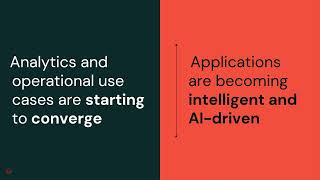
Lakebase is a new Postgres-compatible OLTP database designed to support intelligent applications. Lakebase eliminates custom ETL pipelines with built-in lakehouse table synchronization, supports sub-10ms latency for high-throughput workloads, and offers full Postgres compatibility, so you can build applications more quickly.In this session, you’ll learn how Lakebase enables faster development, production-level concurrency, and simpler operations for data engineers and application developers building modern, data-driven applications. We'll walk through key capabilities, example use cases, and how Lakebase simplifies infrastructure while unlocking new possibilities for AI and analytics.