talk-data.com talk-data.com

Topic

MongoDB

nosql_database document_database big_data

68

tagged

Activity Trend

27 peak/qtr
2020-Q1 2026-Q1

Activities

Showing filtered results

Filtering by: O'Reilly Data Engineering Books ×
Web Development with MongoDB and NodeJS - Second Edition

Discover how to build a full-featured, interactive web application from scratch using Node.js and MongoDB in this comprehensive guide. You will learn to set up your development environment, create a web server with Express.js, and integrate MongoDB for data persistence. By the end of this book, you will have the knowledge and skills to develop and deploy robust web applications ready for the cloud. What this Book will help me do Set up a Node.js development environment and connect it to MongoDB. Develop a web server using Express.js and write integrated APIs. Implement dynamic HTML pages leveraging the Handlebars template engine. Build efficient and scalable data-driven features using Mongoose ODM. Deploy web applications seamlessly to cloud platforms like Heroku, AWS, or Azure. Author(s) This book was co-authored by experts None Satheesh, None Joseph D'mello, and Jason Krol, who bring years of experience in software development and expertise in modern web technologies. With a focus on practical application and best practices, the authors aim to empower readers to succeed in real-world development projects using the innovative Node.js and MongoDB stack. Who is it for? This book is tailored for developers who have a basic understanding of JavaScript and HTML and wish to advance their web development skills. If you are motivated to learn how to leverage Node.js and MongoDB for full-stack development or are curious about building and deploying complete web applications, this book is ideal for you. It addresses learners from early career to experienced developers looking to strengthen their skills in modern development stacks.
Pro MongoDB™ Development

Pro MongoDB Development is a critical reference for anyone using MongoDB, a NoSQL database based on the BSON (binary JSON) document model. The book explores many aspects of implementing MongoDB in web applications, whether you are using Java, PHP, Ruby, and JavaScript. Noted expert Deepak Vohra walks you through accessing MongoDB databases with all these languages and working with various other technologies and databases. Vohra discusses using Java EE frameworks Kundera and Spring Data with MongoDB. You learn the nuts and bolts of migrating data from other NoSQL databases (Apache Cassandra and Couchbase) and from relational databases (Oracle Database). And, because NoSQL databases are commonly used with the Hadoop ecosystem, the book also covers using MongoDB with Apache Hive. Each chapter includes details about the software you need and hands on examples of working with MongoDB and these technologies so you know exactly what to do, whatever your MongoDB implementation requires.

Pro Couchbase Development: A NoSQL Platform for the Enterprise

Pro Couchbase Development: A NoSQL Platform for the Enterprise discusses programming for Couchbase using Java and scripting languages, querying and searching, handling migration, and integrating Couchbase with Hadoop, HDFS, and JSON. It also discusses migration from other NoSQL databases like MongoDB. This book is for big data developers who use Couchbase NoSQL database or want to use Couchbase for their web applications as well as for those migrating from other NoSQL databases like MongoDB and Cassandra. For example, a reason to migrate from Cassandra is that it is not based on the JSON document model with support for a flexible schema without having to define columns and supercolumns. The target audience is largely Java developers but the book also supports PHP and Ruby developers who want to learn about Couchbase. The author supplies examples in Java, PHP, Ruby, and JavaScript. After reading and using this hands-on guide for developing with Couchbase, you'll be able to build complex enterprise, database and cloud applications that leverage this powerful platform.

IBM Software Defined Infrastructure for Big Data Analytics Workloads

This IBM® Redbooks® publication documents how IBM Platform Computing, with its IBM Platform Symphony® MapReduce framework, IBM Spectrum Scale (based Upon IBM GPFS™), IBM Platform LSF®, the Advanced Service Controller for Platform Symphony are work together as an infrastructure to manage not just Hadoop-related offerings, but many popular industry offeringsm such as Apach Spark, Storm, MongoDB, Cassandra, and so on. It describes the different ways to run Hadoop in a big data environment, and demonstrates how IBM Platform Computing solutions, such as Platform Symphony and Platform LSF with its MapReduce Accelerator, can help performance and agility to run Hadoop on distributed workload managers offered by IBM. This information is for technical professionals (consultants, technical support staff, IT architects, and IT specialists) who are responsible for delivering cost-effective cloud services and big data solutions on IBM Power Systems™ to help uncover insights among client’s data so they can optimize product development and business results.

The JavaScript JSON Cookbook

Take your understanding of JSON to the next level with "The JavaScript JSON Cookbook." This in-depth guide equips developers of all levels with practical recipes to integrate JSON into a variety of applications such as web, mobile, and server-side systems, enabling efficient data exchange and manipulation. What this Book will help me do Master the fundamentals of JSON formatting, data exchange, and manipulation. Work with JSON in popular libraries and frameworks like AngularJS, jQuery, and AJAX. Integrate JSON seamlessly with databases such as MongoDB and CouchDB. Utilize JSON in mobile platform development for Android and iOS. Learn advanced techniques such as querying JSON using JSON Path and representing binary objects. Author(s) Ray Rischpater is an accomplished software developer and author with extensive experience in programming and web development. He has a deep understanding of JavaScript and JSON, and his practical approach to solving complex technical challenges makes his books invaluable resources. Ray's instructional style is clear and comprehensive, aiming to empower programmers to achieve their goals. Who is it for? This book is ideal for software developers working with web, mobile, or backend systems who want to expand their expertise in JSON. Whether you're a frontend, backend, or full-stack developer at any skill level, the recipes in this cookbook will enhance your ability to create efficient, data-driven applications. If you aim to use JSON for tasks like data exchange, web services, or database integration, this book is for you. By working through the examples, you will gain actionable skills to implement JSON in diverse real-world scenarios.

NoSQL for Mere Mortals®

NoSQL was developed to overcome the limitations of relational databases in the largest Web applications at companies such as Google, Yahoo and Facebook. As it is applied more widely, developers are finding that it can simplify scalability while requiring far less coding and management overhead. However, NoSQL requires fundamentally different approaches to database design and modeling, and many conventional relational techniques lead to suboptimal results. NoSQL for Mere Mortals is an easy, practical guide to succeeding with NoSQL in your environment. Following the classic, best-selling format pioneered in SQL Queries for Mere Mortals, enterprise database expert Dan Sullivan guides you step-by-step through choosing technologies, designing high-performance databases, and planning for long-term maintenance. Sullivan introduces each type of NoSQL database, shows how to install and manage them, and demonstrates how to leverage their features while avoiding common mistakes that lead to poor performance and unmet requirements. He uses four popular NoSQL databases as reference models: MongoDB, a document database; Cassandra, a column family data store; Redis, a key-value database; and Neo4j, a graph database. You'll find explanations of each database's structure and capabilities, practical guidelines for choosing amongst them, and expert guidance on designing databases with them. Packed with examples, NoSQL for Mere Mortals is today's best way to master NoSQL—whether you're a DBA, developer, user, or student.

Field Guide to Hadoop

If your organization is about to enter the world of big data, you not only need to decide whether Apache Hadoop is the right platform to use, but also which of its many components are best suited to your task. This field guide makes the exercise manageable by breaking down the Hadoop ecosystem into short, digestible sections. You’ll quickly understand how Hadoop’s projects, subprojects, and related technologies work together. Each chapter introduces a different topic—such as core technologies or data transfer—and explains why certain components may or may not be useful for particular needs. When it comes to data, Hadoop is a whole new ballgame, but with this handy reference, you’ll have a good grasp of the playing field. Topics include: Core technologies—Hadoop Distributed File System (HDFS), MapReduce, YARN, and Spark Database and data management—Cassandra, HBase, MongoDB, and Hive Serialization—Avro, JSON, and Parquet Management and monitoring—Puppet, Chef, Zookeeper, and Oozie Analytic helpers—Pig, Mahout, and MLLib Data transfer—Scoop, Flume, distcp, and Storm Security, access control, auditing—Sentry, Kerberos, and Knox Cloud computing and virtualization—Serengeti, Docker, and Whirr

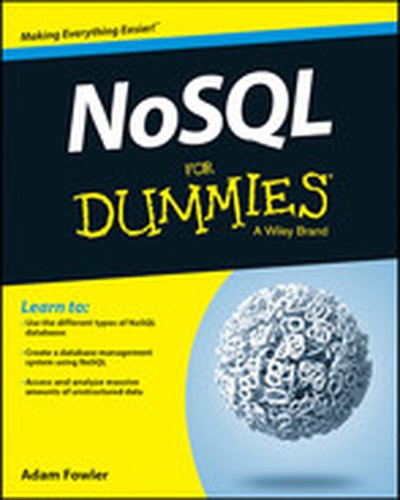
NoSQL For Dummies

Get up to speed on the nuances of NoSQL databases and what they mean for your organization This easy to read guide to NoSQL databases provides the type of no-nonsense overview and analysis that you need to learn, including what NoSQL is and which database is right for you. Featuring specific evaluation criteria for NoSQL databases, along with a look into the pros and cons of the most popular options, NoSQL For Dummies provides the fastest and easiest way to dive into the details of this incredible technology. You'll gain an understanding of how to use NoSQL databases for mission-critical enterprise architectures and projects, and real-world examples reinforce the primary points to create an action-oriented resource for IT pros. If you're planning a big data project or platform, you probably already know you need to select a NoSQL database to complete your architecture. But with options flooding the market and updates and add-ons coming at a rapid pace, determining what you require now, and in the future, can be a tall task. This is where NoSQL For Dummies comes in! Learn the basic tenets of NoSQL databases and why they have come to the forefront as data has outpaced the capabilities of relational databases Discover major players among NoSQL databases, including Cassandra, MongoDB, MarkLogic, Neo4J, and others Get an in-depth look at the benefits and disadvantages of the wide variety of NoSQL database options Explore the needs of your organization as they relate to the capabilities of specific NoSQL databases Big data and Hadoop get all the attention, but when it comes down to it, NoSQL databases are the engines that power many big data analytics initiatives. With NoSQL For Dummies, you'll go beyond relational databases to ramp up your enterprise's data architecture in no time.

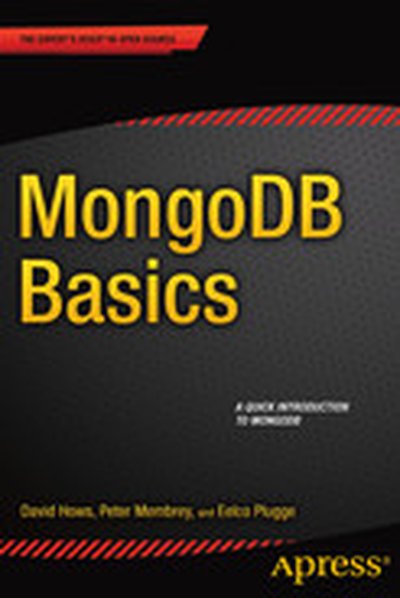
MongoDB Basics

Need a quick and easy to understand introduction to MongoDB and NoSQL databases? MongoDB Basics, from The Definitive Guide to MongoDB, 2E, shows you how a document-oriented database system differs from a relational database, and how to install and get started using it. You'll also learn MongoDB design basics, including geospatial indexing, how to navigate, view, and query your database, and how to use GridFS with a bit of Python.

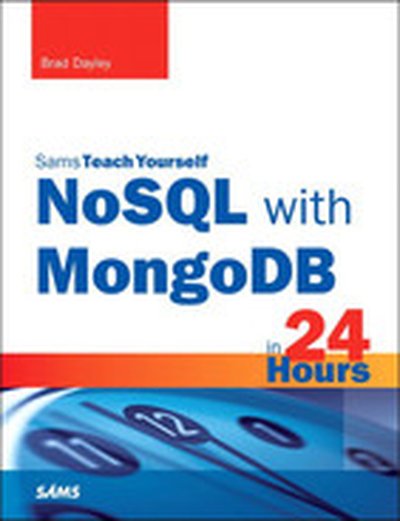
Sams Teach Yourself NoSQL with MongoDB in 24 Hours

NoSQL database usage is growing at a stunning 50% per year, as organizations discover NoSQL's potential to address even the most challenging Big Data and real-time database problems. Every NoSQL database is different, but one is the most popular by far: MongoDB. Now, in just 24 lessons of one hour or less, you can learn how to leverage MongoDB's immense power. Each short, easy lesson builds on all that's come before, teaching NoSQL concepts and MongoDB techniques from the ground up. Sams Teach Yourself NoSQL with MongoDB in 24 Hours covers all this, and much more: Learning how NoSQL is different, when to use it, and when to use traditional RDBMSes instead Designing and implementing MongoDB databases of diverse types and sizes Storing and interacting with data via Java, PHP, Python, and Node.js/Mongoose Choosing the right NoSQL distribution model for your application Installing and configuring MongoDB Designing MongoDB data models, including collections, indexes, and GridFS Balancing consistency, performance, and durability Leveraging the immense power of Map-Reduce Administering, monitoring, securing, backing up, and repairing MongoDB databases Mastering advanced techniques such as sharding and replication Optimizing performance

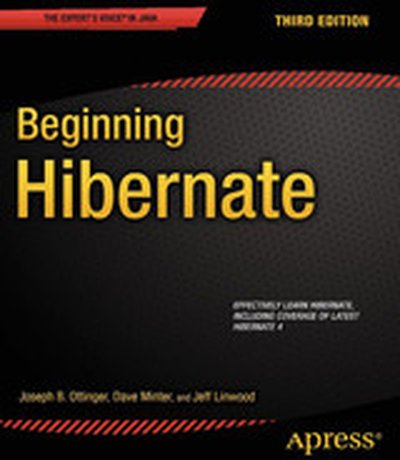
Beginning Hibernate, Third Edition

Beginning Hibernate, Third Edition is ideal if you're experienced in Java with databases (the traditional, or "connected," approach), but new to open-source, lightweight Hibernate, a leading object-relational mapping and database-oriented application development framework. This book packs in information about the release of the Hibernate 4.x persistence layer and provides a clear introduction to the current standard for object-relational persistence in Java. And since the book keeps its focus on Hibernate without wasting time on nonessential third-party tools, you'll be able to immediately start building transaction-based engines and applications. Experienced authors Joseph Ottinger with Dave Minter and Jeff Linwood provide more in-depth examples than any other book for Hibernate beginners. The authors also present material in a lively, example-based manner—not a dry, theoretical, hard-to-read fashion. What you'll learn How to build enterprise Java-based transaction-type applications that access complex data with Hibernate How to work with Hibernate 4 Where to integrate into the persistence life cycle How to map using annotations, Hibernate XML files, and more How to search and query with the new version of Hibernate How to integrate with MongoDB using NoSQL Who this book is for This book is for Java developers who want to learn about Hibernate.

The Definitive Guide to MongoDB: A complete guide to dealing with Big Data using MongoDB, Second Edition

The Definitive Guide to MongoDB, Second Edition, is updated for the latest version and includes all of the latest MongoDB features, including the aggregation framework introduced in version 2.2 and hashed indexes in version 2.4. MongoDB is the most popular of the "Big Data" NoSQL database technologies, and it's still growing. David Hows from 10gen, along with experienced MongoDB authors Peter Membrey and Eelco Plugge, provide their expertise and experience in teaching you everything you need to know to become a MongoDB pro. The Definitive Guide to MongoDB, Second Edition, starts with the basics, including how to install on Windows, Linux, and OS X, and how MongoDB handles your data. Then you'll learn how to develop with MongoDB with both PHP and Python, including an example application using a PHP driver to create a blog application. Finally, you'll dig into more advanced but extremely important MongoDB features, including optimization, replication, and sharding -- load-balancing that makes MongoDB ideal for dealing with Big Data. If you're dealing with data, MongoDB should be on your must-learn list. The Definitive Guide to MongoDB, Second Edition, is just the book you need. What you'll learn Set up MongoDB on all major server platforms, including Windows, Linux, OS X, and cloud platforms like Rackspace, Azure, and Amazon EC2 Work with GridFS and the new aggregation framework Work with your data using non-SQL commands Write applications using either PHP or Python Optimize MongoDB Master MongoDB administration, including replication, replication tagging, and tag-aware sharding Who this book is for Database admins and developers who need to get up to speed on MongoDB and its Big Data, NoSQL approach to dealing with data management.

Mongoose for Application Development

This book is your hands-on guide to mastering Mongoose for application development on the Node.js stack. By working through practical examples, you'll learn how to define data schemas, efficiently interact with your database, and build a real-life project management application using this powerful tool. What this Book will help me do Master connecting Node.js applications to MongoDB using Mongoose. Define and leverage data schemas and models for robust data management. Perform CRUD operations seamlessly using Mongoose's accessible APIs. Integrate advanced concepts like schema validators, population, and sub-documents. Learn to enhance productivity by developing and utilizing reusable plugins. Author(s) Simon Holmes, an experienced web developer, specializes in JavaScript, Node.js, and database technologies. Known for his clear and effective teaching style, Simon has authored several books and tutorials to help developers be more proficient and productive. His insights on Mongoose bridge the gap between practical application and theoretical knowledge. Who is it for? This book is perfect for developers interested in Node.js who want to incorporate MongoDB into their applications and need a structured yet hands-on approach. It's suitable for learners new to Mongoose as well as experienced developers seeking to optimize their database interactions. Key audiences include backend developers, full-stack developers, and software engineers aiming to enhance their database schemas and queries.

Pro Hibernate and MongoDB

Hibernate and MongoDB are a powerful combination of open source persistence and NoSQL technologies for today's Java-based enterprise and cloud application developers. Hibernate is the leading open source Java-based persistence, object relational management engine, recently repositioned as an object grid management engine. MongoDB is a growing, popular open source NoSQL framework, especially popular among cloud application and big data developers. With these two, enterprise and cloud developers have a "complete out of the box" solution. Pro Hibernate and MongoDB shows you how to use and integrate Hibernate and MongoDB. More specifically, this book guides you through the bootstrap; building transactions; handling queries and query entities; and mappings. Then, this book explores the principles and techniques for taking these application principles to the cloud, using the OpenShift Platform as a Service (PaaS) and more. In this book, you get two case studies: An enterprise application using Hibernate and MongoDB. then, A cloud application (OpenShip) migrated from the enterprise application case study After reading or using this book, you come away with the experience from two case studies that give you possible frameworks or templates that you can apply to your own specific application or cloud application building context. What you'll learn How to use and integrate Hibernate and MongoDB to be your "complete out of the box" solution for database driven enterprise and cloud applications How to bootstrap; run in supported environments; do transactions; handle queries and query entities; and mappings How to build an enterprise application case study using Hibernate and MongoDB What are the principles and techniques for taking applications to the Cloud, using the OpenShift Platform as a Service (PaaS) and more How to build a cloud-based app or application (OpenShip) Who this book is for This book is for experienced Java, enterprise Java programmers who may have some experience with Hibernate and/or MongoDB.

MongoDB: The Definitive Guide, 2nd Edition

Manage the huMONGOus amount of data collected through your web application with MongoDB. This authoritative introduction—written by a core contributor to the project—shows you the many advantages of using document-oriented databases, and demonstrates how this reliable, high-performance system allows for almost infinite horizontal scalability. This updated second edition provides guidance for database developers, advanced configuration for system administrators, and an overview of the concepts and use cases for other people on your project. Ideal for NoSQL newcomers and experienced MongoDB users alike, this guide provides numerous real-world schema design examples. Get started with MongoDB core concepts and vocabulary Perform basic write operations at different levels of safety and speed Create complex queries, with options for limiting, skipping, and sorting results Design an application that works well with MongoDB Aggregate data, including counting, finding distinct values, grouping documents, and using MapReduce Gather and interpret statistics about your collections and databases Set up replica sets and automatic failover in MongoDB Use sharding to scale horizontally, and learn how it impacts applications Delve into monitoring, security and authentication, backup/restore, and other administrative tasks

MongoDB Applied Design Patterns

Whether you’re building a social media site or an internal-use enterprise application, this hands-on guide shows you the connection between MongoDB and the business problems it’s designed to solve. You’ll learn how to apply MongoDB design patterns to several challenging domains, such as ecommerce, content management, and online gaming. Using Python and JavaScript code examples, you’ll discover how MongoDB lets you scale your data model while simplifying the development process. Many businesses launch NoSQL databases without understanding the techniques for using their features most effectively. This book demonstrates the benefits of document embedding, polymorphic schemas, and other MongoDB patterns for tackling specific big data use cases, including: Operational intelligence: Perform real-time analytics of business data Ecommerce: Use MongoDB as a product catalog master or inventory management system Content management: Learn methods for storing content nodes, binary assets, and discussions Online advertising networks: Apply techniques for frequency capping ad impressions, and keyword targeting and bidding Social networking: Learn how to store a complex social graph, modeled after Google+ Online gaming: Provide concurrent access to character and world data for a multiplayer role-playing game

Resilience and Reliability on AWS

Cloud services are just as susceptible to network outages as any other platform. This concise book shows you how to prepare for potentially devastating interruptions by building your own resilient and reliable applications in the public cloud. Guided by engineers from 9apps—an independent provider of Amazon Web Services and Eucalyptus cloud solutions—you’ll learn how to combine AWS with open source tools such as PostgreSQL, MongoDB, and Redis. This isn’t a book on theory. With detailed examples, sample scripts, and solid advice, software engineers with operations experience will learn specific techniques that 9apps routinely uses in its cloud infrastructures. Build cloud applications with the "rip, mix, and burn" approach Get a crash course on Amazon Web Services Learn the top ten tips for surviving outages in the cloud Use elasticsearch to build a dependable NoSQL data store Combine AWS and PostgreSQL to build an RDBMS that scales well Create a highly available document database with MongoDB Replica Set and SimpleDB Augment Redis with AWS to provide backup/restore, failover, and monitoring capabilities Work with CloudFront and Route 53 to safeguard global content delivery

Building Node Applications with MongoDB and Backbone

Build an application from backend to browser with Node.js, and kick open the doors to real-time event programming. With this hands-on book, you’ll learn how to create a social network application similar to LinkedIn and Facebook, but with a real-time twist. And you’ll build it with just one programming language: JavaScript. If you’re an experienced web developer unfamiliar with JavaScript, the book’s first section introduces you to the project’s core technologies: Node.js, Backbone.js, and the MongoDB data store. You’ll then launch into the project—a highly responsive, highly scalable application—guided by clear explanations and lots of code examples. Learn about key modules in Node.js for building real-time apps Use the Backbone.js framework to write clean browser code, and maintain better data integration with MongoDB Structure project files as a foundation for code that will arrive later Create user accounts and learn how to secure the data Use Backbone.js templates to build the application’s UIs, and integrate access control with Node.js Develop a contact list to help users link to and track other accounts Use Socket.io to create real-time chat functionality Extend your UIs to give users up-to-the-minute information

NoSQL Distilled: A Brief Guide to the Emerging World of Polyglot Persistence

The need to handle increasingly larger data volumes is one factor driving the adoption of a new class of nonrelational “NoSQL” databases. Advocates of NoSQL databases claim they can be used to build systems that are more performant, scale better, and are easier to program. NoSQL Distilled is a concise but thorough introduction to this rapidly emerging technology. Pramod J. Sadalage and Martin Fowler explain how NoSQL databases work and the ways that they may be a superior alternative to a traditional RDBMS. The authors provide a fast-paced guide to the concepts you need to know in order to evaluate whether NoSQL databases are right for your needs and, if so, which technologies you should explore further. The first part of the book concentrates on core concepts, including schemaless data models, aggregates, new distribution models, the CAP theorem, and map-reduce. In the second part, the authors explore architectural and design issues associated with implementing NoSQL. They also present realistic use cases that demonstrate NoSQL databases at work and feature representative examples using Riak, MongoDB, Cassandra, and Neo4j. In addition, by drawing on Pramod Sadalage’s pioneering work, NoSQL Distilled shows how to implement evolutionary design with schema migration: an essential technique for applying NoSQL databases. The book concludes by describing how NoSQL is ushering in a new age of Polyglot Persistence, where multiple data-storage worlds coexist, and architects can choose the technology best optimized for each type of data access.

Seven Databases in Seven Weeks

Data is getting bigger and more complex by the day, and so are the choices in handling that data. As a modern application developer you need to understand the emerging field of data management, both RDBMS and NoSQL. Seven Databases in Seven Weeks takes you on a tour of some of the hottest open source databases today. In the tradition of Bruce A. Tate's Seven Languages in Seven Weeks, this book goes beyond your basic tutorial to explore the essential concepts at the core each technology. Redis, Neo4J, CouchDB, MongoDB, HBase, Riak and Postgres. With each database, you'll tackle a real-world data problem that highlights the concepts and features that make it shine. You'll explore the five data models employed by these databases-relational, key/value, columnar, document and graph-and which kinds of problems are best suited to each. You'll learn how MongoDB and CouchDB are strikingly different, and discover the Dynamo heritage at the heart of Riak. Make your applications faster with Redis and more connected with Neo4J. Use MapReduce to solve Big Data problems. Build clusters of servers using scalable services like Amazon's Elastic Compute Cloud (EC2). Discover the CAP theorem and its implications for your distributed data. Understand the tradeoffs between consistency and availability, and when you can use them to your advantage. Use multiple databases in concert to create a platform that's more than the sum of its parts, or find one that meets all your needs at once. Seven Databases in Seven Weeks will take you on a deep dive into each of the databases, their strengths and weaknesses, and how to choose the ones that fit your needs. What You Need: To get the most of of this book you'll have to follow along, and that means you'll need a *nix shell (Mac OSX or Linux preferred, Windows users will need Cygwin), and Java 6 (or greater) and Ruby 1.8.7 (or greater). Each chapter will list the downloads required for that database.