talk-data.com talk-data.com

Topic

NLP

Natural Language Processing (NLP)

ai machine_learning text_analysis

32

tagged

Activity Trend

24 peak/qtr
2020-Q1 2026-Q1

Activities

Showing filtered results

Filtering by: O'Reilly Data Science Books ×
What Is Augmented Analytics?

As your business tries to make sense of today’s staggering amount of structured and unstructured data, traditional analytics will take you only so far. The key to success over the next few years will depend on augmented analytics, a method that embeds machine learning and natural language processing (NLP) in the process. This report explains how augmented analytics can help you uncover hidden insights, predict results, and even prescribe solutions. Author Alice LaPlante provides best practices for deploying augmented analytics, along with real-world case studies that show you how to take full advantage of this method. IT professionals, business managers, and CFOs will learn ways to democratize data use among business users and executives, using a self-service model. The future belongs to those who can get more from their data. This report shows you how. Get a primer on the key components and learn how they work together Delve into the benefits of—and roadblocks to—adopting augmented analytics Learn how companies use this method in marketing, sales, finance, and human resources Examine case studies of companies including Accenture and Riverbed

Machine Learning with R Quick Start Guide

Machine Learning with R Quick Start Guide takes you through the foundations of machine learning using the R programming language. Starting with the basics, this book introduces key algorithms and methodologies, offering hands-on examples and applicable machine learning solutions that allow you to extract insights and create predictive models. What this Book will help me do Understand the basics of machine learning and apply them using R 3.5. Learn to clean, prepare, and visualize data with R to ensure robust data analysis. Develop and work with predictive models using various machine learning techniques. Discover advanced topics like Natural Language Processing and neural network training. Implement end-to-end pipeline solutions, from data collection to predictive analytics, in R. Author(s) None Sanz, the author of Machine Learning with R Quick Start Guide, is an expert in data science with years of experience in the field of machine learning and R programming. Known for their accessible and detailed teaching style, the author focuses on providing practical knowledge to empower readers in the real world. Who is it for? This book is ideal for graduate students and professionals, including aspiring data scientists and data analysts, looking to start their journey in machine learning. Readers are expected to have some familiarity with the R programming language but no prior machine learning experience is necessary. With this book, the audience will gain the ability to confidently navigate machine learning concepts and practices.

SAS Text Analytics for Business Applications

Extract actionable insights from text and unstructured data. Information extraction is the task of automatically extracting structured information from unstructured or semi-structured text. SAS Text Analytics for Business Applications: Concept Rules for Information Extraction Models focuses on this key element of natural language processing (NLP) and provides real-world guidance on the effective application of text analytics. Using scenarios and data based on business cases across many different domains and industries, the book includes many helpful tips and best practices from SAS text analytics experts to ensure fast, valuable insight from your textual data. Written for a broad audience of beginning, intermediate, and advanced users of SAS text analytics products, including SAS Visual Text Analytics, SAS Contextual Analysis, and SAS Enterprise Content Categorization, this book provides a solid technical reference. You will learn the SAS information extraction toolkit, broaden your knowledge of rule-based methods, and answer new business questions. As your practical experience grows, this book will serve as a reference to deepen your expertise.

Python for R Users

The definitive guide for statisticians and data scientists who understand the advantages of becoming proficient in both R and Python The first book of its kind, Python for R Users: A Data Science Approach makes it easy for R programmers to code in Python and Python users to program in R. Short on theory and long on actionable analytics, it provides readers with a detailed comparative introduction and overview of both languages and features concise tutorials with command-by-command translations—complete with sample code—of R to Python and Python to R. Following an introduction to both languages, the author cuts to the chase with step-by-step coverage of the full range of pertinent programming features and functions, including data input, data inspection/data quality, data analysis, and data visualization. Statistical modeling, machine learning, and data mining—including supervised and unsupervised data mining methods—are treated in detail, as are time series forecasting, text mining, and natural language processing. • Features a quick-learning format with concise tutorials and actionable analytics • Provides command-by-command translations of R to Python and vice versa • Incorporates Python and R code throughout to make it easier for readers to compare and contrast features in both languages • Offers numerous comparative examples and applications in both programming languages • Designed for use for practitioners and students that know one language and want to learn the other • Supplies slides useful for teaching and learning either software on a companion website Python for R Users: A Data Science Approach is a valuable working resource for computer scientists and data scientists that know R and would like to learn Python or are familiar with Python and want to learn R. It also functions as textbook for students of computer science and statistics. A. Ohri is the founder of Decisionstats.com and currently works as a senior data scientist. He has advised multiple startups in analytics off-shoring, analytics services, and analytics education, as well as using social media to enhance buzz for analytics products. Mr. Ohri's research interests include spreading open source analytics, analyzing social media manipulation with mechanism design, simpler interfaces for cloud computing, investigating climate change and knowledge flows. His other books include R for Business Analytics and R for Cloud Computing.

Text Mining with R

Much of the data available today is unstructured and text-heavy, making it challenging for analysts to apply their usual data wrangling and visualization tools. With this practical book, you’ll explore text-mining techniques with tidytext, a package that authors Julia Silge and David Robinson developed using the tidy principles behind R packages like ggraph and dplyr. You’ll learn how tidytext and other tidy tools in R can make text analysis easier and more effective. The authors demonstrate how treating text as data frames enables you to manipulate, summarize, and visualize characteristics of text. You’ll also learn how to integrate natural language processing (NLP) into effective workflows. Practical code examples and data explorations will help you generate real insights from literature, news, and social media. Learn how to apply the tidy text format to NLP Use sentiment analysis to mine the emotional content of text Identify a document’s most important terms with frequency measurements Explore relationships and connections between words with the ggraph and widyr packages Convert back and forth between R’s tidy and non-tidy text formats Use topic modeling to classify document collections into natural groups Examine case studies that compare Twitter archives, dig into NASA metadata, and analyze thousands of Usenet messages

Mastering Text Mining with R

Mastering Text Mining with R is your go-to guide for learning how to process and analyze textual data using R. Throughout the book, you'll gain the skills necessary to perform data extraction and natural language processing, equipping you with practical applications tailored to real-world scenarios. What this Book will help me do Learn to access and manipulate textual data from various sources using R. Understand text processing techniques and employ them with tools like OpenNLP. Explore methods for text categorization, reduction, and summarization with hands-on exercises. Perform text classification tasks such as sentiment analysis and entity recognition. Build custom applications using text mining techniques and frameworks. Author(s) Ashish Kumar is a seasoned data scientist and software developer with years of experience in text analytics and the R programming language. He has a knack for explaining complex topics in an accessible and practical manner, ideal for learners embracing their text mining journey. Who is it for? This book is for anyone keen on mastering text mining with R. If you're an R programmer, data analyst, or data scientist looking to delve into text analytics, you'll find it ideal. Some familiarity with basic programming and statistics will enhance your experience, but all concepts are introduced clearly and effectively.

Working with Text

What is text mining, and how can it be used? What relevance do these methods have to everyday work in information science and the digital humanities? How does one develop competences in text mining? Working with Text provides a series of cross-disciplinary perspectives on text mining and its applications. As text mining raises legal and ethical issues, the legal background of text mining and the responsibilities of the engineer are discussed in this book. Chapters provide an introduction to the use of the popular GATE text mining package with data drawn from social media, the use of text mining to support semantic search, the development of an authority system to support content tagging, and recent techniques in automatic language evaluation. Focused studies describe text mining on historical texts, automated indexing using constrained vocabularies, and the use of natural language processing to explore the climate science literature. Interviews are included that offer a glimpse into the real-life experience of working within commercial and academic text mining. Introduces text analysis and text mining tools Provides a comprehensive overview of costs and benefits Introduces the topic, making it accessible to a general audience in a variety of fields, including examples from biology, chemistry, sociology, and criminology

Practical Data Analysis Cookbook

Practical Data Analysis Cookbook takes you on a comprehensive journey to mastering data exploration and analysis using Python. From data cleaning and transformation to building predictive and classification models, this book provides practical recipes for tackling real-world data challenges and extracting valuable insights. What this Book will help me do Efficiently clean, transform, and explore datasets using tools like pandas and OpenRefine. Develop predictive models for time series and other datasets using Python libraries such as scikit-learn and Statsmodels. Apply clustering and classification techniques to real-world data problems to gain actionable insights. Explore advanced topics like natural language processing and graph theory concepts using specialized tools. Build the skills to solve practical data modeling problems encountered in a data science role. Author(s) None Drabas is an experienced data scientist and author who specializes in Python-based data analysis. With a background in tackling intricate data-driven problems, None brings real-world experience to the readers. In creating this Cookbook, None adopts a step-by-step approach, making complex techniques accessible to learners of all backgrounds. Who is it for? If you are a data analyst, data scientist, or someone interested in exploring Python for practical data problems, this book is for you. It suits beginners starting their data journey and intermediate professionals looking to enhance their toolset. With clear instructions, it's ideal for anyone willing to build practical skills and tackle real-world challenges in data analysis.

Data Simplification

Data Simplification: Taming Information With Open Source Tools addresses the simple fact that modern data is too big and complex to analyze in its native form. Data simplification is the process whereby large and complex data is rendered usable. Complex data must be simplified before it can be analyzed, but the process of data simplification is anything but simple, requiring a specialized set of skills and tools. This book provides data scientists from every scientific discipline with the methods and tools to simplify their data for immediate analysis or long-term storage in a form that can be readily repurposed or integrated with other data. Drawing upon years of practical experience, and using numerous examples and use cases, Jules Berman discusses the principles, methods, and tools that must be studied and mastered to achieve data simplification, open source tools, free utilities and snippets of code that can be reused and repurposed to simplify data, natural language processing and machine translation as a tool to simplify data, and data summarization and visualization and the role they play in making data useful for the end user. Discusses data simplification principles, methods, and tools that must be studied and mastered Provides open source tools, free utilities, and snippets of code that can be reused and repurposed to simplify data Explains how to best utilize indexes to search, retrieve, and analyze textual data Shows the data scientist how to apply ontologies, classifications, classes, properties, and instances to data using tried and true methods

Data Science from Scratch

Data science libraries, frameworks, modules, and toolkits are great for doing data science, but they’re also a good way to dive into the discipline without actually understanding data science. In this book, you’ll learn how many of the most fundamental data science tools and algorithms work by implementing them from scratch. If you have an aptitude for mathematics and some programming skills, author Joel Grus will help you get comfortable with the math and statistics at the core of data science, and with hacking skills you need to get started as a data scientist. Today’s messy glut of data holds answers to questions no one’s even thought to ask. This book provides you with the know-how to dig those answers out. Get a crash course in Python Learn the basics of linear algebra, statistics, and probability—and understand how and when they're used in data science Collect, explore, clean, munge, and manipulate data Dive into the fundamentals of machine learning Implement models such as k-nearest Neighbors, Naive Bayes, linear and logistic regression, decision trees, neural networks, and clustering Explore recommender systems, natural language processing, network analysis, MapReduce, and databases

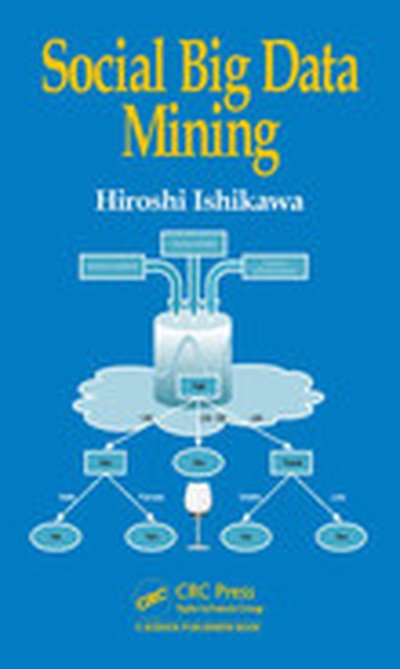
Social Big Data Mining

This book focuses on the basic concepts and the related technologies of data mining for social medial. Topics include: big data and social data, data mining for making a hypothesis, multivariate analysis for verifying the hypothesis, web mining and media mining, natural language processing, social big data applications, and scalability. It explains analytical techniques such as modeling, data mining, and multivariate analysis for social big data. This book is different from other similar books in that presents the overall picture of social big data from fundamental concepts to applications while standing on academic bases.

Information Evaluation

During the reception of a piece of information, we are never passive. Depending on its origin and content, from our personal beliefs and convictions, we bestow upon this piece of information, spontaneously or after reflection, a certain amount of confidence. Too much confidence shows a degree of naivety, whereas an absolute lack of it condemns us as being paranoid. These two attitudes are symmetrically detrimental, not only to the proper perception of this information but also to its use. Beyond these two extremes, each person generally adopts an intermediate position when faced with the reception of information, depending on its provenance and credibility. We still need to understand and explain how these judgements are conceived, in what context and to what end. Spanning the approaches offered by philosophy, military intelligence, algorithmics and information science, this book presents the concepts of information and the confidence placed in it, the methods that militaries, the first to be aware of the need, have or should have adopted, tools to help them, and the prospects that they have opened up. Beyond the military context, the book reveals ways to evaluate information for the good of other fields such as economic intelligence, and, more globally, the informational monitoring by governments and businesses. Contents 1. Information: Philosophical Analysis and Strategic Applications, Mouhamadou El Hady Ba and Philippe Capet. 2. Epistemic Trust, Gloria Origgi. 3. The Fundamentals of Intelligence, Philippe Lemercier. 4. Information Evaluation in the Military Domain: Doctrines, Practices and Shortcomings, Philippe Capet and Adrien Revault d'Allonnes. 5. Multidimensional Approach to Reliability Evaluation of Information Sources, Frédéric Pichon, Christophe Labreuche, Bertrand Duqueroie and Thomas Delavallade. 6. Uncertainty of an Event and its Markers in Natural Language Processing, Mouhamadou El Hady Ba, Stéphanie Brizard, Tanneguy Dulong and Bénédicte Goujon. 7. Quantitative Information Evaluation: Modeling and Experimental Evaluation, Marie-Jeanne Lesot, Frédéric Pichon and Thomas Delavallade. 8. When Reported Information Is Second Hand, Laurence Cholvy. 9. An Architecture for the Evolution of Trust: Definition and Impact of the Necessary Dimensions of Opinion Making, Adrien Revault d'Allonnes. About the Authors Philippe Capet is a project manager and research engineer at Ektimo, working mainly on information management and control in military contexts. Thomas Delavallade is an advanced studies engineer at Thales Communications & Security, working on social media mining in the context of crisis management, cybersecurity and the fight against cybercrime.