talk-data.com talk-data.com

Topic

NoSQL

databases big_data non_relational

111

tagged

Activity Trend

7 peak/qtr
2020-Q1 2026-Q1

Activities

Showing filtered results

Filtering by: O'Reilly Data Engineering Books ×
Pro Couchbase Development: A NoSQL Platform for the Enterprise

Pro Couchbase Development: A NoSQL Platform for the Enterprise discusses programming for Couchbase using Java and scripting languages, querying and searching, handling migration, and integrating Couchbase with Hadoop, HDFS, and JSON. It also discusses migration from other NoSQL databases like MongoDB. This book is for big data developers who use Couchbase NoSQL database or want to use Couchbase for their web applications as well as for those migrating from other NoSQL databases like MongoDB and Cassandra. For example, a reason to migrate from Cassandra is that it is not based on the JSON document model with support for a flexible schema without having to define columns and supercolumns. The target audience is largely Java developers but the book also supports PHP and Ruby developers who want to learn about Couchbase. The author supplies examples in Java, PHP, Ruby, and JavaScript. After reading and using this hands-on guide for developing with Couchbase, you'll be able to build complex enterprise, database and cloud applications that leverage this powerful platform.

Learning Redis

Dive into Redis, and discover how this powerful key-value database can enhance your web and business applications. "Learning Redis" explains the fundamentals of Redis and walks you through the processes of installation, configuration, and hands-on application development. By the end, you will have gained the knowledge to apply Redis in innovative ways to improve scalability and performance. What this Book will help me do Understand and install Redis to start using this NoSQL database efficiently. Master Redis commands and data structures for scalable application designs. Configure and optimize a Redis server setup to enhance performance and manage persistence. Implement solutions using Redis for real-world web application development. Learn best practices for Redis backups, recovery, and fault management to ensure reliability. Author(s) Vinoo Das, a seasoned software engineer with extensive experience in database solutions, wrote this book with a practical approach to learning Redis. Known for his clear explanations, Vinoo deeply understands how to make technical concepts accessible. His professional career spans significant contributions to SQL and NoSQL database development, making him an ideal guide for learning Redis. Who is it for? This book is perfect for SQL developers ready to deepen their expertise by exploring NoSQL databases like Redis. With only basic programming experience required, readers will appreciate the practical approach and the focus on actionable insights. Whether you're looking to build high-performance apps or understand key-value storage systems, this book will meet your needs.

Neo4j Cookbook

Dive into Neo4j and uncover how to harness its powerful capabilities in graph data analysis with the Neo4j Cookbook. Across 75 well-structured recipes, you'll learn to apply practical techniques in modeling, querying, and visualizing graph databases, enabling you to address real-world challenges efficiently. What this Book will help me do Access Neo4j from popular programming languages such as Java, Python, and Scala, enabling easier integration into your projects. Migrate data seamlessly from various data stores, including SQL and NoSQL, into Neo4j, maintaining data consistency. Use best practices for data modeling with Neo4j to optimize performance and scalability for your applications. Analyze social data from sources like Facebook and Twitter, revealing valuable insights from connections and relationships. Integrate geospatial data to enable location-based queries and nearest-point searches, opening up advanced application features. Author(s) Ankur Goel, the author of Neo4j Cookbook, is an experienced technologist with an extensive background in handling database solutions and applications. Passionate about simplifying complex systems, Ankur excels in teaching essential database concepts through clear and actionable recipes. His writing is rooted in practical insights, reflecting his hands-on experience in the industry. Who is it for? This book is ideal for developers and data engineers who currently use or plan to integrate Neo4j into their workflows. If you are migrating from a traditional database system or delving into graph databases for the first time, this book offers structured guidance. Readers should have a fundamental understanding of programming and familiarity with database concepts for the best experience. It caters to individuals aiming to build or enhance data-driven applications using Neo4j's robust graph modeling.

Big Data

Big Data teaches you to build big data systems using an architecture that takes advantage of clustered hardware along with new tools designed specifically to capture and analyze web-scale data. It describes a scalable, easy-to-understand approach to big data systems that can be built and run by a small team. Following a realistic example, this book guides readers through the theory of big data systems, how to implement them in practice, and how to deploy and operate them once they're built. About the Technology About the Book Web-scale applications like social networks, real-time analytics, or e-commerce sites deal with a lot of data, whose volume and velocity exceed the limits of traditional database systems. These applications require architectures built around clusters of machines to store and process data of any size, or speed. Fortunately, scale and simplicity are not mutually exclusive. Big Data teaches you to build big data systems using an architecture designed specifically to capture and analyze web-scale data. This book presents the Lambda Architecture, a scalable, easy-to-understand approach that can be built and run by a small team. You'll explore the theory of big data systems and how to implement them in practice. In addition to discovering a general framework for processing big data, you'll learn specific technologies like Hadoop, Storm, and NoSQL databases. What's Inside Introduction to big data systems Real-time processing of web-scale data Tools like Hadoop, Cassandra, and Storm Extensions to traditional database skills About the Reader This book requires no previous exposure to large-scale data analysis or NoSQL tools. Familiarity with traditional databases is helpful. About the Authors Nathan Marz is the creator of Apache Storm and the originator of the Lambda Architecture for big data systems. James Warren is an analytics architect with a background in machine learning and scientific computing. Quotes Transcends individual tools or platforms. Required reading for anyone working with big data systems. - Jonathan Esterhazy, Groupon A comprehensive, example-driven tour of the Lambda Architecture with its originator as your guide. - Mark Fisher, Pivotal Contains wisdom that can only be gathered after tackling many big data projects. A must-read. - Pere Ferrera Bertran, Datasalt The de facto guide to streamlining your data pipeline in batch and near-real time. - Alex Holmes, Author of "Hadoop in Practice"

NoSQL for Mere Mortals®

NoSQL was developed to overcome the limitations of relational databases in the largest Web applications at companies such as Google, Yahoo and Facebook. As it is applied more widely, developers are finding that it can simplify scalability while requiring far less coding and management overhead. However, NoSQL requires fundamentally different approaches to database design and modeling, and many conventional relational techniques lead to suboptimal results. NoSQL for Mere Mortals is an easy, practical guide to succeeding with NoSQL in your environment. Following the classic, best-selling format pioneered in SQL Queries for Mere Mortals, enterprise database expert Dan Sullivan guides you step-by-step through choosing technologies, designing high-performance databases, and planning for long-term maintenance. Sullivan introduces each type of NoSQL database, shows how to install and manage them, and demonstrates how to leverage their features while avoiding common mistakes that lead to poor performance and unmet requirements. He uses four popular NoSQL databases as reference models: MongoDB, a document database; Cassandra, a column family data store; Redis, a key-value database; and Neo4j, a graph database. You'll find explanations of each database's structure and capabilities, practical guidelines for choosing amongst them, and expert guidance on designing databases with them. Packed with examples, NoSQL for Mere Mortals is today's best way to master NoSQL—whether you're a DBA, developer, user, or student.

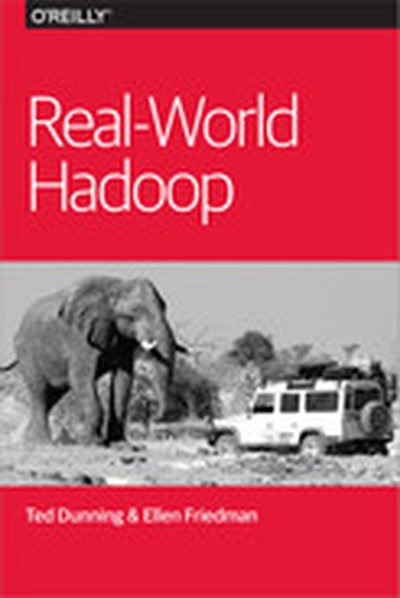
Real-World Hadoop

If you’re a business team leader, CIO, business analyst, or developer interested in how Apache Hadoop and Apache HBase-related technologies can address problems involving large-scale data in cost-effective ways, this book is for you. Using real-world stories and situations, authors Ted Dunning and Ellen Friedman show Hadoop newcomers and seasoned users alike how NoSQL databases and Hadoop can solve a variety of business and research issues. You’ll learn about early decisions and pre-planning that can make the process easier and more productive. If you’re already using these technologies, you’ll discover ways to gain the full range of benefits possible with Hadoop. While you don’t need a deep technical background to get started, this book does provide expert guidance to help managers, architects, and practitioners succeed with their Hadoop projects. Examine a day in the life of big data: India’s ambitious Aadhaar project Review tools in the Hadoop ecosystem such as Apache’s Spark, Storm, and Drill to learn how they can help you Pick up a collection of technical and strategic tips that have helped others succeed with Hadoop Learn from several prototypical Hadoop use cases, based on how organizations have actually applied the technology Explore real-world stories that reveal how MapR customers combine use cases when putting Hadoop and NoSQL to work, including in production Ted Dunning is Chief Applications Architect at MapR Technologies, and committer and PMC member of the Apache’s Drill, Storm, Mahout, and ZooKeeper projects. He is also mentor for Apache’s Datafu, Kylin, Zeppelin, Calcite, and Samoa projects. Ellen Friedman is a solutions consultant, speaker, and author, writing mainly about big data topics. She is a committer for the Apache Mahout project and a contributor to the Apache Drill project.

Mastering Apache Cassandra - Second Edition

Mastering Apache Cassandra - Second Edition is your comprehensive guide to understanding and utilizing the power of Cassandra, an efficient and scalable NoSQL database. Throughout this book, you will learn how to design, deploy, and manage Cassandra databases effectively, tailored to your application's needs. What this Book will help me do Understand the architecture of Apache Cassandra and how it ensures scalability and reliability. Learn to build, configure, and deploy a Cassandra database cluster for high performance. Develop skills in monitoring and tuning Cassandra clusters for optimal operation. Gain expertise in managing clusters through scaling, node repair, and backup strategies. Integrate Apache Cassandra with other tools and your application seamlessly. Author(s) Nishant Neeraj is an experienced software developer and database engineer with a focus on delivering high-performance solutions. They have extensive hands-on experience with NoSQL databases, especially Apache Cassandra, and bring their practical insights and in-depth technical knowledge to this book to help readers tackle real-world challenges. Who is it for? This book is ideal for intermediate developers aiming to enhance their expertise in NoSQL databases. If you have a foundational understanding of database concepts and want to bring your skills to a professional level by mastering Apache Cassandra for modern applications, this book is perfect for you. It provides actionable insights and guidance suitable for professionals tackling high concurrency and big data challenges. Whether you are a developer, database administrator, or architect, this book provides a targeted deep dive into Cassandra.

Couchbase Essentials

Couchbase Essentials is your gateway to mastering Couchbase, a powerful NoSQL database designed for building flexible and scalable applications. Through this book, you will understand Couchbase's key features, explore its indexing and querying capabilities, and learn to design schemas for its schemaless document model. What this Book will help me do Understand how to install and configure a single-node Couchbase environment. Master putting data into and retrieving data from Couchbase using its API. Develop skills in creating secondary and advanced indexes using Couchbase MapReduce views. Learn to design an efficient schema for Couchbase's schemaless document database. Create and query a functional application utilizing Couchbase and its N1QL query language. Author(s) John C Zablocki is an experienced software developer and technology enthusiast with a deep understanding of NoSQL databases like Couchbase. With years of practical experience, John has been instrumental in implementing Couchbase in scalable applications, and he shares actionable insights in this well-rounded book. Who is it for? This book is tailored for application developers aiming to enhance their applications with NoSQL capabilities. It is highly suitable for developers with backgrounds in relational databases, as well as those new to NoSQL systems. If you are interested in building modern, scalable applications, this comprehensive guide to Couchbase is for you.

Learning Apache Cassandra

Learning Apache Cassandra is your comprehensive guide to mastering one of the most popular distributed databases for building scalable, fault-tolerant data layers. Through step-by-step examples and clear explanations, this book will help you understand Cassandra's architecture and how to use its features to design efficient applications. What this Book will help me do Successfully install and set up Apache Cassandra in your environment. Develop highly scalable data models for various application scenarios. Implement efficient query designs using Cassandra's specialized APIs. Maintain data consistency and handle concurrent updates in distributed systems. Apply best practices for securing Cassandra deployments and managing distributed data. Author(s) None Brown is an experienced software developer with a focus on database systems and distributed architectures. With years of hands-on experience working with SQL and NoSQL databases, they bring practical insights and clear instructions to their readers. Their writing aims to demystify complex topics and provide practical learning paths. Who is it for? This book is intended for software developers and database administrators looking to expand their knowledge of distributed databases. If you are familiar with SQL databases like MySQL or PostgreSQL and want to transition to Cassandra, this guide will help you. No prior experience with distributed databases is assumed. By following this book, you'll quickly become proficient in using Cassandra for your distributed application needs.

NoSQL For Dummies

Get up to speed on the nuances of NoSQL databases and what they mean for your organization This easy to read guide to NoSQL databases provides the type of no-nonsense overview and analysis that you need to learn, including what NoSQL is and which database is right for you. Featuring specific evaluation criteria for NoSQL databases, along with a look into the pros and cons of the most popular options, NoSQL For Dummies provides the fastest and easiest way to dive into the details of this incredible technology. You'll gain an understanding of how to use NoSQL databases for mission-critical enterprise architectures and projects, and real-world examples reinforce the primary points to create an action-oriented resource for IT pros. If you're planning a big data project or platform, you probably already know you need to select a NoSQL database to complete your architecture. But with options flooding the market and updates and add-ons coming at a rapid pace, determining what you require now, and in the future, can be a tall task. This is where NoSQL For Dummies comes in! Learn the basic tenets of NoSQL databases and why they have come to the forefront as data has outpaced the capabilities of relational databases Discover major players among NoSQL databases, including Cassandra, MongoDB, MarkLogic, Neo4J, and others Get an in-depth look at the benefits and disadvantages of the wide variety of NoSQL database options Explore the needs of your organization as they relate to the capabilities of specific NoSQL databases Big data and Hadoop get all the attention, but when it comes down to it, NoSQL databases are the engines that power many big data analytics initiatives. With NoSQL For Dummies, you'll go beyond relational databases to ramp up your enterprise's data architecture in no time.

Practical Neo4j

" Why have developers at places like Facebook and Twitter increasingly turned to graph databases to manage their highly connected big data? The short answer is that graphs offer superior speed and flexibility to get the job done. It’s time you added skills in graph databases to your toolkit. In Practical Neo4j, database expert Greg Jordan guides you through the background and basics of graph databases and gets you quickly up and running with Neo4j, the most prominent graph database on the market today. Jordan walks you through the data modeling stages for projects such as social networks, recommendation engines, and geo-based applications. The book also dives into the configuration steps as well as the language options used to create your Neo4j-backed applications. Neo4j runs some of the largest connected datasets in the world, and developing with it offers you a fast, proven NoSQL database option. Besides those working for social media, database, and networking companies of all sizes, academics and researchers will find Neo4j a powerful research tool that can help connect large sets of diverse data and provide insights that would otherwise remain hidden. Using Practical Neo4j, you will learn how to harness that power and create elegant solutions that address complex data problems. This book: Explains the basics of graph databases Demonstrates how to configure and maintain Neo4j Shows how to import data into Neo4j from a variety of sources Provides a working example of a Neo4j-based application using an array of language of options including Java, .Net, PHP, Python, Spring, and Ruby As you’ll discover, Neo4j offers a blend of simplicity and speed while allowing data relationships to maintain first-class status. That’s one reason among many that such a wide range of industries and fields have turned to graph databases to analyze deep, dense relationships. After reading this book, you’ll have a potent, elegant tool you can use to develop projects profitably and improve your career options.

Big Data Made Easy: A Working Guide to the Complete Hadoop Toolset

Many corporations are finding that the size of their data sets are outgrowing the capability of their systems to store and process them. The data is becoming too big to manage and use with traditional tools. The solution: implementing a big data system. As Big Data Made Easy: A Working Guide to the Complete Hadoop Toolset shows, Apache Hadoop offers a scalable, fault-tolerant system for storing and processing data in parallel. It has a very rich toolset that allows for storage (Hadoop), configuration (YARN and ZooKeeper), collection (Nutch and Solr), processing (Storm, Pig, and Map Reduce), scheduling (Oozie), moving (Sqoop and Avro), monitoring (Chukwa, Ambari, and Hue), testing (Big Top), and analysis (Hive). The problem is that the Internet offers IT pros wading into big data many versions of the truth and some outright falsehoods born of ignorance. What is needed is a book just like this one: a wide-ranging but easily understood set of instructions to explain where to get Hadoop tools, what they can do, how to install them, how to configure them, how to integrate them, and how to use them successfully. And you need an expert who has worked in this area for a decade—someone just like author and big data expert Mike Frampton. Big Data Made Easy approaches the problem of managing massive data sets from a systems perspective, and it explains the roles for each project (like architect and tester, for example) and shows how the Hadoop toolset can be used at each system stage. It explains, in an easily understood manner and through numerous examples, how to use each tool. The book also explains the sliding scale of tools available depending upon data size and when and how to use them. Big Data Made Easy shows developers and architects, as well as testers and project managers, how to: Store big data Configure big data Process big data Schedule processes Move data among SQL and NoSQL systems Monitor data Perform big data analytics Report on big data processes and projects Test big data systems Big Data Made Easy also explains the best part, which is that this toolset is free. Anyone can download it and—with the help of this book—start to use it within a day. With the skills this book will teach you under your belt, you will add value to your company or client immediately, not to mention your career.

Beginning Apache Cassandra Development

Beginning Apache Cassandra Development introduces you to one of the most robust and best-performing NoSQL database platforms on the planet. Apache Cassandra is a document database following the JSON document model. It is specifically designed to manage large amounts of data across many commodity servers without there being any single point of failure. This design approach makes Apache Cassandra a robust and easy-to-implement platform when high availability is needed. Apache Cassandra can be used by developers in Java, PHP, Python, and JavaScript—the primary and most commonly used languages. In Beginning Apache Cassandra Development, author and Cassandra expert Vivek Mishra takes you through using Apache Cassandra from each of these primary languages. Mishra also covers the Cassandra Query Language (CQL), the Apache Cassandra analog to SQL. You'll learn to develop applications sourcing data from Cassandra, query that data, and deliver it at speed to your application's users. Cassandra is one of the leading NoSQL databases, meaning you get unparalleled throughput and performance without the sort of processing overhead that comes with traditional proprietary databases. Beginning Apache Cassandra Development will therefore help you create applications that generate search results quickly, stand up to high levels of demand, scale as your user base grows, ensure operational simplicity, and—not least—provide delightful user experiences.

eXist

Get a head start with eXist, the open source NoSQL database and application development platform built entirely around XML technologies. With this hands-on guide, you’ll learn eXist from the ground up, from using this feature-rich database to work with millions of documents to building complex web applications that take advantage of eXist’s many extensions. If you’re familiar with XML—as a student, professor, publisher, or developer—you’ll find that eXist is ideal for all kinds of documents.

MongoDB Basics

Need a quick and easy to understand introduction to MongoDB and NoSQL databases? MongoDB Basics, from The Definitive Guide to MongoDB, 2E, shows you how a document-oriented database system differs from a relational database, and how to install and get started using it. You'll also learn MongoDB design basics, including geospatial indexing, how to navigate, view, and query your database, and how to use GridFS with a bit of Python.

Neo4j in Action

Neo4j in Action is a comprehensive guide to Neo4j, aimed at application developers and software architects. Using hands-on examples, you'll learn to model graph domains naturally with Neo4j graph structures. The book explores the full power of native Java APIs for graph data manipulation and querying. About the Technology Much of the data today is highly connected--from social networks to supply chains to software dependency management--and more connections are continually being uncovered. Neo4j is an ideal graph database tool for highly connected data. It is mature, production-ready, and unique in enabling developers to simply and efficiently model and query connected data. About the Book Neo4j in Action is a comprehensive guide to designing, implementing, and querying graph data using Neo4j. Using hands-on examples, you'll learn to model graph domains naturally with Neo4j graph structures. The book explores the full power of native Java APIs for graph data manipulation and querying. It also covers Cypher, Neo4j's graph query language. Along the way, you'll learn how to integrate Neo4j into your domain-driven app using Spring Data Neo4j, as well as how to use Neo4j in standalone server or embedded modes. What's Inside Graph database patterns How to model data in social networks How to use Neo4j in your Java applications How to configure and set up Neo4j About the Reader Knowledge of Java basics is required. No prior experience with graph data or Neo4j is assumed. About the Authors Aleksa Vukotic is an architect specializing in graph data models. Nicki Watt, Dominic Fox, Tareq Abedrabbo, and Jonas Partner work at OpenCredo, a Neo Technology partner, and have been involved in many projects using Neo4j. Quotes A pragmatic programmatic tour through Neo4j’s APIs and query language. - From the Foreword by Jim Webber and Ian Robinson, Neo Technology Excellent coverage of one of the most successful NoSQL products. - Pouria Amirian, PhD, University of Oxford A great resource for rethinking your data storage using graphs in Neo4j. - Stephen Kitt, ERDF

RDF Database Systems

RDF Database Systems is a cutting-edge guide that distills everything you need to know to effectively use or design an RDF database. This book starts with the basics of linked open data and covers the most recent research, practice, and technologies to help you leverage semantic technology. With an approach that combines technical detail with theoretical background, this book shows how to design and develop semantic web applications, data models, indexing and query processing solutions. Understand the Semantic Web, RDF, RDFS, SPARQL, and OWL within the context of relational database management and NoSQL systems Learn about the prevailing RDF triples solutions for both relational and non-relational databases, including column family, document, graph, and NoSQL Implement systems using RDF data with helpful guidelines and various storage solutions for RDF Process SPARQL queries with detailed explanations of query optimization, query plans, caching, and more Evaluate which approaches and systems to use when developing Semantic Web applications with a helpful description of commercial and open-source systems

Hbase Essentials

Hbase Essentials provides a hands-on introduction to HBase, a distributed database built on top of the Hadoop ecosystem. Through practical examples and clear explanations, you will learn how to set up, use, and administer HBase to manage high-volume, high-velocity data efficiently. What this Book will help me do Understand the importance and use cases of HBase for managing Big Data. Successfully set up and configure an HBase cluster in your environment. Develop data models in HBase and perform CRUD operations effectively. Learn advanced HBase features like counters, coprocessors, and integration with MapReduce. Master cluster management and performance tuning for optimal HBase operations. Author(s) None Garg is a seasoned Big Data engineer with extensive experience in distributed databases and the Hadoop ecosystem. Having worked on complex data systems, None brings practical insights to understanding and implementing HBase. Known for a clear and approachable writing style, None aims to make learning technical subjects accessible. Who is it for? Hbase Essentials is ideal for developers and Big Data engineers keen to build expertise in distributed databases. If you have a basic understanding of HDFS or MapReduce or have experience with NoSQL databases, this book will accelerate your knowledge of HBase. It's tailored for those seeking to leverage HBase for scalable and reliable data solutions. Whether you're starting with HBase or expanding your Big Data skillset, this guide provides the tools to succeed.

DynamoDB Applied Design Patterns

In "DynamoDB Applied Design Patterns", you'll dive deep into the effective design patterns that optimize the performance of applications using DynamoDB. Through practical examples and best practices, this guide empowers developers to create scalable, efficient, and robust DynamoDB implementations. What this Book will help me do Master how to design effective data models using DynamoDB's native features such as tables, attributes, and indexes. Learn to utilize DynamoDB features like global and local secondary indexes to optimize performance. Gain in-depth knowledge on managing and querying DynamoDB using AWS services and tools. Integrate DynamoDB seamlessly with AWS services such as Redshift, S3, and MapReduce. Leverage advanced DynamoDB API features to retrieve data efficiently for diverse application use cases. Author(s) Uchit Hamendra Vyas is a highly skilled professional specializing in AWS and cloud computing. With years of experience as a developer and architect, he brings practical insights into designing efficient database solutions. His approachable teaching style makes complex topics clear and accessible. Who is it for? This book is designed for developers working with or interested in using DynamoDB in their projects. It assumes a moderate familiarity with database design and AWS concepts. Readers aiming to enhance their DynamoDB skills and optimize performance will greatly benefit. If you're looking to take your NoSQL database knowledge to the next level, this book is for you.

I Heart Logs

Why a book about logs? That’s easy: the humble log is an abstraction that lies at the heart of many systems, from NoSQL databases to cryptocurrencies. Even though most engineers don’t think much about them, this short book shows you why logs are worthy of your attention. Based on his popular blog posts, LinkedIn principal engineer Jay Kreps shows you how logs work in distributed systems, and then delivers practical applications of these concepts in a variety of common uses—data integration, enterprise architecture, real-time stream processing, data system design, and abstract computing models. Go ahead and take the plunge with logs; you’re going love them. Learn how logs are used for programmatic access in databases and distributed systems Discover solutions to the huge data integration problem when more data of more varieties meet more systems Understand why logs are at the heart of real-time stream processing Learn the role of a log in the internals of online data systems Explore how Jay Kreps applies these ideas to his own work on data infrastructure systems at LinkedIn