talk-data.com talk-data.com

Topic

Oracle

database enterprise_software cloud

541

tagged

Activity Trend

33 peak/qtr
2020-Q1 2026-Q1

Activities

541 activities · Newest first

Pro Oracle Database 11g Administration

Pro Oracle Database 11g Administration is a book focused on results. Author Darl Kuhn draws from a well of experience over a decade deep to lay out real-world techniques that lead to success as an Oracle DBA. He gives clear explanations on how to perform critical tasks. He weaves in theory where necessary without bogging you down in unneeded detail. He is not afraid to take a stand on how things should be done. He won't leave you adrift in a sea of choices, showing you three ways to do something and then walking away. Database administration isn't about passing a certified exam, or about pointing-and-clicking your way through a crisis. Database administration is about applying the right solution at the right time, about avoiding risk, about making robust choices that get you home each night in time for dinner with your family. If you have "buck stops here" responsibility for an Oracle database, then Pro Oracle Database 11g Administration is the book you need to help elevate yourself to the level of Professional Oracle Database Administrator. Condenses and organizes the core job of a database administrator into one volume. Takes a results-oriented approach to getting things done. Lays a foundation upon which to build a senior level of expertise
Oracle Streams 11g Data Replication

Master Oracle Streams 11 g Replication Enable real-time information access and data sharing across your distributed framework using the expert information in this Oracle Press guide. Oracle Streams 11g Data Replication explains how to set up and administer a unified enterprise data sharing infrastructure. Learn how to capture, propagate, and apply database changes, transform data, and handle data conflicts. Monitoring, optimizing, and troubleshooting techniques are also covered in this comprehensive volume. Understand Oracle Streams components and architecture Gain in-depth knowledge about capturing, propagating, and applying data manipulation language (DML) and data definition language (DDL) changes Learn how to access and modify the contents of Logical Change Records Build custom procedures for data transformations Configure Oracle Streams replication for the database, schemas, and tables Tune Oracle Streams performance for improved throughput Manage and monitor Oracle Streams using Oracle Enterprise Manager Grid Control Learn from several practical examples and scripts

Oracle and PL/SQL Recipes: A Problem-Solution Approach

Oracle PL/SQL Recipes is your go to book for PL/SQL programming solutions. It takes a task-oriented approach to PL/SQL programming that lets you quickly look up a specific task and see the pattern for a solution. Then it's as simple as modifying the pattern for your specific application and implementing it. And you're done and home for dinner. Oracle PL/SQL Recipes is another in Apress' ongoing series of recipe books aimed at Oracle practitioners. The recipe format is ideal for the busy professional who just needs to get the job done. Covers the most common PL/SQL programming problems Presents solutions in ready-to-use format Stays short and to-the-point What you'll learn Move business logic into the database Implement robust exception-handling Optimize and debug, taking advantage of Oracle SQL Developer Integrate PL/SQL with web-based applications Interface with Java code and dynamic languages in the database, and running externally Run the UTPLSQL unit-testing framework Who this book is for Oracle PL/SQL Recipes is database administrators and developers wanting to take advantage of Oracle Database's built-in support for procedural logic. Database administrators can use PL/SQL to automate administrative tasks, audit access to sensitive data, and more. Developers will be able to optimize processing, push business logic into the database layer, and interface with Java and web applications.

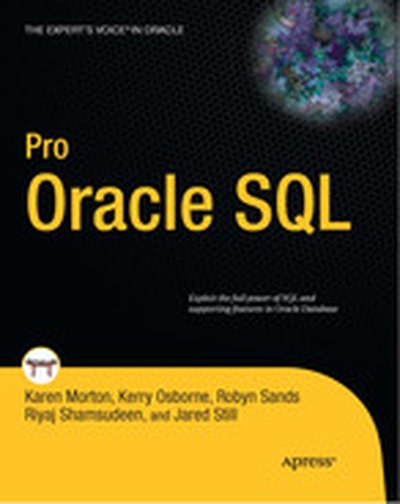
Pro Oracle SQL

Pro Oracle SQL unlocks the power of SQL in the Oracle Database—one of the most potent SQL implementations on the market today. To master it requires a three-pronged approach: learn the language features, learn the supporting features that Oracle provides to help use the language effectively, and learn to think and work in sets. Karen Morton and her team help you master powerful aspects of Oracle SQL not found in competing databases. You'll learn analytic functions, the MODEL clause, and advanced grouping syntax—techniques that will help in creating good queries for reporting and business intelligence applications. Pro Oracle SQL also helps you minimize parsing overhead, read execution plans, test for correct results, and exert control over SQL execution in your database. You'll learn when to create indexes, how to verify that they make a difference, how to use SQL Profiles to optimize SQL in packaged applications, and much more. You'll also understand how SQL is optimized for working in sets, and that the key to getting accurate results lies in making sure that queries ask clear and precise questions. What's the bottom-line? Pro Oracle SQL helps you work at a truly professional level in Oracle dialect of SQL. You'll master the language, the tools to work effectively with the language, and the right way to think about a problem in SQL. Pro Oracle SQL helps you rise above the crowd to provide stellar service in your chosen profession. Endorsed by the OakTable Network, a group of Oracle technologists well-known for their rigorous and scientific approach to Oracle Database performance Comprehensive - goes beyond the language with a focus on what you need to know to write successful queries and data manipulation statements.

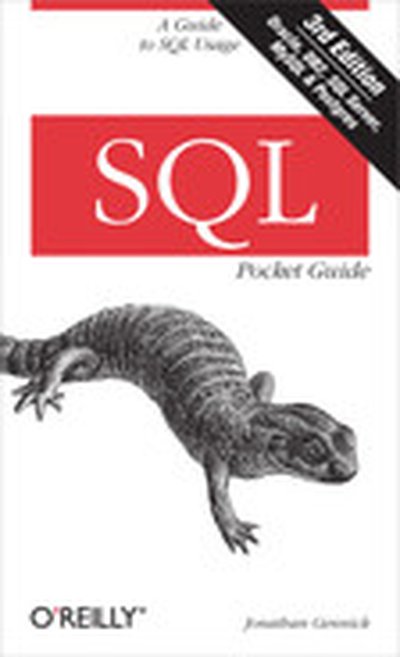
SQL Pocket Guide, 3rd Edition

If you're a programmer or database administrator who uses SQL in your day-to-day work, this popular pocket guide is the ideal on-the-job reference. You'll find many examples that address the language's complexity, along with key aspects of SQL used in IBM DB2 Release 9.7, MySQL 5.1, Oracle Database 11g Release 2, PostgreSQL 9.0, and Microsoft SQL Server 2008 Release 2. SQL Pocket Guide describes how these database systems implement SQL syntax for querying, managing transactions, and making changes to data. It also shows how the systems use SQL functions, regular expression syntax, and type conversion functions and formats. All example SQL statements in this book execute against a set of tables, with data that you can quickly download. The third edition covers important database changes, including: Oracle's support of the recursive WITH syntax, and addition of PIVOT and UNPIVOT operators Functions new to Oracle, such as LISTAGG, NTH_VALUE, and more PostgreSQL’s support of recursive WITH and some window functions DB2 syntax and datatypes, some compatible with Oracle MySQL features such as the TIMESTAMP type and the TO_SECONDS function

Oracle CRM On Demand Combined Analyses

Master the Combined Analysis Tools in Oracle CRM on Demand Drive better decision-making across your enterprise using the reporting and analysis techniques in this Oracle Press guide. Through clear explanations and detailed case studies, Oracle CRM on Demand Combined Analyses shows you how to deliver real-time insightful business intelligence to end users. Learn how to perform multiple queries, join tables, format result columns, and add interactivity to your reports. Methods for filtering the results of a combined analysis are also covered in this practical resource. Create, edit, and join reports with set operators in Oracle Answers On Demand Configure roles and privileges to allow access to development tools Use negative reporting methods to compensate for null data Analyze records from the transactional databases and data warehouse in federated reports Add advanced views such as gauges, view selectors, funnel charts, and narrative views to your combined reports Integrate ad hoc analysis using Oracle Answers on Demand Consolidate information from disparate sources with pivot tables Perform calculations across multiple reports using result columns

Practical Guide to using SQL in Oracle

Structured Query Language has become the standard for generating, manipulating, and retrieving database information. The dramatic increase in the popularity of relational databases, coupled with Oracle’s having the largest market share, has created a demand for programmers who can write SQL code correctly and efficiently.

This book provides a systematic approach to learning SQL in Oracle. Each chapter is written in a step-by-step manner and includes examples that can be run using Oracle. Using the sample tables and data provided, readers will be able to perform the examples to gain hands-on experience with Oracle programming.

Gain an understanding of basic SQL principles. Learn to generate, store, and edit SQL queries in Oracle. Develop joins, subqueries, and correlated subqueries. Work with XML and Oracle databases. Test your SQL knowledge with the exercises at the end of each chapter!

Oracle Database Administration for Microsoft SQL Server DBAs

Apply Your SQL Server DBA Skills to Oracle Database Administration Use your SQL Server experience to set up and maintain a high-performance Oracle Database environment. Written by a DBA with expertise in both platforms, Oracle Database Administration for Microsoft SQL Server DBAs illustrates each technique with clear explanations, examples, and comparison tables. Get full details on Oracle Database intervals, creation assistants, management techniques, and query tools. High availability, disaster recovery, and security procedures are also extensively covered in this comprehensive Oracle Press guide. Install and configure Oracle Database on Windows or Linux systems Administer and monitor databases from Oracle Enterprise Manager Implement robust security using roles, permissions, and privileges Back up and restore databases with Oracle Recovery Manager Use the Oracle cost-based optimizer to tune performance Write, debug, and execute PL/SQL queries using Oracle SQL Developer Maximize availability with Oracle Real Application Clusters Build standby and failover servers using Oracle Data Guard

Pro Oracle Database 11g RAC on Linux

Pro Oracle Database 11g RAC on Linux provides full-life-cycle guidance on implementing Oracle Real Application Clusters in a Linux environment. Real Application Clusters, commonly abbreviated as RAC, is Oracle's industry-leading architecture for scalable and fault-tolerant databases. RAC allows you to scale up and down by simply adding and subtracting inexpensive Linux servers. Redundancy provided by those multiple, inexpensive servers is the basis for the failover and other fault-tolerance features that RAC provides. Written by authors well-known for their talent with RAC, Pro Oracle Database 11g RAC on Linux gives you a rock-solid and technically flawless foundation on which to build your RAC-management skills. Authors Julian Dyke and Steve Shaw share their hard-won experience in building RAC clusters, showing you how to build for success using the very latest Oracle technologies, such as Automatic Storage Management (ASM) and Oracle Clusterware. You'll learn to troubleshoot performance and other problems. You'll even learn how to correctly deploy RAC in a virtual-machine environment based upon Oracle VM, which is the only virtualization solution supported by Oracle Corporation. RAC is a complex and powerful technology. It demands expertise in its deployment. You can't just "wing it" in creating a RAC solution. Julian and Steve have earned the right to term themselves expert—in Pro Oracle Database 11g RAC on Linux, they offer a rigorous and technically-correct treatment of RAC that helps you build a solid foundation of expertise and achieve success. Rigorous and technically accurate content Complete coverage of RAC, from planning to implementation to rollout to ongoing maintenance and troubleshooting Up-to-date with the very latest RAC features

The Business Analyst's Guide to Oracle Hyperion Interactive Reporting 11

The Business Analyst's Guide to Oracle Hyperion Interactive Reporting 11 is your go-to resource for mastering this powerful Oracle business intelligence tool. Within these pages, you'll explore the Interactive Reporting Web Client software to its fullest potential, learning how to gather, analyze, and visually present data effectively. What this Book will help me do Navigate through the Oracle Hyperion interface and utilize key functionalities with confidence. Develop and optimize data models and queries to extract meaningful insights. Integrate external data and analyze results using advanced SQL capabilities. Create compelling dashboards and customize interactive visualizations for impactful presentations. Build highly detailed and professional-quality reports that address complex analytical needs. Author(s) Edward Cody is a seasoned data analysis expert with years of hands-on experience teaching and working with Oracle Hyperion products. His pragmatic approach to reporting challenges is evident in his professional achievements and consulting projects. Edward enjoys sharing his expertise to empower others to harness the potential of cutting-edge data tools. Who is it for? This book is ideal for business analysts, data professionals, and enterprise users aiming to master Oracle Hyperion Interactive Reporting 11. Whether you are new to the software or looking to deepen your expertise, it provides incremental learning for progressively building skills that turn data into strategic decisions.

Quick Start Guide to Oracle Fusion Development

Get Started with Oracle Fusion Development Written by a Group Product Manager at Oracle, this Oracle Press guide gets you up and running quickly with your first Oracle Fusion applications. Quick Start Guide to Oracle Fusion Development provides only the essential information you need to build applications in a matter of hours. Rapidly learn the building blocks and functionality you’ll use most of the time. The progression of topics closely matches the application building process, taking you through a typical developer scenario from start to completion. Quick Start Guide to Oracle Fusion Development features Concise and friendly format providing the essentials needed to start building applications right away Chapters that build on each other to illustrate a typical development scenario from start to finish Unique author insights gained from hours of one-on-one meetings with customers and work in Oracle’s usability labs The perfect entry point to Oracle Fusion development Introduction to Fusion and the Fusion Technologies; Introduction to JDeveloper and Oracle ADF; Finding your Way Around JDeveloper; Building Business Services; Introducing ADF Business Components; The Role of the Entity; A View of your Data – The View Object; The Application Module; Implementing Business Service Validation; More View Object Features; Building the User Interface; Introducing ADF Face Rich Client; ADF Model; Building Typical ADF Pages; Building Application Flow; Menus, Toolbars and Buttons; Advanced UI Techniques; Data Visualization and Other Rich UI Components; Application Look and Feel; Common Coding Patterns; Common Business Service Coding Examples; Common View Coding Examples

Oracle CRM On Demand Dashboards

Design and Deliver Oracle CRM On Demand Dashboards Create custom, interactive dashboards to deliver actionable business intelligence directly to end users with help from this Oracle Press guide. Oracle CRM On Demand Dashboards provides comprehensive coverage of the versatile features available in Oracle Answers On Demand coupled with detailed planning and design strategies for building and deploying reports and dashboards with Oracle CRM On Demand. Real-world examples and time-saving formatting tips are included throughout this practical resource. Configure administrative settings to access report and dashboard development tools Take advantage of built-in dashboards Plan dashboards and reports based on business needs Create, edit, manage, save, and delete custom dashboards Configure dashboard properties and pages Add and configure dashboard objects, such as guided navigation, links, images, and folders Display and arrange reports on dashboards Develop dashboard filter prompts Deploy dashboards to Oracle CRM On Demand end users

Using SQLite

Application developers, take note: databases aren't just for the IS group any more. You can build database-backed applications for the desktop, Web, embedded systems, or operating systems without linking to heavy-duty client-server databases such as Oracle and MySQL. This book shows you how to use SQLite, a small and lightweight relational database engine that you can build directly into your application. With SQLite, you'll discover how to develop a database-backed application that remains manageable in size and complexity. This book guides you every step of the way. You'll get a crash course in data modeling, become familiar with SQLite's dialect of the SQL database language, and much more. Learn how to maintain localized storage in a single file that requires no configuration Build your own SQLite library or use a precompiled distribution in your application Get a primer on SQL, and learn how to use several language functions and extensions Work with SQLite using a scripting language or a C-based language such as C# or Objective-C Understand the basics of database design, and learn how to transfer what you already know to SQLite Take advantage of virtual tables and modules "Complex SQL concepts explained clearly." --D. Richard Hipp, creator of SQLite

Physical Database Design

The rapidly increasing volume of information contained in relational databases places a strain on databases, performance, and maintainability: DBAs are under greater pressure than ever to optimize database structure for system performance and administration. Physical Database Design discusses the concept of how physical structures of databases affect performance, including specific examples, guidelines, and best and worst practices for a variety of DBMSs and configurations. Something as simple as improving the table index design has a profound impact on performance. Every form of relational database, such as Online Transaction Processing (OLTP), Enterprise Resource Management (ERP), Data Mining (DM), or Management Resource Planning (MRP), can be improved using the methods provided in the book. The first complete treatment on physical database design, written by the authors of the seminal, Database Modeling and Design: Logical Design, Fourth Edition Includes an introduction to the major concepts of physical database design as well as detailed examples, using methodologies and tools most popular for relational databases today: Oracle, DB2 (IBM), and SQL Server (Microsoft) Focuses on physical database design for exploiting B+tree indexing, clustered indexes, multidimensional clustering (MDC), range partitioning, shared nothing partitioning, shared disk data placement, materialized views, bitmap indexes, automated design tools, and more!

Expert Oracle Database Architecture: Oracle Database 9

Now in its second edition, this best-selling book by Tom Kyte of Ask Tom fame continues to bring you some of the best thinking on how to apply Oracle Database to produce scalable applications that perform well and deliver correct results. Tom has a simple philosophy: you can treat Oracle as a black box and just stick data into it or you can understand how it works and exploit it as a powerful computing environment. If you choose the latter, then you'll find that there are few information management problems that you cannot solve quickly and elegantly. This fully revised second edition covers the latest developments in Oracle Database 11g. Each feature is taught in a proof-by-example manner, not only discussing what it is, but also how it works, how to implement software using it, and the common pitfalls associated with it. Don't treat Oracle Database as a black-box. Get this book. Get under the hood. Turbo-charge your career. Fully-revised to cover Oracle Database 11g Proof-by-example approach: Let the evidence be your guide Dives deeply into Oracle Databases's most powerful features

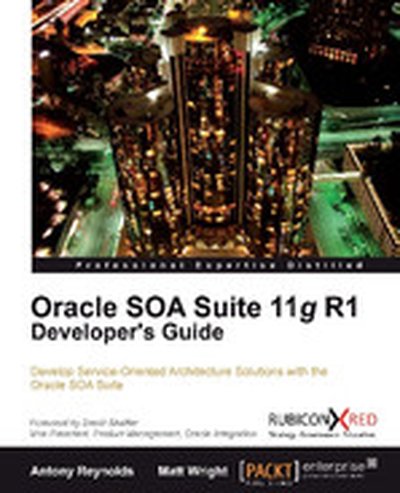
Oracle SOA Suite 11g R1 Developer's Guide

This book provides a detailed guide to developing Service-Oriented Architecture (SOA) solutions using Oracle SOA Suite 11g R1. You'll learn how to implement real-world SOA applications with the suite's various tools and technologies. The tutorials and practical examples ensure that you'll acquire the hands-on skills you need to succeed. What this Book will help me do Learn to use the Oracle Service Bus for building seamless service integrations. Master the BPEL Process Manager to design advanced business workflows. Understand the comprehensive functionalities of the Mediator and Rules Editor. Gain insights on deploying and securing SOA composites effectively. Develop skills in leveraging the Metadata Repository for reusable resources. Author(s) The authors are experts with years of practical experience in SOA architecture and Oracle's suite of tools. They bring their professional expertise and teaching acumen to foster a deep understanding of the subject. Their goal is to translate technical concepts into accessible and actionable insights, making it manageable for developers and architects alike. Who is it for? This book is tailored for developers and architects with foundational knowledge of SOA concepts, including web services and XML technologies. It's for professionals aiming to deepen their expertise in SOA implementation using Oracle's ecosystem. If you're looking to tackle real-world challenges in enterprise integration, this resource is for you.

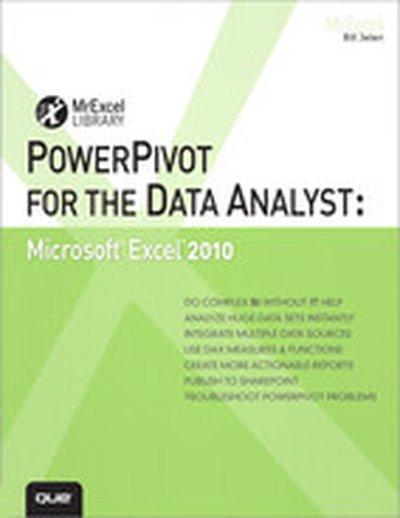
PowerPivot for the Data Analyst: Microsoft® Excel 2010

ANALYZE HUGE AMOUNTS OF BUSINESS DATA FASTER, MORE EASILY, AND MORE ACCURATELY! Use Microsoft’s free PowerPivot add-in for Excel 2010 to analyze immense amounts of data from any source, perform state-of-the-art business analysis far more easily, and make better decisions in less time! Simple, step-by-step instructions walk you through installing PowerPivot, importing data, using PivotTables with PowerPivot, using super-powerful DAX functions and measures, reporting to print or SharePoint, and a whole lot more. Whatever your Excel data analysis experience, this book will help you use PowerPivot to get the right answers, right now—without IT’s help! • Import and integrate data from spreadsheets, SQL Server, Access, Oracle, text files, Atom data feeds, and other sources • Analyze multiple tables together, without complicated VLOOKUPs • Format, sort, and filter data in the PowerPivot window • Add calculated columns using new DAX functions • Create powerful reports from PowerPivot data–and format them so executives instantly get your point • Discover PivotTable tricks that work even better in PowerPivot • Control multiple PivotTable elements on one worksheet, with one set of Excel 2010 Slicers • Use DAX Measures to quickly perform tasks that were difficult or impossible with Calculated Fields • Compare today’s sales to yesterday’s–or to sales from the parallel period last fiscal year. • Use Named Sets to prepare asymmetric reports, show actuals for past months and plan for future months. About MrExcel Library: Every book in the MrExcel Library pinpoints a specific set of crucial Excel tasks and presents focused skills and examples for performing them rapidly and effectively. Selected by Bill Jelen, Microsoft Excel MVP and mastermind behind the leading Excel solutions website MrExcel.com, these books will • Dramatically increase your productivity–saving you 50 hours a year, or more • Present proven, creative strategies for solving real-world problems • Show you how to get great results, no matter how much data you have • Help you avoid critical mistakes that even experienced users make

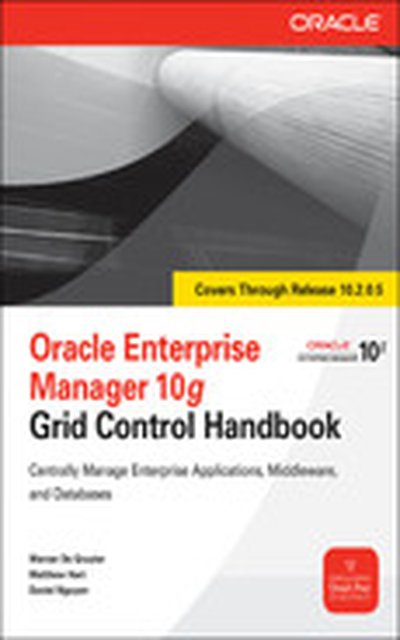
Oracle Enterprise Manager 10g Grid Control Handbook

Master Oracle Enterprise Manager 10 g Grid Control Centralize and simplify enterprise infrastructure administration using the detailed information contained in this Oracle Press guide. Oracle Enterprise Manager 10g Control Handbook shows you how to implement a grid-based management system and maintain on-demand access to critical services. Develop rollout plans, configure hardware and software, deploy targets and agents, control access, and distribute business reports. This authoritative resource also explains how to generate reliable backups, implement top-down performance monitoring, and maximize system availability. Plan and carry out an Oracle Enterprise Manager 10 g Grid Control rollout Set up customized metrics, alerts, thresholds, targets, and agents Manage IT resources from a centralized control console or the command line Manage your infrastructure using secure protocols Automate administrative tasks with Oracle's management agent Distribute business intelligence using the reporting and dashboard features Work with Oracle Enterprise Manager Database Control and Oracle Real Application Clusters Build physical and logical standby databases using Oracle Data Guard

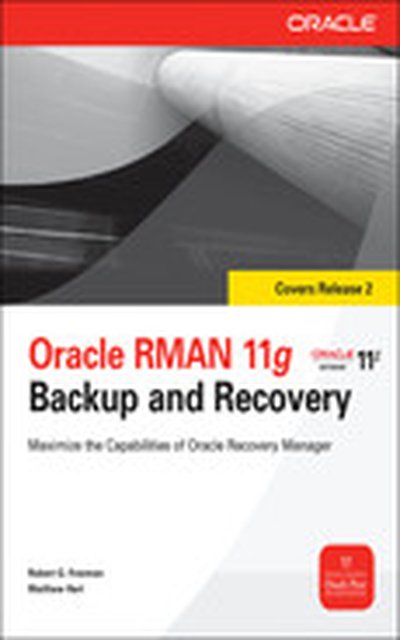
Oracle RMAN 11g Backup and Recovery

Master Oracle Recovery Master Protect your databases from hardware, software, and operator failures using the detailed information in this Oracle Press guide. Oracle RMAN 11g Backup and Recovery explains how to configure databases, generate accurate archives, and carry out system restores. Work from the command line or Oracle Enterprise Manager, automate the backup process, perform Oracle Flashback recoveries, and integrate cloud computing technology. This authoritative resource also shows you how to create reports, optimize performance, and implement third-party administration utilities. Set up, configure, and maintain Oracle Recovery Manager (Oracle RMAN) Manage physical and virtual media with Oracle Secure Backup Work with Oracle RMAN catalogs, packages, and control files Use the Amazon Web Services cloud as an offsite storage solution Create online, offline, and incremental system backups Perform full and partial Oracle RMAN database restores Correct user-induced errors with Oracle Flashback Product clone and standby databases on local or remote servers Use Oracle Real Application Clusters and synch and split technology For a complete list of Oracle Press titles, visit www.OraclePressBooks.com

Oracle Self-Service Applications

Maximize the Capabilities of Oracle Self-Service Applications Get complete coverage of Oracle E-Business Suite's self-service modules, including Oracle iProcurement, Oracle Internet Expenses, Oracle iSupplier Portal, and Oracle iReceivables, inside this Oracle Press guide. Oracle Self-Service Applications discusses the features of each module and how they benefit organizational workflow, and reviews common implementation considerations that apply to all the applications. The book also provides detailed configuration instructions explaining each screen and field. Learn how to set up and use: Oracle iProcurement for automating both the requesting and approval of requisitions Oracle Internet Expenses for streamlining the entry, approval, and auditing of expense reports, including credit card processing Oracle iSupplier Portal to allow secure supplier collaboration Oracle iReceivables to enable customers and employees to review account information online The order management portal for granting inquiry-only viewing and tracking of orders and delivery status Oracle Bill Presentment Architecture for customizing invoices Oracle Approvals Management to accommodate complex rules for approving transactions Oracle Application Framework to customize both the options and usability of the self-service applications