 talk-data.com
Topic
Cyber Security
2078
tagged
Activity Trend
Top Events
Threat mitigation strategies
What are the risks to your organization's data? What are some considerations when thinking about data security? How susceptible are companies to hacking and malware? Jonathan Bloch, CEO of Exchange Data, joins us on this podcast episode of Data Unchained to discuss these topics and everything data security. Tune in and enjoy! To find our more about Jonathan's company, Exchange Data, check out his website: https://www.exchange-data.com/ You contact Jonathan's team by reaching out via email at: [email protected]
cybersecurity #podcast #ai #edgecomputing #data #innovation #edgetocloud #datascience #crypto #datastorage #datacloudtechnology #global #hacking #hacker #hack #malware
Cyberpunk by jiglr | https://soundcloud.com/jiglrmusic Music promoted by https://www.free-stock-music.com Creative Commons Attribution 3.0 Unported License https://creativecommons.org/licenses/by/3.0/deed.en_US Hosted on Acast. See acast.com/privacy for more information.
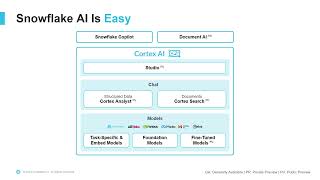
Ready to level up your data pipelines with AI and ML? In this session, we'll dive into key Snowflake AI and ML features and teach you how to easily integrate them into dbt pipelines. You'll explore real-world machine learning and generative AI use cases, and see how dbt and Snowflake together deliver powerful, secure results within Snowflake’s governance and security framework. Plus, discover how data scientists, engineers, and analysts can collaborate seamlessly using these tools. Whether you're scaling ML models or embedding AI into your existing workflows, this session will give you practical strategies for building secure, AI-powered data pipelines with dbt and Snowflake.
Speaker: Randy Pettus Senior Partner Sales Engineer Snowflake
Read the blog to learn about the latest dbt Cloud features announced at Coalesce, designed to help organizations embrace analytics best practices at scale https://www.getdbt.com/blog/coalesce-2024-product-announcements

Join us as we share our journey of migrating from dbt Core to dbt Cloud. We'll discuss why we made this shift – focusing on security, ownership, and standardization. Starting with separate team-based projects on dbt Core, we moved towards a unified structure, and eventually embraced dbt Cloud. Now, all teams follow a common structure and standardized requirements, ensuring better security and collaboration.
In our session, we'll explore how we improved our data analytics processes by migrating from dbt Core to dbt Cloud. Initially, each team had its way of working on dbt Core, leading to security risks and inconsistent practices. To address this, we transitioned to a more unified approach on dbt Core. This year we migrated dbt Cloud, which allowed us to centralize our data analytics workflows, enhancing security and promoting collaboration.
For scheduling we manage our own Airflow instance using AWS EKS. We use Datahub as data catalog.
Key points: Enhanced Security: dbt Cloud provided robust security features, helping us safeguard our data pipelines. Ownership and Collaboration: With dbt Cloud, teams took ownership of their projects while collaborating more effectively. Standardization: We enforced standardized requirements across all projects, ensuring consistency and efficiency, using dbt-project-evaluator.
Speakers: Alejandro Ivanez Platform Engineer DPG Media
Mathias Lavaert Principal Platform Engineer DPG Media
Read the blog to learn about the latest dbt Cloud features announced at Coalesce, designed to help organizations embrace analytics best practices at scale https://www.getdbt.com/blog/coalesce-2024-product-announcements
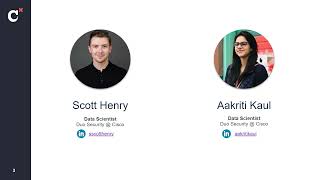
In today's data-driven world, harnessing the power of data is no longer an option but a necessity for businesses to thrive. For product engineering teams in particular, timely access to accurate and contextual data is crucial for making informed decisions and monitoring success. In this conversation, Aakriti Kaul and Scott Henry, Data Scientists at Cisco, dive into Duo Security’s data modernization journey, bolstered by dbt Cloud and embedded context in data, aimed at empowering product teams with data access and insights to drive innovation.
At the end of this session we hope to leave attendees with the following takeaways: • Understand how an Embedded Data science model creates value across Product, Engineering and Data teams • Learn practical strategies for implementing dbt within product development workflows to accelerate decision making and drive innovation, in partnership with Analytics Engineering teams • Gain insights from real-world case studies of Duo’s Product Data teams that have successfully leveraged dbt to provide access to data and insights for product teams • Gain insights from our organizational experience using dbt to provide product teams with self-service access to contextual datasets
The presentation is designed for data scientists, analytics engineers and other professionals involved in product development who are interested in leveraging data to drive decision making and embedding context within their data workflows. Whether you're new to dbt or looking to optimize your existing data analytics workflows, this session will provide valuable insights and practical strategies for harnessing the power of dbt in partnership with product engineering teams.
Speakers: Aakriti Kaul Data Scientist Duo Security @ Cisco
Scott Henry Data Scientist Duo Security @ Cisco
Read the blog to learn about the latest dbt Cloud features announced at Coalesce, designed to help organizations embrace analytics best practices at scale https://www.getdbt.com/blog/coalesce-2024-product-announcements
Key highlights from the recent API Summit; Discussions on major trends and insights, including advancements in API security, management and new technologies
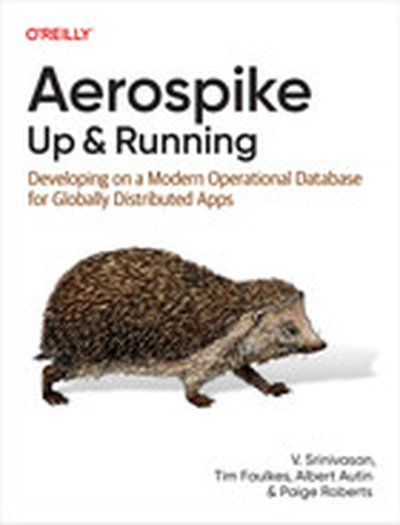
If you're a developer looking to build a distributed, resilient, scalable, high-performance application, you may be evaluating distributed SQL and NoSQL solutions. Perhaps you're considering the Aerospike database. This practical book shows developers, architects, and engineers how to get the highly scalable and extremely low-latency Aerospike database up and running. You will learn how to power your globally distributed applications and take advantage of Aerospike's hybrid memory architecture with the real-time performance of in-memory plus dependable persistence. After reading this book, you'll be able to build applications that can process up to tens of millions of transactions per second for millions of concurrent users on any scale of data. This practical guide provides: Step-by-step instructions on installing and connecting to Aerospike A clear explanation of the programming models available All the advice you need to develop your Aerospike application Coverage of issues such as administration, connectors, consistency, and security Code examples and tutorials to get you up and running quickly And more
This book is your comprehensive guide to building robust Generative AI solutions using the Databricks Data Intelligence Platform. Databricks is the fastest-growing data platform offering unified analytics and AI capabilities within a single governance framework, enabling organizations to streamline their data processing workflows, from ingestion to visualization. Additionally, Databricks provides features to train a high-quality large language model (LLM), whether you are looking for Retrieval-Augmented Generation (RAG) or fine-tuning. Databricks offers a scalable and efficient solution for processing large volumes of both structured and unstructured data, facilitating advanced analytics, machine learning, and real-time processing. In today's GenAI world, Databricks plays a crucial role in empowering organizations to extract value from their data effectively, driving innovation and gaining a competitive edge in the digital age. This book will not only help you master the Data Intelligence Platform but also help power your enterprise to the next level with a bespoke LLM unique to your organization. Beginning with foundational principles, the book starts with a platform overview and explores features and best practices for ingestion, transformation, and storage with Delta Lake. Advanced topics include leveraging Databricks SQL for querying and visualizing large datasets, ensuring data governance and security with Unity Catalog, and deploying machine learning and LLMs using Databricks MLflow for GenAI. Through practical examples, insights, and best practices, this book equips solution architects and data engineers with the knowledge to design and implement scalable data solutions, making it an indispensable resource for modern enterprises. Whether you are new to Databricks and trying to learn a new platform, a seasoned practitioner building data pipelines, data science models, or GenAI applications, or even an executive who wants to communicate the value of Databricks to customers, this book is for you. With its extensive feature and best practice deep dives, it also serves as an excellent reference guide if you are preparing for Databricks certification exams. What You Will Learn Foundational principles of Lakehouse architecture Key features including Unity Catalog, Databricks SQL (DBSQL), and Delta Live Tables Databricks Intelligence Platform and key functionalities Building and deploying GenAI Applications from data ingestion to model serving Databricks pricing, platform security, DBRX, and many more topics Who This Book Is For Solution architects, data engineers, data scientists, Databricks practitioners, and anyone who wants to deploy their Gen AI solutions with the Data Intelligence Platform. This is also a handbook for senior execs who need to communicate the value of Databricks to customers. People who are new to the Databricks Platform and want comprehensive insights will find the book accessible.
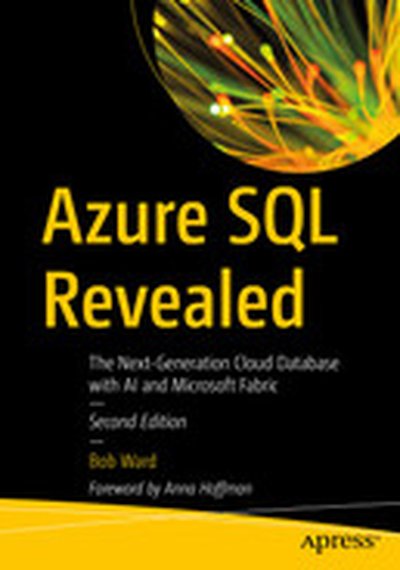
Access detailed content and examples on Azure SQL, a set of cloud services that allows for SQL Server to be deployed in the cloud. This book teaches the fundamentals of deployment, configuration, security, performance, and availability of Azure SQL from the perspective of these same tasks and capabilities in SQL Server. This distinct approach makes this book an ideal learning platform for readers familiar with SQL Server on-premises who want to migrate their skills toward providing cloud solutions to an enterprise market that is increasingly cloud-focused. If you know SQL Server, you will love this book. You will be able to take your existing knowledge of SQL Server and translate that knowledge into the world of cloud services from the Microsoft Azure platform, and in particular into Azure SQL. This book provides information never seen before about the history and architecture of Azure SQL. Author Bob Ward is a leading expert with access to and support from the Microsoft engineering team that built Azure SQL and related database cloud services. He presents powerful, behind-the-scenes insights into the workings of one of the most popular database cloud services in the industry. This book also brings you the latest innovations for Azure SQL including Azure Arc, Hyperscale, generative AI applications, Microsoft Copilots, and integration with the Microsoft Fabric. What You Will Learn Know the history of Azure SQL Deploy, configure, and connect to Azure SQL Choose the correct way to deploy SQL Server in Azure Migrate existing SQL Server instances to Azure SQL Monitor and tune Azure SQL’s performance to meet your needs Ensure your data and application are highly available Secure your data from attack and theft Learn the latest innovations for Azure SQL including Hyperscale Learn how to harness the power of AI for generative data-driven applications and Microsoft Copilots for assistance Learn how to integrate Azure SQL with the unified data platform, the Microsoft Fabric Who This Book Is For This book is designed to teach SQL Server in the Azure cloud to the SQL Server professional. Anyone who operates, manages, or develops applications for SQL Server will benefit from this book. Readers will be able to translate their current knowledge of SQL Server—especially of SQL Server 2019 and 2022—directly to Azure. This book is ideal for database professionals looking to remain relevant as their customer base moves into the cloud.
The Data Product Management In Action podcast, brought to you by Soda and executive producer Scott Hirleman, is a platform for data product management practitioners to share insights and experiences. In Season 01, Episode 19, host Nadiem von Heydebrand interviews Pradeep Fernando, who leads the data and metadata management initiative at Swisscom. They explore key topics in data product management, including the definition and categorization of data products, the role of AI, prioritization strategies, and the application of product management principles. Pradeep shares valuable insights and experiences on successfully implementing data product management within organizations. About our host Nadiem von Heydebrand: Nadiem is the CEO and Co-Founder of Mindfuel. In 2019, he merged his passion for data science with product management, becoming a thought leader in data product management. Nadiem is dedicated to demonstrating the true value contribution of data. With over a decade of experience in the data industry, Nadiem leverages his expertise to scale data platforms, implement data mesh concepts, and transform AI performance into business performance, delighting consumers at global organizations that include Volkswagen, Munich Re, Allianz, Red Bull, and Vorwerk. Connect with Nadiem on LinkedIn. About our guest Pradeep Fernando: Pradeep is a seasoned data product leader with over 6 years of data product leadership experience and over 10 years of product management experience. He leads or is a key contributor to several company-wide data & analytics initiatives at Swisscom such as Data as a Product (Data Mesh), One Data Platform, Machine Learning (Factory), MetaData management, Self-service data & analytics, BI Tooling Strategy, Cloud Transformation, Big Data platforms,and Data warehousing. Previously, he was a product manager at both Swisscom's B2B and Innovation units both building new products and optimizing mature products (profitability) in the domains of enterprise mobile fleet management, cyber-and mobile device security.Pradeep is also passionate about and experienced in leading the development of data products and transforming IT delivery teams into empowered, agile product teams. And, he is always happy to engage in a conversation about lean product management or "heavier" topics such as humanity's future or our past. Connect with Pradeep on LinkedIn. All views and opinions expressed are those of the individuals and do not necessarily reflect their employers or anyone else. Join the conversation on LinkedIn. Apply to be a guest or nominate someone that you know. Do you love what you're listening to? Please rate and review the podcast, and share it with fellow practitioners you know. Your support helps us reach more listeners and continue providing valuable insights!
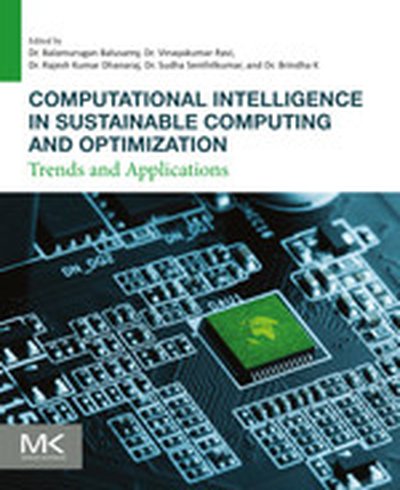
Computational Intelligence in Sustainable Computing and Optimization: Trends and Applications focuses on developing and evolving advanced computational intelligence algorithms for the analysis of data involved in applications, such as agriculture, biomedical systems, bioinformatics, business intelligence, economics, disaster management, e-learning, education management, financial management, and environmental policies. The book presents research in sustainable computing and optimization, combining methods from engineering, mathematics, artificial intelligence, and computer science to optimize environmental resources Computational intelligence in the field of sustainable computing combines computer science and engineering in applications ranging from Internet of Things (IoT), information security systems, smart storage, cloud computing, intelligent transport management, cognitive and bio-inspired computing, and management science. In addition, data intelligence techniques play a critical role in sustainable computing. Recent advances in data management, data modeling, data analysis, and artificial intelligence are finding applications in energy networks and thus making our environment more sustainable. Presents computational, intelligence–based data analysis for sustainable computing applications such as pattern recognition, biomedical imaging, sustainable cities, sustainable transport, sustainable agriculture, and sustainable financial management Develops research in sustainable computing and optimization, combining methods from engineering, mathematics, and computer science to optimize environmental resources Includes three foundational chapters dedicated to providing an overview of computational intelligence and optimization techniques and their applications for sustainable computing
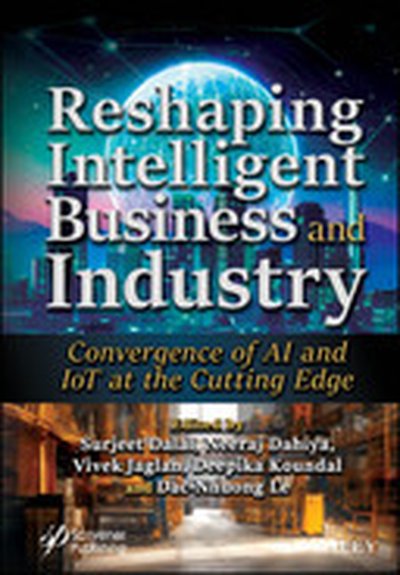
The convergence of Artif icial Intelligence (AI) and Internet of Things (IoT) is reshaping the way industries, businesses, and economies function; the 34 chapters in this collection show how the full potential of these technologies is being enabled to create intelligent machines that simulate smart behavior and support decision-making with little or no human interference, thereby providing startling organizational efficiencies. Readers will discover that in Reshaping Intelligent Business and Industry: The book unpacks the two superpowers of innovation, AI and IoT, and explains how they connect to better communicate and exchange information about online activities; How the center and the network's edge generate predictive analytics or anomaly alerts; The meaning of AI at the edge and IoT networks. How bandwidth is reduced and privacy and security are enhanced; How AI applications increase operating efficiency, spawn new products and services, and enhance risk management; How AI and IoT create 'intelligent' devices and how new AI technology enables IoT to reach its full potential; Analyzes AIOT platforms and the handling of personal information for shared frameworks that remain sensitive to customers’ privacy while effectively utilizing data. Audience This book will appeal to all business and organization leaders, entrepreneurs, policymakers, and economists, as well as scientists, engineers, and students working in artificial intelligence, software engineering, and information technology.
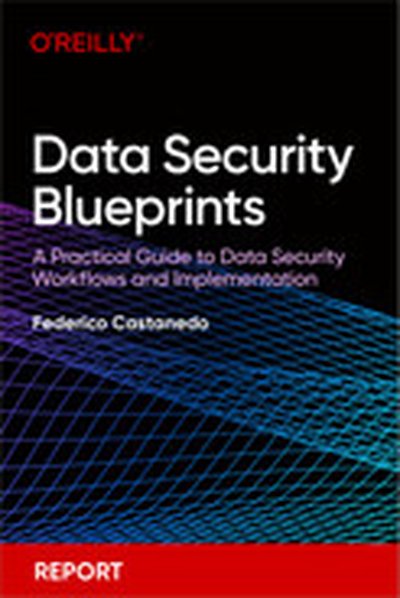
Once you decide to implement a data security strategy, it can be difficult to know where to start. With so many potential threats and challenges to resolve, teams often try to fix everything at once. But this boil-the-ocean approach is difficult to manage efficiently and ultimately leads to frustration, confusion, and halted progress. There's a better way to go. In this report, data science and AI leader Federico Castanedo shows you what to look for in a data security platform that will deliver the speed, scale, and agility you need to be successful in today's fast-paced, distributed data ecosystems. Unlike other resources that focus solely on data security concepts, this guide provides a road map for putting those concepts into practice. This report reveals: The most common data security use cases and their potential challenges What to look for in a data security solution that's built for speed and scale Why increasingly decentralized data architectures require centralized, dynamic data security mechanisms How to implement the steps required to put common use cases into production Methods for assessing risks—and controls necessary to mitigate those risks How to facilitate cross-functional collaboration to put data security into practice in a scalable, efficient way You'll examine the most common data security use cases that global enterprises across every industry aim to achieve, including the specific steps needed for implementation as well as the potential obstacles these use cases present. Federico Castanedo is a data science and AI leader with extensive experience in academia, industry, and startups. Having held leadership positions at DataRobot and Vodafone, he has a successful track record of leading high-performing data science teams and developing data science and AI products with business impact.
Keep your Mac, iPhone, and iPad safe! Version 1.1.1, published September 28, 2025 Secure your Mac, iPhone, or iPad against attacks from the internet, physical intrusion, and more with the greatest of ease. Glenn Fleishman guides you through protecting yourself from phishing, email, and other exploits, as well as network-based invasive behavior. Learn about built-in privacy settings, the Secure Enclave, FileVault, hardware encryption keys, sandboxing, privacy settings, Advanced Data Protection, Lockdown Mode, resetting your password when all hope seems lost, and much more. The digital world is riddled with danger, even as Apple has done a fairly remarkable job at keeping our Macs, iPhones, and iPads safe. But the best security strategy is staying abreast of past risks and anticipating future ones. This book gives you all the insight and directions you need to ensure your Apple devices and their data are safe. It's up to date with macOS 26 Tahoe, iOS 26, and iPadOS 26. You’ll learn about the enhanced Advanced Data Protection option for iCloud services, allowing you to keep all your private data inaccessible not just to thieves and unwarranted government intrusion, but even to Apple! Also get the rundown on Lockdown Mode to deter direct network and phishing attacks, passkeys and hardware secure keys for the highest level of security for Apple Account and website logins, and Mac-specific features such as encrypted startup volumes and FileVault’s login protection process. Security and privacy are tightly related, and this book helps you understand how macOS, iOS, and iPadOS have increasingly compartmentalized and protected your personal data, and how to allow only the apps you want to access specific folders, your contacts, and other information. Here’s what this book has to offer:
Master the privacy settings on your Mac, iPhone, and iPad Calculate your level of risk and your tolerance for it Use Apple’s Stolen Device Protection feature for iPhone that deflects thieves who extract your passcode through coercion or misdirection. Learn why you’re asked to give permission for apps to access folders and personal data on your Mac Moderate access to your audio, video, screen actions, and other hardware inputs and outputs Get to know the increasing layers of system security deployed over the past few years Prepare against a failure or error that might lock you out of your device Share files and folders securely over a network and through cloud services Upgrade your iCloud data protection to use end-to-end encryption Control other low-level security options to reduce the risk of someone gaining physical access to your Mac—or override them to install system extensions Understand FileVault encryption and protection for Mac, and avoid getting locked out Investigate the security of a virtual private network (VPN) to see whether you should use one Learn how the Secure Enclave in Macs with a T2 chip or M-series Apple silicon affords hardware-level protections Dig into ransomware, the biggest potential threat to Mac users (though rare in practice) Discover recent security and privacy technologies, such as Lockdown Mode and passkeys Learn why your iPhone may restart automatically if it's been idle for several days
The EU Commission is likely to vote on the Cyber Resilience Act (CRA) later this year. In this talk we will look at the timeline for the new legislation, any critical discussions happening around implementation and most importantly, the new responsibilities outlined by the CRA. We’ll also discuss what the PSF is doing for CPython and for PyPI and what each of us in the Python ecosystem might want to do to get ready for a new era of increased certainty – and liability – around security.
Discussion on goals, objectives, and importance of cybersecurity in today's landscape.
Kick off with insights from Michael Kophs as he shares how the Secure Future Initiative (SFI) is setting new security standards.
How is data playing a part of the future of AI security? Where is private data hidden? Where should your company start when thinking about integrating AI and Gen AI into their technologies? Thomas Ryan, Chief Executive Officer and Founder of Bigly Sales Inc. joins us on this episode to discuss the status of data privacy with the advent of AI.
data #datascience #dataanalytics #AI #artificialintelligence #security #genai #LLM #podcast #datastorage #technology #innovation
Cyberpunk by jiglr | https://soundcloud.com/jiglrmusic Music promoted by https://www.free-stock-music.com Creative Commons Attribution 3.0 Unported License https://creativecommons.org/licenses/by/3.0/deed.en_US Hosted on Acast. See acast.com/privacy for more information.