In today’s episode, we’re talking to Mariano Jurich, Project and Product Manager at Making Sense — a platform for developing game-changing software solutions. We talk about the history of Making Sense and what the company is working on today, how to recognize when a new customer is a good fit, understanding the many types of users that use your product over time, and the importance of focusing on user experience. We go on to discuss the reasons why a company with a strong product-market fit might still struggle to achieve success, how remote work could shape the future of software development, and how the software industry in Latin America specifically looks set to change. Finally, we talk about how the growth of Web3 will impact software development, lead to greater democratization, and drive a more globalized world. This episode is brought to you by Qrvey The tools you need to take action with your data, on a platform built for maximum scalability, security, and cost efficiencies. If you’re ready to reduce complexity and dramatically lower costs, contact us today at qrvey.com. Qrvey, the modern no-code analytics solution for SaaS companies on AWS.
 talk-data.com
Topic
Cyber Security
2078
tagged
Activity Trend
Top Events
Discover how to harness AWS Glue for your ETL and data analysis workflows with "Serverless ETL and Analytics with AWS Glue." This comprehensive guide introduces readers to the capabilities of AWS Glue, from building data lakes to performing advanced ETL tasks, allowing you to create efficient, secure, and scalable data pipelines with serverless technology. What this Book will help me do Understand and utilize various AWS Glue features for data lake and ETL pipeline creation. Leverage AWS Glue Studio and DataBrew for intuitive data preparation workflows. Implement effective storage optimization techniques for enhanced data analytics. Apply robust data security measures, including encryption and access control, to protect data. Integrate AWS Glue with machine learning tools like SageMaker to build intelligent models. Author(s) The authors of this book include experts across the fields of data engineering and AWS technologies. With backgrounds in data analytics, software development, and cloud architecture, they bring a depth of practical experience. Their approach combines hands-on tutorials with conceptual clarity, ensuring a blend of foundational knowledge and actionable insights. Who is it for? This book is designed for ETL developers, data engineers, and data analysts who are familiar with data management concepts and want to extend their skills into serverless cloud solutions. If you're looking to master AWS Glue for building scalable and efficient ETL pipelines or are transitioning existing systems to the cloud, this book is ideal for you.
Implement the Snowflake Data Cloud using best practices and reap the benefits of scalability and low-cost from the industry-leading, cloud-based, data warehousing platform. This book provides a detailed how-to explanation, and assumes familiarity with Snowflake core concepts and principles. It is a project-oriented book with a hands-on approach to designing, developing, and implementing your Data Cloud with security at the center. As you work through the examples, you will develop the skill, knowledge, and expertise to expand your capability by incorporating additional Snowflake features, tools, and techniques. Your Snowflake Data Cloud will be fit for purpose, extensible, and at the forefront of both Direct Share, Data Exchange, and Snowflake Marketplace. Building the Snowflake Data Cloud helps you transform your organization into monetizing the value locked up within your data. As the digital economy takes hold, with data volume, velocity, and variety growing at exponential rates, you need tools and techniques to quickly categorize, collate, summarize, and aggregate data. You also need the means to seamlessly distribute to release value. This book shows how Snowflake provides all these things and how to use them to your advantage. The book helps you succeed by delivering faster than you can deliver with legacy products and techniques. You will learn how to leverage what you already know, and what you don’t, all applied in a Snowflake Data Cloud context. After reading this book, you will discover and embrace the future where the Data Cloud is central. You will be able to position your organization to take advantage by identifying, adopting, and preparing your tooling for the coming wave of opportunity around sharing and monetizing valuable, corporate data. What You Will Learn Understand why Data Cloud is important tothe success of your organization Up-skill and adopt Snowflake, leveraging the benefits of cloud platforms Articulate the Snowflake Marketplace and identify opportunities to monetize data Identify tools and techniques to accelerate integration with Data Cloud Manage data consumption by monitoring and controlling access to datasets Develop data load and transform capabilities for use in future projects Who This Book Is For Solution architects seeking implementation patterns to integrate with a Data Cloud; data warehouse developers looking for tips, tools, and techniques to rapidly deliver data pipelines; sales managers who want to monetize their datasets and understand the opportunities that Data Cloud presents; and anyone who wishes to unlock value contained within their data silos
In today’s episode, we’re talking to Baskar Agneeswaran, CEO and Co-Founder at Vajro, a cloud-based mobile commerce platform for building high-converting mobile apps for online stores. We talk about Baskar’s and Vajro’s background, how it’s possible to build an app within 60 minutes, and how smartphones might evolve over the next 15 years. Baskar also shares the marketing and sales models used by his company. We discuss the difference between companies that have sales as a growth engine and those that have marketing as a growth engine, and how to strike a balance between these and the product itself. Baskar shares some of the lessons he’s learned scaling a company like Vajro. He also explains the different phases of growth. Finally, we talk about the importance of diversity and how to balance that with alignment around a core mission. This episode is brought to you by Qrvey The tools you need to take action with your data, on a platform built for maximum scalability, security, and cost efficiencies. If you’re ready to reduce complexity and dramatically lower costs, contact us today at qrvey.com. Qrvey, the modern no-code analytics solution for SaaS companies on AWS.
In this episode, we’re talking to Kaj van de Loo, Chief Technology Officer at UserTesting. We talk about the company’s history and the problems it solves, the way Agile development methodologies have evolved, the different types of Agile development, and the differences between B2B and B2C software. Kaj talks about some of the best ways for companies to understand users and how to analyze data like web traffic, the growing importance of personalization in user experience, the best time to add product management to a team, and more. Finally, we talk about the ideal ratio of QAs to developers and whether being a CTO makes someone a better CEO.
This episode is brought to you by Qrvey The tools you need to take action with your data, on a platform built for maximum scalability, security, and cost efficiencies. If you’re ready to reduce complexity and dramatically lower costs, contact us today at qrvey.com. Qrvey, the modern no-code analytics solution for SaaS companies on AWS.
In this episode, we’re talking to Brook Lovatt, Chief Executive Officer at Cloudentity. Cloudentity is a company that provides application and security teams with a better way to automate and control how information is shared over APIs. We talk about the problems Cloudentity solves and how it came to be, along with the options available to today’s SaaS companies when it comes to building a security authorization layer. Brook shares some of the positive impacts of facilitating data sharing. We discuss the differences between data and API, how SaaS has changed over time, the shift towards more product-oriented CEOs (and the advantages of this as a company scales), and the trend of selling software directly to developers. Finally, we look at the growing importance of being a product specialist, and what the future holds for SaaS and developers. This episode is brought to you by Qrvey The tools you need to take action with your data, on a platform built for maximum scalability, security, and cost efficiencies. If you’re ready to reduce complexity and dramatically lower costs, contact us today at qrvey.com. Qrvey, the modern no-code analytics solution for SaaS companies on AWS.
Cybersecurity is the most important arm of defense against cyberattacks. With the recent increase in cyberattacks, corporations must focus on how they are combating these new high-tech threats. When establishing best practices, a corporation must focus on employees' access to specific workspaces and information. IBM Z® focuses on allowing high processing virtual environments while maintaining a high level of security in each workspace. Organizations not only need to adjust their approach to security, but also their approach to IT environments. To meet new customer needs and expectations, organizations must take a more agile approach to their business. IBM® Z allows companies to work with hybrid and multi-cloud environments that allows more ease of use for the user and efficiency overall. Working with IBM Z, organizations can also work with many databases that are included in IBM Cloud Pak® for Data. IBM Cloud Pak for Data allows organizations to make more informed decisions with improved data usage. Along with the improved data usage, organizations can see the effects from working in a Red Hat OpenShift environment. Red Hat OpenShift is compatible across many hardware services and allows the user to run applications in the most efficient manner. The purpose of this IBM Redbooks® publication is to: Introduce IBM Z and LinuxONE platforms and how they work with the Red Hat OpenShift environment and IBMCloud Pak for Data Provide examples and the uses of IBM Z with Cloud Paks for Data that show data gravity, consistent development experience, and consolidation and business resiliency The target audience for this book is IBM Z Technical Specialists, IT Architects, and System Administrators.
This IBM® blueprint publication focuses on early threat detection within a database environment by using IBM Security Guardium® Data Protection and IBM QRadar®. It also highlights how to proactively start a cyber resilience workflow in response to a cyberattack or potential malicious user actions. The workflow that is presented here uses IBM Copy Services Manager as orchestration software to start IBM FlashSystem® Safeguarded Copy functions. The Safeguarded Copy creates an immutable copy of the data in an air-gapped form on the same IBM FlashSystem for isolation and eventual quick recovery. This document describes how to enable and forward Oracle database user activities (by using IBM Security Guardium Data Protection) and IBM FlashSystem audit logs by using IBM FlashSystem to IBM QRadar. This document also describes how to create various rules to determine a threat, and configure and launch a suitable response to the detected threat in IBM QRadar. The document also outlines the steps that are involved to create a Scheduled Task by using IBM Copy Services Manager with various actions.
In this episode, we’re talking to Ken Babcock, Co-Founder of Tango. Tango is a platform for building beautiful step-by-step how-to guides with screenshots, in seconds. Ken talks about meeting his co-founders at Harvard Business School and how the project got started, and we go on to discuss how well-defined processes and documentation can make a company much more scalable. How has the pandemic and the rise of remote work affected the need for clear instructions and documentation? We talk about how SaaS companies can help other businesses transition to the digital world and the role well-documented processes play here. Is there a difference between B2B and B2C SaaS companies when it comes to digital transformation? We also discuss how companies might sometimes grow too fast and hinder progress this way. Finally, we talk about the pros and cons of VC funding and what the near future holds for Tango. This episode is brought to you by Qrvey The tools you need to take action with your data, on a platform built for maximum scalability, security, and cost efficiencies. If you’re ready to reduce complexity and dramatically lower costs, contact us today at qrvey.com. Qrvey, the modern no-code analytics solution for SaaS companies on AWS.
Welcome to the latest episode of SaaS Scaled. Today we’re joined by Chris Wacker, CEO at Laserfiche, the leading SaaS provider of intelligent content management and business process automation. We chat about how Laserfiche came into being, how SaaS has changed and impacted business over the years, the impact of Covid, and the impact of widespread digital transformation on the world. Chris shares some of the key principles that make a SaaS team and product successful. We go on to discuss the difference between short- and long-term thinking with SaaS and how to strike the right balance here, both in SaaS and in business generally. Finally, Chris shares a book that has had a big impact on him. This episode is brought to you by Qrvey The tools you need to take action with your data, on a platform built for maximum scalability, security, and cost efficiencies. If you’re ready to reduce complexity and dramatically lower costs, contact us today at qrvey.com. Qrvey, the modern no-code analytics solution for SaaS companies on AWS.
In today’s episode of SaaS Scaled, we’re talking to Maria Thomas. Maria is Chief Product Officer at Buffer, a SaaS company building a social media and organic marketing platform for small businesses. Maria focuses on the design elements of marketing and engineering. We chat about the main problems Buffer solves and how it came into being, and Maria talks about the importance of transparency within SaaS companies and the benefits of being a value-driven company. We go on to discuss the future — how are Web3, decentralization, and other emerging technologies changing the way the internet works and how people monetize their work? Maria talks about vision and how Buffer defines its vision in a more narrow sense. This episode is brought to you by Qrvey The tools you need to take action with your data, on a platform built for maximum scalability, security, and cost efficiencies. If you’re ready to reduce complexity and dramatically lower costs, contact us today at qrvey.com. Qrvey, the modern no-code analytics solution for SaaS companies on AWS.
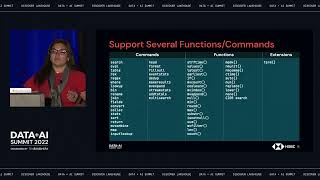
Traditional cybersecurity Security Information and Event Management (SIEM) ways do not scale well for data sources with 30TiB per day, leading HSBC to create a Cybersecurity Lakehouse with Delta and Spark. Creating a platform to overcome several conventional technical constraints, the limitation in the amount of data for long-term analytics available in traditional platforms and query languages is difficult to scale and time-consuming to run. In this talk, we’ll learn how to implement (or actually reverse-engineer) a language with Scala and translate it into what Apache Spark understands, the Catalyst engine. We’ll guide you through the technical journey of building equivalents of a query language into Spark. We’ll learn how HSBC business benefited from this cutting-edge innovation, like decreasing time and resources for Cyber data processing migration, improving Cyber threat Incident Response, and fast onboarding of HSBC Cyber Analysts on Spark with Cybersecurity Lakehouse platform.
Connect with us: Website: https://databricks.com Facebook: https://www.facebook.com/databricksinc Twitter: https://twitter.com/databricks LinkedIn: https://www.linkedin.com/company/data... Instagram: https://www.instagram.com/databricksinc/
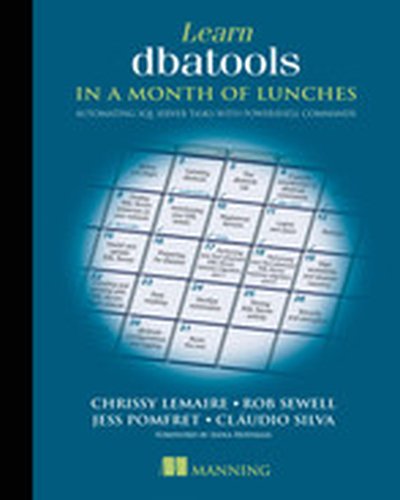
If you work with SQL Server, dbatools is a lifesaver. This book will show you how to use this free and open source PowerShell module to automate just about every SQL server task you can imagine—all in just one month! In Learn dbatools in a Month of Lunches you will learn how to: Perform instance-to-instance and customized migrations Automate security audits, tempdb configuration, alerting, and reporting Schedule and monitor PowerShell tasks in SQL Server Agent Bulk-import any type of data into SQL Server Install dbatools in secure environments Written by a group of expert authors including dbatools creator Chrissy LeMaire, Learn dbatools in a Month of Lunches teaches you techniques that will make you more effective—and efficient—than you ever thought possible. In twenty-eight lunchbreak lessons, you’ll learn the most important use cases of dbatools and the favorite functions of its core developers. Stabilize and standardize your SQL server environment, and simplify your tasks by building automation, alerting, and reporting with this powerful tool. About the Technology For SQL Server DBAs, automation is the key to efficiency. Using the open-source dbatools PowerShell module, you can easily execute tasks on thousands of database servers at once—all from the command line. dbatools gives you over 500 pre-built commands, with countless new options for managing SQL Server at scale. There’s nothing else like it. About the Book Learn dbatools in a Month of Lunches teaches you how to automate SQL Server using the dbatools PowerShell module. Each 30-minute lesson introduces a new automation that will make your daily duties easier. Following the expert advice of dbatools creator Chrissy LeMaire and other top community contributors, you’ll learn to script everything from backups to disaster recovery. What's Inside Performing instance-to-instance and customized migrations Automating security audits, best practices, and standardized configurations Administering SQL Server Agent including running PowerShell scripts effectively Bulk-importing many types of data into SQL Server Executing advanced tasks and increasing efficiency for everyday administration About the Reader For DBAs, accidental DBAs, and systems engineers who manage SQL Server. About the Authors Chrissy LeMaire is a GitHub Star and the creator of dbatools. Rob Sewell is a data engineer and a passionate automator. Jess Pomfret and Cláudio Silva are data platform architects. All are Microsoft MVPs. Quotes All SQL Server professionals should learn dbatools. With its combination of knowledge transfer, anecdotes, and hands-on labs, this book is the perfect way. - From the Foreword by Anna Hoffman, Databases Product Management, Microsoft Excellent guide for dbatools with lots of practical tips! Required reading for anyone interested in dbatools. - Ruben Vandeginste, PeopleWare A must-have for any SQL server developer. - Raushan Kumar Jha, Microsoft If you want to automate all vital aspects of SQL Server, wait no more! Learn dbatools in a month, with guidance from the best minds in the business. - Ranjit Sahai, RAM Consulting
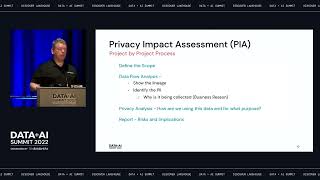
At Spark Data & AI 2021, We presented the use case around Privacy in an Insurance Landscape using Privacera. Scaling Privacy in a Spark Ecosystem (https://www.youtube.com/watch?v=cjJEMlNcg5k). In one year, the concept of privacy and security have taken off as a major need to solve and the ability to embed this into business process to empower data democratization has become mandatory. The concept that data is a product is now commonplace and that ability to rapidly innovate those products hinges on the ability to balance a dual mandate. One mandate: Move Fast. Second Mandate: Manage Privacy and Security. How do we make this happen? Let's dig into the real details and experiences and show the blueprint for success.
Connect with us: Website: https://databricks.com Facebook: https://www.facebook.com/databricksinc Twitter: https://twitter.com/databricks LinkedIn: https://www.linkedin.com/company/data... Instagram: https://www.instagram.com/databricksinc/

Every industry must comply with some form of compliance or data security in order to operate. As data becomes more mission critical to the organization, so does the need to protect and secure it.
Public Sector organizations are responsible for securing sensitive data sets and complying with regulatory programs such as HIPAA, FedRAMP, and StateRAMP.
This does not come as a surprise given the many different attacks targeted at the industry and the extremely sensitive nature of the large volumes of data stored and analyzed. For a product owner or DBA, this can be extremely overwhelming with a security team issuing more restrictions and data access becoming more of a common request among business users. It can be difficult finding an effective governance model to democratize data while also managing compliance across your hybrid estate.
In this session, we will discuss challenges faced in the public sector when expanding to AWS cloud. We will review best practices for managing access and data integrity for a cloud-based data lakehouse with Databricks, and discuss recommended approaches for securing your AWS Cloud environment. We will highlight ways to enable compliance by developing a continuous monitoring strategy and providing tips for implementation of defense in depth. This guide will provide critical questions to ask, an overall strategy, and specific recommendations to serve all security leaders and data engineers in the Public Sector.
This talk is intended to educate on security design considerations when extending your data warehouse to the cloud. This guidance is expected to grow and evolve as new standards and offerings emerge for local, state, and federal government.
Connect with us: Website: https://databricks.com Facebook: https://www.facebook.com/databricksinc Twitter: https://twitter.com/databricks LinkedIn: https://www.linkedin.com/company/data... Instagram: https://www.instagram.com/databricksinc/
As a practitioner, managing and governing data assets and ML models in the data lakehouse is critical for your business initiatives to be successful. With Databricks Unity Catalog, you have a unified governance solution for all data and AI asserts in your lakehouse, giving you much better performance, management and security on any cloud. When deploying Unity Catalog for your lakehouse, you must be prepared with best practices to ensure a smooth governance implementation. This session will cover key considerations for a successful implementation such as: • How to manage Unity Catalog’s metastore and understand various usage patterns • How to use identity federation to assign account principals to a Databricks Workspace • Best practices for leveraging cloud storages, managed tables and external tables with Unity catalog
Connect with us: Website: https://databricks.com Facebook: https://www.facebook.com/databricksinc Twitter: https://twitter.com/databricks LinkedIn: https://www.linkedin.com/company/data... Instagram: https://www.instagram.com/databricksinc/
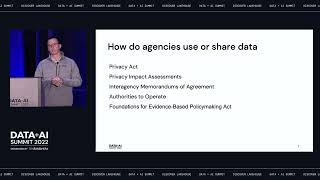
Most large public sector and government agencies all have multiple data-driven initiatives being implemented or considered across functional domains. But, as they scale these efforts they need to ensure data security and quality are top priorities.
In this session, the presenters discuss the core elements of a successful data security and quality framework, including best practices, potential pitfalls, and recommendations based on success with a large federal agency.
Connect with us: Website: https://databricks.com Facebook: https://www.facebook.com/databricksinc Twitter: https://twitter.com/databricks LinkedIn: https://www.linkedin.com/company/data... Instagram: https://www.instagram.com/databricksinc/
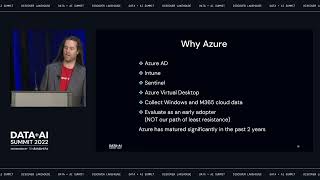
Due to the unique cybersecurity challenges that HSBC faces daily - from high data volumes to untrustworthy sources to the privacy and security restrictions of a highly regulated industry - the resulting architecture was an unwieldy set of disparate data silos. So, how do we build a cybersecurity advanced analytics environment to enrich and transform these myriad data sources into a unified, well-documented, robust, resilient, repeatable, scalable, maintainable platform that will empower the cyber analysts of the future? That at the same time remains cost-effective and enables everyone from the less-technical junior reporting user to the senior machine learning engineers?
In this session, Ryan Harris, Principal Cybersecurity Engineer at HSBC, dives into the infrastructure and architecture employed, ranging from the landing zone concepts, secure access workstations, data lake structure, and isolated data ingestion, to the enterprise integration layer. In the process of building the data pipelines and lakehouses, we ended up building a hybrid data mesh leveraging Delta Lake. The result is a flexible, secure, self-service environment that is unlocking the capabilities of our humans.
Connect with us: Website: https://databricks.com Facebook: https://www.facebook.com/databricksinc Twitter: https://twitter.com/databricks LinkedIn: https://www.linkedin.com/company/data... Instagram: https://www.instagram.com/databricksinc/
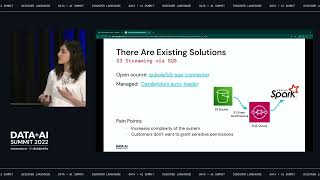
Working with S3 is different from doing so with HDFS: The architecture of the Object store makes the standard Spark file connector inefficient to work with S3.
There is a way to tackle this problem with a message queue for listening to changes in a bucket. What if an additional message queue is not an option and you need to use Spark-streaming? You can use a standard file connector, but you quickly face performance degradation with a number of files in the source path.
We have seen this happen at Hunters, a security operations platform that works with a wide range of data sources.
We want to share a description of the problem and the solution we will open-source. The audience will learn how to configure it and make the best use of it. We will also discuss how to use metadata to boost the performance of discovering new files in the stream and show the use case of utilizing time metadata of CloudTrail to efficiently collect logs for hunting cyber attacks.
Connect with us: Website: https://databricks.com Facebook: https://www.facebook.com/databricksinc Twitter: https://twitter.com/databricks LinkedIn: https://www.linkedin.com/company/data... Instagram: https://www.instagram.com/databricksinc/
We all live in the exciting times and the hype of Distributed Data Mesh (or just mess). This talk will cover a couple architectural and organizational approaches on achieving Distributed Data Mesh, which is essentially a combination of mindset, fully automated infrastructure, continuous integration for data pipelines, dedicated team collaborative environments, and security enforcement. As a Data Leader, you’ll learn what kinds of things you’d need to pay attention to, when starting (or reviving) a modern Data Engineering and Data Science strategy and how Databricks Unity Catalog may help you automating that. As DevOps, you’ll learn about the best practices and pitfalls of Continuous Deployment on Databricks With Terraform and Continuous Integration with Databricks Repos. You’ll be excited how you can automate Data Security with Unity Catalog and Terraform. As a Data Scientist, you’ll learn how you can get relevant infrastructure into “production” relatively faster.
Connect with us: Website: https://databricks.com Facebook: https://www.facebook.com/databricksinc Twitter: https://twitter.com/databricks LinkedIn: https://www.linkedin.com/company/data... Instagram: https://www.instagram.com/databricksinc/