talk-data.com talk-data.com

Topic

SQL

Structured Query Language (SQL)

database_language data_manipulation data_definition programming_language

1751

tagged

Activity Trend

107 peak/qtr
2020-Q1 2026-Q1

Activities

1751 activities · Newest first

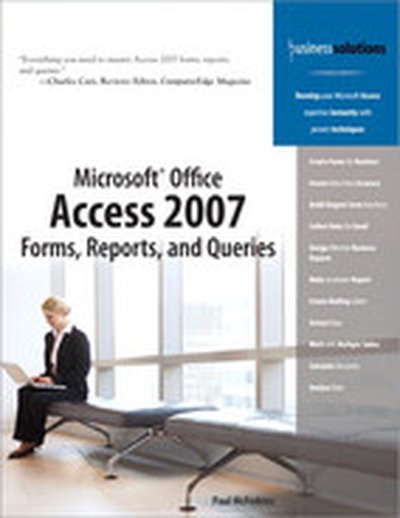
Business Solutions Microsoft® Office Access 2007 Forms, Reports, and Queries

“Everything you need to master Access 2007 forms, reports, and queries.” –Charles Carr, Reviews Editor, ComputorEdge Magazine Create Forms for Business Ensure Data Entry Accuracy Build Elegant Form Interfaces Collect Data Via Email Design Effective Business Reports Make an Invoice Report Create Mailing Labels Extract Data Work with Multiple Tables Calculate Discounts Analyze Data Develop your Microsoft Access expertise instantly with proven techniques Let’s face it: Microsoft Access is a large, intimidating program. Most people never progress beyond creating simple tables and using wizards to build basic forms and reports. At the same time, you need information and you know that what you seek is embedded somewhere in your Access database. Without a more sophisticated knowledge of how to extract and present that data, you’re forced to rely on office gurus and overworked IT people to provide canned reports or one-size-fits-all solutions. This book changes all that by giving you the skills to build efficient front-ends for data (forms), publish the results in an attractive and easy-to-read format (reports), and extract the data you need (queries). This book shuns the big Access picture and instead focuses intently on forms, reports, and queries. This in-depth approach will give you the knowledge and understanding you need to get at the data and prove the old saw that knowledge is power. · Focuses on the three technologies that you must master to get the most out of Access: forms, reports, and queries. · Avoids database theory in favor of practical know-how that you can put to use right away. · Packed full of real-world examples and techniques to help you learn and understand the importance of each section. · Covers what’s new and changed in Microsoft Access 2007. Introduction Part I: Creating Forms Chapter 1 Creating and Using a Form Chapter 2 Working with Form Controls Chapter 3 Designing Forms for Efficient and Accurate Data Entry Chapter 4 Designing Forms for Business Use Chapter 5 Creating Specialized Forms Part II: Designing and Customizing Reports Chapter 6 Creating and Publishing a Report Chapter 7 Designing Effective Business Reports Chapter 8 Designing Advanced Reports Chapter 9 Creating Specialized Reports Part III: Creating Powerful Queries Chapter 10 Creating a Basic Query Chapter 11 Building Criteria Expressions Chapter 12 Working with Multiple-Table Queries Chapter 13 Creating Advanced Queries Chapter 14 Creating PivotTable Queries Chapter 15 Querying with SQL Statements Index
Foundations of SQL Server 2005 Business Intelligence

Just as every business needs to effectively employ business intelligence (BI) to stay competitive, every IT professional needs to master BI to stay employed in this fastest-growing segment of information technology. Foundations of SQL Server 2005 Business Intelligence is the quickest path to understanding BI, and it is essential reading for all who work with SQL Server 2005. It is written from a practical perspective, perfect for anyone who uses the tools in SQL Server 2005s extraordinarily rich BI product suite. This book explains how best to use Analysis Services, SQL Server Integration Services, SQL Server Reporting Services, and SQL Server Data Mining. It also describes best practices for implementing end-to-end BI solutions in small, medium, and large business environments. And it provides important information about integrating BI with various client tools, including Excel, Business Scorecards, Proclarity, and SharePoint Portal Server. Developers, end users, and even managers will find this an enlightening guide to the power and promise of SQL Server 2005 BI.

SQL for MySQL Developers: A Comprehensive Tutorial and Reference

The Most Complete and Practical Guide to MySQL Version 5’s Powerful SQL Dialect MySQL version 5 offers a SQL dialect with immense power. In SQL for MySQL Developers, Rick F. van der Lans helps you master this version ofSQL and take advantage of its full potential. Using case study examplesand hands-on exercises, van der Lans illuminates every key concept,technique, and statement–including advanced features that make iteasier to create even the most complex statements and programs. Drawing on decades of experience as an SQL standards team member and enterprise consultant, he reveals exactly why MySQL’s dialect works as it does–and how to get the most out of it. You’ll gain powerful insight into everything from basic queries to stored procedures, transactions to data security. Whether you’re a programmer, Web developer, analyst, DBA, or database user, this book can take you from “apprentice” to true SQL expert. If you’ve used SQL in older versions of MySQL, you’ll become dramatically more effective–and if you’re migrating from other database platforms, you’ll gain practical mastery fast. Coverage includes Writing queries, including joins, functions, and subqueries Updating data Creating tables, views, and other database objects Specifying keys and other integrity constraints Improving efficiency with indexes Enforcing security via passwords and privileges Embedding SQL statements within PHP programs Building stored procedures and triggers Using transactions, locking, rollback, and isolation levels Utilizing MySQL’s catalog All of the book’s sample programs are available for download from www.r20.nl. About the Author Rick F. van der Lans is author of the classic Introduction to SQL, the definitive SQL guide that database developers have relied on for more than 20 years. He is a consultant, author, and lecturer specializing in database technology, development tools, data warehousing, and XML. As managing director of the Netherlands-based R20/Consultancy, he has advised many large companies on defining their IT architectures. He chairs the European Meta Data Conference, and writes columns for several magazines. Contents About the Author Preface PART I Introduction CHAPTER 1 Introduction to MySQL CHAPTER 2 The Tennis Club Sample Database CHAPTER 3 Installing the Software CHAPTER 4 SQL in a Nutshell PART II Querying and Updating Data CHAPTER 5 SELECT Statement: Common Elements CHAPTER 6 SELECT Statements, Table Expressions, and Subqueries CHAPTER 7 SELECT Statement:The FROM Clause CHAPTER 8 SELECT Statement: The WHERE Clause CHAPTER 9 SELECT Statement: SELECT Clause and Aggregation Functions CHAPTER 10 SELECT Statement: The GROUP BY Clause CHAPTER 11 SELECT Statement: The HAVING Clause CHAPTER 12 SELECT Statement: The ORDER BY Clause CHAPTER 13 SELECT Statement: The LIMIT Clause CHAPTER 14 Combining Table Expressions CHAPTER 15 The User Variable and the SET Statement CHAPTER 16 The HANDLER Statement CHAPTER 17 Updating Tables CHAPTER 18 Loading and Unloading Data CHAPTER 19 Working with XML Documents PART III Creating Database Objects CHAPTER 20 Creating Tables CHAPTER 21 Specifying Integrity Constraints CHAPTER 22 Character Sets and Collations CHAPTER 23 The ENUM and SET Types CHAPTER 24 Changing and Dropping Tables CHAPTER 25 Using Indexes CHAPTER 26 Views CHAPTER 27 Creating Databases CHAPTER 28 Users and Data Security CHAPTER 29 Statements for Table Maintenance CHAPTER 30 The SHOW, DESCRIBE, and HELP Statements PART IV Procedural Database Objects CHAPTER 31 Stored Procedures CHAPTER 32 Stored Functions CHAPTER 33 Triggers CHAPTER 34 Events PART V Programming with SQL CHAPTER 35 MySQL and PHP CHAPTER 36 Dynamic SQL with Prepared Statement CHAPTER 37 Transactions and Multiuser Usage APPENDIX A Syntax of SQL APPENDIX B Scalar Functions APPENDIX C System Variables APPENDIX D Bibliography Index

Microsoft® SQL Server 2005 Unleashed

Microsoft SQL Server 2005 Unleashed offers comprehensive coverage of SQL Server 2005 that goes beyond the basic syntax and information you’ll find in the product manuals, providing in-depth information derived from the authors’ real-world experience to help you build upon your working knowledge of the product and take your experience and knowledge to a higher level. This book focuses primarily on the information needed by system and database administrators, as well as for users with overlapping duties as both DBA and developer. Included is extensive coverage of the new features and upgraded tools and capabilities of SQL Server 2005, including .NET Framework integration, Integration Services, Service Broker, Database Mirroring and Snapshots, and Reporting Services. Detailed information on… Installing, upgrading, and administering SQL Server 2005 Database maintenance, backup, and recovery Creating and managing tables, views, stored procedures, triggers, and user-defined functions Database and index design SQL Server query optimization, and performance monitoring and tuning Transactions, transaction management, and distributed transactions SQL Server Management Studio—NEW! SQL Server Notification Services; Integration Services—NEW!; Analysis Services; Reporting Services—NEW!; Web Services—NEW! SQL Server Service Broker—NEW! SQL Server and Microsoft .NET Framework integration, including CLR-based stored procedures, functions, and triggers—NEW! SQL Server high availability and SQL Server clustering and replication Database Mirroring—NEW! Database Snapshots—NEW! Using XML in SQL Server 2005 SQL Server tools and utilities CD-ROM includes 8 bonus chapters covering topics such as Notification Services, Service Broker, and Full-Text Search Code samples, scripts, and sample databases A PDF version of the entire book Introduction Part I Welcome to Microsoft SQL Server 1 SQL Server 2005 Overview 2 What’s New in SQL Server 2005 Part II SQL Server Tools and Utilities 3 SQL Server Management Studio 4 SQL Server Command-Line Utilities 5 SQL Server Profiler Part III SQL Server Administration 6 SQL Server System and Database Administration 7 Installing SQL Server 2005 8 Upgrading to SQL Server 2005 9 Client Installation and Configuration 10 Security and User Administration 11 Database Backup and Restore 12 Database Mail 13 SQL Server Scheduling and Notification 14 SQL Server High Availability. 15 Replication 16 Database Mirroring 17 SQL Server Clustering Part IV Database Administration 18 Creating and Managing Databases 19 Creating and Managing Tables 20 Creating and Managing Indexes 21 Implementing Data Integrity 22 Creating and Managing Views in SQL Server 23 Creating and Managing Stored Procedures 24 Creating and Managing User-Defined Functions 25 Creating and Managing Triggers 26 Transaction Management and the Transaction Log 27 Database Snapshots 28 Database Maintenance Part V SQL Server Performance and Optimization 29 Indexes and Performance 30 Understanding Query Optimization 31 Query Analysis 32 Locking and Performance 33 Database Design and Performance 34 Monitoring SQL Server Performance Part VI SQL Server Application Development 35 What’s New for Transact-SQL in SQL Server 2005 36 SQL Server and the .NET Framework 37 Using XML in SQL Server 2005 38 SQL Server Web Services Part VII SQL Server Business Intelligence Features 39 SQL Server 2005 Analysis Services 40 SQL Server Integration Services 41 SQL Server 2005 Reporting Services Bonus Chapters on the CD 42 Managing Linked and Remote Servers 43 Configuring, Tuning, and Optimizing SQL Server Options 44 Administering Very Large SQL Server Databases 45 SQL Server Disaster Recovery Planning 46 Transact-SQL Programming Guidelines, Tips, and Tricks 47 SQL Server Notification Services 48 SQL Server Service Broker 49 SQL Server Full-Text Search Index

Microsoft Office® Access 2007 Inside Out

You’re beyond the basics, so dive right in and really put your database skills to work! This supremely organized reference is packed with hundreds of timesaving solutions, troubleshooting tips, and workarounds. It’s all muscle and no fluff. Discover how the experts tackle Access 2007—and challenge yourself to new levels of mastery! Create tables that support your database design strategy Import and link to data from spreadsheets, text files, databases, and other ODBC data sources Build simple to complex queries to manipulate data Learn advanced techniques for building and customizing user interface forms Design attractive reports to calculate and analyze large sets of data Automate your application with Microsoft Visual Basic(R) for Applications Customize the Office Fluent Ribbon Explore using XML and Windows(R) SharePoint(R) Services to create Web-based applications CD includes: Fully searchable eBook—plus bonus chapters Sample database applications—including query, form, and report examples Articles from the experts: designing databases, understanding SQL, exporting data, and more Links to demos, blogs, and user communities References for finding Access 2003 commands in Access 2007 Windows Vista(R) Product Guide eReference and other eBooks For customers who purchase an ebook version of this title, instructions for downloading the CD files can be found in the ebook.

Microsoft SQL Server 2005 Performance Optimization and Tuning Handbook

Database professionals will find that this new edition aids in mastering the latest version of Microsoft’s SQL Server. Developers and database administrators (DBAs) use SQL on a daily basis in application development and the subsequent problem solving and fine tuning. Answers to SQL issues can be quickly located helping the DBA or developer optimize and tune a database to maximum efficiency. Basic questions are easily located on the topics of filtering, sorting, operators, conditionals, pseudo columns, single row functions, joins, grouping functions, sub queries, composite queries, hierarchies, flashback queries, parallel queries, expressions and regular expressions. Assistance on DML, data types (including collections), XML, DDL for basic database objects such as tales, views and indexes, partitioning, and security is also considered. * Identifies the most common issues DBAs face day to day for easy reference *Provides DBAs with solutions actually used by the authors in enterprise environments to resolve common and specialized problems to optimization issues. * Addresses issues that have been introduced by new features which can add more control but reduce performance.

XQuery

With the XQuery 1.0 standard, you finally have a tool that will make it much easier to search, extract and manipulate information from XML content stored in databases. This in-depth tutorial not only walks you through the XQuery specification, but also teaches you how to program with this widely anticipated query language. XQuery is for query writers who have some knowledge of XML basics, but not necessarily advanced knowledge of XML-related technologies. It can be used both as a tutorial, by reading cover to cover, and as a reference, by using the comprehensive index and appendixes. Either way, you will find the background knowledge in namespaces, schemas, built-in types and regular expressions that is relevant to writing XML queries. This book provides: A high-level overview and quick tour of XQuery Information to write sophisticated queries, without being bogged down by the details of types, namespaces, and schemas Advanced concepts for users who want to take advantage of modularity, namespaces, typing and schemas Guidelines for working with specific types of data, such as numbers, strings, dates, URIs and processing instructions A complete alphabetical reference to the built-in functions and types You will also learn about XQuery's support for filtering, sorting, and grouping data, as well as how to use FLWOR expressions, XPath, and XQuery tools for extracting and combining information. With this book, you will discover how to apply all of these tools to a wide variety of data sources, and how to recombine information from multiple sources into a single final output result. Whether you're coming from SQL, XSLT, or starting from scratch, this carefully paced tutorial takes you through the final 1.0 standard in detail.

SQL Server Integration Services

SQL Server 2005 Integration Services (SSIS) lets you build high-performance data integration solutions. SSIS solutions wrap sophisticated workflows around tasks that extract, transform, and load (ETL) data from and to a wide variety of data sources. This Short Cut begins with an overview of key SSIS concepts, capabilities, standard workflow and ETL elements, the development environment, execution, deployment, and migration from Data Transformation Services (DTS). Next, you'll see how to apply the concepts you've learned through hands-on examples of common integration scenarios. Once you've finished this Short Cut, you'll have the background and understanding you need to start building your own SSIS integration solutions.

Pro Access 2007

Pro Access 2007M covers the features of Microsoft Access 2007, including working with SharePoint Office Server and customizing Ribbons. The book is aimed at professional developers and power users who are new to Access 2007. Among other topics, youll learn about the new Access menu structure, including customization, as well as new SharePoint features. This book provides good, short, solid information with as little waffle as possible. And the book includes solid examples that thoroughly explain new features. Author Martin Reid is also a working Access developer who is respected by his peers and knows what working developers face, especially at the time of a new release. What you'll learn Creating custom menus using RibbonX Get up and running building Visual Basic for Applications Classes Learn about Microsoft Office SharePoint Server and how it fits into Access Working with SQL Server and using the new Microsoft Access 2007 to SQL Server 2005 tools Code examples provided to highlight real-world issues Use Access and .NET to present information via the Internet

Learning SAS by Example
Learn to program SAS by example!

If you like learning by example, then Learning SAS by Example: A Programmer's Guide makes it easy to learn SAS programming. In an instructive and conversational tone, author Ron Cody clearly explains each programming technique and then illustrates it with one or more real-life examples, followed by a detailed description of how the program works. The text is divided into four major sections: Getting Started; DATA Step Processing; Presenting and Summarizing Your Data; and Advanced Topics. Subjects addressed include: Reading data from external sources Learning details of DATA step programming Subsetting and combining SAS data sets Understanding SAS functions and working with arrays Creating reports with PROC REPORT and PROC TABULATE Learning to use the SAS Output Delivery System Getting started with the SAS macro language Introducing PROC SQL

You can test your knowledge and hone your skills by solving the problems at the end of each chapter. (Solutions to odd-numbered problems are located at the back of this book. Solutions to all problems are available to instructors by visiting Ron Cody's author page for details.) This book is intended for beginners and intermediate users. Readers should know how to enter and submit a SAS program from their operating system.

This book is part of the SAS Press program.

SQL Injection Defenses

This Short Cut introduces you to how SQL injection vulnerabilities work, what makes applications vulnerable, and how to protect them. It helps you find your vulnerabilities with analysis and testing tools and describes simple approaches for fixing them in the most popular web-programming languages. This Short Cut also helps you protect your live applications by describing how to monitor for and block attacks before your data is stolen. Hacking is an increasingly criminal enterprise, and web applications are an attractive path to identity theft. If the applications you build, manage, or guard are a path to sensitive data, you must protect your applications and their users from this growing threat.

OnDemand SQL Performance Analysis Simplified on DB2 for i5/OS in V5R4

The goal of database performance tuning is to minimize the response time of your queries. It is also to optimize your server’s resources by minimizing network traffic, disk I/O, and CPU time. This IBM IBM Redbooks publication helps you to understand the basics of identifying and tuning the performance of Structured Query Language (SQL) statements using IBM DB2 for i5/OS . DB2 for i5/OS provides a comprehensive set of tools that help technical analysts tune SQL queries. The SQL Performance Monitors are part of the set of tools that IBM i5/OS provides for assisting in SQL performance analysis since Version 3 Release 6. These monitors help to analyze database performance problems after SQL requests are run. In V5R4 of i5/OS iSeries Navigator provides a series of new tools to do SQL Performance analysis that we cover in this book. Among the new tools that we will covering are:

Expert MySQL

Since the enormous number of features made available with MySQL release 5.0, MySQL has been gaining steam as a viable alternative to database behemoths like Oracle and IBM DB2. MySQL users now have the ability to extend MySQL with new SQL commands, optimize query execution, and embed MySQL within low-resource environments like embedded devices and kiosks. Expert MySQL, by Dr. Charles A. Bell, is the first book to examine these opportunities in detail, showing you how to wield maximum control over this powerful open source database. You'll learn how to create your own custom storage handlers, ensuring maximum flexibility and speed within your specialized applications. You'll also gain valuable insight into MySQLs architecture and learn how to tweak its behavior through custom changes to the source code.

Access 2007: The Missing Manual

Compared to industrial-strength database products such as Microsoft's SQL Server, Access is a breeze to use. It runs on PCs rather than servers and is ideal for small- to mid-sized businesses and households. But Access is still intimidating to learn. It doesn't help that each new version crammed in yet another set of features; so many, in fact, that even the pros don't know where to find them all. Access 2007 breaks this pattern with some of the most dramatic changes users have seen since Office 95. Most obvious is the thoroughly redesigned user interface, with its tabbed toolbar (or "Ribbon") that makes features easy to locate and use. The features list also includes several long-awaited changes. One thing that hasn't improved is Microsoft's documentation. To learn the ins and outs of all the features in Access 2007, Microsoft merely offers online help. Access 2007: The Missing Manual was written from the ground up for this redesigned application. You will learn how to design complete databases, maintain them, search for valuable nuggets of information, and build attractive forms for quick-and-easy data entry. You'll even delve into the black art of Access programming (including macros and Visual Basic), and pick up valuable tricks and techniques to automate common tasks -- even if you've never touched a line of code before. You will also learn all about the new prebuilt databases you can customize to fit your needs, and how the new complex data feature will simplify your life. With plenty of downloadable examples, this objective and witty book will turn an Access neophyte into a true master.

Microsoft SQL Server 2005 Analysis Services

Microsoft SQL Server Analysis Services provides fast access to data by means of multidimensional data structures and the multidimensional query languag MDX. Analysis Services provides the capability to design, create, and manage multidimensional cubes based on data warehouse tables, and it serves as the foundation for the Microsoft Business Intelligence strategy. Microsoft SQL Server 2005 Analysis Services gives the reader insight into the way Analysis Services functions. It not only explains ways to design and create multidimensional objects, databases, dimensions, and cubes, but also provides invaluable information about the reasons behind design decisions made by the development team. Here's what you will find inside: Understand the key concepts of multidimensional modeling Explore the multidimensional object model and its definition language Learn the main concepts of the MDX language and gain an in-depth understanding of advanced MDX concepts Understand the mechanisms of integrating multidimensional and relational databases Learn how to build client applications to access data in Analysis Services Examine server architecture, including main data structures, data processing, and query resolution algorithms Gain a deep understanding of the internal and external protocols for data transfer, including the XML/A protocol Explore how Analysis Services manages memory Explore the security model, including role-based security, code-access security, and data security Discover how to monitor and manage Analysis Services All the code for the sample database used in the book can be found at www.informit.com/title/0672327821.

SQL Server 2005 Practical Troubleshooting: The Database Engine

Never-Before-Published Insiders’ Information for Troubleshooting SQL Server 2005. This is the definitive guide to troubleshooting the Microsoft SQL Server 2005 database engine, direct from the people who know it most intimately: the people who wrote it, designed it, and support it. SQL Server expert Ken Henderson, author of the best-selling Guru’s Guides to SQL Server, has assembled a “dream team” of SQL Server developers and support engineers to provide in-depth troubleshooting and diagnostic information that has never been documented before: information that would be impossible to get without access to Microsoft’s own source code. From caching to clustering, query processing to Service Broker, this book will help you address even the toughest problems with database engine operations. Each chapter begins with a brief architectural overview of a key SQL Server component, then drills down into the most common problems users encounter, offering specific guidance on investigating and resolving them. You’ll find comprehensive, in-depth chapters on • Waiting and blocking • Data corruption and recovery • Memory • Procedure cache issues • Query processing • Server crashes and other critical failures • Service Broker • SQLOS and scheduling • tempdb • Clustering This is the indispensable resource for everyone who must keep SQL Server running smoothly: DBAs, database application developers, API programmers, and Web developers alike. Contents About the Authors ix Preface xii Acknowledgments xiv 1 Waiting and Blocking Issues 1 2 Data Corruption and Recovery Issues 47 3 Memory Issues 137 4 Procedure Cache Issues 183 5 Query Processor Issues 225 6 Server Crashes and Other Critical Failures 273 7 Service Broker Issues 331 8 SQLOS and Scheduling Issues 369 9 Tempdb Issues 411 10 Clustering Issues 425 The Aging Champion 441 Index 445

Professional SQL Server™ 2005 Administration

SQL Server 2005 is the largest leap forward for SQL Server since its inception. With this update comes new features that will challenge even the most experienced SQL Server DBAs. Written by a team of some of the best SQL Server experts in the industry, this comprehensive tutorial shows you how to navigate the vastly changed landscape of the SQL Server administration. Drawing on their own first-hand experiences to offer you best practices, unique tips and tricks, and useful workarounds, the authors help you handle even the most difficult SQL Server 2005 administration issues, including blocking and locking. You'll learn how to fine-tune queries you've already written, automate redundant monitoring and maintenance tasks, and use hidden tools so that you can quickly get over the learning curve of how to configure and administer SQL Server 2005. What you will learn from this book How to use some of the more advanced concepts of installation Techniques for properly administering development features such as SQL CLR Ways to secure your SQL Server from common threats How to choose the right hardware configuration Best practices for backing up and recovering your database Step-by-step guidelines for clustering your SQL Server Who this book is for This book is for experienced developers and database administrators who plan to administer or are already administering an SQL Server 2005 system and its business intelligence features. Wrox Professional guides are planned and written by working technologists to meet the real-world needs of programmers, developers, and IT professionals. Focused and relevant, they address the issues technology professionals face every day. They provide examples, practical solutions, and expert education in new technologies, all designed to help programmers do a better job.

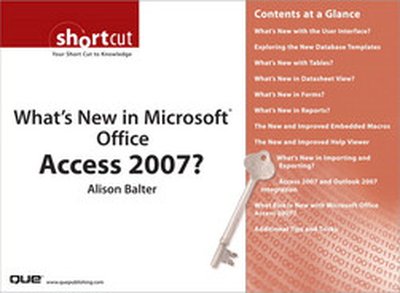
What’s New in Microsoft® Office Access 2007?

Microsoft Office Access 2007 includes a plethora of new features that could prove difficult to find for even seasoned users of previous versions of Access. Alison Balter's What's New in Microsoft Office Access 2007? includes a discussion of all the new features in Access 2007, providing details and practical examples on the use of each feature. Her teaching style is clear and succinct, providing you with a great jump-start to working with Access 2007. The topics covered include what's new with tables, the new and improved embedded macros, and what's new with importing and exporting. Table of Contents Section 1 What's New with the User Interface? Section 2 Exploring the New Database Templates Section 3 What's New with Tables? Section 4 What's New in Datasheet View? Section 5 What's New in Forms? Section 6 What's New in Reports? Section 7 The New and Improved Embedded Macros Section 8 The New and Improved Help Viewer Section 9 What's New in Importing and Exporting? Section 10 Access 2007 and Outlook 2007 Integration Section 11 What Else Is New with Microsoft Office Access 2007? Section 12 Additional Tips and Tricks Alison Balter has been writing about Access since Access 95. She has written eight books and co-authored two books on Access and has written one book on Microsoft SQL Server 2005 Express. Her books include Essential Access 95, Alison Balter's Mastering Access 95 Development, Alison Balter's Mastering Access 97 Development, Access 97 Unleashed, Alison Balter's Mastering Access 2000 Development, Alison Balter's Mastering Access 2002 Desktop Development, Alison Balter's Mastering Access 2002 Enterprise Development, Alison Balter's Mastering Office Access 2003 Development, Access 2003 In-a-Snap, Access 2003 in 24 Hours, and SQL Server Express in 24 Hours. Alison has more than 13 years of practical experience working with Access and Access applications. Her clients' projects range from small end-user projects through enterprisewide applications. Clients include the Archdiocese of Los Angeles, Southern California Edison, Accenture, Prudential Insurance, and the International Cinematographer's Guild. Her Access skills are not limited to writing and programming. Alison has also been teaching Access and speaking at conferences for more than 12 years. Her training has included everything from end-user training to corporate training, in both the United States and Canada.

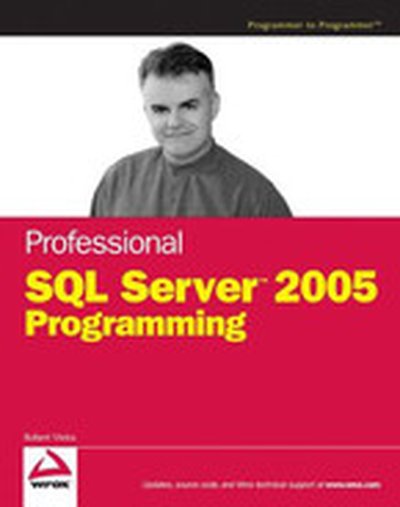
Professional SQL Server™ 2005 Programming

Professional SQL Server 2005 Programming shows experienced developers how to master the substantially revamped feature set of the latest release of Microsoft SQL Server. The book begins with a concise overview of the new features of SQL Server that is of interest to experienced developers. This is especially important given the substantial changes to SQL Server with this release. From there, the book quickly moves on to the 'meat' of the title. Beginning-level material has been removed to provide more room for covering new features and more extensive code examples.

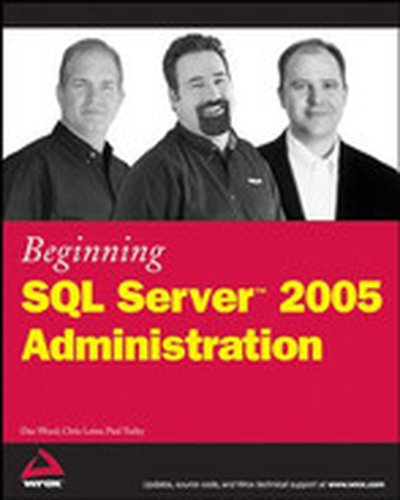
Beginning SQL Server™ 2005 Administration

For the first time, SQL Server 2005 provides features that can support large-scale enterprise databases. With this powerful new release, you may find yourself being called upon to perform duties that are no longer strictly "administrative," duties that have become much more complicated and difficult. With that in mind, a team of experienced Microsoft Certified Professionals provides you with the necessary information to be a more competent and successful database developer or administrator. Beginning with a foundation that features detailed coverage of typical administrative duties, the authors proceed to explain how to build complex data transformations for data import, build distributed data solutions, and maintain the security and integrity of the database. You will be able to apply what you learn to real-world scenarios, and smoothly navigate the vastly changed landscape of SQL Server 2005 administration. What you will learn from this book How to install, maintain, and manage an SQL Server 2005 installation, including high availability and security considerations Various features such as the Common Language Runtime, SQL Server Integration Services, Notification Service, and the Service Broker How to use the tools that are necessary to manage configuration, backups, restores, security, availability, performance, and monitoring A sampling of some of the more advanced areas and complex jobs of the broadening role of a database administrator in the enterprise Who this book is for This book is for both developers and administrators who are responsible for the management and maintenance of an SQL Server 2005 database. Familiarity with relational database concepts and SQL is assumed. Wrox Beginning guides are crafted to make learning programming languages and technologies easier than you think, providing a structured, tutorial format that will guide you through all the techniques involved. Enhance Your Knowledge Advance Your Career