talk-data.com talk-data.com

Topic

SQL

Structured Query Language (SQL)

database_language data_manipulation data_definition programming_language

1751

tagged

Activity Trend

107 peak/qtr
2020-Q1 2026-Q1

Activities

1751 activities · Newest first

Harnessing Hibernate

Harnessing Hibernate is an ideal introduction to the popular framework that lets Java developers work with information from a relational database easily and efficiently. Databases are a very different world than Java objects, and they often involve people with different skills and specializations. With Hibernate, bridging these two worlds is significantly easier, and with this book, you can get up to speed with Hibernate quickly. Rather than present you with another reference, Harnessing Hibernate lets you explore the system, from download and configuration through a series of projects that demonstrate how to accomplish a variety of practical goals. The new edition of this concise guide walks you through Hibernate's primary features, which include mapping from Java classes to database tables, and from Java data types to SQL data types. You will also learn about Hibernate's data query and retrieval facilities, and much more. By reading and following along with the examples, you can get your own Hibernate environment set up quickly and start using it for real-world tasks right away. Harnessing Hibernate teaches you how to: Perform Object/Relational mapping Work with persistent data from Java code Work with groups and relationships between objects Extend Hibernate's rich type support for your own needs Simplify query creation using criteria and examples Use the Hibernate Query Language (HQL) and understand how it differs from SQL Use Hibernate in conjunction with Spring Use Hibernate in conjunction with other packages, such as the Stripes web framework and the Eclipse IDE Once you're past the first few chapters, you can jump to topics that you find particularly interesting or relevant. All background material and explanations of how Hibernate works and why is in the service of a focused task. Source code can be downloaded from the book's website. If using SQL is an uncomfortable chore, Harnessing Hibernate offers you an effective and trouble-free method for working with the information you store in your applications.

Pro T-SQL 2008 Programmer's Guide

Discussing new and existing features, SQL Server designer and administrator Michael Coles takes you on an expert guided tour of Transact-SQL functionality in SQL Server 2008 in his book, Pro T-SQL 2008 Programmer's Guide. Fully functioning examples and downloadable source code bring Coles' technically accurate and engaging treatment of Transact-SQL into your own hands. Step-by-step explanations ensure clarity, and an advocacy of best-practices will steer you down the road to success. Pro T-SQL 2008 Programmer's Guide is every developer's key to making full use of SQL Server 2008's powerful, built-in Transact-SQL language. Transact-SQL is the language developers and DBAs use to interact with SQL Server. It's used for everything from querying data, to writing stored procedures, to managing the database. New features in SQL Server 2008 include a spatial data type, SQLCLR integration, the MERGE statement, a dramatically improved and market-leading XML feature set, and support for encryption—all of which are covered in this book

Oracle Database 11g PL/SQL Programming

Design Feature-Rich PL/SQL Applications Deliver dynamic, client/server PL/SQL applications with expert guidance from an Oracle programming professional. With full coverage of the latest features and tools, Oracle Database 11g PL/SQL Programming lays out each topic alongside detailed explanations, cut-and-paste syntax examples, and real-world case studies. Access and modify database information, construct powerful PL/SQL statements, execute effective queries, and deploy bulletproof security. You'll also learn how to implement C, C++, and Java procedures, Web-enable your database, cut development time, and optimize performance. Create, debug, and manage Oracle-driven PL/SQL programs Use PL/SQL structures, delimiters, operators, variables, and statements Identify and eliminate errors using PLSQL_WARNINGS and exception handlers Work with functions, procedures, packages, collections, and triggers Define and deploy varray, nested table, and associative array data types Handle external routines, object types, large objects, and secure files Communicate between parallel sessions using DBMS_ALERT and DBMS_PIPE Call external procedures through Oracle Net Services and PL/SQL wrappers Integrate internal and server-side Java class libraries using Oracle JVM Develop robust Web applications using PL/SQL Gateway and Web Toolkit

MySQL in a Nutshell, 2nd Edition

When you need to find the right SQL keyword or MySQL client command-line option right away, turn to this convenient reference, known for the same speed and flexibility as the system it covers so thoroughly. MySQL is packed with so many capabilities that the odds of remembering a particular function or statement at the right moment are pretty slim. With MySQL in a Nutshell, you get the details you need, day in and day out, in one concise and extremely well organized book. The new edition contains all the commands and programming information for version 5.1, including new features and language interfaces. It's ideal for anyone using MySQL, from novices who need to get up to speed to advanced users who want a handy reference. Like all O'Reilly Nutshell references, it's easy to use and highly authoritative, written by the editor of the MySQL Knowledge Base at MySQL AB, the creator and owner of MySQL. Inside, you'll find: A thorough reference to MySQL statements, functions, and administrative utilities Several tutorial chapters to help newcomers get started Programming language APIs for PHP, Perl, and C Brief tutorials at the beginning of each API chapter to help anyone, regardless of experience level, understand and master unfamiliar territory New chapters on replication, triggers, and stored procedures Plenty of new examples of how MySQL is used in practice Useful tips to help you get through the most difficult subjectsWhether you employ MySQL in a mission-critical, heavy-use environment or for applications that are more modest, this book puts a wealth of easy-to-find information at your fingertips, saving you hundreds of hours of trial and error and tedious online searching. If you're ready to take advantage of everything MySQL has to offer, MySQL in a Nutshell has precisely what it takes.

MCITP SQL Server 2005 Database Developer All-in-One Exam Guide (Exams 70-431, 70-441 & 70-442)

All-in-One is All You Need Get complete coverage of all three Microsoft Certified IT Professional database developer exams for SQL Server 2005 in this comprehensive volume. Written by a SQL Server expert and MCITP, this definitive exam guide features learning objectives at the beginning of each chapter, exam tips, practice questions, and in-depth explanations. Detailed and authoritative, the book serves as both a complete certification study guide and an essential on-the-job reference. Get full details on all exam topics including how to: Install and configure SQL Server 2005 Manage database design Use Transact-SQL and XML Work with functions, triggers, and CLR integration Optimize, monitor, and secure databases Create stored procedures Handle disaster recovery Work with Service Broker, Web Services, and MARS Use SQL Server Reporting Services and Notification Services Manage locks, deadlocks, and cursors Transfer data using Replication and SQL Server Integration Services The CD-ROM features: Six full practice exams-two for each exam: 70-431, 70-441, & 70-442 Scripts from the step-by-step exercises in the book Video training clips from the author Complete electronic book

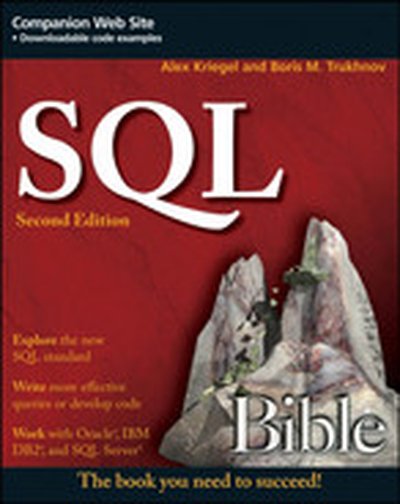
SQL Bible, Second Edition

Combining theory with everyday practicality, this definitive volume is packed with the up-to-date information, new features, and explanations you need to get the very most out of SQL and its latest standard. The book is unique in that every chapter highlights how the new SQL standard applies to the three major databases, Oracle 11g, IBM DB2 9.5, and Microsoft SQL Server 2008. The result is a comprehensive, useful, and real-world reference for all SQL users, from beginners to experienced developers.

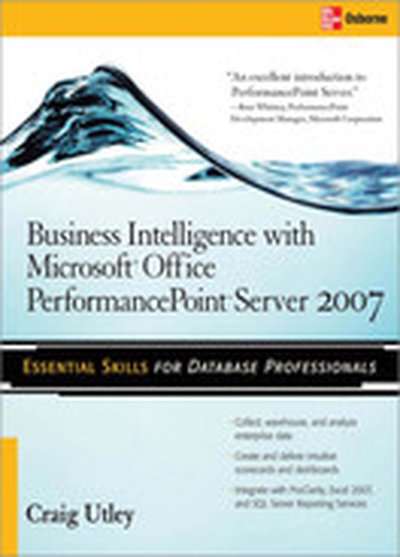
Business Intelligence with Microsoft® Office PerformancePoint™ Server 2007

Deliver BI Solutions with Microsoft Office PerformancePoint Server 2007 Maximize the powerful BI tools available in PerformancePoint 2007 with help from this practical guide. You will learn how to collect and store data, monitor progress, analyze performance, distribute dynamic reports, and create maintainable projects and forecasts. Business Intelligence with Microsoft Office PerformancePoint Server 2007 provides full details on creating scorecards and dashboards, performing advanced analysis on data, and setting up business plans. You will also learn how to integrate PerformancePoint with ProClarity, Excel 2007, and SQL Server Reporting Services. Configure, deploy, and secure all the PerformancePoint components Create KPIs, scorecards, reports, and dashboards with the Dashboard Designer Create business models with the Planning Business Modeler and create budgets and forecasts with Excel 2007 Enable advanced data analysis with PerformancePoint Server and ProClarity tools Take advantage of the enhanced analytic capabilities of Excel 2007 Use SQL Server Reporting Services for analytics Align performance with organizational objectives

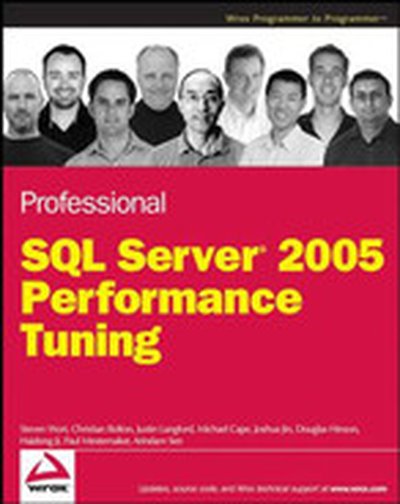
Professional SQL Server® 2005 Performance Tuning

Written by a team of expert SQL users, this comprehensive resource approaches performance tuning from a new perspective by showing you a methodical scientific approach to diagnose performance problems. The book first walks you through how to discover bottlenecks when something is wrong and you'll then learn how to identify and remove the problems that are causing poor performance. You'll discover preventive measures you can take to try to avoid a performance problem entirely and you'll learn how to achieve better performance.

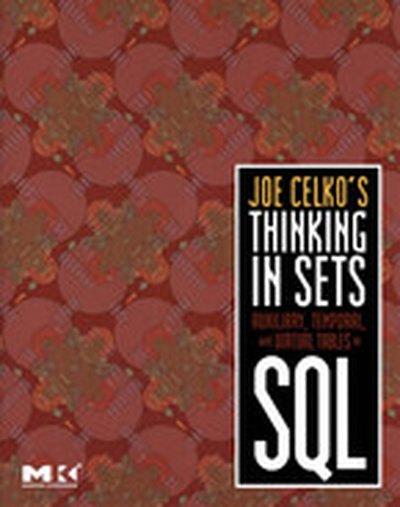
Joe Celko's Thinking in Sets: Auxiliary, Temporal, and Virtual Tables in SQL

Perfectly intelligent programmers often struggle when forced to work with SQL. Why? Joe Celko believes the problem lies with their procedural programming mindset, which keeps them from taking full advantage of the power of declarative languages. The result is overly complex and inefficient code, not to mention lost productivity.This book will change the way you think about the problems you solve with SQL programs.. Focusing on three key table-based techniques, Celko reveals their power through detailed examples and clear explanations. As you master these techniques, you’ll find you are able to conceptualize problems as rooted in sets and solvable through declarative programming. Before long, you’ll be coding more quickly, writing more efficient code, and applying the full power of SQL Filled with the insights of one of the world’s leading SQL authorities - noted for his knowledge and his ability to teach what he knows Focuses on auxiliary tables (for computing functions and other values by joins), temporal tables (for temporal queries, historical data, and audit information), and virtual tables (for improved performance) Presents clear guidance for selecting and correctly applying the right table technique

Oracle Database 11g DBA Handbook

The Essential Resource for Oracle DBAs--Fully Updated and Expanded Manage a flexible, highly available Oracle database with help from the expert information contained in this exclusive Oracle Press guide. Fully revised to cover every new feature and utility, Oracle Database 11g DBA Handbook shows how to perform a new installation, upgrade from previous versions, configure hardware and software for maximum efficiency, and employ bulletproof security. You will learn to automate the backup and recovery process, provide transparent failover capability, audit and tune performance, and distribute your enterprise databases with Oracle Net. Plan and deploy permanent, temporary, and bigfile tablespaces Optimize disk allocation, CPU usage, I/O throughput, and SQL queries Develop powerful database management applications Guard against human errors using Oracle Flashback and Oracle Automatic Undo Management Diagnose and tune system performance using Oracle Automatic Workload Repository and SQL Tuning Sets Implement robust security using authentication, authorization, fine-grained auditing, and fine-grained access control Maintain high availability using Oracle Real Application Clusters and Oracle Active Data Guard Respond more efficiently to failure scenarios by leveraging the Oracle Automatic Diagnostic Repository and the Oracle Repair Advisor Back up and restore tables, tablespaces, and databases with Oracle Recovery Manager and Oracle Data Pump Export and Import Work with networked databases, data warehouses, and VLDBs Put the latest Oracle Database 11 g tools to work--Oracle Total Recall, Oracle Flashback Data Archive, and more

Tapping into Unstructured Data: Integrating Unstructured Data and Textual Analytics into Business Intelligence

“The authors, the best minds on the topic, are breaking new ground. They show how every organization can realize the benefits of a system that can search and present complex ideas or data from what has been a mostly untapped source of raw data.” --Randy Chalfant, CTO, Sun Microsystems The Definitive Guide to Unstructured Data Management and Analysis--From the World’s Leading Information Management Expert A wealth of invaluable information exists in unstructured textual form, but organizations have found it difficult or impossible to access and utilize it. This is changing rapidly: new approaches finally make it possible to glean useful knowledge from virtually any collection of unstructured data. William H. Inmon--the father of data warehousing--and Anthony Nesavich introduce the next data revolution: unstructured data management. Inmon and Nesavich cover all you need to know to make unstructured data work for your organization. You’ll learn how to bring it into your existing structured data environment, leverage existing analytical infrastructure, and implement textual analytic processing technologies to solve new problems and uncover new opportunities. Inmon and Nesavich introduce breakthrough techniques covered in no other book--including the powerful role of textual integration, new ways to integrate textual data into data warehouses, and new SQL techniques for reading and analyzing text. They also present five chapter-length, real-world case studies--demonstrating unstructured data at work in medical research, insurance, chemical manufacturing, contracting, and beyond. This book will be indispensable to every business and technical professional trying to make sense of a large body of unstructured text: managers, database designers, data modelers, DBAs, researchers, and end users alike. Coverage includes What unstructured data is, and how it differs from structured data First generation technology for handling unstructured data, from search engines to ECM--and its limitations Integrating text so it can be analyzed with a common, colloquial vocabulary: integration engines, ontologies, glossaries, and taxonomies Processing semistructured data: uncovering patterns, words, identifiers, and conflicts Novel processing opportunities that arise when text is freed from context Architecture and unstructured data: Data Warehousing 2.0 Building unstructured relational databases and linking them to structured data Visualizations and Self-Organizing Maps (SOMs), including Compudigm and Raptor solutions Capturing knowledge from spreadsheet data and email Implementing and managing metadata: data models, data quality, and more William H. Inmon is founder, president, and CTO of Inmon Data Systems. He is the father of the data warehouse concept, the corporate information factory, and the government information factory. Inmon has written 47 books on data warehouse, database, and information technology management; as well as more than 750 articles for trade journals such as Data Management Review, Byte, Datamation, and ComputerWorld. His b-eye-network.com newsletter currently reaches 55,000 people. Anthony Nesavich worked at Inmon Data Systems, where he developed multiple reports that successfully query unstructured data. Preface xvii 1 Unstructured Textual Data in the Organization 1 2 The Environments of Structured Data and Unstructured Data 15 3 First Generation Textual Analytics 33 4 Integrating Unstructured Text into the Structured Environment 47 5 Semistructured Data 73 6 Architecture and Textual Analytics 83 7 The Unstructured Database 95 8 Analyzing a Combination of Unstructured Data and Structured Data 113 9 Analyzing Text Through Visualization 127 10 Spreadsheets and Email 135 11 Metadata in Unstructured Data 147 12 A Methodology for Textual Analytics 163 13 Merging Unstructured Databases into the Data Warehouse 175 14 Using SQL to Analyze Text 185 15 Case Study--Textual Analytics in Medical Research 195 16 Case Study--A Database for Harmful Chemicals 203 17 Case Study--Managing Contracts Through an Unstructured Database 209 18 Case Study--Creating a Corporate Taxonomy (Glossary) 215 19 Case Study--Insurance Claims 219 Glossary 227 Index 233


Microsoft ® Office 2007 Business Intelligence

Extract and analyze mission-critical enterprise data using Microsoft Office 2007 This authoritative volume is a practical guide to the powerful new collaborative Business Intelligence tools available in Office 2007. Using real-world examples and clear explanations, Microsoft Office 2007 Business Intelligence: Reporting, Analysis, and Measurement from the Desktop shows you how to use Excel, Excel Services, SharePoint, and PerformancePoint with a wide range of stand-alone and external data in today's networked office. You will learn how to analyze data and generate reports, scorecards, and dashboards with the Office tools you're already using to help you in your everyday work. Create Excel PivotTables and PivotCharts and apply Conditional Formatting Convert Excel spreadsheets into Excel Tables with Conditional Formatting and Charting Connect external data to Excel using Office Data Connections and SharePoint Create SharePoint dashboards that display data from multiple sources Add Key Performance Indicators and Excel Services reports to your dashboards Harness advanced SQL Server 2005 data analysis tools with the Excel Data Mining Add-In and Visio Cluster Diagrams Generate integrated PerformancePoint Scorecards Create Visio PivotDiagrams and Windows Mobile spreadsheets

Microsoft® Office Access 2007 VBA

Business Solutions Microsoft® Office Access 2007 VBA Develop your Access 2007 VBA expertise instantly with proven techniques Microsoft Office Access 2007 VBA builds on the skills you’ve already developed in creating database applications and helps you take them to the next level—using Visual Basic for Applications (VBA) to accomplish things you once performed manually. To facilitate this lofty goal, Access includes the VBA programming language. Even if you’ve never programmed, this book will help you learn how to leverage the power of VBA to make your work with Access more efficient than ever before. Microsoft Office Access 2007 VBA is for professionals who use Microsoft Access frequently in their daily work. You have serious work to get done and you can’t spend all day reading a computer book. This book teaches you the essential skills you need to automate your databases as quickly as possible. Although written for Access 2007, the techniques and concepts covered will work in most versions of Microsoft Access. Highlights of This Book Include • Navigating within the Visual Basic Editor • Using variables, constants, and data types • Employing built-in functions • Creating procedures • Understanding object-and event-driven coding • Working with arrays • Understanding scope • Working with forms • Using selection controls • Creating reports • Exploring menus, navigation, and ribbons • Using object models • Working with data • Defining database schema • Using the Windows API • Working with XML files • Exploring Access SQL On the Website Download database files used in the book at www.quepublishing.com. Category Office Applications Covers Visual Basic for Applications User Level Intermediate - Advanced Scott B. Diamond is a seasoned database designer and Microsoft Access 2007 MVP. During the last 20+ years, he has designed databases on a wide range of platforms, including dBASE, FoxPro, SQL/DS, Lotus Approach, Lotus Notes, and, for the past 10 years, Microsoft Access. Scott has worked as a consultant, both in-house and freelance, and as a support professional at firms that are among the leaders in their industries. Scott spends some of his free time answering questions at the premier site for Access support: http://www.utteraccess.com. Brent Spaulding started writing applications about 20 years ago and has utilized Microsoft Access since version 2.0. He looks forward to using Access well into the future. In July 2007, he received the Microsoft MVP award for Access, which recognizes his talent and contributions to the Access community. Front cover bullets: Edit and debug your code Use looping and conditional statements Understand the Access object- and event-driven architecture Automate data entry Learn how to use variables for dynamic automation Create user-friendly applications for others Create custom functions and objects Customize the user interface Manipulate data and objects with code

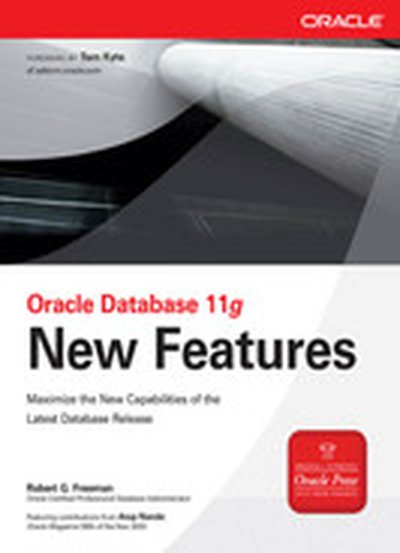
Oracle Database 11g New Features

FOREWORD by Tom Kyte Your Must-Have Guide to Everything New in Oracle Database 11 g Realize the full potential of Oracle Database 11 g with help from the experts. Written by Robert G. Freeman, and with insightful commentary throughout from Arup Nanda, this Oracle Press guide offers full details on the architectural changes, database administration upgrades, availability and recovery revisions, security enhancements, and programming innovations. Every new and updated feature is covered and presented with screenshots, code samples, tables, and charts. Find out how to take full advantage of all the new and improved capabilities of Oracle Database 11 g, including: New Oracle Automatic Storage Management features, such as Fast Disk Resync, Compatibility Attributes, P referred Mirror Read, and Rolling Upgrade components Improved Automated Memory Management capabilities New database design features, such as virtual columns, tablespace encryption, and true table-level data compression New Database Advisors for data recovery and repair, partitioning, and streams performance New tuning features, such as Automatic SQL Tuning and SQL Performance Analyzer Enhancements to Oracle RMAN, including active database duplication and UNDO backup optimization Improved auditing and security capabilities Advanced BI, data warehousing, and partitioning features New SQL and PL/SQL enhancements

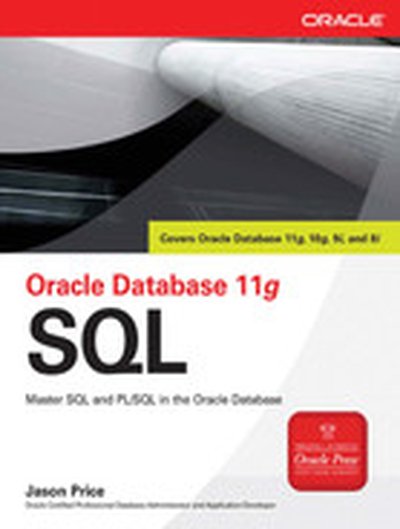
Oracle Database 11g SQL

Write powerful SQL statements and PL/SQL programs Learn to access Oracle databases through SQL statements and construct PL/SQL programs with guidance from Oracle expert, Jason Price. Published by Oracle Press, Oracle Database 11g SQL explains how to retrieve and modify database information, use SQL Plus and SQL Developer, work with database objects, write PL/SQL programs, and much more. Inside, you'll find in-depth coverage of the very latest SQL features and tools, performance optimization techniques, advanced queries, Java support, and XML. This book contains everything you need to master SQL. Explore SQL Plus and SQL Developer Use SQL SELECT, INSERT, UPDATE, and DELETE statements Write PL/SQL programs Create tables, sequences, indexes, views, and triggers Write advanced queries containing complex analytical functions Create database objects and collections to handle abstract data Use large objects to handle multimedia files containing music and movies Write Java programs to access an Oracle Database using JDBC Tune your SQL statements to make them execute faster Explore the XML capabilities of the Oracle Database Master the very latest Oracle Database 11 g features, such as PIVOT and UNPIVOT, flashback archives, and much more

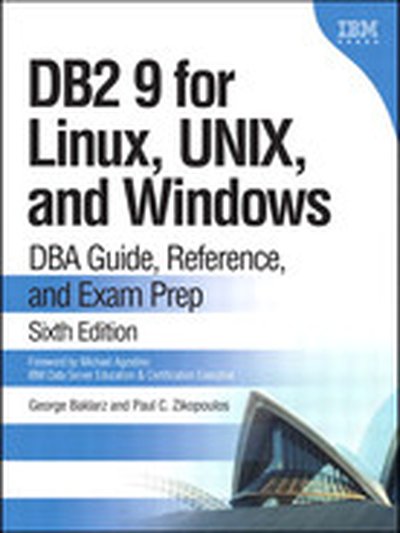
DB2® 9 for Linux®, UNIX®, and Windows®: DBA Guide, Reference, and Exam Prep, Sixth Edition

DB2 ® 9 builds on the world's number one enterprise database to simplify the delivery of information as a service, accelerate development, and dramatically improve operational efficiency, security, and resiliency. Now, this new edition offers complete, start-to-finish coverage of DB2 9 administration and development for Linux ®, UNIX ®, and Windows ® platforms, as well as authoritative preparation for the latest IBM DB2 certification exam. Written for both DBAs and developers, this definitive reference and self-study guide covers all aspects of deploying and managing DB2 9, including DB2 database design and development; day-to-day administration and backup; deployment of networked, Internet-centered, and SOA-based applications; migration; and much more. You'll also find an unparalleled collection of expert tips for optimizing performance, availability, and value. Coverage includes: Important security and resiliency enhancements, including advanced access control; fine-grained, label-based security; and the new security administrator role Breakthrough pureXML ™ features that make it easier to succeed with service-oriented architecture Operational improvements that enhance DBA efficiency--including self-tuning memory allocation, automated storage management, and storage optimization Table-partitioning features that improve scalability and manageability Powerful improvements for more agile and rapid development, including the new Eclipse-based Developer Workbench and simple SQL or XQuery access to all data Whatever your role in working with DB2 or preparing for certification, is the one book you can't afford to be without. DB2 9 for Linux, UNIX, and Windows, Sixth Edition Download Complete DB2 V9 Trial Version Visit ibm.com/db2/9/download.html to download a complete trial version of DB2, which enables you to try out dozens of the most powerful features of DB2 for yourself: everything from pureXML support to automated administration and optimization. Straight from IBM, the ultimate guide to running DB2 9 and preparing for the latest IBM DB2 certification exam! Covers powerful DB2 9 enhancements ranging from automated management to improved compression Covers the full spectrum of DBA responsibilities, including server management, data placement, XML concepts, activity analysis, high availability, and security Presents expert tips and best practices from the DB2 customer support organization

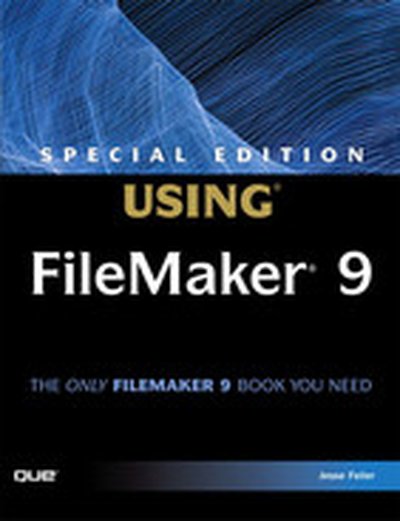
Special Edition Using FileMaker 9

Special Edition Using FileMaker 9 The only FILEMAKER 9 book you need We crafted this book to grow with you, providing the reference material you need as you move toward FileMaker® 9 proficiency and the use of more advanced features. If you buy only one book on FileMaker® 9, Special Edition Using FileMaker® 9 is the only book you need. Make the most of FileMaker 9: • Integrate the Web with FileMaker using the new Web Viewer • Use the new external data sources techniques with SQL and ODBC • Discover how to add supplemental fields in FileMaker to external SQL data sources • See how the major changes in script editing and debugging can help you • Learn new layout techniques, including conditional formatting and auto-resizing layout objects • Find out how to use the new FileMaker Server Admin Console to administer databases • Publish FileMaker databases on the Web using Instant Web Publishing, and use Custom Web Publishing with PHP or XML/XSLT “The new FileMaker 9 product line is the most dramatic new offering in years with over 30 ease-of-use breakthroughs; and Special Edition Using FileMaker 9 is an excellent desk reference and companion resource for all FileMaker professionals!” –Rick Kalman, Senior Product Manager, FileMaker, Inc. Jesse Feiler is a member of the FileMaker Business Alliance. He regularly consults on FileMaker and develops FileMaker solutions for small businesses, non-profits, art, retail point-of-sale, publishing, marketing, and other markets. He has created a number of video training courses, including one on FileMaker 7 and appears regularly on WAMC Northeast Public Radio’s Roundtable and Vox Pop shows. ON THE WEB Download modified FileMaker Starter solutions with added fields, scripts, and layouts to illustrate techniques in the book, along with other materials, from www.quepublishing.com and www.northcountryconsulting.com. Category Database Covers FileMaker 9 User Level Intermediate–Advanced

Excel® 2007 PivotTables and PivotCharts

Though many consumers know the basics of using Excel, few users understand the powerful capabilities of the PivotTable and PivotChart features. These tools can help turn long lists of unreadable data into dynamically generated, easy-to-read tables and charts that highlight useful and pertinent business information. Companies rely on this type of data from marketing, accounting, and finance to help make better decisions about products, sales and even human resources. Charts are interactive, allowing the consumer to tweak results with the click of a mouse and PivotTables allow you to fuse data from several sources into one document. This book shows users how to work with PivotTables and PivotCharts to make sense of their data. It covers features such as: understanding PivotTable benefits and uses; creating and customizing PivotTables; using PivotTables to analyze business data; building custom calculations; linking to external data sources, including Access databases, Word tables, Web pages, XML data, SQL Server databases, and OLAP cubes; publishing PivotTables to the Web; multiple consolidation of data, for example, summarizing annual fiscal data by quarters; preparing financial reporting, budgeting, and data analysis across departments; and using VBA to create macros that automate frequently used PivotTable tasks.

Oracle PL/SQL Language Pocket Reference, 4th Edition

The fourth edition of this popular pocket guide provides quick-reference information that will help you use Oracle's PL/SQL language, including the newest Oracle Database 11g features. It's a companion to Steven Feuerstein and Bill Pribyl's bestselling Oracle PL/SQL Programming. This concise guide boils down the most vital PL/SQL information into an accessible summary of: The new edition describes such Oracle Database 11g elements as PL/SQL's function result cache, compound triggers, the CONTINUE statement, the SIMPLE_INTEGER datatype, and improvements to native compilation, regular expressions, and compiler optimization (including intra-unit inlining). In addition, this book now includes substantial new sections on Oracle's built-in functions and packages. Fundamental language elements (e.g., block structure, datatypes, declarations) Statements for program control, cursor management, and exception handling Records, procedures, functions, triggers, and packages Calling PL/SQL functions in SQL Compilation options, object-oriented features, collections, and Java integration When you need answers quickly, the Oracle PL/SQL Language Pocket Reference will save you hours of frustration.

Oracle PL/SQL Best Practices, 2nd Edition

In this compact book, Steven Feuerstein, widely recognized as one of the world's leading experts on the Oracle PL/SQL language, distills his many years of programming, teaching, and writing about PL/SQL into a set of best practices-recommendations for developing successful applications. Covering the latest Oracle release, Oracle Database 11gR2, Feuerstein has rewritten this new edition in the style of his bestselling Oracle PL/SQL Programming. The text is organized in a problem/solution format, and chronicles the programming exploits of developers at a mythical company called My Flimsy Excuse, Inc., as they write code, make mistakes, and learn from those mistakes-and each other. This book offers practical answers to some of the hardest questions faced by PL/SQL developers, including: What is the best way to write the SQL logic in my application code? How should I write my packages so they can be leveraged by my entire team of developers? How can I make sure that all my team's programs handle and record errors consistently? Oracle PL/SQL Best Practices summarizes PL/SQL best practices in nine major categories: overall PL/SQL application development; programming standards; program testing, tracing, and debugging; variables and data structures; control logic; error handling; the use of SQL in PL/SQL; building procedures, functions, packages, and triggers; and overall program performance. This book is a concise and entertaining guide that PL/SQL developers will turn to again and again as they seek out ways to write higher quality code and more successful applications. "This book presents ideas that make the difference between a successful project and one that never gets off the ground. It goes beyond just listing a set of rules, and provides realistic scenarios that help the reader understand where the rules come from. This book should be required reading for any team of Oracle database professionals." --Dwayne King, President, KRIDAN Consulting