talk-data.com talk-data.com

Topic

SQL

Structured Query Language (SQL)

database_language data_manipulation data_definition programming_language

1751

tagged

Activity Trend

107 peak/qtr
2020-Q1 2026-Q1

Activities

1751 activities · Newest first

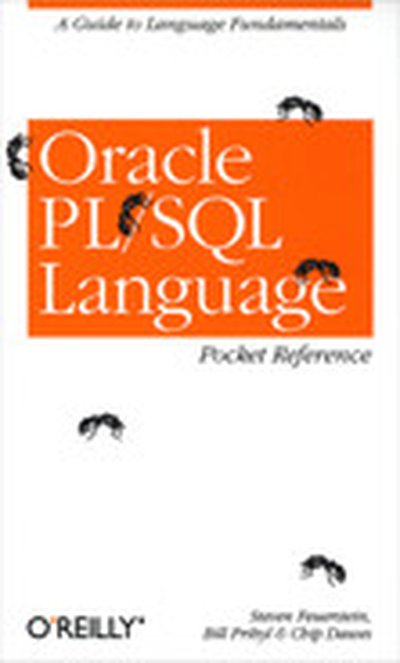
Oracle PL/SQL Language Pocket Reference

This pocket reference provides quick-reference information that will help you use Oracle's PL/SQL language. It is a companion to Steven Feuerstein and Bill Pribyl's bestselling book, Oracle PL/SQL Programming, and includes coverage of the latest version of Oracle, Oracle8i. Oracle is the most popular database management system in use today, and PL/SQL plays a pivotal role in current and projected Oracle products and applications. PL/SQL provides procedural extensions to the SQL relational database language and to an ever-growing number of Oracle development tools. It offers a myriad of data types, and such features as cursors, loops, conditional and sequential control statements, exception handlers, records, tables, and constructs for developing modular code (functions, procedures, and packages). Originally a rather limited tool, PL/SQL became with Oracle7 a mature and effective language for developers. Now, with the introduction of Oracle8, PL/SQL has taken the next step towards becoming a fully realized programming language providing sophisticated object-oriented capabilities. The book on which this pocket reference is based, Oracle PL/SQL Programming, filled a huge gap in the Oracle market, providing developers with a single, comprehensive guide to building applications with PL/SQL -- and building them the right way. That book has become the bible for PL/SQL developers who have raved about its completeness, readability, and practicality. The book is packed with strategies, code architectures, tips, techniques, and fully realized code. The second edition of the book updated the text with the new Oracle8 PL/SQL features, including object types, collections, external procedures, and large object data types and functions. The pocket reference boils down the most vital information from the large (nearly 1000 pages) book into an accessible quick reference that summarizes the basics of PL/SQL -- its block structure, fundamental language elements (e.g., identifiers, declarations, defaults), data structures (including Oracle8 objects), and statements for program control, loops, exception handling, and database access. It also covers the the basics of using Oracle's procedures, functions, and packages, and the latest features for Oracle8i.
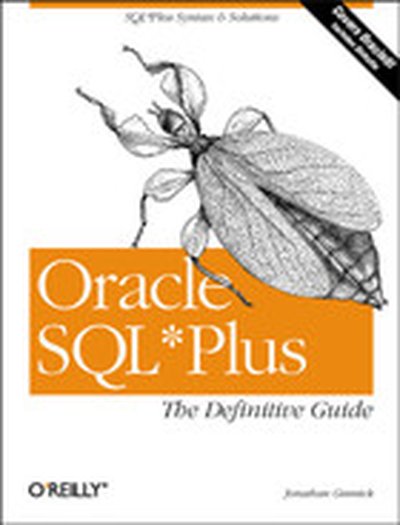
Oracle SQL*Plus: The Definitive Guide

This book is the definitive guide to SQLPlus. If you want to take best advantage of the power and flexibility of this popular Oracle tool, you need this book. SQLPlus is an interactive query tool that is ubiquitous in the Oracle world. It is present in every Oracle installation and is available to almost every Oracle developer and database administrator. SQLPlus has been shipped with Oracle since at least version 6. It continues to be supported and enhanced with each new version of Oracle, including Oracle8 and Oracle8i. It is still the only widely available tool for writing SQL scripts. Despite this wide availability and usage, few developers and DBAs know how powerful SQLPlus really is. This book introduces SQLPlus, includes a quick reference to all of its syntax options, and, most important, provides chapters that describe, in step-by-step fashion, how to perform all of the tasks that Oracle developers and DBAs want to perform with SQLPlus -- and maybe some they didn't realize they COULD perform with SQLPlus. You will learn how to write and execute script files, generate ad hoc reports, extract data from the database, query the data dictionary tables, customize your SQLPlus environment, and use the SQLPlus administrative features (new in Oracle8i). This book is an indispensable resource for readers who are new to SQLPlus, a task-oriented learning tool for those who are already using it, and a quick reference for every user. A table of contents follows: Preface Introduction to SQLPlus Interacting with SQLPlus Generating Reports with SQLPlus Writing SQLPlus Scripts Extracting Data with SQLPlus Exploring Your Database with SQLPlus Advanced Scripting Tuning and Timing The Product User Profile Administration with SQLPlus Customizing Your SQLPlus Environment A. SQLPlus Command Reference B. Connect Strings and the SQLPlus Command Appendices

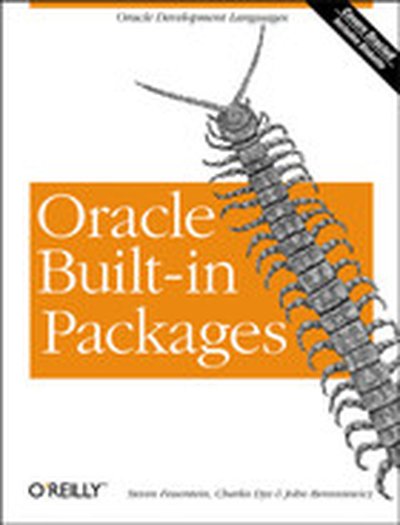
Oracle Built-in Packages

Oracle is the most popular database management system in use today, and PL/SQL plays a pivotal role in current and projected Oracle products and applications. PL/SQL is a programming language providing procedural extensions to the SQL relational database language and to an ever-growing number of oracle development tools. originally a rather limited tool, PL/SQL became with Oracle7 a mature and effective language for developers. now, with the introduction of Oracle8, PL/SQL has taken the next step towards becoming a fully realized programming language providing sophisticated object-oriented capabilities. Steven Feuerstein's Oracle PL/SQL Programming is a comprehensive guide to building applications with PL/SQL. That book has become the bible for PL/SQL developers who have raved about its completeness, readability, and practicality. Built-in packages are collections of PL/SQL objects built by Oracle Corporation and stored directly in the Oracle database. The functionality of these packages is available from any programming environment that can call PL/SQL stored procedures, including Visual Basic, Oracle Developer/2000, Oracle Application Server (for web-based development), and, of course, the Oracle database itself. Built-in packages extend the capabilities and power of PL/SQL in many significant ways. for example: DBMS_SQL executes dynamically constructed SQL statements and PL/SQL blocks of code. DBMS_PIPE communicates between different Oracle sessions through a pipe in the RDBMS shared memory. DBMS_JOB submits and manages regularly scheduled jobs for execution inside the database. DBMS_LOB accesses and manipulates Oracle8's large objects (LOBs) from within PL/SQL programs. 1. Introduction Executing Dynamic SQL and PL/SQL Intersession Communication User Lock and Transaction Management Oracle Advanced Queuing Generating Output from PL/SQL Programs Defining an Application Profile Managing Large Objects Datatype Packages Miscellaneous Packages Managing Session Information Managing Server Resources Job Scheduling in the Database Snapshots Advanced Replication Conflict Resolution Deferred Transactions and Remote Procedure Calls The first edition of Oracle PL/SQL Programming contained a chapter on Oracle's built-in packages. but there is much more to say about the basic PL/SQL packages than Feuerstein could fit in his first book. In addition, now that Oracle8 has been released, there are many new Oracle8 built-in packages not described in the PL/SQL book. There are also packages extensions for specific oracle environments such as distributed database. hence this book. Oracle Built-in Packages pulls together information about how to use the calling interface (API) to Oracle's Built-in Packages, and provides extensive examples on using the built-in packages effectively. The windows diskette included with the book contains the companion guide, an online tool developed by RevealNet, Inc., that provides point-and-click access to the many files of source code and online documentation developed by the authors. The table of contents follows: Preface Part I: Overview Part II: Application Development Packages Part III: Server Management Packages Part IV: Distributed Database Packages Appendix. What's on the companion disk?

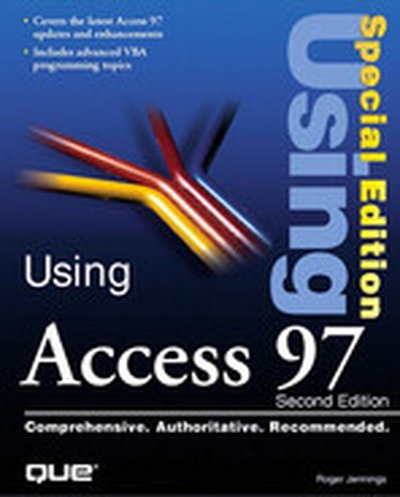
Special Edition Using Access 97, Second Edition

Special Edition Using Access 97, Second Edition, is your authoritative guide to mastering every facet of this powerful 32-bit database development platform. Get started quickly by using the Database Wizard to create a working Access 97 application in less than 30 minutes. Detailed, step-by-step instructions guide you through the process of designing and using Access tables, queries, forms, and reports. Newly added chapters on advanced VBA 5.0 techniques pave your way to Access programming expertise. Plus, you get full coverage of the latest updates to Access 97, including report Snapshot technology from Office Service Release 1 and the Upsizing Wizard for SQL Server 6.5+.

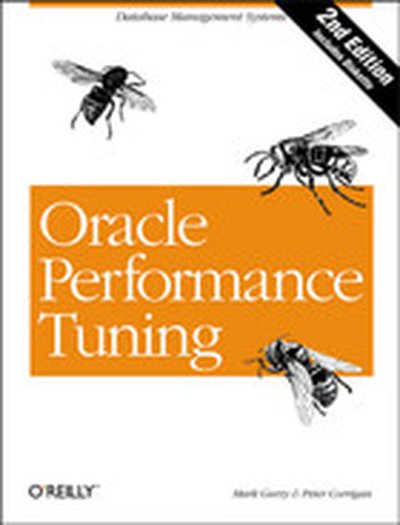
Oracle Performance Tuning, 2nd Edition

The books in O'Reilly's Oracle series are authoritative -- they tell the whole story about complex topics, ranging from performance tuning to the use of packages in PL/SQL to new technologies like Power Objects. And they're independent; they're alternatives for readers who need to know how products and features really work. They're packed with real-world advice and techniques from practitioners in the field, and they come with disks containing code you can use immediately in your own applications. O'Reilly is the alternative for Oracle people who need to solve problems -- and solve them now.Performance tuning is crucial in any modern relational database management system. Too many organizations respond to Oracle performance problems by throwing money at these problems -- by buying larger and more expensive computers or by hiring expert consultants. But there's a lot you can do on your own to increase dramatically the performance of your existing system. Whatever version of Oracle you're running -- from Version 6 to Oracle8, proper tuning can save your organization a huge amount of money in additional equipment, extra memory, and hardware upgrades.The first edition of Oracle Performance Tuning became a classic for programmers, managers, database administrators, system administrators, and anyone who cares about improving the performance of an Oracle system. This second edition contains 400 pages of updated material updating on Oracle features, incorporating advice about disk striping and mirroring, RAID, client-server, distributed databases, MPPS, SMPs, and other architectures. It also includes chapters on parallel server, parallel query, backup and recovery, the Oracle Performance Pack, and more.

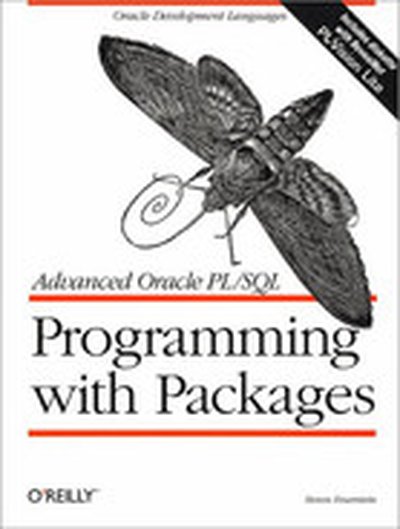
Advanced Oracle PL/SQL Programming with Packages

Steven Feuerstein's first book, Oracle PL/SQL Programming, has become the classic reference to PL/SQL, Oracle's procedural extension to its SQL language. His new book looks thoroughly at one especially advanced and powerful part of the PL/SQL language -- the package. The use of packages can dramatically improve your programming productivity and code quality, while preparing you for object-oriented development in Oracle technology. In this book, Feuerstein explains how to construct packages -- and how to build them the right way. His "best practices" for building packages will transform the way you write packages and help you get the most out of the powerful, but often poorly understood, PL/SQL language. Much more than a book, Advanced Oracle PL/SQL Programming with Packages comes with a PC diskette containing a full-use software companion. Developed by Feuerstein, RevealNet's PL/Vision Lite is the first of its kind for PL/SQL developers: a library of thirty-plus PL/SQL packages. The packages solve a myriad of common programming problems and vastly accelerate the development of modular and maintainable applications. The packages provided in PL/Vision Lite fall into three categories: Building block packages: low-level development enhancers, including string parsers, a list manager, and an interface to PL/SQL tables. Developer utilities: programs that improve your PL/SQL development environment, including a code generator, a powerful substitute for SHOW ERRORS, and an online help delivery mechanism. Plug-and-play components: pieces of code that can be used as is in your own applications, including a high-level exception handler mechanism and a generic, reusable logging mechanism. In addition to describing the details of these packages, this book explores why and how they were built the way they were. You'll come away with an increased appreciation of the PL/SQL language and the power of packages. Most importantly, you'll be ready and eager to put that power to use immediately in your own applications.

A/B testing is a powerful technique used in data-driven decision-making to evaluate the impact of changes or interventions. In this comprehensive workshop, you will gain a deep understanding of A/B testing principles, learn how to design effective experiments, and analyze the results using statistical methods.

Workshop Curriculum:

Module 1: Introduction to A/B Testing Module 2: Formulating Hypotheses and Experiment Design Module 3: Statistical Analysis Techniques Module 4: Interpreting and Presenting Results Module 5: A/B Testing in Practice with Python

Prerequisites:

  • Basic understanding of statistics and hypothesis testing
  • Familiarity with basic concepts of data analysis
  • Familiarity with Python

Agenda:

7:45 pm - 7:50 pm Arrival, socializing, and Opening 7:50 pm - 9:45 pm Dr. Yasin Ceran, "AB Testing Workshop Mastering Experimentation and Statistical Analysis" 9:45 pm - 9:50 pm Q&A

About Dr. Yasin Ceran:

Yasin Ceran is passionate about all things data and holds a vast experience in data analysis, mathematical modeling and Apache Spark, and in SQL, Python and R. He is currently an associate professor at KAIST, South Korea, as well as teaching at San Jose State University at the heart of Silicon Valley. Yasin has worked rigorously on an array of data-related projects encompassing data mining, statistics, modeling, and is dedicated to sharing his experience and expertise with learners.

Build Bigger With Small Ai: Running Small Models Locally

It's finally possible to bring the awesome power of Large Language Models (LLMs) to your laptop. This talk will explore how to run and leverage small, openly available LLMs to power common tasks involving data, including selecting the right models, practical use cases for running small models, and best practices for deploying small models effectively alongside databases.

Bio: Jeffrey Morgan is the founder of Ollama, an open-source tool to get up and run large language models. Prior to founding Ollama, Jeffrey founded Kitematic, which was acquired by Docker and evolved into Docker Desktop. He has previously worked at companies including Docker, Twitter, and Google.

➡️ Follow Us LinkedIn: https://www.linkedin.com/company/small-data-sf/ X/Twitter : https://twitter.com/smalldatasf Website: https://www.smalldatasf.com/

Discover how to run large language models (LLMs) locally using Ollama, the easiest way to get started with small AI models on your Mac, Windows, or Linux machine. Unlike massive cloud-based systems, small open source models are only a few gigabytes, allowing them to run incredibly fast on consumer hardware without network latency. This video explains why these local LLMs are not just scaled-down versions of larger models but powerful tools for developers, offering significant advantages in speed, data privacy, and cost-effectiveness by eliminating hidden cloud provider fees and risks.

Learn the most common use case for small models: combining them with your existing factual data to prevent hallucinations. We dive into retrieval augmented generation (RAG), a powerful technique where you augment a model's prompt with information from a local data source. See a practical demo of how to build a vector store from simple text files and connect it to a model like Gemma 2B, enabling you to query your own data using natural language for fast, accurate, and context-aware responses.

Explore the next frontier of local AI with small agents and tool calling, a new feature that empowers models to interact with external tools. This guide demonstrates how an LLM can autonomously decide to query a DuckDB database, write the correct SQL, and use the retrieved data to answer your questions. This advanced tutorial shows you how to connect small models directly to your data engineering workflows, moving beyond simple chat to create intelligent, data-driven applications.

Get started with practical applications for small models today, from building internal help desks to streamlining engineering tasks like code review. This video highlights how small and large models can work together effectively and shows that open source models are rapidly catching up to their cloud-scale counterparts. It's never been a better time for developers and data analysts to harness the power of local AI.

In this game you will create and manage permissions for Google Cloud resources, run structured queries on BigQuery and Cloud SQL, create several VPC networks and VM instances and test connectivity across networks, and monitor a Google Compute Engine VM instance with Cloud Monitoring.

Click the blue “Learn more” button above to tap into special offers designed to help you implement what you are learning at Google Cloud Next 25.

Interviewing for a Data Science position can feel daunting. This workshop will cover everything you need to know to prepare yourself for interviewing and succeed in landing your preferred Data Science job. I will break down the complete, start-to-finish components of the process—from job applications to offer negotiations—to help you feel confident and maximize your interview experience. Topics covered include: understanding the different flavors of Data Science positions and what best suits you; tailoring your resume to land the interview; technical skills: what to expect and how to prepare your skills in statistics, Python, ML, SQL, and more; communication skills: how to communicate your experiences and stand out; general tips for acing your interviews and negotiating your offers.

In this hands-on lab, you'll explore data with BigQuery's intuitive table explorer and data insight features, enabling you to gain valuable insights without writing SQL queries from scratch. Learn how to generate key insights from order item data, query location tables, and interact with your data seamlessly. By the end, you’ll be equipped to navigate complex datasets and uncover actionable insights quickly and efficiently.

If you register for a Learning Center lab, please ensure that you sign up for a Google Cloud Skills Boost account for both your work domain and personal email address. You will need to authenticate your account as well (be sure to check your spam folder!). This will ensure you can arrive and access your labs quickly onsite. You can follow this link to sign up!