talk-data.com talk-data.com

Event

O'Reilly Data Science Books

2013-08-09 – 2026-02-25 Oreilly Visit website ↗

Activities tracked

333

Collection of O'Reilly books on Data Science.

Filtering by: AI/ML ×

Sessions & talks

Showing 151–175 of 333 · Newest first

Search within this event →
Computational Intelligence and Healthcare Informatics

COMPUTATIONAL INTELLIGENCE and HEALTHCARE INFORMATICS The book provides the state-of-the-art innovation, research, design, and implements methodological and algorithmic solutions to data processing problems, designing and analysing evolving trends in health informatics, intelligent disease prediction, and computer-aided diagnosis. Computational intelligence (CI) refers to the ability of computers to accomplish tasks that are normally completed by intelligent beings such as humans and animals. With the rapid advance of technology, artificial intelligence (AI) techniques are being effectively used in the fields of health to improve the efficiency of treatments, avoid the risk of false diagnoses, make therapeutic decisions, and predict the outcome in many clinical scenarios. Modern health treatments are faced with the challenge of acquiring, analyzing and applying the large amount of knowledge necessary to solve complex problems. Computational intelligence in healthcare mainly uses computer techniques to perform clinical diagnoses and suggest treatments. In the present scenario of computing, CI tools present adaptive mechanisms that permit the understanding of data in difficult and changing environments. The desired results of CI technologies profit medical fields by assembling patients with the same types of diseases or fitness problems so that healthcare facilities can provide effectual treatments. This book starts with the fundamentals of computer intelligence and the techniques and procedures associated with it. Contained in this book are state-of-the-art methods of computational intelligence and other allied techniques used in the healthcare system, as well as advances in different CI methods that will confront the problem of effective data analysis and storage faced by healthcare institutions. The objective of this book is to provide researchers with a platform encompassing state-of-the-art innovations; research and design; implementation of methodological and algorithmic solutions to data processing problems; and the design and analysis of evolving trends in health informatics, intelligent disease prediction and computer-aided diagnosis. Audience The book is of interest to artificial intelligence and biomedical scientists, researchers, engineers and students in various settings such as pharmaceutical & biotechnology companies, virtual assistants developing companies, medical imaging & diagnostics centers, wearable device designers, healthcare assistance robot manufacturers, precision medicine testers, hospital management, and researchers working in healthcare system.
Computation in BioInformatics

COMPUTATION IN BIOINFORMATICS Bioinformatics is a platform between the biology and information technology and this book provides readers with an understanding of the use of bioinformatics tools in new drug design. The discovery of new solutions to pandemics is facilitated through the use of promising bioinformatics techniques and integrated approaches. This book covers a broad spectrum of the bioinformatics field, starting with the basic principles, concepts, and application areas. Also covered is the role of bioinformatics in drug design and discovery, including aspects of molecular modeling. Some of the chapters provide detailed information on bioinformatics related topics, such as silicon design, protein modeling, DNA microarray analysis, DNA-RNA barcoding, and gene sequencing, all of which are currently needed in the industry. Also included are specialized topics, such as bioinformatics in cancer detection, genomics, and proteomics. Moreover, a few chapters explain highly advanced topics, like machine learning and covalent approaches to drug design and discovery, all of which are significant in pharma and biotech research and development. Audience Researchers and engineers in computation biology, information technology, bioinformatics, drug design, biotechnology, pharmaceutical sciences.

2021 Data/AI Salary Survey

Curious about what technologies will have the biggest impact on salaries in the coming year? Want to determine whether a particular certification is worth going for? Looking for the most lucrative programming language to learn next? Are you hiring for a data team? Or do you just want to see how your skills and salary compare to others in the field? Get answers to your salary questions in the 2021 Data/AI Salary Survey .

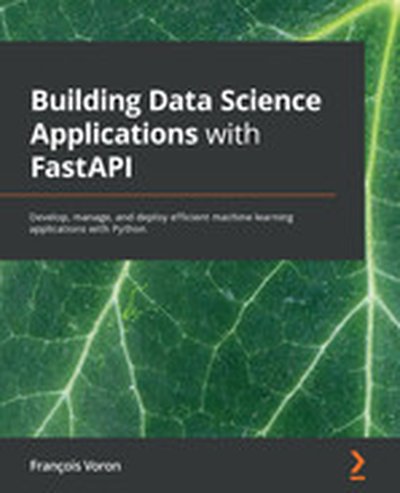
Building Data Science Applications with FastAPI

This comprehensive guide to FastAPI walks readers through developing modern web backends optimized for data science applications. By mastering key concepts like dependency injection and asynchronous programming, you will create high-performing REST APIs and machine learning powered systems. What this Book will help me do Master asynchronous programming and type hinting in Python for efficient coding. Design comprehensive RESTful APIs for machine learning with FastAPI. Build, test, and maintain scalable data science applications. Integrate Python libraries like NumPy and scikit-learn into web backends. Deploy modular and efficient FastAPI-backed systems to production. Author(s) None Voron is a seasoned software developer specialized in web frameworks and data science applications. With a strong background in building scalable systems, they bring invaluable insights on utilizing FastAPI. Voron emphasizes clarity and hands-on learning, sharing their expertise to help developers master the technology efficiently. Who is it for? This book is ideal for data scientists and Python developers interested in creating efficient data science backends. If you have groundwork knowledge of machine learning concepts and Python programming, this book will enhance your ability to deploy and manage APIs for data-driven applications.

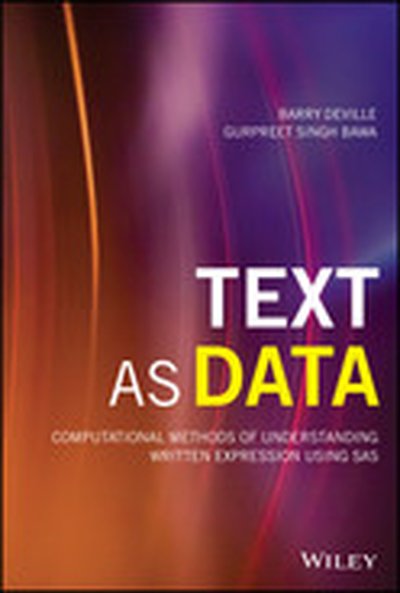
Text as Data

Text As Data: Combining qualitative and quantitative algorithms within the SAS system for accurate, effective and understandable text analytics The need for powerful, accurate and increasingly automatic text analysis software in modern information technology has dramatically increased. Fields as diverse as financial management, fraud and cybercrime prevention, Pharmaceutical R&D, social media marketing, customer care, and health services are implementing more comprehensive text-inclusive, analytics strategies. Text as Data: Computational Methods of Understanding Written Expression Using SAS presents an overview of text analytics and the critical role SAS software plays in combining linguistic and quantitative algorithms in the evolution of this dynamic field. Drawing on over two decades of experience in text analytics, authors Barry deVille and Gurpreet Singh Bawa examine the evolution of text mining and cloud-based solutions, and the development of SAS Visual Text Analytics. By integrating quantitative data and textual analysis with advanced computer learning principles, the authors demonstrate the combined advantages of SAS compared to standard approaches, and show how approaching text as qualitative data within a quantitative analytics framework produces more detailed, accurate, and explanatory results. Understand the role of linguistics, machine learning, and multiple data sources in the text analytics workflow Understand how a range of quantitative algorithms and data representations reflect contextual effects to shape meaning and understanding Access online data and code repositories, videos, tutorials, and case studies Learn how SAS extends quantitative algorithms to produce expanded text analytics capabilities Redefine text in terms of data for more accurate analysis This book offers a thorough introduction to the framework and dynamics of text analytics—and the underlying principles at work—and provides an in-depth examination of the interplay between qualitative-linguistic and quantitative, data-driven aspects of data analysis. The treatment begins with a discussion on expression parsing and detection and provides insight into the core principles and practices of text parsing, theme, and topic detection. It includes advanced topics such as contextual effects in numeric and textual data manipulation, fine-tuning text meaning and disambiguation. As the first resource to leverage the power of SAS for text analytics, Text as Data is an essential resource for SAS users and data scientists in any industry or academic application.

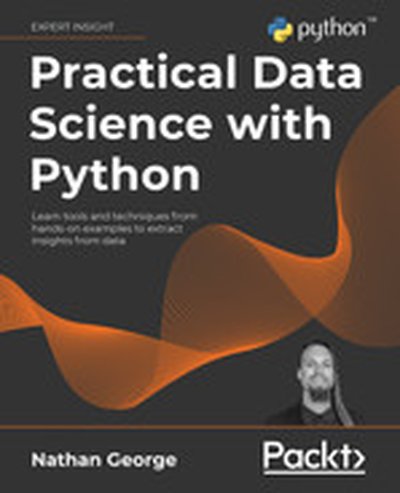
Practical Data Science with Python

Practical Data Science with Python guides you through the entire process of leveraging Python tools to analyze and gain insights from data. You'll start with foundational concepts and coding essentials, progressing through statistical analysis, machine learning techniques, and ethical considerations. What this Book will help me do Clean, prepare, and explore data using pandas and NumPy. Understand and implement machine learning models such as random forests and support vector machines. Perform statistical tests and analyze distributions to enhance data insights. Utilize SQL with Python for efficient data interaction. Generate automated reports and dashboards for data storytelling. Author(s) Nathan George has extensive professional experience as a data scientist and Python developer. He specializes in the application of machine learning and statistical methods to solve real-world problems. His writing combines technical depth with an approachable style, aiming to provide readers with actionable knowledge and skills. Who is it for? This book is perfect for data science beginners who have a basic understanding of Python and want to build practical data analysis skills. Students in analytics programs or professionals looking to transition into a data science role will find value in its approachable yet comprehensive coverage. Aspiring data analysts and career changers will gain firsthand exposure to Python-based data science best practices. If you're eager to develop practical, hands-on experience in the data science field, this is the guide for you.

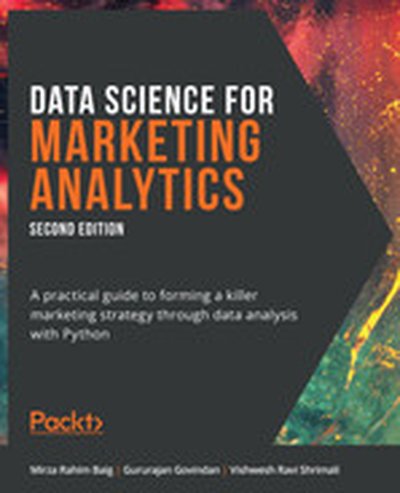
Data Science for Marketing Analytics - Second Edition

In 'Data Science for Marketing Analytics', you'll embark on a journey that integrates the power of data analytics with strategic marketing. With a focus on practical application, this guide walks you through using Python to analyze datasets, implement machine learning models, and derive data-driven insights. What this Book will help me do Gain expertise in cleaning, exploring, and visualizing marketing data using Python. Build machine learning models to predict customer behavior and sales outcomes. Leverage unsupervised learning techniques for effective customer segmentation. Compare and optimize predictive models using advanced evaluation methods. Master Python libraries like pandas and Matplotlib for data manipulation and visualization. Author(s) Mirza Rahim Baig, Gururajan Govindan, and Vishwesh Ravi Shrimali combine their extensive expertise in data analytics and marketing to bring you this comprehensive guide. Drawing from years of applying analytics in real-world marketing scenarios, they provide a hands-on approach to learning data science tools and techniques. Who is it for? This book is perfect for marketing professionals and analysts eager to harness the capabilities of Python to enhance their data-driven strategies. It is also ideal for data scientists looking to apply their skills in marketing across various roles. While a basic understanding of data analysis and Python will help, all key concepts are introduced comprehensively for beginners.

Data Analytics Made Easy

By reading "Data Analytics Made Easy," you'll gain a solid understanding of data analysis and visualization without requiring coding skills. This book emphasizes practical knowledge and use cases, covering storytelling, automation, machine learning, and business dashboards with tools like KNIME and Power BI. What this Book will help me do Understand the fundamentals of data analytics and how to leverage data for business insights. Create and automate data workflows using the no-code KNIME Analytics Platform. Develop interactive dashboards and data visualizations with Microsoft Power BI. Learn the basics of machine learning and how to apply models for business use. Enhance presentations and influence decisions through effective data storytelling. Author(s) None De Mauro is an experienced author and professional in the field of data analytics. Passionate about making complex topics approachable, None specializes in explaining technical concepts in simpler terms, ensuring readers can easily grasp and apply them in their work. Who is it for? This book is perfect for professionals or beginners who want to work with and interpret data effectively. Ideal for individuals in business roles or management positions looking to enhance their skills in data analytics and build a foundational understanding of machine learning and visualization.

Getting Started with Streamlit for Data Science

Getting Started with Streamlit for Data Science is your essential guide to quickly and efficiently building dynamic data science web applications in Python using Streamlit. Whether you're embedding machine learning models, visualizing data, or deploying projects, this book helps you excel in creating and sharing interactive apps with ease. What this Book will help me do Set up a development environment to create your first Streamlit application. Implement and visualize dynamic data workflows by integrating various Python libraries into Streamlit. Develop and showcase machine learning models within Streamlit for clear and interactive presentations. Deploy your projects effortlessly using platforms like Streamlit Sharing, Heroku, and AWS. Utilize tools like Streamlit Components and themes to enhance the aesthetics and usability of your apps. Author(s) Tyler Richards is a data science expert with extensive experience in leveraging technology to present complex data models in an understandable way. He brings practical solutions to readers, aiming to empower them with the tools they need to succeed in the field of data science. Tyler adopts a hands-on teaching method with illustrative examples to ensure clarity and easy learning. Who is it for? This book is designed for anyone involved in data science, from beginners just starting in the field to experienced professionals who want to learn to create interactive web applications using Streamlit. Ideal for those with a working knowledge of Python, this resource will help you streamline your workflows and enhance your project presentations.

Introduction to Statistical and Machine Learning Methods for Data Science

Boost your understanding of data science techniques to solve real-world problems Data science is an exciting, interdisciplinary field that extracts insights from data to solve business problems. This book introduces common data science techniques and methods and shows you how to apply them in real-world case studies. From data preparation and exploration to model assessment and deployment, this book describes every stage of the analytics life cycle, including a comprehensive overview of unsupervised and supervised machine learning techniques. The book guides you through the necessary steps to pick the best techniques and models and then implement those models to successfully address the original business need. No software is shown in the book, and mathematical details are kept to a minimum. This allows you to develop an understanding of the fundamentals of data science, no matter what background or experience level you have.

Consumption-Based Forecasting and Planning

Discover a new, demand-centric framework for forecasting and demand planning In Consumption-Based Forecasting and Planning, thought leader and forecasting expert Charles W. Chase delivers a practical and novel approach to retail and consumer goods companies demand planning process. The author demonstrates why a demand-centric approach relying on point-of-sale and syndicated scanner data is necessary for success in the new digital economy. The book showcases short- and mid-term demand sensing and focuses on disruptions to the marketplace caused by the digital economy and COVID-19. You’ll also learn: How to improve demand forecasting and planning accuracy, reduce inventory costs, and minimize waste and stock-outs What is driving shifting consumer demand patterns, including factors like price, promotions, in-store merchandising, and unplanned and unexpected events How to apply analytics and machine learning to your forecasting challenges using proven approaches and tactics described throughout the book via several case studies. Perfect for executives, directors, and managers at retailers, consumer products companies, and other manufacturers, Consumption-Based Forecasting and Planning will also earn a place in the libraries of sales, marketing, supply chain, and finance professionals seeking to sharpen their understanding of how to predict future consumer demand.

Knowledge Graphs

Applying knowledge in the right context is the most powerful lever businesses can use to become agile, creative, and resilient. Knowledge graphs add context, meaning, and utility to business data. They drive intelligence into data for unparalleled automation and visibility into processes, products, and customers. Businesses use knowledge graphs to anticipate downstream effects, make decisions based on all relevant information, and quickly respond to dynamic markets. In this report for chief information and data officers, Jesus Barassa, Amy E. Hodler, and Jim Webber from Neo4j show how to use knowledge graphs to gain insights, reveal a flexible and intuitive representation of complex data relationships, and make better predictions based on holistic information. Explore knowledge graph mechanics and common organizing principles Build and exploit a connected representation of your enterprise data environment Use decisioning knowledge graphs to explore the advantages of adding relationships to data analytics and data science Conduct virtual testing using software versions of real-world processes Deploy knowledge graphs for more trusted data, higher accuracies, and better reasoning for contextual AI

Data Science Projects with Python - Second Edition

Data Science Projects with Python offers a hands-on, project-based approach to learning data science using real-world data sets and tools. You will explore data using Python libraries like pandas and Matplotlib, build machine learning models with scikit-learn, and apply advanced techniques like XGBoost and SHAP values. This book equips you to confidently extract insights, evaluate models, and deliver results with clarity. What this Book will help me do Learn to load, clean, and preprocess data using Python and pandas. Build and evaluate predictive models, including logistic regression and random forests. Visualize data effectively using Python libraries like Matplotlib. Master advanced techniques like XGBoost and algorithmic fairness. Communicate data-driven insights to aid decision making in practical scenarios. Author(s) Stephen Klosterman is an experienced data scientist with a strong focus on practical applications of machine learning in business. Combining a rich academic background with hands-on industry experience, he excels at explaining complex concepts in an approachable way. As the author of 'Data Science Projects with Python,' his goal is to provide learners with the skills needed for real-world data science challenges. Who is it for? This book is ideal for beginners in data science and machine learning who have some basic programming knowledge in Python. Aspiring data scientists will benefit from its practical, end-to-end examples. Professionals seeking to expand their skillset in predictive modeling and delivering business insights will find this book invaluable. Some foundation in statistics and programming is recommended.

Essentials of Data Science and Analytics

Data science and analytics have emerged as the most desired fields in driving business decisions. Using the techniques and methods of data science, decision makers can uncover hidden patterns in their data, develop algorithms and models that help improve processes and make key business decisions. Data science is a data driven decision making approach that uses several different areas and disciplines with a purpose of extracting insights and knowledge from structured and unstructured data. The algorithms and models of data science along with machine learning and predictive modeling are widely used in solving business problems and predicting future outcomes. This book combines the key concepts of data science and analytics to help you gain a practical understanding of these fields. The four different sections of the book are divided into chapters that explain the core of data science. Given the booming interest in data science, this book is timely and informative.

Advanced Forecasting with Python: With State-of-the-Art-Models Including LSTMs, Facebook’s Prophet, and Amazon’s DeepAR

Cover all the machine learning techniques relevant for forecasting problems, ranging from univariate and multivariate time series to supervised learning, to state-of-the-art deep forecasting models such as LSTMs, recurrent neural networks, Facebook’s open-source Prophet model, and Amazon’s DeepAR model. Rather than focus on a specific set of models, this book presents an exhaustive overview of all the techniques relevant to practitioners of forecasting. It begins by explaining the different categories of models that are relevant for forecasting in a high-level language. Next, it covers univariate and multivariate time series models followed by advanced machine learning and deep learning models. It concludes with reflections on model selection such as benchmark scores vs. understandability of models vs. compute time, and automated retraining and updating of models. Each of the models presented in this book is covered in depth, with an intuitive simple explanation ofthe model, a mathematical transcription of the idea, and Python code that applies the model to an example data set. Reading this book will add a competitive edge to your current forecasting skillset. The book is also adapted to those who have recently started working on forecasting tasks and are looking for an exhaustive book that allows them to start with traditional models and gradually move into more and more advanced models. What You Will Learn Carry out forecasting with Python Mathematically and intuitively understand traditional forecasting models and state-of-the-art machine learning techniques Gain the basics of forecasting and machine learning, including evaluation of models, cross-validation, and back testing Select the right model for the right use case Who This Book Is For The advanced nature of the later chapters makes the book relevant for appliedexperts working in the domain of forecasting, as the models covered have been published only recently. Experts working in the domain will want to update their skills as traditional models are regularly being outperformed by newer models.

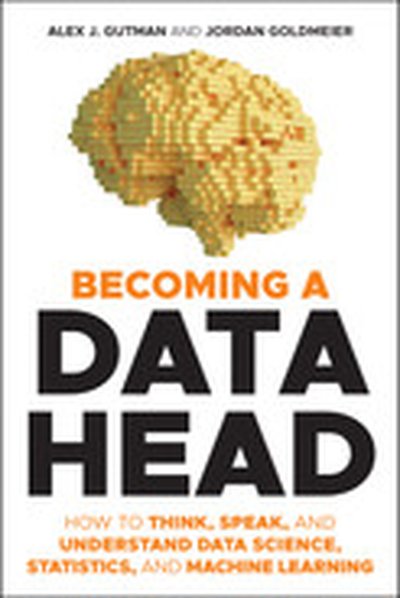
Becoming a Data Head

"Turn yourself into a Data Head. You'll become a more valuable employee and make your organization more successful."Thomas H. Davenport, Research Fellow, Author of Competing on Analytics, Big Data @ Work, and The AI Advantage You've heard the hype around data—now get the facts. In Becoming a Data Head: How to Think, Speak, and Understand Data Science, Statistics, and Machine Learning, award-winning data scientists Alex Gutman and Jordan Goldmeier pull back the curtain on data science and give you the language and tools necessary to talk and think critically about it. You'll learn how to: Think statistically and understand the role variation plays in your life and decision making Speak intelligently and ask the right questions about the statistics and results you encounter in the workplace Understand what's really going on with machine learning, text analytics, deep learning, and artificial intelligence Avoid common pitfalls when working with and interpreting data Becoming a Data Head is a complete guide for data science in the workplace: covering everything from the personalities you’ll work with to the math behind the algorithms. The authors have spent years in data trenches and sought to create a fun, approachable, and eminently readable book. Anyone can become a Data Head—an active participant in data science, statistics, and machine learning. Whether you're a business professional, engineer, executive, or aspiring data scientist, this book is for you.

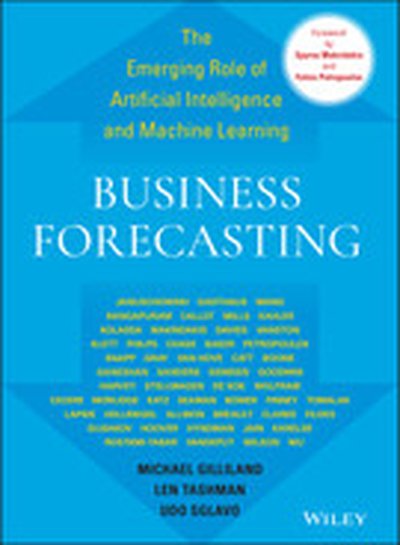
Business Forecasting

Discover the role of machine learning and artificial intelligence in business forecasting from some of the brightest minds in the field In Business Forecasting: The Emerging Role of Artificial Intelligence and Machine Learning accomplished authors Michael Gilliland, Len Tashman, and Udo Sglavo deliver relevant and timely insights from some of the most important and influential authors in the field of forecasting. You'll learn about the role played by machine learning and AI in the forecasting process and discover brand-new research, case studies, and thoughtful discussions covering an array of practical topics. The book offers multiple perspectives on issues like monitoring forecast performance, forecasting process, communication and accountability for forecasts, and the use of big data in forecasting. You will find: Discussions on deep learning in forecasting, including current trends and challenges Explorations of neural network-based forecasting strategies A treatment of the future of artificial intelligence in business forecasting Analyses of forecasting methods, including modeling, selection, and monitoring In addition to the Foreword by renowned researchers Spyros Makridakis and Fotios Petropoulos, the book also includes 16 "opinion/editorial" Afterwords by a diverse range of top academics, consultants, vendors, and industry practitioners, each providing their own unique vision of the issues, current state, and future direction of business forecasting. Perfect for financial controllers, chief financial officers, business analysts, forecast analysts, and demand planners, Business Forecasting will also earn a place in the libraries of other executives and managers who seek a one-stop resource to help them critically assess and improve their own organization's forecasting efforts.

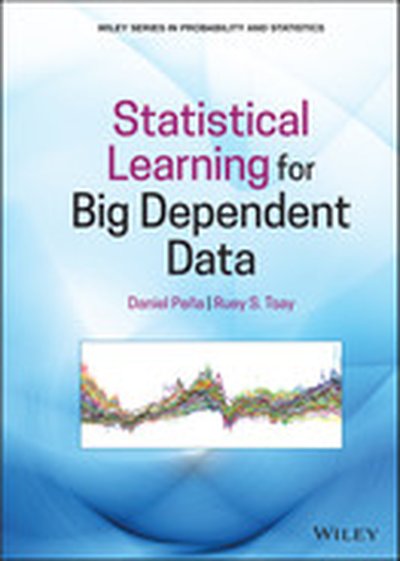
Statistical Learning for Big Dependent Data

Master advanced topics in the analysis of large, dynamically dependent datasets with this insightful resource Statistical Learning with Big Dependent Data delivers a comprehensive presentation of the statistical and machine learning methods useful for analyzing and forecasting large and dynamically dependent data sets. The book presents automatic procedures for modelling and forecasting large sets of time series data. Beginning with some visualization tools, the book discusses procedures and methods for finding outliers, clusters, and other types of heterogeneity in big dependent data. It then introduces various dimension reduction methods, including regularization and factor models such as regularized Lasso in the presence of dynamical dependence and dynamic factor models. The book also covers other forecasting procedures, including index models, partial least squares, boosting, and now-casting. It further presents machine-learning methods, including neural network, deep learning, classification and regression trees and random forests. Finally, procedures for modelling and forecasting spatio-temporal dependent data are also presented. Throughout the book, the advantages and disadvantages of the methods discussed are given. The book uses real-world examples to demonstrate applications, including use of many R packages. Finally, an R package associated with the book is available to assist readers in reproducing the analyses of examples and to facilitate real applications. Analysis of Big Dependent Data includes a wide variety of topics for modeling and understanding big dependent data, like: New ways to plot large sets of time series An automatic procedure to build univariate ARMA models for individual components of a large data set Powerful outlier detection procedures for large sets of related time series New methods for finding the number of clusters of time series and discrimination methods , including vector support machines, for time series Broad coverage of dynamic factor models including new representations and estimation methods for generalized dynamic factor models Discussion on the usefulness of lasso with time series and an evaluation of several machine learning procedure for forecasting large sets of time series Forecasting large sets of time series with exogenous variables, including discussions of index models, partial least squares, and boosting. Introduction of modern procedures for modeling and forecasting spatio-temporal data Perfect for PhD students and researchers in business, economics, engineering, and science: Statistical Learning with Big Dependent Data also belongs to the bookshelves of practitioners in these fields who hope to improve their understanding of statistical and machine learning methods for analyzing and forecasting big dependent data.

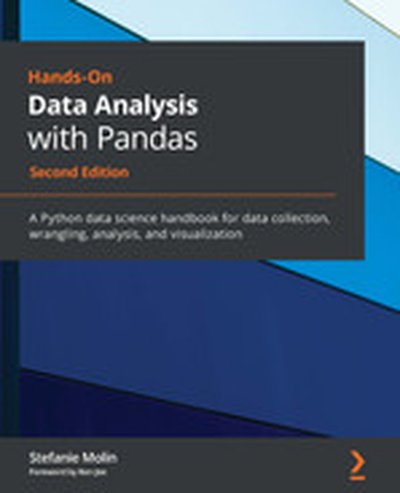
Hands-On Data Analysis with Pandas - Second Edition

'Hands-On Data Analysis with Pandas' guides you to gain expertise in the Python pandas library for data analysis and manipulation. With practical, real-world examples, you'll learn to analyze datasets, visualize data trends, and implement machine learning models for actionable insights. What this Book will help me do Understand and implement data analysis techniques with Python. Develop expertise in data manipulation using pandas and NumPy. Visualize data effectively with pandas visualization tools and seaborn. Apply machine learning techniques with Python libraries. Combine datasets and handle complex data workflows efficiently. Author(s) Stefanie Molin is a software engineer and data scientist with extensive experience in analytics and Python. She has worked with large data-driven systems and has a strong focus on teaching data analysis effectively. Stefanie's books are known for their practical, hands-on approach to solving real data problems. Who is it for? This book is perfect for aspiring data scientists, data analysts, and Python developers. Readers with beginner to intermediate skill levels in Python will find it accessible and informative. It is designed for those seeking to build practical data analysis skills. If you're looking to add data science and pandas to your toolkit, this book is ideal.

Data Science on AWS

With this practical book, AI and machine learning practitioners will learn how to successfully build and deploy data science projects on Amazon Web Services. The Amazon AI and machine learning stack unifies data science, data engineering, and application development to help level up your skills. This guide shows you how to build and run pipelines in the cloud, then integrate the results into applications in minutes instead of days. Throughout the book, authors Chris Fregly and Antje Barth demonstrate how to reduce cost and improve performance. Apply the Amazon AI and ML stack to real-world use cases for natural language processing, computer vision, fraud detection, conversational devices, and more Use automated machine learning to implement a specific subset of use cases with SageMaker Autopilot Dive deep into the complete model development lifecycle for a BERT-based NLP use case including data ingestion, analysis, model training, and deployment Tie everything together into a repeatable machine learning operations pipeline Explore real-time ML, anomaly detection, and streaming analytics on data streams with Amazon Kinesis and Managed Streaming for Apache Kafka Learn security best practices for data science projects and workflows including identity and access management, authentication, authorization, and more

Cleaning Data for Effective Data Science

Dive into the intricacies of data cleaning, a crucial aspect of any data science and machine learning pipeline, with 'Cleaning Data for Effective Data Science.' This comprehensive guide walks you through tools and methodologies like Python, R, and command-line utilities to prepare raw data for analysis. Learn practical strategies to manage, clean, and refine data encountered in the real world. What this Book will help me do Understand and utilize various data formats such as JSON, SQL, and PDF for data ingestion and processing. Master key tools like pandas, SciPy, and Tidyverse to manipulate and analyze datasets efficiently. Develop heuristics and methodologies for assessing data quality, detecting bias, and identifying irregularities. Apply advanced techniques like feature engineering and statistical adjustments to enhance data usability. Gain confidence in handling time series data by employing methods for de-trending and interpolating missing values. Author(s) David Mertz has years of experience as a Python programmer and data scientist. Known for his engaging and accessible teaching style, David has authored numerous technical articles and books. He emphasizes not only the technicalities of data science tools but also the critical thinking that approaches solutions creatively and effectively. Who is it for? 'Cleaning Data for Effective Data Science' is designed for data scientists, software developers, and educators dealing with data preparation. Whether you're an aspiring data enthusiast or an experienced professional looking to refine your skills, this book provides essential tools and frameworks. Prior programming knowledge, particularly in Python or R, coupled with an understanding of statistical fundamentals, will help you make the most of this resource.

Data Science for Supply Chain Forecasting

Using data science in order to solve a problem requires a scientific mindset more than coding skills. Data Science for Supply Chain Forecasting, Second Edition contends that a true scientific method which includes experimentation, observation, and constant questioning must be applied to supply chains to achieve excellence in demand forecasting. This second edition adds more than 45 percent extra content with four new chapters including an introduction to neural networks and the forecast value added framework. Part I focuses on statistical "traditional" models, Part II, on machine learning, and the all-new Part III discusses demand forecasting process management. The various chapters focus on both forecast models and new concepts such as metrics, underfitting, overfitting, outliers, feature optimization, and external demand drivers. The book is replete with do-it-yourself sections with implementations provided in Python (and Excel for the statistical models) to show the readers how to apply these models themselves. This hands-on book, covering the entire range of forecasting—from the basics all the way to leading-edge models—will benefit supply chain practitioners, forecasters, and analysts looking to go the extra mile with demand forecasting. Events around the book Link to a De Gruyter Online Event in which the author Nicolas Vandeput together with Stefan de Kok, supply chain innovator and CEO of Wahupa; Spyros Makridakis, professor at the University of Nicosia and director of the Institute For the Future (IFF); and Edouard Thieuleux, founder of AbcSupplyChain, discuss the general issues and challenges of demand forecasting and provide insights into best practices (process, models) and discussing how data science and machine learning impact those forecasts. The event will be moderated by Michael Gilliland, marketing manager for SAS forecasting software: https://youtu.be/1rXjXcabW2s

Beginning Power Apps: The Non-Developer's Guide to Building Business Applications

Transform the way your business works with easy-to-build apps. With this updated and expanded second edition, you can build business apps that work with your company's systems and databases, without having to enlist the expertise of costly, professionally trained software developers. In this new edition, business applications expert Tim Leung offers step-by-step guidance on how you can improve all areas of your business. He shows how you can replace manual or paper processes with modern apps that run on phone or tablet devices. For administrative and back-office operations, he covers how to build apps with workflow and dashboard capabilities. To facilitate collaboration with customers and clients, you’ll learn how to build secure web portals with data entry capabilities, including how to customize those portals with code. This hands-on new edition has 10 new chapters—including coverage on model-driven and portal apps, artificial intelligence, building components using the Power Apps Component Framework, using PowerShell for administration, and more—complete with context, explanatory screenshots, and non-technical terminology. What You Will Learn Create offline capable mobile apps and responsive web apps Carry out logic, data access, and data entry through formulas Embellish apps with charting, file handling, photo, barcode, and location features Set up Common Data Service, SharePoint, and SQL data sources Use AI to predict outcomes, recognize images, and analyze sentiment Integrate apps with external web services and automate tasks with Power Automate Build reusable code and canvas components, make customizations with JavaScript Transfer apps and data, and secure, administer, and monitor Power Apps environments Who This Book Is For Beginners and non-developers, and assumes no prior knowledge of Power Apps

Intelligent Data Analytics for Terror Threat Prediction

Intelligent data analytics for terror threat prediction is an emerging field of research at the intersection of information science and computer science, bringing with it a new era of tremendous opportunities and challenges due to plenty of easily available criminal data for further analysis. This book provides innovative insights that will help obtain interventions to undertake emerging dynamic scenarios of criminal activities. Furthermore, it presents emerging issues, challenges and management strategies in public safety and crime control development across various domains. The book will play a vital role in improvising human life to a great extent. Researchers and practitioners working in the fields of data mining, machine learning and artificial intelligence will greatly benefit from this book, which will be a good addition to the state-of-the-art approaches collected for intelligent data analytics. It will also be very beneficial for those who are new to the field and need to quickly become acquainted with the best performing methods. With this book they will be able to compare different approaches and carry forward their research in the most important areas of this field, which has a direct impact on the betterment of human life by maintaining the security of our society. No other book is currently on the market which provides such a good collection of state-of-the-art methods for intelligent data analytics-based models for terror threat prediction, as intelligent data analytics is a newly emerging field and research in data mining and machine learning is still in the early stage of development.

Beginning Mathematica and Wolfram for Data Science: Applications in Data Analysis, Machine Learning, and Neural Networks

Enhance your data science programming and analysis with the Wolfram programming language and Mathematica, an applied mathematical tools suite. The book will introduce you to the Wolfram programming language and its syntax, as well as the structure of Mathematica and its advantages and disadvantages. You’ll see how to use the Wolfram language for data science from a theoretical and practical perspective. Learning this language makes your data science code better because it is very intuitive and comes with pre-existing functions that can provide a welcoming experience for those who use other programming languages. You’ll cover how to use Mathematica where data management and mathematical computations are needed. Along the way you’ll appreciate how Mathematica provides a complete integrated platform: it has a mixed syntax as a result of its symbolic and numerical calculations allowing it to carry out various processes without superfluous lines of code. You’ll learn to use its notebooks as a standard format, which also serves to create detailed reports of the processes carried out. What You Will Learn Use Mathematica to explore data and describe the concepts using Wolfram language commands Create datasets, work with data frames, and create tables Import, export, analyze, and visualize data Work with the Wolfram data repository Build reports on the analysis Use Mathematica for machine learning, with different algorithms, including linear, multiple, and logistic regression; decision trees; and data clustering Who This Book Is For Data scientists new to using Wolfram and Mathematica as a language/tool to program in. Programmers should have some prior programming experience, but can be new to the Wolfram language.