In this session, we will explore cost transformative vendors such as DeepSeek and MistralAI’s impact on AI development, highlighting the potential to enhance enterprise innovation at a price/performance that is unprecedented. Data, analytics & AI leaders can bring their questions on how they can capitalize on new training and inferencing paradigms in AI, the future of AI model development and the impact of reasoning models on a more autonomous future in AI.
 talk-data.com
Topic
Analytics
data_analysis
insights
metrics
4552
tagged
Activity Trend
398
peak/qtr
2020-Q1
2026-Q2
Top Events
O'Reilly Data Science Books
528
O'Reilly Data Engineering Books
395
Moody's Talks - Inside Economics
283
Data Engineering Podcast
227
Data Career Podcast: Helping You Land a Data Analyst Job FAST
187
Data + AI Summit 2025
178
Databricks DATA + AI Summit 2023
170
The Analytics Power Hour
130
DataFramed
103
DATA MINER Big Data Europe Conference 2020
98
Secrets of Data Analytics Leaders
89
Dbt Coalesce 2024
87
Analytics is experiencing another monumental change. Just as visual drag and drop BI tools and augmented insights led to changes in analytics delivery, we now experience conversational interfaces, automated workflows and AI agents that cause us to rethink how analytics will be done. Join this session to learn the new technologies that are making an impact and how this will affect plans for future investment in analytics tools, platforms and solutions.
This presentation of Gartner's top D&A predictions for 2024 guides data and analytics leaders as they plan for the impact of AI on all aspects of data and analytics, including leadership, governance, talent, market, and the need for AI-ready data and a FinAI competency for value realization.
D&A leaders and teams are at an AI-driven inflection point. They are crucial to enable business value through AI-readiness but must evolve their strategy and operating model to meet their organization’s AI ambitions. Reporting from the Gartner 2025 CDAO Agenda Survey, this session reveals actions successful D&A leaders have taken to deliver business outcomes from AI, data, and analytics, and what they need to do next year.
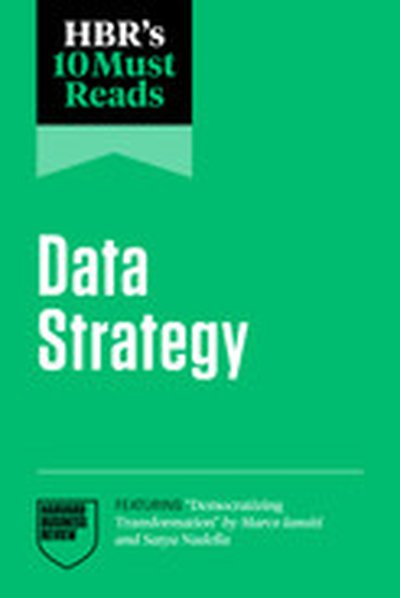
by
Marco Iansiti
,
Thomas Davenport
(Babson College)
,
Satya Nadella
(Microsoft)
,
Harvard Business Review
,
Tsedal Neeley
Data is your business. Have you unlocked its full potential? If you read nothing else on data strategy, read this book. We've combed through hundreds of Harvard Business Review articles and selected the most important ones to help you maximize your analytics capabilities; harness the power of data, algorithms, and AI; and gain competitive advantage in our hyperconnected world. This book will inspire you to: Reap the rewards of digital transformation Make better data-driven decisions Design breakout products that generate profitable insights Address vulnerabilities to cyberattacks and data breaches Reskill your workforce and build a culture of continuous learning Win with personalized customer experiences at scale This collection of articles includes "What's Your Data Strategy?," by Leandro DalleMule and Thomas H. Davenport; "Democratizing Transformation," by Marco Iansiti and Satya Nadella; "Why Companies Should Consolidate Tech Roles in the C-Suite," by Thomas H. Davenport, John Spens, and Saurabh Gupta; "Developing a Digital Mindset," by Tsedal Neeley and Paul Leonardi; "What Does It Actually Take to Build a Data-Driven Culture?," by Mai B. AlOwaish and Thomas C. Redman; "When Data Creates Competitive Advantage," by Andrei Hagiu and Julian Wright; "Building an Insights Engine," by Frank van den Driest, Stan Sthanunathan, and Keith Weed; "Personalization Done Right," by Mark Abraham and David C. Edelman; "Ensure High-Quality Data Powers Your AI," by Thomas C. Redman; "The Ethics of Managing People's Data," by Michael Segalla and Dominique Rouzies; "Where Data-Driven Decision-Making Can Go Wrong," by Michael Luca and Amy C. Edmondson; "Sizing Up Your Cyberrisks," by Thomas J. Parenty and Jack J. Domet; "A Better Way to Put Your Data to Work," Veeral Desai, Tim Fountaine, and Kayvaun Rowshankish; and "Heavy Machinery Meets AI," by Vijay Govindarajan and Venkat Venkatraman. HBR's 10 Must Reads are definitive collections of classic ideas, practical advice, and essential thinking from the pages of Harvard Business Review. Exploring topics like disruptive innovation, emotional intelligence, and new technology in our ever-evolving world, these books empower any leader to make bold decisions and inspire others.
With high D&A ambitions and AI pilots becoming increasingly ubiquitous, focus is shifting toward consistent execution. We will share how to continue innovating and experimenting while scaling success. In this keynote, Gartner’s perspective will guide you on preparing for the expected and adapting to the unexpected. Learn to enhance your D&A and AI capabilities on the path to success.
The modern data stack has transformed how organizations work with data, but are our BI tools keeping pace with these changes? As data schemas become increasingly fluid and analysis needs range from quick explorations to production-grade reporting, traditional approaches are being challenged. How can we create analytics experiences that accommodate both casual spreadsheet users and technical data modelers? With semantic layers becoming crucial for AI integration and data governance growing in importance, what skills do today's BI professionals need to master? Finding the balance between flexibility and governance is perhaps the greatest challenge facing data teams today. Colin Zima is the Co-Founder and CEO of Omni, a business intelligence platform focused on making data more accessible and useful for teams of all sizes. Prior to Omni, he was Chief Analytics Officer and VP of Product at Looker, where he helped shape the product and data strategy leading up to its acquisition by Google for $2.6 billion. Colin’s background spans roles in data science, analytics, and product leadership, including positions at Google, HotelTonight, and as founder of the restaurant analytics startup PrimaTable. He holds a degree in Operations Research and Financial Engineering from Princeton University and began his career as a Structured Credit Analyst at UBS. In the episode, Richie and Colin explore the evolution of BI tools, the challenges of integrating casual and rigorous data analysis, the role of semantic layers, and the impact of AI on business intelligence. They discuss the importance of understanding business needs, creating user-focused dashboards, and the future of data products, and much more. Links Mentioned in the Show: OmniConnect with ColinSkill Track: Design in Power BIRelated Episode: Self-Service Business Intelligence with Sameer Al-Sakran, CEO at MetabaseRegister for RADAR AI - June 26 New to DataCamp? Learn on the go using the DataCamp mobile appEmpower your business with world-class data and AI skills with DataCamp for business
by
Matt Colyar
(Moody's Analytics)
,
Cris deRitis
,
Mark Zandi
(Moody's Analytics)
,
Marisa DiNatale
(Moody's Analytics)
The specter of stagflation is on the rise. While the higher tariffs have yet to translate into higher prices, the Inside Economics team and their colleague, inflation-maven Matt Colyar, argue they soon will. And weaker growth isn’t too far behind – the team’s recession probabilities are increasing again. Mass immigrant deportations, and Israel’s bombing of Iran and the resulting spike in oil prices, also point to higher inflation and weaker growth. Just how serious a threat stagflation poses depends on many factors, the least of which is whether the Fed is willing and able to stick to its inflation mandate. Guest: Matt Colyar – Assistant Director, Moody's Analytics Hosts: Mark Zandi – Chief Economist, Moody’s Analytics, Cris deRitis – Deputy Chief Economist, Moody’s Analytics, Marisa DiNatale – Senior Director - Head of Global Forecasting, Moody’s Analytics Follow Mark Zandi on 'X', BlueSky or LinkedIn @MarkZandi, Cris deRitis on LinkedIn, and Marisa DiNatale on LinkedIn
Questions or Comments, please email us at [email protected]. We would love to hear from you. To stay informed and follow the insights of Moody's Analytics economists, visit Economic View.
The analytics industry is evolving faster than ever, and staying ahead requires more than technical expertise—it takes community building, internal advocacy, and the ability to drive impactful projects. In this episode, Dustin Schimek, Data Fluency Program Manager at MedStar Health, discusses the state of analytics in 2025. We explore what analysts are working on today, the importance of internal evangelism, and how to spearhead new projects and get to proof of concept (POC) quickly. Dustin also shares insights on standout traits for analysts and why community is at the heart of analytics success. If you're looking to thrive in analytics and stay at the forefront of the industry, this show is for you! What You'll Learn: Key trends shaping the analytics industry in 2025 The role of community building and internal evangelism in driving analytics success How to accelerate proof of concept (POC) for new analytics projects Common themes that make analysts stand out in today's industry Register for free to be part of the next live session: https://bit.ly/3XB3A8b Follow us on Socials: LinkedIn YouTube Instagram (Mavens of Data) Instagram (Maven Analytics) TikTok Facebook Medium X/Twitter
Modern data organizations have moved beyond big data analytics to also incorporate advanced AI/ML data workloads. These workflows often involve multimodal datasets containing documents, images, long-form text, embeddings, URLs and more. Unity Catalog is an ideal solution for organizing and governing this data at scale. When paired with the Daft open source data engine, you can build a truly multimodal, AI-ready data lakehouse. In this session, we’ll explore how Daft integrates with Unity Catalog’s core features (such as volumes and functions) to enable efficient, AI-driven data lakehouses. You will learn how to ingest and process multimodal data (images, text and videos), run AI/ML transformations and feature extractions at scale, and maintain full control and visibility over your data with Unity Catalog’s fine-grained governance.

The Apache Iceberg™ community is introducing native geospatial type support, addressing key challenges in managing geospatial data at scale, including fragmented formats and inefficiencies in storing large spatial datasets. This talk will delve into the origins of the Iceberg geo type, its specification design and future goals. We will examine the impact on both the geospatial and Iceberg communities, in introducing a standard data warehouse storage layer to the geospatial community, and enabling optimized geospatial analytics for Iceberg users. We will also present a live demonstration of the Iceberg geo data type with Apache Sedona™ and Apache Spark™, showcasing how it simplifies and accelerates geospatial analytics workflows and queries. Finally, we will also provide an in-depth look at its current capabilities and outline the roadmap for future developments, and offer a perspective on its role in advancing geospatial data management in the industry.
Monitoring data pipelines is key to reliability at scale. In this session, we’ll dive into the observability experience in Lakeflow, Databricks’ unified DE solution — from intuitive UI monitoring to advanced event analysis, cost observability and custom dashboards. We’ll walk through the revamped UX for Lakeflow observability, showing how to: Monitor runs and task states, dependencies and retry behavior in the UI Set up alerts for job and pipeline outcomes + failures Use pipeline and job system tables for historical insights Explore run events and event logs for root cause analysis Analyze metadata to understand and optimize pipeline spend How to build custom dashboards using system tables to track performance data quality, freshness, SLAs and failure trends, and drive automated alerting based on real-time signals This session will help you unlock full visibility into your data workflows.
Discover how the latest innovations in Databricks AI/BI Dashboards and Genie are transforming self-service analytics. This session offers a high-level tour of new capabilities that empower business users to ask questions in natural language, generate insights faster and make smarter decisions. Whether you're a long-time Databricks user or just exploring what's possible with AI/BI, you'll walk away with a clear understanding of how these tools are evolving — and how to leverage them for greater business impact.

Join two energy industry leaders as they showcase groundbreaking applications of AI and data solutions in modern oil and gas operations. NOV demonstrates how their Generative AI pipeline revolutionized drilling mud report processing, automating the analysis of 300 reports daily with near-perfect accuracy and real-time analytics capabilities. BP shares how Unity Catalog has transformed their enterprise-wide data strategy, breaking down silos while maintaining robust governance and security. Together, these case studies illustrate how AI and advanced analytics are enabling cleaner, more efficient energy operations while maintaining the reliability demanded by today's market.
by
Porter Orr
(The Standard Insurance Company)
,
Anindita Mahapatra
(Databricks)
,
Kranthi Nekkalapu
(Suncorp)
,
Adrien de Nazelle
(Oliver Wyman)
The insurance industry is rapidly evolving as advances in data and artificial intelligence (AI) drive innovation, enabling more personalized customer experiences, streamlined operations, and improved efficiencies. With powerful data analytics and AI-driven solutions, insurers can automate claims processing, enhance risk management, and make real-time decisions. Leveraging insights from large and complex datasets, organizations are delivering more customer-centric products and services than ever before. Key takeaways: Real-world applications of data and AI in claims automation, underwriting, and customer engagementHow predictive analytics and advanced data modeling help anticipate risks and meet customer needs. Personalization of policies, optimized pricing, and more efficient workflows for greater ROI. Discover how data and AI are fueling growth, improving protection, and shaping the future of the insurance industry!
Data residency laws and legal mandates are driving the need for lakehouses across public and private clouds. This sprawl threatens centralized governance and compliance, while impacting cost, performance, and analytics/AI functionality. This session shows how e6data extends Unity Catalog across hybrid environments for consistent policy enforcement and query execution—regardless of data location—with guarantees around network egress, entitlements, performance, scalability, and cost. Learn how e6data’s “zero-data movement” philosophy powers a cost- and latency-optimized, location-aware architecture. We’ll cover onboarding strategies for hybrid fleets that enforce data movement restrictions and stay close to the data for better performance and lower cost. Discover how a location-aware compute strategy enables hybrid lakehouses with four key value metrics: cross-platform functionality, governed access, low latency, and total cost of ownership.
by
Bobby Grubert
(RBC Capital Markets)
,
Antoine Amend
(Databricks)
,
Raul Chavarria
(B3 - Bolsa, Brasil e Balcão)
,
Jimmy Kozlow
(Northern Trust)
Growth in capital markets thrives on innovation, agility and real-time insights. This session highlights how leading firms use Databricks’ Data Intelligence Platform to uncover opportunities, optimize trading strategies and deliver personalized client experiences. Learn how advanced analytics and AI help organizations expand their reach, improve decision-making and unlock new revenue streams. Industry leaders share how unified data platforms break down silos, deepen insights and drive success in a fast-changing market. Key takeaways: Predictive analytics and machine learning strategies for growth Real-world examples of optimized trading and enhanced client engagement Tools to innovate while ensuring operational efficiency Discover how data intelligence empowers capital markets firms to thrive in today’s competitive landscape!
As Databricks transforms data processing, analytics and machine learning, managing platform costs has become crucial for organizations aiming to maximize value while staying within budget. While Databricks offers unmatched scalability and performance, inefficient usage can lead to unexpected cost overruns. This presentation will explore common challenges organizations face in controlling Databricks costs and provide actionable best practices for optimizing resource allocation, preventing over-provisioning and eliminating underutilization. Drawing from NTT DATA’s experience, I'll share how we reduced Databricks costs by up to 50% through strategies like choosing the right compute resource, leveraging manage tables and using Unity Catalog features, such as system tables, to monitor consumption. Join this session to gain practical insights and tools that will empower your team to optimize Databricks without overspending.
Every analytics, BI and AI project relies on high-quality data. This is why data engineering, the practice of building reliable data pipelines that ingest and transform data, is consequential to the success of these projects. In this session, we'll show how you can use Lakeflow to accelerate innovation in multiple parts of the organization. We'll review real-world examples of Databricks customers using Lakeflow in different industries such as automotive, healthcare and retail. We'll touch on how the foundational data engineering capabilities Lakeflow provides help power initiatives that improve customer experiences, make real-time decisions and drive business results.
In this session, we’ll introduce Zerobus Direct Write API, part of Lakeflow Connect, which enables you to push data directly to your lakehouse and simplify ingestion for IOT, clickstreams, telemetry, and more. We’ll start with an overview of the ingestion landscape to date. Then, we'll cover how you can “shift left” with Zerobus, embedding data ingestion into your operational systems to make analytics and AI a core component of the business, rather than an afterthought. The result is a significantly simpler architecture that scales your operations, using this new paradigm to skip unnecessary hops. We'll also highlight one of our early customers, Joby Aviation and how they use Zerobus. Finally, we’ll provide a framework to help you understand when to use Zerobus versus other ingestion offerings—and we’ll wrap up with a live Q&A so that you can hit the ground running with your own use cases.