Evgenii Sukhanov shares practical insights on testing product analytics in mobile apps, covering common pitfalls, effective testing strategies and best practices for documentation. The session explains what product analytics is, why it matters, and how missing or incorrect event data can lead to misguided product decisions. Combining developer and QA perspectives, it demonstrates how unit tests, UI tests, and manual validation work together to ensure reliable and actionable data, with concrete tips to improve analytics quality and cross-team collaboration.
 talk-data.com
Topic
Analytics
data_analysis
insights
metrics
4552
tagged
Activity Trend
398
peak/qtr
2020-Q1
2026-Q2
Top Events
O'Reilly Data Science Books
528
O'Reilly Data Engineering Books
395
Moody's Talks - Inside Economics
283
Data Engineering Podcast
227
Data Career Podcast: Helping You Land a Data Analyst Job FAST
187
Data + AI Summit 2025
178
Databricks DATA + AI Summit 2023
170
The Analytics Power Hour
130
DataFramed
103
DATA MINER Big Data Europe Conference 2020
98
Secrets of Data Analytics Leaders
89
Dbt Coalesce 2024
87
by
Evgeniya (Jenny) Sukhodolskaya
(Qdrant)
,
Slava Dubrov
(HubSpot)
,
Andrey Vasnetsov
(Qdrant)
,
Marina Ariamnova
(SumUp)
At Qdrant Conference, builders, researchers, and industry practitioners shared how vector search, retrieval infrastructure, and LLM-driven workflows are evolving across developer tooling, AI platforms, analytics teams, and modern search research.
Andrey Vasnetsov (Qdrant) explained how Qdrant was born from the need to combine database-style querying with vector similarity search—something he first built during the COVID lockdowns. He highlighted how vector search has shifted from an ML specialty to a standard developer tool and why hosting an in-person conference matters for gathering honest, real-time feedback from the growing community.
Slava Dubrov (HubSpot) described how his team uses Qdrant to power AI Signals, a platform for embeddings, similarity search, and contextual recommendations that support HubSpot’s AI agents. He shared practical use cases like look-alike company search, reflected on evaluating agentic frameworks, and offered career advice for engineers moving toward technical leadership.
Marina Ariamnova (SumUp) presented her internally built LLM analytics assistant that turns natural-language questions into SQL, executes queries, and returns clean summaries—cutting request times from days to minutes. She discussed balancing analytics and engineering work, learning through real projects, and how LLM tools help analysts scale routine workflows without replacing human expertise.
Evgeniya (Jenny) Sukhodolskaya (Qdrant) discussed the multi-disciplinary nature of DevRel and her focus on retrieval research. She shared her work on sparse neural retrieval, relevance feedback, and hybrid search models that blend lexical precision with semantic understanding—contributing methods like Mini-COIL and shaping Qdrant’s search quality roadmap through end-to-end experimentation and community education.
Speakers
Andrey Vasnetsov Co-founder & CTO of Qdrant, leading the engineering and platform vision behind a developer-focused vector database and vector-native infrastructure. Connect: https://www.linkedin.com/in/andrey-vasnetsov-75268897/
Slava Dubrov Technical Lead at HubSpot working on AI Signals—embedding models, similarity search, and context systems for AI agents. Connect: https://www.linkedin.com/in/slavadubrov/
Marina Ariamnova Data Lead at SumUp, managing analytics and financial data workflows while prototyping LLM tools that automate routine analysis. Connect: https://www.linkedin.com/in/marina-ariamnova/
Evgeniya (Jenny) Sukhodolskaya Developer Relations Engineer at Qdrant specializing in retrieval research, sparse neural methods, and educational ML content. Connect: https://www.linkedin.com/in/evgeniya-sukhodolskaya/
In this conversation with Nagim Ashufta, Founder of DRIVA GmbH, we dig into what it really looks like when organizations try to get serious about data. Nagim started his own agency to help companies accelerate their data capabilities, and he's seen the same challenges come up again and again. For those in analytics seeking to understand the realities of a data role, this is a great view into the challenges that organizations face, and how you can be prepared. If you're an analytics professional, this episode will give you a practical look at the landscape, the pitfalls, and the messy-but-important role you play in helping data actually deliver. What You'll Learn: Why data is almost never the first role companies hire for, and what this means The common patterns across organizations that struggle with analytics maturity Why "everyone is a data steward" and what stewardship really means in practice 🤝 Follow Nagim on LinkedIn! Register for free to be part of the next live session: https://bit.ly/3XB3A8b Follow us on Socials: LinkedIn YouTube Instagram (Mavens of Data) Instagram (Maven Analytics) TikTok Facebook Medium X/Twitter
In this second part of my three-part series (catch Part I via episode 182), I dig deeper into the key idea that sales in commercial data products can be accelerated by designing for actual user workflows—vs. going wide with a “many-purpose” AI and analytics solution that “does more,” but is misaligned with how users’ most important work actually gets done.
To explain this, I will explain the concept of user experience (UX) outcomes, and how building your solution to enable these outcomes may be a dependency for you to get sales traction, and for your customer to see the value of your solution. I also share practical steps to improve UX outcomes in commercial data products, from establishing a baseline definition of UX quality to mapping out users’ current workflows (and future ones, when agentic AI changes their job). Finally, I talk about how approaching product development as small “bets” helps you build small, and learn fast so you can accelerate value creation.
Highlights/ Skip to:
Continuing the journey: designing for users, workflows, and tasks (00:32) How UX impacts sales—not just usage and adoption(02:16) Understanding how you can leverage users’ frustrations and perceived risks as fuel for building an indispensable data product (04:11) Definition of a UX outcome (7:30) Establishing a baseline definition of product (UX) quality, so you know how to observe and measure improvement (11:04 ) Spotting friction and solving the right customer problems first (15:34) Collecting actionable user feedback (20:02) Moving users along the scale from frustration to satisfaction to delight (23:04) Unique challenges of designing B2B AI and analytics products used for decision intelligence (25:04)
Quotes from Today’s Episode One of the hardest parts of building anything meaningful, especially in B2B or data-heavy spaces, is pausing long enough to ask what the actual ‘it’ is that we’re trying to solve.
People rush into building the fix, pitching the feature, or drafting the roadmap before they’ve taken even a moment to define what the user keeps tripping over in their day-to-day environment.
And until you slow down and articulate that shared, observable frustration, you’re basically operating on vibes and assumptions instead of behavior and reality.
What you want is not a generic problem statement but an agreed-upon description of the two or three most painful frictions that are obvious to everyone involved, frictions the user experiences visibly and repeatedly in the flow of work.
Once you have that grounding, everything else prioritization, design decisions, sequencing, even organizational alignment suddenly becomes much easier because you’re no longer debating abstractions, you’re working against the same measurable anchor.
And the irony is, the faster you try to skip this step, the longer the project drags on, because every downstream conversation becomes a debate about interpretive language rather than a conversation about a shared, observable experience.
__
Want people to pay for your product? Solve an observable problem—not a vague information or data problem. What do I mean?
“When you’re trying to solve a problem for users, especially in analytical or AI-driven products, one of the biggest traps is relying on interpretive statements instead of observable ones.
Interpretive phrasing like ‘they’re overwhelmed’ or ‘they don’t trust the data’ feels descriptive, but it hides the important question of what, exactly, we can see them doing that signals the problem.
If you can’t film it happening, if you can’t watch the behavior occur in real time, then you don’t actually have a problem definition you can design around.
Observable frustration might be the user jumping between four screens, copying and pasting the same value into different systems, or re-running a query five times because something feels off even though they can’t articulate why.
Those concrete behaviors are what allow teams to converge and say, ‘Yes, that’s the thing, that is the friction we agree must change,’ and that shift from interpretation to observation becomes the foundation for better design, better decision-making, and far less wasted effort.
And once you anchor the conversation in visible behavior, you eliminate so many circular debates and give everyone, from engineering to leadership, a shared starting point that’s grounded in reality instead of theory."
__
One of the reasons that measuring the usability/utility/satisfaction of your product’s UX might seem hard is that you don’t have a baseline definition of how satisfactory (or not) the product is right now. As such, it’s very hard to tell if you’re just making product changes—or you’re making improvements that might make the product worth paying for at all, worth paying more for, or easier to buy.
"It’s surprisingly common for teams to claim they’re improving something when they’ve never taken the time to document what the current state even looks like. If you want to create a meaningful improvement, something a user actually feels, you need to understand the baseline level of friction they tolerate today, not what you imagine that friction might be.
Establishing a baseline is not glamorous work, but it’s the work that prevents you from building changes that make sense on paper but do nothing to the real flow of work. When you diagram the existing workflow, when you map the sequence of steps the user actually takes, the mismatches between your mental model and their lived experience become crystal clear, and the design direction becomes far less ambiguous.
That act of grounding yourself in the current state allows every subsequent decision, prioritizing fixes, determining scope, measuring progress, to be aligned with reality rather than assumptions.
And without that baseline, you risk designing solutions that float in conceptual space, disconnected from the very pains you claim to be addressing."
__
Prototypes are a great way to learn—if you’re actually treating them as a means to learn, and not a product you intend to deliver regardless of the feedback customers give you.
"People often think prototyping is about validating whether their solution works, but the deeper purpose is to refine the problem itself.
Once you put even a rough prototype in front of someone and watch what they do with it, you discover the edges of the problem more accurately than any conversation or meeting can reveal.
Users will click in surprising places, ignore the part you thought mattered most, or reveal entirely different frictions just by trying to interact with the thing you placed in front of them. That process doesn’t just improve the design, it improves the team’s understanding of which parts of the problem are real and which parts were just guesses.
Prototyping becomes a kind of externalization of assumptions, forcing you to confront whether you’re solving the friction that actually holds back the flow of work or a friction you merely predicted.
And every iteration becomes less about perfecting the interface and more about sharpening the clarity of the underlying problem, which is why the teams that prototype early tend to build faster, with better alignment, and far fewer detours."
__
Most founders and data people tend to measure UX quality by “counting usage” of their solution. Tracking usage stats, analytics on sessions, etc. The problem with this is that it tells you nothing useful about whether people are satisfied (“meets spec”) or delighted (“a product they can’t live without”). These are product metrics—but they don’t reflect how people feel.
There are better measurements to use for evaluating users’ experience that go beyond “willingness to pay.”
Payment is great, but in B2B products, buyers aren’t always users—and we’ve all bought something based on the promise of what it would do for us, but the promise fell short.
"In B2B analytics and AI products, the biggest challenge isn’t complexity, it’s ambiguity around what outcome the product is actually responsible for changing.
Teams often define success in terms of internal goals like ‘adoption,’ ‘usage,’ or ‘efficiency,’ but those metrics don’t tell you what the user’s experience is supposed to look like once the product is working well.
A product tied to vague business outcomes tends to drift because no one agrees on what the improvement should feel like in the user’s real workflow.
What you want are visible, measurable, user-centric outcomes, outcomes that describe how the user’s behavior or experience will change once the solution is in place, down to the concrete actions they’ll no longer need to take.
When you articulate outcomes at that level, it forces the entire organization to align around a shared target, reduces the scope bloat that normally plagues enterprise products, and gives you a way to evaluate whether you’re actually removing friction rather than just adding more layers of tooling.
And ironically, the clearer the user outcome is, the easier it becomes to achieve the business outcome, because the product is no longer floating in abstraction, it’s anchored in the lived reality of the people who use it."
Links
Listen to part one: Episode 182 Schedule a Design-Eyes Assessment with me and get clarity, now.
by
Cris deRitis
,
Scott Hoyt
(Moody's Analytics)
,
Mark Zandi
(Moody's Analytics)
,
Marisa DiNatale
(Moody's Analytics)
Scott Hoyt joins the podcast to provide a look into the holiday retail season and to discuss the state of the U.S. consumer more broadly. The team reviews the downbeat data on consumer confidence, the labor market, inflation and housing, and contemplates the implications for consumer spending this Christmas. The team remembers to take a listener question on income inequality and the mood gets even darker. Happy Thanksgiving everyone! Hosts: Mark Zandi – Chief Economist, Moody’s Analytics, Cris deRitis – Deputy Chief Economist, Moody’s Analytics, and Marisa DiNatale – Senior Director - Head of Global Forecasting, Moody’s Analytics Follow Mark Zandi on 'X' and BlueSky @MarkZandi, Cris deRitis on LinkedIn, and Marisa DiNatale on LinkedIn
Questions or Comments, please email us at [email protected]. We would love to hear from you. To stay informed and follow the insights of Moody's Analytics economists, visit Economic View.
Hosted by Simplecast, an AdsWizz company. See pcm.adswizz.com for information about our collection and use of personal data for advertising.
by
Olivia Maly
Data Science Leader
Brought to You By: • Statsig — The unified platform for flags, analytics, experiments, and more. Statsig are helping make the first-ever Pragmatic Summit a reality. Join me and 400 other top engineers and leaders on 11 February, in San Francisco for a special one-day event. Reserve your spot here. • Linear — The system for modern product development. Engineering teams today move much faster, thanks to AI. Because of this, coordination increasingly becomes a problem. This is where Linear helps fast-moving teams stay focused. Check out Linear. — As software engineers, what should we know about writing secure code? Johannes Dahse is the VP of Code Security at Sonar and a security expert with 20 years of industry experience. In today’s episode of The Pragmatic Engineer, he joins me to talk about what security teams actually do, what developers should own, and where real-world risk enters modern codebases. We cover dependency risk, software composition analysis, CVEs, dynamic testing, and how everyday development practices affect security outcomes. Johannes also explains where AI meaningfully helps, where it introduces new failure modes, and why understanding the code you write and ship remains the most reliable defense. If you build and ship software, this episode is a practical guide to thinking about code security under real-world engineering constraints. — Timestamps (00:00) Intro (02:31) What is penetration testing? (06:23) Who owns code security: devs or security teams? (14:42) What is code security? (17:10) Code security basics for devs (21:35) Advanced security challenges (24:36) SCA testing (25:26) The CVE Program (29:39) The State of Code Security report (32:02) Code quality vs security (35:20) Dev machines as a security vulnerability (37:29) Common security tools (42:50) Dynamic security tools (45:01) AI security reviews: what are the limits? (47:51) AI-generated code risks (49:21) More code: more vulnerabilities (51:44) AI’s impact on code security (58:32) Common misconceptions of the security industry (1:03:05) When is security “good enough?” (1:05:40) Johannes’s favorite programming language — The Pragmatic Engineer deepdives relevant for this episode: • What is Security Engineering? • Mishandled security vulnerability in Next.js • Okta Schooled on Its Security Practices — Production and marketing by https://penname.co/. For inquiries about sponsoring the podcast, email [email protected].
Get full access to The Pragmatic Engineer at newsletter.pragmaticengineer.com/subscribe
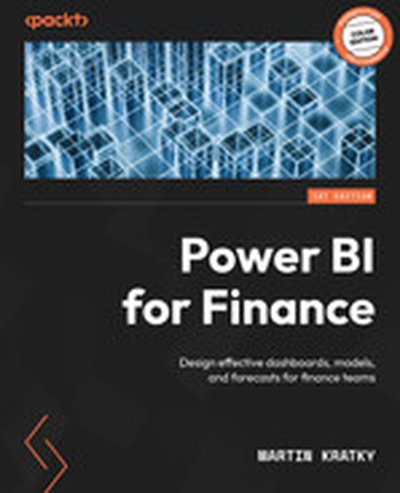
Build effective data models and reports in Power BI for financial planning, budgeting, and valuations with practical templates, logic, and step-by-step guidance. Free with your book: DRM-free PDF version + access to Packt's next-gen Reader Key Features Engineer optimal star schema data models for financial planning and analysis Implement common financial logic, calendars, and variance calculations Create dynamic, formatted reports for income statements, balance sheets, and cash flow Purchase of the print or Kindle book includes a free PDF eBook Book Description Martin Kratky brings his global experience of over 20 years as co-founder of Managility and creator of Acterys to empower CFOs and accountants with Power BI for Finance through this hands-on guide to streamlining and enhancing financial processes. Starting with the foundation of every effective BI solution, a well-designed data model, the book shows you how to structure star schemas and integrate common financial data sources like ERP and accounting systems. You’ll then learn to implement key financial logic using DAX and M, covering calendars, KPIs, and variance calculations. The book offers practical advice on creating clear and compliant financial reports, such as income statements, balance sheets, and cash flows with visual design and formatting best practices. With dedicated chapters on advanced workflows, you’ll learn how to handle multi-currency setups, perform group consolidations, and implement planning models like rolling forecasts, annual budgets, and sales and operations planning (S&OP). As you advance, you’ll gain insights from real-world case studies covering company valuations, Excel integration, and the use of write-back methods with Dynamics Business Performance Planning and Acterys. The concluding chapters highlight how AI and Copilot enhance financial analytics. Email sign-up and proof of purchase required What you will learn Apply multi-currency handling and group consolidation techniques in Power BI Model discounted cash flow and company valuation scenarios Design and manage write-back workflows with Dynamics BPP and Acterys Integrate Excel and Power BI using live connections and cube formulas Utilize AI, Copilot, and LLMs to enhance automation and insight generation Create complete finance-focused dashboards for sales and operations planning Who this book is for This book is for finance professionals including CFOs, FP&A managers, controllers, and certified accountants who want to enhance reporting, planning, and forecasting using Power BI. Basic familiarity with Power BI and financial concepts is recommended to get the most out of this hands-on guide.
by
Avery Smith
Help us become the #1 Data Podcast by leaving a rating & review! We are 67 reviews away! Can You Pass This Data Analyst Interview? 🖥️ Build your own app with Replit: https://replit.com/refer/AveryData 👔 Mock Interview Platform: https://interviewsimulator.io 💌 Join 30k+ aspiring data analysts & get my tips in your inbox weekly 👉 https://www.datacareerjumpstart.com/newsletter 🆘 Feeling stuck in your data journey? Come to my next free "How to Land Your First Data Job" training 👉 https://www.datacareerjumpstart.com/training 👩💻 Want to land a data job in less than 90 days? 👉 https://www.datacareerjumpstart.com/daa 👔 Ace The Interview with Confidence 👉 https://www.datacareerjumpstart.com//interviewsimulator ⌚ TIMESTAMPS 00:28 — Question 1 02:54 — Question 2 04:53 — Question 3 08:08 — Where to do Interview Practice 08:54 — How to Build Cool Apps Like This 🔗 CONNECT WITH AVERY 🎥 YouTube Channel 🤝 LinkedIn 📸 Instagram 🎵 TikTok 💻 Website Mentioned in this episode: Join the last cohort of 2025! The LAST cohort of The Data Analytics Accelerator for 2025 kicks off on Monday, December 8th and enrollment is officially open!
To celebrate the end of the year, we’re running a special End-of-Year Sale, where you’ll get: ✅ A discount on your enrollment 🎁 6 bonus gifts, including job listings, interview prep, AI tools + more
If your goal is to land a data job in 2026, this is your chance to get ahead of the competition and start strong.
👉 Join the December Cohort & Claim Your Bonuses: https://DataCareerJumpstart.com/daa https://www.datacareerjumpstart.com/daa
Data science leadership is about more than just technical expertise—it’s about building trust, embracing AI, and delivering real business impact. As organizations evolve toward AI-first strategies, data teams have an unprecedented opportunity to lead that transformation. But how do you turn a traditional analytics function into an AI-driven powerhouse that drives decision-making across the business? What’s the right structure to balance deep technical specialization with seamless business integration? From building credibility through high-impact forecasting to creating psychological safety around AI adoption, effective data leadership today requires both technical rigor and visionary communication. The landscape is shifting fast, but with the right approach, data science can stand as a true pillar of innovation alongside engineering, product, and design. Bilal Zia is currently the Head of Data Science & Analytics at Duolingo, an EdTech company whose mission is to develop the best education in the world and make it universally available. Previously, he spent two years helping to build and lead an interdisciplinary Central Science team at Amazon, comprising economists, data and applied scientists, survey specialists, user researchers, and engineers. Before that, he spent fifteen years in the Research Department of the World Bank in Washington, D.C., pursuing an applied academic career. He holds a Ph.D. in Economics from the Massachusetts Institute of Technology, and his interests span economics, data science, machine learning/AI, psychology, and user research. In the episode, Richie and Bilal explore rebuilding an underperforming data team, fostering trust with leadership, embedding data scientists within product teams, leveraging AI for productivity, the future of synthetic A/B testing, and much more. Links Mentioned in the Show: DuolingoDuolingo Blog: How machine learning supercharged our revenue by millions of dollarsConnect with BilalAI-Native Course: Intro to AI for WorkRelated Episode: The Future of Data & AI Education Just Arrived with Jonathan Cornelissen & Yusuf SaberRewatch RADAR AI New to DataCamp? Learn on the go using the DataCamp mobile appEmpower your business with world-class data and AI skills with DataCamp for business
In this episode, Tristan Handy sits down with Chang She — a co-creator of Pandas and now CEO of LanceDB — to explore the convergence of analytics and AI engineering. The team at LanceDB is rebuilding the data lake from the ground up with AI as a first principle, starting with a new AI-native file format called Lance. Tristan traces Chang's journey as one of the original contributors to the pandas library to building a new infrastructure layer for AI-native data. Learn why vector databases alone aren't enough, why agents require new architecture, and how LanceDB is building a AI lakehouse for the future. For full show notes and to read 6+ years of back issues of the podcast's companion newsletter, head to https://roundup.getdbt.com. The Analytics Engineering Podcast is sponsored by dbt Labs.
In this lab you'll help a coffee shop unify their operational and analytical workloads with Cosmos DB in Microsoft Fabric. You'll blend operational data with curated sources using cross-database SQL, stream and visualize real-time POS events, and create a gold layer for personalization. Finally, you'll implement reverse ETL to Cosmos for lightning-fast serving and train a lightweight Spark notebook model to deliver the right offer at the right time before your customer’s order is ready.
Please RSVP and arrive at least 5 minutes before the start time, at which point remaining spaces are open to standby attendees.
Harness the power of real-time analytics and digital twins to achieve critical operational tasks. In this lab, you'll learn how to transform physical systems into dynamic digital replicas, enhancing simulations and optimizing operations. Discover how to build end-to-end solutions for event-driven scenarios, streaming data, and data logs. These practical steps will empower you to drive smart decision-making and foster innovation within your organization.
Please RSVP and arrive at least 5 minutes before the start time, at which point remaining spaces are open to standby attendees.
by
Cris deRitis
,
Mark Zandi
(Moody's Analytics)
,
Marisa DiNatale
(Moody's Analytics)
,
Alan S. Blinder
(Princeton University)
The Inside Economics crew welcomes Alan Blinder back to the podcast. The Princeton University economics professor and former Vice Chair of the Fed offers his perspective on the outlook for artificial intelligence, the risk of a bubble in equity markets, and the potential implications of current threats to Fed independence. The team also breaks down the much-delayed September employment report. Guest: Alan Blinder – Professor of Economics and Public Affairs at Princeton University Get more information on Alan Blinder's book - A Monetary and Fiscal History of the United States, 1961-2021 Hosts: Mark Zandi – Chief Economist, Moody’s Analytics, Cris deRitis – Deputy Chief Economist, Moody’s Analytics, and Marisa DiNatale – Senior Director - Head of Global Forecasting, Moody’s Analytics Follow Mark Zandi on 'X' and BlueSky @MarkZandi, Cris deRitis on LinkedIn, and Marisa DiNatale on LinkedIn
Questions or Comments, please email us at [email protected]. We would love to hear from you. To stay informed and follow the insights of Moody's Analytics economists, visit Economic View.
Hosted by Simplecast, an AdsWizz company. See pcm.adswizz.com for information about our collection and use of personal data for advertising.

As organizations aim to be more data-driven, integrated, scalable, and collaborative platforms are vital. Azure Databricks delivers unified data analytics for processing, AI, and real-time insights. Its full potential emerges within the integration with the Microsoft ecosystem. This session shows how Azure Databricks serves as the data and AI backbone while empowering users to leverage Microsoft solutions like Power BI, Power Apps and Microsoft Foundry for advanced, real-time decision-making.
As manufacturers and supply chain leaders navigate the dual pressures of operational efficiency and sustainability, geospatial intelligence (GSI) is emerging as a transformative force. This lab session explores how the integration of Earth observation data, AI, and cloud-scale analytics is enabling smarter, faster, and greener decision-making across industrial ecosystems.
Please RSVP and arrive at least 5 minutes before the start time, at which point remaining spaces are open to standby attendees.
In this episode, we're joined by Terry Dorsey, Senior Data Architect & Evangelist at Denodo, to unpack the conceptual differences between terms like data fabrics, vector databases, and knowledge graphs, and remind you not to forget about the importance of structured data in this new AI-native world! What You'll Learn: The difference between data fabrics, vector databases, and knowledge graphs — and the pros and cons Why organizing and managing data is still the hardest part of any AI project (and how process design plays a critical role) Why structured data and schemas are still crucial in the age of LLMs and embeddings How knowledge graphs help model context, relationships, and "episodic memory" more completely than other approaches If you've ever wondered about different data and AI terms, here's a great glossary to check out from Denodo: https://www.denodo.com/en/glossary 🤝 Follow Terry on LinkedIn! Register for free to be part of the next live session: https://bit.ly/3XB3A8b Follow us on Socials: LinkedIn YouTube Instagram (Mavens of Data) Instagram (Maven Analytics) TikTok Facebook Medium X/Twitter
by
FNU Shiv Shankar Kumar
(Infosys)
,
Jason Pereira
(Microsoft Corporation)
,
Isaac Gritz
(Databricks)
,
Saurabh Shukla
(Databricks)
,
Sanjay Soni
(Microsoft)
,
Ranavikrant Chouhan
(Microsoft)
Join this hands-on lab to design and deploy a modern, cloud-native analytics and AI solution using Azure Databricks, Microsoft Foundry, and Microsoft Copilot Studio. Work with the Zava-Litware scenario to perform data ingestion, orchestration with Lakeflow, AI-driven insights via Genie, mirrored catalog in Microsoft Fabric, Copilot Studio low-code automation, and advanced reporting in Power BI. Build a scalable, cost-efficient solution showcasing AI-powered analytics for business transformation.
Please RSVP and arrive at least 5 minutes before the start time, at which point remaining spaces are open to standby attendees.
As manufacturers and supply chain leaders navigate the dual pressures of operational efficiently and sustainability, geospatial intelligence (GSI) is emerging as a transformative force. Discover how the integration of Earth observation data, AI, and cloud-scale analytics is enabling smarter, faster, and greener decision-making across industrial ecosystems.
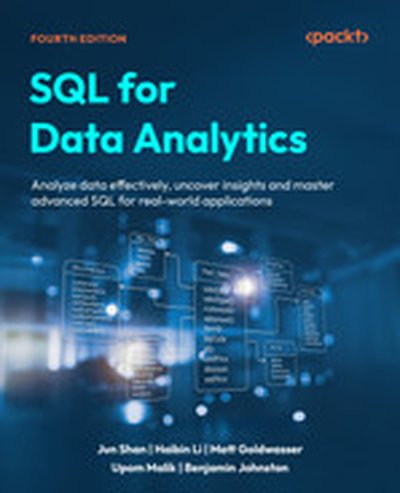
Dive into the world of data analytics with 'SQL for Data Analytics'. This book takes you beyond simple query writing to teach you how to use SQL to analyze, interpret, and derive actionable insights from real-world data. By the end, you'll build technical skills that allow you to solve complex problems and demonstrate results using data. What this Book will help me do Understand how to create, manage, and utilize structured databases for analytics. Use advanced SQL techniques such as window functions and subqueries effectively. Analyze various types of data like geospatial, JSON, and time-series data in SQL. Apply statistical principles within the context of SQL for enhanced insights. Automate data workflows and presentations using SQL and Python integration. Author(s) The authors Jun Shan, Haibin Li, Matt Goldwasser, Upom Malik, and Benjamin Johnston bring together a wealth of knowledge in data analytics, database management, and applied statistics. Together, they aim to empower readers through clear explanations, practical examples, and a focus on real-world applicability. Who is it for? This book is aimed at data professionals and learners such as aspiring data analysts, backend developers, and anyone involved in data-driven decision-making processes. The ideal reader has a basic understanding of SQL and mathematics and is eager to extend their skills to tackle real-world data challenges effectively.