talk-data.com talk-data.com

Topic

apache-spark

68

tagged

Activity Trend

1 peak/qtr
2020-Q1 2026-Q1

Activities

68 activities · Newest first

Spark in Action, Second Edition

The Spark distributed data processing platform provides an easy-to-implement tool for ingesting, streaming, and processing data from any source. In Spark in Action, Second Edition, you’ll learn to take advantage of Spark’s core features and incredible processing speed, with applications including real-time computation, delayed evaluation, and machine learning. Spark skills are a hot commodity in enterprises worldwide, and with Spark’s powerful and flexible Java APIs, you can reap all the benefits without first learning Scala or Hadoop. About the Technology Analyzing enterprise data starts by reading, filtering, and merging files and streams from many sources. The Spark data processing engine handles this varied volume like a champ, delivering speeds 100 times faster than Hadoop systems. Thanks to SQL support, an intuitive interface, and a straightforward multilanguage API, you can use Spark without learning a complex new ecosystem. About the Book Spark in Action, Second Edition, teaches you to create end-to-end analytics applications. In this entirely new book, you’ll learn from interesting Java-based examples, including a complete data pipeline for processing NASA satellite data. And you’ll discover Java, Python, and Scala code samples hosted on GitHub that you can explore and adapt, plus appendixes that give you a cheat sheet for installing tools and understanding Spark-specific terms. What's Inside Writing Spark applications in Java Spark application architecture Ingestion through files, databases, streaming, and Elasticsearch Querying distributed datasets with Spark SQL About the Reader This book does not assume previous experience with Spark, Scala, or Hadoop. About the Author Jean-Georges Perrin is an experienced data and software architect. He is France’s first IBM Champion and has been honored for 12 consecutive years. Quotes This book reveals the tools and secrets you need to drive innovation in your company or community. - Rob Thomas, IBM An indispensable, well-paced, and in-depth guide. A must-have for anyone into big data and real-time stream processing. - Anupam Sengupta, GuardHat Inc. This book will help spark a love affair with distributed processing. - Conor Redmond, InComm Product Control Currently the best book on the subject! - Markus Breuer, Materna IPS
Next-Generation Machine Learning with Spark: Covers XGBoost, LightGBM, Spark NLP, Distributed Deep Learning with Keras, and More

Access real-world documentation and examples for the Spark platform for building large-scale, enterprise-grade machine learning applications. The past decade has seen an astonishing series of advances in machine learning. These breakthroughs are disrupting our everyday life and making an impact across every industry. Next-Generation Machine Learning with Spark provides a gentle introduction to Spark and Spark MLlib and advances to more powerful, third-party machine learning algorithms and libraries beyond what is available in the standard Spark MLlib library. By the end of this book, you will be able to apply your knowledge to real-world use cases through dozens of practical examples and insightful explanations. What You Will Learn Be introduced to machine learning, Spark, and Spark MLlib 2.4.x Achieve lightning-fast gradient boosting on Spark with the XGBoost4J-Spark and LightGBM libraries Detect anomalies with the Isolation Forest algorithm for Spark Use the Spark NLP and Stanford CoreNLP libraries that support multiple languages Optimize your ML workload with the Alluxio in-memory data accelerator for Spark Use GraphX and GraphFrames for Graph Analysis Perform image recognition using convolutional neural networks Utilize the Keras framework and distributed deep learning libraries with Spark Who This Book Is For Data scientists and machine learning engineers who want to take their knowledge to the next level and use Spark and more powerful, next-generation algorithms and libraries beyond what is available in the standard Spark MLlib library; also serves as a primer for aspiring data scientists and engineers who need an introduction to machine learning, Spark, and Spark MLlib.

PolyBase Revealed: Data Virtualization with SQL Server, Hadoop, Apache Spark, and Beyond

Harness the power of PolyBase data virtualization software to make data from a variety of sources easily accessible through SQL queries while using the T-SQL skills you already know and have mastered. PolyBase Revealed shows you how to use the PolyBase feature of SQL Server 2019 to integrate SQL Server with Azure Blob Storage, Apache Hadoop, other SQL Server instances, Oracle, Cosmos DB, Apache Spark, and more. You will learn how PolyBase can help you reduce storage and other costs by avoiding the need for ETL processes that duplicate data in order to make it accessible from one source. PolyBase makes SQL Server into that one source, and T-SQL is your golden ticket. The book also covers PolyBase scale-out clusters, allowing you to distribute PolyBase queries among several SQL Server instances, thus improving performance. With great flexibility comes great complexity, and this book shows you where to look when queries fail, complete with coverageof internals, troubleshooting techniques, and where to find more information on obscure cross-platform errors. Data virtualization is a key target for Microsoft with SQL Server 2019. This book will help you keep your skills current, remain relevant, and build new business and career opportunities around Microsoft’s product direction. What You Will Learn Install and configure PolyBase as a stand-alone service, or unlock its capabilities with a scale-out cluster Understand how PolyBase interacts with outside data sources while presenting their data as regular SQL Server tables Write queries combining data from SQL Server, Apache Hadoop, Oracle, Cosmos DB, Apache Spark, and more Troubleshoot PolyBase queries using SQL Server Dynamic Management Views Tune PolyBase queries using statistics and execution plans Solve common business problems, including "cold storage" of infrequentlyaccessed data and simplifying ETL jobs Who This Book Is For SQL Server developers working in multi-platform environments who want one easy way of communicating with, and collecting data from, all of these sources

Mastering Spark with R

If you’re like most R users, you have deep knowledge and love for statistics. But as your organization continues to collect huge amounts of data, adding tools such as Apache Spark makes a lot of sense. With this practical book, data scientists and professionals working with large-scale data applications will learn how to use Spark from R to tackle big data and big compute problems. Authors Javier Luraschi, Kevin Kuo, and Edgar Ruiz show you how to use R with Spark to solve different data analysis problems. This book covers relevant data science topics, cluster computing, and issues that should interest even the most advanced users. Analyze, explore, transform, and visualize data in Apache Spark with R Create statistical models to extract information and predict outcomes; automate the process in production-ready workflows Perform analysis and modeling across many machines using distributed computing techniques Use large-scale data from multiple sources and different formats with ease from within Spark Learn about alternative modeling frameworks for graph processing, geospatial analysis, and genomics at scale Dive into advanced topics including custom transformations, real-time data processing, and creating custom Spark extensions

Learn PySpark: Build Python-based Machine Learning and Deep Learning Models

Leverage machine and deep learning models to build applications on real-time data using PySpark. This book is perfect for those who want to learn to use this language to perform exploratory data analysis and solve an array of business challenges. You'll start by reviewing PySpark fundamentals, such as Spark’s core architecture, and see how to use PySpark for big data processing like data ingestion, cleaning, and transformations techniques. This is followed by building workflows for analyzing streaming data using PySpark and a comparison of various streaming platforms. You'll then see how to schedule different spark jobs using Airflow with PySpark and book examine tuning machine and deep learning models for real-time predictions. This book concludes with a discussion on graph frames and performing network analysis using graph algorithms in PySpark. All the code presented in the book will be available in Python scripts on Github. What You'll Learn Develop pipelines for streaming data processing using PySpark Build Machine Learning & Deep Learning models using PySpark latest offerings Use graph analytics using PySpark Create Sequence Embeddings from Text data Who This Book is For Data Scientists, machine learning and deep learning engineers who want to learn and use PySpark for real time analysis on streaming data.

Stream Processing with Apache Spark

Before you can build analytics tools to gain quick insights, you first need to know how to process data in real time. With this practical guide, developers familiar with Apache Spark will learn how to put this in-memory framework to use for streaming data. You’ll discover how Spark enables you to write streaming jobs in almost the same way you write batch jobs. Authors Gerard Maas and François Garillot help you explore the theoretical underpinnings of Apache Spark. This comprehensive guide features two sections that compare and contrast the streaming APIs Spark now supports: the original Spark Streaming library and the newer Structured Streaming API. Learn fundamental stream processing concepts and examine different streaming architectures Explore Structured Streaming through practical examples; learn different aspects of stream processing in detail Create and operate streaming jobs and applications with Spark Streaming; integrate Spark Streaming with other Spark APIs Learn advanced Spark Streaming techniques, including approximation algorithms and machine learning algorithms Compare Apache Spark to other stream processing projects, including Apache Storm, Apache Flink, and Apache Kafka Streams

Hands-On Big Data Analytics with PySpark

Dive into the exciting world of big data analytics with 'Hands-On Big Data Analytics with PySpark'. This practical guide offers you the tools and knowledge to tackle massive datasets using PySpark. By exploring real-world examples, you'll learn to unleash the power of distributed systems to analyze and manipulate data at scale. What this Book will help me do Master using PySpark to handle large and complex datasets efficiently and effectively. Develop skills to optimize Spark programs using best practices like reducing shuffle operations. Learn to set up a PySpark environment, process data from platforms like HDFS, Hive, and S3. Enhance your data analytics capabilities by implementing powerful SQL queries and data visualizations. Understand testing and debugging techniques to build reliable, production-quality data pipelines. Author(s) Authored by Rudy Lai and Bartłomiej Potaczek, both seasoned data engineers and authors in the big data field. Rudy and Bartłomiej bring their extensive experience working with distributed systems and scalable data architectures into this book. Their approach is hands-on, focusing on real-world applications and best practices. Who is it for? This book is tailored for data scientists, engineers, and developers eager to advance their big data analytics capabilities. Whether you're new to big data or experienced with other analytics frameworks, this book will equip you with practical knowledge to utilize PySpark for scalable data solutions.

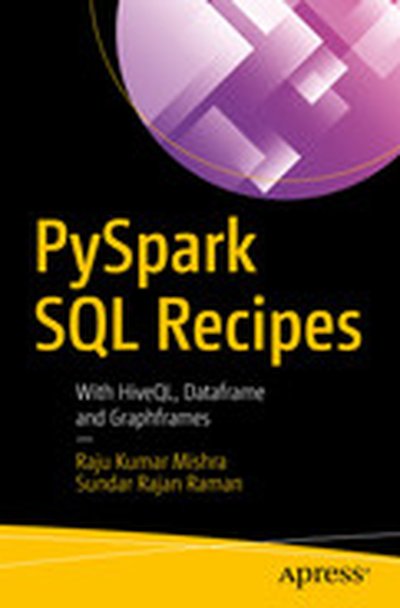
PySpark SQL Recipes: With HiveQL, Dataframe and Graphframes

Carry out data analysis with PySpark SQL, graphframes, and graph data processing using a problem-solution approach. This book provides solutions to problems related to dataframes, data manipulation summarization, and exploratory analysis. You will improve your skills in graph data analysis using graphframes and see how to optimize your PySpark SQL code. PySpark SQL Recipes starts with recipes on creating dataframes from different types of data source, data aggregation and summarization, and exploratory data analysis using PySpark SQL. You’ll also discover how to solve problems in graph analysis using graphframes. On completing this book, you’ll have ready-made code for all your PySpark SQL tasks, including creating dataframes using data from different file formats as well as from SQL or NoSQL databases. What You Will Learn Understand PySpark SQL and its advanced features Use SQL and HiveQL with PySpark SQL Work with structured streaming Optimize PySpark SQL Master graphframes and graph processing Who This Book Is For Data scientists, Python programmers, and SQL programmers.

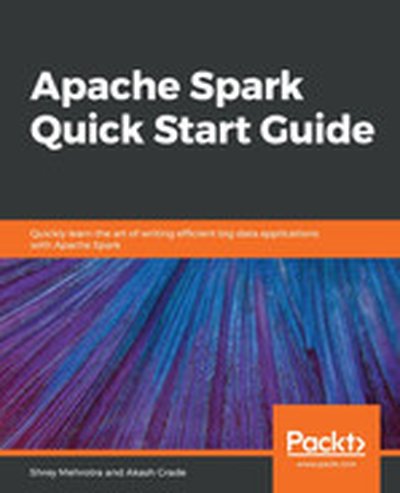
Apache Spark Quick Start Guide

Dive into the world of scalable data processing with the "Apache Spark Quick Start Guide." This book offers a foundational introduction to Spark, empowering readers to harness its capabilities for big data processing. With clear explanations and hands-on examples, you'll learn to implement Spark applications that handle complex data tasks efficiently. What this Book will help me do Understand and implement Spark's RDDs and DataFrame APIs to process large datasets effectively. Set up a local development environment for Spark-based projects. Develop skills to debug and optimize slow-performing Spark applications. Harness built-in modules of Spark for SQL, streaming, and machine learning applications. Adopt best practices and optimization techniques for high-performance Spark applications. Author(s) Shrey Mehrotra is a seasoned software developer with expertise in big data technologies, particularly Apache Spark. With years of hands-on industry experience, Shrey focuses on making complex technical concepts accessible to all. Through his writing, he aims to share clear, practical guidance for developers of all levels. Who is it for? This guide is perfect for big data enthusiasts and professionals looking to learn Apache Spark's capabilities from scratch. It's aimed at data engineers interested in optimizing application performance and data scientists wanting to integrate machine learning with Spark. A basic familiarity with either Scala, Python, or Java is recommended.

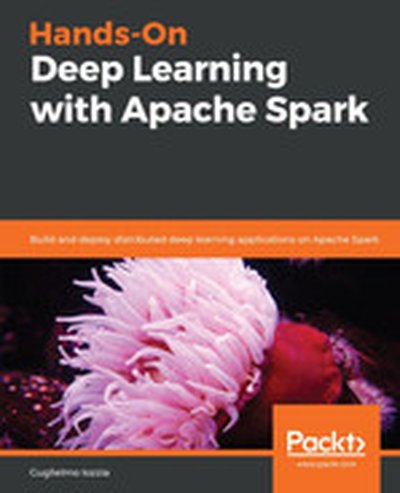
Hands-On Deep Learning with Apache Spark

"Hands-On Deep Learning with Apache Spark" is an essential resource for mastering distributed deep learning frameworks and applications on Apache Spark. Through practical examples and guided tutorials, this book teaches you to deploy scalable deep learning solutions for handling complex data challenges efficiently. What this Book will help me do Understand how to set up Apache Spark for deep learning workflows. Gain practical insight into implementing neural networks, including CNNs and RNNs, on distributed platforms. Learn to train and optimize models using popular frameworks like TensorFlow and Keras. Develop expertise in analyzing large datasets with textual and image-based deep learning methods. Acquire skills to deploy trained models for real-world applications in distributed environments. Author(s) None Iozzia is an accomplished software engineer and data scientist with a strong background in distributed computing and machine learning. With years of experience working with Apache Spark and deep learning technologies, None brings a wealth of practical knowledge to the table. Their passion for providing clear, hands-on guidance makes this book an approachable and valuable resource for learners of all levels. Who is it for? This book is aimed at Scala developers, data scientists, and data analysts who are looking to extend their skill set to include distributed deep learning on Apache Spark. It's ideally suited for readers familiar with machine learning basics and those with prior exposure to Apache Spark workflows. If you aim to create scalable machine learning solutions that handle complex data, this book offers precisely what you need.

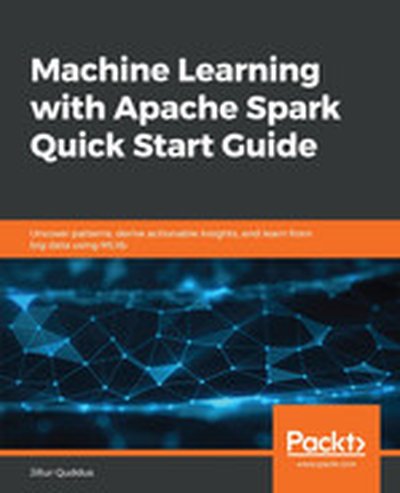
Machine Learning with Apache Spark Quick Start Guide

"Machine Learning with Apache Spark Quick Start Guide" introduces you to the fundamental concepts and tools needed to harness the power of Apache Spark for data processing and machine learning. This book combines practical examples and real-world scenarios to show you how to manage big data efficiently while uncovering actionable insights through advanced analytics. What this Book will help me do Understand the role of Apache Spark in the big data ecosystem. Set up and configure an Apache Spark development environment. Learn and implement supervised and unsupervised learning models using Spark MLlib. Apply advanced analytical algorithms to real-world big data problems. Develop and deploy real-time machine learning pipelines with Apache Spark. Author(s) None Quddus is an experienced practitioner in the fields of big data, distributed technologies, and machine learning. With a career dedicated to using advanced analytics to solve real-world problems, Quddus brings practical expertise to each topic addressed. Their approachable writing style ensures readers can apply concepts effectively, even in complex scenarios. Who is it for? This book is ideal for business analysts, data analysts, and data scientists who are eager to gain hands-on experience with big data technologies. Whether you are new to Apache Spark or looking to expand your knowledge of its machine learning capabilities, this guide provides the tools and insights necessary to achieve those goals. Technical professionals wanting to develop their skills in processing and analyzing big data will find this resource invaluable.

Apache Spark 2: Data Processing and Real-Time Analytics

Build efficient data flow and machine learning programs with this flexible, multi-functional open-source cluster-computing framework Key Features Master the art of real-time big data processing and machine learning Explore a wide range of use-cases to analyze large data Discover ways to optimize your work by using many features of Spark 2.x and Scala Book Description Apache Spark is an in-memory, cluster-based data processing system that provides a wide range of functionalities such as big data processing, analytics, machine learning, and more. With this Learning Path, you can take your knowledge of Apache Spark to the next level by learning how to expand Spark's functionality and building your own data flow and machine learning programs on this platform. You will work with the different modules in Apache Spark, such as interactive querying with Spark SQL, using DataFrames and datasets, implementing streaming analytics with Spark Streaming, and applying machine learning and deep learning techniques on Spark using MLlib and various external tools. By the end of this elaborately designed Learning Path, you will have all the knowledge you need to master Apache Spark, and build your own big data processing and analytics pipeline quickly and without any hassle. This Learning Path includes content from the following Packt products: Mastering Apache Spark 2.x by Romeo Kienzler Scala and Spark for Big Data Analytics by Md. Rezaul Karim, Sridhar Alla Apache Spark 2.x Machine Learning Cookbook by Siamak Amirghodsi, Meenakshi Rajendran, Broderick Hall, Shuen MeiCookbook What you will learn Get to grips with all the features of Apache Spark 2.x Perform highly optimized real-time big data processing Use ML and DL techniques with Spark MLlib and third-party tools Analyze structured and unstructured data using SparkSQL and GraphX Understand tuning, debugging, and monitoring of big data applications Build scalable and fault-tolerant streaming applications Develop scalable recommendation engines Who this book is for If you are an intermediate-level Spark developer looking to master the advanced capabilities and use-cases of Apache Spark 2.x, this Learning Path is ideal for you. Big data professionals who want to learn how to integrate and use the features of Apache Spark and build a strong big data pipeline will also find this Learning Path useful. To grasp the concepts explained in this Learning Path, you must know the fundamentals of Apache Spark and Scala.

Machine Learning with PySpark: With Natural Language Processing and Recommender Systems

Build machine learning models, natural language processing applications, and recommender systems with PySpark to solve various business challenges. This book starts with the fundamentals of Spark and its evolution and then covers the entire spectrum of traditional machine learning algorithms along with natural language processing and recommender systems using PySpark. Machine Learning with PySpark shows you how to build supervised machine learning models such as linear regression, logistic regression, decision trees, and random forest. You’ll also see unsupervised machine learning models such as K-means and hierarchical clustering. A major portion of the book focuses on feature engineering to create useful features with PySpark to train the machine learning models. The natural language processing section covers text processing, text mining, and embedding for classification. After reading thisbook, you will understand how to use PySpark’s machine learning library to build and train various machine learning models. Additionally you’ll become comfortable with related PySpark components, such as data ingestion, data processing, and data analysis, that you can use to develop data-driven intelligent applications. What You Will Learn Build a spectrum of supervised and unsupervised machine learning algorithms Implement machine learning algorithms with Spark MLlib libraries Develop a recommender system with Spark MLlib libraries Handle issues related to feature engineering, class balance, bias and variance, and cross validation for building an optimal fit model Who This Book Is For Data science and machine learning professionals.

Practical Apache Spark: Using the Scala API

Work with Apache Spark using Scala to deploy and set up single-node, multi-node, and high-availability clusters. This book discusses various components of Spark such as Spark Core, DataFrames, Datasets and SQL, Spark Streaming, Spark MLib, and R on Spark with the help of practical code snippets for each topic. Practical Apache Spark also covers the integration of Apache Spark with Kafka with examples. You’ll follow a learn-to-do-by-yourself approach to learning – learn the concepts, practice the code snippets in Scala, and complete the assignments given to get an overall exposure. On completion, you’ll have knowledge of the functional programming aspects of Scala, and hands-on expertise in various Spark components. You’ll also become familiar with machine learning algorithms with real-time usage. What You Will Learn Discover the functional programming features of Scala Understand the completearchitecture of Spark and its components Integrate Apache Spark with Hive and Kafka Use Spark SQL, DataFrames, and Datasets to process data using traditional SQL queries Work with different machine learning concepts and libraries using Spark's MLlib packages Who This Book Is For Developers and professionals who deal with batch and stream data processing.

Beginning Apache Spark 2: With Resilient Distributed Datasets, Spark SQL, Structured Streaming and Spark Machine Learning library

Develop applications for the big data landscape with Spark and Hadoop. This book also explains the role of Spark in developing scalable machine learning and analytics applications with Cloud technologies. Beginning Apache Spark 2 gives you an introduction to Apache Spark and shows you how to work with it. Along the way, you’ll discover resilient distributed datasets (RDDs); use Spark SQL for structured data; and learn stream processing and build real-time applications with Spark Structured Streaming. Furthermore, you’ll learn the fundamentals of Spark ML for machine learning and much more. After you read this book, you will have the fundamentals to become proficient in using Apache Spark and know when and how to apply it to your big data applications. What You Will Learn Understand Spark unified data processing platform Howto run Spark in Spark Shell or Databricks Use and manipulate RDDs Deal with structured data using Spark SQL through its operations and advanced functions Build real-time applications using Spark Structured Streaming Develop intelligent applications with the Spark Machine Learning library Who This Book Is For Programmers and developers active in big data, Hadoop, and Java but who are new to the Apache Spark platform.

Apache Spark Deep Learning Cookbook

Embark on a journey to master distributed deep learning with the "Apache Spark Deep Learning Cookbook". Designed specifically for leveraging the capabilities of Apache Spark, TensorFlow, and Keras, this book offers over 80 problem-solving recipes to efficiently train and deploy state-of-the-art neural networks, addressing real-world AI challenges. What this Book will help me do Set up and configure a working Apache Spark environment optimized for deep learning tasks. Implement distributed training practices for deep learning models using TensorFlow and Keras. Develop and test neural networks such as CNNs and RNNs targeting specific big data problems. Apply Spark's built-in libraries and integrations for enhanced NLP and computer vision applications. Effectively manage and preprocess large datasets using Spark DataFrames for machine learning tasks. Author(s) Authors Ahmed Sherif and None Ravindra bring years of experience in deep learning, Apache Spark use cases, and hands-on practical training. Their collective expertise has contributed to designing this cookbook approach, focusing on clarity and usability for readers tackling challenging machine learning scenarios. Who is it for? This book is ideal for IT professionals, data scientists, and software developers with foundational understanding of machine learning concepts and Apache Spark framework capabilities. If you aim to scale deep learning and integrate efficient computing with Spark's power, this guide is for you. Familiarity with Python will help maximize the book's potential.

PySpark Cookbook

Dive into the world of big data processing and analytics with the "PySpark Cookbook". This book provides over 60 hands-on recipes for implementing efficient data-intensive solutions using Apache Spark and Python. By mastering these recipes, you'll be equipped to tackle challenges in large-scale data processing, machine learning, and stream analytics. What this Book will help me do Set up and configure PySpark environments effectively, including working with Jupyter for enhanced interactivity. Understand and utilize DataFrames for data manipulation, analysis, and transformation tasks. Develop end-to-end machine learning solutions using the ML and MLlib modules in PySpark. Implement structured streaming and graph-processing solutions to analyze and visualize data streams and relationships. Deploy PySpark applications to the cloud infrastructure efficiently using best practices. Author(s) This book is co-authored by None Lee and None Drabas, who are experienced professionals in data processing and analytics leveraging Python and Apache Spark. With their deep technical expertise and a passion for teaching through practical examples, they aim to make the complex concepts of PySpark accessible to developers of varied experience levels. Who is it for? This book is ideal for Python developers who are keen to delve into the Apache Spark ecosystem. Whether you're just starting with big data or have some experience with Spark, this book provides practical recipes to enhance your skills. Readers looking to solve real-world data-intensive challenges using PySpark will find this resource invaluable.

Data Analytics with Spark Using Python, First edition

Spark for Data Professionals introduces and solidifies the concepts behind Spark 2.x, teaching working developers, architects, and data professionals exactly how to build practical Spark solutions. Jeffrey Aven covers all aspects of Spark development, including basic programming to SparkSQL, SparkR, Spark Streaming, Messaging, NoSQL and Hadoop integration. Each chapter presents practical exercises deploying Spark to your local or cloud environment, plus programming exercises for building real applications. Unlike other Spark guides, Spark for Data Professionals explains crucial concepts step-by-step, assuming no extensive background as an open source developer. It provides a complete foundation for quickly progressing to more advanced data science and machine learning topics. This guide will help you: Understand Spark basics that will make you a better programmer and cluster “citizen” Master Spark programming techniques that maximize your productivity Choose the right approach for each problem Make the most of built-in platform constructs, including broadcast variables, accumulators, effective partitioning, caching, and checkpointing Leverage powerful tools for managing streaming, structured, semi-structured, and unstructured data

Spark: The Definitive Guide

Learn how to use, deploy, and maintain Apache Spark with this comprehensive guide, written by the creators of the open-source cluster-computing framework. With an emphasis on improvements and new features in Spark 2.0, authors Bill Chambers and Matei Zaharia break down Spark topics into distinct sections, each with unique goals. Youâ??ll explore the basic operations and common functions of Sparkâ??s structured APIs, as well as Structured Streaming, a new high-level API for building end-to-end streaming applications. Developers and system administrators will learn the fundamentals of monitoring, tuning, and debugging Spark, and explore machine learning techniques and scenarios for employing MLlib, Sparkâ??s scalable machine-learning library. Get a gentle overview of big data and Spark Learn about DataFrames, SQL, and Datasetsâ??Sparkâ??s core APIsâ??through worked examples Dive into Sparkâ??s low-level APIs, RDDs, and execution of SQL and DataFrames Understand how Spark runs on a cluster Debug, monitor, and tune Spark clusters and applications Learn the power of Structured Streaming, Sparkâ??s stream-processing engine Learn how you can apply MLlib to a variety of problems, including classification or recommendation

Complete Guide to Open Source Big Data Stack

See a Mesos-based big data stack created and the components used. You will use currently available Apache full and incubating systems. The components are introduced by example and you learn how they work together. In the Complete Guide to Open Source Big Data Stack, the author begins by creating a private cloud and then installs and examines Apache Brooklyn. After that, he uses each chapter to introduce one piece of the big data stack—sharing how to source the software and how to install it. You learn by simple example, step by step and chapter by chapter, as a real big data stack is created. The book concentrates on Apache-based systems and shares detailed examples of cloud storage, release management, resource management, processing, queuing, frameworks, data visualization, and more. What You’ll Learn Install a private cloud onto the local cluster using Apache cloud stack Source, install, and configure Apache: Brooklyn, Mesos, Kafka, and Zeppelin See how Brooklyn can be used to install Mule ESB on a cluster and Cassandra in the cloud Install and use DCOS for big data processing Use Apache Spark for big data stack data processing Who This Book Is For Developers, architects, IT project managers, database administrators, and others charged with developing or supporting a big data system. It is also for anyone interested in Hadoop or big data, and those experiencing problems with data size.