talk-data.com talk-data.com

Topic

BI

Business Intelligence (BI)

data_visualization reporting analytics

179

tagged

Activity Trend

111 peak/qtr
2020-Q1 2026-Q2

Activities

Showing filtered results

Filtering by: O'Reilly Data Engineering Books ×
Microsoft Big Data Solutions

Tap the power of Big Data with Microsoft technologies Big Data is here, and Microsoft's new Big Data platform is a valuable tool to help your company get the very most out of it. This timely book shows you how to use HDInsight along with HortonWorks Data Platform for Windows to store, manage, analyze, and share Big Data throughout the enterprise. Focusing primarily on Microsoft and HortonWorks technologies but also covering open source tools, Microsoft Big Data Solutions explains best practices, covers on-premises and cloud-based solutions, and features valuable case studies. Best of all, it helps you integrate these new solutions with technologies you already know, such as SQL Server and Hadoop. Walks you through how to integrate Big Data solutions in your company using Microsoft's HDInsight Server, HortonWorks Data Platform for Windows, and open source tools Explores both on-premises and cloud-based solutions Shows how to store, manage, analyze, and share Big Data through the enterprise Covers topics such as Microsoft's approach to Big Data, installing and configuring HortonWorks Data Platform for Windows, integrating Big Data with SQL Server, visualizing data with Microsoft and HortonWorks BI tools, and more Helps you build and execute a Big Data plan Includes contributions from the Microsoft and HortonWorks Big Data product teams If you need a detailed roadmap for designing and implementing a fully deployed Big Data solution, you'll want Microsoft Big Data Solutions.
Pro Microsoft HDInsight: Hadoop on Windows

Pro Microsoft HDInsight is a complete guide to deploying and using Apache Hadoop on the Microsoft Windows Azure Platforms. The information in this book enables you to process enormous volumes of structured as well as non-structured data easily using HDInsight, which is Microsoft's own distribution of Apache Hadoop. Furthermore, the blend of Infrastructure as a Service (IaaS) and Platform as a Service (PaaS) offerings available through Windows Azure lets you take advantage of Hadoop's processing power without the worry of creating, configuring, maintaining, or managing your own cluster. With the data explosion that is soon to happen, the open source Apache Hadoop Framework is gaining traction, and it benefits from a huge ecosystem that has risen around the core functionalities of the Hadoop distributed file system (HDFS™) and Hadoop Map Reduce. Pro Microsoft HDInsight equips you with the knowledge, confidence, and technique to configure and manage this ecosystem on Windows Azure. The book is an excellent choice for anyone aspiring to be a data scientist or data engineer, putting you a step ahead in the data mining field. Guides you through installation and configuration of an HDInsight cluster on Windows Azure Provides clear examples of configuring and executing Map Reduce jobs Helps you consume data and diagnose errors from the Windows Azure HDInsight Service What you'll learn Create and Manage HDInsight clusters on Windows Azure Understand the different HDInsight services and configuration files Develop and run Map Reduce jobs using .NET and PowerShell Consume data from client applications like Microsoft Excel and Power View Monitor job executions and logs Troubleshoot common problems Who this book is for Pro Microsoft HDInsight: Hadoop on Windows is an excellent choice for developers in the field of business intelligence and predictive analysis who want that extra edge in technology on Microsoft Windows and Windows Azure platforms. The book is for people who love to slice and dice data, and identify trends and patterns through analysis of data to help in creative and intelligent decision making.

IBM DB2 Web Query for i Version 2.1 Implementation Guide

Business Intelligence (BI) is a broad term relating to applications designed to analyze data for purposes of understanding and acting on the key metrics that drive profitability in an enterprise. Key to analyzing that data is providing fast, easy access to it while delivering it in formats or tools that best fit the needs of the end user. At the core of any business intelligence solution are end user query and reporting tools that provide intuitive access to data supporting a spectrum of end users from executives to "power users," from spreadsheet aficionados to the external Internet consumer. IBM® DB2 Web Query for i offers a set of modernized tools for a more robust, extensible, and productive reporting solution than the popular Query for System i tool (also known as Query/400). IBM DB2 Web Query for i preserves investments in the reports developed with Query/400 by offering a choice of importing definitions into the new technology or continuing to run existing Query/400 reports as-is. But it also offers significant productivity and performance enhancements by leveraging the latest in DB2 for i query optimization technology. This IBM Redbooks® publication provides a broad understanding of the new DB2 Web Query product. It entails a group of self-explanatory tutorials to help you get up to speed quickly. Overall, this book is designed for IT users. You can use Part 2, "Tutorials for DB2 Web Query" on page 161, as stand-alone tutorials for anyone who is developing their own queries.

Leveraging DB2 10 for High Performance of Your Data Warehouse

Building on the business intelligence (BI) framework and capabilities that are outlined in InfoSphere Warehouse: A Robust Infrastructure for Business Intelligence, SG24-7813, this IBM® Redbooks® publication focuses on the new business insight challenges that have arisen in the last few years and the new technologies in IBM DB2® 10 for Linux, UNIX, and Windows that provide powerful analytic capabilities to meet those challenges. This book is organized in to two parts. The first part provides an overview of data warehouse infrastructure and DB2 Warehouse, and outlines the planning and design process for building your data warehouse. The second part covers the major technologies that are available in DB2 10 for Linux, UNIX, and Windows. We focus on functions that help you get the most value and performance from your data warehouse. These technologies include database partitioning, intrapartition parallelism, compression, multidimensional clustering, range (table) partitioning, data movement utilities, database monitoring interfaces, infrastructures for high availability, DB2 workload management, data mining, and relational OLAP capabilities. A chapter on BLU Acceleration gives you all of the details about this exciting DB2 10.5 innovation that simplifies and speeds up reporting and analytics. Easy to set up and self-optimizing, BLU Acceleration eliminates the need for indexes, aggregates, or time-consuming database tuning to achieve top performance and storage efficiency. No SQL or schema changes are required to take advantage of this breakthrough technology. This book is primarily intended for use by IBM employees, IBM clients, and IBM Business Partners.

Oracle Fusion Applications Development and Extensibility Handbook

Master Oracle Fusion Applications Design and Personalization Deliver highly adaptable business applications that bolster productivity and drive informed decision-making. Oracle Fusion Applications Development and Extensibility Handbook contains best practices, real-world case studies, and technical deep dives. Discover how to manage design- and run-time customizations, extend existing UIs and build new ones, secure your applications, and integrate with other systems. This Oracle Press guide offers complete coverage of the latest cloud and SOA-based features. Explore Oracle Fusion Applications components and architecture Plan, develop, debug, and deploy customizations Extend out-of-the-box functionality with Oracle JDeveloper Modify web applications using Oracle Composer Incorporate Oracle SOA Suite 11 g composites Validate code through sandboxes and test environments Secure data using authorization, authentication, and encryption Design and distribute personalized BI reports Automate jobs with Oracle Enterprise Scheduler Change appearance and branding of your applications with the Oracle ADF Skin Editor Extend and customize CRM with Application Composer

SQL Server Analysis Services 2012 Cube Development Cookbook

The 'SQL Server Analysis Services 2012 Cube Development Cookbook' equips you with the practical skills needed to design and implement OLAP cubes using both multidimensional and tabular models. By working through hands-on recipes, you'll quickly gain the expertise to create robust Business Intelligence solutions with SQL Server Analysis Services. What this Book will help me do Build and enhance multidimensional and tabular models for effective data analysis. Implement key OLAP features like dimensions, cubes, actions, and aggregations. Scale and optimize your Business Intelligence solutions for enterprise-level performance. Utilize MDX and DAX languages proficiently to query and manipulate data. Develop skills in securing, monitoring, and troubleshooting SQL Server Analysis Services. Author(s) None Dewald is an experienced business intelligence professional with years of hands-on expertise with SQL Server Analysis Services. His approach to teaching focuses on practical application and equipping his audience with tools to be successful in deploying and maintaining BI solutions. Who is it for? This book is perfect for BI and ETL developers who work with SQL Server Analysis Services to build OLAP cubes. It assumes familiarity with relational database management systems, Excel, and SQL. If you're looking to deepen your understanding of Microsoft's BI stack and improve your practical skills in SSAS, this book is for you.

Oracle Database 12c New Features

Maximize the New and Improved Features of Oracle Database 12 c Written by Master Principle Database Expert, Oracle, and Oracle ACE Robert G. Freeman, this Oracle Press guide describes the myriad new and enhanced capabilities available in the latest Oracle Database release. Inside, you’ll find everything you need to know to get up and running quickly on Oracle Database 12 c. Supported by running commentary from world-renowned Oracle expert Tom Kyte, and with additional contributions by Oracle experts Eric Yen and Scott Black, Oracle Database 12c New Features offers detailed coverage of: Installing Oracle Database 12 c Architectural changes, such as Oracle Multitenant The most current information on upgrading and migrating to Oracle Database 12 c The pre-upgrade information tool and parallel processing for database upgrades Oracle Real Application Clusters new features, such as Oracle Flex Cluster, Oracle Flex Automatic Storage Management, and Oracle Automatic Storage Management Cluster File System Oracle RMAN enhancements, including cross-platform backup and recovery Oracle Data Guard improvements, such as Fast Sync, and Oracle Active Data Guard new features, such as Far Sync SQL, PL/SQL, DML, and DDL new features Improvements to partitioning manageability, performance, and availability Advanced business intelligence and data warehousing capabilities Security enhancements, including privileges analysis, data redaction, and new administrative-level privileges Manageability, performance, and optimization improvements

Cloudera Impala

Learn about Cloudera Impala--an open source project that's opening up the Apache Hadoop software stack to a wide audience of database analysts, users, and developers. The Impala massively parallel processing (MPP) engine makes SQL queries of Hadoop data simple enough to be accessible to analysts familiar with SQL and to users of business intelligence tools--and it’s fast enough to be used for interactive exploration and experimentation.

Oracle Exadata Survival Guide

Oracle Exadata Survival Guide is a hands-on guide for busy Oracle database administrators who are migrating their skill sets to Oracle's Exadata database appliance. The book covers the concepts behind Exadata, and the available configurations for features such as smart scans, storage indexes, Smart Flash Cache, hybrid columnar compression, and more. You'll learn about performance metrics and execution plans, and how to optimize SQL running in Oracle's powerful, new environment. The authors also cover migration from other servers. Oracle Exadata is fast becoming the standard for large installations such as those running data warehouse, business intelligence, and large-scale OLTP systems. Exadata is like no other platform, and is new ground even for experienced Oracle database administrators. The Oracle Exadata Survival Guide helps you navigate the ins and outs of this new platform, de-mystifying this amazing appliance and its exceptional performance. The book takes a highly practical approach, not diving too deeply into the details, but giving you just the right depth of information to quickly transfer your skills to Oracle's important new platform. Helps transfer your skills to the platform of the future Covers the important ground without going too deep Takes a practical and hands-on approach to everyday tasks What you'll learn Learn the components and basic architecture of an Exadata machine Reduce data transfer overhead by processing queries in the storage layer Examine and take action on Exadata-specific performance metrics Deploy Hybrid Columnar Compression to reduce storage and I/O needs Create worry-free migrations from existing databases into Exadata Understand and address issues specific to ERP migrations Who this book is for Oracle Exadata Survival Guide is for the busy enterprise Oracle DBA who has suddenly been thrust into the Exadata arena. Readers should have a sound grasp of traditional Oracle database administration, and be prepared to learn new aspects that are specific to the Exadata appliance.

Oracle Business Intelligence Discoverer 11g Handbook

Master Oracle Business Intelligence Discoverer 11g Provide secure, immediate access to critical business information from relational and multidimensional data sources across your organization. Oracle Business Intelligence Discoverer 11g Handbook shows you how to optimize this intuitive ad hoc query, reporting, analysis, and web publishing tool for maximum performance. Real-world examples illustrate the powerful analysis, security, and reporting capabilities. Enable business users at all levels to make faster, more-informed decisions with help from this Oracle Press guide. Configure and manage Oracle Business Intelligence Discoverer 11g Run functional queries using the Workbook Wizard Add sorts, calculations, percentages, totals, and parameters using Oracle Business Intelligence Discoverer Plus Format queries into well-organized reports with graphs, tables, titles, headers, and footers Perform data analysis--statistical, classification, deviation, trend, and aging Use Oracle Business Intelligence Discoverer Viewer 11g to analyze, format, export, e-mail, and print reports Manage integration with Oracle WebLogic Server Refine existing queries using interactive pivoting, drilling, and hyper-drilling Build effective conditions and refine parameters, calculations, sorting, and percentages Manage access and sharing rights, scheduling privileges, and user preferences Build an end user layer and a business area using Oracle Business Intelligence Discoverer Administrator Use Oracle Enterprise Manager's Fusion Middleware Control feature to manage Oracle Business Intelligence Discoverer settings and preferences Implement powerful analytic functions using templates

Pro Oracle SQL, Second Edition

Pro Oracle SQL, Second Edition unlocks the power of SQL in the Oracle database—one of the most potent SQL implementations on the market today. To master it requires a multi-pronged approach: learn the language features, learn how and why the language features work, learn the supporting features that Oracle provides to help use the language effectively, and learn to think and work in sets. Karen Morton has updated the content for Oracle version 12c and helps you master powerful aspects of Oracle SQL from the inside-out. You'll learn analytic functions, the MODEL clause, and advanced grouping syntax—features that will help in creating good queries for reporting and business intelligence applications. Pro Oracle SQL, Second Edition also helps you minimize parsing overhead, read execution plans, test for correct results, understand performance management, and exert control over SQL execution in your database. You'll learn when to create indexes, how to verify that they make a difference, how to use SQL Baselines and Profiles to optimize and stabilize SQL execution plans, and much more. You'll also understand how SQL is optimized for working in sets, and that the key to getting accurate results lies in making sure that queries ask clear and precise questions. Pro Oracle SQL, Second Edition helps you work at a truly professional level in the Oracle dialect of SQL. You'll master the language, the tools to work effectively with the language, and the right way to think about a problem in SQL. Endorsed by the OakTable Network, a group of Oracle technologists well-known for their rigorous and scientific approach to Oracle Database performance Comprehensive—goes beyond the language with a focus on what you need to know to write successful queries and data manipulation statements. Performance focused—teaches you how to measure the performance of your SQL statements and not just the syntax. What you'll learn Master powerful SQL features implemented in the Oracle Database Understand how the Oracle Optimizer develops execution plans Read and interpret SQL execution plans Quickly diagnose and fix badly performing SQL Control execution plans through hints, profiles, and plan baselines Optimize queries within packaged applications without touching the code Recognize when not to waste time on SQL that is performing optimally Who this book is for Pro Oracle SQL, Second Edition is aimed at developers and database administrators who submit SQL for execution by an Oracle database. Readers should already know the basic four SQL statements, and be ready to learn deeply about Oracle's specific implementation of the language, including Oracle-specific features and syntax. Readers should also want to learn about Oracle Database features such as analytic queries, the MODEL clause, and the WITH clause (subquery factoring) that are designed to help developers and database administrators exert control over their SQL environment and its execution.

Oracle Essentials, 5th Edition

Written by Oracle insiders, this indispensable guide distills an enormous amount of information about the Oracle Database into one compact volume. Ideal for novice and experienced DBAs, developers, managers, and users, Oracle Essentials walks you through technologies and features in Oracle’s product line, including its architecture, data structures, networking, concurrency, and tuning. Complete with illustrations and helpful hints, this fifth edition provides a valuable one-stop overview of Oracle Database 12c, including an introduction to Oracle and cloud computing. Oracle Essentials provides the conceptual background you need to understand how Oracle truly works. Topics include: A complete overview of Oracle databases and data stores, and Fusion Middleware products and features Core concepts and structures in Oracle’s architecture, including pluggable databases Oracle objects and the various datatypes Oracle supports System and database management, including Oracle Enterprise Manager 12c Security options, basic auditing capabilities, and options for meeting compliance needs Performance characteristics of disk, memory, and CPU tuning Basic principles of multiuser concurrency Oracle’s online transaction processing (OLTP) Data warehouses, Big Data, and Oracle’s business intelligence tools Backup and recovery, and high availability and failover solutions

IBM Information Server: Integration and Governance for Emerging Data Warehouse Demands

This IBM® Redbooks® publication is intended for business leaders and IT architects who are responsible for building and extending their data warehouse and Business Intelligence infrastructure. It provides an overview of powerful new capabilities of Information Server in the areas of big data, statistical models, data governance and data quality. The book also provides key technical details that IT professionals can use in solution planning, design, and implementation.

The Data Warehouse Toolkit: The Definitive Guide to Dimensional Modeling, 3rd Edition

Updated new edition of Ralph Kimball's groundbreaking book on dimensional modeling for data warehousing and business intelligence! The first edition of Ralph Kimball's The Data Warehouse Toolkit introduced the industry to dimensional modeling, and now his books are considered the most authoritative guides in this space. This new third edition is a complete library of updated dimensional modeling techniques, the most comprehensive collection ever. It covers new and enhanced star schema dimensional modeling patterns, adds two new chapters on ETL techniques, includes new and expanded business matrices for 12 case studies, and more. Authored by Ralph Kimball and Margy Ross, known worldwide as educators, consultants, and influential thought leaders in data warehousing and business intelligence Begins with fundamental design recommendations and progresses through increasingly complex scenarios Presents unique modeling techniques for business applications such as inventory management, procurement, invoicing, accounting, customer relationship management, big data analytics, and more Draws real-world case studies from a variety of industries, including retail sales, financial services, telecommunications, education, health care, insurance, e-commerce, and more Design dimensional databases that are easy to understand and provide fast query response with The Data Warehouse Toolkit: The Definitive Guide to Dimensional Modeling, 3rd Edition.

Big Data Imperatives: Enterprise 'Big Data' Warehouse, 'BI' Implementations and Analytics

Big Data Imperatives, focuses on resolving the key questions on everyone's mind: Which data matters? Do you have enough data volume to justify the usage? How you want to process this amount of data? How long do you really need to keep it active for your analysis, marketing, and BI applications? Big data is emerging from the realm of one-off projects to mainstream business adoption; however, the real value of big data is not in the overwhelming size of it, but more in its effective use. This book addresses the following big data characteristics: Very large, distributed aggregations of loosely structured data - often incomplete and inaccessible Petabytes/Exabytes of data Millions/billions of people providing/contributing to the context behind the data Flat schema's with few complex interrelationships Involves time-stamped events Made up of incomplete data Includes connections between data elements that must be probabilistically inferred Big Data Imperatives explains 'what big data can do'. It can batch process millions and billions of records both unstructured and structured much faster and cheaper. Big data analytics provide a platform to merge all analysis which enables data analysis to be more accurate, well-rounded, reliable and focused on a specific business capability. Big Data Imperatives describes the complementary nature of traditional data warehouses and big-data analytics platforms and how they feed each other. This book aims to bring the big data and analytics realms together with a greater focus on architectures that leverage the scale and power of big data and the ability to integrate and apply analytics principles to data which earlier was not accessible. This book can also be used as a handbook for practitioners; helping them on methodology,technical architecture, analytics techniques and best practices. At the same time, this book intends to hold the interest of those new to big data and analytics by giving them a deep insight into the realm of big data. What you'll learn Understanding the technology, implementation of big data platforms and their usage for analytics Big data architectures Big data design patterns Implementation best practices Who this book is for This book is designed for IT professionals, data warehousing, business intelligence professionals, data analysis professionals, architects, developers and business users.

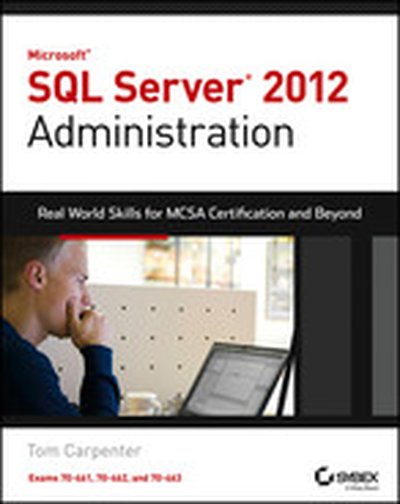
Microsoft SQL Server 2012 Administration: Real-World Skills for MCSA Certification and Beyond (Exams 70-461, 70-462, and 70-463)

Implement, maintain, and repair SQL Server 2012 databases As the most significant update since 2008, Microsoft SQL Server 2012 boasts updates and new features that are critical to understand. Whether you manage and administer SQL Server 2012 or are planning to get your MCSA: SQL Server 2012 certification, this book is the perfect supplement to your learning and preparation. From understanding SQL Server's roles to implementing business intelligence and reporting, this practical book explores tasks and scenarios that a working SQL Server DBA faces regularly and shows you step by step how to handle them. Includes practice exams and coverage of exam objectives for those seeking MSCA: SQL Server 2012 certification Explores the skills you'll need on the job as a SQL Server 2012 DBA Discusses designing and implementing database solutions Walks you through administrating, maintaining, and securing SQL Server 2012 Addresses implementing high availability and data distribution Includes bonus videos where the author walks you through some of the more difficult tasks expected of a DBA Featuring hands-on exercises and real-world scenarios, this resource guides you through the essentials of implementing, maintaining, and repairing SQL Server 2012 databases. Note: The ebook version does not provide access to the companion files.

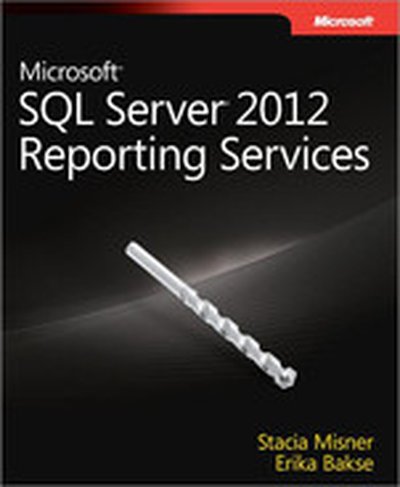
Microsoft SQL Server 2012 Reporting Services

Use your SQL Server skills to create and manage key data reports Deliver interactive business intelligence reports using SQL Server 2012 Reporting Services, and help facilitate real-time decision making throughout the enterprise. SQL Server expert Stacia Misner shows you in detail how to design, manage, and access custom reports that capture data from multiple sources. This book is ideal for experienced SQL Server developers, whether you’re new to Reporting Services or upgrading from an earlier version. Discover how to: Use the latest features, including the Power View ad hoc reporting tool Design reports by understanding how your audience accesses and uses data Add interactive features to help end users sort and filter data Create rich data visualization with charts, gauges, indictors, and data maps Configure your report server, provide security, and monitor report contents Use SharePoint or Report Manager to search and access reports online Create a library of report parts that clients can use for ad hoc reporting Build and manage reports using Reporting Services as a development platform

Oracle E-Business Suite R12 Integration and OA Framework Development and Extension Cookbook

Have you ever wanted to customize or extend Oracle E-Business Suite but didn't know where to begin? This comprehensive cookbook provides a detailed guide to building and deploying extensions for Oracle E-Business Suite Release 12. Through step-by-step examples, you will learn key techniques for OA Framework development, desktop integration, and BI Publisher. What this Book will help me do Understand the architecture of Oracle E-Business Suite Release 12 and how it supports extensibility. Follow detailed instructions to set up a development environment using JDeveloper for OA Framework extensions. Learn to personalize and develop Oracle Application Framework (OAF) pages with hands-on examples. Gain skills in creating and using BI Publisher templates for generating professional reports. Acquire techniques for configuring and utilizing desktop integrator tools for enhancing business workflows. Author(s) Andy Penver is an experienced Oracle consultant with a vast knowledge in Oracle E-Business Suite and business application development. With over a decade of hands-on development experience, Andy has mentored teams globally in employing Oracle E-Business Suite efficiently. His warm teaching approach ensures that he conveys technical concepts in a way that's understandable and actionable. Who is it for? This book is ideal for developers, functional consultants, and IT professionals working with Oracle E-Business Suite. Beginners with minimal technical expertise will find the structured approach and comprehensive explanations accessible. Seasoned professionals seeking to deepen their skills in EBS customization will also benefit. If you want to master extending Oracle E-Business Suite, this book is for you.

What's New in SQL Server 2012

SQL Server 2012 introduces a wealth of new features and enhancements that database professionals need to master to stay ahead in the ever-evolving industry. This book provides a practical guide to upgrading your knowledge with the latest advancements, from T-SQL improvements to new Business Intelligence tools and cloud capabilities. What this Book will help me do Understand and install the core and advanced features of SQL Server 2012 effectively. Implement new SQL Server Management Studio features for enhanced administration. Utilize Business Intelligence Semantic Models for insightful data analysis. Execute data cleansing projects using Data Quality Services (DQS). Simulate real-world database loads using Distributed Replay for testing purposes. Author(s) The author is an experienced database administrator and SQL Server expert with a career spanning over two decades. With hands-on experience in implementation, administration, and optimization of complex SQL Server environments, the author brings a wealth of practical knowledge to this book. Their approach is to provide concise, actionable insights tailored to the needs of IT professionals. Who is it for? This book is tailored for database administrators, developers, and BI professionals familiar with SQL Server 2008 R2 seeking to efficiently upgrade to SQL Server 2012. If you aim to quickly adopt and utilize the new features and improvements in SQL Server 2012, this book provides the clear and focused learning path you need.

Oracle Exalytics Revealed

An in-depth Oracle Press guide to Oracle Exalytics In-Memory Machine Written by Oracle ACE Director Mark Rittman, this e-book offers comprehensive coverage of Oracle Exalytics In-Memory Machine, the best-in-class, preintegrated BI platform. After an overview of the product and its capabilities, you’ll get complete details on installation, configuration, administration, maintenance, and creation of the in-memory adaptive data mart that powers the “speed-of-thought” dashboards. Expert tips for integrating with both Oracle and non-Oracle enterprise data sources are included. Enable your organization to analyze large amounts of data via rich, visual dashboards using Oracle Exalytics In-Memory Machine and this Oracle Press guide.