talk-data.com talk-data.com

Topic

BI

Business Intelligence (BI)

data_visualization reporting analytics

1211

tagged

Activity Trend

111 peak/qtr
2020-Q1 2026-Q1

Activities

1211 activities · Newest first

Decision Trees for Analytics Using SAS Enterprise Miner

Decision Trees for Analytics Using SAS Enterprise Miner is the most comprehensive treatment of decision tree theory, use, and applications available in one easy-to-access place. This book illustrates the application and operation of decision trees in business intelligence, data mining, business analytics, prediction, and knowledge discovery. It explains in detail the use of decision trees as a data mining technique and how this technique complements and supplements data mining approaches such as regression, as well as other business intelligence applications that incorporate tabular reports, OLAP, or multidimensional cubes.

An expanded and enhanced release of Decision Trees for Business Intelligence and Data Mining Using SAS Enterprise Miner, this book adds up-to-date treatments of boosting and high-performance forest approaches and rule induction. There is a dedicated section on the most recent findings related to bias reduction in variable selection. It provides an exhaustive treatment of the end-to-end process of decision tree construction and the respective considerations and algorithms, and it includes discussions of key issues in decision tree practice.

Analysts who have an introductory understanding of data mining and who are looking for a more advanced, in-depth look at the theory and methods of a decision tree approach to business intelligence and data mining will benefit from this book.

This book is part of the SAS Press program.
IBM Information Server: Integration and Governance for Emerging Data Warehouse Demands

This IBM® Redbooks® publication is intended for business leaders and IT architects who are responsible for building and extending their data warehouse and Business Intelligence infrastructure. It provides an overview of powerful new capabilities of Information Server in the areas of big data, statistical models, data governance and data quality. The book also provides key technical details that IT professionals can use in solution planning, design, and implementation.

Developing Business Intelligence Apps for SharePoint

Create dynamic business intelligence (BI) solutions for SharePoint faster and with more capabilities than previously possible. With this book, you’ll learn the entire process—from high-level concepts to development and deployment—for building data-rich BI applications with Visual Studio LightSwitch, SQL Server 2012, and a host of related Microsoft technologies. You’ll learn practical techniques and patterns necessary to use all of these technologies together as you build an example application through the course of the book, step by step. Discover how to solve real problems, using BI solutions that will evolve to meet future needs. Learn the fundamentals of SharePoint, LightSwitch, and SQL Server 2012 Get a solid grounding in BI application basics and database design principles Use LightSwitch to build a help desk app, including data model design and SharePoint data integration Build a tabular cube with Microsoft’s Business Intelligence Semantic Model (BISM) Dive into the data visualization stack, including Excel and SQL Server Reporting Services Create reports with Excel Services, Report Builder, and PowerView Use tips and tricks for setting up your BI application development environment

The Data Warehouse Toolkit: The Definitive Guide to Dimensional Modeling, 3rd Edition

Updated new edition of Ralph Kimball's groundbreaking book on dimensional modeling for data warehousing and business intelligence! The first edition of Ralph Kimball's The Data Warehouse Toolkit introduced the industry to dimensional modeling, and now his books are considered the most authoritative guides in this space. This new third edition is a complete library of updated dimensional modeling techniques, the most comprehensive collection ever. It covers new and enhanced star schema dimensional modeling patterns, adds two new chapters on ETL techniques, includes new and expanded business matrices for 12 case studies, and more. Authored by Ralph Kimball and Margy Ross, known worldwide as educators, consultants, and influential thought leaders in data warehousing and business intelligence Begins with fundamental design recommendations and progresses through increasingly complex scenarios Presents unique modeling techniques for business applications such as inventory management, procurement, invoicing, accounting, customer relationship management, big data analytics, and more Draws real-world case studies from a variety of industries, including retail sales, financial services, telecommunications, education, health care, insurance, e-commerce, and more Design dimensional databases that are easy to understand and provide fast query response with The Data Warehouse Toolkit: The Definitive Guide to Dimensional Modeling, 3rd Edition.

Oracle Business Intelligence Applications

Implement Oracle Business Intelligence Applications Provide actionable business intelligence across the enterprise to enable informed decision-making and streamlined business processes. Oracle Business Intelligence Applications: Deliver Value Through Rapid Implementations shows how to justify, configure, customize, and extend this complete package of BI solutions. You'll get a technical walkthrough of Oracle Business Intelligence Applications architecture--from the dashboard to the data source--followed by best practices for maximizing the powerful features of each application. You will also find out about stakeholders critical to project approval and success. Optimize performance using Oracle Exalytics In-Memory Machine Deliver timely financial information to managers with Oracle Financial Analytics Enable a streamlined, demand-driven supply chain via Oracle Supply Chain and Order Management Analytics Provide end-to-end visibility into manufacturing operations with Oracle Manufacturing Analytics Optimize supply-side performance through Oracle Procurement and Spend Analytics Use Oracle Human Resources Analytics to provide key workforce information to managers and HR professionals Track the costs and labor required to maintain and operate assets with Oracle Enterprise Asset Management Analytics Maintain visibility into project performance via Oracle Project Analytics Provide actionable insight into sales opportunities using Oracle Sales Analytics Enable superior customer service with Oracle Service Analytics

Big Data Imperatives: Enterprise 'Big Data' Warehouse, 'BI' Implementations and Analytics

Big Data Imperatives, focuses on resolving the key questions on everyone's mind: Which data matters? Do you have enough data volume to justify the usage? How you want to process this amount of data? How long do you really need to keep it active for your analysis, marketing, and BI applications? Big data is emerging from the realm of one-off projects to mainstream business adoption; however, the real value of big data is not in the overwhelming size of it, but more in its effective use. This book addresses the following big data characteristics: Very large, distributed aggregations of loosely structured data - often incomplete and inaccessible Petabytes/Exabytes of data Millions/billions of people providing/contributing to the context behind the data Flat schema's with few complex interrelationships Involves time-stamped events Made up of incomplete data Includes connections between data elements that must be probabilistically inferred Big Data Imperatives explains 'what big data can do'. It can batch process millions and billions of records both unstructured and structured much faster and cheaper. Big data analytics provide a platform to merge all analysis which enables data analysis to be more accurate, well-rounded, reliable and focused on a specific business capability. Big Data Imperatives describes the complementary nature of traditional data warehouses and big-data analytics platforms and how they feed each other. This book aims to bring the big data and analytics realms together with a greater focus on architectures that leverage the scale and power of big data and the ability to integrate and apply analytics principles to data which earlier was not accessible. This book can also be used as a handbook for practitioners; helping them on methodology,technical architecture, analytics techniques and best practices. At the same time, this book intends to hold the interest of those new to big data and analytics by giving them a deep insight into the realm of big data. What you'll learn Understanding the technology, implementation of big data platforms and their usage for analytics Big data architectures Big data design patterns Implementation best practices Who this book is for This book is designed for IT professionals, data warehousing, business intelligence professionals, data analysis professionals, architects, developers and business users.

QlikView for Developers Cookbook

"QlikView for Developers Cookbook" empowers you to elevate your QlikView development skills beyond the introductory level. Through practical recipes, this book provides hands-on exercises covering topics like advanced visualizations, data modeling challenges, and script writing. This is an ideal resource for developers looking to master QlikView's functionalities and apply advanced techniques. What this Book will help me do Master techniques for creating advanced visualizations in QlikView. Improve your applications by applying best practices in data modeling. Learn to script and automate tasks effectively within QlikView. Enhance performance optimization to deliver faster QlikView applications. Implement robust security measures for your QlikView solutions. Author(s) Stephen Redmond is a seasoned QlikView developer with over seven years of experience in designing and implementing business intelligence solutions. His expertise encompasses advanced scripting, data modeling, and visualization techniques, making him an authority on QlikView development. Stephen's hands-on approach in teaching helps practitioners achieve excellence in their use of QlikView. Who is it for? This book is tailored for individuals with a foundational knowledge of QlikView who want to advance their skills. Whether you're a developer at a QlikView customer, partner, or QlikView itself, or someone aiming to become an expert in QlikView development, this book is crafted for you. It assumes you have a basic understanding and are eager to solve complex problems and create advanced solutions.

Microsoft SQL Server 2012 Administration: Real-World Skills for MCSA Certification and Beyond (Exams 70-461, 70-462, and 70-463)

Implement, maintain, and repair SQL Server 2012 databases As the most significant update since 2008, Microsoft SQL Server 2012 boasts updates and new features that are critical to understand. Whether you manage and administer SQL Server 2012 or are planning to get your MCSA: SQL Server 2012 certification, this book is the perfect supplement to your learning and preparation. From understanding SQL Server's roles to implementing business intelligence and reporting, this practical book explores tasks and scenarios that a working SQL Server DBA faces regularly and shows you step by step how to handle them. Includes practice exams and coverage of exam objectives for those seeking MSCA: SQL Server 2012 certification Explores the skills you'll need on the job as a SQL Server 2012 DBA Discusses designing and implementing database solutions Walks you through administrating, maintaining, and securing SQL Server 2012 Addresses implementing high availability and data distribution Includes bonus videos where the author walks you through some of the more difficult tasks expected of a DBA Featuring hands-on exercises and real-world scenarios, this resource guides you through the essentials of implementing, maintaining, and repairing SQL Server 2012 databases. Note: The ebook version does not provide access to the companion files.

IBM Cognos 10 Framework Manager

"IBM Cognos 10 Framework Manager" is your complete guide to mastering the key features of IBM Cognos Framework Manager for robust data modeling. By following practical, step-by-step lessons enhanced with expert tips, you'll progress from handling imported data to developing dynamic, user-friendly data models optimized for Business Intelligence reporting. What this Book will help me do Import and model relational data effectively to support diverse reporting needs. Create organized, well-structured reporting packages for easy data access and usage. Utilize parameters and parameter reports to enable dynamic and adaptable reporting solutions. Manage models in multi-user environments, fostering collaboration and enhanced functionality. Leverage the Model Design Accelerator to quickly develop well-designed initial data models. Author(s) Terence Phillip Curran has extensive experience in data modeling and IBM Cognos technology. Through his practical expertise and hands-on teaching methods, he has become a trusted source of guidance in the field. In this book, Curran combines his practical knowledge with clear explanations to help users fully utilize IBM Cognos Framework Manager. Who is it for? This book serves developers interested in using IBM Cognos Framework Manager to build and optimize data models. If you're new to the tool, you'll benefit from its thorough and accessible approach to learning. For experienced users, it offers advanced techniques and tips to improve and streamline your modeling efforts. Whether you're preparing reporting packages or building multi-user collaborative models, this book provides the practical guidance you need.

Business Intelligence in Microsoft SharePoint 2013

Dive into the business intelligence features in SharePoint 2013—and use the right combination of tools to deliver compelling solutions. Take control of business intelligence (BI) with the tools offered by SharePoint 2013 and Microsoft SQL Server 2012. Led by a group of BI and SharePoint experts, you’ll get step-by-step instructions for understanding how to use these technologies best in specific BI scenarios—whether you’re a SharePoint administrator, SQL Server developer, or business analyst. Discover how to: Manage the entire BI lifecycle, from determining key performance indicators to building dashboards Use web-based Microsoft Excel services and publish workbooks on a SharePoint Server Mash up data from multiple sources and create Data Analysis Expressions (DAX) using PowerPivot Create data-driven diagrams that provide interactive processes and context with Microsoft Visio Services Use dashboards, scorecards, reports, and key performance indicators to monitor and analyze your business Use SharePoint to view BI reports side by side, no matter which tools were used to produced them

IBM Cognos Business Intelligence

This comprehensive guide to IBM Cognos 10 Business Intelligence tools provides practical, hands-on learning to help you improve your business's data management and analysis capabilities. By mastering key features such as Report Studio, Analysis Studio, and Business Insight, you will be able to make smarter decisions, achieve better results, and gain a deeper understanding of your organization's data. What this Book will help me do Develop advanced reporting skills using IBM Cognos 10 Report Studio and Query Studio. Analyze data effectively with a thorough understanding of Analysis Studio features. Integrate statistical and real-time information into business reports for critical insights. Implement modern strategies to enhance business collaboration and decision-making. Master delivering high-impact business intelligence presentations to broader audiences. Author(s) The authors of this book are experienced IBM Cognos professionals who bring years of business intelligence development and consultancy expertise. They are committed to teaching in a practical and results-driven manner, providing readers with actionable skills. Their insight into IBM Cognos stems from years of real-world application, ensuring the book is rich with valuable advice. Who is it for? This book is ideal for IBM Cognos developers, business intelligence consultants, and analysts with foundational knowledge of Cognos 10 and some experience with Cognos 8. Readers who aim to deepen their understanding of reporting, administration, and analytics will find this guide valuable. It serves as both a learning resource for upgrading skills and a reference for optimizing IBM Cognos environments in professional settings.

Microsoft SQL Server 2012 Reporting Services

Use your SQL Server skills to create and manage key data reports Deliver interactive business intelligence reports using SQL Server 2012 Reporting Services, and help facilitate real-time decision making throughout the enterprise. SQL Server expert Stacia Misner shows you in detail how to design, manage, and access custom reports that capture data from multiple sources. This book is ideal for experienced SQL Server developers, whether you’re new to Reporting Services or upgrading from an earlier version. Discover how to: Use the latest features, including the Power View ad hoc reporting tool Design reports by understanding how your audience accesses and uses data Add interactive features to help end users sort and filter data Create rich data visualization with charts, gauges, indictors, and data maps Configure your report server, provide security, and monitor report contents Use SharePoint or Report Manager to search and access reports online Create a library of report parts that clients can use for ad hoc reporting Build and manage reports using Reporting Services as a development platform

Microsoft Excel 2013: Building Data Models with PowerPivot

Your guide to quickly turn data into results. Transform your skills, data, and business—and create your own BI solutions using software you already know and love: Microsoft Excel. Two business intelligence (BI) experts take you inside PowerPivot functionality for Excel® 2013, with a focus on real world scenarios, problem-solving, and data modeling. You'll learn how to quickly turn mass quantities of data into meaningful information and on-the-job results—no programming required! Understand the differences between PowerPivot for Self Service BI and SQL Server Analysis Services for Corporate BI Extend your existing data-analysis skills to create your own BI solutions Quickly manipulate large data sets, often in millions of rows Perform simple-to-sophisticated calculations and what-if analysis Create complex reporting systems with data modeling and Data Analysis Expressions Share your results effortlessly across your organization using Microsoft SharePoint®

Oracle E-Business Suite R12 Integration and OA Framework Development and Extension Cookbook

Have you ever wanted to customize or extend Oracle E-Business Suite but didn't know where to begin? This comprehensive cookbook provides a detailed guide to building and deploying extensions for Oracle E-Business Suite Release 12. Through step-by-step examples, you will learn key techniques for OA Framework development, desktop integration, and BI Publisher. What this Book will help me do Understand the architecture of Oracle E-Business Suite Release 12 and how it supports extensibility. Follow detailed instructions to set up a development environment using JDeveloper for OA Framework extensions. Learn to personalize and develop Oracle Application Framework (OAF) pages with hands-on examples. Gain skills in creating and using BI Publisher templates for generating professional reports. Acquire techniques for configuring and utilizing desktop integrator tools for enhancing business workflows. Author(s) Andy Penver is an experienced Oracle consultant with a vast knowledge in Oracle E-Business Suite and business application development. With over a decade of hands-on development experience, Andy has mentored teams globally in employing Oracle E-Business Suite efficiently. His warm teaching approach ensures that he conveys technical concepts in a way that's understandable and actionable. Who is it for? This book is ideal for developers, functional consultants, and IT professionals working with Oracle E-Business Suite. Beginners with minimal technical expertise will find the structured approach and comprehensive explanations accessible. Seasoned professionals seeking to deepen their skills in EBS customization will also benefit. If you want to master extending Oracle E-Business Suite, this book is for you.

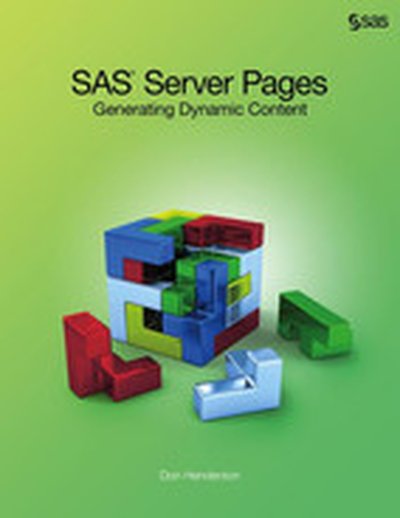
SAS Server Pages

SAS Server Pages have been used by SAS developers as a way of creating custom user interfaces for Web-based applications. This enhanced book offers information on how to create SAS Server Pages using the SAS 9.3 experimental procedure PROC STREAM, providing users with a foundation technology that greatly expands the capabilities of SAS for dynamic and rich content generation. By combining PROC STREAM and the Macro facility, SAS can now more easily generate any type of markup or text-based content such as HTML, XML, and CSV.

Exclusively available in electronic format, this book provides more extensive and flexible ways to develop applications using video examples of a wide range of PROC STREAM and SAS Server Pages techniques, including both Web applications and Base SAS implementations. Users can see results immediately and can access additional content and information online through embedded links. It also offers basic how-to documentation on PROC STREAM and an overview of a Portal Reporting Framework that illustrates creating custom user interfaces for stored processes within the SAS Portal.

Ideal for SAS programmers who have some knowledge of the Macro facility as well as BI users, SAS Server Pages: Generating Dynamic Content removes the difficulties associated with HTML-based content creation while providing a resource on using PROC STREAM in a dynamic, enhanced format.

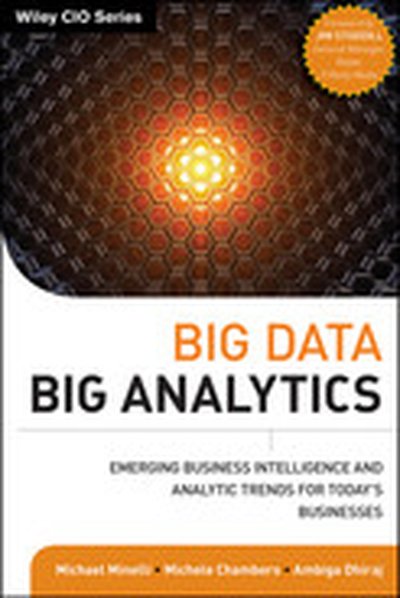
Big Data, Big Analytics: Emerging Business Intelligence and Analytic Trends for Today's Businesses

Unique prospective on the big data analytics phenomenon for both business and IT professionals The availability of Big Data, low-cost commodity hardware and new information management and analytics software has produced a unique moment in the history of business. The convergence of these trends means that we have the capabilities required to analyze astonishing data sets quickly and cost-effectively for the first time in history. These capabilities are neither theoretical nor trivial. They represent a genuine leap forward and a clear opportunity to realize enormous gains in terms of efficiency, productivity, revenue and profitability. The Age of Big Data is here, and these are truly revolutionary times. This timely book looks at cutting-edge companies supporting an exciting new generation of business analytics. Learn more about the trends in big data and how they are impacting the business world (Risk, Marketing, Healthcare, Financial Services, etc.) Explains this new technology and how companies can use them effectively to gather the data that they need and glean critical insights Explores relevant topics such as data privacy, data visualization, unstructured data, crowd sourcing data scientists, cloud computing for big data, and much more.

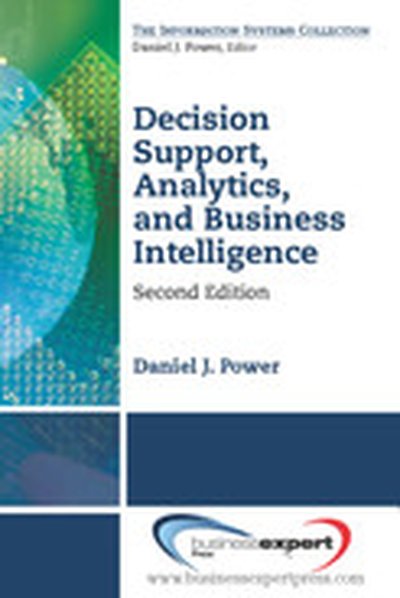
Decision Support, Analytics, and Business Intelligence, Second Edition

Competition is becoming more intense and decision makers are encountering increasing complexity, rapid change, and higher levels of risk. In many situations, the solution is more and better computerized decision support, especially analytics and business intelligence. Today managers need to learn about and understand computerized decision support. If a business is to succeed, managers must know much more about information technology solutions. This second edition of a powerful introductory book is targeted at busy managers and MBA students who need to grasp the basics of computerized decision support, including the following: What are analytics? What is a decision support system? How can managers identify opportunities to create innovative computerized support? Inside, the author addresses these questions and some 60 more fundamental questions that are key to understanding the rapidly changing realm of computerized decision support. In a short period of time, you’ll “get up to speed” on decision support, analytics, and business intelligence.

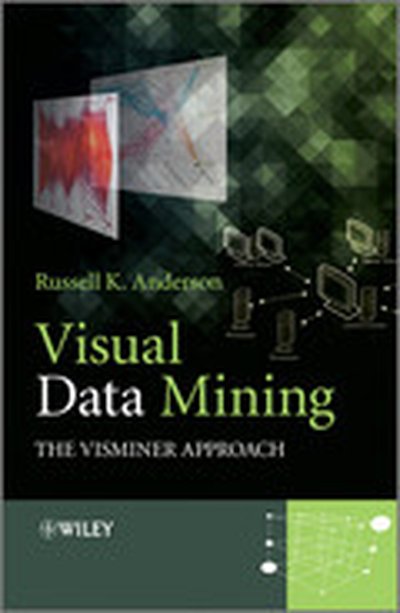
Visual Data Mining: The VisMiner Approach, 2nd Edition

A visual approach to data mining. Data mining has been defined as the search for useful and previously unknown patterns in large datasets, yet when faced with the task of mining a large dataset, it is not always obvious where to start and how to proceed. This book introduces a visual methodology for data mining demonstrating the application of methodology along with a sequence of exercises using VisMiner. VisMiner has been developed by the author and provides a powerful visual data mining tool enabling the reader to see the data that they are working on and to visually evaluate the models created from the data. Key features: Presents visual support for all phases of data mining including dataset preparation. Provides a comprehensive set of non-trivial datasets and problems with accompanying software. Features 3-D visualizations of multi-dimensional datasets. Gives support for spatial data analysis with GIS like features. Describes data mining algorithms with guidance on when and how to use. Accompanied by VisMiner, a visual software tool for data mining, developed specifically to bridge the gap between theory and practice. Visual Data Mining: The VisMiner Approach is designed as a hands-on work book to introduce the methodologies to students in data mining, advanced statistics, and business intelligence courses. This book provides a set of tutorials, exercises, and case studies that support students in learning data mining processes. In praise of the VisMiner approach: "What we discovered among students was that the visualization concepts and tools brought the analysis alive in a way that was broadly understood and could be used to make sound decisions with greater certainty about the outcomes"—Dr. James V. Hansen, J. Owen Cherrington Professor, Marriott School, Brigham Young University, USA "Students learn best when they are able to visualize relationships between data and results during the data mining process. VisMiner is easy to learn and yet offers great visualization capabilities throughout the data mining process. My students liked it very much and so did I." —Dr. Douglas Dean, Assoc. Professor of Information Systems, Marriott School, Brigham Young University, USA

Business Intelligence, 2nd Edition

Business Intelligence: The Savvy Managers Guide, Second Edition, discusses the objectives and practices for designing and deploying a business intelligence (BI) program. It looks at the basics of a BI program, from the value of information and the mechanics of planning for success to data model infrastructure, data preparation, data analysis, integration, knowledge discovery, and the actual use of discovered knowledge. Organized into 21 chapters, this book begins with an overview of the kind of knowledge that can be exposed and exploited through the use of BI. It then proceeds with a discussion of information use in the context of how value is created within an organization, how BI can improve the ways of doing business, and organizational preparedness for exploiting the results of a BI program. It also looks at some of the critical factors to be taken into account in the planning and execution of a successful BI program. In addition, the reader is introduced to considerations for developing the BI roadmap, the platforms for analysis such as data warehouses, and the concepts of business metadata. Other chapters focus on data preparation and data discovery, the business rules approach, and data mining techniques and predictive analytics. Finally, emerging technologies such as text analytics and sentiment analysis are considered. This book will be valuable to data management and BI professionals, including senior and middle-level managers, Chief Information Officers and Chief Data Officers, senior business executives and business staff members, database or software engineers, and business analysts. Guides managers through developing, administering, or simply understanding business intelligence technology Keeps pace with the changes in best practices, tools, methods and processes used to transform an organization’s data into actionable knowledge Contains a handy, quick-reference to technologies and terminology

Using Open Source Platforms for Business Intelligence

Open Source BI solutions have many advantages over traditional proprietary software, from offering lower initial costs to more flexible support and integration options; but, until now, there has been no comprehensive guide to the complete offerings of the OS BI market. Writing for IT managers and business analysts without bias toward any BI suite, industry insider Lyndsay Wise covers the benefits and challenges of all available open source BI systems and tools, enabling readers to identify the solutions and technologies that best meet their business needs. Wise compares and contrasts types of OS BI and proprietary tools on the market, including Pentaho, Jaspersoft, RapidMiner, SpagoBI, BIRT, and many more. Real-world case studies and project templates clarify the steps involved in implementing open source BI, saving new users the time and trouble of developing their own solutions from scratch. For business managers who are hard pressed to indentify the best BI solutions and software for their companies, this book provides a practical guide to evaluating the ROI of open source versus traditional BI deployments. The only book to provide complete coverage of all open source BI systems and tools specifically for business managers, without bias toward any OS BI suite A practical, step-by-step guide to implementing OS BI solutions that maximize ROI Comprehensive coverage of all open source systems and tools, including architectures, data integration, support, optimization, data mining, data warehousing, and interoperability Case studies and project templates enable readers to evaluate the benefits and tradeoffs of all OS BI options without having to spend time developing their own solutions from scratch