talk-data.com talk-data.com

Topic

Cloud Computing

infrastructure saas iaas

4055

tagged

Activity Trend

471 peak/qtr
2020-Q1 2026-Q1

Activities

4055 activities · Newest first

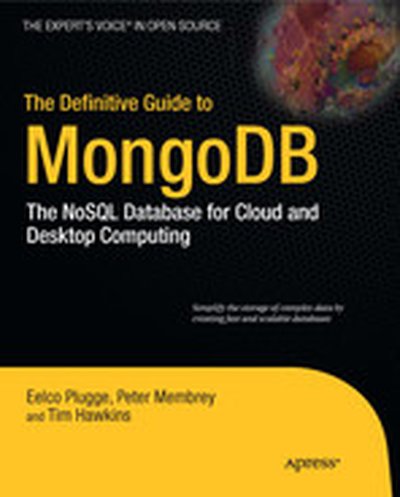
The Definitive Guide to MongoDB: The NoSQL Database for Cloud and Desktop Computing

MongoDB, a cross-platform NoSQL database, is the fastest-growing new database in the world. MongoDB provides a rich document orientated structure with dynamic queries that you'll recognize from RDMBS offerings such as MySQL. In other words, this is a book about a NoSQL database that does not require the SQL crowd to re-learn how the database world works! MongoDB has reached 1.0 and already boasts 50,000+ users. The community is strong and vibrant and MongoDB is improving at a fast rate. With scalable and fast databases becoming critical for today's applications, this book shows you how to install, administer and program MongoDB without pretending SQL never existed.

The New Era of Enterprise Business Intelligence: Using Analytics to Achieve a Global Competitive Advantage

A Complete Blueprint for Maximizing the Value of Business Intelligence in the Enterprise The typical enterprise recognizes the immense potential of business intelligence (BI) and its impact upon many facets within the organization–but it’s not easy to transform BI’s potential into real business value. In top BI expert Mike Biere presents a complete blueprint for creating winning BI strategies and infrastructure, and systematically maximizing the value of information throughout the enterprise. The New Era of Enterprise Business Intelligence, This product-independent guide brings together start-to-finish guidance and practical checklists for every senior IT executive, planner, strategist, implementer, and the actual business users themselves. Drawing on thousands of hours working with enterprise customers, Biere helps decision-makers choose from today’s unprecedented spectrum of options, including the latest BI platform suites and appliances. He offers practical, “in-the-trenches” insights on a wide spectrum of planning and implementation issues, from segmenting and supporting users to working with unstructured data. Coverage includes • Understanding the scope of today’s BI solutions and how they fit into existing infrastructure • Assessing new options such as SaaS and cloud-based technologies • Avoiding technology biases and other “project killers” • Developing effective RFIs/RFPs and proofs of concept • Setting up competency centers and planning for skills development • Crafting a better experience for all your business users • Supporting the requirements of senior executives, including performance management • Cost-justifying BI solutions and measuring success • Working with enterprise content management, text analytics, and search • Planning and constructing portals, mashups, and other user interfaces • Previewing the future of BI

A Developer’s Guide to Amazon SimpleDB

The Complete Guide to Building Cloud Computing Solutions with Amazon SimpleDB Using SimpleDB, any organization can leverage Amazon Web Services (AWS), Amazon’s powerful cloud-based computing platform–and dramatically reduce the cost and resources associated with application infrastructure. Now, for the first time, there’s a complete developer’s guide to building production solutions with Amazon SimpleDB. Pioneering SimpleDB developer Mocky Habeeb brings together all the hard-to-find information you need to succeed. Mocky tours the SimpleDB platform and APIs, explains their essential characteristics and tradeoffs, and helps you determine whether your applications are appropriate for SimpleDB. Next, he walks you through all aspects of writing, deploying, querying, optimizing, and securing Amazon SimpleDB applications–from the basics through advanced techniques. Throughout, Mocky draws on his unsurpassed experience supporting developers on SimpleDB’s official Web forums. He offers practical tips and answers that can’t be found anywhere else, and presents extensive working sample code–from snippets to complete applications. With A Developer’s Guide to Amazon SimpleDB you will be able to Evaluate whether a project is suited for Amazon SimpleDB Write SimpleDB applications that take full advantage of SimpleDB’s availability, scalability, and flexibility Effectively manage the entire SimpleDB application lifecycle Deploy cloud computing applications faster and more easily Work with SELECT and bulk data operations Fine tune queries to optimize performance Integrate SimpleDB security into existing organizational security plans Write and enhance runtime SimpleDB clients Build complete applications using AJAX and SimpleDB Understand low-level issues involved in writing clients and frameworks Solve common SimpleDB usage problems and avoid hidden pitfalls This book will be an indispensable resource for every IT professional evaluating or using SimpleDB to build cloud-computing applications, clients, or frameworks.

MySQL High Availability

Server bottlenecks and failures are a fact of life in any database deployment, but they don't have to bring everything to a halt. MySQL has several features that can help you protect your system from outages, whether it's running on hardware, virtual machines, or in the cloud. MySQL High Availability explains how to use these replication, cluster, and monitoring features in a wide range of real-life situations. Written by engineers who designed many of the tools covered inside, this book reveals undocumented or hard-to-find aspects of MySQL reliability and high availability -- knowledge that’s essential for any organization using this database system. "MySQL replication is widely deployed but has never been adequately explained. This book changes that."-- Mark Callaghan, MySQL contributor and leader of MySQL engineering efforts at a few of the world's largest Internet companies Explore the binary log, a file for replication that helps in disaster recovery and troubleshooting Get techniques for improving response time and handling large data sets Monitor database activity and performance, as well as major operating system parameters Keep track of what masters and slaves are doing, and deal with failures and restarts, corruption, and other incidents Automate key tasks with code from an open source library written by the authors Learn techniques for using MySQL in virtualized environments, such as Amazon Web Services Use MySQL Cluster to achieve high availability

Oracle RMAN 11g Backup and Recovery

Master Oracle Recovery Master Protect your databases from hardware, software, and operator failures using the detailed information in this Oracle Press guide. Oracle RMAN 11g Backup and Recovery explains how to configure databases, generate accurate archives, and carry out system restores. Work from the command line or Oracle Enterprise Manager, automate the backup process, perform Oracle Flashback recoveries, and integrate cloud computing technology. This authoritative resource also shows you how to create reports, optimize performance, and implement third-party administration utilities. Set up, configure, and maintain Oracle Recovery Manager (Oracle RMAN) Manage physical and virtual media with Oracle Secure Backup Work with Oracle RMAN catalogs, packages, and control files Use the Amazon Web Services cloud as an offsite storage solution Create online, offline, and incremental system backups Perform full and partial Oracle RMAN database restores Correct user-induced errors with Oracle Flashback Product clone and standby databases on local or remote servers Use Oracle Real Application Clusters and synch and split technology For a complete list of Oracle Press titles, visit www.OraclePressBooks.com

Hadoop: The Definitive Guide

Hadoop: The Definitive Guide helps you harness the power of your data. Ideal for processing large datasets, the Apache Hadoop framework is an open source implementation of the MapReduce algorithm on which Google built its empire. This comprehensive resource demonstrates how to use Hadoop to build reliable, scalable, distributed systems: programmers will find details for analyzing large datasets, and administrators will learn how to set up and run Hadoop clusters. Complete with case studies that illustrate how Hadoop solves specific problems, this book helps you: Use the Hadoop Distributed File System (HDFS) for storing large datasets, and run distributed computations over those datasets using MapReduce Become familiar with Hadoop's data and I/O building blocks for compression, data integrity, serialization, and persistence Discover common pitfalls and advanced features for writing real-world MapReduce programs Design, build, and administer a dedicated Hadoop cluster, or run Hadoop in the cloud Use Pig, a high-level query language for large-scale data processing Take advantage of HBase, Hadoop's database for structured and semi-structured data Learn ZooKeeper, a toolkit of coordination primitives for building distributed systems If you have lots of data -- whether it's gigabytes or petabytes -- Hadoop is the perfect solution. Hadoop: The Definitive Guide is the most thorough book available on the subject. "Now you have the opportunity to learn about Hadoop from a master-not only of the technology, but also of common sense and plain talk."-- Doug Cutting, Hadoop Founder, Yahoo!

Up to 90% of organizations are building across cloud environments, from edge to to multiple clouds - and the scale and speed of AI is putting pressure on these architectures. In this spotlight discover how organizations are leveraging decades of our infrastructure expertise to build secure, sovereign AI solutions. Also, learn how industry leaders are using the latest advances in networking, storage, and distributed cloud solutions to accelerate AI solution deployment anywhere.

There’s an old saying: “If you fail to plan, you are planning to fail.” This is true when it comes to migrating workloads to the cloud. Attempting a move without insights into your apps is setting the stage for disaster. How can you ensure your migration to Google Cloud is secure and meets your customers’ expectations? We’ll discuss the role Datadog plays in a migration to Google Cloud. We’ll explore best practices and guide you through the steps to achieve a seamless and successful migration.

This Session is hosted by a Google Cloud Next Sponsor.Visit your registration profile at g.co/cloudnext to opt out of sharing your contact information with the sponsor hosting this session.

Traditional enterprises can unlock their full potential and achieve transformative results by adopting a Cloud-first, AI-first approach. In this session, Infosys experts share a comprehensive blueprint powered by Infosys Topaz and Infosys Cobalt offerings on Google Cloud. Gain insights into the power of this dynamic duo and learn how Infosys is uniquely positioned to navigate enterprises through this transformative journey. By attending this session, your contact information may be shared with the sponsor for relevant follow up for this event only.

Click the blue “Learn more” button above to tap into special offers designed to help you implement what you are learning at Google Cloud Next 25.

Join us to learn how to design and deploy mission-critical applications on Google Cloud, with a focus on reliability. We’ll cover common deployment architectures for traditional enterprise and AI and machine learning apps, Google Cloud product capabilities to improve reliability, and best practices for high availability and disaster recovery. And a Google Cloud customer will share their journey of running mission-critical applications on Google Cloud, including key lessons learned and how those connect back to Google Cloud architectural guidance and best practices.

Advancing mainframe modernization with Slingshot and Microsoft

Learn how a major US health company conquered legacy tech debt with Publicis Sapient. This session details an AI-powered modernization effort that transformed thousands of COBOL screens and utilized Microsoft's Azure cloud platform and Sapient Slingshot, resulting in a 3x faster migration and improved overall efficiency.

Agentic AI SRE on Azure for faster RCA and resolution

Downtime is expensive, and every minute counts when incidents hit. Yet valuable engineering time is lost to troubleshooting, instead of driving design and innovation. NeuBird’s Agentic AI SRE delivers real-time RCA and remediation, while ensuring enterprise-grade security and governance. It correlates telemetry across Azure Monitor, observability tools, and multi-cloud, helping reduce MTTR up to 90%. Join this session to see Hawkeye by NeuBird in action.

Join experts from Box, Typeface, Glean, CitiBank, and Securiti AI for actionable tips to effectively implement AI-powered apps across your enterprise. We'll discuss real use cases, implementation best practices, and how to measure returns on investment — whether that's in marketing, financial services, HR, or beyond.

Click the blue “Learn more” button above to tap into special offers designed to help you implement what you are learning at Google Cloud Next 25.

Join us to learn customer-proven strategies for AI-powered innovation and modernization, leveraging the best of public cloud, edge, sovereign, and cross-cloud infrastructure and services. See how leaders are achieving real business outcomes faster and more cost-effectively in industries like retail, healthcare, and even the most stringent regulated industries. Plus, see how Gemini is dramatically simplifying and reimagining cloud as we know it.

Click the blue “Learn more” button above to tap into special offers designed to help you implement what you are learning at Google Cloud Next 25.

AI-based data discovery and threat detection with Veeam

Explore how Veeam Data Cloud for M365 goes far beyond backup, leveraging Azure and Azure AI to interact with your data. These new features offer high-throughput data discovery and Veeam's patent-pending advanced malware and ransomware detection. See a live demo of natural language queries, threat evaluation, and AI-driven management via MCP server. Learn how IT Admins, SOC Leads and CISOs can quickly identify threats and prioritize mitigation- empowering security teams to act faster and smarter.

session
by Moontae Lee (LG AI Research) , Cesar Naranjo (Moloco) , Chelsie Czop (Google Cloud) , Kshetrajna Radhaven (Shopify) , Newfel Harrat (Google Cloud) , Kasper Piskorski, PhD (Technology Innovation Institute)

AI Hypercomputer is a revolutionary system designed to make implementing AI at scale easier and more efficient. In this session, we’ll explore the key benefits of AI Hypercomputer and how it simplifies complex AI infrastructure environments. Then, learn firsthand from industry leaders Shopify, Technology Innovation Institute, Moloco, and LG AI Research on how they leverage Google Cloud’s AI solutions to drive innovation and transform their businesses.