talk-data.com talk-data.com

Topic

data-science-tasks

849

tagged

Activity Trend

1 peak/qtr
2020-Q1 2026-Q1

Activities

849 activities · Newest first

Data Insights

Data Insights: New Ways to Visualize and Make Sense of Data offers thought-provoking insights into how visualization can foster a clearer and more comprehensive understanding of data. The book offers perspectives from people with different backgrounds, including data scientists, statisticians, painters, and writers. It argues that all data is useless, or misleading, if we do not know what it means.Organized into seven chapters, the book explores some of the ways that data visualization and other emerging approaches can make data meaningful and therefore useful. It also discusses some fundamental ideas and basic questions in the data lifecycle; the process of interactions between people, data, and displays that lead to better questions and more useful answers; and the fundamentals, origins, and purposes of the basic building blocks that are used in data visualization. The reader is introduced to tried and true approaches to understanding users in the context of user interface design, how communications can get distorted, and how data visualization is related to thinking machines. Finally, the book looks at the future of data visualization by assessing its strengths and weaknesses. Case studies from business analytics, healthcare, network monitoring, security, and games, among others, as well as illustrations, thought-provoking quotes, and real-world examples are included.This book will prove useful to computer professionals, technical marketing professionals, content strategists, Web and product designers, and researchers. Demonstrates, with a variety of case studies, how visualizations can foster a clearer and more comprehensive understanding of data Answers the question, "How can data visualization help me?" with discussions of how it fits into a wide array of purposes and situations Makes the case that data visualization is not just about technology; it also involves a deeply human process
Bayesian Methods in Health Economics

Health economics is concerned with the study of the cost-effectiveness of health care interventions. This book provides an overview of Bayesian methods for the analysis of health economic data. After an introduction to the basic economic concepts and methods of evaluation, it presents Bayesian statistics using accessible mathematics. The next chapters describe the theory and practice of cost-effectiveness analysis from a statistical viewpoint, and Bayesian computation, notably MCMC. The final chapter presents three detailed case studies covering cost-effectiveness analyses using individual data from clinical trials, evidence synthesis and hierarchical models and Markov models. The text uses WinBUGS and JAGS with datasets and code available online.

Statistics for Economics

Statistics is the branch of mathematics that deals with real-life problems. As such, it is an essential tool for economists. Unfortunately, the way you and many other economists learn the concept of statistics is not compatible with the way economists think and learn. The problem is worsened by the use of mathematical jargon and complex derivations. Here’s a book that proves none of this is necessary. All the examples and exercises in this book are constructed within the field of economics, thus eliminating the difficulty of learning statistics with examples from fields that have no relation to business, politics, or policy. Statistics is, in fact, not more difficult than economics. Anyone who can comprehend economics can understand and use statistics successfully within this field, including you! This book utilizes Microsoft Excel to obtain statistical results, as well as to perform additional necessary computations. Microsoft Excel is not the software of choice for performing sophisticated statistical analysis. However, it is widely available, and almost everyone has some degree of familiarity with it. Using Excel will eliminate the need for students and readers to buy and learn new software, the need that itself would prove to be another impediment to learning and using statistics.

Statistics in a Nutshell, 2nd Edition

Need to learn statistics for your job? Want help passing a statistics course? Statistics in a Nutshell is a clear and concise introduction and reference for anyone new to the subject. Thoroughly revised and expanded, this edition helps you gain a solid understanding of statistics without the numbing complexity of many college texts. Each chapter presents easy-to-follow descriptions, along with graphics, formulas, solved examples, and hands-on exercises. If you want to perform common statistical analyses and learn a wide range of techniques without getting in over your head, this is your book. Learn basic concepts of measurement and probability theory, data management, and research design Discover basic statistical procedures, including correlation, the t-test, the chi-square and Fisher’s exact tests, and techniques for analyzing nonparametric data Learn advanced techniques based on the general linear model, including ANOVA, ANCOVA, multiple linear regression, and logistic regression Use and interpret statistics for business and quality improvement, medical and public health, and education and psychology Communicate with statistics and critique statistical information presented by others

Computational Statistics, 2nd Edition

This new edition continues to serve as a comprehensive guide to modern and classical methods of statistical computing. The book is comprised of four main parts spanning the field: Optimization Integration and Simulation Bootstrapping Density Estimation and Smoothing Within these sections, each chapter includes a comprehensive introduction and step-by-step implementation summaries to accompany the explanations of key methods. The new edition includes updated coverage and existing topics as well as new topics such as adaptive MCMC and bootstrapping for correlated data. The book website now includes comprehensive R code for the entire book. There are extensive exercises, real examples, and helpful insights about how to use the methods in practice. Note: The ebook version does not provide access to the companion files.

Visual Guide to Chart Patterns

The step-by-step visual guide to spotting potential price movements and improving returns Bloomberg Visual Guide to Chart Patterns is a concise and accessible visual guide to identifying, understanding, and using chart patterns to predict the direction and extent of price moves. Packed with visual learning enhancements and exercises, this innovative book helps savvy investors and professionals alike master the essential skills of chart pattern recognition. Follow along as chart pattern expert Thomas Bulkowski teaches you to recognize important peaks and valleys that form patterns—footprints of the smart money. Nearly 200 color charts assist in providing a step-by-step approach to finding those footprints, interpreting them, and following them. Popular patterns such as head-and-shoulders, double tops and bottoms, triangles, gaps, flags, and pennants are just a few of the many patterns explored throughout the book. For the sophisticated trader or investor, the book also provides statistical research to support the claims of pattern behavior, trading signals, and setups, in an easy to understand way. Discusses chart pattern identification guidelines, psychology, variations, failures, and buy and sell signals Covers the most popular and common chart patterns as well as lesser-known ones like throwbacks, pullbacks, and busted patterns Incorporates quizzes, step-by-step exercises, enhanced graphics and video tutorials to immerse the reader in the world of chart patterns Designed for use by investors and traders, from beginners to experts looking for a practical, easy-to-use guide, comprehensive reference, Bloomberg Visual Guide to Chart Patterns provides a sophisticated introduction to the world of chart patterns.

Data Clean-Up and Management

Data use in the library has specific characteristics and common problems. Data Clean-up and Management addresses these, and provides methods to clean up frequently-occurring data problems using readily-available applications. The authors highlight the importance and methods of data analysis and presentation, and offer guidelines and recommendations for a data quality policy. The book gives step-by-step how-to directions for common dirty data issues. Focused towards libraries and practicing librarians Deals with practical, real-life issues and addresses common problems that all libraries face Offers cradle-to-grave treatment for preparing and using data, including download, clean-up, management, analysis and presentation

Beginning R: An Introduction to Statistical Programming

Beginning R: An Introduction to Statistical Programming is a hands-on book showing how to use the R language, write and save R scripts, build and import data files, and write your own custom statistical functions. R is a powerful open-source implementation of the statistical language S, which was developed by AT&T. R has eclipsed S and the commercially-available S-Plus language, and has become the de facto standard for doing, teaching, and learning computational statistics. R is both an object-oriented language and a functional language that is easy to learn, easy to use, and completely free. A large community of dedicated R users and programmers provides an excellent source of R code, functions, and data sets. R is also becoming adopted into commercial tools such as Oracle Database. Your investment in learning R is sure to pay off in the long term as R continues to grow into the go to language for statistical exploration and research. Covers the freely-available R language for statistics Shows the use of R in specific uses case such as simulations, discrete probability solutions, one-way ANOVA analysis, and more Takes a hands-on and example-based approach incorporating best practices with clear explanations of the statistics being done What you'll learn Acquire and install R Import and export data and scripts Generate basic statistics and graphics Program in R to write custom functions Use R for interactive statistical explorations Implement simulations and other advanced techniques Who this book is for Beginning R: An Introduction to Statistical Programming is an easy-to-read book that serves as an instruction manual and reference for working professionals, professors, and students who want to learn and use R for basic statistics. It is the perfect book for anyone needing a free, capable, and powerful tool for exploring statistics and automating their use.

Service-Oriented Distributed Knowledge Discovery

A new approach to distributed large-scale data mining, service-oriented knowledge discovery extracts useful knowledge from often unmanageable volumes of data by exploiting data mining and machine learning distributed models and techniques in service-oriented infrastructures. Service-Oriented Distributed Knowledge Discovery presents techniques, algorithms, and systems based on the service-oriented paradigm. It explains how to design services for data analytics, describes real systems for implementing distributed knowledge discovery applications, and explores mobile data mining models.

Statistical Monitoring of Complex Multivariate Processes: With Applications in Industrial Process Control

The development and application of multivariate statistical techniques in process monitoring has gained substantial interest over the past two decades in academia and industry alike. Initially developed for monitoring and fault diagnosis in complex systems, such techniques have been refined and applied in various engineering areas, for example mechanical and manufacturing, chemical, electrical and electronic, and power engineering. The recipe for the tremendous interest in multivariate statistical techniques lies in its simplicity and adaptability for developing monitoring applications. In contrast, competitive model, signal or knowledge based techniques showed their potential only whenever cost-benefit economics have justified the required effort in developing applications. Statistical Monitoring of Complex Multivariate Processes presents recent advances in statistics based process monitoring, explaining how these processes can now be used in areas such as mechanical and manufacturing engineering for example, in addition to the traditional chemical industry. This book: Contains a detailed theoretical background of the component technology. Brings together a large body of work to address the field's drawbacks, and develops methods for their improvement. Details cross-disciplinary utilization, exemplified by examples in chemical, mechanical and manufacturing engineering. Presents real life industrial applications, outlining deficiencies in the methodology and how to address them. Includes numerous examples, tutorial questions and homework assignments in the form of individual and team-based projects, to enhance the learning experience. Features a supplementary website including Matlab algorithms and data sets. This book provides a timely reference text to the rapidly evolving area of multivariate statistical analysis for academics, advanced level students, and practitioners alike.

Industrial Statistics with Minitab

Industrial Statistics with MINITAB demonstrates the use of MINITAB as a tool for performing statistical analysis in an industrial context. This book covers introductory industrial statistics, exploring the most commonly used techniques alongside those that serve to give an overview of more complex issues. A plethora of examples in MINITAB are featured along with case studies for each of the statistical techniques presented. Industrial Statistics with MINITAB: Provides comprehensive coverage of user-friendly practical guidance to the essential statistical methods applied in industry. Explores statistical techniques and how they can be used effectively with the help of MINITAB 16. Contains extensive illustrative examples and case studies throughout and assumes no previous statistical knowledge. Emphasises data graphics and visualization, and the most used industrial statistical tools, such as Statistical Process Control and Design of Experiments. Is supported by an accompanying website featuring case studies and the corresponding datasets. Six Sigma Green Belts and Black Belts will find explanations and examples of the most relevant techniques in DMAIC projects. The book can also be used as quick reference enabling the reader to be confident enough to explore other MINITAB capabilities.

Solving Business Problems with Informix TimeSeries

The world is becoming more and more instrumented, interconnected, and intelligent in what IBM® terms a smarter planet, with more and more data being collected for analysis. In trade magazines, this trend is called big data. As part of this trend, the following types of time-based information are collected: Large data centers support a corporation or provide cloud services. These data centers need to collect temperature, humidity, and other types of Utility meters (referred to as smart meters) allow utility companies to collect information over a wireless network and to collect more data than ever before. IBM Informix® TimeSeries is optimized for the processing of time-based data and can provide the following benefits: Storage savings: Storage can be optimized when you know the characteristics of your time-based data. Informix TimeSeries often uses one third of the storage space that is required by a standard relational database. Query performance: Informix TimeSeries takes into consideration the type of data to optimize its organization on disk and eliminates the need for some large indexes and additional sorting. For these reasons and more, some queries can easily have an order of magnitude performance improvement compared to standard relational. Simpler queries: Informix TimeSeries includes a large set of specialized functions that allow you to better express the processing that you want to execute. It even provides a toolkit so that you can add proprietary algoritms to the library. This IBM Redbooks® publication is for people who want to implement a solution that revolves around time-based data. It gives you the information that you need to get started and be productive with Informix TimeSeries.

Regression for Economics

Regression analysis is the most commonly used statistical method in the world. Although few would characterize this technique as simple, regression is in fact both simple and elegant. The complexity that many attribute to regression analysis is often a reflection of their lack of familiarity with the language of mathematics. But regression analysis can be understood even without a mastery of sophisticated mathematical concepts. This book provides the foundation and will help demystify regression analysis using examples from economics and with real data to show the applications of the method. The concepts related to regression analysis are explained in a way that is comprehensible to those whose mathematical skills are not matching that of the expert level, and uses Microsoft Excel to obtain regression results. What hinders peoples’ comprehension of regression analysis is the difficulty many have in understanding mathematical symbols and derivations. By removing this obstacle, this book enables the logical reader to learn regression without possessing superior mathematical skills.

Bayesian Statistics: An Introduction, 4th Edition

Bayesian Statistics is the school of thought that combines prior beliefs with the likelihood of a hypothesis to arrive at posterior beliefs. The first edition of Peter Lee's book appeared in 1989, but the subject has moved ever onwards, with increasing emphasis on Monte Carlo based techniques. This new fourth edition looks at recent techniques such as variational methods, Bayesian importance sampling, approximate Bayesian computation and Reversible Jump Markov Chain Monte Carlo (RJMCMC), providing a concise account of the way in which the Bayesian approach to statistics develops as well as how it contrasts with the conventional approach. The theory is built up step by step, and important notions such as sufficiency are brought out of a discussion of the salient features of specific examples. This edition: Includes expanded coverage of Gibbs sampling, including more numerical examples and treatments of OpenBUGS, R2WinBUGS and R2OpenBUGS. Presents significant new material on recent techniques such as Bayesian importance sampling, variational Bayes, Approximate Bayesian Computation (ABC) and Reversible Jump Markov Chain Monte Carlo (RJMCMC). Provides extensive examples throughout the book to complement the theory presented. Accompanied by a supporting website featuring new material and solutions. More and more students are realizing that they need to learn Bayesian statistics to meet their academic and professional goals. This book is best suited for use as a main text in courses on Bayesian statistics for third and fourth year undergraduates and postgraduate students.

Infographics: The Power of Visual Storytelling

Transform your marketing efforts through the power of visual content In today's fast-paced environment, you must communicate your message in a concise and engaging way that sets it apart from the noise. Visual content—such as infographics and data visualization—can accomplish this. With DIY functionality, Infographics: The Power of Visual Storytelling will teach you how to find stories in your data, and how to visually communicate and share them with your audience for maximum impact. Infographics will show you the vast potential to using the communication medium as a marketing tool by creating informative and shareable infographic content. Learn how to explain an object, idea, or process using strong illustration that captures interest and provides instant clarity Discover how to unlock interesting stories (in previously buried or boring data) and turn them into visual communications that will help build brands and increase sales Use the power of visual content to communicate with and engage your audience, capture attention, and expand your market.

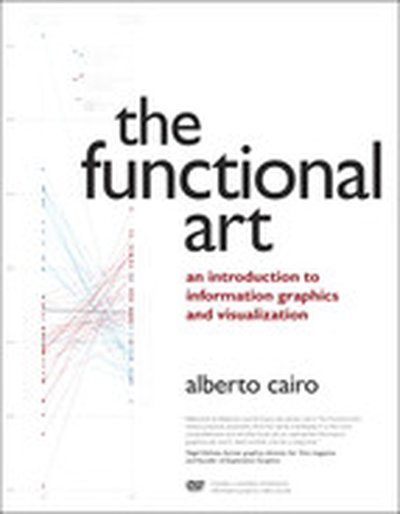
The Functional Art: An introduction to information graphics and visualization

Unlike any time before in our lives, we have access to vast amounts of free information. With the right tools, we can start to make sense of all this data to see patterns and trends that would otherwise be invisible to us. By transforming numbers into graphical shapes, we allow readers to understand the stories those numbers hide. In this practical introduction to understanding and using information graphics, you’ll learn how to use data visualizations as tools to see beyond lists of numbers and variables and achieve new insights into the complex world around us. Regardless of the kind of data you’re working with–business, science, politics, sports, or even your own personal finances–this book will show you how to use statistical charts, maps, and explanation diagrams to spot the stories in the data and learn new things from it. Condé Nast Traveler’s John Grimwade , National Geographic Magazine’s Fernando Baptista, The New York Times’ Steve Duenes, The Washington Post’s Hannah Fairfield, Hans Rosling of the Gapminder Foundation, Stanford’s Geoff McGhee, and European superstars Moritz Stefaner, Jan Willem Tulp, Stefanie Posavec, and Gregor Aisch. The Functional Art reveals: In this introductory course on information graphics, Alberto Cairo goes into greater detail with even more visual examples of how to create effective information graphics that function as practical tools for aiding perception. You’ll learn how to: incorporate basic design principles in your visualizations, create simple interfaces for interactive graphics, and choose the appropriate type of graphic forms for your data. Cairo also deconstructs successful information graphics from The New York Times and National Geographic magazine with sketches and images not shown in the book.

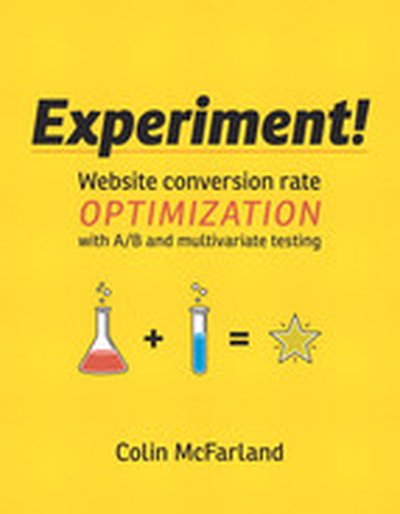
Experiment!: Website conversion rate optimization with A/B and multivariate testing

Testing is a surefire way to dramatically improve your website’s conversion rate and increase revenue. When you run experiments with changes to design or content, you’ll quickly discover which changes better motivate your users to take action. This book shows how to learn from your customers’ behavior and decisions, and how their responses reveal the strengths and weaknesses of your site. It will show you how to make websites that work harder and convert better. Learn how to approach experiments to improve conversion Understand the various methods of testing including A/B and multivariate Discover experiment ideas, and go beyond optimization to innovation Recognize the UX and design implications of experimenting Learn to analyze data and deliver results Experimenting changes the way you think about design and the way you work. It helps prevent the loudest voice from deciding direction; instead, through an experiment, you’ll ask the most important voices--your customers--“What do you think?”

Experiment!: Planning, Implementing and Interpreting

Experiments are the most effective way to learn about the world. By cleverly interfering with something to see how it reacts we are able to find out how it works. In contrast to passive observation, experimenting provides us with data relevant to our research and thus less time and effort is spent separating relevant from irrelevant information. The art of experimentation is often learnt by doing, so an intuitive understanding of the experimental method usually evolves gradually through years of trial and error. This book speeds up the journey for the reader to becoming a proficient experimenter. Organized in two parts, this unique text begins by providing a general introduction to the scientific approach to experimentation. It then describes the processes and tools required, including the relevant statistical and experimental methods. Towards the end of the book a methodology is presented, which leads the reader through the three phases of an experiment: 'Planning', 'Data Collection', and 'Analysis and Synthesis'. Experiment! Provides an excellent introduction to the methodology and implementation of experimentation in the natural, engineering and medical sciences Puts practical tools into scientific context Features a number of selected actual experiments to explore what are the key characteristics of good experiments Includes examples and exercises in every chapter This book focuses on general research skills, such as adopting a scientific mindset, learning how to plan meaningful experiments and understanding the fundamentals of collecting and interpreting data. It is directed to anyone engaged in experiments, especially Ph.D. and masters students just starting to create and develop their own experiments.

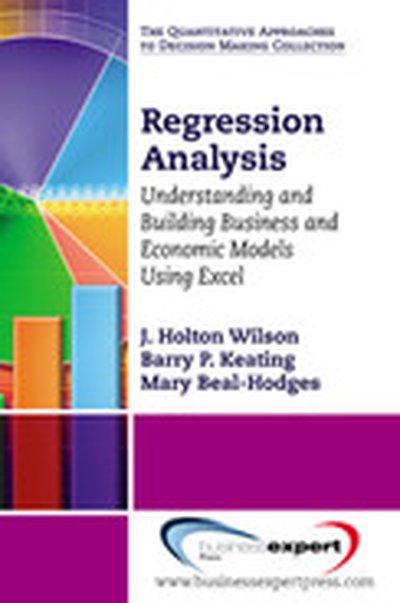
Regression Analysis

The technique of regression analysis is used so often in business and economics today that an understanding of its use is necessary for almost everyone engaged in the field. This book will teach you the essential elements of building and understanding regression models in a business/economic context in an intuitive manner. The authors take a non-theoretical treatment that is accessible even if you have a limited statistical background. It is specifically designed to teach the correct use of regression, while advising you of its limitations and teaching about common pitfalls. This book describes exactly how regression models are developed and evaluated —where real data is used, instead of contrived textbook-like problems. Completing this book will allow you to understand and build basic business/economic models using regression analysis. You will be able to interpret the output of those models and you will be able to evaluate the models for accuracy and shortcomings. Even if you never build a model yourself, at some point in your career it is likely that you will find it necessary to interpret one; this book will make that possible. Included are instructions for using Microsoft Excel to build business/economic models using regression analysis with an appendix using screen shots and step-by-step instructions.

Applied Data Mining for Forecasting Using SAS

Applied Data Mining for Forecasting Using SAS, by Tim Rey, Arthur Kordon, and Chip Wells, introduces and describes approaches for mining large time series data sets. Written for forecasting practitioners, engineers, statisticians, and economists, the book details how to select useful candidate input variables for time series regression models in environments when the number of candidates is large, and identifies the correlation structure between selected candidate inputs and the forecast variable.