talk-data.com talk-data.com

Topic

data

5765

tagged

Activity Trend

3 peak/qtr
2020-Q1 2026-Q1

Activities

5765 activities · Newest first

Adopting IBM PureApplication System V1.0

This IBM® Redbooks® publication introduces users to the concepts of the IBM PureApplication™ System V1.0. This book covers the most common problems, solutions, best practices, and use cases about adopting the IBM PureApplication System V1.0. The target audience for this book is anyone from the IT industry who wants to acquire a better understanding of IBM PureApplication System, including technical consultants, business partners, and independent software vendors who are considering migrating to a cloud computing solution. This book also is applicable to system administrators, middleware specialists, and software engineers who need a more in-depth approach to PureApplication System features and capabilities.

IBM PowerHA SystemMirror 7.1.2 Enterprise Edition for AIX

This IBM® Redbooks® publication helps strengthen high availability solutions for IBM Power Systems™ with IBM PowerHA® SystemMirror® Enterprise Edition (hardware, software, and tools) with a well-defined and documented deployment model within an IBM Power Systems environment, offering clients a planned foundation for a dynamic, highly available infrastructure for their enterprise applications. This book addresses topics to leverage the strengths of IBM PowerHA SystemMirror 7.1.2 Enterprise Edition for AIX on IBM Power Systems to solve client application high availability challenges, and maximize system availability, and management. The book examines the tools, utilities, documentation, and other resources available to help the IBM technical teams provide solutions and support for IBM high availability solutions with IBM PowerHA in an IBM Power Systems environment. This book is targeted toward technical professionals (consultants, technical support staff, IT Architects, and IT Specialists) responsible for providing high availability solutions and support with IBM Power Systems and IBM PowerHA.

Implementing Analytics

Implementing Analytics demystifies the concept, technology and application of analytics and breaks its implementation down to repeatable and manageable steps, making it possible for widespread adoption across all functions of an organization. Implementing Analytics simplifies and helps democratize a very specialized discipline to foster business efficiency and innovation without investing in multi-million dollar technology and manpower. A technology agnostic methodology that breaks down complex tasks like model design and tuning and emphasizes business decisions rather than the technology behind analytics. Simplifies the understanding of analytics from a technical and functional perspective and shows a wide array of problems that can be tackled using existing technology Provides a detailed step by step approach to identify opportunities, extract requirements, design variables and build and test models. It further explains the business decision strategies to use analytics models and provides an overview for governance and tuning Helps formalize analytics projects from staffing, technology and implementation perspectives Emphasizes machine learning and data mining over statistics and shows how the role of a Data Scientist can be broken down and still deliver the value by building a robust development process

MySQL Workbench: Data Modeling & Development

The only Oracle Press guide to MySQL Workbench explains how to design and model MySQL databases. MySQL Workbench Data Modeling and Development helps developers learn how to effectively use this powerful product for database modeling, reverse engineering, and interaction with the database without writing SQL statements. MySQL Workbench is a graphical user interface that can be used to create and maintain MySQL databases without coding. The book covers the interface and explains how to accomplish each step by illustrating best practices visually. Clear examples, instructions, and explanations reveal, in a single volume, the art of database modeling. This Oracle Press guide shows you how to get the tool to do what you want. Annotated screen shots demonstrate all interactions with the tool, and text explains the how, what, and why of each step. Complete coverage Installation and Configuration; Creating and Managing Connections; Data Modeling Concepts; Creating an ERD; Defining the Physical Schemata; Creating and Managing Tables; Creating and Managing Relationships; Creating and Managing Views; Creating and Managing Routines; Creating and Managing Routine Groups; Creating and Managing User & Groups; Creating and Managing SQL Scripts; Generating SQL Scripts; Forward Engineering a Data Model; Synchronize a Model with a Database; Reverse Engineering a Database; Managing Differences in the Data Catalog; Creating and Managing Model Notes; Editing Table Data; Editing Generated Scripts; Creating New Instances; Managing Import and Export; Managing Security; Managing Server Instances

Statistics and Probability with Applications for Engineers and Scientists

Introducing the tools of statistics and probability from the ground up An understanding of statistical tools is essential for engineers and scientists who often need to deal with data analysis over the course of their work. Statistics and Probability with Applications for Engineers and Scientists walks readers through a wide range of popular statistical techniques, explaining step-by-step how to generate, analyze, and interpret data for diverse applications in engineering and the natural sciences. Unique among books of this kind, Statistics and Probability with Applications for Engineers and Scientists covers descriptive statistics first, then goes on to discuss the fundamentals of probability theory. Along with case studies, examples, and real-world data sets, the book incorporates clear instructions on how to use the statistical packages Minitab and Microsoft Office Excel to analyze various data sets. The book also features: Detailed discussions on sampling distributions, statistical estimation of population parameters, hypothesis testing, reliability theory, statistical quality control including Phase I and Phase II control charts, and process capability indices A clear presentation of nonparametric methods and simple and multiple linear regression methods, as well as a brief discussion on logistic regression method Comprehensive guidance on the design of experiments, including randomized block designs, one- and two-way layout designs, Latin square designs, random effects and mixed effects models, factorial and fractional factorial designs, and response surface methodology A companion website containing data sets for Minitab and Microsoft Office Excel, as well as JMP routines and results Assuming no background in probability and statistics, Statistics and Probability with Applications for Engineers and Scientists features a unique, yet tried-and-true, approach that is ideal for all undergraduate students as well as statistical practitioners who analyze and illustrate real-world data in engineering and the natural sciences.

IBM System Storage Solutions Handbook

This IBM® Redbooks® publication provides overviews and pointers for information about the most current IBM System Storage products, showing how IBM delivers the right mix of products for nearly every aspect of business continuance and business efficiency. IBM System Storage® products can help you store, safeguard, retrieve, and share your data. The following topics are covered: Part 1 introduces IBM Smarter Storage solutions. It provides overviews of IBM Smart Storage Cloud, IBM SmartCloud® Virtual Storage Center (VSC), as well as an overview of the new IBM PureSystems™ offerings. Part 2 describes the IBM disk products that include IBM System Storage DS® Series (entry-level, midrange, and enterprise offerings). Part 3 presents an overview of the IBM TotalStorage and System Storage Tape Drives, IBM Tape Automation Products, and IBM Tape Virtualization Solutions and products. Part 4 describes storage networking infrastructure and presents the switches and directors to form SAN solutions, as well as converged networks and data center networking. Part 5 describes the IBM System Storage software portfolio. including Tivoli Storage Manager version 6.4, Tivoli Storage Productivity Center version 5.1.1, and IBM General Parallel File System (IBM GPFS™). Part 6 describes the z/OS® storage management software and tools. Finally, the Appendixes provide information about High Performance Storage System (HPSS) and IBM FlashSystem Storage. This book is intended as a reference for basic and comprehensive information about the IBM System Storage products portfolio. The book provides a starting point when establishing your own enterprise storage environment.

A Practical Guide to Managing Reference Data with IBM InfoSphere Master Data Management Reference Data Management Hub

IBM® InfoSphere® Master Data Management Reference Data Management Hub (InfoSphere MDM Ref DM Hub) is designed as a ready-to-run application that provides the governance, process, security, and audit control for managing reference data as an enterprise standard, resulting in fewer errors, reduced business risk and cost savings. This IBM Redbooks® publication describes where InfoSphere MDM Ref DM Hub fits into information management reference architecture. It explains the end-to-end process of an InfoSphere MDM Ref DM Hub implementation including the considerations of planning a reference data management project, requirements gathering and analysis, model design in detail, and integration considerations and scenarios. It then shows implementation examples and the ongoing administration tasks. This publication can help IT professionals who are interested or have a need to manage reference data efficiently and implement an InfoSphere MDM Ref DM Hub solution with ease.

Data Warehousing in the Age of Big Data

Data Warehousing in the Age of the Big Data will help you and your organization make the most of unstructured data with your existing data warehouse. As Big Data continues to revolutionize how we use data, it doesn't have to create more confusion. Expert author Krish Krishnan helps you make sense of how Big Data fits into the world of data warehousing in clear and concise detail. The book is presented in three distinct parts. Part 1 discusses Big Data, its technologies and use cases from early adopters. Part 2 addresses data warehousing, its shortcomings, and new architecture options, workloads, and integration techniques for Big Data and the data warehouse. Part 3 deals with data governance, data visualization, information life-cycle management, data scientists, and implementing a Big Data–ready data warehouse. Extensive appendixes include case studies from vendor implementations and a special segment on how we can build a healthcare information factory. Ultimately, this book will help you navigate through the complex layers of Big Data and data warehousing while providing you information on how to effectively think about using all these technologies and the architectures to design the next-generation data warehouse. Learn how to leverage Big Data by effectively integrating it into your data warehouse. Includes real-world examples and use cases that clearly demonstrate Hadoop, NoSQL, HBASE, Hive, and other Big Data technologies Understand how to optimize and tune your current data warehouse infrastructure and integrate newer infrastructure matching data processing workloads and requirements

Exploiting IBM PowerHA SystemMirror V6.1 for AIX Enterprise Edition

This IBM® Redbooks® publication positions the IBM PowerHA® SystemMirror® V6.1 for AIX® Enterprise Edition as the cluster management solution for high availability. This solution enables near-continuous application service and minimizes the impact of planned and unplanned outages. The primary goal of this high-availability solution is to recover operations at a remote location after a system or data center failure, establish or strengthen a business recovery plan, and provide separate recovery location. The IBM PowerHA SystemMirror Enterprise Edition is targeted at multisite high-availability disaster recovery. The objective of this book is to help new and existing PowerHA customers to understand how to plan to accomplish a successful installation and configuration of the PowerHA SystemMirror for AIX Enterprise Edition. This book emphasizes the IBM Power Systems™ strategy to deliver more advanced functional capabilities for business resiliency and to enhance product usability and robustness through deep integration with AIX, affiliated software stack, and storage technologies. PowerHA SystemMirror is designed, developed, integrated, tested, and supported by IBM from top to bottom.

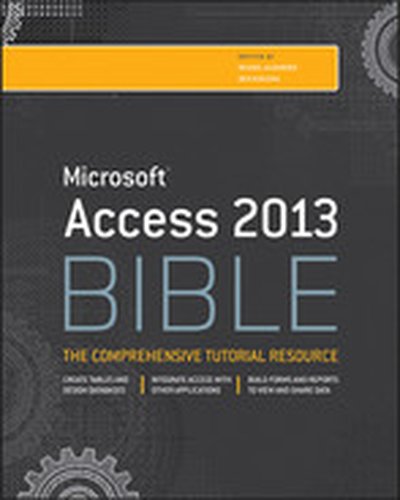
Access 2013 Bible

A comprehensive reference to the updated and new features of Access 2013 As the world's most popular database management tool, Access enables you to organize, present, analyze, and share data as well as build powerful database solutions. However, databases can be complex. That's why you need the expert guidance in this comprehensive reference. Access 2013 Bible helps you gain a solid understanding of database purpose, construction, and application so that whether you're new to Access or looking to upgrade to the 2013 version, this well-rounded resource provides you with a thorough look at everything Access can do. Explains how to create tables, manipulate datasheets, and work with multiple tables Teaches you how to apply the seven-step design method to build databases that are tailored to your needs Covers building forms with wizards, creating bound and unbound forms, and adding data validation Shows you ways to automate query parameters, create functions and subroutines, and add programmed error routines Features a bonus website with content that contains all source code from the book as well as bonus shareware, freeware, trial, demo, and evaluation programs If you are looking for a comprehensive book on all things Access, look no further than Access 2013 Bible.

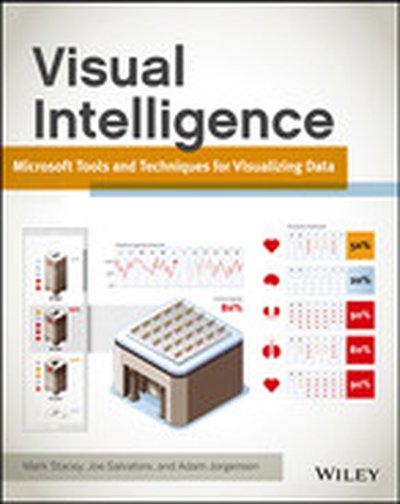
Visual Intelligence: Microsoft Tools and Techniques for Visualizing Data

Go beyond design concepts and learn to build state-of-the-art visualizations The visualization experts at Microsoft's Pragmatic Works have created a full-color, step-by-step guide to building specific types of visualizations. The book thoroughly covers the Microsoft toolset for data analysis and visualization, including Excel, and explores best practices for choosing a data visualization design, selecting tools from the Microsoft stack, and building a dynamic data visualization from start to finish. You'll examine different types of visualizations, their strengths and weaknesses, and when to use each one. Data visualization tools unlock the stories within the data, enabling you to present it in a way that is useful for making business decisions This full-color guide introduces data visualization design concepts, then explains the various Microsoft tools used to store and display data Features a detailed discussion of various classes of visualizations, their uses, and the appropriate tools for each Includes practical implementations of various visualizations and best practices for using them Covers out-of-the-box Microsoft tools, custom-developed illustrations and implementations, and code examples Visual Intelligence: Microsoft Tools and Techniques for Visualizing Data arms you with best practices and the knowledge to choose and build dynamic data visualizations.

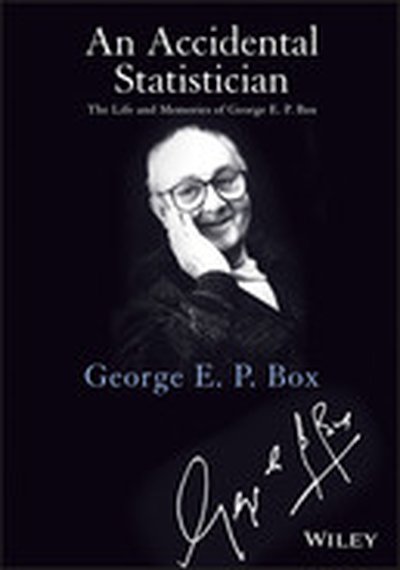
An Accidental Statistician: The Life and Memories of George E. P. Box

Celebrating the life of an admired pioneer in statistics In this captivating and inspiring memoir, world-renowned statistician George E. P. Box offers a firsthand account of his life and statistical work. Writing in an engaging, charming style, Dr. Box reveals the unlikely events that led him to a career in statistics, beginning with his job as a chemist conducting experiments for the British army during World War II. At this turning point in his life and career, Dr. Box taught himself the statistical methods necessary to analyze his own findings when there were no statisticians available to check his work. Throughout his autobiography, Dr. Box expertly weaves a personal and professional narrative to illustrate the effects his work had on his life and vice-versa. Interwoven between his research with time series analysis, experimental design, and the quality movement, Dr. Box recounts coming to the United States, his family life, and stories of the people who mean the most to him. This fascinating account balances the influence of both personal and professional relationships to demonstrate the extraordinary life of one of the greatest and most influential statisticians of our time. An Accidental Statistician also features: Two forewords written by Dr. Box's former colleagues and closest confidants Personal insights from more than a dozen statisticians on how Dr. Box has influenced and continues to touch their careers and lives Numerous, previously unpublished photos from the author's personal collection An Accidental Statistician is a compelling read for statisticians in education or industry, mathematicians, engineers, and anyone interested in the life story of an influential intellectual who altered the world of modern statistics.

Simulating Data with SAS

Data simulation is a fundamental technique in statistical programming and research. Rick Wicklin's Simulating Data with SAS brings together the most useful algorithms and the best programming techniques for efficient data simulation in an accessible how-to book for practicing statisticians and statistical programmers.

This book discusses in detail how to simulate data from common univariate and multivariate distributions, and how to use simulation to evaluate statistical techniques. It also covers simulating correlated data, data for regression models, spatial data, and data with given moments. It provides tips and techniques for beginning programmers, and offers libraries of functions for advanced practitioners.

As the first book devoted to simulating data across a range of statistical applications, Simulating Data with SAS is an essential tool for programmers, analysts, researchers, and students who use SAS software.

This book is part of the SAS Press program.

Access 2013: The Missing Manual

Unlock the secrets of Access 2013 and discover how to use your data in creative ways. With this book’s easy step-by-step instructions, you’ll learn how to build and maintain a full-featured database and even turn it into a web app. You also get tips and practices from the pros for good database design—ideal whether you’re using Access for business, school, or at home. The important stuff you need to know Build a database with ease. Organize and update lists, documents, catalogs, and other types of information. Create your own web app. Let your whole team work on a database in the cloud. Share your database on a network. Link your Access database to SQL Server or SharePoint. Customize the interface. Make data entry a breeze by building your own templates Find what you need fast. Search, sort, and summarize huge amounts of data in minutes. Put your info to use. Turn raw info into well-formatted printed reports. Dive into Access programming. Automate complex tasks and solve common challenges.

Access® 2013 Absolute Beginner’s Guide

Make the most of Access 2013— without becoming a technical expert! This book is the fastest way to master Access and use it to build powerful, useful databases of all kinds—even web application databases! Even if you’ve never used Access before, you’ll learn how to do what you want, one incredibly clear and easy step at a time. Access has never, ever been this simple! Who knew how simple Access® 2013 could be? This is the easiest, most practical beginner’s guide to using Microsoft’s incredibly powerful new Access 2013 database program… simple, reliable instructions for doing everything you really want to do! Here’s a small sample of what you’ll learn: • Create tables to efficiently store and navigate your data • Build queries that retrieve exactly the information you want • Design intuitive forms that help your users work more efficiently • Build reports that answer key questions intuitively and visually • Learn easy techniques for designing more reliable databases • Work faster with AutoForms, AutoReports, and other shortcuts • Automate repetitive tasks and build more polished databases with macros • Share Access data with Excel, SQL Server, and other applications • Solve complex problems with advanced query, form, and reporting techniques • Build modern web databases that serve users through browsers • Run your database on the cloud through Microsoft Office 365 • Construct a complete database application from start to finish • And much more… Alison Balter , President of InfoTech Services Group, Inc., has spent 25 years training and consulting on Microsoft Access and related applications with top organizations such as Cisco, Shell, Accenture, Northrop, the U.S. Drug Enforcement Administration, Prudential, Transamerica, Fox Broadcasting, and the U.S. Navy. She travels throughout North America delivering seminars on Access and has authored 14 books and videos for Pearson, including Microsoft Access 2010 LiveLessons and Alison Balter’s Mastering Access 2007 Development. She is past president of the Independent Computer Consultants Association of Los Angeles. Category: Databases Covers: Microsoft® Access® 2013 User Level: Beginning

JMP for Basic Univariate and Multivariate Statistics, 2nd Edition

JMP Start Statistics: A Guide to Statistics and Data Analysis Using JMP, Fifth Edition, is the perfect mix of software manual and statistics text. Authors John Sall, Ann Lehman, Mia Stephens, and Lee Creighton provide hands-on tutorials with just the right amount of conceptual and motivational material to illustrate how to use the intuitive interface for data analysis in JMP. Each chapter features concept-specific tutorials, examples, brief reviews of concepts, step-by-step illustrations, and exercises.

JMP Start Statistics, Fifth Edition, includes many new features of JMP 10, including an enhanced ability to manage a JMP session by easily tracking open and recently opened JMP tables; scripts, analyses, JMP projects, and other files; vastly expanded tools for instructors to demonstrate statistical concepts and interactive scripts to help students grasp difficult topics; Split-Plot designs with examples; examples of Graph Builder and Control Chart Builder; and new features that make the software easier to use.

This book is part of the SAS Press program.

Data Points: Visualization That Means Something

A fresh look at visualization from the author of Visualize This Whether it's statistical charts, geographic maps, or the snappy graphical statistics you see on your favorite news sites, the art of data graphics or visualization is fast becoming a movement of its own. In Data Points: Visualization That Means Something, author Nathan Yau presents an intriguing complement to his bestseller Visualize This, this time focusing on the graphics side of data analysis. Using examples from art, design, business, statistics, cartography, and online media, he explores both standard-and not so standard-concepts and ideas about illustrating data. Shares intriguing ideas from Nathan Yau, author of Visualize This and creator of flowingdata.com, with over 66,000 subscribers Focuses on visualization, data graphics that help viewers see trends and patterns they might not otherwise see in a table Includes examples from the author's own illustrations, as well as from professionals in statistics, art, design, business, computer science, cartography, and more Examines standard rules across all visualization applications, then explores when and where you can break those rules Create visualizations that register at all levels, with Data Points: Visualization That Means Something.

Introducing Geographic Information Systems with ArcGIS: A Workbook Approach to Learning GIS, 3rd Edition

An integrated approach that combines essential GIS background with a practical workbook on applying the principles in ArcGIS® 10.0 and 10.1 Introducing Geographic Information Systems with ArcGIS® integrates a broad introduction to GIS with a software-specific workbook for Esri's ArcGIS®. Where most courses make do using two separate texts, one covering GIS and another the software, this book enables students and instructors to use a single text with an integrated approach covering both in one volume with a common vocabulary and instructional style. This revised edition focuses on the latest software updates—ArcGIS® 10.0 and 10.1. In addition to its already successful coverage, the book allows students to experience publishing maps on the Internet through new exercises, and introduces the idea of programming in the language Esri has chosen for applications (i.e., Python). A DVD is packaged with the book, as in prior editions, containing data for working out all of the exercises. This complete, user-friendly coursebook: Is updated for the latest ArcGIS® releases—ArcGIS® 10.0 and 10.1 Introduces the central concepts of GIS and topics needed to understand spatial information analysis Provides a considerable ability to operate important tools in ArcGIS® Demonstrates new capabilities of ArcGIS® 10.0 and 10.1 Provides a basis for the advanced study of GIS and the study of the newly emerging field of GIScience Introducing Geographic Information Systems with ArcGIS®, Third Edition is the ideal guide for undergraduate students taking courses such as Introduction to GIS, Fundamentals of GIS, and Introduction to ArcGIS® Desktop. It is also an important guide for professionals looking to update their skills for ArcGIS® 10.0 and 10.1.

Microsoft SQL Server 2012 Reporting Services

Use your SQL Server skills to create and manage key data reports Deliver interactive business intelligence reports using SQL Server 2012 Reporting Services, and help facilitate real-time decision making throughout the enterprise. SQL Server expert Stacia Misner shows you in detail how to design, manage, and access custom reports that capture data from multiple sources. This book is ideal for experienced SQL Server developers, whether you’re new to Reporting Services or upgrading from an earlier version. Discover how to: Use the latest features, including the Power View ad hoc reporting tool Design reports by understanding how your audience accesses and uses data Add interactive features to help end users sort and filter data Create rich data visualization with charts, gauges, indictors, and data maps Configure your report server, provide security, and monitor report contents Use SharePoint or Report Manager to search and access reports online Create a library of report parts that clients can use for ad hoc reporting Build and manage reports using Reporting Services as a development platform