talk-data.com talk-data.com

Topic

data

5765

tagged

Activity Trend

3 peak/qtr
2020-Q1 2026-Q1

Activities

5765 activities · Newest first

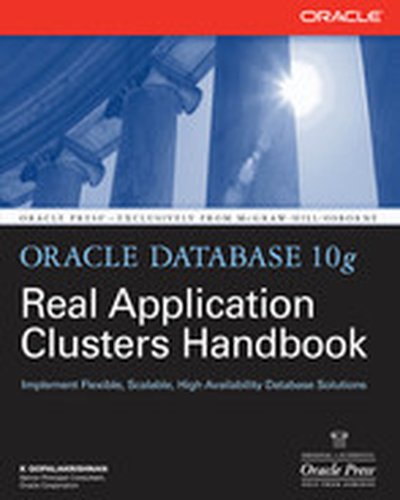
Oracle Database 10g Real Application Clusters Handbook

Learn cutting-edge technology from Oracle experts Written by Oracle insiders, this comprehensive guide covers everything you need to know about Real Application Clusters -- low-cost hardware platforms that can rival and exceed the quality of service, availability, and scalability of the most expensive mainframe systems. Concepts covered are applicable to all previous versions of Oracle Tuning and troubleshooting tips, providing insight on the most advanced diagnostics available Detailed coverage of advanced RAC concepts Working code for all examples available online

Java and XML, 3rd Edition

Java and XML, 3rd Edition, shows you how to cut through all the hype about XML and put it to work. It teaches you how to use the APIs, tools, and tricks of XML to build real-world applications. The result is a new approach to managing information that touches everything from configuration files to web sites. After two chapters on XML basics, including XPath, XSL, DTDs, and XML Schema, the rest of the book focuses on using XML from your Java applications. This third edition of Java and XML covers all major Java XML processing libraries, including full coverage of the SAX, DOM, StAX, JDOM, and dom4j APIs as well as the latest version of the Java API for XML Processing (JAXP) and Java Architecture for XML Binding (JAXB). The chapters on web technology have been entirely rewritten to focus on the today's most relevant topics: syndicating content with RSS and creating Web 2.0 applications. You'll learn how to create, read, and modify RSS feeds for syndicated content and use XML to power the next generation of websites with Ajax and Adobe Flash. Topics include: The basics of XML, including DTDs, namespaces, XML Schema, XPath, and Transformations The SAX API, including all handlers, filters, and writers The DOM API, including DOM Level 2, Level 3, and the DOM HTML module The JDOM API, including the core and a look at XPath support The StAX API, including StAX factories, producing documents and XMLPull Data Binding with JAXB, using the new JAXB 2.0 annotations Web syndication and podcasting with RSS XML on the Presentation Layer, paying attention to Ajax and Flash applications If you are developing with Java and need to use XML, or think that you will be in the future; if you're involved in the new peer-to-peer movement, messaging, or web services; or if you're developing software for electronic commerce, Java and XML will be an indispensable companion.

SQL Server 2005 Practical Troubleshooting: The Database Engine

Never-Before-Published Insiders’ Information for Troubleshooting SQL Server 2005. This is the definitive guide to troubleshooting the Microsoft SQL Server 2005 database engine, direct from the people who know it most intimately: the people who wrote it, designed it, and support it. SQL Server expert Ken Henderson, author of the best-selling Guru’s Guides to SQL Server, has assembled a “dream team” of SQL Server developers and support engineers to provide in-depth troubleshooting and diagnostic information that has never been documented before: information that would be impossible to get without access to Microsoft’s own source code. From caching to clustering, query processing to Service Broker, this book will help you address even the toughest problems with database engine operations. Each chapter begins with a brief architectural overview of a key SQL Server component, then drills down into the most common problems users encounter, offering specific guidance on investigating and resolving them. You’ll find comprehensive, in-depth chapters on • Waiting and blocking • Data corruption and recovery • Memory • Procedure cache issues • Query processing • Server crashes and other critical failures • Service Broker • SQLOS and scheduling • tempdb • Clustering This is the indispensable resource for everyone who must keep SQL Server running smoothly: DBAs, database application developers, API programmers, and Web developers alike. Contents About the Authors ix Preface xii Acknowledgments xiv 1 Waiting and Blocking Issues 1 2 Data Corruption and Recovery Issues 47 3 Memory Issues 137 4 Procedure Cache Issues 183 5 Query Processor Issues 225 6 Server Crashes and Other Critical Failures 273 7 Service Broker Issues 331 8 SQLOS and Scheduling Issues 369 9 Tempdb Issues 411 10 Clustering Issues 425 The Aging Champion 441 Index 445

Developing Workflows and Automation Packages for IBM Tivoli Intelligent Orchestrator V3.1

IBM Tivoli Intelligent ThinkDynamic Orchestrator and IBM Tivoli Provisioning Manager help automate the provisioning and orchestration tasks by invoking pre-prepared workflows that perform most of the provisioning and orchestration tasks automatically. This frees up resources to focus on more productive issues, and helps allocate CPU capacity to where it is needed and when it is needed. Workflow and Automation Package management are the single most important success factor in any IBM Tivoli Intelligent ThinkDynamic Orchestrator and IBM Tivoli Provisioning Manager implementation. Understanding and mastering this issue is critical for Independent Software Vendors (ISV) who wish to allow their products to be an integrated part of any IBM Tivoli Intelligent ThinkDynamic Orchestrator and IBM Tivoli Provisioning Manager environment. The primary goal of this IBM Redbooks publication is to support ISVs, Business Partners, Customers, and IBMers in developing and implementing Workflows and Automation Packages to be used for automation purposes by IBM Tivoli Intelligent ThinkDynamic Orchestrator and IBM Tivoli Provisioning Manager. This book is focused on effectively planning, developing, testing, and implementing product, device, or customer specific best practices into the IBM Tivoli Intelligent ThinkDynamic Orchestrator and IBM Tivoli Provisioning Manager engines, in order to automate management processes related to specific system and device implementations. Please note that the additional material referenced in the text is not available from IBM.

Professional SQL Server™ 2005 Administration

SQL Server 2005 is the largest leap forward for SQL Server since its inception. With this update comes new features that will challenge even the most experienced SQL Server DBAs. Written by a team of some of the best SQL Server experts in the industry, this comprehensive tutorial shows you how to navigate the vastly changed landscape of the SQL Server administration. Drawing on their own first-hand experiences to offer you best practices, unique tips and tricks, and useful workarounds, the authors help you handle even the most difficult SQL Server 2005 administration issues, including blocking and locking. You'll learn how to fine-tune queries you've already written, automate redundant monitoring and maintenance tasks, and use hidden tools so that you can quickly get over the learning curve of how to configure and administer SQL Server 2005. What you will learn from this book How to use some of the more advanced concepts of installation Techniques for properly administering development features such as SQL CLR Ways to secure your SQL Server from common threats How to choose the right hardware configuration Best practices for backing up and recovering your database Step-by-step guidelines for clustering your SQL Server Who this book is for This book is for experienced developers and database administrators who plan to administer or are already administering an SQL Server 2005 system and its business intelligence features. Wrox Professional guides are planned and written by working technologists to meet the real-world needs of programmers, developers, and IT professionals. Focused and relevant, they address the issues technology professionals face every day. They provide examples, practical solutions, and expert education in new technologies, all designed to help programmers do a better job.

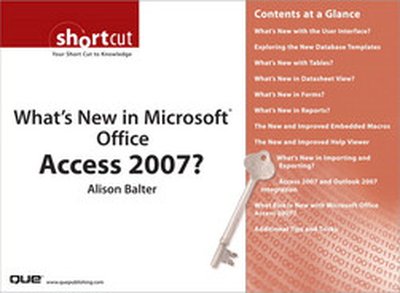
What’s New in Microsoft® Office Access 2007?

Microsoft Office Access 2007 includes a plethora of new features that could prove difficult to find for even seasoned users of previous versions of Access. Alison Balter's What's New in Microsoft Office Access 2007? includes a discussion of all the new features in Access 2007, providing details and practical examples on the use of each feature. Her teaching style is clear and succinct, providing you with a great jump-start to working with Access 2007. The topics covered include what's new with tables, the new and improved embedded macros, and what's new with importing and exporting. Table of Contents Section 1 What's New with the User Interface? Section 2 Exploring the New Database Templates Section 3 What's New with Tables? Section 4 What's New in Datasheet View? Section 5 What's New in Forms? Section 6 What's New in Reports? Section 7 The New and Improved Embedded Macros Section 8 The New and Improved Help Viewer Section 9 What's New in Importing and Exporting? Section 10 Access 2007 and Outlook 2007 Integration Section 11 What Else Is New with Microsoft Office Access 2007? Section 12 Additional Tips and Tricks Alison Balter has been writing about Access since Access 95. She has written eight books and co-authored two books on Access and has written one book on Microsoft SQL Server 2005 Express. Her books include Essential Access 95, Alison Balter's Mastering Access 95 Development, Alison Balter's Mastering Access 97 Development, Access 97 Unleashed, Alison Balter's Mastering Access 2000 Development, Alison Balter's Mastering Access 2002 Desktop Development, Alison Balter's Mastering Access 2002 Enterprise Development, Alison Balter's Mastering Office Access 2003 Development, Access 2003 In-a-Snap, Access 2003 in 24 Hours, and SQL Server Express in 24 Hours. Alison has more than 13 years of practical experience working with Access and Access applications. Her clients' projects range from small end-user projects through enterprisewide applications. Clients include the Archdiocese of Los Angeles, Southern California Edison, Accenture, Prudential Insurance, and the International Cinematographer's Guild. Her Access skills are not limited to writing and programming. Alison has also been teaching Access and speaking at conferences for more than 12 years. Her training has included everything from end-user training to corporate training, in both the United States and Canada.

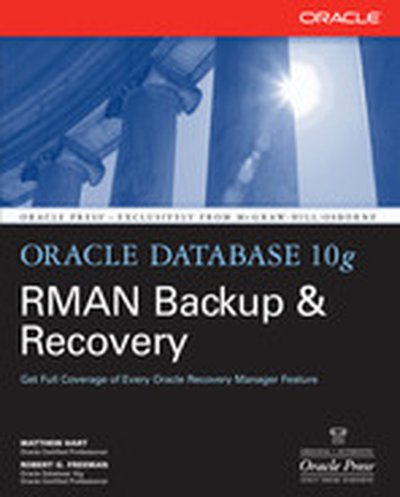
Oracle Database 10g RMAN Backup & Recovery

The Most Complete Guide to Maximizing Oracle Recovery Manager Deploy a rock-solid data backup and disaster recovery strategy with the in-depth guidance of this authoritative volume. From the exclusive publishers of Oracle Press books, Oracle Database 10g RMAN Backup & Recovery shows you, step by step, how to set up RMAN-ready databases, create reliable backup tapes and discs, and perform accurate Oracle system restores. Find out how to use RMAN from the command line and from Enterprise Manager, generate meaningful lists and reports, and automate administrative tasks using third-party media management tools. Plus, you'll learn to perform incremental backups, Flashback recoveries, and database cloning. Set up, configure, and maintain Oracle Database 10 g RMAN Use RMAN recovery catalogs, target database packages, and control files Centralize backup tape management using Oracle Secure Backup Perform online, offline, and incremental system backups Monitor and tune performance with Enterprise Manager Grid Control and Database Control Accomplish complete and partial RMAN database restores Improve functionality using VERITAS NetBackup, EMC NetWorker Module, and Tivoli Storage Manager Overcome human errors using Flashback Versions Query and Transaction Query Create clone and standby databases from tape and disc backups Work with Real Application Cluster (RAC) databases and sync-and-split hardware technologies

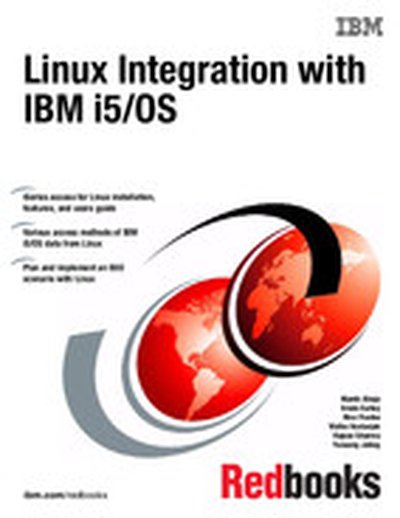
Linux Integration with IBM i5/OS

IBM System i platform offers many points of integration that support Linux applications leveraging IBM i5/OS applications and data, such as IBM eServer iSeries Access for Linux, IBM i5/OS NetServer with Samba support, and IBM Java Virtual Machine and JTOpen support. Please note that the additional material referenced in the text is not available from IBM.

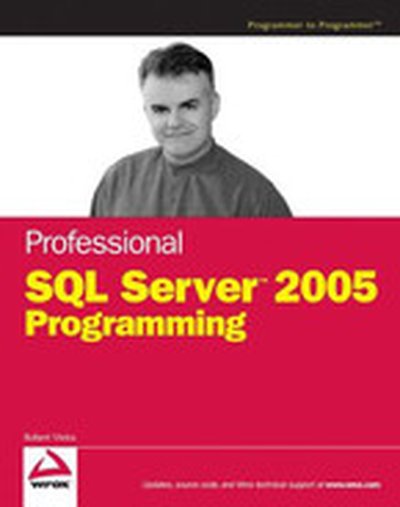
Professional SQL Server™ 2005 Programming

Professional SQL Server 2005 Programming shows experienced developers how to master the substantially revamped feature set of the latest release of Microsoft SQL Server. The book begins with a concise overview of the new features of SQL Server that is of interest to experienced developers. This is especially important given the substantial changes to SQL Server with this release. From there, the book quickly moves on to the 'meat' of the title. Beginning-level material has been removed to provide more room for covering new features and more extensive code examples.

Beginning SQL Server™ 2005 Administration

For the first time, SQL Server 2005 provides features that can support large-scale enterprise databases. With this powerful new release, you may find yourself being called upon to perform duties that are no longer strictly "administrative," duties that have become much more complicated and difficult. With that in mind, a team of experienced Microsoft Certified Professionals provides you with the necessary information to be a more competent and successful database developer or administrator. Beginning with a foundation that features detailed coverage of typical administrative duties, the authors proceed to explain how to build complex data transformations for data import, build distributed data solutions, and maintain the security and integrity of the database. You will be able to apply what you learn to real-world scenarios, and smoothly navigate the vastly changed landscape of SQL Server 2005 administration. What you will learn from this book How to install, maintain, and manage an SQL Server 2005 installation, including high availability and security considerations Various features such as the Common Language Runtime, SQL Server Integration Services, Notification Service, and the Service Broker How to use the tools that are necessary to manage configuration, backups, restores, security, availability, performance, and monitoring A sampling of some of the more advanced areas and complex jobs of the broadening role of a database administrator in the enterprise Who this book is for This book is for both developers and administrators who are responsible for the management and maintenance of an SQL Server 2005 database. Familiarity with relational database concepts and SQL is assumed. Wrox Beginning guides are crafted to make learning programming languages and technologies easier than you think, providing a structured, tutorial format that will guide you through all the techniques involved. Enhance Your Knowledge Advance Your Career

Leveraging DB2 Data Warehouse Edition for Business Intelligence

In this IBM Redbooks publication we describe and discuss DB2 Data Warehouse Edition (DWE) Version 9.1, a comprehensive platform offering with functionality to build a business intelligence infrastructure for analytics and Web-based applications, and best practices for deployment. DB2 DWE integrates core components for data warehouse construction and administration, data mining, OLAP, and InLine Analytics and reporting. It extends the DB2 data warehouse with design-side tooling and runtime infrastructure for OLAP, data mining, InLine Analytics, and intra-warehouse data movement and transformation, on a common platform based on DB2 and WebSphere. The platform pillars are based on the technology of DB2, Rational Data Architect (for physical data modeling only), the SQL Warehousing Tool, Intelligent Miner, DB2 Cube Views, and Alphablox. DWE includes an Eclipse-based design environment, DWE Design Studio, that integrates the DWE products (with the exception of Alphablox and Query Patroller) with a common framework and user interface. The new SQL Warehousing Tool enables visual design of intra-warehouse, table-to-table data flows and control flows using generated SQL. DB2 Alphablox is the tool for developing custom applications with embedded analytics-based visual components. DWE enables faster time-to-value for enterprise analytics, while limiting the number of vendors, tools, skill sets and licenses required.

DB2 Recovery Expert for z/OS User Scenarios

This IBM Redbooks publication describes the procedures for using IBM DB2 Recovery Expert for z/OS to manage the recovery of DB2 for z/OS objects in a data sharing and non-data sharing environment. IBM DB2 Recovery Expert for z/OS is an easy-to-use, automated recovery solution that enables database recovery operations with minimal disruption. Its graphical user interface (GUI) provides powerful reporting and automated recovery capabilities for productive database maintenance and high availability. This book is written for an audience of DB2 for z/OS database administrators (DBA). This book gives you an overview of DB2 Recovery Expert for z/OS, its main features, architecture, recovery semantics, and processing flow. It also describes some of the key considerations in choosing a particular topology to address a business requirement. We provide user scenarios with step-by-step approaches to recover single DB2 for z/OS objects, multiple DB2 for z/OS objects, dropped DB2 for z/OS tables, and DB2 for z/OS subsystems using the IBM Recovery Expert for z/OS tool. We discuss backup and recovery in a DB2 for z/OS environment, the types of failures that might occur, the types of recovery that are supported, the types of objects that can be recovered, the elements and tools of recovery, and the recovery flow. We also provide a brief tutorial of the DB2 Recovery Expert for z/OS GUI client and an overview of the schema level repository (SLR) with recommendations for its maintenance. Please note that the additional material referenced in the text is not available from IBM.

IBM System Storage DS6000 Series: Copy Services in Open Environments

This IBM Redbooks publication helps you install, tailor, and configure Copy Services in open systems environments on the IBM System Storage DS6000 storage server series. It should be read in conjunction with the IBM System Storage DS6000 Series: Architecture and Implementation, SG24-6781. This book gives you the details necessary to configure each of the Copy Services functions in an open systems environment. There is a companion book that supports the configuration of the Copy Services functions in a z/OS environment, IBM System Storage DS6000 Series: Copy Services with System z servers, SG24-6782. This book helps you design and create the storage map and install Copy Services in an open systems environment. This book helps you design and create a new Copy Services installation or to migrate from an existing installation, as well as addresses design functions and changes in terminology from other IBM Copy Services products. We include hints and tips to maximize the effective installation. It also includes a section on System i and an overview of the TotalStorage Productivity Center for Replication.

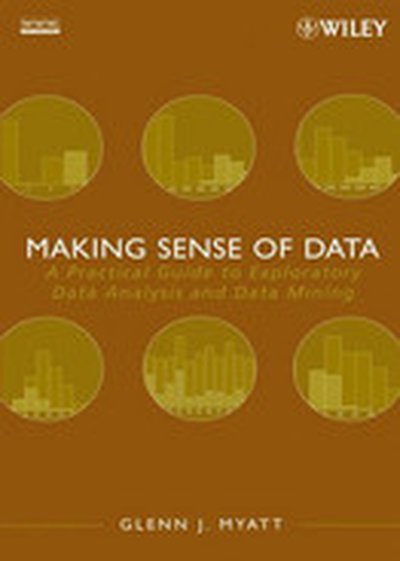
Making Sense of Data: A Practical Guide to Exploratory Data Analysis and Data Mining

A practical, step-by-step approach to making sense out of data Making Sense of Data educates readers on the steps and issues that need to be considered in order to successfully complete a data analysis or data mining project. The author provides clear explanations that guide the reader to make timely and accurate decisions from data in almost every field of study. A step-by-step approach aids professionals in carefully analyzing data and implementing results, leading to the development of smarter business decisions. With a comprehensive collection of methods from both data analysis and data mining disciplines, this book successfully describes the issues that need to be considered, the steps that need to be taken, and appropriately treats technical topics to accomplish effective decision making from data. Readers are given a solid foundation in the procedures associated with complex data analysis or data mining projects and are provided with concrete discussions of the most universal tasks and technical solutions related to the analysis of data, including: Problem definitions Data preparation Data visualization Data mining Statistics Grouping methods Predictive modeling Deployment issues and applications Throughout the book, the author examines why these multiple approaches are needed and how these methods will solve different problems. Processes, along with methods, are carefully and meticulously outlined for use in any data analysis or data mining project. From summarizing and interpreting data, to identifying non-trivial facts, patterns, and relationships in the data, to making predictions from the data, Making Sense of Data addresses the many issues that need to be considered as well as the steps that need to be taken to master data analysis and mining.

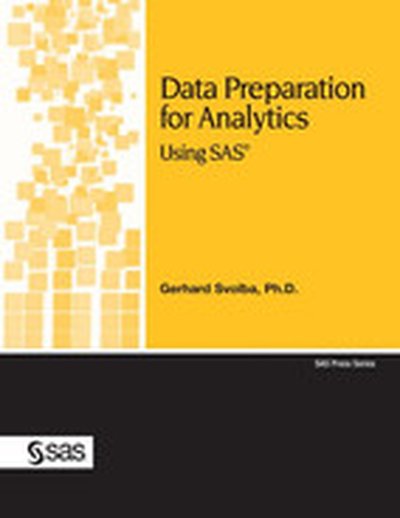
Data Preparation for Analytics Using SAS

Written for anyone involved in the data preparation process for analytics, Gerhard Svolba's Data Preparation for Analytics Using SAS offers practical advice in the form of SAS coding tips and tricks, and provides the reader with a conceptual background on data structures and considerations from a business point of view. The tasks addressed include viewing analytic data preparation in the context of its business environment, identifying the specifics of predictive modeling for data mart creation, understanding the concepts and considerations of data preparation for time series analysis, using various SAS procedures and SAS Enterprise Miner for scoring, creating meaningful derived variables for all data mart types, using powerful SAS macros to make changes among the various data mart structures, and more!

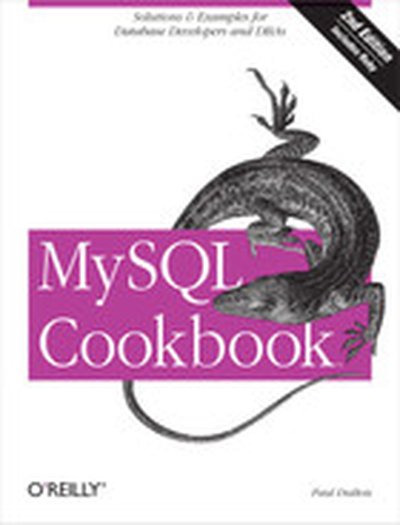
MySQL Cookbook, 2nd Edition

Along with MySQL's popularity has come a flood of questions about solving specific problems, and that's where this Cookbook is essential. Designed as a handy resource when you need quick solutions or techniques, the book offers dozens of short, focused pieces of code and hundreds of worked-out examples for programmers of all levels who don't have the time (or expertise) to solve MySQL problems from scratch. The new edition covers MySQL 5.0 and its powerful new features, as well as the older but still widespread MySQL 4.1. One major emphasis of this book is how to use SQL to formulate queries for particular kinds of questions, using the mysql client program included in MySQL distributions. The other major emphasis is how to write programs that interact with the MySQL server through an API. You'll find plenty of examples using several language APIs in multiple scenarios and situations, including the use of Ruby to retrieve and format data. There are also many new examples for using Perl, PHP, Python, and Java as well. Other recipes in the book teach you to: Access data from multiple tables at the same time Use SQL to select, sort, and summarize rows Find matches or mismatches between rows in two tables Determine intervals between dates or times, including age calculations Store images into MySQL and retrieve them for display in web pages Get LOAD DATA to read your data files properly or find which values in the file are invalid Use strict mode to prevent entry of bad data into your database Copy a table or a database to another server Generate sequence numbers to use as unique row identifiers Create database events that execute according to a schedule And a lot more MySQL Cookbook doesn't attempt to develop full-fledged, complex applications. Instead, it's intended to assist you in developing applications yourself by helping you get past problems that have you stumped.

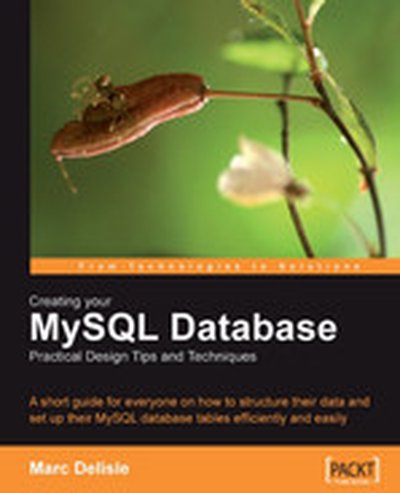
Creating your MySQL Database: Practical Design Tips and Techniques

This book is your guide to efficiently designing and structuring databases using MySQL. Through practical insights, you will learn how to organize data effectively and design with an emphasis on future growth and performance. By following this book's tips, you'll be able to streamline the backend of your applications and improve their robustness and scalability. What this Book will help me do Understand how to collect and organize data for a MySQL database. Master structuring database schemas for optimal performance. Learn about data security and applying privileges and views. Gain techniques to document and visualize data effectively. Develop and validate relational database structure with SQL queries. Author(s) Marc Delisle is an experienced database practitioner and an advocate for practical database design. With years of expertise in MySQL, Marc has helped numerous organizations optimize their data handling strategies. His writing simplifies complex concepts and focuses on empowering readers to apply lessons directly to real projects. Who is it for? This book is intended for software developers or IT professionals who handle applications with MySQL databases. It suits those with beginner to intermediate SQL and MySQL knowledge aiming to enhance their database design skills. Readers seeking practical, hands-on techniques for efficient database structuring will find this book invaluable. By learning the provided methods, readers can ensure their databases perform reliably in production environments.

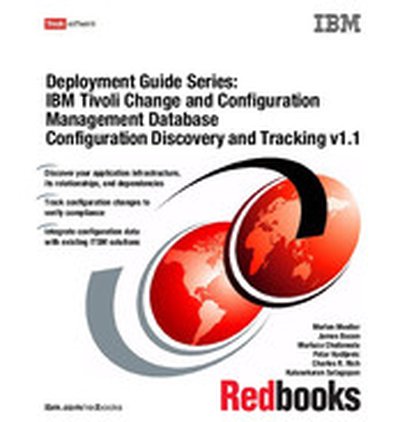
Deployment Guide Series: IBM Tivoli Change and Configuration Management Database Configuration Discovery and Tracking v1.1

The IBM Tivoli Change and Configuration Management Database Configuration Discovery and Tracking v1.1 (CDT) is an agentless deep discovery tool that can discover the configuration information of application systems as well as their components and relationships automatically. It also discovers installed hardware and software components in a complex computer server environment and tracks changes to all these components over time. IBM Tivoli CCMDB CDT v1.1 is the core component of the IT Service Management strategy from IBM and fills the role of the Change Management Database for your implementation of ITIL aligned IT processes. This IBM Redbooks publication provides help and recommendations on how to get started deploying Configuration Discovery and Tracking v1.1 and provides step-by-step instructions for setting up and customizing the discovery in your own environment. In addition, it describes the various interfaces that you can use to integrate CDT with your existing IT Service Management processes. The information in this book is intended for IT specialists who design and implement IT Service Management solutions based on IBM Tivoli CCMDB Configuration Discovery and Tracking v1.1.

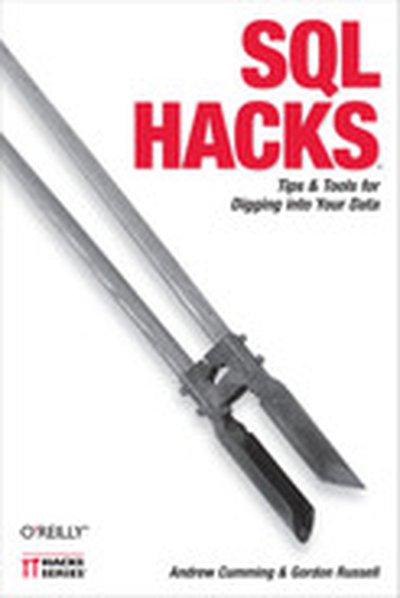
SQL Hacks

Whether you're running Access, MySQL, SQL Server, Oracle, or PostgreSQL, this book will help you push the limits of traditional SQL to squeeze data effectively from your database. The book offers 100 hacks -- unique tips and tools -- that bring you the knowledge of experts who apply what they know in the real world to help you take full advantage of the expressive power of SQL. You'll find practical techniques to address complex data manipulation problems. Learn how to: Wrangle data in the most efficient way possible Aggregate and organize your data for meaningful and accurate reporting Make the most of subqueries, joins, and unions Stay on top of the performance of your queries and the server that runs them Avoid common SQL security pitfalls, including the dreaded SQL injection attack Let SQL Hacks serve as your toolbox for digging up and manipulating data. If you love to tinker and optimize, SQL is the perfect technology and SQL Hacks is the must-have book for you.

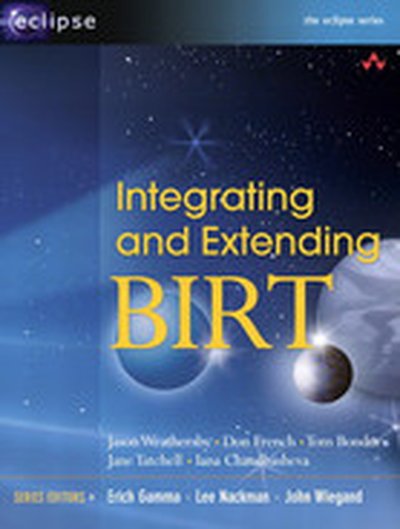
Integrating and Extending BIRT

A new edition of this title is available, ISBN-10: 0321580303 ISBN-13: 9780321580306 The second of a two-book series about business intelligence and reporting technology, introduces programmers to BIRT architecture and the reporting framework. Built on the Eclipse platform, this exciting technology makes it possible for programmers to build and deploy customized reports using scripting and BIRT APIs. In addition, programmers can extend the BIRT framework by building new plug-ins using the Eclipse Plug-in Development Environment. Integrating and Extending BIRT This book describes the key components of BIRT architecture, applications, and engines, including installing, deploying, and troubleshooting the Reporting and Charting engines in an Enterprise Java application-server environment.For developers who wish to incorporate custom business logic in their reports or access data from Java objects, the book describes BIRT's extensive scripting capabilities in JavaScript and Java. For developers who want to extend the BIRT framework, the book describes the key extension points to use in creating customized report items, rendering extensions for generating output other than HTML or PDF, and Open Data Access (ODA) drivers for new data sources. The book provides extensive examples of how to build plug-ins to extend the features of the BIRT framework. Topics discussed include Installing and deploying BIRT Deploying a BIRT report to an application server Understanding BIRT architecture Scripting in a BIRT report design Integrating BIRT functionality in applications Working with the BIRT extension framework