talk-data.com talk-data.com

Topic

data

5765

tagged

Activity Trend

3 peak/qtr
2020-Q1 2026-Q1

Activities

5765 activities · Newest first

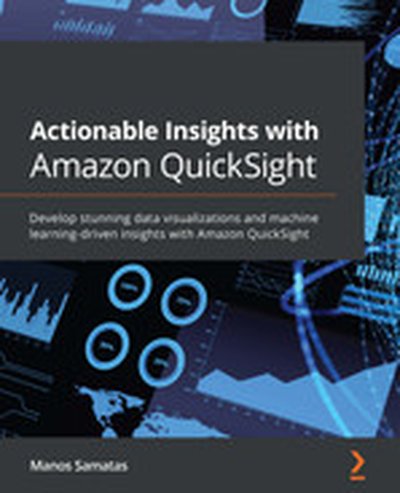
Actionable Insights with Amazon QuickSight

Discover the power of Amazon QuickSight with this comprehensive guide. Learn to create stunning data visualizations, integrate machine learning insights, and automate operations to optimize your data analytics workflows. This book offers practical guidance on utilizing QuickSight to develop insightful and interactive business intelligence solutions. What this Book will help me do Understand the role of Amazon QuickSight within the AWS analytics ecosystem. Learn to configure data sources and develop visualizations effectively. Gain skills in adding interactivity to dashboards using custom controls and parameters. Incorporate machine learning capabilities into your dashboards, including forecasting and anomaly detection. Explore advanced features like QuickSight APIs and embedded multi-tenant analytics design. Author(s) None Samatas is an AWS-certified big data solutions architect with years of experience in designing and implementing scalable analytics solutions. With a clear and practical approach, None teaches how to effectively leverage Amazon QuickSight for efficient and insightful business intelligence applications. Their expertise ensures readers will gain actionable skills. Who is it for? This book is ideal for business intelligence (BI) developers and data analysts looking to deepen their expertise in creating interactive dashboards using Amazon QuickSight. It is a perfect guide for professionals aiming to explore machine learning integration in BI solutions. Familiarity with basic data visualization concepts is recommended, but no prior experience with Amazon QuickSight is needed.

IoT-enabled Smart Healthcare Systems, Services and Applications

IoT-Enabled Smart Healthcare Systems, Services and Applications Explore the latest healthcare applications of cutting-edge technologies In IoT-Enabled Smart Healthcare Systems, Services and Applications, an accomplished team of researchers delivers an insightful and comprehensive exploration of the roles played by cutting-edge technologies in modern healthcare delivery. The distinguished editors have included resources from a diverse array of learned experts in the field that combine to create a broad examination of a rapidly developing field. With a particular focus on Internet of Things (IoT) technologies, readers will discover how new technologies are impacting healthcare applications from remote monitoring systems to entire healthcare delivery methodologies. After an introduction to the role of emerging technologies in smart health care, this volume includes treatments of ICN-Fog computing, edge computing, security and privacy, IoT architecture, vehicular ad-hoc networks (VANETs), and patient surveillance systems, all in the context of healthcare delivery. Readers will also find: A thorough introduction to ICN-Fog computing for IoT based healthcare, including its architecture and challenges Comprehensive explorations of Internet of Things enabled software defined networking for edge computing in healthcare Practical discussions of a review of e-healthcare systems in India and Thailand, as well as the security and privacy issues that arise through the use of smart healthcare systems using Internet of Things devices In-depth examinations of the architecture and applications of an Internet of Things based healthcare system Perfect for healthcare practitioners and allied health professionals, hospital administrators, and technology professionals, IoT-Enabled Smart Healthcare Systems, Services and Applications is an indispensable addition to the libraries of healthcare regulators and policymakers seeking a one-stop resource that explains cutting-edge technologies in modern healthcare.

What Is Causal Inference?

Causal inference lies at the heart of our ability to understand why things happen by helping us predict the results of our actions. This process is vital for businesses that aspire to turn data and information into valuable knowledge. With this report, data scientists and analysts will learn a principled way of thinking about causality, using a suite of causal inference techniques now available. Authors Hugo Bowne-Anderson, a data science consultant, and Mike Loukides, vice president of content strategy at O'Reilly Media, introduce causality and discuss randomized control trials (RCTs), key aspects of causal graph theory, and much-needed techniques from econometrics. You'll explore: Techniques from econometrics, including randomized control trials, the causality gold standard used in A/B-testing The constant-effects model for dealing with all things not being equal across the groups you're comparing Regression for dealing with confounding variables and selection bias Instrumental variables to estimate causal relationships in situations where regression won't work Techniques from causal graph theory including forks and colliders, the graphical tools for representing common causal patterns Backdoor and front-door adjustments for making causal inferences in the presence of confounders

Why External Data Needs to Be Part of Your Data and Analytics Strategy

Innovative organizations today are reaping the benefits of combining data from a variety of internal and external sources. By collecting, storing, analyzing, and leveraging external data, these companies are able to outperform competitors by unlocking improvements in growth, productivity, and risk management. This report explains how you can harness the power of external data to boost analytics, find competitive advantages, and drive value. Author Joseph D. Stec explains how clever companies are now using advanced analytics tools that can simultaneously collect, mix, and match diverse data from disparate data sources. This enables them to improve products and brand loyalty, generate better conversions, identify trends earlier, and pinpoint additional ways to improve customer satisfaction. With this report, you will: Learn how external data elevates and enhances the way you analyze and interpret data outside of your apps or databases Dive into the nuts and bolts of external data platforms to solve key challenges Understand how new technology makes external data easier to use with analytics Learn how an external data platform fits into your data architecture Gain access to relevant external data signals with Explorium, an automated external data management platform Unlock improvements in growth, productivity, and risk management

Cassandra: The Definitive Guide, (Revised) Third Edition, 3rd Edition

Imagine what you could do if scalability wasn't a problem. With this hands-on guide, you'll learn how the Cassandra database management system handles hundreds of terabytes of data while remaining highly available across multiple data centers. This revised third edition--updated for Cassandra 4.0 and new developments in the Cassandra ecosystem, including deployments in Kubernetes with K8ssandra--provides technical details and practical examples to help you put this database to work in a production environment. Authors Jeff Carpenter and Eben Hewitt demonstrate the advantages of Cassandra's nonrelational design, with special attention to data modeling. Developers, DBAs, and application architects looking to solve a database scaling issue or future-proof an application will learn how to harness Cassandra's speed and flexibility. Understand Cassandra's distributed and decentralized structure Use the Cassandra Query Language (CQL) and cqlsh (the CQL shell) Create a working data model and compare it with an equivalent relational model Design and develop applications using client drivers Explore cluster topology and learn how nodes exchange data Maintain a high level of performance in your cluster Deploy Cassandra onsite, in the cloud, or with Docker and Kubernetes Integrate Cassandra with Spark, Kafka, Elasticsearch, Solr, and Lucene

Building Big Data Pipelines with Apache Beam

Building Big Data Pipelines with Apache Beam is the essential guide for mastering data processing using Apache Beam. This book covers both the basics and advanced concepts, from implementing pipelines to extending functionalities with custom I/O connectors. By the end, you'll be equipped to build scalable and reusable big data solutions. What this Book will help me do Understand the core principles of Apache Beam and its architecture. Learn how to create efficient data processing pipelines for diverse scenarios. Master the use of stateful processing for real-time data handling. Gain skills in using Beam's portability features for various languages. Explore advanced functionalities like creating custom I/O connectors. Author(s) None Lukavský is a seasoned data engineer with extensive experience in big data technologies and Apache Beam. Having worked on innovative data solutions across industries, None brings hands-on insights and practical expertise to this book. Their approach to teaching ensures readers can directly apply concepts to real-world scenarios. Who is it for? This book is designed for professionals involved in big data, such as data engineers, analysts, and scientists. It is particularly suited for those with an intermediate level of understanding of Java, aiming to expand their skill set to include advanced data pipeline construction. Whether you're stepping into Apache Beam for the first time or looking to deepen your expertise, this book offers valuable, actionable insights.

Extreme DAX

Delve into advanced Data Analysis Expressions (DAX) concepts and Power BI capabilities with Extreme DAX, designed to elevate your skills in Microsoft's Business Intelligence tools. This book guides you through solving intricate business problems, improving your reporting, and leveraging data modeling principles to their fullest potential. What this Book will help me do Master advanced DAX functions and leverage their full potential in data analysis. Develop a solid understanding of context and filtering within Power BI models. Employ strategies for dynamic visualizations and secure data access via row-level security. Apply financial DAX functions for precise investment evaluations and forecasts. Utilize alternative calendars and advanced time-intelligence for comprehensive temporal analyses. Author(s) Michiel Rozema and Henk Vlootman bring decades of deep experience in data analytics and business intelligence to your learning journey. Both authors are seasoned practitioners in using DAX and Microsoft BI tools, with numerous practical deployments of their expertise in business solutions. Their approachable writing reflects their teaching style, ensuring you can easily grasp even challenging concepts. This book combines their comprehensive technical knowledge with real-world, hands-on examples, offering an invaluable resource for refining your skills. Who is it for? This book is perfect for intermediate to advanced analysts who have a foundational knowledge of DAX and Power BI and wish to deepen their expertise. If you are striving to improve performance and accuracy in your reports or aiming to handle advanced modeling scenarios, this book is for you. Prior experience with DAX, Power BI, or equivalent analytical tools is recommended to maximize the benefit. Whether you're a business analyst, data professional, or enthusiast, this book will elevate your analytical capabilities to new heights.

AI-Enabled Analytics for Business

We are entering the era of digital transformation where human and artificial intelligence (AI) work hand in hand to achieve data driven performance. Today, more than ever, businesses are expected to possess the talent, tools, processes, and capabilities to enable their organizations to implement and utilize continuous analysis of past business performance and events to gain forward-looking insight to drive business decisions and actions. AI-Enabled Analytics in Business is your Roadmap to meet this essential business capability. To ensure we can plan for the future vs react to the future when it arrives, we need to develop and deploy a toolbox of tools, techniques, and effective processes to reveal forward-looking unbiased insights that help us understand significant patterns, relationships, and trends. This book promotes clarity to enable you to make better decisions from insights about the future. Learn how advanced analytics ensures that your people have the right information at the right time to gain critical insights and performance opportunities Empower better, smarter decision making by implementing AI-enabled analytics decision support tools Uncover patterns and insights in data, and discover facts about your business that will unlock greater performance Gain inspiration from practical examples and use cases showing how to move your business toward AI-Enabled decision making AI-Enabled Analytics in Business is a must-have practical resource for directors, officers, and executives across various functional disciplines who seek increased business performance and valuation.

Statistical Analysis with Excel For Dummies, 5th Edition

Become a stats superstar by using Excel to reveal the powerful secrets of statistics Microsoft Excel offers numerous possibilities for statistical analysis—and you don’t have to be a math wizard to unlock them. In Statistical Analysis with Excel For Dummies, fully updated for the 2021 version of Excel, you’ll hit the ground running with straightforward techniques and practical guidance to unlock the power of statistics in Excel. Bypass unnecessary jargon and skip right to mastering formulas, functions, charts, probabilities, distributions, and correlations. Written for professionals and students without a background in statistics or math, you’ll learn to create, interpret, and translate statistics—and have fun doing it! In this book you’ll find out how to: Understand, describe, and summarize any kind of data, from sports stats to sales figures Confidently draw conclusions from your analyses, make accurate predictions, and calculate correlations Model the probabilities of future outcomes based on past data Perform statistical analysis on any platform: Windows, Mac, or iPad Access additional resources and practice templates through Dummies.com For anyone who’s ever wanted to unleash the full potential of statistical analysis in Excel—and impress your colleagues or classmates along the way—Statistical Analysis with Excel For Dummies walks you through the foundational concepts of analyzing statistics and the step-by-step methods you use to apply them.

Innovative Data Integration and Conceptual Space Modeling for COVID, Cancer, and Cardiac Care

In recent years, scientific research and translation medicine have placed increased emphasis on computational methodology and data curation across many disciplines, both to advance underlying science and to instantiate precision-medicine protocols in the lab and in clinical practice. The nexus of concerns related to oncology, cardiology, and virology (SARS-CoV-2) presents a fortuitous context within which to examine the theory and practice of biomedical data curation. Innovative Data Integration and Conceptual Space Modeling for COVID, Cancer, and Cardiac Care argues that a well-rounded approach to data modeling should optimally embrace multiple perspectives inasmuch as data-modeling is neither a purely formal nor a purely conceptual discipline, but rather a hybrid of both. On the one hand, data models are designed for use by computer software components, and are, consequently, constrained by the mechanistic demands of software environments; data modeling strategies must accept the formal rigors imposed by unambiguous data-sharing and query-evaluation logic. In particular, data models are not well-suited for software-level deployment if such models do not translate seamlessly to clear strategies for querying data and ensuring data integrity as information is moved across multiple points. On the other hand, data modeling is, likewise, constrained by human conceptual tendencies, because the information which is managed by databases and data networks is ultimately intended to be visualized/utilized by humans as the end-user. Thus, at the intersection of both formal and humanistic methodology, data modeling takes on elements of both logico-mathematical frameworks (e.g., type systems and graph theory) and conceptual/philosophical paradigms (e.g., linguistics and cognitive science). The authors embrace this two-sided aspect of data models by seeking non-reductionistic points of convergence between formal and humanistic/conceptual viewpoints, and by leveraging biomedical contexts (viz., COVID, Cancer, and Cardiac Care) so as to provide motivating examples and case-studies in this volume. Provides an analysis of how conceptual spaces and related cognitive linguistic approaches can inspire programming and query-processing models Outlines the vital role that data modeling/curation has played in significant medical breakthroughs Presents readers with an overview of how information-management approaches intersect with precision medicine, providing case studies of data-modeling in concrete scientific practice Explores applications of image analysis and computer vision in the context of precision medicine Examines the role of technology in scientific publishing, replication studies, and dataset curation

IBM Storage Networking c-type FICON Implementation Guide

The next-generation IBM® c-type Directors and switches for IBM Storage Networking provides high-speed Fibre Channel (FC) and IBM Fibre Connection (IBM FICON®) connectivity from the IBM Z® platform to the storage area network (SAN) core. It enables enterprises to rapidly deploy high-density virtualized servers with the dual benefit of higher bandwidth and consolidation. This IBM Redpaper Redbooks publication helps administrators understand how to implement or migrate to an IBM c-type SAN environment. It provides an overview of the key hardware and software products, and it explains how to install, configure, monitor, tune, and troubleshoot your SAN environment.

Change Detection and Image Time-Series Analysis 1

Change Detection and Image Time Series Analysis 1 presents a wide range of unsupervised methods for temporal evolution analysis through the use of image time series associated with optical and/or synthetic aperture radar acquisition modalities. Chapter 1 introduces two unsupervised approaches to multiple-change detection in bi-temporal multivariate images, with Chapters 2 and 3 addressing change detection in image time series in the context of the statistical analysis of covariance matrices. Chapter 4 focuses on wavelets and convolutional-neural filters for feature extraction and entropy-based anomaly detection, and Chapter 5 deals with a number of metrics such as cross correlation ratios and the Hausdorff distance for variational analysis of the state of snow. Chapter 6 presents a fractional dynamic stochastic field model for spatio temporal forecasting and for monitoring fast-moving meteorological events such as cyclones. Chapter 7 proposes an analysis based on characteristic points for texture modeling, in the context of graph theory, and Chapter 8 focuses on detecting new land cover types by classification-based change detection or feature/pixel based change detection. Chapter 9 focuses on the modeling of classes in the difference image and derives a multiclass model for this difference image in the context of change vector analysis.

SAN and Fabric Resiliency Best Practices for IBM b-type Products

This IBM® Redpaper® publication describes best practices for deploying and using advanced Broadcom Fabric Operating System (FOS) features to identify, monitor, and protect Fibre Channel (FC) SANs from problematic devices and media behavior. Note that this paper primarily focuses on the FOS command options and features that are available since version 8.2 with some coverage of new features that were introduced in 9.0. This paper covers the following recent changes: SANnav Fabric Performance Impact Notification

Getting Started with IBM Hyper Protect Data Controller

IBM® Hyper Protect Data Controller is designed to provide privacy protection of your sensitive data and give ease of control and auditability. It can manage how data is shared securely through a central control. Hyper Protect Data Controller can protect data wherever it goes—security policies are kept and honored whenever the data is accessed and future data access can be revoked even after data leaves the system of record. This IBM Redbooks® publication can assist you with determining how to get started with IBM Hyper Protect Data Controller through a use case approach. It will help you plan for, install, tailor and configure the Hyper Protect Data Controller. It includes information about the following topics: Concepts and reference architecture Common use cases with implementation guidance and advice Implementation and policy examples Typical operational tasks for creating policies and preparing for audits Monitoring user activity and events This IBM Redbooks publication is written for IT Managers, IT Architects, Security Administrators, data owners, and data consumers.

Installing and Configuring IBM Db2 AI for IBM z/OS v1.4.0

Artificial intelligence (AI) enables computers and machines to mimic the perception, learning, problem-solving, and decision-making capabilities of the human mind. AI development is made possible by the availability of large amounts of data and the corresponding development and wide availability of computer systems that can process all that data faster and more accurately than humans can. What happens if you infuse AI with a world-class database management system, such as IBM Db2®? IBM® has done just that with Db2 AI for z/OS (Db2ZAI). Db2ZAI is built to infuse AI and data science to assist businesses in the use of AI to develop applications more easily. With Db2ZAI, the following benefits are realized: Data science functionality Better built applications Improved database performance (and DBA's time and efforts are saved) through simplification and automation of error reporting and routine tasks Machine learning (ML) optimizer to improve query access paths and reduce the need for manual tuning and query optimization Integrated data access that makes data available from various vendors including private cloud providers. This IBM Redpaper® publication helps to simplify your installation by tailoring and configuration of Db2 AI for z/OS®. It was written for system programmers, system administrators, and database administrators.

SAP Enterprise Portfolio and Project Management: A Guide to Implement, Integrate, and Deploy EPPM Solutions

Learn the fundamentals of SAP Enterprise Project and Portfolio management Project Systems (PS), Portfolio and Project Management (PPM) and Commercial Project Management (CPM) and their integration with other SAP modules. This book covers various business scenarios from different industries including the public sector, engineering and construction, professional services, telecom, mining, chemical, and pharmaceutical. Author Joseph Alexander Soosaimuthu will help you understand common business challenges and pain areas faced in portfolio, program and project management, and will provide suitable recommendations to overcome these challenges. This book not only suggests solutions within SAP, but also provides workarounds or integrations with third-party tools based on various Industry-specific business requirements. SAP Portfolio and Project Management addresses commonly asked questions regarding SAP EPPM implementation and deployment, and conveys a framework to facilitate engagement and discussion with key stakeholders. This provides coverage of SAP on-premise solutions with ECC 6.08 and SAP PPM 6.1 deployed on the same client, as well as S/4 HANA On-Premise 2020 with integration to BPC and BI/W systems. Interface with other third-party schedule management, estimation, costing and forecasting applications are also covered in this book. After completing SAP Portfolio and Project Management, you will be able to implement SAP Enterprise Portfolio and Project Management based on industry best practices. For your reference, you’ll also gain a list of development objects and a functionality list by Industry, and a Fiori apps list for Enterprise Portfolio and Project Management (EPPM). What You Will Learn Understand the fundamentals of project, program and portfolio management within SAP EPPM Master the art of project forecasting and scheduling integrations with other SAP modules Gainknowledge of the different interface options for scheduling, estimation, costing and forecasting third party applications Learn EPPM industry best practices, and how to address industry-specific business challenges Leverage operational and strategic reporting within EPPM Who This Book For Functional consultants and business analysts who are involved in SAP EPPM (PS, PPM and CPM) deployment and clients who are interested and are in the process of having SAP EPPM deployed for their Enterprise.

Data Science in Engineering and Management

This book brings insight into Data Science and offers applications and implementation strategies. It includes recent developments and future trends and covers the concept of Data Science along with its origin. It focuses on the mechanisms of extracting data along with classifications, architectural concepts, and predictive analysis.

Data Engineering with AWS

Discover how to effectively build and manage data engineering pipelines using AWS with "Data Engineering with AWS". In this hands-on book, you'll explore the foundational principles of data engineering, learn to architect data pipelines, and work with essential AWS services to process, transform, and analyze data. What this Book will help me do Understand and implement modern data engineering pipelines with AWS services. Gain proficiency in automating data ingestion and transformation using Amazon tools. Perform efficient data queries and analysis leveraging Amazon Athena and Redshift. Create insightful data visualizations using Amazon QuickSight. Apply machine learning techniques to enhance data engineering processes. Author(s) None Eagar, a Senior Data Architect with over twenty-five years of experience, specializes in modern data architectures and cloud solutions. With a rich background in applying data engineering to real-world problems, None Eagar shares expertise in a clear and approachable way for readers. Who is it for? This book is perfect for data engineers and data architects aiming to grow their expertise in AWS-based solutions. It's also geared towards beginners in data engineering wanting to adopt the best practices. Those with a basic understanding of big data and cloud platforms will find it particularly valuable, but prior AWS experience is not required.

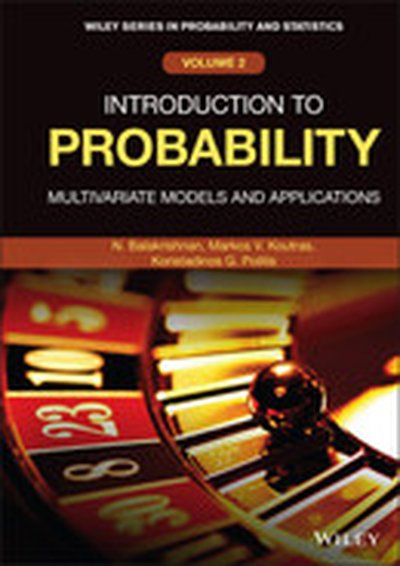
Introduction to Probability

INTRODUCTION TO PROBABILITY Discover practical models and real-world applications of multivariate models useful in engineering, business, and related disciplines In Introduction to Probability: Multivariate Models and Applications, a team of distinguished researchers delivers a comprehensive exploration of the concepts, methods, and results in multivariate distributions and models. Intended for use in a second course in probability, the material is largely self-contained, with some knowledge of basic probability theory and univariate distributions as the only prerequisite. This textbook is intended as the sequel to Introduction to Probability: Models and Applications. Each chapter begins with a brief historical account of some of the pioneers in probability who made significant contributions to the field. It goes on to describe and explain a critical concept or method in multivariate models and closes with two collections of exercises designed to test basic and advanced understanding of the theory. A wide range of topics are covered, including joint distributions for two or more random variables, independence of two or more variables, transformations of variables, covariance and correlation, a presentation of the most important multivariate distributions, generating functions and limit theorems. This important text: Includes classroom-tested problems and solutions to probability exercises Highlights real-world exercises designed to make clear the concepts presented Uses Mathematica software to illustrate the text’s computer exercises Features applications representing worldwide situations and processes Offers two types of self-assessment exercises at the end of each chapter, so that students may review the material in that chapter and monitor their progress Perfect for students majoring in statistics, engineering, business, psychology, operations research and mathematics taking a second course in probability, Introduction to Probability: Multivariate Models and Applications is also an indispensable resource for anyone who is required to use multivariate distributions to model the uncertainty associated with random phenomena.