talk-data.com talk-data.com

Topic

data

5765

tagged

Activity Trend

3 peak/qtr
2020-Q1 2026-Q1

Activities

5765 activities · Newest first

Microsoft Power BI Visual Calculations: Simplifying DAX

Seasoned experts Jeroen ter Heerdt, Madzy Stikkelorum, and Marc Lelijveld help you master visual calculations in Power BI for transformative data insights Microsoft Power BI Visual Calculations: Simplifying DAX is a comprehensive guide that demystifies the innovative feature of visual calculations in Power BI. Jeroen, a Principal Product Manager at Microsoft, Madzy, a Data Analytics Consultant, and Marc, a Microsoft Data Platform MVP, bring their extensive expertise to this book, offering you a practical approach to mastering visual calculations. The book is designed to simplify DAX, making it accessible to beginners and empowering you to transform raw data into actionable insights. You will learn to implement visual calculations, understand their benefits, and apply them effectively in real-world scenarios, ultimately enhancing your ability to make data-driven decisions. By reading this book, you will: Understand the fundamentals of visual calculations in Power BI Create your first visual calculation with step-by-step guidance Explore advanced concepts like resetting context in visual calculations Compare visual calculations with other Power BI calculation options Master the performance characteristics of visual calculations Utilize specific functions designed for visual calculations Implement practical use cases like running sums and moving averages Enhance visual calculations with regular DAX expressions Optimize operational processes using data-driven insights Unlock the full potential of Power BI for strategic decision-making About This Book For Power BI users who want to simplify DAX and unlock the full potential of visual calculations without the usual complexities For business executives, managers, and data enthusiasts looking to transform raw data into actionable insights for strategic decision-making
Microsoft Power Platform Solutions Architect's Handbook - Second Edition

Dive into 'Microsoft Power Platform Solution Architect's Handbook' to master the art of designing and delivering enterprise-grade solutions using Microsoft's cutting-edge Power Platform. Through a mix of practical examples and hands-on tutorials, this book equips you to harness tools like AI, Copilot, and DevOps for building innovative, scalable applications tailored to enterprise needs. What this Book will help me do Acquire the knowledge to effectively utilize AI tools such as Power Platform Copilot and ChatGPT to enhance application intelligence. Understand and apply enterprise-grade solution architecture principles for scalable and secure application development. Gain expertise in integrating heterogenous systems with Power Platform Pipes and third-party APIs. Develop proficiency in creating and maintaining reusable Dataverse data models. Learn to establish and manage a Center of Excellence to govern and scale Power Platform solutions. Author(s) Hugo Herrera is an experienced solution architect specializing in the Microsoft Power Platform with a deep focus on integrating AI and cloud-native strategies. With years of hands-on experience in enterprise software development and architectural design, Hugo brings real-world insights into his writing, emphasizing practical application of advanced concepts. His approach is clear, structured, and aimed at empowering readers to excel. Who is it for? This book is tailored for IT professionals like solution architects, enterprise architects, and technical consultants who are looking to elevate their capabilities in Power Platform development. It is also suitable for individuals with an intermediate understanding of Power Platform seeking to spearhead enterprise-level digital transformation projects. Ideal readers are those ready to deepen their integration, data modeling, and AI usage skills within the Microsoft ecosystem, particularly for enterprise applications.

AI-Driven Software Testing : Transforming Software Testing with Artificial Intelligence and Machine Learning

AI-Driven Software Testing explores how Artificial Intelligence (AI) and Machine Learning (ML) are revolutionizing quality engineering (QE), making testing more intelligent, efficient, and adaptive. The book begins by examining the critical role of QE in modern software development and the paradigm shift introduced by AI/ML. It traces the evolution of software testing, from manual approaches to AI-powered automation, highlighting key innovations that enhance accuracy, speed, and scalability. Readers will gain a deep understanding of quality engineering in the age of AI, comparing traditional and AI-driven testing methodologies to uncover their advantages and challenges. Moving into practical applications, the book delves into AI-enhanced test planning, execution, and defect management. It explores AI-driven test case development, intelligent test environments, and real-time monitoring techniques that streamline the testing lifecycle. Additionally, it covers AI’s impact on continuous integration and delivery (CI/CD), predictive analytics for failure prevention, and strategies for scaling AI-driven testing across cloud platforms. Finally, it looks ahead to the future of AI in software testing, discussing emerging trends, ethical considerations, and the evolving role of QE professionals in an AI-first world. With real-world case studies and actionable insights, AI-Driven Software Testing is an essential guide for QE engineers, developers, and tech leaders looking to harness AI for smarter, faster, and more reliable software testing. What you will learn: • What are the key principles of AI/ML-driven quality engineering • What is intelligent test case generation and adaptive test automation • Explore predictive analytics for defect prevention and risk assessment • Understand integration of AI/ML tools in CI/CD pipelines Who this book is for: Quality Engineers looking to enhance software testing with AI-driven techniques. Data Scientists exploring AI applications in software quality assurance and engineering. Software Developers – Engineers seeking to integrate AI/ML into testing and automation workflows.

FinOps for Snowflake: A Guide to Cloud Financial Optimization

Unlock the full financial potential of your Snowflake environment. Learn how to cut costs, boost performance, and take control of your cloud data spend with FinOps for Snowflake—your essential guide to implementing a smart, automated, and Snowflake-optimized FinOps strategy. In today’s data-driven world, financial optimization on platforms like Snowflake is more critical than ever. Whether you're just beginning your FinOps journey or refining mature practices, this book provides a practical roadmap to align Snowflake usage with business goals, reduce costs, and improve performance—without compromising agility. Grounded in real-world case studies and packed with actionable strategies, FinOps for Snowflake shows how leading organizations are transforming their environments through automation, governance, and cost intelligence. You'll learn how to apply proven techniques for architecture tuning, workload and storage efficiency, and performance optimization—empowering you to make smarter, data-driven decisions. What You Will Learn Master FinOps principles tailored for Snowflake’s architecture and pricing model Enable collaboration across finance, engineering, and business teams Deliver real-time cost insights for smarter decision-making Optimize compute, storage, and Snowflake AI and ML services for efficiency Leverage Snowflake Cortex AI and Adoptive Warehouse/Compute for intelligent cost governance Apply proven strategies to achieve operational excellence and measurable savings Who this Book is For Data professionals, cloud engineers, FinOps practitioners, and finance teams seeking to improve cost visibility, operational efficiency, and financial accountability in Snowflake environments.

The SAP Fiori Handbook: A Step-By-Step Guide to SAP Fiori Essentials

The SAP Fiori Handbook is your one-stop-shop to turbo charge your UX skills to ensure your enterprise applications are more user-friendly and accessible. This handbook is broadly divided into four sections and provides you with an in-depth exploration of the SAP Fiori system with chapters offering a theoretical context as well as detailed, step-by-step explanations of the key concepts providing you with a systematic approach to deepen your understanding of the SAP Fiori environment. The book will cover everything from introductory concepts and installation before moving through the key elements of the SAP Fiori system , from the Fiori App, Launchpad Content Manager and SAP Fiori UI. We will also cover important topics like app support and troubleshooting and diving into SAP Fiori Reports too. You Will: Explore the entire SAP Fiori eco-system [endif]Learn to configure and manage SAP Fiori Launchpad content [endif]See how to create custom apps and technical catalogs [endif]Explore how to implement Spaces and Pages Understand how to use App Support Functionality for troubleshooting Explore how to configure and manage Catalogs and Groups using SAP Fiori Launchpad Designer Understand how to convert existing Groups to Pages Get to grips with Fiori Apps recommendation report as well as SAP Fiori Upgrade Impact Analysis Report Who is this Book for: SAP Fiori administrators, consultants and Business Analysts as well as anyone responsible for configuring and maintaining the SAP Fiori launchpad experience for their company.

Architecting AI Software Systems

Dive into the world of architecting intelligent software with this comprehensive guide. This book explores the principles and practices required to integrate artificial intelligence into existing architectures to deliver scalable and robust AI-driven systems. By the end of this journey, you will be equipped with the knowledge and skills to design and optimize next-generation AI applications. What this Book will help me do Effectively integrate AI-driven components within traditional software systems while maintaining scalability and performance. Understand key architectural risks and how to address them, ensuring resilience and cost-efficiency. Apply architectural principles through hands-on exercises and real-world case studies to solidify your learning. Master AI and ML concepts crucial to modern architectures, such as inference and decision-making mechanisms. Develop actionable architectural strategies for implementing user-centric, high-performance AI systems. Author(s) Richard D Avila and Imran Ahmad bring decades of experience in software architecture and AI technologies. Richard has worked extensively in crafting AI-integrated solutions for enterprise-grade systems, while Imran specializes in making complex AI accessible and manageable for developers. Their combined expertise provides an authoritative and approachable guide to AI systems architecture. Who is it for? This book is ideal for software architects and system designers looking to understand and implement AI within their architectures. It is also a valuable resource for CTOs, VPs of Engineering, and professionals spinning on the edge of technical leadership to keep their systems competitive. Intermediate-level developers aspiring to grow into architectural roles will gain actionable insights into the principles of AI-driven systems design. Beginner architects with a passion for AI technologies will find this book to be a robust starting point.

Visualizing Generative AI

Generative AI has the potential to innovate and evolve business processes, but workers are still figuring out how to build with, optimize, and prompt GenAI tools to fit their needs. And of course, there are pitfalls to avoid, like security risks and hallucinations. Getting it right requires an intuitive understanding of the technology’s capabilities and limitations. This approachable guidebook helps learners of all levels navigate GenAI—and have fun while doing it. Loaded with insightful diagrams and illustrations, Visualizing Generative AI is the perfect entry point for curious IT professionals, business leaders who want to stay on top of the latest technologies, students exploring careers in cloud computing and AI, and anyone else interested in getting started with GenAI. You’ll traverse the generative AI landscape, exploring everything from how this technology works to the ways organizations are already leveraging it to great success. Understand how generative AI has evolved, with a focus on major breakthroughs Get acquainted with the available tools and platforms for GenAI workloads Examine real-world applications, such as chatbots and workflow automation Learn fundamentals that you can build upon as you continue your GenAI journey

Generative AI for Software Developers

Master Generative AI in software development with hands-on guidance, from coding and debugging to testing and deployment, using GitHub Copilot, Amazon Q Developer, and OpenAI APIs to build scalable, AI-powered applications Key Features Hands-on guidance for mastering AI-powered coding, debugging, and deployment with real-world examples Comprehensive coverage of GenAI concepts, prompt engineering, fine-tuning, and SDLC integration Practical strategies for architecting and scaling production-ready AI-driven applications Book Description Generative AI for Software Developers is your practical guide to mastering AI-powered development and staying ahead in a fast-changing industry. Through a structured, hands-on approach, this book helps you understand, implement, and optimize Generative AI in modern software engineering. From AI-assisted coding, debugging, and documentation to testing, deployment, and system design, it equips you with the skills to integrate AI seamlessly into your workflows. You’ll work with tools such as GitHub Copilot, Amazon Q Developer, and OpenAI APIs while learning strategies for prompt engineering, fine-tuning, and building scalable AI-powered applications. Featuring real-world use cases, best practices, and expert insights, this book bridges the gap between experimenting with AI and production deployment. Whether you’re an aspiring AI developer, experienced engineer, or solutions architect, this guide gives you the clarity, confidence, and tactical knowledge to thrive in the GenAI-driven future of software development. Armed with these insights, you’ll be ready to build, integrate, and scale intelligent solutions that enhance every stage of the software development lifecycle. What you will learn Build a secure GenAI application with expert guidance Understand the fundamentals of GenAI and its applications in software engineering Automate coding tasks with tools like GitHub Copilot, Amazon Q Developer, and OpenAI APIs Apply AI for debugging, testing, documentation, and deployment workflows Get to grips with prompt engineering and fine-tuning techniques to optimize AI outputs Implement best practices for architecting and scaling AI-powered applications Build end-to-end GenAI projects, moving from experimentation to production Who this book is for This book is for software developers, engineers, architects, and tech professionals who want to understand the core concepts of Generative AI and its real-world applications, master AI-driven development workflows to improve efficiency and code quality, and leverage tools like GitHub Copilot, Amazon Q Developer, and OpenAI APIs to automate coding tasks.

Generative AI Design Patterns

Generative AI enables powerful new capabilities, but they come with some serious limitations that you'll have to tackle to ship a reliable application or agent. Luckily, experts in the field have compiled a library of 32 tried-and-true design patterns to address the challenges you're likely to encounter when building applications using LLMs, such as hallucinations, nondeterministic responses, and knowledge cutoffs. This book codifies research and real-world experience into advice you can incorporate into your projects. Each pattern describes a problem, shows a proven way to solve it with a fully coded example, and discusses trade-offs. Design around the limitations of LLMs Ensure that generated content follows a specific style, tone, or format Maximize creativity while balancing different types of risk Build agents that plan, self-correct, take action, and collaborate with other agents Compose patterns into agentic applications for a variety of use cases

Getting Started with Taipy

Share your machine learning models, create chatbots, as well as build and deploy insightful dashboards speedily using Taipy with this hands-on book featuring real-world application examples from multiple industries Free with your book: DRM-free PDF version + access to Packt's next-gen Reader Key Features Create visually compelling, interactive data applications with Taipy Bring predictive models to end users and create data pipelines to compare scenarios with what-if analyses Go beyond prototypes to build and deploy production-ready applications using the cloud provider of your choice Purchase of the print or Kindle book includes a free PDF eBook in full color Book Description While data analysts, data scientists, and BI experts have the tools to analyze data, build models, and create compelling visuals, they often struggle to translate these insights into practical, user-friendly applications that help end users answer real-world questions, such as identifying revenue trends, predicting inventory needs, or detecting fraud, without wading through complex code. This book is a comprehensive guide to overcoming this challenge. This book teaches you how to use Taipy, a powerful open-source Python library, to build intuitive, production-ready data apps quickly and efficiently. Instead of creating prototypes that nobody uses, you'll learn how to build faster applications that process large amounts of data for multiple users and deliver measurable business impact. Taipy does the heavy lifting to enable your users to visualize their KPIs, interact with charts and maps, and compare scenarios for better decision-making. You’ll learn to use Taipy to build apps that make your data accessible and actionable in production environments like the cloud or Docker. By the end of this book, you won’t just understand Taipy, you'll be able to transform your data skills into impactful solutions that address real-world needs and deliver valuable insights. Email sign-up and proof of purchase required What you will learn Explore Taipy, its use cases, and how it's different from other projects Discover how to create visually appealing interactive apps, display KPIs, charts, and maps Understand how to compare scenarios to make better decisions Connect Taipy applications to several data sources and services Develop apps for diverse use cases, including chatbots, dashboards, ML apps, and maps Deploy Taipy applications on different types of servers and services Master advanced concepts for simplifying and accelerating your development workflow Who this book is for If you’re a data analyst, data scientist, or BI analyst looking to build production-ready data apps entirely in Python, this book is for you. If your scripts and models sit idle because non-technical stakeholders can’t use them, this book shows you how to turn them into full applications fast with Taipy, so your work delivers real business value. It’s also valuable for developers and engineers who want to streamline their data workflows and build UIs in pure Python.

Advanced Snowflake

As Snowflake's capabilities expand, staying updated with its latest features and functionalities can be overwhelming. The platform's rapid development gave rise to advanced tools like Snowpark and the Native App Framework, which are crucial for optimizing data operations but may seem complex to navigate. In this essential book, author Muhammad Fasih Ullah offers a detailed guide to understanding these sophisticated tools, ensuring you can leverage the full potential of Snowflake for data processing, application development, and deploying machine learning models at scale. You'll gain actionable insights and structured examples to transform your understanding and skills in handling advanced data scenarios within Snowflake. By the end of this book, you will: Grasp advanced features such as Snowpark, Snowflake Native App Framework, and Iceberg tables Enhance your projects with geospatial functions for comprehensive geospatial analytics Interact with Snowflake using a variety of programming languages through Snowpark Implement and manage machine learning models effectively using Snowpark ML Develop and deploy applications within the Snowflake environment

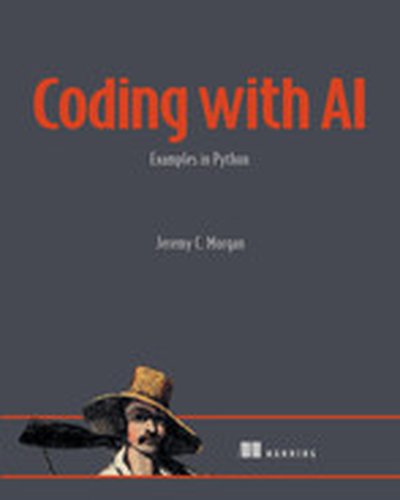
Coding with AI

Practical techniques to accelerate software development using generative AI. Let’s get real. You’d like to hand off a lot of tedious software development tasks to an assistant—and now you can! AI-powered coding tools like Copilot can accelerate research, design, code creation, testing, troubleshooting, documentation, refactoring and more. Coding with AI shows you how. Written for working developers, this book fast-tracks you to AI-powered productivity with bite-size projects, tested prompts, and techniques for getting the most out of AI. In Coding with AI you’ll learn how to: Incorporate AI tools into your development workflow Create pro-quality documentation and tests Debug and refactor software efficiently Create and organize reusable prompts Coding with AI takes you through several small Python projects with the help of AI tools, showing you exactly how to use AI to create and refine real software. This book skips the baby steps and goes straight to the techniques you’ll use on the job, every day. You’ll learn to sidestep AI inefficiencies like hallucination and identify the places where AI can save you the most time and effort. About the Technology Taking a systematic approach to coding with Al will deliver the clarity, consistency, and scalability you need for production-grade applications. With practice, you can use AI tools to break down complex problems, generate maintainable code, enhance your models, and streamline debugging, testing, and collaboration. As you learn to work with AI’s strengths—and recognize its limitations—you’ll build more reliable software and find that the quality of your generated code improves significantly. About the Book Coding with AI shows you how to gain massive benefits from a powerful array of AI-driven development tools and techniques. And it shares the insights and methods you need to use them effectively in professional projects. Following realistic examples, you’ll learn AI coding for database integration, designing a UI, and establishing an automated testing suite. You’ll even vibe code a game—but only after you’ve built a rock-solid foundation. What's Inside Incorporate AI into your development workflow Create pro-quality documentation and tests Debug and refactor software efficiently Create and organize reusable prompts About the Reader For professional software developers. Examples in Python. About the Author Jeremy C. Morgan has two decades of experience as an engineer building software for everything from Fortune 100 companies to tiny startups. Quotes Delivers exactly what working developers need: practical techniques that actually work. - Scott Hanselman, Microsoft You’ll be writing prompt engineering poetry. - Lars Klint, Atlassian Blends years of software experience with hands-on knowledge of top AI coding techniques. Essential. - Steve Buchanan, Jamf Detailed use of AI in real-world applications. A great job! - Santosh Yadav, Celonis

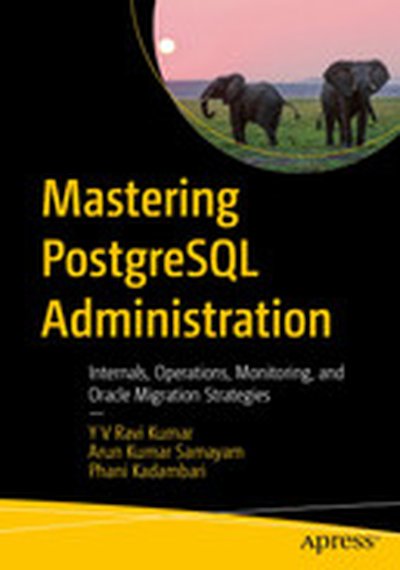
Mastering PostgreSQL Administration: Internals, Operations, Monitoring, and Oracle Migration Strategies

This book is your one-stop resource on PostgreSQL system architecture, installation, management, maintenance, and migration. It will help you address the critical needs driving successful database management today: reliability and availability, performance and scalability, security and compliance, cost-effectiveness and flexibility, disaster recovery, and real-time analytics—all in one volume. Each topic in the book is thoroughly explained by industry experts and includes step-by-step instructions for configuring the features, a discussion of common issues and their solutions, and an exploration of real-world scenarios and case studies that illustrate how concepts work in practice. You won't find the book's comprehensive coverage of advanced topics, including migration from Oracle to PostgreSQL, heterogeneous replication, and backup & recovery, in one place—online or anywhere else. What You Will Learn Install PostgreSQL using source code and yum installation Back up and recover Migrate from Oracle database to PostgreSQL using ora2pg utility Replicate from PostgreSQL to Oracle database and vice versa using Oracle GoldenGate Monitor using Grafana, PGAdmin, and command line tools Maintain with VACUUM, REINDEX, etc. Who This Book Is For Intermediate and advanced PostgreSQL users, including PostgreSQL administrators, architects, developers, analysts, disaster recovery system engineers, high availability engineers, and migration engineers

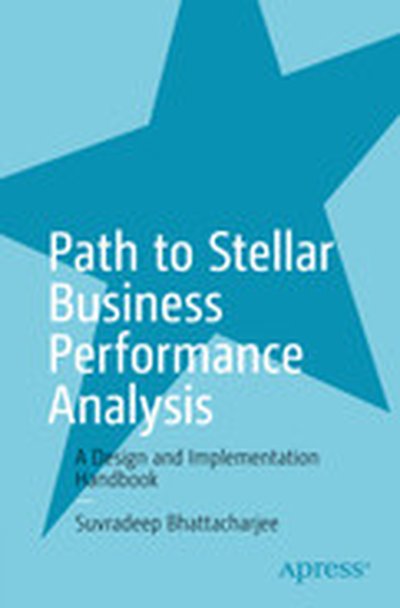
Path to Stellar Business Performance Analysis : A Design and Implementation Handbook

Business performance analysis is central to any business, as it helps to make or mend products, services, and processes. This book provides several blueprints for setting up business performance analytics (BPA) shops, from process layout for performance measures to tracking the underlying metrics of them using website tools such as Google Analytics and Looker Studio. Delivering satisfying user experiences in the context of overarching business objectives is key to delivering elevated business performance. This book transcends the topic of tracking user behaviors in websites from generic to specific KPI scenario-based tracking using Google Analytics/Google Tag Manager. Business Performance Analysis stands out by helping you create fit-for-purpose and coherent performance analysis blueprints by integrating performance measure creation and website analytics of BPA together. What You Will Learn Design a Business Performance Analysis function Analyze performance metrics with website analytics tools Identify business performance metrics for common product scenarios Who This Book is For Senior leaders, product managers, product owners, UX and web analytics professionals

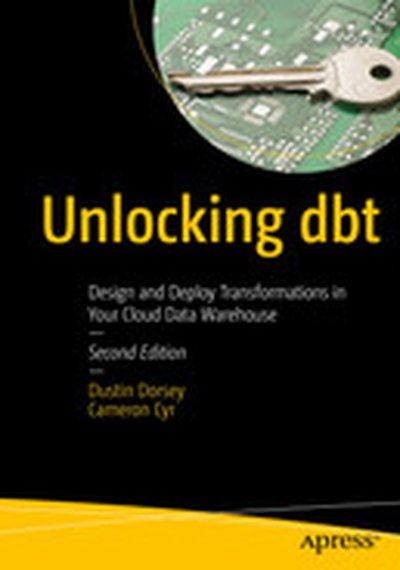
Unlocking dbt: Design and Deploy Transformations in Your Cloud Data Warehouse

Master the art of data transformation with the second edition of this trusted guide to dbt. Building on the foundation of the first edition, this updated volume offers a deeper, more comprehensive exploration of dbt’s capabilities—whether you're new to the tool or looking to sharpen your skills. It dives into the latest features and techniques, equipping you with the tools to create scalable, maintainable, and production-ready data transformation pipelines. Unlocking dbt, Second Edition introduces key advancements, including the semantic layer, which allows you to define and manage metrics at scale, and dbt Mesh, empowering organizations to orchestrate decentralized data workflows with confidence. You’ll also explore more advanced testing capabilities, expanded CI/CD and deployment strategies, and enhancements in documentation—such as the newly introduced dbt Catalog. As in the first edition, you’ll learn how to harness dbt’s power to transform raw data into actionable insights, while incorporating software engineering best practices like code reusability, version control, and automated testing. From configuring projects with the dbt Platform or open source dbt to mastering advanced transformations using SQL and Jinja, this book provides everything you need to tackle real-world challenges effectively. What You Will Learn Understand dbt and its role in the modern data stack Set up projects using both the cloud-hosted dbt Platform and open source project Connect dbt projects to cloud data warehouses Build scalable models in SQL and Python Configure development, testing, and production environments Capture reusable logic with Jinja macros Incorporate version control with your data transformation code Seamlessly connect your projects using dbt Mesh Build and manage a semantic layer using dbt Deploy dbt using CI/CD best practices Who This Book Is For Current and aspiring data professionals, including architects, developers, analysts, engineers, data scientists, and consultants who are beginning the journey of using dbt as part of their data pipeline’s transformation layer. Readers should have a foundational knowledge of writing basic SQL statements, development best practices, and working with data in an analytical context such as a data warehouse.

Investing for Programmers

Maximize your portfolio, analyze markets, and make data-driven investment decisions using Python and generative AI. Investing for Programmers shows you how you can turn your existing skills as a programmer into a knack for making sharper investment choices. You’ll learn how to use the Python ecosystem, modern analytic methods, and cutting-edge AI tools to make better decisions and improve the odds of long-term financial success. In Investing for Programmers you’ll learn how to: Build stock analysis tools and predictive models Identify market-beating investment opportunities Design and evaluate algorithmic trading strategies Use AI to automate investment research Analyze market sentiments with media data mining In Investing for Programmers you'll learn the basics of financial investment as you conduct real market analysis, connect with trading APIs to automate buy-sell, and develop a systematic approach to risk management. Don’t worry—there’s no dodgy financial advice or flimsy get-rich-quick schemes. Real-life examples help you build your own intuition about financial markets, and make better decisions for retirement, financial independence, and getting more from your hard-earned money. About the Technology A programmer has a unique edge when it comes to investing. Using open-source Python libraries and AI tools, you can perform sophisticated analysis normally reserved for expensive financial professionals. This book guides you step-by-step through building your own stock analysis tools, forecasting models, and more so you can make smart, data-driven investment decisions. About the Book Investing for Programmers shows you how to analyze investment opportunities using Python and machine learning. In this easy-to-read handbook, experienced algorithmic investor Stefan Papp shows you how to use Pandas, NumPy, and Matplotlib to dissect stock market data, uncover patterns, and build your own trading models. You’ll also discover how to use AI agents and LLMs to enhance your financial research and decision-making process. What's Inside Build stock analysis tools and predictive models Design algorithmic trading strategies Use AI to automate investment research Analyze market sentiment with media data mining About the Reader For professional and hobbyist Python programmers with basic personal finance experience. About the Author Stefan Papp combines 20 years of investment experience in stocks, cryptocurrency, and bonds with decades of work as a data engineer, architect, and software consultant. Quotes Especially valuable for anyone looking to improve their investing. - Armen Kherlopian, Covenant Venture Capital A great breadth of topics—from basic finance concepts to cutting-edge technology. - Ilya Kipnis, Quantstrat Trader A top tip for people who want to leverage development skills to improve their investment possibilities. - Michael Zambiasi, Raiffeisen Digital Bank Brilliantly bridges the worlds of coding and finance. - Thomas Wiecki, PyMC Labs

Medical Analytics for Clinical and Healthcare Applications

The book is essential for anyone exploring the forefront of healthcare innovation, as it offers a thorough exploration of transformative data-driven methodologies that can significantly enhance patient outcomes and clinical efficiency in today’s evolving medical landscape. In today’s rapidly advancing healthcare landscape, the integration of medical analytics has become essential for improving patient outcomes, clinical efficiency, and decision-making. Medical Analytics for Clinical and Healthcare Applications provides a comprehensive examination of how data-driven methodologies are revolutionizing the medical field. This book offers a deep dive into innovative techniques, real-world applications, and emerging trends in medical analytics, showcasing how these advancements are transforming disease detection, diagnosis, treatment planning, and healthcare management. Spanning sixteen chapters across five subsections, this edited volume covers a wide array of topics—from foundational principles of medical data analysis to cutting-edge applications in predictive healthcare and medical data security. Readers will encounter state-of-the-art methodologies, including machine learning models, predictive analytics, and deep learning techniques applied to various healthcare challenges such as mental health disorders, cancer detection, and hospital mortality predictions. Medical Analytics for Clinical and Healthcare Applications equips readers with the knowledge to harness the power of medical analytics and its potential to shape the future of healthcare. Through its interdisciplinary approach and expert insights, this volume is poised to serve as a valuable resource for advancing healthcare technologies and improving the overall quality of care. Readers will find the volume: Explores the latest medical analytics techniques applied across clinical settings, from diagnosis to treatment optimization; Features real-world case studies and tools for implementing data-driven solutions in healthcare; Bridges the gap between healthcare professionals, data scientists, and engineers for collaborative innovation in medical technologies; Provides foresight into emerging trends and technologies shaping the future of healthcare analytics. Audience Healthcare professionals, clinical researchers, medical data scientists, biomedical engineers, IT professionals, academics, and policymakers focused on the intersection of medicine and data analytics.

DAX for Humans

Level up your Power BI skills by learning DAX in an easy, fun, and practical way using one core pattern that can be used to solve most problems Key Features Learn simple through advanced DAX in a clear, concise way using real-world examples Explore powerful techniques for debugging DAX and increasing efficiency Use artificial intelligence to write, refine, and troubleshoot your DAX formulas Purchase of the print or Kindle book includes a free PDF eBook Book Description Although DAX has been around for over a decade, many struggle to master the language primarily because DAX is often taught through the CALCULATE function, which is the most complex and unintuitive function in all of DAX. But what if DAX could be taught without CALCULATE? The result would be an incredibly intuitive and easy way to learn DAX. DAX for Humans stands the traditional approach to learning DAX on its head, foregoing the traditional, legacy methods of learning DAX for a more modern approach that focuses on core DAX concepts and not any specific function. Even if you know nothing about DAX, from the very first chapter you will learn the essentials of the DAX language, as well as a single pattern to solve the majority of DAX problems. From that point forward, you’ll explore how to work with the basic building blocks of the DAX language and apply what you learn to real-world business scenarios across customers, human resources, projects, finance, operations, and more. By the end of this book, you’ll be able to apply your DAX skills to simple, complex, and advanced scenarios; understand how to optimize and debug your DAX code; and even know how to efficiently apply artificial intelligence to help you write and debug your DAX code. What you will learn Master techniques to solve common DAX calculations Apply DAX to real-word, practical business scenarios Explore advanced techniques for tackling unusual DAX scenarios Discover new ideas, tricks, and time-saving techniques for better calculations Find out how to optimize and debug DAX effectively Leverage AI to assist in writing, troubleshooting, and improving DAX Who this book is for If you use Power BI but struggle with DAX or if you know DAX but want to improve and expand your skills, then this book is for you. Even if you have never used Power BI or DAX before, you will find this book helpful as you progress from the basics to mastery of the DAX language using real-world scenarios as your guide.

Modernizing SAP with AWS: A Comprehensive Journey to Cloud Migration, Architecture, and Innovation Strategies

Follow the cloud journey of a fictional company Nimbus Airlines and the process it goes through to modernize its SAP systems. This book provides a detailed guide for those looking to transition their SAP systems to the cloud using Amazon Web Services (AWS). Through the lens of various characters, the book is structured in three parts — starting with an introduction to SAP and AWS fundamentals, followed by technical architecture insights, and concluding with migration strategies and case studies, the book covers technical aspects of modernizing SAP with AWS. You’ll review the partnership between SAP and AWS, highlighted by their long-standing collaboration and shared innovations. Then design an AWS architecture tailored for SAP workloads, including high availability, disaster recovery, and operations automation. The book concludes with a tour of the migration process, offering various strategies, tools, and frameworks reinforced with real-world customer case studies that showcase successful SAP migrations to AWS. Modernizing SAP with AWS equips business leaders and technical architects with the knowledge to leverage AWS for their SAP systems, ensuring a smooth transition and unlocking new opportunities for innovation. What You Will Learn Understand the fundamentals of AWS and its key components, including computing, storage, networking, and microservices, for SAP systems. Explore the technical partnership between SAP and AWS, learning how their collaboration drives innovation and delivers business value. Design an optimized AWS architecture for SAP workloads, focusing on high availability, disaster recovery, and operations automation. Discover innovative ways to enhance and extend SAP functionality using AWS tools for better system performance and automation. Who This Book Is For SAP professionals and consultants interested in learning how AWS can enhance SAP performance, security, and automation. Cloud engineers and developers involved in SAP migration projects, looking for best practices and real-world case studies for successful implementation. Enterprise architects seeking to design optimized, scalable, and secure SAP infrastructure on AWS. CIOs, CTOs, and IT managers aiming to modernize SAP systems and unlock innovation through cloud technology.

The Business Analyst's Career Master Plan

The Business Analyst's Career Master Plan empowers professionals to take charge of their livelihoods by mastering the key principles, techniques, and frameworks of business analysis. This guide combines strategic insights and actionable advice to help you flourish in your field, whether you're just starting out or striving toward a leadership role. What this Book will help me do Understand and apply foundational business analysis skills for professional scenarios. Develop advanced techniques such as effective requirements elicitation and stakeholder management. Design a personalized career roadmap tailored to your professional aspirations. Gain insights into certifications such as CBAP, ECBA, and PMI-PBA to leverage your credentials. Stay informed about emerging technologies and trends impacting the field. Author(s) Jamie Champagne, a renowned business analyst and career mentor, shares insights drawn from years of professional experience and thought leadership in this field. Jamie is recognized for her contributions to improving project outcomes and developing well-rounded analysts. Her passion for strategic thinking and practical career planning resonates throughout this book. Who is it for? This book is perfect for business professionals at all levels, from beginners setting their first steps in analysis to experienced analysts aiming for leadership. It is equally useful to other business roles, such as project managers and process advisors, seeking to deepen their understanding of business analysis. If advancing your career in business analysis is your goal, this book is tailored for you.