talk-data.com talk-data.com

Topic

data

5765

tagged

Activity Trend

3 peak/qtr
2020-Q1 2026-Q1

Activities

5765 activities · Newest first

Data Lake Maturity Model

Data is changing everything. Many industries today are being fundamentally transformed through the accumulation and analysis of large quantities of data, stored in diversified but flexible repositories known as data lakes. Whether your company has just begun to think about big data or has already initiated a strategy for handling it, this practical ebook shows you how to plan a successful data lake migration. You’ll learn the value of data lakes, their structure, and the problems they attempt to solve. Using Zaloni’s data lake maturity model, you’ll then explore your organization’s readiness for putting a data lake into action. Do you have the tools and data architectures to support big data analysis? Are your people and processes prepared? The data lake maturity model will help you rate your organization’s readiness. This report includes: The structure and purpose of a data lake Descriptive, predictive, and prescriptive analytics Data lake curation, self-service, and the use of data lake zones How to rate your organization using the data lake maturity model A complete checklist to help you determine your strategic path forward

AI and Big Data on IBM Power Systems Servers

Abstract As big data becomes more ubiquitous, businesses are wondering how they can best leverage it to gain insight into their most important business questions. Using machine learning (ML) and deep learning (DL) in big data environments can identify historical patterns and build artificial intelligence (AI) models that can help businesses to improve customer experience, add services and offerings, identify new revenue streams or lines of business (LOBs), and optimize business or manufacturing operations. The power of AI for predictive analytics is being harnessed across all industries, so it is important that businesses familiarize themselves with all of the tools and techniques that are available for integration with their data lake environments. In this IBM® Redbooks® publication, we cover the best practices for deploying and integrating some of the best AI solutions on the market, including: IBM Watson Machine Learning Accelerator (see note for product naming) IBM Watson Studio Local IBM Power Systems™ IBM Spectrum™ Scale IBM Data Science Experience (IBM DSX) IBM Elastic Storage™ Server Hortonworks Data Platform (HDP) Hortonworks DataFlow (HDF) H2O Driverless AI We map out all the integrations that are possible with our different AI solutions and how they can integrate with your existing or new data lake. We also walk you through some of our client use cases and show you how some of the industry leaders are using Hortonworks, IBM PowerAI, and IBM Watson Studio Local to drive decision making. We also advise you on your deployment options, when to use a GPU, and why you should use the IBM Elastic Storage Server (IBM ESS) to improve storage management. Lastly, we describe how to integrate IBM Watson Machine Learning Accelerator and Hortonworks with or without IBM Watson Studio Local, how to access real-time data, and security. Note: IBM Watson Machine Learning Accelerator is the new product name for IBM PowerAI Enterprise. Note: Hortonworks merged with Cloudera in January 2019. The new company is called Cloudera. References to Hortonworks as a business entity in this publication are now referring to the merged company. Product names beginning with Hortonworks continue to be marketed and sold under their original names.

International Futures

International Futures: Building and Using Global Models extensively covers one of the most advanced systems for integrated, long-term, global and large-scale forecasting analysis available today, the International Futures (IFs) system. Key elements of a strong, long-term global forecasting system are described, i.e. the formulations for the driving variables in separate major models and the manner in which these separate models are integrated. The heavy use of algorithmic and rule-based elements and the use of elements of control theory is also explained. Furthermore, the IFs system is compared and contrasted with all other major modeling efforts, also outlining the major benefits of the IFs system. Finally, the book provides suggestions on how the development of forecasting systems might most productively proceed in the coming years. Helps readers understand the IFs system, not at a detailed equation and technical level, but in terms of the important decisions made that dominate the structure and long-term behavior Presents information on the universe of long-term global forecasting systems, key decisions made, and the range of similarities and differences in the systems Covers the relationship between long-term forecasts in a variety of global issues and the forecasting systems and assumptions that underly them (essential information for forecast consumers)

PROC SQL, 3rd Edition

PROC SQL: Beyond the Basics Using SAS®, Third Edition, is a step-by-step, example-driven guide that helps readers master the language of PROC SQL. Packed with analysis and examples illustrating an assortment of PROC SQL options, statements, and clauses, this book not only covers all the basics, but it also offers extensive guidance on complex topics such as set operators and correlated subqueries. Programmers at all levels will appreciate Kirk Lafler’s easy-to-follow examples, clear explanations, and handy tips to extend their knowledge of PROC SQL. This third edition explores new and powerful features in SAS® 9.4, including topics such as: IFC and IFN functions nearest neighbor processing the HAVING clause indexes It also features two completely new chapters on fuzzy matching and data-driven programming. Delving into the workings of PROC SQL with greater analysis and discussion, PROC SQL: Beyond the Basics Using SAS®, Third Edition, explores this powerful database language using discussion and numerous real-world examples.

Digital Image Interpolation in Matlab

This book provides a comprehensive study in digital image interpolation with theoretical, analytical and Matlab® implementation. It includes all historically and practically important interpolation algorithms, accompanied with Matlab® source code on a website, which will assist readers to learn and understand the implementation details of each presented interpolation algorithm. Furthermore, sections in fundamental signal processing theories and image quality models are also included. The authors intend for the book to help readers develop a thorough consideration of the design of image interpolation algorithms and applications for their future research in the field of digital image processing. Introduces a wide range of traditional and advanced image interpolation methods concisely and provides thorough treatment of theoretical foundations Discusses in detail the assumptions and limitations of presented algorithms Investigates a variety of interpolation and implementation methods including transform domain, edge-directed, wavelet and scale-space, and fractal based methods Features simulation results for comparative analysis, summaries and computational and analytical exercises at the end of each chapter Digital Image Interpolation in Matlab® is an excellent guide for researchers and engineers working in digital imaging and digital video technologies. Graduate students studying digital image processing will also benefit from this practical reference text.

Hands-On Dashboard Development with QlikView

"Hands-On Dashboard Development with QlikView" is a practical guide that will teach you how to create interactive and visually appealing business intelligence dashboards using QlikView. You will learn to connect data from various sources, build effective data models, and craft dynamic visualizations to communicate critical insights with stakeholders. What this Book will help me do Learn the latest features of QlikView and how to effectively apply them. Connect QlikView to diverse data sources, including databases and websites. Develop comprehensive data models that avoid circular references. Utilize advanced visualization techniques to create maps, charts, and dashboards. Implement robust security measures and manage user access efficiently. Author(s) None Agarwal is a seasoned Business Intelligence professional with extensive experience in building and managing BI solutions for different industries. Having a passion for data visualization, None dedicates themselves to empowering others through clear, actionable, and concise tutorials. Their warm, instructive style makes advanced concepts approachable for learners of all levels. Who is it for? This book is ideal for business intelligence professionals, data analysts, and aspiring QlikView developers with fundamental knowledge of data visualization and BI concepts. It is designed for those looking to enhance their skills in QlikView and create impactful dashboards to leverage their data effectively. Beginners who are eager to learn QlikView will also find this book to be a great resource.

People Analytics For Dummies

Maximize performance with better data Developing a successful workforce requires more than a gut check. Data can help guide your decisions on everything from where to seat a team to optimizing production processes to engaging with your employees in ways that ring true to them. People analytics is the study of your number one business asset—your people—and this book shows you how to collect data, analyze that data, and then apply your findings to create a happier and more engaged workforce. Start a people analytics project Work with qualitative data Collect data via communications Find the right tools and approach for analyzing data If your organization is ready to better understand why high performers leave, why one department has more personnel issues than another, and why employees violate, People Analytics For Dummies makes it easier.

Advanced Time Series Data Analysis

Introduces the latest developments in forecasting in advanced quantitative data analysis This book presents advanced univariate multiple regressions, which can directly be used to forecast their dependent variables, evaluate their in-sample forecast values, and compute forecast values beyond the sample period. Various alternative multiple regressions models are presented based on a single time series, bivariate, and triple time-series, which are developed by taking into account specific growth patterns of each dependent variables, starting with the simplest model up to the most advanced model. Graphs of the observed scores and the forecast evaluation of each of the models are offered to show the worst and the best forecast models among each set of the models of a specific independent variable. Advanced Time Series Data Analysis: Forecasting Using EViews provides readers with a number of modern, advanced forecast models not featured in any other book. They include various interaction models, models with alternative trends (including the models with heterogeneous trends), and complete heterogeneous models for monthly time series, quarterly time series, and annually time series. Each of the models can be applied by all quantitative researchers. Presents models that are all classroom tested Contains real-life data samples Contains over 350 equation specifications of various time series models Contains over 200 illustrative examples with special notes and comments Applicable for time series data of all quantitative studies Advanced Time Series Data Analysis: Forecasting Using EViews will appeal to researchers and practitioners in forecasting models, as well as those studying quantitative data analysis. It is suitable for those wishing to obtain a better knowledge and understanding on forecasting, specifically the uncertainty of forecast values.

Dynamic System Reliability

Offers timely and comprehensive coverage of dynamic system reliability theory This book focuses on hot issues of dynamic system reliability, systematically introducing the reliability modeling and analysis methods for systems with imperfect fault coverage, systems with function dependence, systems subject to deterministic or probabilistic common-cause failures, systems subject to deterministic or probabilistic competing failures, and dynamic standby sparing systems. It presents recent developments of such extensions involving reliability modelling theory, reliability evaluation methods, and features numerous case studies based on real-world examples. The presented dynamic reliability theory can enable a more accurate representation of actual complex system behavior, thus more effectively guiding the reliable design of real-world critical systems. Dynamic System Reliability: Modelling and Analysis of Dynamic and Dependent Behaviors begins by describing the evolution from the traditional static reliability theory to the dynamic system reliability theory, and provides a detailed investigation of dynamic and dependent behaviors in subsequent chapters. Although written for those with a background in basic probability theory and stochastic processes, the book includes a chapter reviewing the fundamentals that readers need to know in order to understand contents of other chapters which cover advanced topics in reliability theory and case studies. The first book systematically focusing on dynamic system reliability modelling and analysis theory Provides a comprehensive treatment on imperfect fault coverage (single-level/multi-level or modular), function dependence, common cause failures (deterministic and probabilistic), competing failures (deterministic and probabilistic), and dynamic standby sparing Includes abundant illustrative examples and case studies based on real-world systems Covers recent advances in combinatorial models and algorithms for dynamic system reliability analysis Offers a rich set of references, providing helpful resources for readers to pursue further research and study of the topics Dynamic System Reliability: Modelling and Analysis of Dynamic and Dependent Behaviors is an excellent book for undergraduate and graduate students, and engineers and researchers in reliability and related disciplines.

Forecasting With The Theta Method

The first book to be published on the Theta method, outlining under what conditions the method outperforms other forecasting methods This book is the first to detail the Theta method of forecasting – one of the most difficult-to-beat forecasting benchmarks, which topped the biggest forecasting competition in the world in 2000: the M3 competition. Written by two of the leading experts in the forecasting field, it illuminates the exact replication of the method and under what conditions the method outperforms other forecasting methods. Recent developments such as multivariate models are also included, as are a series of practical applications in finance, economics, and healthcare. The book also offers practical tools in MS Excel and guidance, as well as provisional access, for the use of R source code and respective packages. Forecasting with the Theta Method: Theory and Applications includes three main parts. The first part, titled Theory, Methods, Models & Applications details the new theory about the method. The second part, Applications & Performance in Forecasting Competitions, describes empirical results and simulations on the method. The last part roadmaps future research and also include contributions from another leading scholar of the method – Dr. Fotios Petropoulos. First ever book to be published on the Theta Method Explores new theory and exact conditions under which methods would outperform most forecasting benchmarks Clearly written with practical applications Employs R – open source code with all included implementations Forecasting with the Theta Method: Theory and Applications is a valuable tool for both academics and practitioners involved in forecasting and respective software development.

Multivariate Time Series Analysis and Applications

An essential guide on high dimensional multivariate time series including all the latest topics from one of the leading experts in the field Following the highly successful and much lauded book, Time Series Analysis—Univariate and Multivariate Methods, this new work by William W.S. Wei focuses on high dimensional multivariate time series, and is illustrated with numerous high dimensional empirical time series. Beginning with the fundamentalconcepts and issues of multivariate time series analysis,this book covers many topics that are not found in general multivariate time series books. Some of these are repeated measurements, space-time series modelling, and dimension reduction. The book also looks at vector time series models, multivariate time series regression models, and principle component analysis of multivariate time series. Additionally, it provides readers with information on factor analysis of multivariate time series, multivariate GARCH models, and multivariate spectral analysis of time series. With the development of computers and the internet, we have increased potential for data exploration. In the next few years, dimension will become a more serious problem. Multivariate Time Series Analysis and its Applications provides some initial solutions, which may encourage the development of related software needed for the high dimensional multivariate time series analysis. Written by bestselling author and leading expert in the field Covers topics not yet explored in current multivariate books Features classroom tested material Written specifically for time series courses Multivariate Time Series Analysis and its Applications is designed for an advanced time series analysis course. It is a must-have for anyone studying time series analysis and is also relevant for students in economics, biostatistics, and engineering.

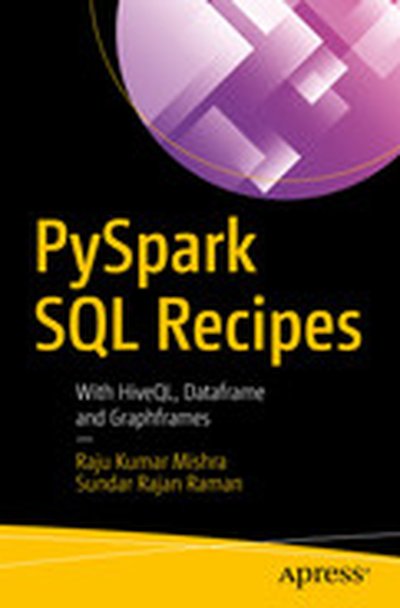
PySpark SQL Recipes: With HiveQL, Dataframe and Graphframes

Carry out data analysis with PySpark SQL, graphframes, and graph data processing using a problem-solution approach. This book provides solutions to problems related to dataframes, data manipulation summarization, and exploratory analysis. You will improve your skills in graph data analysis using graphframes and see how to optimize your PySpark SQL code. PySpark SQL Recipes starts with recipes on creating dataframes from different types of data source, data aggregation and summarization, and exploratory data analysis using PySpark SQL. You’ll also discover how to solve problems in graph analysis using graphframes. On completing this book, you’ll have ready-made code for all your PySpark SQL tasks, including creating dataframes using data from different file formats as well as from SQL or NoSQL databases. What You Will Learn Understand PySpark SQL and its advanced features Use SQL and HiveQL with PySpark SQL Work with structured streaming Optimize PySpark SQL Master graphframes and graph processing Who This Book Is For Data scientists, Python programmers, and SQL programmers.

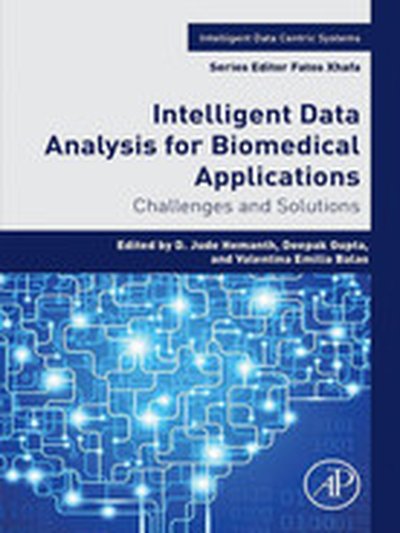
Intelligent Data Analysis for Biomedical Applications

Intelligent Data Analysis for Biomedical Applications: Challenges and Solutions presents specialized statistical, pattern recognition, machine learning, data abstraction and visualization tools for the analysis of data and discovery of mechanisms that create data. It provides computational methods and tools for intelligent data analysis, with an emphasis on problem-solving relating to automated data collection, such as computer-based patient records, data warehousing tools, intelligent alarming, effective and efficient monitoring, and more. This book provides useful references for educational institutions, industry professionals, researchers, scientists, engineers and practitioners interested in intelligent data analysis, knowledge discovery, and decision support in databases. Provides the methods and tools necessary for intelligent data analysis and gives solutions to problems resulting from automated data collection Contains an analysis of medical databases to provide diagnostic expert systems Addresses the integration of intelligent data analysis techniques within biomedical information systems

Data Analyst

With this book, aspiring data analysts will discover what data analysts do all day, what skills they will need for the role, and what regulations they will be required to adhere to. Practising data analysts can explore useful data analysis tools, methods and techniques, brush up on best practices and look at how they can advance their career.

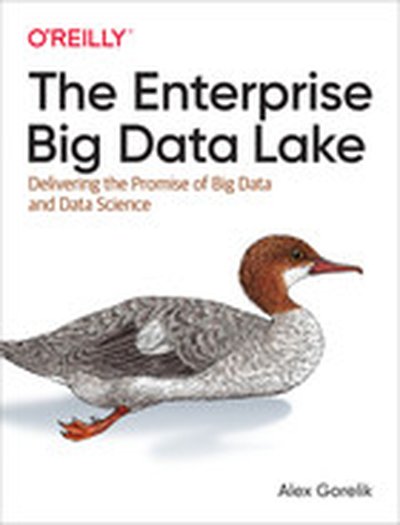
The Enterprise Big Data Lake

The data lake is a daring new approach for harnessing the power of big data technology and providing convenient self-service capabilities. But is it right for your company? This book is based on discussions with practitioners and executives from more than a hundred organizations, ranging from data-driven companies such as Google, LinkedIn, and Facebook, to governments and traditional corporate enterprises. You’ll learn what a data lake is, why enterprises need one, and how to build one successfully with the best practices in this book. Alex Gorelik, CTO and founder of Waterline Data, explains why old systems and processes can no longer support data needs in the enterprise. Then, in a collection of essays about data lake implementation, you’ll examine data lake initiatives, analytic projects, experiences, and best practices from data experts working in various industries. Get a succinct introduction to data warehousing, big data, and data science Learn various paths enterprises take to build a data lake Explore how to build a self-service model and best practices for providing analysts access to the data Use different methods for architecting your data lake Discover ways to implement a data lake from experts in different industries

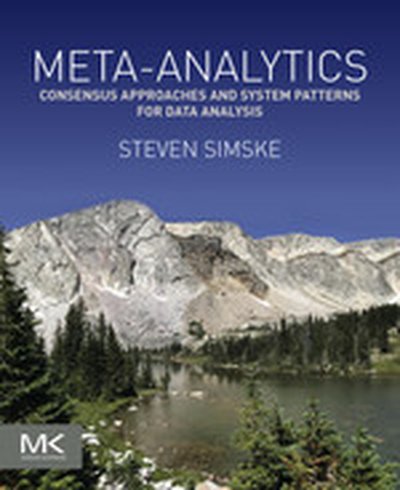
Meta-Analytics

Meta-Analytics: Consensus Approaches and System Patterns for Data Analysis presents an exhaustive set of patterns for data science to use on any machine learning based data analysis task. The book virtually ensures that at least one pattern will lead to better overall system behavior than the use of traditional analytics approaches. The book is ‘meta’ to analytics, covering general analytics in sufficient detail for readers to engage with, and understand, hybrid or meta- approaches. The book has relevance to machine translation, robotics, biological and social sciences, medical and healthcare informatics, economics, business and finance. Inn addition, the analytics within can be applied to predictive algorithms for everyone from police departments to sports analysts. Provides comprehensive and systematic coverage of machine learning-based data analysis tasks Enables rapid progress towards competency in data analysis techniques Gives exhaustive and widely applicable patterns for use by data scientists Covers hybrid or ‘meta’ approaches, along with general analytics Lays out information and practical guidance on data analysis for practitioners working across all sectors

Mastering Ceph - Second Edition

Mastering Ceph is your comprehensive guide to understanding and deploying Ceph for scalable storage solutions. From planning and design to advanced disaster recovery practices, this book equips you with practical knowledge and hands-on techniques to harness the power of Ceph effectively. What this Book will help me do Design and deploy scalable Ceph clusters tailored to your needs. Optimize Ceph's performance with state-of-the-art tuning techniques. Implement effective disaster recovery strategies for robust storage systems. Extend Ceph's functionality with programming using Librados. Troubleshoot and maintain Ceph to ensure reliability and performance. Author(s) None Fisk is a recognized expert in storage infrastructure. With years of hands-on experience with Ceph and storage systems, None has been involved in numerous successful deployments and performance optimizations. Drawing from real-world scenarios, the author's insights make this guide invaluable for professionals. Who is it for? This book is tailored for storage administrators, cloud engineers, and system administrators aiming to enhance their expertise in storage technologies. Whether you're new to Ceph or looking to deepen your knowledge, the clear examples and practical advice make it a perfect pick.

SAS Administration from the Ground Up

Learn SAS® administration from the ground up! Those who are new to SAS platform administration may find themselves full of questions. SAS® Administration from the Ground Up: Running the SAS®9 Platform in a Metadata Server Environment will save you time, money and frustration. This book walks the reader through setting up and maintaining a SAS platform from scratch. The author includes tips on best practices and troubleshooting to show you simple ways to streamline your SAS environment and make your work more manageable. Written for both new administrators and seasoned professionals, this book covers: Also included is a master administration checklist, with helpful resources provided for each task. SAS® 9.4 architecture SAS administration tools such as SAS® Management Console, SAS® Environment Manager and SAS® Deployment Manager Users, groups, and roles Metadata library administration Security

Walmart and the CICS Asynchronous API: An Adoption Experience

Abstract This IBM® Redbooks® publication discusses practical uses of the IBM CICS asynchronous API capability. It describes the methodology, design and thought process used by a large client, Walmart, and the considerations of the choices made. The Redbooks publication provides real life examples and application patterns that benefit from the performance and scalability offered by the new API. The book discusses the homegrown methodology used by Walmart before the API was available and compares it with the design using the new API. A discussion of the process used to migrate older applications to begin using the new API is included so the reader will understand the ease of implementing the new API. A description of real world usage patterns describes the current production application Walmart has deployed as well as other patterns to give the reader a sense of what's possible applying creative thinking with technology improvements. Finally, a section is included on the areas to be considered as you begin to plan and implement asynchronous API capabilities. This book should be read by: Enterprise Architects searching for faster ways to service strategic applications across the enterprise. Solution Architects who want to better understand implementation possibilities for improved response times and better performance for CICS applications. CICS programmers looking to modernize and provide improved response times.

Hands-On Business Intelligence with Qlik Sense

"Hands-On Business Intelligence with Qlik Sense" teaches you how to harness the powerful capabilities of Qlik Sense to build dynamic, interactive dashboards and analyze data effectively. This book provides comprehensive guidance, from data modeling to creating visualizations, geospatial analysis, forecasting, and sharing insights across your organization. What this Book will help me do Understand the core concepts of Qlik Sense for building business intelligence dashboards. Master the process of loading, reshaping, and modeling data for analysis and reporting. Create impactful visual representations of data using Qlik Sense visualization tools. Leverage advanced analytics techniques, including Python and R integration, for deeper insights. Utilize Qlik Sense GeoAnalytics to perform geospatial analysis and produce location-based insights. Author(s) The authors of "Hands-On Business Intelligence with Qlik Sense" are experts in Qlik Sense and data analysis. They collectively bring decades of experience in business intelligence development and implementation. Their practical approach ensures that readers not only learn the theory but can also apply the techniques in real-world scenarios. Who is it for? This book is designed for business intelligence developers, data analysts, and anyone interested in exploring Qlik Sense for their data analysis tasks. If you're aiming to start with Qlik Sense and want a practical and hands-on guide, this book is ideal. No prior experience with Qlik Sense is necessary, but familiarity with data analysis concepts is helpful.