talk-data.com talk-data.com

Topic

data

5765

tagged

Activity Trend

3 peak/qtr
2020-Q1 2026-Q1

Activities

5765 activities · Newest first

Learn Chart.js

This book, 'Learn Chart.js', serves as a comprehensive guide to mastering Chart.js for creating stunning web-based data visualizations. By combining JavaScript, HTML5 Canvas, and Chart.js, you will understand how to turn raw data into interactive visual stories. What this Book will help me do Develop skills to create interactive and engaging data visualizations using the Chart.js library. Learn to efficiently load, parse, and handle data from external formats like CSV and JSON. Understand different chart types offered by Chart.js and learn when to best use each one. Gain the ability to customize Chart.js charts, such as adjusting properties for styling or animations. Acquire hands-on experience with practical examples, equipping you to apply what you learn in real-world scenarios. Author(s) Helder da Rocha brings his extensive experience in programming and software development to this book, offering readers a clear and practical approach to mastering Chart.js. With a deep understanding of data visualization and web technologies, he conveys complex concepts in a straightforward way. Who is it for? This book is ideal for web developers, data analysts, and designers who have basic proficiency in HTML, CSS, and JavaScript. It is particularly suited for professionals looking to create impactful web-based data visualizations using open-source tools. Additionally, the book assumes no prior knowledge of the Canvas element, making it accessible for Chart.js beginners.
Mastering Hadoop 3

"Mastering Hadoop 3" is your in-depth guide to understanding and mastering the advanced features of the Hadoop ecosystem. With a focus on distributed computing and data processing, this book covers essential tools such as YARN, MapReduce, and Apache Spark to help you build scalable, efficient data pipelines. What this Book will help me do Gain a comprehensive understanding of Hadoop Distributed File System (HDFS) and YARN for effective resource management. Master data processing with MapReduce and learn to integrate with real-time processing engines like Spark and Flink. Develop and secure enterprise-grade Hadoop-based data pipelines by implementing robust security and governance measures. Explore techniques for batch data processing, data modeling, and designing applications tailored for Hadoop environments. Understand best practices for optimizing and troubleshooting Hadoop clusters for enhanced performance and reliability. Author(s) The authors, including None Wong, None Singh, and None Kumar, bring together years of experience in big data engineering, distributed systems, and enterprise application development. They aim to provide a clear pathway to mastering Hadoop ecosystem tools. Who is it for? This book is ideal for budding big data professionals who have some familiarity with Java and basic Hadoop concepts and wish to elevate their expertise. If you're a Hadoop career practitioner keen to expand your understanding of the ecosystem's advanced capabilities or a professional looking to implement Hadoop in organizational workflows, this book is well-suited for you.

Mastering Tableau 2019.1 - Second Edition

Mastering Tableau 2019.1 is your essential guide for becoming an expert in Tableau's advanced features and functionalities. This book will teach you how to use Tableau Prep for data preparation, create complex visualizations and dashboards, and leverage Tableau's integration with R, Python, and MATLAB. You'll be equipped with the skills to solve both common and advanced BI challenges. What this Book will help me do Gain expertise in preparing and blending data using Tableau Prep and other data handling tools. Create advanced data visualizations and designs that effectively communicate insights. Implement narrative storytelling in BI with advanced presentation designs in Tableau. Integrate Tableau with programming tools like R, Python, and MATLAB for extended functionalities. Optimize performance and improve dashboard interactivity for user-friendly analytics solutions. Author(s) Marleen Meier, with extensive experience in business intelligence and analytics, and None Baldwin, an expert in data visualization, collaboratively bring this advanced Tableau guide to life. Their passion for empowering users with practical BI solutions reflects in the hands-on approach employed throughout the book. Who is it for? This book is perfectly suited for business analysts, BI professionals, and data analysts who already have foundational knowledge of Tableau and seek to advance their skills for tackling more complex BI challenges. It's ideal for individuals aiming to master Tableau's premium features for impactful analytics solutions.

Python for Data Science For Dummies, 2nd Edition

The fast and easy way to learn Python programming and statistics Python is a general-purpose programming language created in the late 1980s—and named after Monty Python—that's used by thousands of people to do things from testing microchips at Intel, to powering Instagram, to building video games with the PyGame library. Python For Data Science For Dummies is written for people who are new to data analysis, and discusses the basics of Python data analysis programming and statistics. The book also discusses Google Colab, which makes it possible to write Python code in the cloud. Get started with data science and Python Visualize information Wrangle data Learn from data The book provides the statistical background needed to get started in data science programming, including probability, random distributions, hypothesis testing, confidence intervals, and building regression models for prediction.

SAP Business Intelligence Quick Start Guide

This book is your practical guide to understanding and using the SAP BusinessObjects Business Intelligence (BI) Platform. Through hands-on examples and clear instructions, you'll learn how to create insightful data visualizations, manage business intelligence reports, and deploy and maintain the BI platform effectively, empowering better data-driven decision making. What this Book will help me do Learn how to use SAP Web Intelligence to develop insightful dashboards and reports. Understand the use of SAP Crystal Reports for Enterprise in creating detailed analytics. Gain proficiency in SAP Lumira for advanced data visualization and storytelling. Learn to configure and deploy the SAP BusinessObjects BI platform in a business environment. Develop skills in using SAP Predictive Analytics to perform advanced data analysis capabilities. Author(s) Vinay Singh brings significant expertise in data analysis and the SAP BusinessObjects platform. With years of experience implementing and consulting on SAP solutions across industries, Vinay offers a unique ability to demystify complex technical subjects for readers. His practical approach and commitment to empowering readers make his book a valuable learning resource. Who is it for? This book is ideal for Business Intelligence professionals seeking to explore advanced tools for data analysis. It caters to SAP users eager to expand their expertise in leveraging SAP BusinessObjects for improved decision-making capabilities. It serves IT consultants and data analysts wishing to gain deeper insights into deployment and utilization strategies. Appropriate for beginners with foundational understanding of BI principles aiming to learn a globally recognized BI tool.

IBM DS8880 Architecture and Implementation (Release 8.51)

Abstract * Updated for R8.51 * This IBM® Redbooks® publication describes the concepts, architecture, and implementation of the IBM DS8880 family. The book provides reference information to assist readers who need to plan for, install, and configure the DS8880 systems. The IBM DS8000® family is a high-performance, high-capacity, highly secure, and resilient series of disk storage systems. The DS8880 family is the latest and most advanced of the DS8000 offerings to date. The high availability, multiplatform support, including IBM Z, and simplified management tools help provide a cost-effective path to an on-demand and cloud-based infrastructures. The IBM DS8880 family now offers business-critical, all-flash, and hybrid data systems that span a wide range of price points: DS8882F: Rack Mounted storage system DS8884: Business Class DS8886: Enterprise Class DS8888: Analytics Class The DS8884 and DS8886 are available as either hybrid models, or can be configured as all-flash. Each model represents the most recent in this series of high-performance, high-capacity, flexible, and resilient storage systems. These systems are intended to address the needs of the most demanding clients. Two powerful IBM POWER8® processor-based servers manage the cache to streamline disk I/O, maximizing performance and throughput. These capabilities are further enhanced with the availability of the second generation of high-performance flash enclosures (HPFEs Gen-2) and newer flash drives. Like its predecessors, the DS8880 supports advanced disaster recovery (DR) solutions, business continuity solutions, and thin provisioning. All disk drives in the DS8880 storage system include the Full Disk Encryption (FDE) feature. The DS8880 can automatically optimize the use of each storage tier, particularly flash drives, by using the IBM Easy Tier® feature. Release 8.5 introduces the Safeguarded Copy feature. The DS8882F Rack Mounted is decribed in a separate publication, Introducing the IBM DS8882F Rack Mounted Storage System, REDP-5505.

Advanced R Statistical Programming and Data Models: Analysis, Machine Learning, and Visualization

Carry out a variety of advanced statistical analyses including generalized additive models, mixed effects models, multiple imputation, machine learning, and missing data techniques using R. Each chapter starts with conceptual background information about the techniques, includes multiple examples using R to achieve results, and concludes with a case study. Written by Matt and Joshua F. Wiley, Advanced R Statistical Programming and Data Models shows you how to conduct data analysis using the popular R language. You’ll delve into the preconditions or hypothesis for various statistical tests and techniques and work through concrete examples using R for a variety of these next-level analytics. This is a must-have guide and reference on using and programming with the R language. What You’ll Learn Conduct advanced analyses in R including: generalized linear models, generalized additive models, mixedeffects models, machine learning, and parallel processing Carry out regression modeling using R data visualization, linear and advanced regression, additive models, survival / time to event analysis Handle machine learning using R including parallel processing, dimension reduction, and feature selection and classification Address missing data using multiple imputation in R Work on factor analysis, generalized linear mixed models, and modeling intraindividual variability Who This Book Is For Working professionals, researchers, or students who are familiar with R and basic statistical techniques such as linear regression and who want to learn how to use R to perform more advanced analytics. Particularly, researchers and data analysts in the social sciences may benefit from these techniques. Additionally, analysts who need parallel processing to speed up analytics are givenproven code to reduce time to result(s).

Stata

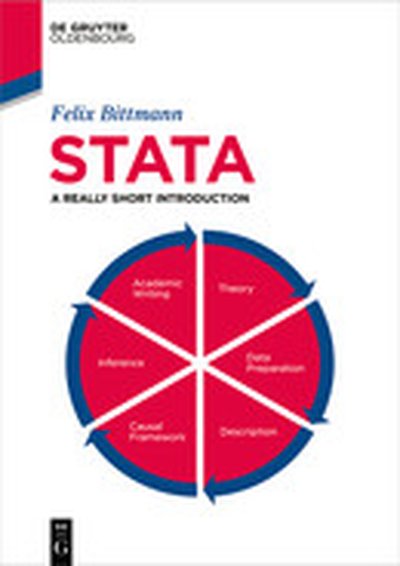
Stata is one of the most popular statistical software in the world and suited for all kinds of users, from absolute beginners to experienced veterans. This book offers a clear and concise introduction to the usage and the workflow of Stata. Included topics are importing and managing datasets, cleaning and preparing data, creating and manipulating variables, producing descriptive statistics and meaningful graphs as well as central quantitative methods, like linear (OLS) and binary logistic regressions and matching. Additional information about diagnostical tests ensures that these methods yield valid and correct results that live up to academic standards. Furthermore, users are instructed how to export results that can be directly used in popular software like Microsoft Word for seminar papers and publications. Lastly, the book offers a short yet focussed introduction to scientific writing, which should guide readers through the process of writing a first quantitative seminar paper or research report. The book underlines correct usage of the software and a productive workflow which also introduces aspects like replicability and general standards for academic writing. While absolute beginners will enjoy the easy to follow point-and-click interface, more experienced users will benefit from the information about do-files and syntax which makes Stata so popular. Lastly, a wide range of user-contributed software („Ados") is introduced which further improves the general workflow and guarantees the availability of state of the art statistical methods.

IBM FlashSystem A9000 and A9000R Architecture and Implementation (Version 12.3.1)

Abstract * Version 12.3.1 * This IBM® Redbooks publication presents the architecture, design, concepts, and technology that are used in IBM FlashSystem® A9000 and IBM FlashSystem A9000R. FlashSystem A9000 and FlashSystem A9000R deliver the microsecond latency and high availability of IBM FlashCore® technology with grid architecture, simple scalability, and industry-leading IBM software that is designed to drive your business into the cognitive era. The Hyper-Scale Manager highly intuitive user interface simplifies management. Comprehensive data reduction capabilities, including inline deduplication and a powerful compression engine, help lower total cost of ownership. With software version 12.3.1 and Hyper-Scale Manager version 5.5.1 (or later) the system can compute reclaimable and attributed capacity information, without performance impact. From a functional standpoint, FlashSystem A9000 and FlashSystem A9000R take advantage of most of the software-defined storage features that are offered by the IBM Spectrum™ Accelerate software, including multi-tenancy and business continuity functions. FlashSystem A9000 and FlashSystem A9000R supports HyperSwap and Multi-site High Availabilty / Disaster Recovery (HA/DR) configurations. This publication is intended for those individuals who need to plan, install, tailor, and configure FlashSystem A9000 and FlashSystem A9000R. For detailed information about configuration, management, and replication functions and their usage, see the following publications: , SG24-8376 IBM Spectrum Accelerate Family Storage Configuration and Usage for IBM FlashSystem A9000, IBM FlashSystem A9000R, and IBM XIV Gen3 , REDP-5401 IBM FlashSystem A9000 and A9000R Business Continuity Solutions , REDP-5434 IBM HyperSwap and Multi-site HA/DR solution for IBM FlashSystem A9000 and A9000R , SG24-8368. IBM Spectrum Accelerate Family: Host Attachment and Interoperability

Theory of Ridge Regression Estimation with Applications

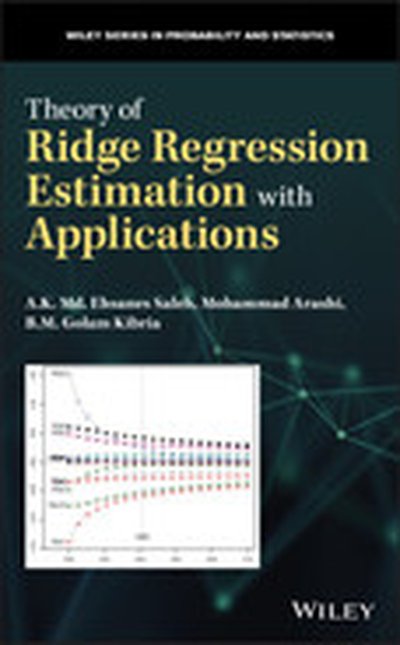
A guide to the systematic analytical results for ridge, LASSO, preliminary test, and Stein-type estimators with applications Theory of Ridge Regression Estimation with Applications offers a comprehensive guide to the theory and methods of estimation. Ridge regression and LASSO are at the center of all penalty estimators in a range of standard models that are used in many applied statistical analyses. Written by noted experts in the field, the book contains a thorough introduction to penalty and shrinkage estimation and explores the role that ridge, LASSO, and logistic regression play in the computer intensive area of neural network and big data analysis. Designed to be accessible, the book presents detailed coverage of the basic terminology related to various models such as the location and simple linear models, normal and rank theory-based ridge, LASSO, preliminary test and Stein-type estimators. The authors also include problem sets to enhance learning. This book is a volume in the Wiley Series in Probability and Statistics series that provides essential and invaluable reading for all statisticians. This important resource: Offers theoretical coverage and computer-intensive applications of the procedures presented Contains solutions and alternate methods for prediction accuracy and selecting model procedures Presents the first book to focus on ridge regression and unifies past research with current methodology Uses R throughout the text and includes a companion website containing convenient data sets Written for graduate students, practitioners, and researchers in various fields of science, Theory of Ridge Regression Estimation with Applications is an authoritative guide to the theory and methodology of statistical estimation.

SAS Certified Specialist Prep Guide

The SAS® Certified Specialist Prep Guide: Base Programming Using SAS® 9.4 prepares you to take the new SAS 9.4 Base Programming -- Performance-Based Exam. This is the official guide by the SAS Global Certification Program. This prep guide is for both new and experienced SAS users, and it covers all the objectives that are tested on the exam. New in this edition is a workbook whose sample scenarios require you to write code to solve problems and answer questions. Answers for the chapter quizzes and solutions for the sample scenarios in the workbook are included. You will also find links to exam objectives, practice exams, and other resources such as the Base SAS® glossary and a list of practice data sets. Major topics include importing data, creating and modifying SAS data sets, and identifying and correcting both data syntax and programming logic errors. All exam topics are covered in these chapters: Setting Up Practice Data Basic Concepts Accessing Your Data Creating SAS Data Sets Identifying and Correcting SAS Language Errors Creating Reports Understanding DATA Step Processing BY-Group Processing Creating and Managing Variables Combining SAS Data Sets Processing Data with DO Loops SAS Formats and Informats SAS Date, Time, and Datetime Values Using Functions to Manipulate Data Producing Descriptive Statistics Creating Output Practice Programming Scenarios (Workbook)

IBM Elastic Storage Server Implementation Guide for Version 5.3

This IBM® Redpaper™ publication introduces and describes the IBM Elastic Storage™ Server as a scalable, high-performance data and file management solution. The solution is built on proven IBM Spectrum™ Scale technology, formerly IBM General Parallel File System (GPFS™). IBM Elastic Storage Servers can be implemented for a range of diverse requirements, providing reliability, performance, and scalability. This publication helps you to understand the solution and its architecture and helps you to plan the installation and integration of the environment. The following combination of physical and logical components are required: Hardware Operating system Storage Network Applications This paper provides guidelines for several usage and integration scenarios. Typical scenarios include Cluster Export Services (CES) integration, disaster recovery, and multicluster integration. This paper addresses the needs of technical professionals (consultants, technical support staff, IT Architects, and IT Specialists) who must deliver cost-effective cloud services and big data solutions.

Using the IBM Spectrum Accelerate Family in VMware Environments: IBM XIV, IBM FlashSystem A9000 and IBM FlashSystem A9000R, and IBM Spectrum Accelerate

This IBM® Redpaper™ publication is a brief overview of synergistic aspects between various VMware offerings and the IBM Spectrum™ Accelerate family, including IBM XIV® and IBM FlashSystem® A9000 and IBM FlashSystem A9000R servers. After reviewing different integration concepts and explaining general implementation aspects for attaching the IBM Spectrum Accelerate™ family to VMware ESXi deployments, the paper focuses on components that are enabled by IBM Spectrum Connect v3.4. This paper is intended for planning to use or implementing the IBM Spectrum Accelerate family of storage systems in a VMware environment.

Advanced MySQL 8

Dive into the world of MySQL 8.0 with this comprehensive guide, tailored for professionals seeking to optimize and expand their database capabilities. You will master techniques to improve performance, scalability, and security in your database applications, making them robust and efficient. What this Book will help me do Learn to implement and analyze large queries efficiently in MySQL 8.0. Gain insights into optimizing performance by leveraging MySQL indexing and settings. Understand advanced replication techniques, including Group Replication and its applications in InnoDB clusters. Master the essentials of database monitoring and managing large distributed instances. Explore methods for backup, recovery, and enhancing data security within MySQL. Author(s) None Vanier, None Shah, and None Malepati are seasoned database experts with extensive experience in MySQL and database management. They have worked on scaling enterprise-level database applications, focusing on improving performance and reliability. They bring real-world insights and a clear, practical approach to this book, making it an invaluable resource for developers and administrators alike. Who is it for? This book is perfect for database administrators, developers, and system architects who already have a foundational understanding of MySQL and are looking to deepen their expertise. If you're someone interested in enhancing database application performance, mastering advanced techniques, or handling distributed databases and scaling challenges, this book will surely cater to your professional aspirations.

Apache Spark Quick Start Guide

Dive into the world of scalable data processing with the "Apache Spark Quick Start Guide." This book offers a foundational introduction to Spark, empowering readers to harness its capabilities for big data processing. With clear explanations and hands-on examples, you'll learn to implement Spark applications that handle complex data tasks efficiently. What this Book will help me do Understand and implement Spark's RDDs and DataFrame APIs to process large datasets effectively. Set up a local development environment for Spark-based projects. Develop skills to debug and optimize slow-performing Spark applications. Harness built-in modules of Spark for SQL, streaming, and machine learning applications. Adopt best practices and optimization techniques for high-performance Spark applications. Author(s) Shrey Mehrotra is a seasoned software developer with expertise in big data technologies, particularly Apache Spark. With years of hands-on industry experience, Shrey focuses on making complex technical concepts accessible to all. Through his writing, he aims to share clear, practical guidance for developers of all levels. Who is it for? This guide is perfect for big data enthusiasts and professionals looking to learn Apache Spark's capabilities from scratch. It's aimed at data engineers interested in optimizing application performance and data scientists wanting to integrate machine learning with Spark. A basic familiarity with either Scala, Python, or Java is recommended.

Ceph: Designing and Implementing Scalable Storage Systems

Get to grips with the unified, highly scalable distributed storage system and learn how to design and implement it. Key Features Explore Ceph's architecture in detail Implement a Ceph cluster successfully and gain deep insights into its best practices Leverage the advanced features of Ceph, including erasure coding, tiering, and BlueStore Book Description This Learning Path takes you through the basics of Ceph all the way to gaining in-depth understanding of its advanced features. You'll gather skills to plan, deploy, and manage your Ceph cluster. After an introduction to the Ceph architecture and its core projects, you'll be able to set up a Ceph cluster and learn how to monitor its health, improve its performance, and troubleshoot any issues. By following the step-by-step approach of this Learning Path, you'll learn how Ceph integrates with OpenStack, Glance, Manila, Swift, and Cinder. With knowledge of federated architecture and CephFS, you'll use Calamari and VSM to monitor the Ceph environment. In the upcoming chapters, you'll study the key areas of Ceph, including BlueStore, erasure coding, and cache tiering. More specifically, you'll discover what they can do for your storage system. In the concluding chapters, you will develop applications that use Librados and distributed computations with shared object classes, and see how Ceph and its supporting infrastructure can be optimized. By the end of this Learning Path, you'll have the practical knowledge of operating Ceph in a production environment. This Learning Path includes content from the following Packt products: Ceph Cookbook by Michael Hackett, Vikhyat Umrao and Karan Singh Mastering Ceph by Nick Fisk Learning Ceph, Second Edition by Anthony D'Atri, Vaibhav Bhembre and Karan Singh What you will learn Understand the benefits of using Ceph as a storage solution Combine Ceph with OpenStack, Cinder, Glance, and Nova components Set up a test cluster with Ansible and virtual machine with VirtualBox Develop solutions with Librados and shared object classes Configure BlueStore and see its interaction with other configurations Tune, monitor, and recover storage systems effectively Build an erasure-coded pool by selecting intelligent parameters Who this book is for If you are a developer, system administrator, storage professional, or cloud engineer who wants to understand how to deploy a Ceph cluster, this Learning Path is ideal for you. It will help you discover ways in which Ceph features can solve your data storage problems. Basic knowledge of storage systems and GNU/Linux will be beneficial.

Hands-On Data Science with the Command Line

"Hands-On Data Science with the Command Line" introduces the incredible power of command-line tools to simplify and automate data science tasks. Leveraging tools like AWK, Bash, and more, you'll learn not only to handle datasets effectively but also to create efficient data pipelines and visualize data directly from the command line. What this Book will help me do Learn to set up and optimize the command line interface for data science tasks. Master using AWK and similar tools for data processing. Discover strategies for scripting, automation, and managing files efficiently. Understand how to visualize data directly from the command line. Gain fluency in combining tools to create seamless data pipelines. Author(s) The authors, None Morris, None McCubbin, and None Page, are experienced data scientists and technical authors with a passion for teaching complex topics in approachable ways. Their extensive experience using command-line tools for data-related workflows equips them to guide readers step-by-step in mastering these powerful techniques. Who is it for? This book is ideal for data scientists and data analysts seeking to streamline and automate their workflows using command-line tools. If you have basic experience with data science and are curious about incorporating the efficiency of the command line into your work, this guide is perfect for you.

Hands-On Deep Learning with Apache Spark

"Hands-On Deep Learning with Apache Spark" is an essential resource for mastering distributed deep learning frameworks and applications on Apache Spark. Through practical examples and guided tutorials, this book teaches you to deploy scalable deep learning solutions for handling complex data challenges efficiently. What this Book will help me do Understand how to set up Apache Spark for deep learning workflows. Gain practical insight into implementing neural networks, including CNNs and RNNs, on distributed platforms. Learn to train and optimize models using popular frameworks like TensorFlow and Keras. Develop expertise in analyzing large datasets with textual and image-based deep learning methods. Acquire skills to deploy trained models for real-world applications in distributed environments. Author(s) None Iozzia is an accomplished software engineer and data scientist with a strong background in distributed computing and machine learning. With years of experience working with Apache Spark and deep learning technologies, None brings a wealth of practical knowledge to the table. Their passion for providing clear, hands-on guidance makes this book an approachable and valuable resource for learners of all levels. Who is it for? This book is aimed at Scala developers, data scientists, and data analysts who are looking to extend their skill set to include distributed deep learning on Apache Spark. It's ideally suited for readers familiar with machine learning basics and those with prior exposure to Apache Spark workflows. If you aim to create scalable machine learning solutions that handle complex data, this book offers precisely what you need.

Kibana 7 Quick Start Guide

Dive into the world of Kibana 7 with this hands-on guide that simplifies the process of visualizing and analyzing data using Elasticsearch. From fundamental concepts to advanced tools, this book enables you to create intuitive dashboards and leverage powerful machine learning capabilities effectively. Discover how to transform your data into actionable insights with ease. What this Book will help me do Configure Logstash to fetch and process CSV data for visualization. Master creating and managing index patterns within Kibana for efficient data navigation. Effectively apply filters to refine data presentations and insights. Develop and utilize machine learning jobs in Kibana to identify trends and anomalies. Create, customize, and share impactful visualizations and dashboards to drive data-driven decisions. Author(s) None Srivastava is a technical expert in data visualization and Elasticsearch tools, with practical experience implementing and teaching about the Elastic Stack. The author brings a hands-on approach to this book, simplifying complex concepts for ease of understanding. Their expertise ensures that the book serves both as a learning guide and a practical reference. Who is it for? This book is ideal for developers and IT professionals who are either new to Kibana or looking to deepen their understanding of its visualization capabilities. It is suitable for individuals working with the Elastic Stack or seeking to leverage Kibana for data analysis purposes. Even if you are progressing from a novice to an intermediate level, this guide will provide future-proof skills to optimize your workflow.

Learning PostgreSQL 11 - Third Edition

Immerse yourself in the capabilities of PostgreSQL 11 with this comprehensive beginner's guide. Learning PostgreSQL 11 will take you through relational database fundamentals and advanced database functionality, empowering you to build efficient and scalable database solutions with confidence. By the end of this book, you'll have mastery over PostgreSQL's features to develop, manage, and optimize your own databases. What this Book will help me do Gain a solid understanding of relational database principles and the PostgreSQL ecosystem. Learn to install PostgreSQL, create a database, and design a data model effectively. Develop skills to create, manipulate, and optimize tables, views, and efficient indexes. Utilize server-side programming with PL/pgSQL and advanced data types like JSONB. Enhance database reliability and performance, and connect to your Python applications seamlessly. Author(s) Christopher Travers and None Volkov bring their collective expertise and practical experience to this book. Christopher has a strong background in software development and database systems, with years of hands-on involvement with PostgreSQL. None has contributed significantly to innovative database solutions, emphasizing clear and actionable instructions. Together, they aim to demystify PostgreSQL for learners of all backgrounds. Who is it for? This book is crafted for developers, database administrators, and tech enthusiasts who want to delve into PostgreSQL. Beginners with no prior database experience will find its approach accessible, while those aiming to enhance their skills with PostgreSQL's latest features will benefit immensely. It's ideal for anyone seeking to build solid database or data warehousing applications with modern capabilities and best practices.