talk-data.com talk-data.com

Topic

Data Modelling

data_governance data_quality metadata_management

355

tagged

Activity Trend

18 peak/qtr
2020-Q1 2026-Q1

Activities

355 activities · Newest first

MongoDB 8.0 in Action, Third Edition

Deliver flexible, scalable, and high-performance data storage that's perfect for AI and other modern applications with MongoDB 8.0 and MongoDB Atlas multi-cloud data platform. In MongoDB 8.0 in Action, Third Edition you'll find comprehensive coverage of the latest version of MongoDB 8.0 and the MongoDB Atlas multi-cloud data platform. Learn to utilize MongoDB’s flexible schema design for data modeling, scale applications effectively using advanced sharding features, integrate full-text and vector-based semantic search, and more. This totally revised new edition delivers engaging hands-on tutorials and examples that put MongoDB into action! In MongoDB 8.0 in Action, Third Edition you'll: Master new features in MongoDB 8.0 Create your first, free Atlas cluster using the Atlas CLI Design scalable NoSQL databases with effective data modeling techniques Master Vector Search for building GenAI-driven applications Utilize advanced search capabilities in MongoDB Atlas, including full-text search Build Event-Driven Applications with Atlas Stream Processing Deploy and manage MongoDB Atlas clusters both locally and in the cloud using the Atlas CLI Leverage the Atlas SQL interface for familiar SQL querying Use MongoDB Atlas Online Archive for efficient data management Establish robust security practices including encryption Master backup and restore strategies Optimize database performance and identify slow queries MongoDB 8.0 in Action, Third Edition offers a clear, easy-to-understand introduction to everything in MongoDB 8.0 and MongoDB Atlas—including new advanced features such as embedded config servers in sharded clusters, or moving an unsharded collection to a different shard. The book also covers Atlas stream processing, full text search, and vector search capabilities for generative AI applications. Each chapter is packed with tips, tricks, and practical examples you can quickly apply to your projects, whether you're brand new to MongoDB or looking to get up to speed with the latest version. About the Technology MongoDB is the database of choice for storing structured, semi-structured, and unstructured data like business documents and other text and image files. MongoDB 8.0 introduces a range of exciting new features—from sharding improvements that simplify the management of distributed data, to performance enhancements that stay resilient under heavy workloads. Plus, MongoDB Atlas brings vector search and full-text search features that support AI-powered applications. About the Book MongoDB 8.0 in Action, Third Edition you’ll learn how to take advantage of all the new features of MongoDB 8.0, including the powerful MongoDB Atlas multi-cloud data platform. You’ll start with the basics of setting up and managing a document database. Then, you’ll learn how to use MongoDB for AI-driven applications, implement advanced stream processing, and optimize performance with improved indexing and query handling. Hands-on projects like creating a RAG-based chatbot and building an aggregation pipeline mean you’ll really put MongoDB into action! What's Inside The new features in MongoDB 8.0 Get familiar with MongoDB’s Atlas cloud platform Utilizing sharding enhancements Using vector-based search technologies Full-text search capabilities for efficient text indexing and querying About the Reader For developers and DBAs of all levels. No prior experience with MongoDB required. About the Author Arek Borucki is a MongoDB Champion, certified MongoDB and MongoDB Atlas administrator with expertise in distributed systems, NoSQL databases, and Kubernetes. Quotes An excellent resource with real-world examples and best practices to design, optimize, and scale modern applications. - Advait Patel, Broadcom Essential MongoDB resource. Covers new features such as full-text search, vector search, AI, and RAG applications. - Juan Roy, Credit Suisse Reflects author’s practical experience and clear teaching style. It’s packed with real-world examples and up-to-date insights. - Rajesh Nair, MongoDB Champion & community leader This book will definitely make you a MongoDB star! - Vinicios Wentz, JP Morgan & Chase Co.
Xarray provides data structures for multi-dimensional labeled arrays and a toolkit for scalable data analysis on large, complex datasets. Many real-world datasets often have hierarchical or heterogeneous structure, and are best organized through groups of related data arrays. Through xarray.DataTree, the xarray data model now supports opening datasets with a hierarchical structure of groups, such as HDF5 files and Zarr stores. This expanded data model is now general enough to manage data across different scientific disciplines, including geosciences and biosciences. This hands-on tutorial focuses on intermediate and advanced workflows using xarray to analyze real-world hierarchical data.

Enter the agentic era of data and analytics with Tableau and Agentforce. Discover how AI agents are accelerating data modeling and unlocking conversational analytics. Hear how leading organizations are harnessing agents to reimagine decision-making, supercharge insight delivery, and unleash the full potential of their data-driven workforce.

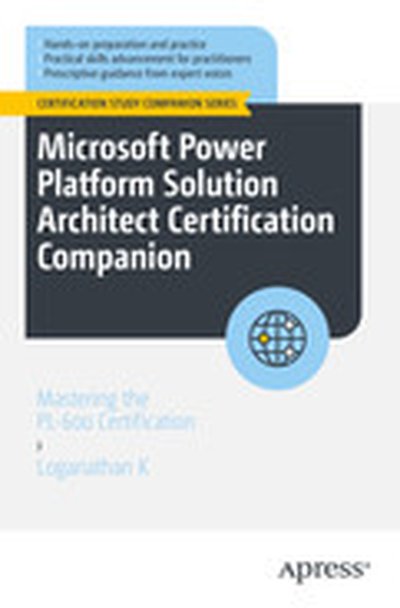
Microsoft Power Platform Solution Architect Certification Companion: Mastering the PL-600 Certification

This comprehensive guide book equips you with the knowledge and confidence needed to prep for the exam and thrive as a Power Platform Solution Architect. The book starts with a foundation for successful solution architecture, emphasizing essential skills such as requirements gathering, governance, and security. You will learn to navigate customer discovery, translate business needs into technical requirements, and design solutions that address both functional and non-functional needs. The second part of the book delves into the Microsoft Power Platform ecosystem, offering an in-depth look at its core components—Power Apps, Power Automate, Power BI, Microsoft Copilot, and Robotic Process Automation (RPA). Detailed insights into data modeling, security strategies, and AI integration will guide you in building scalable, secure solutions. Coverage of application life cycle management, which empowers solution architects to design, implement, and deploy Power Platform solutions effectively, is discussed next. You will then go through real-world scenarios, giving you a practical understanding of the challenges and considerations in managing Power Platform projects within a business context. The book concludes with strategies for continuous learning and resources for professional development, including practice questions to assess knowledge and readiness for the PL-600 exam. After reading the book, you will be ready to take the exam and become a successful Power Platform Solution Architect. What You Will Learn Understand the Solution Architect's role, responsibilities, and strategic approaches to successfully navigate projects Master the basics of Power Platform Solution Architecture Understand governance, security, and integration concepts in real-world scenarios Design and deploy effective business solutions using Power Platform components Gain the skills necessary to prep for the PL-600 certification exam Who This Book Is For Professionals pursuing Microsoft PL-600 Solution Architect certification and IT consultants and developers transitioning to solution architect roles

Revolutionizing Insurance: How to Drive Growth and Innovation

The insurance industry is rapidly evolving as advances in data and artificial intelligence (AI) drive innovation, enabling more personalized customer experiences, streamlined operations, and improved efficiencies. With powerful data analytics and AI-driven solutions, insurers can automate claims processing, enhance risk management, and make real-time decisions. Leveraging insights from large and complex datasets, organizations are delivering more customer-centric products and services than ever before. Key takeaways: Real-world applications of data and AI in claims automation, underwriting, and customer engagementHow predictive analytics and advanced data modeling help anticipate risks and meet customer needs. Personalization of policies, optimized pricing, and more efficient workflows for greater ROI. Discover how data and AI are fueling growth, improving protection, and shaping the future of the insurance industry!

Sponsored by: West Monroe | Disruptive Forces: LLMs and the New Age of Data Engineering

Seismic shift Large Language Models are unleashing on data engineering, challenging traditional workflows. LLMs obliterate inefficiencies and redefine productivity. AI powerhouses automate complex tasks like documentation, code translation, and data model development with unprecedented speed and precision. Integrating LLMs into tools promises to reduce offshore dependency, fostering agile onshore innovation. Harnessing LLMs' full potential involves challenges, requiring deep dives into domain-specific data and strategic business alignment. Session will addresses deploying LLMs effectively, overcoming data management hurdles, and fostering collaboration between engineers and stakeholders. Join us to explore a future where LLMs redefine possibilities, inviting you to embrace AI-driven innovation and position your organization as a leader in data engineering.

Transforming Bio-Pharma Manufacturing: Eli Lilly's Data-Driven Journey With Databricks

Eli Lilly and Company, a leading bio-pharma company, is revolutionizing manufacturing with next-gen fully digital sites. Lilly and Tredence have partnered to establish a Databricks-powered Global Manufacturing Data Fabric (GMDF), laying the groundwork for transformative data products used by various personas at sites and globally. By integrating data from various manufacturing systems into a unified data model, GMDF has delivered actionable insights across several use cases such as batch release by exception, predictive maintenance, anomaly detection, process optimization and more. Our serverless architecture leverages Databricks Auto Loader for real-time data streaming, PySpark for automation and Unity Catalog for governance, ensuring seamless data processing and optimization. This platform is the foundation for data driven processes, self-service analytics, AI and more. This session will provide details on the data architecture and strategy and share a few use cases delivered.

Busting Data Modeling Myths: Truths and Best Practices for Data Modeling in the Lakehouse

Unlock the truth behind data modeling in Databricks. This session will tackle the top 10 myths surrounding relational and dimensional data modeling. Attendees will gain a clear understanding of what Databricks Lakehouse truly supports today, including how to leverage primary and foreign keys, identity columns for surrogate keys, column-level data quality constraints and much more. This session will talk through the lens of medallion architecture, explaining how to implement data models across bronze, silver, and gold tables. Whether you’re migrating from a legacy warehouse or building new analytics solutions, you’ll leave equipped to fully leverage Databricks’ capabilities, and design scalable, high-performance data models for enterprise analytics.

Data Modeling 101 for Data Lakehouse Demystified

This session is repeated. In today’s data-driven world, the Data Lakehouse has emerged as a powerful architectural paradigm that unifies the flexibility of data lakes with the reliability and structure of traditional data warehouses. However, organizations must adopt the right data modeling techniques to unlock its full potential to ensure scalability, maintainability and efficiency. This session is designed for beginners looking to demystify the complexities of data modeling for the lakehouse and make informed design decisions. We’ll break down Medallion Architecture, explore key data modeling techniques and walk through the maturity stages of a successful data platform — transitioning from raw, unstructured data to well-organized, query-efficient models.

This course offers a deep dive into designing data models within the Databricks Lakehouse environment, and understanding the data products lifecycle. Participants will learn to align business requirements with data organization and model design leveraging Delta Lake and Unity Catalog for defining data architectures, and techniques for data integration and sharing. Prerequisites: Foundational knowledge equivalent to Databricks Certified Data Engineer Associate and familiarity with many topics covered in Databricks Certified Data Engineer Professional. Experience with: Basic SQL queries and table creation on Databricks Lakehouse architecture fundamentals (medallion layers) Unity Catalog concepts (high-level) [Optional] Familiarity with data warehousing concepts (dimensional modeling, 3NF, etc.) is beneficial but not mandatory. Labs: Yes

How This Regional Bank Built a Better Branch Profitability Tracker | The Data Apps Conference

This regional bank needed a robust system for funds transfer pricing and profitability analysis across branches, products, and customers. After discovering Sigma's capabilities for complex financial calculations and data modeling, the bank's team built a comprehensive solution for modern banking needs.

In this session, the Senior Financial Analyst and IT Reporting Analyst will showcase how they developed a Sigma-powered solution to:

Streamline expense allocation workflows Calculate and apply sophisticated funds transfer pricing Enable detailed variance analysis and research Create foundation for branch, product, and customer-level profitability insights Watch this session to see how this regional bank leveraged Sigma Data Apps to build a scalable, data-driven financial reporting system that enhances decision-making and operational efficiency.

➡️ Learn more about Data Apps: https://www.sigmacomputing.com/product/data-applications?utm_source=youtube&utm_medium=organic&utm_campaign=data_apps_conference&utm_content=pp_data_apps


➡️ Sign up for your free trial: https://www.sigmacomputing.com/go/free-trial?utm_source=youtube&utm_medium=video&utm_campaign=free_trial&utm_content=free_trial

sigma #sigmacomputing #dataanalytics #dataanalysis #businessintelligence #cloudcomputing #clouddata #datacloud #datastructures #datadriven #datadrivendecisionmaking #datadriveninsights #businessdecisions #datadrivendecisions #embeddedanalytics #cloudcomputing #SigmaAI #AI #AIdataanalytics #AIdataanalysis #GPT #dataprivacy #python #dataintelligence #moderndataarchitecture

Enter the agentic era of data and analytics with Tableau and Agentforce. Discover how AI agents are accelerating data modeling and unlocking conversational analytics. Hear how leading organizations are harnessing agents to reimagine decision-making, supercharge insight delivery, and unleash the full potential of their data-driven workforce.

This hands-on lab guides you through importing real-world data from CSV files into a Cloud SQL database. Using a flight dataset from the US Bureau of Transport Statistics, you'll gain hands-on experience with data ingestion and basic analysis. You'll learn to create a Cloud SQL instance and database, effectively import your data, and build a foundational data model using SQL queries.

If you register for a Learning Center lab, please ensure that you sign up for a Google Cloud Skills Boost account for both your work domain and personal email address. You will need to authenticate your account as well (be sure to check your spam folder!). This will ensure you can arrive and access your labs quickly onsite. You can follow this link to sign up!

This talk will demonstrate how the SAP user community can use Looker/Explore Assistant Chatbot to explore data insights into SAP ERP data stored on Google Cloud's BigQuery using natural language prompts. We will discuss the challenge of accessing and analyzing SAP data - ETL, Complex Data Model, introduction to Generative AI and Large Language Models (LLMs), and Looker Explore Assistant and Chatbot This presentation will illustrate how SAP users can leverage Looker and Explore Assistant Chatbot to gain insights into their SAP ERP data residing on Google Cloud's BigQuery, using natural language prompts. We will address common challenges in accessing and analyzing SAP data, such as ETL processes and complex data models. Additionally, we will provide an introduction to Generative AI and Large Language Models (LLMs), as well as an overview of Looker Explore Assistant and Chatbot's capabilities.

Step up to the plate and dive into the world of MLB player analytics! Build a data platform and app that introduces new fans to MLB's stars. You will combine structured and unstructured data like MLB player stats and videos, then visualize and ask your data questions. Take this opportunity to leverage the latest and best of Google Cloud's data tools, like BigQuery for storage and analysis, Looker for data modeling and visualization, and the new Conversational Analytics for natural language queries. What new MLB player insights will you uncover?

This hands-on lab guides you through importing real-world data from CSV files into a Cloud SQL database. Using a flight dataset from the US Bureau of Transport Statistics, you'll gain hands-on experience with data ingestion and basic analysis. You'll learn to create a Cloud SQL instance and database, effectively import your data, and build a foundational data model using SQL queries.

If you register for a Learning Center lab, please ensure that you sign up for a Google Cloud Skills Boost account for both your work domain and personal email address. You will need to authenticate your account as well (be sure to check your spam folder!). This will ensure you can arrive and access your labs quickly onsite. You can follow this link to sign up!

Wayfair’s Multi-year Data Mesh Journey | Nachiket Mehta and Piyush Tiwari | Shift Left Data Confe...

Wayfair’s Multi-year Data Mesh Journey | Nachiket Mehta and Piyush Tiwari | Shift Left Data Conference 2025

Wayfair’s multi-year Data Mesh journey involved shifting from a monolithic, centralized data model to a decentralized, domain-driven architecture built on microservices. By embracing Data Mesh principles, Wayfair empowered domain teams to take end-to-end ownership of their data.

Key enablers included a data contract management platform ensure trusted, discoverable data products, and the development of Taxon, an internal ontology and knowledge graph that unified semantics across domains while supporting the company's tech modernization.

Organizationally, Wayfair introduced an Embedded Data Engineering model – embedding data engineers within domain teams – to instill a “Data-as-a-Product” mindset among data producers. This sociotechnical shift ensured that those who create data also own its quality, documentation, and evolution, rather than relying on a centralized BI team. As a result, Wayfair’s data producers are now accountable for well-defined, high-quality data products, and data consumers can more easily discover and trust data through the unified catalog and ontology.

The presentation will highlight how Wayfair has adopted the “shift left” (pushing data ownership and quality to the source teams) and next heading towards “shift right” (focusing on consumer-driven data products and outcomes) to unlock business outcomes. This session will share both technical strategies and business results from Wayfair’s Data Mesh journey.