Information session covering Magnimind Academy's Mentor-Led Data Science Internship Program, including program overview, benefits (real industry projects, expert data scientists, project-based intensive training, mock interviews, resume polish, post-interview feedback), and opportunities to ask questions.
 talk-data.com
Topic
Data Science
machine_learning
statistics
analytics
1516
tagged
Activity Trend
68
peak/qtr
2020-Q1
2026-Q2
Top Events
O'Reilly Data Science Books
324
DATA MINER Big Data Europe Conference 2020
107
DataFramed
101
O'Reilly Data Engineering Books
84
DataTalks.Club
66
Data Engineering Podcast
59
Data Hackers
54
The Future of Data Podcast | conversation with leaders, influencers, and change makers in the World of Data & Analytics
44
Databricks DATA + AI Summit 2023
43
Data Skeptic
39
Data Career Podcast: Helping You Land a Data Analyst Job FAST
38
Making Data Simple
37
Continuation of the Maths and Coding – Linear Algebra Session.
We will have a practical Maths and Coding – Linear Algebra Session covering fundamental linear algebra concepts essential in machine learning, data science, and numerical computing. The session will be facilitated by Jessica González, a mathematician and data analyst with a strong background in education and applied mathematics. Jessica is currently working as a Data Analyst at Radius Fuel Cards, where she builds dashboards, analyzes fuel consumption data, and improves pricing estimators. She holds a Master’s in Mathematics from Freie Universität Berlin and has previously worked as an IB Mathematics Instructor and University Assistant.
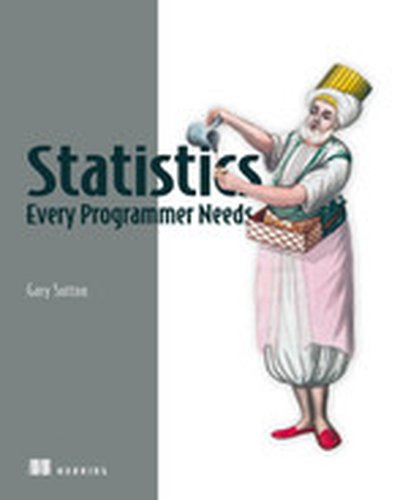
Put statistics into practice with Python! Data-driven decisions rely on statistics. Statistics Every Programmer Needs introduces the statistical and quantitative methods that will help you go beyond “gut feeling” for tasks like predicting stock prices or assessing quality control, with examples using the rich tools of the Python ecosystem. Statistics Every Programmer Needs will teach you how to: Apply foundational and advanced statistical techniques Build predictive models and simulations Optimize decisions under constraints Interpret and validate results with statistical rigor Implement quantitative methods using Python In this hands-on guide, stats expert Gary Sutton blends the theory behind these statistical techniques with practical Python-based applications, offering structured, reproducible, and defensible methods for tackling complex decisions. Well-annotated and reusable Python code listings illustrate each method, with examples you can follow to practice your new skills. About the Technology Whether you’re analyzing application performance metrics, creating relevant dashboards and reports, or immersing yourself in a numbers-heavy coding project, every programmer needs to know how to turn raw data into actionable insight. Statistics and quantitative analysis are the essential tools every programmer needs to clarify uncertainty, optimize outcomes, and make informed choices. About the Book Statistics Every Programmer Needs teaches you how to apply statistics to the everyday problems you’ll face as a software developer. Each chapter is a new tutorial. You’ll predict ultramarathon times using linear regression, forecast stock prices with time series models, analyze system reliability using Markov chains, and much more. The book emphasizes a balance between theory and hands-on Python implementation, with annotated code and real-world examples to ensure practical understanding and adaptability across industries. What's Inside Probability basics and distributions Random variables Regression Decision trees and random forests Time series analysis Linear programming Monte Carlo and Markov methods and much more About the Reader Examples are in Python. About the Author Gary Sutton is a business intelligence and analytics leader and the author of Statistics Slam Dunk: Statistical analysis with R on real NBA data. Quotes A well-organized tour of the statistical, machine learning and optimization tools every data science programmer needs. - Peter Bruce, Author of Statistics for Data Science and Analytics Turns statistics from a stumbling block into a superpower. Clear, relevant, and written with a coder’s mindset! - Mahima Bansod, LogicMonitor Essential! Stats and modeling with an emphasis on real-world system design. - Anupam Samanta, Google A great blend of theory and practice. - Ariel Andres, Scotia Global Asset Management
Healthcare AI is rapidly evolving beyond simple diagnostic tools to comprehensive systems that can analyze and predict patient outcomes. With the rise of multimodal AI models that can process everything from medical images to patient records and genetic information, we're entering an era where AI could fundamentally transform how healthcare decisions are made. But how do we ensure these systems maintain patient privacy while still leveraging vast amounts of medical data? What are the technical challenges in building AI that can reason across different types of medical information? And how do we balance the promise of AI-assisted healthcare with the critical role of human medical professionals? Professor Aldo Faisal is Chair in AI & Neuroscience at Imperial College London, with joint appointments in Bioengineering and Computing, and also holds the Chair in Digital Health at the University of Bayreuth. He is the Founding Director of the UKRI Centre for Doctoral Training in AI for Healthcare and leads the Brain & Behaviour Lab and Behaviour Analytics Lab at Imperial’s Data Science Institute. His research integrates machine learning, neuroscience, and human behaviour to develop AI technologies for healthcare. He is among the few engineers globally leading their own clinical trials, with work focused on digital biomarkers and AI-based medical interventions. Aldo serves as Associate Editor for Nature Scientific Data and PLOS Computational Biology, and has chaired major conferences like KDD, NIPS, and IEEE BSN. His work has earned multiple awards, including the $50,000 Toyota Mobility Foundation Prize, and is regularly featured in global media outlets. In the episode, Richie and Aldo explore the advancements in AI for healthcare, including AI's role in diagnostics and operational improvements, the ambitious Nightingale AI project, challenges in handling diverse medical data, privacy concerns, and the future of AI-assisted medical decision-making, and much more. Links Mentioned in the Show: Aldo’s PublicationsConnect with AldoProject: What is Your Heart Rate Telling You?Related Episode: Using Data to Optimize Costs in Healthcare with Travis Dalton and Jocelyn Jiang President/CEO & VP of Data & Decision Science at MultiPlanRewatch RADAR AI New to DataCamp? Learn on the go using the DataCamp mobile appEmpower your business with world-class data and AI skills with DataCamp for business
Au programme : Présentation détaillée des formations : Développement Web, Data Analyse, Data Science, Growth.
Due to popular demand, Anton is back with more Scala Native! He'll be taking us on a journey of working with C libraries, marrying C code with SN interop, and maybe writing some assembly.
⭐ Anton Sviridov ⭐ Scala enthusiast, open source contributor, and blog author. Worked in Data Science, distributed systems, and programming language tooling. Recently I have been diving deeper into systems programming languages and the lessons we can learn from them to be applicable to Scala Native.
Info session about LLM Mini Bootcamp; join to ask questions and receive a discount coupon.
Info session about LLM Mini Bootcamp.
Information session to discuss Magnimind Academy's Mentor-Led Data Science Internship Program, including program details and opportunities; led by Dr. Murat Baday and Dr. Yasin Ceran.
Information session about Magnimind Academy's mentor-led data science internship program.
Recent breakthroughs in large language model-based artificial intelligence (AI) have captured the public’s interest in AI more broadly. With the growing adoption of these technologies in professional and educational settings, public dialog about their potential impacts on the workforce has been ubiquitous. It is, however, difficult to separate the public dialog about the potential impact of the technology from the experienced impact of the technology in the research software engineer and data science workplace. Likewise, it is challenging to separate the generalized anxiety about AI from its specific impacts on individuals working in specialized work settings.
As research software engineers (RSEs) and those in adjacent computational fields engage with AI in the workplace, the realities of the impacts of this technology are becoming clearer. However, much of the dialog has been limited to high-level discussion around general intra-institutional impacts, and lacks the nuance required to provide helpful guidance to RSE practitioners in research settings, specifically. Surprisingly, many RSEs are not involved in career discussions on what the rise of AI means for their professions.
During this BoF, we will hold a structured, interactive discussion session with the goal of identifying critical areas of engagement with AI in the workplace including: current use of AI, AI assistance and automation, AI skills and workforce development, AI and open science, and AI futures. This BoF will represent the first of a series of discussions held jointly by the Academic Data Science Alliance and the US Research Software Engineer Association over the coming year, with support from Schmidt Sciences. The insights gathered from these sessions will inform the development of guidance resources on these topic areas for the broader RSE and computational data practitioner communities.
Working with data in grids or spreadsheets is great for collaboration as there are many different tools to view and edit the files. Data science workflows often include packages like openpyxl to create, load, edit, and export spreadsheets that then are shared with others who can use other tools like Excel, Google Sheets, or IDEs to view them. The new Python in Excel feature as well as the Anaconda Toolbox add-in provides the tools to run Python directly in cells in a spreadsheet, making it easier for Pythonistas to access and collaborate on code. This talk will introduce how these features work, demo collaborating on Python code in a worksheet, and talk about some case studies where these tools have been used to teach and collaborate with Python.
Women remain critically underrepresented in data science and Python communities, comprising only 15–22% of professionals globally and less than 3% of contributors to Python open-source projects. This disparity not only limits diversity but also represents a missed opportunity for innovation and community growth. This talk explores actionable strategies to address these gaps, drawing from my leadership in Women in AI at IBM, TechWomen mentorship, and initiatives with NumFOCUS. Attendees will gain insights and practical steps to create inclusive environments, foster diverse collaboration, and ensure the scientific Python community thrives by unlocking its full potential.
NVIDIA’s CUDA platform has long been the backbone of high-performance GPU computing, but its power has historically been gated behind C and C++ expertise. With the recent introduction of native Python support, CUDA is more accessible to the programming language you know and love, ushering in a new era for scientific computing, data science, and AI development.
This talk explores various methods to accelerate traditional machine learning pipelines using scikit-learn, UMAP, and HDBSCAN on GPUs. We will contrast the experimental Array API Standard support layer in scikit-learn with the cuML library from the NVIDIA RAPIDS Data Science stack, including its zero-code change acceleration capability. ML and data science practitioners will learn how to seamlessly accelerate machine learning workflows, highlight performance benefits, and receive practical guidance for different problem types and sizes. Insights into minimizing cost and runtime by effectively mixing hardware for various tasks, as well as the current implementation status and future plans for these acceleration methods, will be provided.
Block-based programming divides inputs into local arrays that are processed concurrently by groups of threads. Users write sequential array-centric code, and the framework handles parallelization, synchronization, and data movement behind the scenes. This approach aligns well with SciPy's array-centric ethos and has roots in older HPC libraries, such as NWChem’s TCE, BLIS, and ATLAS.
In recent years, many block-based Python programming models for GPUs have emerged, like Triton, JAX/Pallas, and Warp, aiming to make parallelism more accessible for scientists and increase portability.
In this talk, we'll present cuTile and Tile IR, a new Pythonic tile-based programming model and compiler recently announced by NVIDIA. We'll explore cuTile examples from a variety of domains, including a new LLAMA3-based reference app and a port of miniWeather. You'll learn the best practices for writing and debugging block-based Python GPU code, gain insight into how such code performs, and learn how it differs from traditional SIMT programming.
By the end of the session, you'll understand how block-based GPU programming enables more intuitive, portable, and efficient development of high-performance, data-parallel Python applications for HPC, data science, and machine learning.
by
Joe Cheng
LLMs are powerful, flexible, easy-to-use... and often wrong. This is a dangerous combination, especially for data analysis and scientific research, where correctness and reproducibility are core requirements. Fortunately, it turns out that by carefully applying LLMs to narrower use cases, we can turn them into surprisingly reliable assistants that accelerate and enhance, rather than undermine, scientific work.
This is not just theory—I’ll showcase working examples of seamlessly integrating LLMs into analytic workflows, helping data scientists build interactive, intelligent applications without needing to be web developers. You’ll see firsthand how keeping LLMs focused lets us leverage their "intelligence" in a way that’s practical, rigorous, and reproducible.
The practice of data science in genomics and computational biology is fraught with friction. This is largely due to a tight coupling of bioinformatic tools to file input/output. While omic data is specialized and the storage formats for high-throughput sequencing and related data are often standardized, the adoption of emerging open standards not tied to bioinformatics can help better integrate bioinformatic workflows into the wider data science, visualization, and AI/ML ecosystems. Here, we present two bridge libraries as short vignettes for composable bioinformatics. First, we present Anywidget, an architecture and toolkit based on modern web standards for sharing interactive widgets across all Jupyter-compatible runtimes, including JupyterLab, Google Colab, VSCode, and more. Second, we present Oxbow, a Rust and Python-based adapter library that unifies access to common genomic data formats by efficiently transforming queries into Apache Arrow, a standard in-memory columnar representation for tabular data analytics. Together, we demonstrate the composition of these libraries to build a custom connected genomic analysis and visualization environments. We propose that components such as these, which leverage scientific domain-agnostic standards to unbundle specialized file manipulation, analytics, and web interactivity, can serve as reusable building blocks for composing flexible genomic data analysis and machine learning workflows as well as systems for exploratory data analysis and visualization.
by
Kevin Lee
As data science continues to evolve, the ever-growing size of datasets poses significant computational challenges. Traditional CPU-based processing often struggles to keep pace with the demands of data science workflows. Accelerated computing with GPUs offers a solution by enabling massive parallelism and significantly reducing processing times for data-heavy tasks. In this session, we will explore GPU computing architecture, how it differs from CPUs, and why it is particularly well-suited for data science workloads. This hands-on lab will dive into the different approaches to GPU programming, from low-level CUDA coding to high-level Python libraries within RAPIDS such as, CuPy, cuDF, cuGraph, and cuML.