
talk-data.com talk-data.com

Topic

DWH

Data Warehouse

analytics business_intelligence data_storage

128

tagged

Activity Trend

35 peak/qtr
2020-Q1 2026-Q1

Activities

Showing filtered results

Filtering by: Tobias Macey ×

Summary Collecting and cleaning data is only useful if someone can make sense of it afterward. The latest evolution in the data ecosystem is the introduction of a dedicated metrics layer to help address the challenge of adding context and semantics to raw information. In this episode Nick Handel shares the story behind Transform, a new platform that provides a managed metrics layer for your data platform. He explains the challenges that occur when metrics are maintained across a variety of systems, the benefits of unifying them in a common access layer, and the potential that it unlocks for everyone in the business to confidently answer questions with data.

Announcements

Hello and welcome to the Data Engineering Podcast, the show about modern data management You listen to this show to learn about all of the latest tools, patterns, and practices that power data engineering projects across every domain. Now there’s a book that captures the foundational lessons and principles that underly everything that you hear about here. I’m happy to announce I collected wisdom from the community to help you in your journey as a data engineer and worked with O’Reilly to publish it as 97 Things Every Data Engineer Should Know. Go to dataengineeringpodcast.com/97things today to get your copy! When you’re ready to build your next pipeline, or want to test out the projects you hear about on the show, you’ll need somewhere to deploy it, so check out our friends at Linode. With their managed Kubernetes platform it’s now even easier to deploy and scale your workflows, or try out the latest Helm charts from tools like Pulsar and Pachyderm. With simple pricing, fast networking, object storage, and worldwide data centers, you’ve got everything you need to run a bulletproof data platform. Go to dataengineeringpodcast.com/linode today and get a $100 credit to try out a Kubernetes cluster of your own. And don’t forget to thank them for their continued support of this show! Are you bored with writing scripts to move data into SaaS tools like Salesforce, Marketo, or Facebook Ads? Hightouch is the easiest way to sync data into the platforms that your business teams rely on. The data you’re looking for is already in your data warehouse and BI tools. Connect your warehouse to Hightouch, paste a SQL query, and use their visual mapper to specify how data should appear in your SaaS systems. No more scripts, just SQL. Supercharge your business teams with customer data using Hightouch for Reverse ETL today. Get started for free at dataengineeringpodcast.com/hightouch. Atlan is a collaborative workspace for data-driven teams, like Github for engineering or Figma for design teams. By acting as a virtual hub for data assets ranging from tables and dashboards to SQL snippets & code, Atlan enables teams to create a single source of truth for all their data assets, and collaborate across the modern data stack through deep integrations with tools like Snowflake, Slack, Looker and more. Go to dataengineeringpodcast.com/atlan today and sign up for a free trial. If you’re a data engineering podcast listener, you get credits worth $3000 on an annual subscription Your host is Tobias Macey and today I’m interviewing Nick Handel about Transform, a platform providing a dedicated metrics layer for your data stack

Interview

Introduction How did you get involved in the area of data management? Can you describe what Transform is and the story behind it? How do you define the concept of a "metric" in the context of the data platform? What are the general strategies in the industry for creating, managing, and consuming metrics?

How has that been changing in the past couple of years?

What is driving that shift?

What are the main goals that you have for the Transform platform?

Who are the target users? How does that focus influence your approach to the design of the platform?

How is the Transform platform architected?

What are the core capabilities tha
Summary Data quality is a concern that has been gaining attention alongside the rising importance of analytics for business success. Many solutions rely on hand-coded rules for catching known bugs, or statistical analysis of records to detect anomalies retroactively. While those are useful tools, it is far better to prevent data errors before they become an outsized issue. In this episode Gleb Mezhanskiy shares some strategies for adding quality checks at every stage of your development and deployment workflow to identify and fix problematic changes to your data before they get to production.

Announcements

Hello and welcome to the Data Engineering Podcast, the show about modern data management You listen to this show to learn about all of the latest tools, patterns, and practices that power data engineering projects across every domain. Now there’s a book that captures the foundational lessons and principles that underly everything that you hear about here. I’m happy to announce I collected wisdom from the community to help you in your journey as a data engineer and worked with O’Reilly to publish it as 97 Things Every Data Engineer Should Know. Go to dataengineeringpodcast.com/97things today to get your copy! When you’re ready to build your next pipeline, or want to test out the projects you hear about on the show, you’ll need somewhere to deploy it, so check out our friends at Linode. With their managed Kubernetes platform it’s now even easier to deploy and scale your workflows, or try out the latest Helm charts from tools like Pulsar and Pachyderm. With simple pricing, fast networking, object storage, and worldwide data centers, you’ve got everything you need to run a bulletproof data platform. Go to dataengineeringpodcast.com/linode today and get a $100 credit to try out a Kubernetes cluster of your own. And don’t forget to thank them for their continued support of this show! RudderStack’s smart customer data pipeline is warehouse-first. It builds your customer data warehouse and your identity graph on your data warehouse, with support for Snowflake, Google BigQuery, Amazon Redshift, and more. Their SDKs and plugins make event streaming easy, and their integrations with cloud applications like Salesforce and ZenDesk help you go beyond event streaming. With RudderStack you can use all of your customer data to answer more difficult questions and then send those insights to your whole customer data stack. Sign up free at dataengineeringpodcast.com/rudder today. We’ve all been asked to help with an ad-hoc request for data by the sales and marketing team. Then it becomes a critical report that they need updated every week or every day. Then what do you do? Send a CSV via email? Write some Python scripts to automate it? But what about incremental sync, API quotas, error handling, and all of the other details that eat up your time? Today, there is a better way. With Census, just write SQL or plug in your dbt models and start syncing your cloud warehouse to SaaS applications like Salesforce, Marketo, Hubspot, and many more. Go to dataengineeringpodcast.com/census today to get a free 14-day trial. Your host is Tobias Macey and today I’m interviewing Gleb Mezhanskiy about strategies for proactive data quality management and his work at Datafold to help provide tools for implementing them

Interview

Introduction How did you get involved in the area of data management? Can you describe what you are building at Datafold and the story behind it? What are the biggest factors that you see contributing to data quality issues?

How are teams identifying and addressing those failures?

How does the data platform architecture impact the potential for introducing quality problems? What are some of the potential risks or consequences of introducing errors in data processing? How can organizations shift to being proactive in their data quality management?

How much of a role does tooling play in addressing the introduct

Summary There is a wealth of tools and systems available for processing data, but the user experience of integrating them and building workflows is still lacking. This is particularly important in large and complex organizations where domain knowledge and context is paramount and there may not be access to engineers for codifying that expertise. Raj Bains founded Prophecy to address this need by creating a UI first platform for building and executing data engineering workflows that orchestrates Airflow and Spark. Rather than locking your business logic into a proprietary storage layer and only exposing it through a drag-and-drop editor Prophecy synchronizes all of your jobs with source control, allowing an easy bi-directional interaction between code first and no-code experiences. In this episode he shares his motivations for creating Prophecy, how he is leveraging the magic of compilers to translate between UI and code oriented representations of logic, and the organizational benefits of having a cohesive experience designed to bring business users and domain experts into the same platform as data engineers and analysts.

Announcements

Hello and welcome to the Data Engineering Podcast, the show about modern data management You listen to this show to learn about all of the latest tools, patterns, and practices that power data engineering projects across every domain. Now there’s a book that captures the foundational lessons and principles that underly everything that you hear about here. I’m happy to announce I collected wisdom from the community to help you in your journey as a data engineer and worked with O’Reilly to publish it as 97 Things Every Data Engineer Should Know. Go to dataengineeringpodcast.com/97things today to get your copy! When you’re ready to build your next pipeline, or want to test out the projects you hear about on the show, you’ll need somewhere to deploy it, so check out our friends at Linode. With their managed Kubernetes platform it’s now even easier to deploy and scale your workflows, or try out the latest Helm charts from tools like Pulsar and Pachyderm. With simple pricing, fast networking, object storage, and worldwide data centers, you’ve got everything you need to run a bulletproof data platform. Go to dataengineeringpodcast.com/linode today and get a $100 credit to try out a Kubernetes cluster of your own. And don’t forget to thank them for their continued support of this show! Are you bored with writing scripts to move data into SaaS tools like Salesforce, Marketo, or Facebook Ads? Hightouch is the easiest way to sync data into the platforms that your business teams rely on. The data you’re looking for is already in your data warehouse and BI tools. Connect your warehouse to Hightouch, paste a SQL query, and use their visual mapper to specify how data should appear in your SaaS systems. No more scripts, just SQL. Supercharge your business teams with customer data using Hightouch for Reverse ETL today. Get started for free at dataengineeringpodcast.com/hightouch. Atlan is a collaborative workspace for data-driven teams, like Github for engineering or Figma for design teams. By acting as a virtual hub for data assets ranging from tables and dashboards to SQL snippets & code, Atlan enables teams to create a single source of truth for all their data assets, and collaborate across the modern data stack through deep integrations with tools like Snowflake, Slack, Looker and more. Go to dataengineeringpodcast.com/atlan today and sign up for a free trial. If you’re a data engineering podcast listener, you get credits worth $3000 on an annual subscription Your host is Tobias Macey and today I’m interviewing Raj Bains about Prophecy, a low-code data engineering platform built on Spark and Airflow

Interview

Introduction How did you get involved in the area of data management? Can you describe what you are building at Prophecy and the story behind it? There are a huge number of too

Summary We have been building platforms and workflows to store, process, and analyze data since the earliest days of computing. Over that time there have been countless architectures, patterns, and "best practices" to make that task manageable. With the growing popularity of cloud services a new pattern has emerged and been dubbed the "Modern Data Stack". In this episode members of the GoDataDriven team, Guillermo Sanchez, Bram Ochsendorf, and Juan Perafan, explain the combinations of services that comprise this architecture, share their experiences working with clients to employ the stack, and the benefits of bringing engineers and business users together with data.

Announcements

Hello and welcome to the Data Engineering Podcast, the show about modern data management You listen to this show to learn about all of the latest tools, patterns, and practices that power data engineering projects across every domain. Now there’s a book that captures the foundational lessons and principles that underly everything that you hear about here. I’m happy to announce I collected wisdom from the community to help you in your journey as a data engineer and worked with O’Reilly to publish it as 97 Things Every Data Engineer Should Know. Go to dataengineeringpodcast.com/97things today to get your copy! When you’re ready to build your next pipeline, or want to test out the projects you hear about on the show, you’ll need somewhere to deploy it, so check out our friends at Linode. With their managed Kubernetes platform it’s now even easier to deploy and scale your workflows, or try out the latest Helm charts from tools like Pulsar and Pachyderm. With simple pricing, fast networking, object storage, and worldwide data centers, you’ve got everything you need to run a bulletproof data platform. Go to dataengineeringpodcast.com/linode today and get a $100 credit to try out a Kubernetes cluster of your own. And don’t forget to thank them for their continued support of this show! RudderStack’s smart customer data pipeline is warehouse-first. It builds your customer data warehouse and your identity graph on your data warehouse, with support for Snowflake, Google BigQuery, Amazon Redshift, and more. Their SDKs and plugins make event streaming easy, and their integrations with cloud applications like Salesforce and ZenDesk help you go beyond event streaming. With RudderStack you can use all of your customer data to answer more difficult questions and then send those insights to your whole customer data stack. Sign up free at dataengineeringpodcast.com/rudder today. We’ve all been asked to help with an ad-hoc request for data by the sales and marketing team. Then it becomes a critical report that they need updated every week or every day. Then what do you do? Send a CSV via email? Write some Python scripts to automate it? But what about incremental sync, API quotas, error handling, and all of the other details that eat up your time? Today, there is a better way. With Census, just write SQL or plug in your dbt models and start syncing your cloud warehouse to SaaS applications like Salesforce, Marketo, Hubspot, and many more. Go to dataengineeringpodcast.com/census today to get a free 14-day trial. Your host is Tobias Macey and today I’m interviewing Guillermo Sanchez, Bram Ochsendorf, and Juan Perafan about their experiences with managed services in the modern data stack in their work as consultants at GoDataDriven

Interview

Introduction How did you get involved in the area of data management? Can you start by giving your definition of the modern data stack?

What are the key characteristics of a tool or platform that make it a candidate for the "modern" stack?

How does the modern data stack shift the responsibilities and capabilities of data professionals and consumers? What are some difficulties that you face when working with customers to migrate to these new architectures? What are some of the limitations of the components or

Summary Every data project, whether it’s analytics, machine learning, or AI, starts with the work of data cleaning. This is a critical step and benefits from being accessible to the domain experts. Trifacta is a platform for managing your data engineering workflow to make curating, cleaning, and preparing your information more approachable for everyone in the business. In this episode CEO Adam Wilson shares the story behind the business, discusses the myriad ways that data wrangling is performed across the business, and how the platform is architected to adapt to the ever-changing landscape of data management tools. This is a great conversation about how deliberate user experience and platform design can make a drastic difference in the amount of value that a business can provide to their customers.

Announcements

Hello and welcome to the Data Engineering Podcast, the show about modern data management You listen to this show to learn about all of the latest tools, patterns, and practices that power data engineering projects across every domain. Now there’s a book that captures the foundational lessons and principles that underly everything that you hear about here. I’m happy to announce I collected wisdom from the community to help you in your journey as a data engineer and worked with O’Reilly to publish it as 97 Things Every Data Engineer Should Know. Go to dataengineeringpodcast.com/97things today to get your copy! When you’re ready to build your next pipeline, or want to test out the projects you hear about on the show, you’ll need somewhere to deploy it, so check out our friends at Linode. With their managed Kubernetes platform it’s now even easier to deploy and scale your workflows, or try out the latest Helm charts from tools like Pulsar and Pachyderm. With simple pricing, fast networking, object storage, and worldwide data centers, you’ve got everything you need to run a bulletproof data platform. Go to dataengineeringpodcast.com/linode today and get a $100 credit to try out a Kubernetes cluster of your own. And don’t forget to thank them for their continued support of this show! Are you bored with writing scripts to move data into SaaS tools like Salesforce, Marketo, or Facebook Ads? Hightouch is the easiest way to sync data into the platforms that your business teams rely on. The data you’re looking for is already in your data warehouse and BI tools. Connect your warehouse to Hightouch, paste a SQL query, and use their visual mapper to specify how data should appear in your SaaS systems. No more scripts, just SQL. Supercharge your business teams with customer data using Hightouch for Reverse ETL today. Get started for free at dataengineeringpodcast.com/hightouch. Atlan is a collaborative workspace for data-driven teams, like Github for engineering or Figma for design teams. By acting as a virtual hub for data assets ranging from tables and dashboards to SQL snippets & code, Atlan enables teams to create a single source of truth for all their data assets, and collaborate across the modern data stack through deep integrations with tools like Snowflake, Slack, Looker and more. Go to dataengineeringpodcast.com/atlan today and sign up for a free trial. If you’re a data engineering podcast listener, you get credits worth $3000 on an annual subscription Your host is Tobias Macey and today I’m interviewing Adam Wilson about Trifacta, a platform for modern data workers to assess quality, transform, and automate data pipelines

Interview

Introduction How did you get involved in the area of data management? Can you describe what Trifacta is and the story behind it? Across your site and material you focus on using the term "data wrangling". What is your personal definition of that term, and in what ways do you differentiate from ETL/ELT?

How does the deliberate use of that terminology influence the way that you think about the design and features of the Trifacta platform?

What is Trifacta’s role in the overall data platform/data lifecycle for an organization?

What are some examples of tools that Trifacta might replace? What tools or systems does Trifacta integrate with?

Who are the target end-users of the Trifacta platform and how do those personas direct the design and functionality? Can you describe how Trifacta is architected?

How have the goals and design of the system changed or evolved since you first began working on it?

Can you talk through the workflow and lifecycle of data as it traverses your platform, and the user interactions that drive it? How can data engineers share and encourage proper patterns for working with data assets with end-users across the organization? What are the limits of scale for volume and complexity of data assets that users are able to manage through Trifacta’s visual tools?

What are some strategies that you and your customers have found useful for pre-processing the information that enters your platform to increase the accessibility for end-users to self-serve?

What are the most interesting, innovative, or unexpected ways that you have seen Trifacta used? What are the most interesting, unexpected, or challenging lessons that you have learned while working on Trifacata? When is Trifacta the wrong choice? What do you have planned for the future of Trifacta?

Contact Info

LinkedIn @a_adam_wilson on Twitter

Parting Question

From your perspective, what is the biggest gap in the tooling or technology for data management today?

Closing Announcements

Thank you for listening! Don’t forget to check out our other show, Podcast.init to learn about the Python language, its community, and the innovative ways it is being used. Visit the site to subscribe to the show, sign up for the mailing list, and read the show notes. If you’ve learned something or tried out a project from the show then tell us about it! Email [email protected]) with your story. To help other people find the show please leave a review on iTunes and tell your friends and co-workers Join the community in the new Zulip chat workspace at dataengineeringpodcast.com/chat

Links

Trifacta Informatica UC Berkeley Stanford University Citadel

Podcast Episode

Stanford Data Wrangler DBT

Podcast Episode

Pig Databricks Sqoop Flume SPSS Tableau SDLC == Software Delivery Life-Cycle

The intro and outro music is from The Hug by The Freak Fandango Orchestra / CC BY-SA

Support Data Engineering Podcast

Summary At the core of every data pipeline is an workflow manager (or several). Deploying, managing, and scaling that orchestration can consume a large fraction of a data team’s energy so it is important to pick something that provides the power and flexibility that you need. SaaSGlue is a managed service that lets you connect all of your systems, across clouds and physical infrastructure, and spanning all of your programming languages. In this episode Bart and Rich Wood explain how SaaSGlue is architected to allow for a high degree of flexibility in usage and deployment, their experience building a business with family, and how you can get started using it today. This is a fascinating platform with an endless set of use cases and a great team of people behind it.

Announcements

Hello and welcome to the Data Engineering Podcast, the show about modern data management When you’re ready to build your next pipeline, or want to test out the projects you hear about on the show, you’ll need somewhere to deploy it, so check out our friends at Linode. With their managed Kubernetes platform it’s now even easier to deploy and scale your workflows, or try out the latest Helm charts from tools like Pulsar and Pachyderm. With simple pricing, fast networking, object storage, and worldwide data centers, you’ve got everything you need to run a bulletproof data platform. Go to dataengineeringpodcast.com/linode today and get a $100 credit to try out a Kubernetes cluster of your own. And don’t forget to thank them for their continued support of this show! RudderStack’s smart customer data pipeline is warehouse-first. It builds your customer data warehouse and your identity graph on your data warehouse, with support for Snowflake, Google BigQuery, Amazon Redshift, and more. Their SDKs and plugins make event streaming easy, and their integrations with cloud applications like Salesforce and ZenDesk help you go beyond event streaming. With RudderStack you can use all of your customer data to answer more difficult questions and then send those insights to your whole customer data stack. Sign up free at dataengineeringpodcast.com/rudder today. We’ve all been asked to help with an ad-hoc request for data by the sales and marketing team. Then it becomes a critical report that they need updated every week or every day. Then what do you do? Send a CSV via email? Write some Python scripts to automate it? But what about incremental sync, API quotas, error handling, and all of the other details that eat up your time? Today, there is a better way. With Census, just write SQL or plug in your dbt models and start syncing your cloud warehouse to SaaS applications like Salesforce, Marketo, Hubspot, and many more. Go to dataengineeringpodcast.com/census today to get a free 14-day trial. Your host is Tobias Macey and today I’m interviewing Rich and Bart Wood about SaasGlue, a SaaS-based integration, orchestration and automation platform that lets you fill the gaps in your existing automation infrastructure

Interview

Introduction How did you get involved in the area of data management? Can you describe what SaasGlue is and the story behind it?

I understand that you are building this company with your 3 brothers. What have been the pros and cons of working with your family on this project?

What are the main use cases that you are focused on enabling?

Who are your target users and how has that influenced the features and design of the platform?

Orchestration, automation, and workflow management are all areas that have a range of active products and projects. How do you characterize SaaSGlue’s position in the overall ecosystem?

What are some of the ways that you see it integrated into a data platform?

What are the core elements and concepts of the SaaSGlue platform? How is the SaaSGlue platform architected?

How have the goals and design of the platform changed or evolved since you first began working on it? What are some of the assumptio

Summary Data integration in the form of extract and load is the critical first step of every data project. There are a large number of commercial and open source projects that offer that capability but it is still far from being a solved problem. One of the most promising community efforts is that of the Singer ecosystem, but it has been plagued by inconsistent quality and design of plugins. In this episode the members of the Meltano project share the work they are doing to improve the discovery, quality, and capabilities of Singer taps and targets. They explain their work on the Meltano Hub and the Singer SDK and their long term goals for the Singer community.

Announcements

Hello and welcome to the Data Engineering Podcast, the show about modern data management When you’re ready to build your next pipeline, or want to test out the projects you hear about on the show, you’ll need somewhere to deploy it, so check out our friends at Linode. With their managed Kubernetes platform it’s now even easier to deploy and scale your workflows, or try out the latest Helm charts from tools like Pulsar and Pachyderm. With simple pricing, fast networking, object storage, and worldwide data centers, you’ve got everything you need to run a bulletproof data platform. Go to dataengineeringpodcast.com/linode today and get a $100 credit to try out a Kubernetes cluster of your own. And don’t forget to thank them for their continued support of this show! Are you bored with writing scripts to move data into SaaS tools like Salesforce, Marketo, or Facebook Ads? Hightouch is the easiest way to sync data into the platforms that your business teams rely on. The data you’re looking for is already in your data warehouse and BI tools. Connect your warehouse to Hightouch, paste a SQL query, and use their visual mapper to specify how data should appear in your SaaS systems. No more scripts, just SQL. Supercharge your business teams with customer data using Hightouch for Reverse ETL today. Get started for free at dataengineeringpodcast.com/hightouch. Atlan is a collaborative workspace for data-driven teams, like Github for engineering or Figma for design teams. By acting as a virtual hub for data assets ranging from tables and dashboards to SQL snippets & code, Atlan enables teams to create a single source of truth for all their data assets, and collaborate across the modern data stack through deep integrations with tools like Snowflake, Slack, Looker and more. Go to dataengineeringpodcast.com/atlan today and sign up for a free trial. If you’re a data engineering podcast listener, you get credits worth $3000 on an annual subscription Your host is Tobias Macey and today I’m interviewing Douwe Maan, Taylor Murphy, and AJ Steers about their work to level up the Singer ecosystem through projects like Meltano Hub and the Singer SDK

Interview

Introduction How did you get involved in the area of data management? Can you start by describing what the Singer ecosystem is? What are the current weak points/challenges in the ecosystem? What is the current role of the Meltano project/community within the ecosystem?

What are the projects and activities related to Singer that you are focused on?

What are the main goals of the Meltano Hub?

What criteria are you using to determine which projects to include in the hub? Why is the number of targets so small? What additional functionality do you have planned for the hub?

What functionality does the SDK provide?

How does the presence of the SDK make it easier to write taps/targets? What do you believe the long-term impacts of the SDK on the overall availability and quality of plugins will be?

Now that you have spun out your own business and raised funding, how does that influence the priorities and focus of your work?

How do you hope to productize what you have built at Meltano?

What are the most interesting, innovative, or unexpected ways that you have seen Meltano and Singer plugins used? What are

Summary While the overall concept of timeseries data is uniform, its usage and applications are far from it. One of the most demanding applications of timeseries data is for application and server monitoring due to the problem of high cardinality. In his quest to build a generalized platform for managing timeseries Paul Dix keeps getting pulled back into the monitoring arena. In this episode he shares the history of the InfluxDB project, the business that he has helped to build around it, and the architectural aspects of the engine that allow for its flexibility in managing various forms of timeseries data. This is a fascinating exploration of the technical and organizational evolution of the Influx Data platform, with some promising glimpses of where they are headed in the near future.

Announcements

Hello and welcome to the Data Engineering Podcast, the show about modern data management When you’re ready to build your next pipeline, or want to test out the projects you hear about on the show, you’ll need somewhere to deploy it, so check out our friends at Linode. With their managed Kubernetes platform it’s now even easier to deploy and scale your workflows, or try out the latest Helm charts from tools like Pulsar and Pachyderm. With simple pricing, fast networking, object storage, and worldwide data centers, you’ve got everything you need to run a bulletproof data platform. Go to dataengineeringpodcast.com/linode today and get a $100 credit to try out a Kubernetes cluster of your own. And don’t forget to thank them for their continued support of this show! RudderStack’s smart customer data pipeline is warehouse-first. It builds your customer data warehouse and your identity graph on your data warehouse, with support for Snowflake, Google BigQuery, Amazon Redshift, and more. Their SDKs and plugins make event streaming easy, and their integrations with cloud applications like Salesforce and ZenDesk help you go beyond event streaming. With RudderStack you can use all of your customer data to answer more difficult questions and then send those insights to your whole customer data stack. Sign up free at dataengineeringpodcast.com/rudder today. We’ve all been asked to help with an ad-hoc request for data by the sales and marketing team. Then it becomes a critical report that they need updated every week or every day. Then what do you do? Send a CSV via email? Write some Python scripts to automate it? But what about incremental sync, API quotas, error handling, and all of the other details that eat up your time? Today, there is a better way. With Census, just write SQL or plug in your dbt models and start syncing your cloud warehouse to SaaS applications like Salesforce, Marketo, Hubspot, and many more. Go to dataengineeringpodcast.com/census today to get a free 14-day trial. Your host is Tobias Macey and today I’m interviewing Paul Dix about Influx Data and the different facets of the market for timeseries databases

Interview

Introduction How did you get involved in the area of data management? Can you describe what you are building at Influx Data and the story behind it? Timeseries data is a fairly broad category with many variations in terms of storage volume, frequency, processing requirements, etc. This has led to an explosion of database engines and related tools to address these different needs. How do you think about your position and role in the ecosystem?

Who are your target customers and how does that focus inform your product and feature priorities? What are the use cases that Influx is best suited for?

Can you give an overview of the different projects, tools, and services that comprise your platform? How is InfluxDB architected?

How have the design and implementation of the DB engine changed or evolved since you first began working on it? What are you optimizing for on the consistency vs. availability spectrum of CAP? What is your approach to clustering/data distribution beyond a single node?

Summary Data Engineering is a broad and constantly evolving topic, which makes it difficult to teach in a concise and effective manner. Despite that, Daniel Molnar and Peter Fabian started the Pipeline Academy to do exactly that. In this episode they reflect on the lessons that they learned while teaching the first cohort of their bootcamp how to be effective data engineers. By focusing on the fundamentals, and making everyone write code, they were able to build confidence and impart the importance of context for their students.

Announcements

Hello and welcome to the Data Engineering Podcast, the show about modern data management When you’re ready to build your next pipeline, or want to test out the projects you hear about on the show, you’ll need somewhere to deploy it, so check out our friends at Linode. With their managed Kubernetes platform it’s now even easier to deploy and scale your workflows, or try out the latest Helm charts from tools like Pulsar and Pachyderm. With simple pricing, fast networking, object storage, and worldwide data centers, you’ve got everything you need to run a bulletproof data platform. Go to dataengineeringpodcast.com/linode today and get a $100 credit to try out a Kubernetes cluster of your own. And don’t forget to thank them for their continued support of this show! Are you bored with writing scripts to move data into SaaS tools like Salesforce, Marketo, or Facebook Ads? Hightouch is the easiest way to sync data into the platforms that your business teams rely on. The data you’re looking for is already in your data warehouse and BI tools. Connect your warehouse to Hightouch, paste a SQL query, and use their visual mapper to specify how data should appear in your SaaS systems. No more scripts, just SQL. Supercharge your business teams with customer data using Hightouch for Reverse ETL today. Get started for free at dataengineeringpodcast.com/hightouch. Atlan is a collaborative workspace for data-driven teams, like Github for engineering or Figma for design teams. By acting as a virtual hub for data assets ranging from tables and dashboards to SQL snippets & code, Atlan enables teams to create a single source of truth for all their data assets, and collaborate across the modern data stack through deep integrations with tools like Snowflake, Slack, Looker and more. Go to dataengineeringpodcast.com/atlan today and sign up for a free trial. If you’re a data engineering podcast listener, you get credits worth $3000 on an annual subscription Your host is Tobias Macey and today I’m interviewing Daniel Molnar and Peter Fabian about the lessons that they learned from their first cohort at the Pipeline data engineering academy

Interview

Introduction How did you get involved in the area of data management? Can you start by sharing the curriculum and learning goals for the students? How did you set a common baseline for all of the students to build from throughout the program?

What was your process for determining the structure of the tasks and the tooling used?

What were some of the topics/tools that the students had the most difficulty with?

What topics/tools were the easiest to grasp?

What are some difficulties that you encountered while trying to teach different concepts? How did you deal with the tension of teaching the fundamentals while tying them to toolchains that hiring managers are looking for? What are the successes that you had with this cohort and what changes are you making to your approach/curriculum to build on them? What are some of the failures that you encountered and what lessons have you taken from them? How did the pandemic impact your overall plan and execution of the initial cohort? What were the skills that you focused on for interview preparation? What level of ongoing support/engagement do you have with students once they complete the curriculum? What are the most interesting, innovative, or unexpected solutions that you saw from your students? What are the most interesting, unexpected, or challenging lessons that you have learned while working with your first cohort? When is a bootcamp the wrong approach for skill development? What do you have planned for the future of the Pipeline Academy?

Contact Info

Daniel

LinkedIn Website @soobrosa on Twitter

Peter

LinkedIn

Parting Question

From your perspective, what is the biggest gap in the tooling or technology for data management today?

Links

Pipeline Academy

Blog

Scikit Pandas Urchin Kafka Three "C"s – Context, Confidence, and Code Prefect

Podcast Episode

Great Expectations

Podcast Episode Podcast.init Episode

Docker Kubernetes Become a Data Engineer On A Shoestring James Mickens

The intro and outro music is from The Hug by The Freak Fandango Orchestra / CC BY-SA

Support Data Engineering Podcast

Summary The database is the core of any system because it holds the data that drives your entire experience. We spend countless hours designing the data model, updating engine versions, and tuning performance. But how confident are you that you have configured it to be as performant as possible, given the dozens of parameters and how they interact with each other? Andy Pavlo researches autonomous database systems, and out of that research he created OtterTune to find the optimal set of parameters to use for your specific workload. In this episode he explains how the system works, the challenge of scaling it to work across different database engines, and his hopes for the future of database systems.

Announcements

Hello and welcome to the Data Engineering Podcast, the show about modern data management When you’re ready to build your next pipeline, or want to test out the projects you hear about on the show, you’ll need somewhere to deploy it, so check out our friends at Linode. With their managed Kubernetes platform it’s now even easier to deploy and scale your workflows, or try out the latest Helm charts from tools like Pulsar and Pachyderm. With simple pricing, fast networking, object storage, and worldwide data centers, you’ve got everything you need to run a bulletproof data platform. Go to dataengineeringpodcast.com/linode today and get a $100 credit to try out a Kubernetes cluster of your own. And don’t forget to thank them for their continued support of this show! RudderStack’s smart customer data pipeline is warehouse-first. It builds your customer data warehouse and your identity graph on your data warehouse, with support for Snowflake, Google BigQuery, Amazon Redshift, and more. Their SDKs and plugins make event streaming easy, and their integrations with cloud applications like Salesforce and ZenDesk help you go beyond event streaming. With RudderStack you can use all of your customer data to answer more difficult questions and then send those insights to your whole customer data stack. Sign up free at dataengineeringpodcast.com/rudder today. We’ve all been asked to help with an ad-hoc request for data by the sales and marketing team. Then it becomes a critical report that they need updated every week or every day. Then what do you do? Send a CSV via email? Write some Python scripts to automate it? But what about incremental sync, API quotas, error handling, and all of the other details that eat up your time? Today, there is a better way. With Census, just write SQL or plug in your dbt models and start syncing your cloud warehouse to SaaS applications like Salesforce, Marketo, Hubspot, and many more. Go to dataengineeringpodcast.com/census today to get a free 14-day trial. Your host is Tobias Macey and today I’m interviewing Andy Pavlo about OtterTune, a system to continuously monitor and improve database performance via machine learning

Interview

Introduction How did you get involved in the area of data management? Can you describe what OtterTune is and the story behind it?

How does it relate to your work with NoisePage?

What are the challenges that database administrators, operators, and users run into when working with, configuring, and tuning transactional systems?

What are some of the contributing factors to the sprawling complexity of the configurable parameters for these databases?

Can you describe how OtterTune is implemented?

What are some of the aggregate benefits that OtterTune can gain by running as a centralized service and learning from all of the systems that it connects to? What are some of the assumptions that you made when starting the commercialization of this technology that have been challenged or invalidated as you began working with initial customers? How have the design and goals of the system changed or evolved since you first began working on it?

What is involved in adding support for a new database engine?

How applicable are the OtterTune capabilities to analyti

Summary Working with unstructured data has typically been a motivation for a data lake. The challenge is imposing enough order on the platform to make it useful. Kirk Marple has spent years working with data systems and the media industry, which inspired him to build a platform for automatically organizing your unstructured assets to make them more valuable. In this episode he shares the goals of the Unstruk Data Warehouse, how it is architected to extract asset metadata and build a searchable knowledge graph from the information, and the myriad ways that the system can be used. If you are wondering how to deal with all of the information that doesn’t fit in your databases or data warehouses, then this episode is for you.

Announcements

Hello and welcome to the Data Engineering Podcast, the show about modern data management When you’re ready to build your next pipeline, or want to test out the projects you hear about on the show, you’ll need somewhere to deploy it, so check out our friends at Linode. With their managed Kubernetes platform it’s now even easier to deploy and scale your workflows, or try out the latest Helm charts from tools like Pulsar and Pachyderm. With simple pricing, fast networking, object storage, and worldwide data centers, you’ve got everything you need to run a bulletproof data platform. Go to dataengineeringpodcast.com/linode today and get a $100 credit to try out a Kubernetes cluster of your own. And don’t forget to thank them for their continued support of this show! Are you bored with writing scripts to move data into SaaS tools like Salesforce, Marketo, or Facebook Ads? Hightouch is the easiest way to sync data into the platforms that your business teams rely on. The data you’re looking for is already in your data warehouse and BI tools. Connect your warehouse to Hightouch, paste a SQL query, and use their visual mapper to specify how data should appear in your SaaS systems. No more scripts, just SQL. Supercharge your business teams with customer data using Hightouch for Reverse ETL today. Get started for free at dataengineeringpodcast.com/hightouch. Atlan is a collaborative workspace for data-driven teams, like Github for engineering or Figma for design teams. By acting as a virtual hub for data assets ranging from tables and dashboards to SQL snippets & code, Atlan enables teams to create a single source of truth for all their data assets, and collaborate across the modern data stack through deep integrations with tools like Snowflake, Slack, Looker and more. Go to dataengineeringpodcast.com/atlan today and sign up for a free trial. If you’re a data engineering podcast listener, you get credits worth $3000 on an annual subscription Your host is Tobias Macey and today I’m interviewing Kirk Marple about Unstruk Data, a company that is building a data warehouse for unstructured data that ofers automated data preparation via metadata enrichment, integrated compute, and graph-based search

Interview

Introduction How did you get involved in the area of data management? Can you describe what Unstruk Data is and the story behind it? What would you classify as "unstructured data"?

What are some examples of industries that rely on large or varied sets of unstructured data? What are the challenges for analytics that are posed by the different categories of unstructured data?

What is the current state of the industry for working with unstructured data?

What are the unique capabilities that Unstruk provides and how does it integrate with the rest of the ecosystem? Where does it sit in the overall landscape of data tools?

Can you describe how the Unstruk data warehouse is implemented?

What are the assumptions that you had at the start of this project that have been challenged as you started working through the technical implementation and customer trials? How has the design and architecture evolved or changed since you began working on it?

How do you handle versioning of data, give

Summary When you build a machine learning model, the first step is always to load your data. Typically this means downloading files from object storage, or querying a database. To speed up the process, why not build the model inside the database so that you don’t have to move the information? In this episode Paige Roberts explains the benefits of pushing the machine learning processing into the database layer and the approach that Vertica has taken for their implementation. If you are looking for a way to speed up your experimentation, or an easy way to apply AutoML then this conversation is for you.

Announcements

Hello and welcome to the Data Engineering Podcast, the show about modern data management When you’re ready to build your next pipeline, or want to test out the projects you hear about on the show, you’ll need somewhere to deploy it, so check out our friends at Linode. With their managed Kubernetes platform it’s now even easier to deploy and scale your workflows, or try out the latest Helm charts from tools like Pulsar and Pachyderm. With simple pricing, fast networking, object storage, and worldwide data centers, you’ve got everything you need to run a bulletproof data platform. Go to dataengineeringpodcast.com/linode today and get a $100 credit to try out a Kubernetes cluster of your own. And don’t forget to thank them for their continued support of this show! RudderStack’s smart customer data pipeline is warehouse-first. It builds your customer data warehouse and your identity graph on your data warehouse, with support for Snowflake, Google BigQuery, Amazon Redshift, and more. Their SDKs and plugins make event streaming easy, and their integrations with cloud applications like Salesforce and ZenDesk help you go beyond event streaming. With RudderStack you can use all of your customer data to answer more difficult questions and then send those insights to your whole customer data stack. Sign up free at dataengineeringpodcast.com/rudder today. We’ve all been asked to help with an ad-hoc request for data by the sales and marketing team. Then it becomes a critical report that they need updated every week or every day. Then what do you do? Send a CSV via email? Write some Python scripts to automate it? But what about incremental sync, API quotas, error handling, and all of the other details that eat up your time? Today, there is a better way. With Census, just write SQL or plug in your dbt models and start syncing your cloud warehouse to SaaS applications like Salesforce, Marketo, Hubspot, and many more. Go to dataengineeringpodcast.com/census today to get a free 14-day trial. Your host is Tobias Macey and today I’m interviewing Paige Roberts about machine learning workflows inside the database

Interview

Introduction How did you get involved in the area of data management? Can you start by giving an overview of the current state of the market for databases that support in-process machine learning?

What are the motivating factors for running a machine learning workflow inside the database?

What styles of ML are feasible to do inside the database? (e.g. bayesian inference, deep learning, etc.) What are the performance implications of running a model training pipeline within the database runtime? (both in terms of training performance boosts, and database performance impacts) Can you describe the architecture of how the machine learning process is managed by the database engine? How do you manage interacting with Python/R/Jupyter/etc. when working within the database? What is the impact on data pipeline and MLOps architectures when using the database to manage the machine learning workflow? What are the most interesting, innovative, or unexpected ways that you have seen in-database ML used? What are the most interesting, unexpected, or challenging lessons that you have learned while working on machine learning inside the database? When is in-database ML the wrong choice? What are the recent trends/

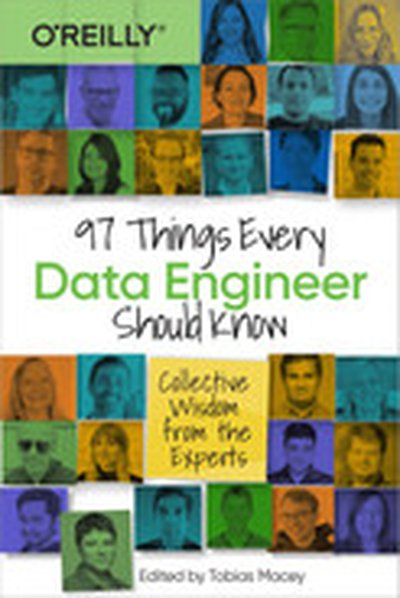
97 Things Every Data Engineer Should Know

Take advantage of today's sky-high demand for data engineers. With this in-depth book, current and aspiring engineers will learn powerful real-world best practices for managing data big and small. Contributors from notable companies including Twitter, Google, Stitch Fix, Microsoft, Capital One, and LinkedIn share their experiences and lessons learned for overcoming a variety of specific and often nagging challenges. Edited by Tobias Macey, host of the popular Data Engineering Podcast, this book presents 97 concise and useful tips for cleaning, prepping, wrangling, storing, processing, and ingesting data. Data engineers, data architects, data team managers, data scientists, machine learning engineers, and software engineers will greatly benefit from the wisdom and experience of their peers. Topics include: The Importance of Data Lineage - Julien Le Dem Data Security for Data Engineers - Katharine Jarmul The Two Types of Data Engineering and Data Engineers - Jesse Anderson Six Dimensions for Picking an Analytical Data Warehouse - Gleb Mezhanskiy The End of ETL as We Know It - Paul Singman Building a Career as a Data Engineer - Vijay Kiran Modern Metadata for the Modern Data Stack - Prukalpa Sankar Your Data Tests Failed! Now What? - Sam Bail

Summary Google pioneered an impressive number of the architectural underpinnings of the broader big data ecosystem. Now they offer the technologies that they run internally to external users of their cloud platform. In this episode Lak Lakshmanan enumerates the variety of services that are available for building your various data processing and analytical systems. He shares some of the common patterns for building pipelines to power business intelligence dashboards, machine learning applications, and data warehouses. If you’ve ever been overwhelmed or confused by the array of services available in the Google Cloud Platform then this episode is for you.

Announcements

Hello and welcome to the Data Engineering Podcast, the show about modern data management When you’re ready to build your next pipeline, or want to test out the projects you hear about on the show, you’ll need somewhere to deploy it, so check out our friends at Linode. With their managed Kubernetes platform it’s now even easier to deploy and scale your workflows, or try out the latest Helm charts from tools like Pulsar and Pachyderm. With simple pricing, fast networking, object storage, and worldwide data centers, you’ve got everything you need to run a bulletproof data platform. Go to dataengineeringpodcast.com/linode today and get a $100 credit to try out a Kubernetes cluster of your own. And don’t forget to thank them for their continued support of this show! Are you bored with writing scripts to move data into SaaS tools like Salesforce, Marketo, or Facebook Ads? Hightouch is the easiest way to sync data into the platforms that your business teams rely on. The data you’re looking for is already in your data warehouse and BI tools. Connect your warehouse to Hightouch, paste a SQL query, and use their visual mapper to specify how data should appear in your SaaS systems. No more scripts, just SQL. Supercharge your business teams with customer data using Hightouch for Reverse ETL today. Get started for free at dataengineeringpodcast.com/hightouch. Atlan is a collaborative workspace for data-driven teams, like Github for engineering or Figma for design teams. By acting as a virtual hub for data assets ranging from tables and dashboards to SQL snippets & code, Atlan enables teams to create a single source of truth for all their data assets, and collaborate across the modern data stack through deep integrations with tools like Snowflake, Slack, Looker and more. Go to dataengineeringpodcast.com/atlan today and sign up for a free trial. If you’re a data engineering podcast listener, you get credits worth $3000 on an annual subscription Your host is Tobias Macey and today I’m interviewing Lak Lakshmanan about the suite of services for data and analytics in Google Cloud Platform.

Interview

Introduction How did you get involved in the area of data management? Can you start by giving an overview of the tools and products that are offered as part of Google Cloud for data and analytics?

How do the various systems relate to each other for building a full workflow? How do you balance the need for clean integration between services with the need to make them useful in isolation when used as a single component of a data platform?

What have you found to be the primary motivators for customers who are adopting GCP for some or all of their data workloads? What are some of the challenges that new users of GCP encounter when working with the data and analytics products that it offers? What are the systems that you have found to be easiest to work with?

Which are the most challenging to work with, whether due to the kinds of problems that they are solving for, or due to their user experience design?

How has your work with customers fed back into the products that you are building on top of? What are some examples of architectural or software patterns that are unique to the GCP product suite? What are the most interesting, innovative, or unexpected ways that y

Summary The way to build maintainable software and systems is through composition of individual pieces. By making those pieces high quality and flexible they can be used in surprising ways that the original creators couldn’t have imagined. One such component that has gone above and beyond its originally envisioned use case is BookKeeper, a distributed storage system that is optimized for durability and speed. In this episode Matteo Merli shares the story behind the creation of BookKeeper, the various ways that it is being used today, and the architectural aspects that make it such a strong building block for projects such as Pulsar. He also shares some of the other interesting systems that have been built on top of it and an amusing war story of running it at scale in its early years.

Announcements

Hello and welcome to the Data Engineering Podcast, the show about modern data management When you’re ready to build your next pipeline, or want to test out the projects you hear about on the show, you’ll need somewhere to deploy it, so check out our friends at Linode. With their managed Kubernetes platform it’s now even easier to deploy and scale your workflows, or try out the latest Helm charts from tools like Pulsar and Pachyderm. With simple pricing, fast networking, object storage, and worldwide data centers, you’ve got everything you need to run a bulletproof data platform. Go to dataengineeringpodcast.com/linode today and get a $100 credit to try out a Kubernetes cluster of your own. And don’t forget to thank them for their continued support of this show! RudderStack’s smart customer data pipeline is warehouse-first. It builds your customer data warehouse and your identity graph on your data warehouse, with support for Snowflake, Google BigQuery, Amazon Redshift, and more. Their SDKs and plugins make event streaming easy, and their integrations with cloud applications like Salesforce and ZenDesk help you go beyond event streaming. With RudderStack you can use all of your customer data to answer more difficult questions and then send those insights to your whole customer data stack. Sign up free at dataengineeringpodcast.com/rudder today. We’ve all been asked to help with an ad-hoc request for data by the sales and marketing team. Then it becomes a critical report that they need updated every week or every day. Then what do you do? Send a CSV via email? Write some Python scripts to automate it? But what about incremental sync, API quotas, error handling, and all of the other details that eat up your time? Today, there is a better way. With Census, just write SQL or plug in your dbt models and start syncing your cloud warehouse to SaaS applications like Salesforce, Marketo, Hubspot, and many more. Go to dataengineeringpodcast.com/census today to get a free 14-day trial. Your host is Tobias Macey and today I’m interviewing Matteo Merli about Apache BookKeeper, a scalable, fault-tolerant, and low-latency storage service optimized for real-time workloads

Interview

Introduction How did you get involved in the area of data management? Can you describe what BookKeeper is and the story behind it? What are the most notable features/capabilities of BookKeeper? What are some of the ways that BookKeeper is being used? How has your work on Pulsar influenced the features and product direction of BookKeeper? Can you describe the architecture of a BookKeeper cluster?

How have the design and goals of BookKeeper changed or evolved over time?

What is the impact of record-oriented storage on data distribution/allocation within the cluster when working with variable record sizes? What are some of the operational considerations that users should be aware of? What are some of the most interesting/compelling features from your perspective? What are some of the most often overlooked or misunderstood capabilities of BookKeeper? What are the most interesting, innovative, or unexpected ways that you have seen BookKeeper used? What

Summary SQL is the most widely used language for working with data, and yet the tools available for writing and collaborating on it are still clunky and inefficient. Frustrated with the lack of a modern IDE and collaborative workflow for managing the SQL queries and analysis of their big data environments, the team at Pinterest created Querybook. In this episode Justin Mejorada-Pier and Charlie Gu share the story of how the initial prototype for a data catalog ended up as one of their most widely used interfaces to their analytical data. They also discuss the unique combination of features that it offers, how it is implemented, and the path to releasing it as open source. Querybook is an impressive and unique piece of technology that is well worth exploring, so listen and try it out today.

Announcements

Hello and welcome to the Data Engineering Podcast, the show about modern data management When you’re ready to build your next pipeline, or want to test out the projects you hear about on the show, you’ll need somewhere to deploy it, so check out our friends at Linode. With their managed Kubernetes platform it’s now even easier to deploy and scale your workflows, or try out the latest Helm charts from tools like Pulsar and Pachyderm. With simple pricing, fast networking, object storage, and worldwide data centers, you’ve got everything you need to run a bulletproof data platform. Go to dataengineeringpodcast.com/linode today and get a $100 credit to try out a Kubernetes cluster of your own. And don’t forget to thank them for their continued support of this show! Firebolt is the fastest cloud data warehouse. Visit dataengineeringpodcast.com/firebolt to get started. The first 25 visitors will receive a Firebolt t-shirt. Atlan is a collaborative workspace for data-driven teams, like Github for engineering or Figma for design teams. By acting as a virtual hub for data assets ranging from tables and dashboards to SQL snippets & code, Atlan enables teams to create a single source of truth for all their data assets, and collaborate across the modern data stack through deep integrations with tools like Snowflake, Slack, Looker and more. Go to dataengineeringpodcast.com/atlan today and sign up for a free trial. If you’re a data engineering podcast listener, you get credits worth $3000 on an annual subscription Your host is Tobias Macey and today I’m interviewing Justin Mejorada-Pier and Charlie Gu about Querybook, an open source IDE for your big data projects

Interview

Introduction How did you get involved in the area of data management? Can you describe what Querybook is and the story behind it? What are the main use cases or workflows that Querybook is designed for?

What are the shortcomings of dashboarding/BI tools that make something like Querybook necessary?

The tag line calls out the fact that Querybook is an IDE for "big data". What are the manifestations of that focus in the feature set and user experience? Who are the target users of Querybook and how does that inform the feature priorities and user experience? Can you describe how Querybook is architected?

How have the goals and design changed or evolved since you first began working on it? What were some of the assumptions or design choices that you had to unwind in the process of open sourcing it?

What is the workflow for someone building a DataDoc with Querybook?

What is the experience of working as a collaborator on an analysis?

How do you handle lifecycle management of query results? What are your thoughts on the potential for extending Querybook beyond SQL-oriented analysis and integrating something like Jupyter kernels? What are the most interesting, innovative, or unexpected ways that you have seen Querybook used? What are the most interesting, unexpected, or challenging lessons that you have learned while working on Querybook? When is Querybook the wrong choice? What do you have planned for the future of Querybook?

Contact Info

Justin

Link

Summary Every part of the business relies on data, yet only a small team has the context and expertise to build and maintain workflows and data pipelines to transform, clean, and integrate it. In order for the true value of your data to be realized without burning out your engineers you need a way for everyone to get access to the information they care about. To help make that a more tractable problem Blake Burch co-founded Shipyard. In this episode he explains the utility of a low code solution that lets non engineers create their own self-serve pipelines, how the Shipyard platform is designed to make that possible, and how it allows engineers to create reusable tasks to satisfy the specific needs of the business. This is an interesting conversation about how to make data more accessible and more useful by improving the user experience of the tools that we create.

Announcements

Hello and welcome to the Data Engineering Podcast, the show about modern data management When you’re ready to build your next pipeline, or want to test out the projects you hear about on the show, you’ll need somewhere to deploy it, so check out our friends at Linode. With their managed Kubernetes platform it’s now even easier to deploy and scale your workflows, or try out the latest Helm charts from tools like Pulsar and Pachyderm. With simple pricing, fast networking, object storage, and worldwide data centers, you’ve got everything you need to run a bulletproof data platform. Go to dataengineeringpodcast.com/linode today and get a $100 credit to try out a Kubernetes cluster of your own. And don’t forget to thank them for their continued support of this show! RudderStack’s smart customer data pipeline is warehouse-first. It builds your customer data warehouse and your identity graph on your data warehouse, with support for Snowflake, Google BigQuery, Amazon Redshift, and more. Their SDKs and plugins make event streaming easy, and their integrations with cloud applications like Salesforce and ZenDesk help you go beyond event streaming. With RudderStack you can use all of your customer data to answer more difficult questions and then send those insights to your whole customer data stack. Sign up free at dataengineeringpodcast.com/rudder today. When it comes to serving data for AI and ML projects, do you feel like you have to rebuild the plane while you’re flying it across the ocean? Molecula is an enterprise feature store that operationalizes advanced analytics and AI in a format designed for massive machine-scale projects without having to manage endless one-off information requests. With Molecula, data engineers manage one single feature store that serves the entire organization with millisecond query performance whether in the cloud or at your data center. And since it is implemented as an overlay, Molecula doesn’t disrupt legacy systems. High-growth startups use Molecula’s feature store because of its unprecedented speed, cost savings, and simplified access to all enterprise data. From feature extraction to model training to production, the Molecula feature store provides continuously updated feature access, reuse, and sharing without the need to pre-process data. If you need to deliver unprecedented speed, cost savings, and simplified access to large scale, real-time data, visit dataengineeringpodcast.com/molecula and request a demo. Mention that you’re a Data Engineering Podcast listener, and they’ll send you a free t-shirt. Your host is Tobias Macey and today I’m interviewing Blake Burch about Shipyard, and his mission to create the easiest way for data teams to launch, monitor, and share resilient pipelines with less engineering

Interview

Introduction How did you get involved in the area of data management? Can you describe what you are building at Shipyard and the story behind it? What are the main goals that you have for Shipyard?

How does it compare to other data orchestration frameworks in the market?

Who are

Summary The data warehouse has become the focal point of the modern data platform. With increased usage of data across businesses, and a diversity of locations and environments where data needs to be managed, the warehouse engine needs to be fast and easy to manage. Yellowbrick is a data warehouse platform that was built from the ground up for speed, and can work across clouds and all the way to the edge. In this episode CTO Mark Cusack explains how the engine is architected, the benefits that speed and predictable pricing has for the organization, and how you can simplify your platform by putting the warehouse close to the data, instead of the other way around.

Announcements

Hello and welcome to the Data Engineering Podcast, the show about modern data management When you’re ready to build your next pipeline, or want to test out the projects you hear about on the show, you’ll need somewhere to deploy it, so check out our friends at Linode. With their managed Kubernetes platform it’s now even easier to deploy and scale your workflows, or try out the latest Helm charts from tools like Pulsar and Pachyderm. With simple pricing, fast networking, object storage, and worldwide data centers, you’ve got everything you need to run a bulletproof data platform. Go to dataengineeringpodcast.com/linode today and get a $100 credit to try out a Kubernetes cluster of your own. And don’t forget to thank them for their continued support of this show! Firebolt is the fastest cloud data warehouse. Visit dataengineeringpodcast.com/firebolt to get started. The first 25 visitors will receive a Firebolt t-shirt. Atlan is a collaborative workspace for data-driven teams, like Github for engineering or Figma for design teams. By acting as a virtual hub for data assets ranging from tables and dashboards to SQL snippets & code, Atlan enables teams to create a single source of truth for all their data assets, and collaborate across the modern data stack through deep integrations with tools like Snowflake, Slack, Looker and more. Go to dataengineeringpodcast.com/atlan today and sign up for a free trial. If you’re a data engineering podcast listener, you get credits worth $3000 on an annual subscription Your host is Tobias Macey and today I’m interviewing Mark Cusack about Yellowbrick, a data warehouse designed for distributed clouds

Interview

Introduction How did you get involved in the area of data management? Can you start by describing what Yellowbrick is and some of the story behind it? What does the term "distributed cloud" signify and what challenges are associated with it? How would you characterize Yellowbrick’s position in the database/DWH market? How is Yellowbrick architected?

How have the goals and design of the platform changed or evolved over time?

How does Yellowbrick maintain visibility across the different data locations that it is responsible for?

What capabilities does it offer for being able to join across the disparate "clouds"?

What are some data modeling strategies that users should consider when designing their deployment of Yellowbrick? What are some of the capabilities of Yellowbrick that you find most useful or technically interesting? For someone who is adopting Yellowbrick, what is the process for getting it integrated into their data systems? What are the most underutilized, overlooked, or misunderstood features of Yellowbrick? What are the most interesting, innovative, or unexpected ways that you have seen Yellowbrick used? What are the most interesting, unexpected, or challenging lessons that you have learned while working on and with Yellowbrick? When is Yellowbrick the wrong choice? What do you have planned for the future of the product?

Contact Info

LinkedIn @markcusack on Twitter

Parting Question

From your perspective, what is the biggest gap in the tooling or technology for data management today?

Links

Yellowbrick Teradata Rainstor Distributed Cloud Hybrid Cloud SwimOS

Podcast Episode

K

Summary Machine learning models use vectors as the natural mechanism for representing their internal state. The problem is that in order for the models to integrate with external systems their internal state has to be translated into a lower dimension. To eliminate this impedance mismatch Edo Liberty founded Pinecone to build database that works natively with vectors. In this episode he explains how this technology will allow teams to accelerate the speed of innovation, how vectors make it possible to build more advanced search functionality, and how Pinecone is architected. This is an interesting conversation about how reconsidering the architecture of your systems can unlock impressive new capabilities.

Announcements

Hello and welcome to the Data Engineering Podcast, the show about modern data management When you’re ready to build your next pipeline, or want to test out the projects you hear about on the show, you’ll need somewhere to deploy it, so check out our friends at Linode. With their managed Kubernetes platform it’s now even easier to deploy and scale your workflows, or try out the latest Helm charts from tools like Pulsar and Pachyderm. With simple pricing, fast networking, object storage, and worldwide data centers, you’ve got everything you need to run a bulletproof data platform. Go to dataengineeringpodcast.com/linode today and get a $100 credit to try out a Kubernetes cluster of your own. And don’t forget to thank them for their continued support of this show! RudderStack’s smart customer data pipeline is warehouse-first. It builds your customer data warehouse and your identity graph on your data warehouse, with support for Snowflake, Google BigQuery, Amazon Redshift, and more. Their SDKs and plugins make event streaming easy, and their integrations with cloud applications like Salesforce and ZenDesk help you go beyond event streaming. With RudderStack you can use all of your customer data to answer more difficult questions and then send those insights to your whole customer data stack. Sign up free at dataengineeringpodcast.com/rudder today. When it comes to serving data for AI and ML projects, do you feel like you have to rebuild the plane while you’re flying it across the ocean? Molecula is an enterprise feature store that operationalizes advanced analytics and AI in a format designed for massive machine-scale projects without having to manage endless one-off information requests. With Molecula, data engineers manage one single feature store that serves the entire organization with millisecond query performance whether in the cloud or at your data center. And since it is implemented as an overlay, Molecula doesn’t disrupt legacy systems. High-growth startups use Molecula’s feature store because of its unprecedented speed, cost savings, and simplified access to all enterprise data. From feature extraction to model training to production, the Molecula feature store provides continuously updated feature access, reuse, and sharing without the need to pre-process data. If you need to deliver unprecedented speed, cost savings, and simplified access to large scale, real-time data, visit dataengineeringpodcast.com/molecula and request a demo. Mention that you’re a Data Engineering Podcast listener, and they’ll send you a free t-shirt. Your host is Tobias Macey and today I’m interviewing Edo Liberty about Pinecone, a vector database for powering machine learning and similarity search

Interview

Introduction How did you get involved in the area of data management? Can you start by describing what Pinecone is and the story behind it? What are some of the contexts where someone would want to perform a similarity search?

What are the considerations that someone should be aware of when deciding between Pinecone and Solr/Lucene for a search oriented use case?

What are some of the other use cases that Pinecone enables? In the absence of Pinecone, what kinds of systems and solutions are people b

Summary Data governance is a phrase that means many different things to many different people. This is because it is actually a concept that encompasses the entire lifecycle of data, across all of the people in an organization who interact with it. Stijn Christiaens co-founded Collibra with the goal of addressing the wide variety of technological aspects that are necessary to realize such an important and expansive process. In this episode he shares his thoughts on the balance between human and technological processes that are necessary for a well-managed data governance strategy, how Collibra is designed to aid in that endeavor, and his experiences using the platform that his company is building to help power the company. This is an excellent conversation that spans the engineering and philosophical complexities of an important and ever-present aspect of working with data.

Announcements

Hello and welcome to the Data Engineering Podcast, the show about modern data management

When you’re ready to build your next pipeline, or want to test out the projects you hear about on the show, you’ll need somewhere to deploy it, so check out our friends at Linode. With their managed Kubernetes platform it’s now even easier to deploy and scale your workflows, or try out the latest Helm charts from tools like Pulsar and Pachyderm. With simple pricing, fast networking, object storage, and worldwide data centers, you’ve got everything you need to run a bulletproof data platform. Go to dataengineeringpodcast.com/linode today and get a $100 credit to try out a Kubernetes cluster of your own. And don’t forget to thank them for their continued support of this show!

RudderStack’s smart customer data pipeline is warehouse-first. It builds your customer data warehouse and your identity graph on your data warehouse, with support for Snowflake, Google BigQuery, Amazon Redshift, and more. Their SDKs and plugins make event streaming easy, and their integrations with cloud applications like Salesforce and ZenDesk help you go beyond event streaming. With RudderStack you can use all of your customer data to answer more difficult questions and then send those insights to your whole customer data stack. Sign up free at dataengineeringpodcast.com/rudder today.

Your host is Tobias Macey and today I’m interviewing Stijn Christiaens about data governance in the enterprise and how Collibra applies the lessons learned from their customers to their own business

Interview

Introduction How did you get involved in the area of data management? Can you start by describing what you are building at Collibra and the story behind the company? Wat does "data governance" mean to you, and how does that definition inform your work at Collibra?

How would you characterize the current landscape of "data governance" offerings and Collibra’s position within it?

What are the elements of governance that are often ignored in small/medium businesses but which are essential for the enterprise? (e.g. data stewards, business glossaries, etc.) One of the most important tasks as a data professional is to establish and maintain trust in the information you are curating. What are the biggest obstacles to overcome in that mission? What are some of the data problems that you will only find at large or complex organizations?

How does Collibra help to tame that complexity?

Who are the end users of Collibra within an organization? Can you talk through the workflow and various interactions that your customers have as it relates to the overall flow of data through an organization? Can you describe how the Collibra platform is implemented?

How has the scope and design of the system evolved since you first began working on it?

You are currently leading a team that uses Collibra to manage the operations of the business. What are some of the most notable surprises that you have learned from being your own customer?

What are some of the weak points that you have be