talk-data.com talk-data.com

Topic

Hadoop

Apache Hadoop

big_data distributed_computing data_processing

258

tagged

Activity Trend

3 peak/qtr
2020-Q1 2026-Q1

Activities

258 activities · Newest first

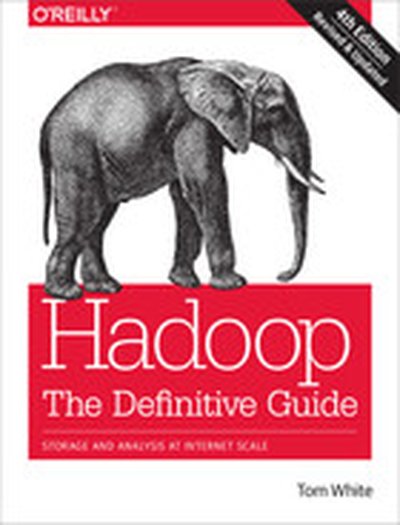
Hadoop: The Definitive Guide, 4th Edition

Get ready to unlock the power of your data. With the fourth edition of this comprehensive guide, youâ??ll learn how to build and maintain reliable, scalable, distributed systems with Apache Hadoop. This book is ideal for programmers looking to analyze datasets of any size, and for administrators who want to set up and run Hadoop clusters. Using Hadoop 2 exclusively, author Tom White presents new chapters on YARN and several Hadoop-related projects such as Parquet, Flume, Crunch, and Spark. Youâ??ll learn about recent changes to Hadoop, and explore new case studies on Hadoopâ??s role in healthcare systems and genomics data processing. Learn fundamental components such as MapReduce, HDFS, and YARN Explore MapReduce in depth, including steps for developing applications with it Set up and maintain a Hadoop cluster running HDFS and MapReduce on YARN Learn two data formats: Avro for data serialization and Parquet for nested data Use data ingestion tools such as Flume (for streaming data) and Sqoop (for bulk data transfer) Understand how high-level data processing tools like Pig, Hive, Crunch, and Spark work with Hadoop Learn the HBase distributed database and the ZooKeeper distributed configuration service
Storm Applied

Storm Applied is a practical guide to using Apache Storm for the real-world tasks associated with processing and analyzing real-time data streams. This immediately useful book starts by building a solid foundation of Storm essentials so that you learn how to think about designing Storm solutions the right way from day one. But it quickly dives into real-world case studies that will bring the novice up to speed with productionizing Storm. About the Technology It's hard to make sense out of data when it's coming at you fast. Like Hadoop, Storm processes large amounts of data but it does it reliably and in real time, guaranteeing that every message will be processed. Storm allows you to scale with your data as it grows, making it an excellent platform to solve your big data problems. About the Book Storm Applied is an example-driven guide to processing and analyzing real-time data streams. This immediately useful book starts by teaching you how to design Storm solutions the right way. Then, it quickly dives into real-world case studies that show you how to scale a high-throughput stream processor, ensure smooth operation within a production cluster, and more. Along the way, you'll learn to use Trident for stateful stream processing, along with other tools from the Storm ecosystem. What's Inside Mapping real problems to Storm components Performance tuning and scaling Practical troubleshooting and debugging Exactly-once processing with Trident About the Reader This book moves through the basics quickly. While prior experience with Storm is not assumed, some experience with big data and real-time systems is helpful. About the Authors Sean Allen, Matthew Jankowski, and Peter Pathirana lead the development team for a high-volume, search-intensive commercial web application at TheLadders. Quotes Will no doubt become the definitive practitioner’s guide for Storm users. - From the Foreword by Andrew Montalenti The book’s practical approach to Storm will save you a lot of hassle and a lot of time. - Tanguy Leroux, Elasticsearch Great introduction to distributed computing with lots of real-world examples. - Shay Elkin, Tangent Logic Go beyond the MapReduce way of thinking to solve big data problems. - Muthusamy Manigandan, OzoneMedia

Hadoop Virtualization

Hadoop was built to use local data storage on a dedicated group of commodity hardware, but many organizations are choosing to save money (and operational headaches) by running Hadoop in the cloud. This O'Reilly report focuses on the benefits of deploying Hadoop to a private cloud environment, and provides an overview of best practices to maximize performance. Private clouds provide lower capital expenses than on-site clusters and offer lower operating expenses than public cloud deployment. Author Courtney Webster shows you what's involved in Hadoop virtualization, and how you can efficiently plan a private cloud deployment. Topics include: How Hadoop virtualization offers scalable capability for future growth and minimal downtime Why a private cloud offers unique benefits with comparable (and even improved) performance How you can literally set up Hadoop in a private cloud in minutes How aggregation can be used on top of (or instead of) virtualization Which resources and practices are best for a private cloud deployment How cloud-based management tools lower the complexity of initial configuration and maintenance

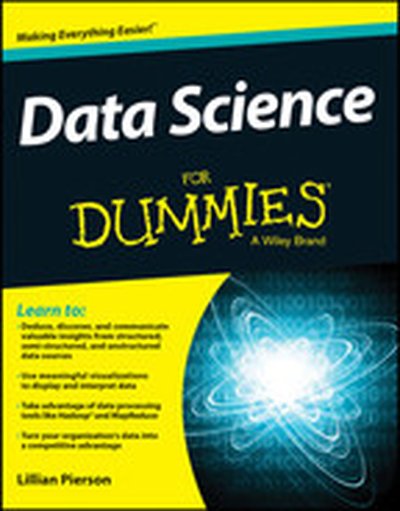
Data Science For Dummies

Discover how data science can help you gain in-depth insight into your business - the easy way! Jobs in data science abound, but few people have the data science skills needed to fill these increasingly important roles in organizations. Data Science For Dummies is the perfect starting point for IT professionals and students interested in making sense of their organization's massive data sets and applying their findings to real-world business scenarios. From uncovering rich data sources to managing large amounts of data within hardware and software limitations, ensuring consistency in reporting, merging various data sources, and beyond, you'll develop the know-how you need to effectively interpret data and tell a story that can be understood by anyone in your organization. Provides a background in data science fundamentals before moving on to working with relational databases and unstructured data and preparing your data for analysis Details different data visualization techniques that can be used to showcase and summarize your data Explains both supervised and unsupervised machine learning, including regression, model validation, and clustering techniques Includes coverage of big data processing tools like MapReduce, Hadoop, Dremel, Storm, and Spark It's a big, big data world out there - let Data Science For Dummies help you harness its power and gain a competitive edge for your organization.

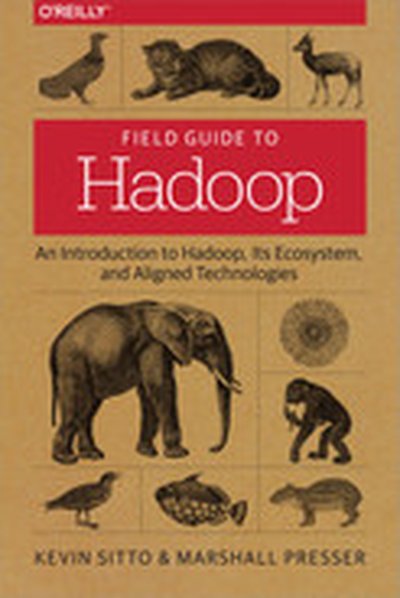
Field Guide to Hadoop

If your organization is about to enter the world of big data, you not only need to decide whether Apache Hadoop is the right platform to use, but also which of its many components are best suited to your task. This field guide makes the exercise manageable by breaking down the Hadoop ecosystem into short, digestible sections. You’ll quickly understand how Hadoop’s projects, subprojects, and related technologies work together. Each chapter introduces a different topic—such as core technologies or data transfer—and explains why certain components may or may not be useful for particular needs. When it comes to data, Hadoop is a whole new ballgame, but with this handy reference, you’ll have a good grasp of the playing field. Topics include: Core technologies—Hadoop Distributed File System (HDFS), MapReduce, YARN, and Spark Database and data management—Cassandra, HBase, MongoDB, and Hive Serialization—Avro, JSON, and Parquet Management and monitoring—Puppet, Chef, Zookeeper, and Oozie Analytic helpers—Pig, Mahout, and MLLib Data transfer—Scoop, Flume, distcp, and Storm Security, access control, auditing—Sentry, Kerberos, and Knox Cloud computing and virtualization—Serengeti, Docker, and Whirr

Apache Hive Essentials

Apache Hive Essentials is the perfect guide for understanding and mastering Hive, the SQL-like big data query language built on top of Hadoop. With this book, you will gain the skills to effectively use Hive to analyze and manage large data sets. Whether you're a developer, data analyst, or just curious about big data, this hands-on guide will enhance your capabilities. What this Book will help me do Understand the core concepts of Hive and its relation to big data and Hadoop. Learn how to set up a Hive environment and integrate it with Hadoop. Master the SQL-like query functionalities of Hive to select, manipulate, and analyze data. Develop custom functions in Hive to extend its functionality for your own specific use cases. Discover best practices for optimizing Hive performance and ensuring data security. Author(s) Dayong Du is an expert in big data analytics with extensive experience in implementing and using tools like Hive in professional settings. Having worked on practical big data solutions, Dayong brings a wealth of knowledge and insights to his writing. His clear, approachable style makes complex topics accessible to readers. Who is it for? This book is ideal for developers, data analysts, and data engineers looking to leverage Hive for big data analysis. If you are familiar with SQL and Hadoop basics and aim to enhance your understanding of Hive, this book is for you. Beginners with some programming background eager to dive into big data technologies will also benefit. It's tailored for learners wanting actionable knowledge to advance their data processing skills.

Apache Flume: Distributed Log Collection for Hadoop - Second Edition

"Apache Flume: Distributed Log Collection for Hadoop - Second Edition" is your hands-on guide to learning how to use Apache Flume to reliably collect and move logs and data streams into your Hadoop ecosystem. Through practical examples and real-world scenarios, this book will help you master the setup, configuration, and optimization of Flume for various data ingestion use cases. What this Book will help me do Understand the key concepts and architecture behind Apache Flume to build reliable and scalable data ingestion systems. Set up Flume agents to collect and transfer data into the Hadoop File System (HDFS) or other storage solutions effectively. Learn stream data processing techniques, such as filtering, transforming, and enriching data during transit to improve data usability. Integrate Flume with other tools like Elasticsearch and Solr to enhance analytics and search capabilities. Implement monitoring and troubleshooting workflows to maintain healthy and optimized Flume data pipelines. Author(s) Steven Hoffman, a seasoned software developer and data engineer, brings years of practical experience working with big data technologies to this book. He has a strong background in distributed systems and big data solutions, having implemented enterprise-scale analytics projects. Through clear and approachable writing, he aims to empower readers to successfully deploy reliable data pipelines using Apache Flume. Who is it for? This book is written for Hadoop developers, data engineers, and IT professionals who seek to build robust pipelines for streaming data into Hadoop environments. It is ideal for readers who have a basic understanding of Hadoop and HDFS but are new to Apache Flume. If you are looking to enhance your analytics capabilities by efficiently ingesting, routing, and processing streaming data, this book is for you. Beginners as well as experienced engineers looking to dive deeper into Flume will find it insightful.

Hadoop MapReduce v2 Cookbook - Second Edition

Explore insights from vast datasets with "Hadoop MapReduce v2 Cookbook - Second Edition." This book serves as a practical guide for developers and system administrators who aim to master big data processing using Hadoop v2. By engaging with its step-by-step recipes, you will learn to harness the Hadoop MapReduce ecosystem for scalable and efficient data solutions. What this Book will help me do Master the configuration and management of Hadoop YARN, MapReduce v2, and HDFS clusters. Integrate big data tools such as Hive, HBase, Pig, Mahout, and Nutch with Hadoop v2. Develop analytics solutions for large-scale datasets using MapReduce-based applications. Address specific challenges like data classification, recommendations, and text analytics leveraging Hadoop MapReduce. Deploy and manage big data clusters effectively, including options for cloud environments. Author(s) The authors behind "Hadoop MapReduce v2 Cookbook - Second Edition" combine their deep expertise in big data technology and years of experience working directly with Hadoop. They have helped numerous organizations implement scalable data processing solutions and are passionate about teaching others. Their approach ensures readers gain both foundational knowledge and practical skills. Who is it for? This book is perfect for developers and system administrators who want to learn Hadoop MapReduce v2, including configuring and managing big data clusters. Beginners with basic Java knowledge can follow along to advance their skills in big data processing. Ideal for those transitioning to Hadoop v2 or requiring practical recipes for immediate application. Great for professionals aiming to deepen their expertise in scalable data technologies.

NoSQL For Dummies

Get up to speed on the nuances of NoSQL databases and what they mean for your organization This easy to read guide to NoSQL databases provides the type of no-nonsense overview and analysis that you need to learn, including what NoSQL is and which database is right for you. Featuring specific evaluation criteria for NoSQL databases, along with a look into the pros and cons of the most popular options, NoSQL For Dummies provides the fastest and easiest way to dive into the details of this incredible technology. You'll gain an understanding of how to use NoSQL databases for mission-critical enterprise architectures and projects, and real-world examples reinforce the primary points to create an action-oriented resource for IT pros. If you're planning a big data project or platform, you probably already know you need to select a NoSQL database to complete your architecture. But with options flooding the market and updates and add-ons coming at a rapid pace, determining what you require now, and in the future, can be a tall task. This is where NoSQL For Dummies comes in! Learn the basic tenets of NoSQL databases and why they have come to the forefront as data has outpaced the capabilities of relational databases Discover major players among NoSQL databases, including Cassandra, MongoDB, MarkLogic, Neo4J, and others Get an in-depth look at the benefits and disadvantages of the wide variety of NoSQL database options Explore the needs of your organization as they relate to the capabilities of specific NoSQL databases Big data and Hadoop get all the attention, but when it comes down to it, NoSQL databases are the engines that power many big data analytics initiatives. With NoSQL For Dummies, you'll go beyond relational databases to ramp up your enterprise's data architecture in no time.

YARN Essentials

"YARN Essentials" offers a practical introduction to Apache Hadoop YARN. With this book, you will acquire the skills to install, configure, and manage YARN clusters effectively. It provides hands-on guidance for deploying and managing applications and emerging frameworks, making this resource vital for mastering this key Hadoop technology. What this Book will help me do Learn how to install and configure Apache YARN from scratch. Understand YARN's architecture and its integration with the Hadoop ecosystem. Gain the ability to fine-tune a YARN cluster for optimal performance and scalability. Develop skills to create and run applications on a shared YARN cluster environment. Become proficient in managing, troubleshooting, and expanding YARN capabilities. Author(s) None Fasale and Nirmal Kumar are experienced professionals specializing in Hadoop and distributed systems. With years of hands-on experience in YARN and managing large-scale data processing frameworks, they bring their comprehensive expertise into this guide. Their focus on clarity and applicable knowledge ensures readers gain practical skills alongside theoretical understanding. Who is it for? This book is ideal for Hadoop administrators or developers with background knowledge of Hadoop 1.x, seeking to specialize in managing YARN clusters effectively. It assumes familiarity with basic Hadoop concepts while providing thorough explanations for YARN-specific features and topics. If you're looking to deploy scalable applications using YARN, this is the book for you.

Data: Emerging Trends and Technologies

What are the emerging trends and technologies that will transform the data landscape in coming months? In this report from Strata + Hadoop World co-chair Alistair Croll, you'll learn how the ubiquity of cheap sensors, fast networks, and distributed computing have given rise to several developments that will soon have a profound effect on individuals and society as a whole. Machine learning, for example, has quickly moved from lab tool to hosted, pay-as-you-go services in the cloud. Those services, in turn, are leading to predictive apps that will provide individuals with the right functionality and content at the right time by continuously learning about them and predicting what they'll need. Computational power can produce cognitive augmentation. Report topics include: The swing between centralized and distributed computing Machine learning as a service Personal digital assistants and cognitive augmentation Graph databases and analytics Regulating complex algorithms The pace of real-time data and automation Solving dire problems with big data Implications of having sensors everywhere This report contains many more examples of how big data is starting to reshape business and change behavior, and it's just a small sample of the in-depth information Strata + Hadoop World provides. Pick up this report and make plans to attend one of several Strata + Hadoop World conferences in the San Francisco Bay Area, London, and New York.

Learning Hadoop 2

Delve into the world of big data with 'Learning Hadoop 2', a comprehensive guide to leveraging the capabilities of Hadoop 2 for data processing and analysis. In this book, you will explore the tools and frameworks that integrate with Hadoop, discovering the best ways to design and deploy effective workflows for managing and analyzing large datasets. What this Book will help me do Understand the fundamentals of the MapReduce framework and its applications. Utilize advanced tools such as Samza and Spark for real-time and iterative data processing. Manage large datasets with data mining techniques tailored for Hadoop environments. Deploy Hadoop applications across various infrastructures, including local clusters and cloud services. Create and orchestrate sophisticated data workflows and pipelines with Apache Pig and Oozie. Author(s) Gabriele Modena is an experienced developer and trained data specialist with a keen focus on distributed data processing frameworks. Having worked extensively with big data platforms, Gabriele brings practical insights and a hands-on perspective to technical subjects. His writing is concise and engaging, aiming to render complex concepts accessible. Who is it for? This book is ideal for system and application developers eager to learn practical implementations of the Hadoop framework. Readers should be familiar with the Unix/Linux command-line interface and Java programming. Prior experience with Hadoop will be advantageous, but not necessary.

Big Data Analytics

With this book, managers and decision makers are given the tools to make more informed decisions about big data purchasing initiatives. Big Data Analytics: A Practical Guide for Managers not only supplies descriptions of common tools, but also surveys the various products and vendors that supply the big data market. Comparing and contrasting the different types of analysis commonly conducted with big data, this accessible reference presents clear-cut explanations of the general workings of big data tools. Instead of spending time on HOW to install specific packages, it focuses on the reasons WHY readers would install a given package. The book provides authoritative guidance on a range of tools, including open source and proprietary systems. It details the strengths and weaknesses of incorporating big data analysis into decision-making and explains how to leverage the strengths while mitigating the weaknesses. Describes the benefits of distributed computing in simple terms Includes substantial vendor/tool material, especially for open source decisions Covers prominent software packages, including Hadoop and Oracle Endeca Examines GIS and machine learning applications Considers privacy and surveillance issues The book further explores basic statistical concepts that, when misapplied, can be the source of errors. Time and again, big data is treated as an oracle that discovers results nobody would have imagined. While big data can serve this valuable function, all too often these results are incorrect, yet are still reported unquestioningly. The probability of having erroneous results increases as a larger number of variables are compared unless preventative measures are taken. The approach taken by the authors is to explain these concepts so managers can ask better questions of their analysts and vendors as to the appropriateness of the methods used to arrive at a conclusion. Because the world of science and medicine has been grappling with similar issues in the publication of studies, the authors draw on their efforts and apply them to big data.

Data Driven

Succeeding with data isn’t just a matter of putting Hadoop in your machine room, or hiring some physicists with crazy math skills. It requires you to develop a data culture that involves people throughout the organization. In this O’Reilly report, DJ Patil and Hilary Mason outline the steps you need to take if your company is to be truly data-driven—including the questions you should ask and the methods you should adopt. You’ll not only learn examples of how Google, LinkedIn, and Facebook use their data, but also how Walmart, UPS, and other organizations took advantage of this resource long before the advent of Big Data. No matter how you approach it, building a data culture is the key to success in the 21st century. You’ll explore: Data scientist skills—and why every company needs a Spock How the benefits of giving company-wide access to data outweigh the costs Why data-driven organizations use the scientific method to explore and solve data problems Key questions to help you develop a research-specific process for tackling important issues What to consider when assembling your data team Developing processes to keep your data team (and company) engaged Choosing technologies that are powerful, support teamwork, and easy to use and learn

Big Data Made Easy: A Working Guide to the Complete Hadoop Toolset

Many corporations are finding that the size of their data sets are outgrowing the capability of their systems to store and process them. The data is becoming too big to manage and use with traditional tools. The solution: implementing a big data system. As Big Data Made Easy: A Working Guide to the Complete Hadoop Toolset shows, Apache Hadoop offers a scalable, fault-tolerant system for storing and processing data in parallel. It has a very rich toolset that allows for storage (Hadoop), configuration (YARN and ZooKeeper), collection (Nutch and Solr), processing (Storm, Pig, and Map Reduce), scheduling (Oozie), moving (Sqoop and Avro), monitoring (Chukwa, Ambari, and Hue), testing (Big Top), and analysis (Hive). The problem is that the Internet offers IT pros wading into big data many versions of the truth and some outright falsehoods born of ignorance. What is needed is a book just like this one: a wide-ranging but easily understood set of instructions to explain where to get Hadoop tools, what they can do, how to install them, how to configure them, how to integrate them, and how to use them successfully. And you need an expert who has worked in this area for a decade—someone just like author and big data expert Mike Frampton. Big Data Made Easy approaches the problem of managing massive data sets from a systems perspective, and it explains the roles for each project (like architect and tester, for example) and shows how the Hadoop toolset can be used at each system stage. It explains, in an easily understood manner and through numerous examples, how to use each tool. The book also explains the sliding scale of tools available depending upon data size and when and how to use them. Big Data Made Easy shows developers and architects, as well as testers and project managers, how to: Store big data Configure big data Process big data Schedule processes Move data among SQL and NoSQL systems Monitor data Perform big data analytics Report on big data processes and projects Test big data systems Big Data Made Easy also explains the best part, which is that this toolset is free. Anyone can download it and—with the help of this book—start to use it within a day. With the skills this book will teach you under your belt, you will add value to your company or client immediately, not to mention your career.

Mastering Hadoop

Embark on a journey to master Hadoop and its advanced features with this comprehensive book. "Mastering Hadoop" equips you with the knowledge needed to tackle complex data processing challenges and optimize your Hadoop workflows. With clear explanations and practical examples, this book is your guide to becoming proficient in leveraging Hadoop technologies. What this Book will help me do Optimize Hadoop MapReduce jobs, Pig scripts, and Hive queries for better performance. Understand and employ advanced data formats and Hadoop I/O techniques. Learn to integrate low-latency processing with Storm on YARN. Explore the cloud deployment of Hadoop and advanced HDFS alternatives. Enhance Hadoop security and master techniques for analytics using Hadoop. Author(s) None Karanth is an experienced Hadoop professional with years of expertise in data processing and distributed computing. With a practical and methodical approach, None has crafted this book to empower learners with the essentials and advanced features of Hadoop. None's focus on performance optimization and real-world applications helps bridge the gap between theory and practice. Who is it for? This book is ideal for data engineers and software developers familiar with the basics of Hadoop who seek to advance their understanding. If you aim to enhance Hadoop performance or adopt new features like YARN and Storm, this book is for you. Readers interested in Hadoop deployment, optimization, and newer capabilities will also greatly benefit. It's perfect for anyone aiming to become a Hadoop expert, from intermediate learners to advanced practitioners.

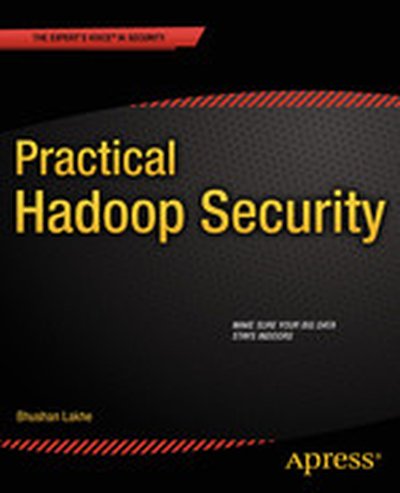
Practical Hadoop Security

Practical Hadoop Security is an excellent resource for administrators planning a production Hadoop deployment who want to secure their Hadoop clusters. A detailed guide to the security options and configuration within Hadoop itself, author Bhushan Lakhe takes you through a comprehensive study of how to implement defined security within a Hadoop cluster in a hands-on way. You will start with a detailed overview of all the security options available for Hadoop, including popular extensions like Kerberos and OpenSSH, and then delve into a hands-on implementation of user security (with illustrated code samples) with both in-the-box features and with security extensions implemented by leading vendors. No security system is complete without a monitoring and tracing facility, so Practical Hadoop Security next steps you through audit logging and monitoring technologies for Hadoop, as well as ready to use implementation and configuration examples--again with illustrated code samples. The book concludes with the most important aspect of Hadoop security – encryption. Both types of encryptions, for data in transit and data at rest, are discussed at length with leading open source projects that integrate directly with Hadoop at no licensing cost. Practical Hadoop Security: Explains importance of security, auditing and encryption within a Hadoop installation Describes how the leading players have incorporated these features within their Hadoop distributions and provided extensions Demonstrates how to set up and use these features to your benefit and make your Hadoop installation secure without impacting performance or ease of use

Big Data Now: 2014 Edition

In the four years that O'Reilly Media, Inc. has produced its annual Big Data Now report, the data field has grown from infancy into young adulthood. Data is now a leader in some fields and a driver of innovation in others, and companies that use data and analytics to drive decision-making are outperforming their peers. And while access to big data tools and techniques once required significant expertise, today many tools have improved and communities have formed to share best practices. Companies have also started to emphasize the importance of processes, culture, and people. The topics in represent the major forces currently shaping the data world: Big Data Now: 2014 Edition Cognitive augmentation: predictive APIs, graph analytics, and Network Science dashboards Intelligence matters: defining AI, modeling intelligence, deep learning, and "summoning the demon" Cheap sensors, fast networks, and distributed computing: stream processing, hardware data flows, and computing at the edge Data (science) pipelines: broadening the coverage of analytic pipelines with specialized tools Evolving marketplace of big data components: SSDs, Hadoop 2, Spark; and why datacenters need operating systems Design and social science: human-centered design, wearables and real-time communications, and wearable etiquette Building a data culture: moving from prediction to real-time adaptation; and why you need to become a data skeptic Perils of big data: data redlining, intrusive data analysis, and the state of big data ethics

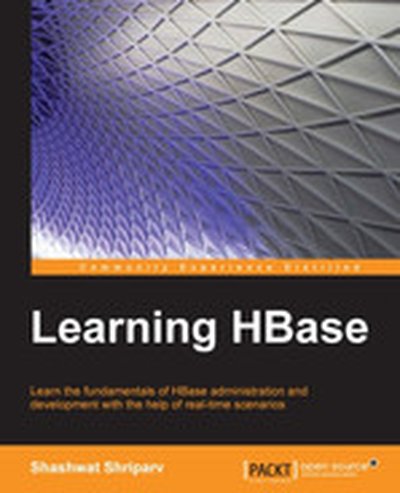
Learning Hbase

In "Learning HBase", you'll dive deep into the core functionalities of Apache HBase and understand its applications in handling Big Data environments. By exploring both theoretical concepts and practical scenarios, you'll acquire the skills to set up, manage, and optimize HBase clusters. What this Book will help me do Understand and explain the components of the HBase ecosystem. Install and configure HBase clusters for optimized performance. Develop and maintain applications using HBase's structured storage model. Troubleshoot and resolve common issues in HBase deployments. Leverage Hadoop tools and advanced techniques to enhance HBase capabilities. Author(s) None Shriparv is a skilled technologist with a robust background in Big Data tools and application development. With hands-on expertise in distributed storage systems and data analytics, they lend exceptional insights into managing HBase environments. Their approach combines clarity, practicality, and a focus on real-world applicability. Who is it for? This book is ideal for system administrators and developers who are starting their journey in Big Data technology. With clear explanations and hands-on scenarios, it suits those seeking foundational and intermediate knowledge of the HBase ecosystem. Suitably designed, it helps students, early-career professionals, and mid-level technologists enhance their expertise. If you work in Big Data and want to grow your skill set in distributed storage systems, this book is for you.

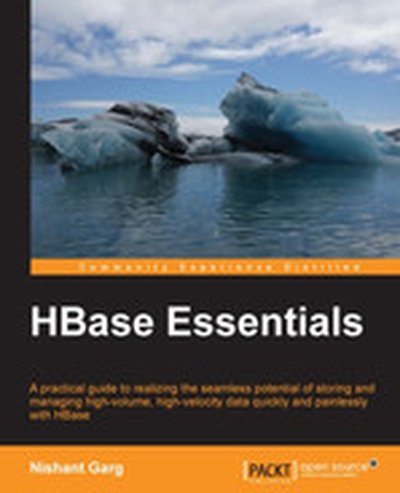
Hbase Essentials

Hbase Essentials provides a hands-on introduction to HBase, a distributed database built on top of the Hadoop ecosystem. Through practical examples and clear explanations, you will learn how to set up, use, and administer HBase to manage high-volume, high-velocity data efficiently. What this Book will help me do Understand the importance and use cases of HBase for managing Big Data. Successfully set up and configure an HBase cluster in your environment. Develop data models in HBase and perform CRUD operations effectively. Learn advanced HBase features like counters, coprocessors, and integration with MapReduce. Master cluster management and performance tuning for optimal HBase operations. Author(s) None Garg is a seasoned Big Data engineer with extensive experience in distributed databases and the Hadoop ecosystem. Having worked on complex data systems, None brings practical insights to understanding and implementing HBase. Known for a clear and approachable writing style, None aims to make learning technical subjects accessible. Who is it for? Hbase Essentials is ideal for developers and Big Data engineers keen to build expertise in distributed databases. If you have a basic understanding of HDFS or MapReduce or have experience with NoSQL databases, this book will accelerate your knowledge of HBase. It's tailored for those seeking to leverage HBase for scalable and reliable data solutions. Whether you're starting with HBase or expanding your Big Data skillset, this guide provides the tools to succeed.