talk-data.com talk-data.com

Topic

Hadoop

Apache Hadoop

big_data distributed_computing data_processing

258

tagged

Activity Trend

3 peak/qtr
2020-Q1 2026-Q1

Activities

258 activities · Newest first

Hadoop 2 Quick-Start Guide: Learn the Essentials of Big Data Computing in the Apache Hadoop 2 Ecosystem

Get Started Fast with Apache Hadoop ® 2, YARN, and Today’s Hadoop Ecosystem With Hadoop 2.x and YARN, Hadoop moves beyond MapReduce to become practical for virtually any type of data processing. Hadoop 2.x and the Data Lake concept represent a radical shift away from conventional approaches to data usage and storage. Hadoop 2.x installations offer unmatched scalability and breakthrough extensibility that supports new and existing Big Data analytics processing methods and models. Hadoop ® 2 Quick-Start Guide is the first easy, accessible guide to Apache Hadoop 2.x, YARN, and the modern Hadoop ecosystem. Building on his unsurpassed experience teaching Hadoop and Big Data, author Douglas Eadline covers all the basics you need to know to install and use Hadoop 2 on personal computers or servers, and to navigate the powerful technologies that complement it. Eadline concisely introduces and explains every key Hadoop 2 concept, tool, and service, illustrating each with a simple “beginning-to-end” example and identifying trustworthy, up-to-date resources for learning more. This guide is ideal if you want to learn about Hadoop 2 without getting mired in technical details. Douglas Eadline will bring you up to speed quickly, whether you’re a user, admin, devops specialist, programmer, architect, analyst, or data scientist. Coverage Includes Understanding what Hadoop 2 and YARN do, and how they improve on Hadoop 1 with MapReduce Understanding Hadoop-based Data Lakes versus RDBMS Data Warehouses Installing Hadoop 2 and core services on Linux machines, virtualized sandboxes, or clusters Exploring the Hadoop Distributed File System (HDFS) Understanding the essentials of MapReduce and YARN application programming Simplifying programming and data movement with Apache Pig, Hive, Sqoop, Flume, Oozie, and HBase Observing application progress, controlling jobs, and managing workflows Managing Hadoop efficiently with Apache Ambari–including recipes for HDFS to NFSv3 gateway, HDFS snapshots, and YARN configuration Learning basic Hadoop 2 troubleshooting, and installing Apache Hue and Apache Spark
Sams Teach Yourself: Big Data Analytics with Microsoft HDInsight in 24 Hours

Sams Teach Yourself Big Data Analytics with Microsoft HDInsight in 24 Hours In just 24 lessons of one hour or less, Sams Teach Yourself Big Data Analytics with Microsoft HDInsight in 24 Hours helps you leverage Hadoop’s power on a flexible, scalable cloud platform using Microsoft’s newest business intelligence, visualization, and productivity tools. This book’s straightforward, step-by-step approach shows you how to provision, configure, monitor, and troubleshoot HDInsight and use Hadoop cloud services to solve real analytics problems. You’ll gain more of Hadoop’s benefits, with less complexity–even if you’re completely new to Big Data analytics. Every lesson builds on what you’ve already learned, giving you a rock-solid foundation for real-world success. Practical, hands-on examples show you how to apply what you learn Quizzes and exercises help you test your knowledge and stretch your skills Notes and tips point out shortcuts and solutions Learn how to… Master core Big Data and NoSQL concepts, value propositions, and use cases Work with key Hadoop features, such as HDFS2 and YARN Quickly install, configure, and monitor Hadoop (HDInsight) clusters in the cloud Automate provisioning, customize clusters, install additional Hadoop projects, and administer clusters Integrate, analyze, and report with Microsoft BI and Power BI Automate workflows for data transformation, integration, and other tasks Use Apache HBase on HDInsight Use Sqoop or SSIS to move data to or from HDInsight Perform R-based statistical computing on HDInsight datasets Accelerate analytics with Apache Spark Run real-time analytics on high-velocity data streams Write MapReduce, Hive, and Pig programs Register your book at informit.com/register for convenient access to downloads, updates, and corrections as they become available.

Hadoop with Python

Hadoop is mostly written in Java, but that doesn't exclude the use of other programming languages with this distributed storage and processing framework, particularly Python. With this concise book, you’ll learn how to use Python with the Hadoop Distributed File System (HDFS), MapReduce, the Apache Pig platform and Pig Latin script, and the Apache Spark cluster-computing framework. Authors Zachary Radtka and Donald Miner from the data science firm Miner & Kasch take you through the basic concepts behind Hadoop, MapReduce, Pig, and Spark. Then, through multiple examples and use cases, you'll learn how to work with these technologies by applying various Python tools. Use the Python library Snakebite to access HDFS programmatically from within Python applications Write MapReduce jobs in Python with mrjob, the Python MapReduce library Extend Pig Latin with user-defined functions (UDFs) in Python Use the Spark Python API (PySpark) to write Spark programs with Python Learn how to use the Luigi Python workflow scheduler to manage MapReduce jobs and Pig scripts Zachary Radtka, a platform engineer at Miner & Kasch, has extensive experience creating custom analytics that run on petabyte-scale data sets.

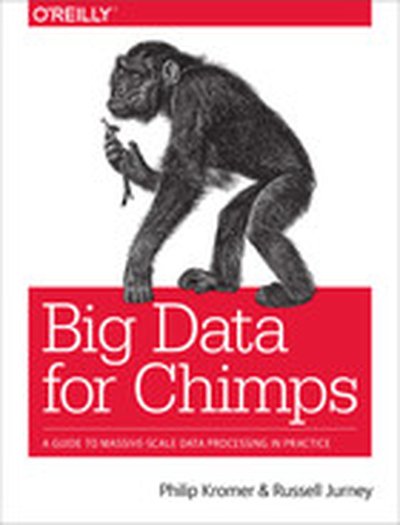
Big Data for Chimps

Finding patterns in massive event streams can be difficult, but learning how to find them doesn’t have to be. This unique hands-on guide shows you how to solve this and many other problems in large-scale data processing with simple, fun, and elegant tools that leverage Apache Hadoop. You’ll gain a practical, actionable view of big data by working with real data and real problems. Perfect for beginners, this book’s approach will also appeal to experienced practitioners who want to brush up on their skills. Part I explains how Hadoop and MapReduce work, while Part II covers many analytic patterns you can use to process any data. As you work through several exercises, you’ll also learn how to use Apache Pig to process data. Learn the necessary mechanics of working with Hadoop, including how data and computation move around the cluster Dive into map/reduce mechanics and build your first map/reduce job in Python Understand how to run chains of map/reduce jobs in the form of Pig scripts Use a real-world dataset—baseball performance statistics—throughout the book Work with examples of several analytic patterns, and learn when and where you might use them

Pro MongoDB™ Development

Pro MongoDB Development is a critical reference for anyone using MongoDB, a NoSQL database based on the BSON (binary JSON) document model. The book explores many aspects of implementing MongoDB in web applications, whether you are using Java, PHP, Ruby, and JavaScript. Noted expert Deepak Vohra walks you through accessing MongoDB databases with all these languages and working with various other technologies and databases. Vohra discusses using Java EE frameworks Kundera and Spring Data with MongoDB. You learn the nuts and bolts of migrating data from other NoSQL databases (Apache Cassandra and Couchbase) and from relational databases (Oracle Database). And, because NoSQL databases are commonly used with the Hadoop ecosystem, the book also covers using MongoDB with Apache Hive. Each chapter includes details about the software you need and hands on examples of working with MongoDB and these technologies so you know exactly what to do, whatever your MongoDB implementation requires.

Beginning Big Data with Power BI and Excel 2013

In Beginning Big Data with Power BI and Excel 2013, you will learn to solve business problems by tapping the power of Microsoft’s Excel and Power BI to import data from NoSQL and SQL databases and other sources, create relational data models, and analyze business problems through sophisticated dashboards and data-driven maps. While Beginning Big Data with Power BI and Excel 2013 covers prominent tools such as Hadoop and the NoSQL databases, it recognizes that most small and medium-sized businesses don’t have the Big Data processing needs of a Netflix, Target, or Facebook. Instead, it shows how to import data and use the self-service analytics available in Excel with Power BI. As you’ll see through the book’s numerous case examples, these tools—which you already know how to use—can perform many of the same functions as the higher-end Apache tools many people believe are required to carry out in Big Data projects. Through instruction, insight, advice, and case studies, Beginning Big Data with Power BI and Excel 2013 will show you how to: Import and mash up data from web pages, SQL and NoSQL databases, the Azure Marketplace and other sources. Tap into the analytical power of PivotTables and PivotCharts and develop relational data models to track trends and make predictions based on a wide range of data. Understand basic statistics and use Excel with PowerBI to do sophisticated statistical analysis—including identifying trends and correlations. Use SQL within Excel to do sophisticated queries across multiple tables, including NoSQL databases. Create complex formulas to solve real-world business problems using Data Analysis Expressions (DAX).

Managing the Data Lake

Organizations across many industries have recently created fast-growing repositories to deal with an influx of new data from many sources and often in multiple formats. To manage these data lakes, companies have begun to leave the familiar confines of relational databases and data warehouses for Hadoop and various big data solutions. But adopting new technology alone won’t solve the problem. Based on interviews with several experts in data management, author Andy Oram provides an in-depth look at common issues you’re likely to encounter as you consider how to manage business data. You’ll explore five key topic areas, including: Acquisition and ingestion: how to solve these problems with a degree of automation. Metadata: how to keep track of when data came in and how it was formatted, and how to make it available at later stages of processing. Data preparation and cleaning: what you need to know before you prepare and clean your data, and what needs to be cleaned up and how. Organizing workflows: what you should do to combine your tasks—ingestion, cataloging, and data preparation—into an end-to-end workflow. Access control: how to address security and access controls at all stages of data handling. Andy Oram, an editor at O’Reilly Media since 1992, currently specializes in programming. His work for O'Reilly includes the first books on Linux ever published commercially in the United States.

Mapping Big Data

To discover the shape and structure of the big data market, the San Francisco-based startup Relato took a unique approach to market research and created the first fully data-driven market report. Company CEO Russell Jurney and his team collected and analyzed raw data from a variety of sources to reveal a boatload of business insights about the big data space. This exceptional report is now available for free download. Using data analytic techniques such as social network analysis (SNA), Relato exposed the vast and complex partnership network that exists among tens of thousands of unique big data vendors. The dataset Relato collected is centered around Cloudera, Hortonworks, and MapR, the major platform vendors of Hadoop, the primary force behind this market. From this snowball sample, a 2-hop network, the Relato team was able to answer several questions, including: Who are the major players in the big data market? Which is the leading Hadoop vendor? What sectors are included in this market and how do they relate? Which among the thousands of partnerships are most important? Who’s doing business with whom? Metrics used in this report are also visible in Relato’s interactive web application, via a link in the report, which walks you through the insights step-by-step.

Learning YARN

"Learning YARN" is your comprehensive guide to master YARN, the resource management layer in the Hadoop ecosystem. Through the book, you'll leverage YARN's capabilities for big data processing, learning to deploy, manage, and scale Hadoop-YARN clusters. What this Book will help me do Understand the main features and benefits of the YARN framework. Gain experience managing Hadoop clusters of varying sizes. Learn to integrate YARN with domain-specific big data tools like Spark. Become skilled at administration and configuration of YARN. Develop and run your own YARN-based applications for distributed computing. Author(s) Akhil Arora and Shrey Mehrotra bring with them years of experience working in big data frameworks and technologies. With expertise in YARN specifically, they aim to bridge the gap for developers and administrators to learn and implement scalable big data solutions. Their extensive knowledge in cluster management and distributed data processing shines through in how this book is structured and detailed. Who is it for? This book is ideal for software developers, big data engineers, and system administrators interested in advancing their knowledge in resource management in Hadoop systems. If you have basic familiarity with Hadoop and need a deeper understanding or feature knowledge of YARN for professional growth, this book is tailored for you. It is also suitable for learners seeking to integrate big data platforms like Spark into YARN clusters.

Pro Couchbase Development: A NoSQL Platform for the Enterprise

Pro Couchbase Development: A NoSQL Platform for the Enterprise discusses programming for Couchbase using Java and scripting languages, querying and searching, handling migration, and integrating Couchbase with Hadoop, HDFS, and JSON. It also discusses migration from other NoSQL databases like MongoDB. This book is for big data developers who use Couchbase NoSQL database or want to use Couchbase for their web applications as well as for those migrating from other NoSQL databases like MongoDB and Cassandra. For example, a reason to migrate from Cassandra is that it is not based on the JSON document model with support for a flexible schema without having to define columns and supercolumns. The target audience is largely Java developers but the book also supports PHP and Ruby developers who want to learn about Couchbase. The author supplies examples in Java, PHP, Ruby, and JavaScript. After reading and using this hands-on guide for developing with Couchbase, you'll be able to build complex enterprise, database and cloud applications that leverage this powerful platform.

Virtualizing Hadoop: How to Install, Deploy, and Optimize Hadoop in a Virtualized Architecture

Plan and Implement Hadoop Virtualization for Maximum Performance, Scalability, and Business Agility Enterprises running Hadoop must absorb rapid changes in big data ecosystems, frameworks, products, and workloads. Virtualized approaches can offer important advantages in speed, flexibility, and elasticity. Now, a world-class team of enterprise virtualization and big data experts guide you through the choices, considerations, and tradeoffs surrounding Hadoop virtualization. The authors help you decide whether to virtualize Hadoop, deploy Hadoop in the cloud, or integrate conventional and virtualized approaches in a blended solution. First, Virtualizing Hadoop reviews big data and Hadoop from the standpoint of the virtualization specialist. The authors demystify MapReduce, YARN, and HDFS and guide you through each stage of Hadoop data management. Next, they turn the tables, introducing big data experts to modern virtualization concepts and best practices. Finally, they bring Hadoop and virtualization together, guiding you through the decisions you’ll face in planning, deploying, provisioning, and managing virtualized Hadoop. From security to multitenancy to day-to-day management, you’ll find reliable answers for choosing your best Hadoop strategy and executing it. Coverage includes the following: • Reviewing the frameworks, products, distributions, use cases, and roles associated with Hadoop • Understanding YARN resource management, HDFS storage, and I/O • Designing data ingestion, movement, and organization for modern enterprise data platforms • Defining SQL engine strategies to meet strict SLAs • Considering security, data isolation, and scheduling for multitenant environments • Deploying Hadoop as a service in the cloud • Reviewing the essential concepts, capabilities, and terminology of virtualization • Applying current best practices, guidelines, and key metrics for Hadoop virtualization • Managing multiple Hadoop frameworks and products as one unified system • Virtualizing master and worker nodes to maximize availability and performance • Installing and configuring Linux for a Hadoop environment

Hadoop Application Architectures

Get expert guidance on architecting end-to-end data management solutions with Apache Hadoop. While many sources explain how to use various components in the Hadoop ecosystem, this practical book takes you through architectural considerations necessary to tie those components together into a complete tailored application, based on your particular use case.

Hadoop Security

As more corporations turn to Hadoop to store and process their most valuable data, the risk of a potential breach of those systems increases exponentially. This practical book not only shows Hadoop administrators and security architects how to protect Hadoop data from unauthorized access, it also shows how to limit the ability of an attacker to corrupt or modify data in the event of a security breach. Authors Ben Spivey and Joey Echeverria provide in-depth information about the security features available in Hadoop, and organize them according to common computer security concepts. You’ll also get real-world examples that demonstrate how you can apply these concepts to your use cases. Understand the challenges of securing distributed systems, particularly Hadoop Use best practices for preparing Hadoop cluster hardware as securely as possible Get an overview of the Kerberos network authentication protocol Delve into authorization and accounting principles as they apply to Hadoop Learn how to use mechanisms to protect data in a Hadoop cluster, both in transit and at rest Integrate Hadoop data ingest into enterprise-wide security architecture Ensure that security architecture reaches all the way to end-user access

IBM Software Defined Infrastructure for Big Data Analytics Workloads

This IBM® Redbooks® publication documents how IBM Platform Computing, with its IBM Platform Symphony® MapReduce framework, IBM Spectrum Scale (based Upon IBM GPFS™), IBM Platform LSF®, the Advanced Service Controller for Platform Symphony are work together as an infrastructure to manage not just Hadoop-related offerings, but many popular industry offeringsm such as Apach Spark, Storm, MongoDB, Cassandra, and so on. It describes the different ways to run Hadoop in a big data environment, and demonstrates how IBM Platform Computing solutions, such as Platform Symphony and Platform LSF with its MapReduce Accelerator, can help performance and agility to run Hadoop on distributed workload managers offered by IBM. This information is for technical professionals (consultants, technical support staff, IT architects, and IT specialists) who are responsible for delivering cost-effective cloud services and big data solutions on IBM Power Systems™ to help uncover insights among client’s data so they can optimize product development and business results.

Apache Oozie

Get a solid grounding in Apache Oozie, the workflow scheduler system for managing Hadoop jobs. With this hands-on guide, two experienced Hadoop practitioners walk you through the intricacies of this powerful and flexible platform, with numerous examples and real-world use cases. Once you set up your Oozie server, you’ll dive into techniques for writing and coordinating workflows, and learn how to write complex data pipelines. Advanced topics show you how to handle shared libraries in Oozie, as well as how to implement and manage Oozie’s security capabilities. Install and configure an Oozie server, and get an overview of basic concepts Journey through the world of writing and configuring workflows Learn how the Oozie coordinator schedules and executes workflows based on triggers Understand how Oozie manages data dependencies Use Oozie bundles to package several coordinator apps into a data pipeline Learn about security features and shared library management Implement custom extensions and write your own EL functions and actions Debug workflows and manage Oozie’s operational details

Big Data

Big Data teaches you to build big data systems using an architecture that takes advantage of clustered hardware along with new tools designed specifically to capture and analyze web-scale data. It describes a scalable, easy-to-understand approach to big data systems that can be built and run by a small team. Following a realistic example, this book guides readers through the theory of big data systems, how to implement them in practice, and how to deploy and operate them once they're built. About the Technology About the Book Web-scale applications like social networks, real-time analytics, or e-commerce sites deal with a lot of data, whose volume and velocity exceed the limits of traditional database systems. These applications require architectures built around clusters of machines to store and process data of any size, or speed. Fortunately, scale and simplicity are not mutually exclusive. Big Data teaches you to build big data systems using an architecture designed specifically to capture and analyze web-scale data. This book presents the Lambda Architecture, a scalable, easy-to-understand approach that can be built and run by a small team. You'll explore the theory of big data systems and how to implement them in practice. In addition to discovering a general framework for processing big data, you'll learn specific technologies like Hadoop, Storm, and NoSQL databases. What's Inside Introduction to big data systems Real-time processing of web-scale data Tools like Hadoop, Cassandra, and Storm Extensions to traditional database skills About the Reader This book requires no previous exposure to large-scale data analysis or NoSQL tools. Familiarity with traditional databases is helpful. About the Authors Nathan Marz is the creator of Apache Storm and the originator of the Lambda Architecture for big data systems. James Warren is an analytics architect with a background in machine learning and scientific computing. Quotes Transcends individual tools or platforms. Required reading for anyone working with big data systems. - Jonathan Esterhazy, Groupon A comprehensive, example-driven tour of the Lambda Architecture with its originator as your guide. - Mark Fisher, Pivotal Contains wisdom that can only be gathered after tackling many big data projects. A must-read. - Pere Ferrera Bertran, Datasalt The de facto guide to streamlining your data pipeline in batch and near-real time. - Alex Holmes, Author of "Hadoop in Practice"

Hadoop Essentials

In 'Hadoop Essentials,' you'll embark on an engaging journey to master the Hadoop ecosystem. This book covers fundamental to advanced topics, from HDFS and MapReduce to real-time analytics with Spark, empowering you to handle modern data challenges efficiently. What this Book will help me do Understand the core components of Hadoop, including HDFS, YARN, and MapReduce, for foundational knowledge. Learn to optimize Big Data architectures and improve application performance. Utilize tools like Hive and Pig for efficient data querying and processing. Master data ingestion technologies like Sqoop and Flume for seamless data management. Achieve fluency in real-time data analytics using modern tools like Apache Spark and Apache Storm. Author(s) None Achari is a seasoned expert in Big Data and distributed systems with in-depth knowledge of the Hadoop ecosystem. With years of experience in both development and teaching, they craft content that bridges practical know-how with theoretical insights in a highly accessible style. Who is it for? This book is perfect for system and application developers aiming to learn practical applications of Hadoop. It suits professionals seeking solutions to real-world Big Data challenges as well as those familiar with distributed systems basics and looking to deepen their expertise in advanced data analysis.

The Security Data Lake

Companies of all sizes are considering data lakes as a way to deal with terabytes of security data that can help them conduct forensic investigations and serve as an early indicator to identify bad or relevant behavior. Many think about replacing their existing SIEM (security information and event management) systems with Hadoop running on commodity hardware. Before your company jumps into the deep end, you first need to weigh several critical factors. This O'Reilly report takes you through technological and design options for implementing a data lake. Each option not only supports your data analytics use cases, but is also accessible by processes, workflows, third-party tools, and teams across your organization. Within this report, you'll explore: Five questions to ask before choosing architecture for your backend data store How data lakes can overcome scalability and data duplication issues Different options for storing context and unstructured log data Data access use cases covering both search and analytical queries via SQL Processes necessary for ingesting data into a data lake, including parsing, enrichment, and aggregation Four methods for embedding your SIEM into a data lake

Real-World Hadoop

If you’re a business team leader, CIO, business analyst, or developer interested in how Apache Hadoop and Apache HBase-related technologies can address problems involving large-scale data in cost-effective ways, this book is for you. Using real-world stories and situations, authors Ted Dunning and Ellen Friedman show Hadoop newcomers and seasoned users alike how NoSQL databases and Hadoop can solve a variety of business and research issues. You’ll learn about early decisions and pre-planning that can make the process easier and more productive. If you’re already using these technologies, you’ll discover ways to gain the full range of benefits possible with Hadoop. While you don’t need a deep technical background to get started, this book does provide expert guidance to help managers, architects, and practitioners succeed with their Hadoop projects. Examine a day in the life of big data: India’s ambitious Aadhaar project Review tools in the Hadoop ecosystem such as Apache’s Spark, Storm, and Drill to learn how they can help you Pick up a collection of technical and strategic tips that have helped others succeed with Hadoop Learn from several prototypical Hadoop use cases, based on how organizations have actually applied the technology Explore real-world stories that reveal how MapR customers combine use cases when putting Hadoop and NoSQL to work, including in production Ted Dunning is Chief Applications Architect at MapR Technologies, and committer and PMC member of the Apache’s Drill, Storm, Mahout, and ZooKeeper projects. He is also mentor for Apache’s Datafu, Kylin, Zeppelin, Calcite, and Samoa projects. Ellen Friedman is a solutions consultant, speaker, and author, writing mainly about big data topics. She is a committer for the Apache Mahout project and a contributor to the Apache Drill project.