talk-data.com talk-data.com

Topic

Hadoop

Apache Hadoop

big_data distributed_computing data_processing

258

tagged

Activity Trend

3 peak/qtr
2020-Q1 2026-Q1

Activities

258 activities · Newest first

Summary

There is a vast constellation of tools and platforms for processing and analyzing your data. In this episode Matthew Rocklin talks about how Dask fills the gap between a task oriented workflow tool and an in memory processing framework, and how it brings the power of Python to bear on the problem of big data.

Preamble

Hello and welcome to the Data Engineering Podcast, the show about modern data infrastructure Go to dataengineeringpodcast.com to subscribe to the show, sign up for the newsletter, read the show notes, and get in touch. You can help support the show by checking out the Patreon page which is linked from the site. To help other people find the show you can leave a review on iTunes, or Google Play Music, and tell your friends and co-workers Your host is Tobias Macey and today I’m interviewing Matthew Rocklin about Dask and the Blaze ecosystem.

Interview with Matthew Rocklin

Introduction How did you get involved in the area of data engineering? Dask began its life as part of the Blaze project. Can you start by describing what Dask is and how it originated? There are a vast number of tools in the field of data analytics. What are some of the specific use cases that Dask was built for that weren’t able to be solved by the existing options? One of the compelling features of Dask is the fact that it is a Python library that allows for distributed computation at a scale that has largely been the exclusive domain of tools in the Hadoop ecosystem. Why do you think that the JVM has been the reigning platform in the data analytics space for so long? Do you consider Dask, along with the larger Blaze ecosystem, to be a competitor to the Hadoop ecosystem, either now or in the future? Are you seeing many Hadoop or Spark solutions being migrated to Dask? If so, what are the common reasons? There is a strong focus for using Dask as a tool for interactive exploration of data. How does it compare to something like Apache Drill? For anyone looking to integrate Dask into an existing code base that is already using NumPy or Pandas, what does that process look like? How do the task graph capabilities compare to something like Airflow or Luigi? Looking through the documentation for the graph specification in Dask, it appears that there is the potential to introduce cycles or other bugs into a large or complex task chain. Is there any built-in tooling to check for that before submitting the graph for execution? What are some of the most interesting or unexpected projects that you have seen Dask used for? What do you perceive as being the most relevant aspects of Dask for data engineering/data infrastructure practitioners, as compared to the end users of the systems that they support? What are some of the most significant problems that you have been faced with, and which still need to be overcome in the Dask project? I know that the work on Dask is largely performed under the umbrella of PyData and sponsored by Continuum Analytics. What are your thoughts on the financial landscape for open source data analytics and distributed computation frameworks as compared to the broader world of open source projects?

Keep in touch

@mrocklin on Twitter mrocklin on GitHub

Links

http://matthewrocklin.com/blog/work/2016/09/22/cluster-deployments?utm_source=rss&utm_medium=rss https://opendatascience.com/blog/dask-for-institutions/?utm_source=rss&utm_medium=rss Continuum Analytics 2sigma X-Array Tornado

Website Podcast Interview

Airflow Luigi Mesos Kubernetes Spark Dryad Yarn Read The Docs XData

The intro and outro music is from The Hug by The Freak Fandango Orchestra / CC BY-SA Support Data Engineering Podcast
Pro Apache Phoenix: An SQL Driver for HBase, First Edition

Leverage Phoenix as an ANSI SQL engine built on top of the highly distributed and scalable NoSQL framework HBase. Learn the basics and best practices that are being adopted in Phoenix to enable a high write and read throughput in a big data space. This book includes real-world cases such as Internet of Things devices that send continuous streams to Phoenix, and the book explains how key features such as joins, indexes, transactions, and functions help you understand the simple, flexible, and powerful API that Phoenix provides. Examples are provided using real-time data and data-driven businesses that show you how to collect, analyze, and act in seconds. Pro Apache Phoenix covers the nuances of setting up a distributed HBase cluster with Phoenix libraries, running performance benchmarks, configuring parameters for production scenarios, and viewing the results. The book also shows how Phoenix plays well with other key frameworks in the Hadoop ecosystem such as Apache Spark, Pig, Flume, and Sqoop. You will learn how to: Handle a petabyte data store by applying familiar SQL techniques Store, analyze, and manipulate data in a NoSQL Hadoop echo system with HBase Apply best practices while working with a scalable data store on Hadoop and HBase Integrate popular frameworks (Apache Spark, Pig, Flume) to simplify big data analysis Demonstrate real-time use cases and big data modeling techniques Who This Book Is For Data engineers, Big Data administrators, and architects

Practical Data Science with Hadoop® and Spark: Designing and Building Effective Analytics at Scale

The Complete Guide to Data Science with Hadoop—For Technical Professionals, Businesspeople, and Students Demand is soaring for professionals who can solve real data science problems with Hadoop and Spark. is your complete guide to doing just that. Drawing on immense experience with Hadoop and big data, three leading experts bring together everything you need: high-level concepts, deep-dive techniques, real-world use cases, practical applications, and hands-on tutorials. Practical Data Science with Hadoop® and Spark The authors introduce the essentials of data science and the modern Hadoop ecosystem, explaining how Hadoop and Spark have evolved into an effective platform for solving data science problems at scale. In addition to comprehensive application coverage, the authors also provide useful guidance on the important steps of data ingestion, data munging, and visualization. Once the groundwork is in place, the authors focus on specific applications, including machine learning, predictive modeling for sentiment analysis, clustering for document analysis, anomaly detection, and natural language processing (NLP). This guide provides a strong technical foundation for those who want to do practical data science, and also presents business-driven guidance on how to apply Hadoop and Spark to optimize ROI of data science initiatives. Learn What data science is, how it has evolved, and how to plan a data science career How data volume, variety, and velocity shape data science use cases Hadoop and its ecosystem, including HDFS, MapReduce, YARN, and Spark Data importation with Hive and Spark Data quality, preprocessing, preparation, and modeling Visualization: surfacing insights from huge data sets Machine learning: classification, regression, clustering, and anomaly detection Algorithms and Hadoop tools for predictive modeling Cluster analysis and similarity functions Large-scale anomaly detection NLP: applying data science to human language

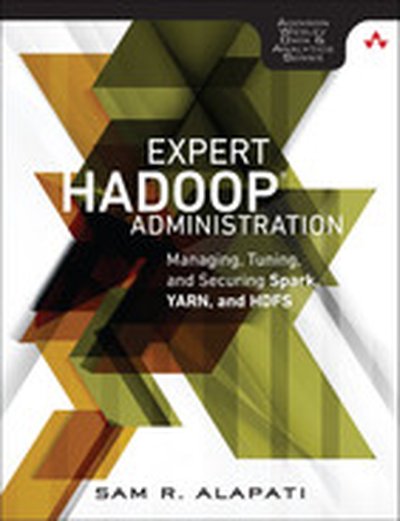
Expert Hadoop® Administration

The Comprehensive, Up-to-Date Apache Hadoop Administration Handbook and Reference “Sam Alapati has worked with production Hadoop clusters for six years. His unique depth of experience has enabled him to write the go-to resource for all administrators looking to spec, size, expand, and secure production Hadoop clusters of any size.” –Paul Dix, Series Editor In leading Hadoop administrator Sam R. Alapati brings together authoritative knowledge for creating, configuring, securing, managing, and optimizing production Hadoop clusters in any environment. Drawing on his experience with large-scale Hadoop administration, Alapati integrates action-oriented advice with carefully researched explanations of both problems and solutions. He covers an unmatched range of topics and offers an unparalleled collection of realistic examples. Expert Hadoop® Administration, Alapati demystifies complex Hadoop environments, helping you understand exactly what happens behind the scenes when you administer your cluster. You’ll gain unprecedented insight as you walk through building clusters from scratch and configuring high availability, performance, security, encryption, and other key attributes. The high-value administration skills you learn here will be indispensable no matter what Hadoop distribution you use or what Hadoop applications you run. Understand Hadoop’s architecture from an administrator’s standpoint Create simple and fully distributed clusters Run MapReduce and Spark applications in a Hadoop cluster Manage and protect Hadoop data and high availability Work with HDFS commands, file permissions, and storage management Move data, and use YARN to allocate resources and schedule jobs Manage job workflows with Oozie and Hue Secure, monitor, log, and optimize Hadoop Benchmark and troubleshoot Hadoop

Apache HBase Primer

Learn the fundamental foundations and concepts of the Apache HBase (NoSQL) open source database. It covers the HBase data model, architecture, schema design, API, and administration. Apache HBase is the database for the Apache Hadoop framework. HBase is a column family based NoSQL database that provides a flexible schema model. What You'll Learn Work with the core concepts of HBase Discover the HBase data model, schema design, and architecture Use the HBase API and administration Who This Book Is For Apache HBase (NoSQL) database users, designers, developers, and admins.

The Big Data Transformation

Business executives today are well aware of the power of data, especially for gaining actionable insight into products and services. But how do you jump into the big data analytics game without spending millions on data warehouse solutions you don’t need? This 40-page report focuses on massively parallel processing (MPP) analytical databases that enable you to run queries and dashboards on a variety of business metrics at extreme speed and Exabyte scale. Because they leverage the full computational power of a cluster, MPP analytical databases can analyze massive volumes of data—both structured and semi-structured—at unprecedented speeds. This report presents five real-world case studies from Etsy, Cerner Corporation, Criteo and other global enterprises to focus on one big data analytics platform in particular, HPE Vertica. You’ll discover: How one prominent data storage company convinced both business and tech stakeholders to adopt an MPP analytical database Why performance marketing technology company Criteo used a Center of Excellence (CoE) model to ensure the success of its big data analytics endeavors How YPSM uses Vertica to speed up its Hadoop-based data processing environment Why Cerner adopted an analytical database to scale its highly successful health information technology platform How Etsy drives success with the company’s big data initiative by avoiding common technical and organizational mistakes

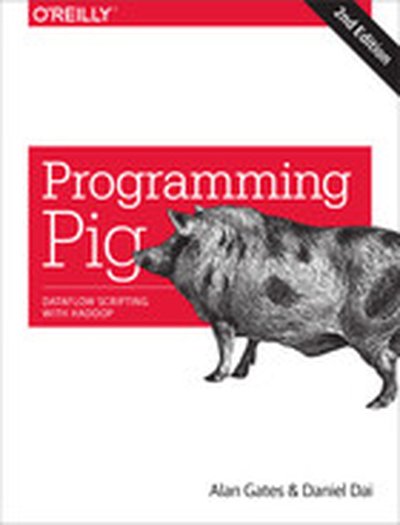
Programming Pig, 2nd Edition

For many organizations, Hadoop is the first step for dealing with massive amounts of data. The next step? Processing and analyzing datasets with the Apache Pig scripting platform. With Pig, you can batch-process data without having to create a full-fledged application, making it easy to experiment with new datasets. Updated with use cases and programming examples, this second edition is the ideal learning tool for new and experienced users alike. You’ll find comprehensive coverage on key features such as the Pig Latin scripting language and the Grunt shell. When you need to analyze terabytes of data, this book shows you how to do it efficiently with Pig. Delve into Pig’s data model, including scalar and complex data types Write Pig Latin scripts to sort, group, join, project, and filter your data Use Grunt to work with the Hadoop Distributed File System (HDFS) Build complex data processing pipelines with Pig’s macros and modularity features Embed Pig Latin in Python for iterative processing and other advanced tasks Use Pig with Apache Tez to build high-performance batch and interactive data processing applications Create your own load and store functions to handle data formats and storage mechanisms

Business Analytics for Managers, 2nd Edition

The intensified used of data based on analytical models to control digitalized operational business processes in an intelligent way is a game changer that continuously disrupts more and more markets. This book exemplifies this development and shows the latest tools and advances in this field Business Analytics for Managers offers real-world guidance for organizations looking to leverage their data into a competitive advantage. This new second edition covers the advances that have revolutionized the field since the first edition's release; big data and real-time digitalized decision making have become major components of any analytics strategy, and new technologies are allowing businesses to gain even more insight from the ever-increasing influx of data. New terms, theories, and technologies are explained and discussed in terms of practical benefit, and the emphasis on forward thinking over historical data describes how analytics can drive better business planning. Coverage includes data warehousing, big data, social media, security, cloud technologies, and future trends, with expert insight on the practical aspects of the current state of the field. Analytics helps businesses move forward. Extensive use of statistical and quantitative analysis alongside explanatory and predictive modeling facilitates fact-based decision making, and evolving technologies continue to streamline every step of the process. This book provides an essential update, and describes how today's tools make business analytics more valuable than ever. Learn how Hadoop can upgrade your data processing and storage Discover the many uses for social media data in analysis and communication Get up to speed on the latest in cloud technologies, data security, and more Prepare for emerging technologies and the future of business analytics Most businesses are caught in a massive, non-stop stream of data. It can become one of your most valuable assets, or a never-ending flood of missed opportunity. Technology moves fast, and keeping up with the cutting edge is crucial for wringing even more value from your data— Business Analytics for Managers brings you up to date, and shows you what analytics can do for you now.

Oracle R Enterprise: Harnessing the Power of R in Oracle Database

Master the Big Data Capabilities of Oracle R Enterprise Effectively manage your enterprise’s big data and keep complex processes running smoothly using the hands-on information contained in this Oracle Press guide. Oracle R Enterprise: Harnessing the Power of R in Oracle Database shows, step-by-step, how to create and execute large-scale predictive analytics and maintain superior performance. Discover how to explore and prepare your data, accurately model business processes, generate sophisticated graphics, and write and deploy powerful scripts. You will also find out how to effectively incorporate Oracle R Enterprise features in APEX applications, OBIEE dashboards, and Apache Hadoop systems. Learn to: • Install, configure, and administer Oracle R Enterprise • Establish connections and move data to the database • Create Oracle R Enterprise packages and functions • Use the R language to work with data in Oracle Database • Build models using ODM, ORE, and other algorithms • Develop and deploy R scripts and use the R script repository • Execute embedded R scripts and employ ORE SQL API functions • Map and manipulate data using Oracle R Advanced Analytics for Hadoop • Use ORE in Oracle Data Miner, OBIEE, and other applications

Practical Hadoop Ecosystem: A Definitive Guide to Hadoop-Related Frameworks and Tools

Learn how to use the Apache Hadoop projects, including MapReduce, HDFS, Apache Hive, Apache HBase, Apache Kafka, Apache Mahout, and Apache Solr. From setting up the environment to running sample applications each chapter in this book is a practical tutorial on using an Apache Hadoop ecosystem project. While several books on Apache Hadoop are available, most are based on the main projects, MapReduce and HDFS, and none discusses the other Apache Hadoop ecosystem projects and how they all work together as a cohesive big data development platform. What You Will Learn: Set up the environment in Linux for Hadoop projects using Cloudera Hadoop Distribution CDH 5 Run a MapReduce job Store data with Apache Hive, and Apache HBase Index data in HDFS with Apache Solr Develop a Kafka messaging system Stream Logs to HDFS with Apache Flume Transfer data from MySQL database to Hive, HDFS, and HBase with Sqoop Create a Hive table over Apache Solr Develop a Mahout User Recommender System Who This Book Is For: Apache Hadoop developers. Pre-requisite knowledge of Linux and some knowledge of Hadoop is required.

Hadoop Blueprints

"Hadoop Blueprints" guides you through using Hadoop and its ecosystem to solve real-life business problems. You will explore six case studies covering areas like fraud detection, marketing analysis, and data lakes, providing a thorough and practical understanding of Hadoop applications. What this Book will help me do Understand how to use Hadoop to solve real-life business scenarios effectively. Learn to build a 360-degree customer view integrating different data types. Develop and deploy a fraud detection system leveraging Hadoop technologies. Explore marketing campaign analysis and improvement using data-driven workflows on Hadoop. Gain hands-on experience with creating and maintaining efficient data lakes. Author(s) Sudheesh Narayan, along with his co-authors Anurag Shrivastava and Nod Deshpande, brings extensive experience in Big Data technologies. They have been involved in developing solutions utilizing Hadoop, Apache Spark, and other ecosystem components. Their practical approach to presenting complex technical topics ensures readers can apply their knowledge to real-world scenarios. Who is it for? This book is ideal for software developers, data engineers, and IT professionals who have a foundational understanding of Hadoop and seek to expand their practical skills. Readers should be familiar with Java or other scripting languages. It's perfect for those aiming to build actionable solutions for business problems using Big Data technologies.

Big Data Analytics

Dive into the world of big data with "Big Data Analytics: Real Time Analytics Using Apache Spark and Hadoop." This comprehensive guide introduces readers to the fundamentals and practical applications of Apache Spark and Hadoop, covering essential topics like Spark SQL, DataFrames, structured streaming, and more. Learn how to harness the power of real-time analytics and big data tools effectively. What this Book will help me do Master the key components of Apache Spark and Hadoop ecosystems, including Spark SQL and MapReduce. Gain an understanding of DataFrames, DataSets, and structured streaming for seamless data handling. Develop skills in real-time analytics using Spark Streaming and technologies like Kafka and HBase. Learn to implement machine learning models using Spark's MLlib and ML Pipelines. Explore graph analytics with GraphX and leverage data visualization tools like Jupyter and Zeppelin. Author(s) Venkat Ankam, an expert in big data technologies, has years of experience working with Apache Hadoop and Spark. As an educator and technical consultant, Venkat has enabled numerous professionals to gain critical insights into big data ecosystems. With a pragmatic approach, his writings aim to guide readers through complex systems in a structured and easy-to-follow manner. Who is it for? This book is perfect for data analysts, data scientists, software architects, and programmers aiming to expand their knowledge of big data analytics. Readers should ideally have a basic programming background in languages like Python, Scala, R, or SQL. Prior hands-on experience with big data environments is not necessary but is an added advantage. This guide is created to cater to a range of skill levels, from beginners to intermediate learners.

Hadoop: Data Processing and Modelling

Unlock the power of your data with Hadoop 2.X ecosystem and its data warehousing techniques across large data sets About This Book Conquer the mountain of data using Hadoop 2.X tools The authors succeed in creating a context for Hadoop and its ecosystem Hands-on examples and recipes giving the bigger picture and helping you to master Hadoop 2.X data processing platforms Overcome the challenging data processing problems using this exhaustive course with Hadoop 2.X Who This Book Is For This course is for Java developers, who know scripting, wanting a career shift to Hadoop - Big Data segment of the IT industry. So if you are a novice in Hadoop or an expert, this book will make you reach the most advanced level in Hadoop 2.X. What You Will Learn Best practices for setup and configuration of Hadoop clusters, tailoring the system to the problem at hand Integration with relational databases, using Hive for SQL queries and Sqoop for data transfer Installing and maintaining Hadoop 2.X cluster and its ecosystem Advanced Data Analysis using the Hive, Pig, and Map Reduce programs Machine learning principles with libraries such as Mahout and Batch and Stream data processing using Apache Spark Understand the changes involved in the process in the move from Hadoop 1.0 to Hadoop 2.0 Dive into YARN and Storm and use YARN to integrate Storm with Hadoop Deploy Hadoop on Amazon Elastic MapReduce and Discover HDFS replacements and learn about HDFS Federation In Detail As Marc Andreessen has said "Data is eating the world," which can be witnessed today being the age of Big Data, businesses are producing data in huge volumes every day and this rise in tide of data need to be organized and analyzed in a more secured way. With proper and effective use of Hadoop, you can build new-improved models, and based on that you will be able to make the right decisions. The first module, Hadoop beginners Guide will walk you through on understanding Hadoop with very detailed instructions and how to go about using it. Commands are explained using sections called "What just happened" for more clarity and understanding. The second module, Hadoop Real World Solutions Cookbook, 2nd edition, is an essential tutorial to effectively implement a big data warehouse in your business, where you get detailed practices on the latest technologies such as YARN and Spark. Big data has become a key basis of competition and the new waves of productivity growth. Hence, once you get familiar with the basics and implement the end-to-end big data use cases, you will start exploring the third module, Mastering Hadoop. So, now the question is if you need to broaden your Hadoop skill set to the next level after you nail the basics and the advance concepts, then this course is indispensable. When you finish this course, you will be able to tackle the real-world scenarios and become a big data expert using the tools and the knowledge based on the various step-by-step tutorials and recipes. Style and approach This course has covered everything right from the basic concepts of Hadoop till you master the advance mechanisms to become a big data expert. The goal here is to help you learn the basic essentials using the step-by-step tutorials and from there moving toward the recipes with various real-world solutions for you. It covers all the important aspects of Hadoop from system designing and configuring Hadoop, machine learning principles with various libraries with chapters illustrated with code fragments and schematic diagrams. This is a compendious course to explore Hadoop from the basics to the most advanced techniques available in Hadoop 2.X.

Disruptive Analytics: Charting Your Strategy for Next-Generation Business Analytics

Learn all you need to know about seven key innovations disrupting business analytics today. These innovations—the open source business model, cloud analytics, the Hadoop ecosystem, Spark and in-memory analytics, streaming analytics, Deep Learning, and self-service analytics—are radically changing how businesses use data for competitive advantage. Taken together, they are disrupting the business analytics value chain, creating new opportunities. Enterprises who seize the opportunity will thrive and prosper, while others struggle and decline: disrupt or be disrupted. Disruptive Business Analytics provides strategies to profit from disruption. It shows you how to organize for insight, build and provision an open source stack, how to practice lean data warehousing, and how to assimilate disruptive innovations into an organization. Through a short history of business analytics and a detailed survey of products and services, analytics authority Thomas W. Dinsmore provides a practical explanation of the most compelling innovations available today. What You'll Learn Discover how the open source business model works and how to make it work for you See how cloud computing completely changes the economics of analytics Harness the power of Hadoop and its ecosystem Find out why Apache Spark is everywhere Discover the potential of streaming and real-time analytics Learn what Deep Learning can do and why it matters See how self-service analytics can change the way organizations do business Who This Book Is For Corporate actors at all levels of responsibility for analytics: analysts, CIOs, CTOs, strategic decision makers, managers, systems architects, technical marketers, product developers, IT personnel, and consultants.

Practical Hive: A Guide to Hadoop's Data Warehouse System

Dive into the world of SQL on Hadoop and get the most out of your Hive data warehouses. This book is your go-to resource for using Hive: authors Scott Shaw, Ankur Gupta, David Kjerrumgaard, and Andreas Francois Vermeulen take you through learning HiveQL, the SQL-like language specific to Hive, to analyze, export, and massage the data stored across your Hadoop environment. From deploying Hive on your hardware or virtual machine and setting up its initial configuration to learning how Hive interacts with Hadoop, MapReduce, Tez and other big data technologies, Practical Hive gives you a detailed treatment of the software. In addition, this book discusses the value of open source software, Hive performance tuning, and how to leverage semi-structured and unstructured data. What You Will Learn Install and configure Hive for new and existing datasets Perform DDL operations Execute efficient DML operations Use tables, partitions, buckets, and user-defined functions Discover performance tuning tips and Hive best practices Who This Book Is For Developers, companies, and professionals who deal with large amounts of data and could use software that can efficiently manage large volumes of input. It is assumed that readers have the ability to work with SQL.

IBM Data Engine for Hadoop and Spark

This IBM® Redbooks® publication provides topics to help the technical community take advantage of the resilience, scalability, and performance of the IBM Power Systems™ platform to implement or integrate an IBM Data Engine for Hadoop and Spark solution for analytics solutions to access, manage, and analyze data sets to improve business outcomes. This book documents topics to demonstrate and take advantage of the analytics strengths of the IBM POWER8® platform, the IBM analytics software portfolio, and selected third-party tools to help solve customer's data analytic workload requirements. This book describes how to plan, prepare, install, integrate, manage, and show how to use the IBM Data Engine for Hadoop and Spark solution to run analytic workloads on IBM POWER8. In addition, this publication delivers documentation to complement available IBM analytics solutions to help your data analytic needs. This publication strengthens the position of IBM analytics and big data solutions with a well-defined and documented deployment model within an IBM POWER8 virtualized environment so that customers have a planned foundation for security, scaling, capacity, resilience, and optimization for analytics workloads. This book is targeted at technical professionals (analytics consultants, technical support staff, IT Architects, and IT Specialists) that are responsible for delivering analytics solutions and support on IBM Power Systems.

Architecting for Access

Fragmented, disparate backend data systems have become the norm in today’s enterprise, where you’ll find a mix of relational databases, Hadoop stores, and NoSQL engines, with access and analytics tools bolted on every which way. This mishmash of options presents a real challenge when it comes to choosing frontend analytics and visualization tools. How did we get here? In this O’Reilly report, IT veteran Rich Morrow takes you through the rapid changes to both backend storage and frontend analytics over the past decade, and provides a pragmatic list of requirements for an analytics stack that will centralize access to all of these data systems. You’ll examine current analytics platforms, including Looker—a new breed of analytics and visualization tools built specifically to handle our fragmented data space. Understand why and how data became so fractured so quickly Explore the tangled web of data and backend tools in today’s enterprises Learn the tool requirements for accessing and analyzing the full spectrum of data Examine the relative strengths of popular analytics and visualization tools, including Looker, Tableau, and MicroStrategy Inspect Looker’s unique focus on both the frontend and backend

In Search of Database Nirvana

The database pendulum is in full swing. Ten years ago, web-scale companies began moving away from proprietary relational databases to handle big data use cases with NoSQL and Hadoop. Now, for a variety of reasons, the pendulum is swinging back toward SQL-based solutions. What many companies really want is a system that can handle all of their operational, OLTP, BI, and analytic workloads. Could such an all-in-one database exist? This O’Reilly report examines this quest for database nirvana, or what Gartner recently dubbed Hybrid Transaction/Analytical Processing (HTAP). Author Rohit Jain takes an in-depth look at the possibilities and the challenges for companies that long for a single query engine to rule them all. With this report, you’ll explore: The challenges of having one query engine support operational, BI, and analytical workloads Efforts to produce a query engine that supports multiple storage engines Attempts to support multiple data models with the same query engine Why an HTAP database engine needs to provide enterprise-caliber capabilities, including high availability, security, and manageability How to assess various options for meeting workload requirements with one database engine, or a combination of query and storage engines

Interactive Spark using PySpark

Apache Spark is an in-memory framework that allows data scientists to explore and interact with big data much more quickly than with Hadoop. Python users can work with Spark using an interactive shell called PySpark. Why is it important? PySpark makes the large-scale data processing capabilities of Apache Spark accessible to data scientists who are more familiar with Python than Scala or Java. This also allows for reuse of a wide variety of Python libraries for machine learning, data visualization, numerical analysis, etc. What you'll learn—and how you can apply it Compare the different components provided by Spark, and what use cases they fit. Learn how to use RDDs (resilient distributed datasets) with PySpark. Write Spark applications in Python and submit them to the cluster as Spark jobs. Get an introduction to the Spark computing framework. Apply this approach to a worked example to determine the most frequent airline delays in a specific month and year. This lesson is for you because… You're a data scientist, familiar with Python coding, who needs to get up and running with PySpark You're a Python developer who needs to leverage the distributed computing resources available on a Hadoop cluster, without learning Java or Scala first Prerequisites Familiarity with writing Python applications Some familiarity with bash command-line operations Basic understanding of how to use simple functional programming constructs in Python, such as closures, lambdas, maps, etc. Materials or downloads needed in advance Apache Spark This lesson is taken from by Jenny Kim and Benjamin Bengfort. Data Analytics with Hadoop

Practical Hadoop Migration: How to Integrate Your RDBMS with the Hadoop Ecosystem and Re-Architect Relational Applications to NoSQL

Re-architect relational applications to NoSQL, integrate relational database management systems with the Hadoop ecosystem, and transform and migrate relational data to and from Hadoop components. This book covers the best-practice design approaches to re-architecting your relational applications and transforming your relational data to optimize concurrency, security, denormalization, and performance. Winner of IBM's 2012 Gerstner Award for his implementation of big data and data warehouse initiatives and author of Practical Hadoop Security, author Bhushan Lakhe walks you through the entire transition process. First, he lays out the criteria for deciding what blend of re-architecting, migration, and integration between RDBMS and HDFS best meets your transition objectives. Then he demonstrates how to design your transition model. Lakhe proceeds to cover the selection criteria for ETL tools, the implementation steps for migration with SQOOP- and Flume-based data transfers, and transition optimization techniques for tuning partitions, scheduling aggregations, and redesigning ETL. Finally, he assesses the pros and cons of data lakes and Lambda architecture as integrative solutions and illustrates their implementation with real-world case studies. Hadoop/NoSQL solutions do not offer by default certain relational technology features such as role-based access control, locking for concurrent updates, and various tools for measuring and enhancing performance. Practical Hadoop Migration shows how to use open-source tools to emulate such relational functionalities in Hadoop ecosystem components. What You'll Learn Decide whether you should migrate your relational applications to big data technologies or integrate them Transition your relational applications to Hadoop/NoSQL platforms in terms of logical design and physical implementation Discover RDBMS-to-HDFS integration, data transformation, and optimization techniques Consider when to use Lambda architecture and data lake solutions Select and implement Hadoop-based components and applications to speed transition, optimize integrated performance, and emulate relational functionalities Who This Book Is For Database developers, database administrators, enterprise architects, Hadoop/NoSQL developers, and IT leaders. Its secondary readership is project and program managers and advanced students of database and management information systems.