talk-data.com talk-data.com

Topic

Hadoop

Apache Hadoop

big_data distributed_computing data_processing

258

tagged

Activity Trend

3 peak/qtr
2020-Q1 2026-Q1

Activities

258 activities · Newest first

Streaming Change Data Capture

There are many benefits to becoming a data-driven organization, including the ability to accelerate and improve business decision accuracy through the real-time processing of transactions, social media streams, and IoT data. But those benefits require significant changes to your infrastructure. You need flexible architectures that can copy data to analytics platforms at near-zero latency while maintaining 100% production uptime. Fortunately, a solution already exists. This ebook demonstrates how change data capture (CDC) can meet the scalability, efficiency, real-time, and zero-impact requirements of modern data architectures. Kevin Petrie, Itamar Ankorion, and Dan Potter—technology marketing leaders at Attunity—explain how CDC enables faster and more accurate decisions based on current data and reduces or eliminates full reloads that disrupt production and efficiency. The book examines: How CDC evolved from a niche feature of database replication software to a critical data architecture building block Architectures where data workflow and analysis take place, and their integration points with CDC How CDC identifies and captures source data updates to assist high-speed replication to one or more targets Case studies on cloud-based streaming and streaming to a data lake and related architectures Guiding principles for effectively implementing CDC in cloud, data lake, and streaming environments The Attunity Replicate platform for efficiently loading data across all major database, data warehouse, cloud, streaming, and Hadoop platforms

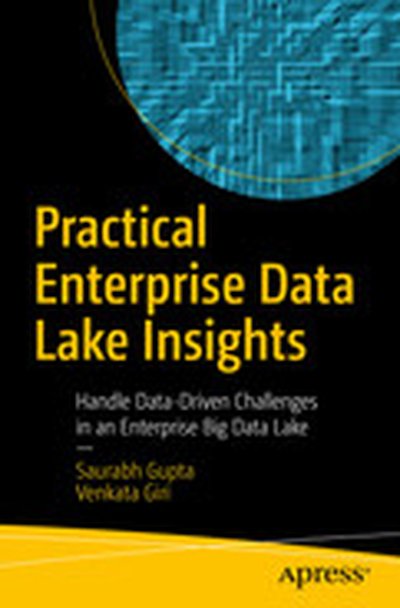
Practical Enterprise Data Lake Insights: Handle Data-Driven Challenges in an Enterprise Big Data Lake

Use this practical guide to successfully handle the challenges encountered when designing an enterprise data lake and learn industry best practices to resolve issues. When designing an enterprise data lake you often hit a roadblock when you must leave the comfort of the relational world and learn the nuances of handling non-relational data. Starting from sourcing data into the Hadoop ecosystem, you will go through stages that can bring up tough questions such as data processing, data querying, and security. Concepts such as change data capture and data streaming are covered. The book takes an end-to-end solution approach in a data lake environment that includes data security, high availability, data processing, data streaming, and more. Each chapter includes application of a concept, code snippets, and use case demonstrations to provide you with a practical approach. You will learn the concept, scope, application, and starting point. What You'll Learn Get to know data lake architecture and design principles Implement data capture and streaming strategies Implement data processing strategies in Hadoop Understand the data lake security framework and availability model Who This Book Is For Big data architects and solution architects

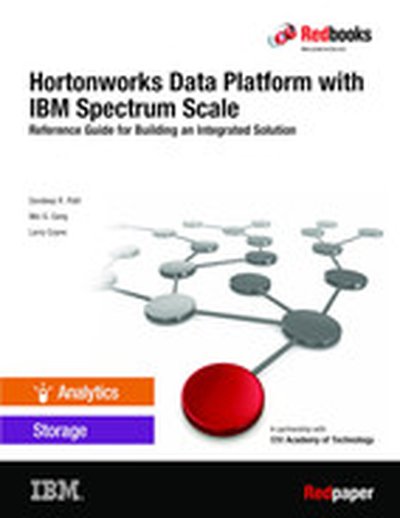
Hortonworks Data Platform with IBM Spectrum Scale: Reference Guide for Building an Integrated Solution

This IBM® Redpaper™ publication provides guidance on building an enterprise-grade data lake by using IBM Spectrum™ Scale and Hortonworks Data Platform for performing in-place Hadoop or Spark-based analytics. It covers the benefits of the integrated solution, and gives guidance about the types of deployment models and considerations during the implementation of these models. Hortonworks Data Platform (HDP) is a leading Hadoop and Spark distribution. HDP addresses the complete needs of data-at-rest, powers real-time customer applications, and delivers robust analytics that accelerate decision making and innovation. IBM Spectrum Scale™ is flexible and scalable software-defined file storage for analytics workloads. Enterprises around the globe have deployed IBM Spectrum Scale to form large data lakes and content repositories to perform high-performance computing (HPC) and analytics workloads. It can scale performance and capacity both without bottlenecks.

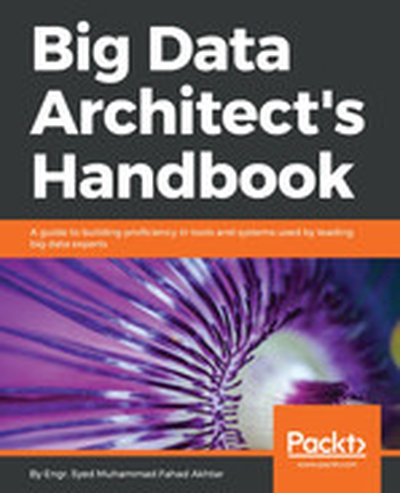
Big Data Architect???s Handbook

Big Data Architect's Handbook is your comprehensive guide to mastering the art of building sophisticated big data solutions. As you delve into this book, you'll learn to design end-to-end big data pipelines and integrate data from various sources for insightful analysis. What this Book will help me do Understand the Hadoop ecosystem and familiarize yourself with major Apache projects. Make informed decisions when designing cloud infrastructures for big data needs. Gain expertise in analyzing structured and unstructured data using machine learning. Develop skills to implement scalable and efficient big data pipelines. Enhance your ability to visualize and monitor data insights effectively. Author(s) None Akhtar has amassed a wealth of experience in big data architecture and related technologies. With years of hands-on involvement in development, analysis, and implementation of big data systems, None brings a pragmatic and insightful perspective. This passion for educating others about data-driven technologies shines through in a user-first approach to making complex topics accessible. Who is it for? This book caters to aspiring data professionals, software developers, and tech enthusiasts aiming to enhance their expertise in big data. Readers with basic programming and data analysis skills will find the content approachable yet challenging enough to deepen their understanding. If your career goal involves managing, analyzing, and making decisions based on large datasets, this book will help bridge the gap between skill and application.

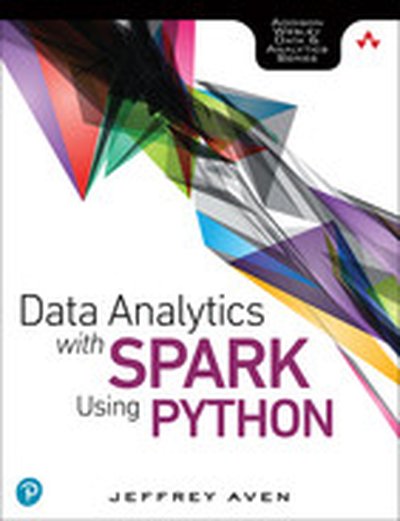
Data Analytics with Spark Using Python, First edition

Spark for Data Professionals introduces and solidifies the concepts behind Spark 2.x, teaching working developers, architects, and data professionals exactly how to build practical Spark solutions. Jeffrey Aven covers all aspects of Spark development, including basic programming to SparkSQL, SparkR, Spark Streaming, Messaging, NoSQL and Hadoop integration. Each chapter presents practical exercises deploying Spark to your local or cloud environment, plus programming exercises for building real applications. Unlike other Spark guides, Spark for Data Professionals explains crucial concepts step-by-step, assuming no extensive background as an open source developer. It provides a complete foundation for quickly progressing to more advanced data science and machine learning topics. This guide will help you: Understand Spark basics that will make you a better programmer and cluster “citizen” Master Spark programming techniques that maximize your productivity Choose the right approach for each problem Make the most of built-in platform constructs, including broadcast variables, accumulators, effective partitioning, caching, and checkpointing Leverage powerful tools for managing streaming, structured, semi-structured, and unstructured data

Big Data Analytics with Hadoop 3

Big Data Analytics with Hadoop 3 is your comprehensive guide to understanding and leveraging the power of Apache Hadoop for large-scale data processing and analytics. Through practical examples, it introduces the tools and techniques necessary to integrate Hadoop with other popular frameworks, enabling efficient data handling, processing, and visualization. What this Book will help me do Understand the foundational components and features of Apache Hadoop 3 such as HDFS, YARN, and MapReduce. Gain the ability to integrate Hadoop with programming languages like Python and R for data analysis. Learn the skills to utilize tools such as Apache Spark and Apache Flink for real-time data analytics within the Hadoop ecosystem. Develop expertise in setting up a Hadoop cluster and performing analytics in cloud environments such as AWS. Master the process of building practical big data analytics pipelines for end-to-end data processing. Author(s) Sridhar Alla is a seasoned big data professional with extensive industry experience in building and deploying scalable big data analytics solutions. Known for his expertise in Hadoop and related ecosystems, Sridhar combines technical depth with clear communication in his writing, providing practical insights and hands-on knowledge. Who is it for? This book is tailored for data professionals, software engineers, and data scientists looking to expand their expertise in big data analytics using Hadoop 3. Whether you're an experienced developer or new to the big data ecosystem, this book provides the step-by-step guidance and practical examples needed to advance your skills and achieve your analytical goals.

Summary

Most businesses end up with data in a myriad of places with varying levels of structure. This makes it difficult to gain insights from across departments, projects, or people. Presto is a distributed SQL engine that allows you to tie all of your information together without having to first aggregate it all into a data warehouse. Kamil Bajda-Pawlikowski co-founded Starburst Data to provide support and tooling for Presto, as well as contributing advanced features back to the project. In this episode he describes how Presto is architected, how you can use it for your analytics, and the work that he is doing at Starburst Data.

Preamble

Hello and welcome to the Data Engineering Podcast, the show about modern data management When you’re ready to build your next pipeline you’ll need somewhere to deploy it, so check out Linode. With private networking, shared block storage, node balancers, and a 40Gbit network, all controlled by a brand new API you’ve got everything you need to run a bullet-proof data platform. Go to dataengineeringpodcast.com/linode to get a $20 credit and launch a new server in under a minute. Go to dataengineeringpodcast.com to subscribe to the show, sign up for the newsletter, read the show notes, and get in touch. Your host is Tobias Macey and today I’m interviewing Kamil Bajda-Pawlikowski about Presto and his experiences with supporting it at Starburst Data

Interview

Introduction How did you get involved in the area of data management? Can you start by explaining what Presto is?

What are some of the common use cases and deployment patterns for Presto?

How does Presto compare to Drill or Impala? What is it about Presto that led you to building a business around it? What are some of the most challenging aspects of running and scaling Presto? For someone who is using the Presto SQL interface, what are some of the considerations that they should keep in mind to avoid writing poorly performing queries?

How does Presto represent data for translating between its SQL dialect and the API of the data stores that it interfaces with?

What are some cases in which Presto is not the right solution? What types of support have you found to be the most commonly requested? What are some of the types of tooling or improvements that you have made to Presto in your distribution?

What are some of the notable changes that your team has contributed upstream to Presto?

Contact Info

Website E-mail Twitter – @starburstdata Twitter – @prestodb

Parting Question

From your perspective, what is the biggest gap in the tooling or technology for data management today?

Links

Starburst Data Presto Hadapt Hadoop Hive Teradata PrestoCare Cost Based Optimizer ANSI SQL Spill To Disk Tempto Benchto Geospatial Functions Cassandra Accumulo Kafka Redis PostGreSQL

The intro and outro music is from The Hug by The Freak Fandango Orchestra / {CC BY-SA](http://creativecommons.org/licenses/by-sa/3.0/)?utm_source=rss&utm_medium=rss Support Data Engineering Podcast

In this podcast, Justin Borgman talks about his journey of starting a data science start, doing an exit, and jumping on another one. The session is filled with insights for leadership, looking for entrepreneurial wisdom to get on a data-driven journey.

Timeline: 0:28 Justin's journey. 3:22 Taking the plunge to start a new company. 5:49 Perception vs. reality of starting a data warehouse company. 8:15 Bringing in something new to the IT legacy. 13:20 Getting your first few customers. 16:16 Right moment for a data warehouse company to look for a new venture. 18:20 Right person to have as a co-founder. 20:29 Advantages of going seed vs. series A. 22:13 When is a company ready for seeding or series A? 24:40 Who's a good adviser? 26:35 Exiting Teradata. 28:54 Teradata to starting a new company. 31:24 Excitement of starting something from scratch. 32:24 What is Starburst? 37:15 Presto, a great engine for cloud platforms. 40:30 How can a company get started with Presto. 41:50 Health of enterprise data. 44:15 Where does Presto not fit in? 45:19 Future of enterprise data. 46:36 Drawing parallels between proprietary space and open source space. 49:02 Does align with open-source gives a company a better chance in seeding. 51:44 John's ingredients for success. 54:05 John's favorite reads. 55:01 Key takeaways.

Paul's Recommended Read: The Outsiders Paperback – S. E. Hinton amzn.to/2Ai84Gl

Podcast Link: https://futureofdata.org/running-a-data-science-startup-one-decision-at-a-time-futureofdata-podcast/

Justin's BIO: Justin has spent the better part of a decade in senior executive roles building new businesses in the data warehousing and analytics space. Before co-founding Starburst, Justin was Vice President and General Manager at Teradata (NYSE: TDC), where he was responsible for the company’s portfolio of Hadoop products. Prior to joining Teradata, Justin was co-founder and CEO of Hadapt, the pioneering "SQL-on-Hadoop" company that transformed Hadoop from file system to analytic database accessible to anyone with a BI tool. Teradata acquired Hadapt in 2014.

Justin earned a BS in Computer Science from the University of Massachusetts at Amherst and an MBA from the Yale School of Management.

About #Podcast:

FutureOfData podcast is a conversation starter to bring leaders, influencers, and lead practitioners to discuss their journey to create the data-driven future.

Want to sponsor? Email us @ [email protected]

Keywords:

FutureOfData #DataAnalytics #Leadership #Podcast #BigData #Strategy

In this episode, Wayne Eckerson and Jeff Magnusson discuss the data architecture Stitch Fix created to support its data science workloads, as well as the need to balance man and machine and art and science.

Magnusson is the vice president of data platform at Stitch Fix. He leads a team responsible for building the data platform that supports the company's team of 80+ data scientists, as well as other business users. That platform is designed to facilitate self-service among data scientists and promote velocity and innovation that differentiate Stitch Fix in the marketplace. Before Stitch Fix, Magnusson managed the data platform architecture team at Netflix where he helped design and open source many of the components of the Hadoop-based infrastructure and big data platform.

Summary

Business Intelligence software is often cumbersome and requires specialized knowledge of the tools and data to be able to ask and answer questions about the state of the organization. Metabase is a tool built with the goal of making the act of discovering information and asking questions of an organizations data easy and self-service for non-technical users. In this episode the CEO of Metabase, Sameer Al-Sakran, discusses how and why the project got started, the ways that it can be used to build and share useful reports, some of the useful features planned for future releases, and how to get it set up to start using it in your environment.

Preamble

Hello and welcome to the Data Engineering Podcast, the show about modern data management When you’re ready to build your next pipeline you’ll need somewhere to deploy it, so check out Linode. With private networking, shared block storage, node balancers, and a 40Gbit network, all controlled by a brand new API you’ve got everything you need to run a bullet-proof data platform. Go to dataengineeringpodcast.com/linode to get a $20 credit and launch a new server in under a minute. For complete visibility into the health of your pipeline, including deployment tracking, and powerful alerting driven by machine-learning, DataDog has got you covered. With their monitoring, metrics, and log collection agent, including extensive integrations and distributed tracing, you’ll have everything you need to find and fix performance bottlenecks in no time. Go to dataengineeringpodcast.com/datadog today to start your free 14 day trial and get a sweet new T-Shirt. Go to dataengineeringpodcast.com to subscribe to the show, sign up for the newsletter, read the show notes, and get in touch. Your host is Tobias Macey and today I’m interviewing Sameer Al-Sakran about Metabase, a free and open source tool for self service business intelligence

Interview

Introduction How did you get involved in the area of data management? The current goal for most companies is to be “data driven”. How would you define that concept?

How does Metabase assist in that endeavor?

What is the ratio of users that take advantage of the GUI query builder as opposed to writing raw SQL?

What level of complexity is possible with the query builder?

What have you found to be the typical use cases for Metabase in the context of an organization? How do you manage scaling for large or complex queries? What was the motivation for using Clojure as the language for implementing Metabase? What is involved in adding support for a new data source? What are the differentiating features of Metabase that would lead someone to choose it for their organization? What have been the most challenging aspects of building and growing Metabase, both from a technical and business perspective? What do you have planned for the future of Metabase?

Contact Info

Sameer

salsakran on GitHub @sameer_alsakran on Twitter LinkedIn

Metabase

Website @metabase on Twitter metabase on GitHub

Parting Question

From your perspective, what is the biggest gap in the tooling or technology for data management today?

Links

Expa Metabase Blackjet Hadoop Imeem Maslow’s Hierarchy of Data Needs 2 Sided Marketplace Honeycomb Interview Excel Tableau Go-JEK Clojure React Python Scala JVM Redash How To Lie With Data Stripe Braintree Payments

The intro and outro music is from The Hug by The Freak Fandango Orchestra / CC BY-SA Support Data Engineering Podcast

A Deep Dive into NoSQL Databases: The Use Cases and Applications

A Deep Dive into NoSQL Databases: The Use Cases and Applications, Volume 109, the latest release in the Advances in Computers series first published in 1960, presents detailed coverage of innovations in computer hardware, software, theory, design and applications. In addition, it provides contributors with a medium in which they can explore their subjects in greater depth and breadth. This update includes sections on NoSQL and NewSQL databases for big data analytics and distributed computing, NewSQL databases and scalable in-memory analytics, NoSQL web crawler application, NoSQL Security, a Comparative Study of different In-Memory (No/New)SQL Databases, NoSQL Hands On-4 NoSQLs, the Hadoop Ecosystem, and more. Provides a very comprehensive, yet compact, book on the popular domain of NoSQL databases for IT professionals, practitioners and professors Articulates and accentuates big data analytics and how it gets simplified and streamlined by NoSQL database systems Sets a stimulating foundation with all the relevant details for NoSQL database researchers, developers and administrators

In this podcast, Wayne Eckerson and Joe Caserta discuss data migration, compare cloud offerings from Amazon, Google, and Microsoft, and define and explain artificial intelligence.

You can contact Caserta by visiting caserta.com or by sending him an email to [email protected]. Follow him on Twitter @joe_caserta.

Caserta is President of a New York City-based consulting firm he founded in 2001 and a longtime data guy. In 2004, Joe teamed up with data warehousing legend, Ralph Kimball to write to write the book The Data Warehouse ETL Toolkit. Today he’s now one of the leading authorities on big data implementations. This makes Joe one of the few individuals with in-the-trenches experience on both sides of the data divide, traditional data warehousing on relational databases and big data implementations on Hadoop and the cloud.

Summary

The rate of change in the data engineering industry is alternately exciting and exhausting. Joe Crobak found his way into the work of data management by accident as so many of us do. After being engrossed with researching the details of distributed systems and big data management for his work he began sharing his findings with friends. This led to his creation of the Hadoop Weekly newsletter, which he recently rebranded as the Data Engineering Weekly newsletter. In this episode he discusses his experiences working as a data engineer in industry and at the USDS, his motivations and methods for creating a newsleteter, and the insights that he has gleaned from it.

Preamble

Hello and welcome to the Data Engineering Podcast, the show about modern data management When you’re ready to build your next pipeline you’ll need somewhere to deploy it, so check out Linode. With private networking, shared block storage, node balancers, and a 40Gbit network, all controlled by a brand new API you’ve got everything you need to run a bullet-proof data platform. Go to dataengineeringpodcast.com/linode to get a $20 credit and launch a new server in under a minute. Go to dataengineeringpodcast.com to subscribe to the show, sign up for the newsletter, read the show notes, and get in touch. Your host is Tobias Macey and today I’m interviewing Joe Crobak about his work maintaining the Data Engineering Weekly newsletter, and the challenges of keeping up with the data engineering industry.

Interview

Introduction How did you get involved in the area of data management? What are some of the projects that you have been involved in that were most personally fulfilling?

As an engineer at the USDS working on the healthcare.gov and medicare systems, what were some of the approaches that you used to manage sensitive data? Healthcare.gov has a storied history, how did the systems for processing and managing the data get architected to handle the amount of load that it was subjected to?

What was your motivation for starting a newsletter about the Hadoop space?

Can you speak to your reasoning for the recent rebranding of the newsletter?

How much of the content that you surface in your newsletter is found during your day-to-day work, versus explicitly searching for it? After over 5 years of following the trends in data analytics and data infrastructure what are some of the most interesting or surprising developments?

What have you found to be the fundamental skills or areas of experience that have maintained relevance as new technologies in data engineering have emerged?

What is your workflow for finding and curating the content that goes into your newsletter? What is your personal algorithm for filtering which articles, tools, or commentary gets added to the final newsletter? How has your experience managing the newsletter influenced your areas of focus in your work and vice-versa? What are your plans going forward?

Contact Info

Data Eng Weekly Email Twitter – @joecrobak Twitter – @dataengweekly

Parting Question

From your perspective, what is the biggest gap in the tooling or technology for data management today?

Links

USDS National Labs Cray Amazon EMR (Elastic Map-Reduce) Recommendation Engine Netflix Prize Hadoop Cloudera Puppet healthcare.gov Medicare Quality Payment Program HIPAA NIST National Institute of Standards and Technology PII (Personally Identifiable Information) Threat Modeling Apache JBoss Apache Web Server MarkLogic JMS (Java Message Service) Load Balancer COBOL Hadoop Weekly Data Engineering Weekly Foursquare NiFi Kubernetes Spark Flink Stream Processing DataStax RSS The Flavors of Data Science and Engineering CQRS Change Data Capture Jay Kreps

The intro and outro music is from The Hug by The Freak Fandango Orchestra / CC BY-SA Support Data Engineering Podcast

Modern Big Data Processing with Hadoop

Delve into the world of big data with 'Modern Big Data Processing with Hadoop.' This comprehensive guide introduces you to the powerful capabilities of Apache Hadoop and its ecosystem to solve data processing and analytics challenges. By the end, you will have mastered the techniques necessary to architect innovative, scalable, and efficient big data solutions. What this Book will help me do Master the principles of building an enterprise-level big data strategy with Apache Hadoop. Learn to integrate Hadoop with tools such as Apache Spark, Elasticsearch, and more for comprehensive solutions. Set up and manage your big data architecture, including deployment on cloud platforms with Apache Ambari. Develop real-time data pipelines and enterprise search solutions. Leverage advanced visualization tools like Apache Superset to make sense of data insights. Author(s) None R. Patil, None Kumar, and None Shindgikar are experienced big data professionals and accomplished authors. With years of hands-on experience in implementing and managing Apache Hadoop systems, they bring a depth of expertise to their writing. Their dedication lies in making complex technical concepts accessible while demonstrating real-world best practices. Who is it for? This book is designed for data professionals aiming to advance their expertise in big data solutions using Apache Hadoop. Ideal readers include engineers and project managers involved in data architecture and those aspiring to become big data architects. Some prior exposure to big data systems is beneficial to fully benefit from this book's insights and tutorials.

In this episode, Wayne Eckerson and Jeff Magnusson discuss a self-service model for data science work and the role of a data platform in that environment. Magnusson also talks about Flotilla, a new open source API that makes it easy for data scientists to execute tasks on the data platform.

Magnusson is the vice president of data platform at Stitch Fix. He leads a team responsible for building the data platform that supports the company's team of 80+ data scientists, as well as other business users. That platform is designed to facilitate self-service among data scientists and promote velocity and innovation that differentiate Stitch Fix in the marketplace. Before Stitch Fix, Magnusson managed the data platform architecture team at Netflix where he helped design and open source many of the components of the Hadoop-based infrastructure and big data platform.

IBM Power Systems Bits: Understanding IBM Patterns for Cognitive Systems

This IBM® Redpaper™ publication addresses IBM Patterns for Cognitive Systems topics to anyone developing, implementing, and using Cognitive Solutions on IBM Power Systems™ servers. Moreover, this publication provides documentation to transfer the knowledge to the sales and technical teams. This publication describes IBM Patterns for Cognitive Systems. Think of a pattern as a use case for a specific scenario, such as event-based real-time marketing for real-time analytics, anti-money laundering, and addressing data oceans by reducing the cost of Hadoop. These examples are just a few of the cognitive patterns that are now available. Patterns identify and address challenges for cognitive infrastructures. These entry points then help you understand where you are on the cognitive journey and enables IBM to demonstrate the set of solutions capabilities for each lifecycle stage. This book targets technical readers, including IT specialist, systems architects, data scientists, developers, and anyone looking for a guide about how to unleash the cognitive capabilities of IBM Power Systems by using patterns.

Summary

As communications between machines become more commonplace the need to store the generated data in a time-oriented manner increases. The market for timeseries data stores has many contenders, but they are not all built to solve the same problems or to scale in the same manner. In this episode the founders of TimescaleDB, Ajay Kulkarni and Mike Freedman, discuss how Timescale was started, the problems that it solves, and how it works under the covers. They also explain how you can start using it in your infrastructure and their plans for the future.

Preamble

Hello and welcome to the Data Engineering Podcast, the show about modern data infrastructure When you’re ready to launch your next project you’ll need somewhere to deploy it. Check out Linode at dataengineeringpodcast.com/linode and get a $20 credit to try out their fast and reliable Linux virtual servers for running your data pipelines or trying out the tools you hear about on the show. Go to dataengineeringpodcast.com to subscribe to the show, sign up for the newsletter, read the show notes, and get in touch. You can help support the show by checking out the Patreon page which is linked from the site. To help other people find the show you can leave a review on iTunes, or Google Play Music, and tell your friends and co-workers Your host is Tobias Macey and today I’m interviewing Ajay Kulkarni and Mike Freedman about Timescale DB, a scalable timeseries database built on top of PostGreSQL

Interview

Introduction How did you get involved in the area of data management? Can you start by explaining what Timescale is and how the project got started? The landscape of time series databases is extensive and oftentimes difficult to navigate. How do you view your position in that market and what makes Timescale stand out from the other options? In your blog post that explains the design decisions for how Timescale is implemented you call out the fact that the inserted data is largely append only which simplifies the index management. How does Timescale handle out of order timestamps, such as from infrequently connected sensors or mobile devices? How is Timescale implemented and how has the internal architecture evolved since you first started working on it?

What impact has the 10.0 release of PostGreSQL had on the design of the project? Is timescale compatible with systems such as Amazon RDS or Google Cloud SQL?

For someone who wants to start using Timescale what is involved in deploying and maintaining it? What are the axes for scaling Timescale and what are the points where that scalability breaks down?

Are you aware of anyone who has deployed it on top of Citus for scaling horizontally across instances?

What has been the most challenging aspect of building and marketing Timescale? When is Timescale the wrong tool to use for time series data? One of the use cases that you call out on your website is for systems metrics and monitoring. How does Timescale fit into that ecosystem and can it be used along with tools such as Graphite or Prometheus? What are some of the most interesting uses of Timescale that you have seen? Which came first, Timescale the business or Timescale the database, and what is your strategy for ensuring that the open source project and the company around it both maintain their health? What features or improvements do you have planned for future releases of Timescale?

Contact Info

Ajay

LinkedIn @acoustik on Twitter Timescale Blog

Mike

Website LinkedIn @michaelfreedman on Twitter Timescale Blog

Timescale

Website @timescaledb on Twitter GitHub

Parting Question

From your perspective, what is the biggest gap in the tooling or technology for data management today?

Links

Timescale PostGreSQL Citus Timescale Design Blog Post MIT NYU Stanford SDN Princeton Machine Data Timeseries Data List of Timeseries Databases NoSQL Online Transaction Processing (OLTP) Object Relational Mapper (ORM) Grafana Tableau Kafka When Boring Is Awesome PostGreSQL RDS Google Cloud SQL Azure DB Docker Continuous Aggregates Streaming Replication PGPool II Kubernetes Docker Swarm Citus Data

Website Data Engineering Podcast Interview

Database Indexing B-Tree Index GIN Index GIST Index STE Energy Redis Graphite Prometheus pg_prometheus OpenMetrics Standard Proposal Timescale Parallel Copy Hadoop PostGIS KDB+ DevOps Internet of Things MongoDB Elastic DataBricks Apache Spark Confluent New Enterprise Associates MapD Benchmark Ventures Hortonworks 2σ Ventures CockroachDB Cloudflare EMC Timescale Blog: Why SQL is beating NoSQL, and what this means for the future of data

The intro and outro music is from a href="http://freemusicarchive.org/music/The_Freak_Fandango_Orchestra/Love_death_and_a_drunken_monkey/04_-_The_Hug?utm_source=rss&utm_medium=rss" target="_blank"…

In this episode, Wayne Eckerson and Lenin Gali discuss the past and future of the cloud and big data.

Gali is a data analytics practitioner who has always been on the leading edge of where business and technology intersect. He was one of the first to move data analytics to the cloud when he was BI director at ShareThis, a social media based services provider. He was instrumental in defining an enterprise analytics strategy, developing a data platform that brought games and business data together to enable thousands of data users to build better games and services by using Hadoop & Teradata while at Ubisoft. He is now spearheading the creation of a Hadoop-based data analytics platform at Quotient, a digital marketing technology firm in the retail industry.

Complete Guide to Open Source Big Data Stack

See a Mesos-based big data stack created and the components used. You will use currently available Apache full and incubating systems. The components are introduced by example and you learn how they work together. In the Complete Guide to Open Source Big Data Stack, the author begins by creating a private cloud and then installs and examines Apache Brooklyn. After that, he uses each chapter to introduce one piece of the big data stack—sharing how to source the software and how to install it. You learn by simple example, step by step and chapter by chapter, as a real big data stack is created. The book concentrates on Apache-based systems and shares detailed examples of cloud storage, release management, resource management, processing, queuing, frameworks, data visualization, and more. What You’ll Learn Install a private cloud onto the local cluster using Apache cloud stack Source, install, and configure Apache: Brooklyn, Mesos, Kafka, and Zeppelin See how Brooklyn can be used to install Mule ESB on a cluster and Cassandra in the cloud Install and use DCOS for big data processing Use Apache Spark for big data stack data processing Who This Book Is For Developers, architects, IT project managers, database administrators, and others charged with developing or supporting a big data system. It is also for anyone interested in Hadoop or big data, and those experiencing problems with data size.

In this podcast, Wayne Eckerson and Joe Caserta discuss what constitutes a modern data platform. Caserta is President of a New York City-based consulting firm he founded in 2001 and a longtime data guy. In 2004, Joe teamed up with data warehousing legend, Ralph Kimball to write to write the book The Data Warehouse ETL Toolkit. Today he’s now one of the leading authorities on big data implementations. This makes Joe one of the few individuals with in-the-trenches experience on both sides of the data divide, traditional data warehousing on relational databases and big data implementations on Hadoop and the cloud. His perspectives are always insightful.