talk-data.com talk-data.com

Topic

Hadoop

Apache Hadoop

big_data distributed_computing data_processing

258

tagged

Activity Trend

3 peak/qtr
2020-Q1 2026-Q1

Activities

258 activities · Newest first

Practical Big Data Analytics

Practical Big Data Analytics is your ultimate guide to harnessing Big Data technologies for enterprise analytics and machine learning. By leveraging tools like Hadoop, Spark, NoSQL databases, and frameworks such as R, this book equips you with the skills to implement robust data solutions that drive impactful business insights. Gain practical expertise in handling data at scale and uncover the value behind the numbers. What this Book will help me do Master the fundamental concepts of Big Data storage, processing, and analytics. Gain practical skills in using tools like Hadoop, Spark, and NoSQL databases for large-scale data handling. Develop and deploy machine learning models and dashboards with R and R Shiny. Learn strategies for creating cost-efficient and scalable enterprise data analytics solutions. Understand and implement effective approaches to combining Big Data technologies for actionable insights. Author(s) None Dasgupta is an expert in Big Data analytics, statistical methodologies, and enterprise data solutions. With years of experience consulting on enterprise data platforms and working with leading industry technologies, Dasgupta brings a wealth of practical knowledge to help readers navigate and succeed in the field of Big Data. Through this book, Dasgupta shares an accessible and systematic way to learn and apply key Big Data concepts. Who is it for? This book is ideal for professionals eager to delve into Big Data analytics, regardless of their current level of expertise. It accommodates both aspiring analysts and seasoned IT professionals looking to enhance their knowledge in data-driven decision making. Individuals with a technical inclination and a drive to build Big Data architectures will find this book particularly beneficial. No prior knowledge of Big Data is required, although familiarity with programming concepts will enhance the learning experience.
Apache Kafka 1.0 Cookbook

Dive into the essential resource for mastering Apache Kafka with this cookbook of practical recipes. You'll explore the dynamic features of Kafka 1.0, integrate it with enterprise data solutions, and confidently manage messaging and streaming data in real-time. What this Book will help me do Effectively install and configure Apache Kafka in a professional environment. Implement Kafka producers and consumers to manage real-time data streams. Utilize Confluent platforms and Kafka streams for advanced data processing. Monitor Kafka clusters with tools like Graphite and Ganglia for optimal performance. Integrate Kafka seamlessly with tools such as Hadoop, Spark, and Elasticsearch. Author(s) None Estrada and None Zinoviev have extensive experience in enterprise data systems and have been dedicated contributors to the Apache Kafka ecosystem. Their combined expertise encompasses developing robust, real-time distributed systems and delivering insightful technical guidance. Through this book, they share their vast knowledge and practical solutions, tailored for both developers and administrators. Who is it for? This book is tailored for developers and administrators looking to enhance their expertise in Apache Kafka. Developers should be comfortable with Java or Scala to fully utilize examples, while administrators benefit from prior knowledge of Kafka operations. Ideal readers are those seeking actionable techniques to efficiently manage and integrate Kafka into their enterprise systems.

PySpark Recipes: A Problem-Solution Approach with PySpark2

Quickly find solutions to common programming problems encountered while processing big data. Content is presented in the popular problem-solution format. Look up the programming problem that you want to solve. Read the solution. Apply the solution directly in your own code. Problem solved! PySpark Recipes covers Hadoop and its shortcomings. The architecture of Spark, PySpark, and RDD are presented. You will learn to apply RDD to solve day-to-day big data problems. Python and NumPy are included and make it easy for new learners of PySpark to understand and adopt the model. What You Will Learn Understand the advanced features of PySpark2 and SparkSQL Optimize your code Program SparkSQL with Python Use Spark Streaming and Spark MLlib with Python Perform graph analysis with GraphFrames Who This Book Is For Data analysts, Python programmers, big data enthusiasts

Big Data Analytics with SAS

Discover how to leverage the power of SAS for big data analytics in 'Big Data Analytics with SAS.' This book helps you unlock key techniques for preparing, analyzing, and reporting on big data effectively using SAS. Whether you're exploring integration with Hadoop and Python or mastering SAS Studio, you'll advance your analytics capabilities. What this Book will help me do Set up a SAS environment for performing hands-on data analytics tasks efficiently. Master the fundamentals of SAS programming for data manipulation and analysis. Use SAS Studio and Jupyter Notebook to interface with SAS efficiently and effectively. Perform preparatory data workflows and advanced analytics, including predictive modeling and reporting. Integrate SAS with platforms like Hadoop, SAP HANA, and Cloud Foundry for scaling analytics processes. Author(s) None Pope is a seasoned data analytics expert with extensive experience in SAS and big data platforms. With a passion for demystifying complex data workflows, None teaches SAS techniques in an approachable way. Their expert insights and practical examples empower readers to confidently analyze and report on data. Who is it for? If you're a SAS professional or a data analyst looking to expand your skills in big data analysis, this book is for you. It suits readers aiming to integrate SAS into diverse tech ecosystems or seeking to learn predictive modeling and reporting with SAS. Both beginners and those familiar with SAS can benefit.

Summary With the wealth of formats for sending and storing data it can be difficult to determine which one to use. In this episode Doug Cutting, creator of Avro, and Julien Le Dem, creator of Parquet, dig into the different classes of serialization formats, what their strengths are, and how to choose one for your workload. They also discuss the role of Arrow as a mechanism for in-memory data sharing and how hardware evolution will influence the state of the art for data formats.

Preamble

Hello and welcome to the Data Engineering Podcast, the show about modern data infrastructure When you’re ready to launch your next project you’ll need somewhere to deploy it. Check out Linode at dataengineeringpodcast.com/linode and get a $20 credit to try out their fast and reliable Linux virtual servers for running your data pipelines or trying out the tools you hear about on the show. Continuous delivery lets you get new features in front of your users as fast as possible without introducing bugs or breaking production and GoCD is the open source platform made by the people at Thoughtworks who wrote the book about it. Go to dataengineeringpodcast.com/gocd to download and launch it today. Enterprise add-ons and professional support are available for added peace of mind. Go to dataengineeringpodcast.com to subscribe to the show, sign up for the newsletter, read the show notes, and get in touch. You can help support the show by checking out the Patreon page which is linked from the site. To help other people find the show you can leave a review on iTunes, or Google Play Music, and tell your friends and co-workers This is your host Tobias Macey and today I’m interviewing Julien Le Dem and Doug Cutting about data serialization formats and how to pick the right one for your systems.

Interview

Introduction How did you first get involved in the area of data management? What are the main serialization formats used for data storage and analysis? What are the tradeoffs that are offered by the different formats? How have the different storage and analysis tools influenced the types of storage formats that are available? You’ve each developed a new on-disk data format, Avro and Parquet respectively. What were your motivations for investing that time and effort? Why is it important for data engineers to carefully consider the format in which they transfer their data between systems?

What are the switching costs involved in moving from one format to another after you have started using it in a production system?

What are some of the new or upcoming formats that you are each excited about? How do you anticipate the evolving hardware, patterns, and tools for processing data to influence the types of storage formats that maintain or grow their popularity?

Contact Information

Doug:

cutting on GitHub Blog @cutting on Twitter

Julien

Email @J_ on Twitter Blog julienledem on GitHub

Links

Apache Avro Apache Parquet Apache Arrow Hadoop Apache Pig Xerox Parc Excite Nutch Vertica Dremel White Paper

Twitter Blog on Release of Parquet

CSV XML Hive Impala Presto Spark SQL Brotli ZStandard Apache Drill Trevni Apache Calcite

The intro and outro music is from The Hug by The Freak Fandango Orchestra / CC BY-SA

Support Data Engineering Podcast

Machine Learning with R Cookbook - Second Edition

Machine Learning with R Cookbook, Second Edition, is your hands-on guide to applying machine learning principles using R. Through simple, actionable examples and detailed step-by-step recipes, this book will help you build predictive models, analyze data, and derive actionable insights. Explore core topics in data science, including regression, classification, clustering, and more. What this Book will help me do Apply the Apriori algorithm for association analysis to uncover relationships in transaction datasets. Effectively visualize data patterns and associations using a variety of plots and graphing methods. Master the application of regression techniques to address predictive modeling challenges. Leverage the power of R and Hadoop for performing big data machine learning efficiently. Conduct advanced analyses such as survival analysis and improve machine learning model performance. Author(s) Yu-Wei, Chiu (David Chiu), the author, is an experienced data scientist and R programmer who specializes in applying data science and machine learning principles to solve real-world problems. David's pragmatic and comprehensive teaching style provides readers with deep insights and practical methodologies for using R effectively in their projects. His passion for data science and expertise in R and big data make this book a reliable resource for learners. Who is it for? This book is ideal for data scientists, analysts, and professionals working with machine learning and R. It caters to intermediate users who are versed in the basics of R and want to deepen their skills. If you aim to become the go-to expert for machine learning challenges and enhance your efficiency and capability in machine learning projects, this book is for you.

Competing on Analytics: Updated, with a New Introduction

The New Edition of a Business Classic This landmark work, the first to introduce business leaders to analytics, reveals how analytics are rewriting the rules of competition. Updated with fresh content, Competing on Analytics provides the road map for becoming an analytical competitor, showing readers how to create new strategies for their organizations based on sophisticated analytics. Introducing a five-stage model of analytical competition, Davenport and Harris describe the typical behaviors, capabilities, and challenges of each stage. They explain how to assess your company’s capabilities and guide it toward the highest level of competition. With equal emphasis on two key resources, human and technological, this book reveals how even the most highly analytical companies can up their game. With an emphasis on predictive, prescriptive, and autonomous analytics for marketing, supply chain, finance, M&A, operations, R&D, and HR, the book contains numerous new examples from different industries and business functions, such as Disney’s vacation experience, Google’s HR, UPS’s logistics, the Chicago Cubs’ training methods, and Firewire Surfboards’ customization. Additional new topics and research include: Data scientists and what they do Big data and the changes it has wrought Hadoop and other open-source software for managing and analyzing data Data products—new products and services based on data and analytics Machine learning and other AI technologies The Internet of Things and its implications New computing architectures, including cloud computing Embedding analytics within operational systems Visual analytics The business classic that turned a generation of leaders into analytical competitors, Competing on Analytics is the definitive guide for transforming your company’s fortunes in the age of analytics and big data.

Mastering Apache Storm

Mastering Apache Storm is your step-by-step guide to mastering real-time data streaming with this robust framework. You'll learn how to process big data efficiently and integrate Apache Storm with popular technologies like Kafka, HBase, and Redis to maximize its potential. This book walks you through from basic concepts to advanced implementations of Apache Storm in real-world scenarios. What this Book will help me do Understand the core features and operation of Apache Storm for real-time data streaming. Integrate Apache Storm with other Big Data frameworks like Kafka, HBase, Redis, and Hadoop. Effectively deploy and manage multi-node Apache Storm clusters in real-world environments. Monitor and analyze your data streams and system health effectively using built-in and external tools. Learn to implement fault-tolerant, scalable, and distributed stream processing applications in Apache Storm. Author(s) None Jain is an experienced software developer and technical instructor specializing in distributed systems and real-time data processing. With years of experience working with Apache Storm and related technologies, their teachings focus on practical, hands-on learning to equip readers with actionable skills. Who is it for? This book is ideal for Java developers aspiring to build expertise in real-time data streaming and distributed processing applications using Apache Storm. Beginners can start with the fundamentals provided, while those with prior knowledge can delve into intermediate and advanced implementations.

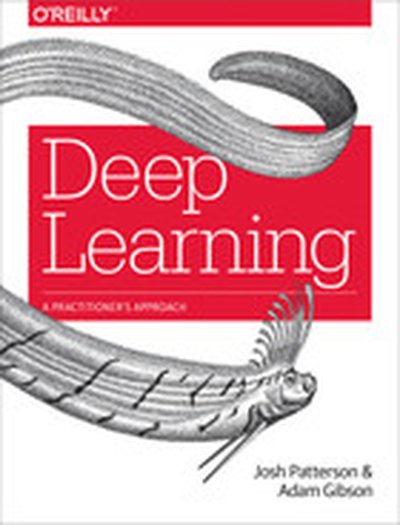
Deep Learning

Although interest in machine learning has reached a high point, lofty expectations often scuttle projects before they get very far. How can machine learning—especially deep neural networks—make a real difference in your organization? This hands-on guide not only provides the most practical information available on the subject, but also helps you get started building efficient deep learning networks. Authors Adam Gibson and Josh Patterson provide theory on deep learning before introducing their open-source Deeplearning4j (DL4J) library for developing production-class workflows. Through real-world examples, you’ll learn methods and strategies for training deep network architectures and running deep learning workflows on Spark and Hadoop with DL4J. Dive into machine learning concepts in general, as well as deep learning in particular Understand how deep networks evolved from neural network fundamentals Explore the major deep network architectures, including Convolutional and Recurrent Learn how to map specific deep networks to the right problem Walk through the fundamentals of tuning general neural networks and specific deep network architectures Use vectorization techniques for different data types with DataVec, DL4J’s workflow tool Learn how to use DL4J natively on Spark and Hadoop

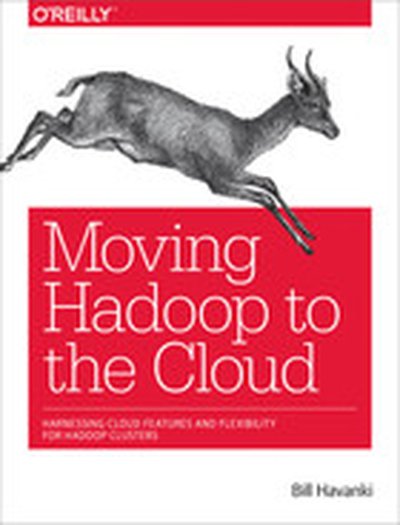
Moving Hadoop to the Cloud

Until recently, Hadoop deployments existed on hardware owned and run by organizations. Now, of course, you can acquire the computing resources and network connectivity to run Hadoop clusters in the cloud. But there’s a lot more to deploying Hadoop to the public cloud than simply renting machines. This hands-on guide shows developers and systems administrators familiar with Hadoop how to install, use, and manage cloud-born clusters efficiently. You’ll learn how to architect clusters that work with cloud-provider features—not just to avoid pitfalls, but also to take full advantage of these services. You’ll also compare the Amazon, Google, and Microsoft clouds, and learn how to set up clusters in each of them. Learn how Hadoop clusters run in the cloud, the problems they can help you solve, and their potential drawbacks Examine the common concepts of cloud providers, including compute capabilities, networking and security, and storage Build a functional Hadoop cluster on cloud infrastructure, and learn what the major providers require Explore use cases for high availability, relational data with Hive, and complex analytics with Spark Get patterns and practices for running cloud clusters, from designing for price and security to dealing with maintenance

R: Mining Spatial, Text, Web, and Social Media Data

Create data mining algorithms About This Book Develop a strong strategy to solve predictive modeling problems using the most popular data mining algorithms Real-world case studies will take you from novice to intermediate to apply data mining techniques Deploy cutting-edge sentiment analysis techniques to real-world social media data using R Who This Book Is For This Learning Path is for R developers who are looking to making a career in data analysis or data mining. Those who come across data mining problems of different complexities from web, text, numerical, political, and social media domains will find all information in this single learning path. What You Will Learn Discover how to manipulate data in R Get to know top classification algorithms written in R Explore solutions written in R based on R Hadoop projects Apply data management skills in handling large data sets Acquire knowledge about neural network concepts and their applications in data mining Create predictive models for classification, prediction, and recommendation Use various libraries on R CRAN for data mining Discover more about data potential, the pitfalls, and inferencial gotchas Gain an insight into the concepts of supervised and unsupervised learning Delve into exploratory data analysis Understand the minute details of sentiment analysis In Detail Data mining is the first step to understanding data and making sense of heaps of data. Properly mined data forms the basis of all data analysis and computing performed on it. This learning path will take you from the very basics of data mining to advanced data mining techniques, and will end up with a specialized branch of data mining—social media mining. You will learn how to manipulate data with R using code snippets and how to mine frequent patterns, association, and correlation while working with R programs. You will discover how to write code for various predication models, stream data, and time-series data. You will also be introduced to solutions written in R based on R Hadoop projects. Now that you are comfortable with data mining with R, you will move on to implementing your knowledge with the help of end-to-end data mining projects. You will learn how to apply different mining concepts to various statistical and data applications in a wide range of fields. At this stage, you will be able to complete complex data mining cases and handle any issues you might encounter during projects. After this, you will gain hands-on experience of generating insights from social media data. You will get detailed instructions on how to obtain, process, and analyze a variety of socially-generated data while providing a theoretical background to accurately interpret your findings. You will be shown R code and examples of data that can be used as a springboard as you get the chance to undertake your own analyses of business, social, or political data. This Learning Path combines some of the best that Packt has to offer in one complete, curated package. It includes content from the following Packt products: Learning Data Mining with R by Bater Makhabel R Data Mining Blueprints by Pradeepta Mishra Social Media Mining with R by Nathan Danneman and Richard Heimann Style and approach A complete package with which will take you from the basics of data mining to advanced data mining techniques, and will end up with a specialized branch of data mining—social media mining. Downloading the example code for this book. You can download the example code files for all Packt books you have purchased from your account at http://www.PacktPub.com. If you purchased this book elsewhere, you can visit http://www.PacktPub.com/support and register to have the code file.

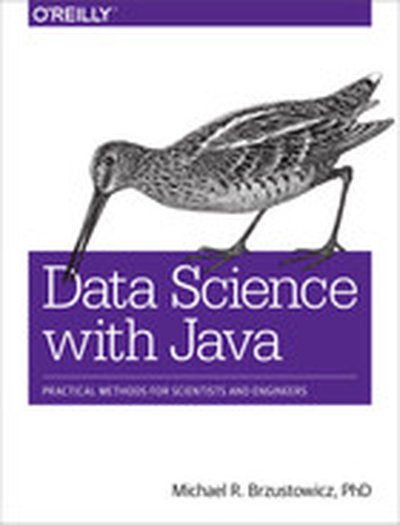
Data Science with Java

Data Science is booming thanks to R and Python, but Java brings the robustness, convenience, and ability to scale critical to today’s data science applications. With this practical book, Java software engineers looking to add data science skills will take a logical journey through the data science pipeline. Author Michael Brzustowicz explains the basic math theory behind each step of the data science process, as well as how to apply these concepts with Java. You’ll learn the critical roles that data IO, linear algebra, statistics, data operations, learning and prediction, and Hadoop MapReduce play in the process. Throughout this book, you’ll find code examples you can use in your applications. Examine methods for obtaining, cleaning, and arranging data into its purest form Understand the matrix structure that your data should take Learn basic concepts for testing the origin and validity of data Transform your data into stable and usable numerical values Understand supervised and unsupervised learning algorithms, and methods for evaluating their success Get up and running with MapReduce, using customized components suitable for data science algorithms

Data Lake for Enterprises

"Data Lake for Enterprises" is a comprehensive guide to building data lakes using the Lambda Architecture. It introduces big data technologies like Hadoop, Spark, and Flume, showing how to use them effectively to manage and leverage enterprise-scale data. You'll gain the skills to design and implement data systems that handle complex data challenges. What this Book will help me do Master the use of Lambda Architecture to create scalable and effective data management systems. Understand and implement technologies like Hadoop, Spark, Kafka, and Flume in an enterprise data lake. Integrate batch and stream processing techniques using big data tools for comprehensive data analysis. Optimize data lakes for performance and reliability with practical insights and techniques. Implement real-world use cases of data lakes and machine learning for predictive data insights. Author(s) None Mishra, None John, and Pankaj Misra are recognized experts in big data systems with a strong background in designing and deploying data solutions. With a clear and methodical teaching style, they bring years of experience to this book, providing readers with the tools and knowledge required to excel in enterprise big data initiatives. Who is it for? This book is ideal for software developers, data architects, and IT professionals looking to integrate a data lake strategy into their enterprises. It caters to readers with a foundational understanding of Java and big data concepts, aiming to advance their practical knowledge of building scalable data systems. If you're eager to delve into cutting-edge technologies and transform enterprise data management, this book is for you.

Hadoop 2.x Administration Cookbook

Gain mastery over managing and maintaining large Apache Hadoop clusters with the Hadoop 2.x Administration Cookbook. This book provides practical step-by-step recipes guiding you to efficiently set up, optimize, and troubleshoot Hadoop clusters, ensuring high availability, security, and optimal performance in your data operations. What this Book will help me do Successfully set up and deploy an operational Hadoop 2.x cluster suitable for large-scale data operations. Effectively monitor and maintain Hadoop's HDFS, YARN, and MapReduce systems for optimized performance. Plan, configure, and enhance cluster availability using Zookeeper and Journal Node strategies. Develop workflows and manage data ingestion processes with tools like Flume and Oozie. Secure, troubleshoot, and optimize Hadoop environments to meet enterprise and operational standards. Author(s) Aman Singh is an experienced Hadoop administrator with years of hands-on experience managing robust and efficient Hadoop clusters. Aman has a deep understanding of the practical challenges faced in this field and a talent for breaking down complex topics into actionable steps. Through clear, problem-oriented language, Aman helps readers achieve fluency in Hadoop administration. Who is it for? This book is ideal for system administrators or IT professionals who have a foundational understanding of Hadoop and aim to strengthen their administrative skills. It is especially beneficial for experienced Hadoop administrators looking for a quick and practical reference guide to master cluster management. Whether you're working in a large enterprise or exploring Hadoop ecosystems for personal development, you'll find this book invaluable.

Sams Teach Yourself Hadoop in 24 Hours

Apache Hadoop is the technology at the heart of the Big Data revolution, and Hadoop skills are in enormous demand. Now, in just 24 lessons of one hour or less, you can learn all the skills and techniques you'll need to deploy each key component of a Hadoop platform in your local environment or in the cloud, building a fully functional Hadoop cluster and using it with real programs and datasets. Each short, easy lesson builds on all that's come before, helping you master all of Hadoop's essentials, and extend it to meet your unique challenges. Apache Hadoop in 24 Hours, Sams Teach Yourself covers all this, and much more: Understanding Hadoop and the Hadoop Distributed File System (HDFS) Importing data into Hadoop, and process it there Mastering basic MapReduce Java programming, and using advanced MapReduce API concepts Making the most of Apache Pig and Apache Hive Implementing and administering YARN Taking advantage of the full Hadoop ecosystem Managing Hadoop clusters with Apache Ambari Working with the Hadoop User Environment (HUE) Scaling, securing, and troubleshooting Hadoop environments Integrating Hadoop into the enterprise Deploying Hadoop in the cloud Getting started with Apache Spark Step-by-step instructions walk you through common questions, issues, and tasks; Q-and-As, Quizzes, and Exercises build and test your knowledge; "Did You Know?" tips offer insider advice and shortcuts; and "Watch Out!" alerts help you avoid pitfalls. By the time you're finished, you'll be comfortable using Apache Hadoop to solve a wide spectrum of Big Data problems.

Usage-Driven Database Design: From Logical Data Modeling through Physical Schema Definition

Design great databases—from logical data modeling through physical schema definition. You will learn a framework that finally cracks the problem of merging data and process models into a meaningful and unified design that accounts for how data is actually used in production systems. Key to the framework is a method for taking the logical data model that is a static look at the definition of the data, and merging that static look with the process models describing how the data will be used in actual practice once a given system is implemented. The approach solves the disconnect between the static definition of data in the logical data model and the dynamic flow of the data in the logical process models. The design framework in this book can be used to create operational databases for transaction processing systems, or for data warehouses in support of decision support systems. The information manager can be a flat file, Oracle Database, IMS, NoSQL, Cassandra, Hadoop, or any other DBMS. Usage-Driven Database Design emphasizes practical aspects of design, and speaks to what works, what doesn't work, and what to avoid at all costs. Included in the book are lessons learned by the author over his 30+ years in the corporate trenches. Everything in the book is grounded on good theory, yet demonstrates a professional and pragmatic approach to design that can come only from decades of experience. Presents an end-to-end framework from logical data modeling through physical schema definition. Includes lessons learned, techniques, and tricks that can turn a database disaster into a success. Applies to all types of database management systems, including NoSQL such as Cassandra and Hadoop, and mainstream SQL databases such as Oracle and SQL Server What You'll Learn Create logical data models that accurately reflect the real world of the user Create usage scenarios reflecting how applications will use a new database Merge static data models with dynamic process models to create resilient yet flexible database designs Support application requirements by creating responsive database schemas in any database architecture Cope with big data and unstructured data for transaction processing and decision support systems Recognize when relational approaches won't work, and when to turn toward NoSQL solutions such as Cassandra or Hadoop Who This Book Is For System developers, including business analysts, database designers, database administrators, and application designers and developers who must design or interact with database systems

Data Science For Dummies, 2nd Edition

Your ticket to breaking into the field of data science! Jobs in data science are projected to outpace the number of people with data science skills—making those with the knowledge to fill a data science position a hot commodity in the coming years. Data Science For Dummies is the perfect starting point for IT professionals and students interested in making sense of an organization's massive data sets and applying their findings to real-world business scenarios. From uncovering rich data sources to managing large amounts of data within hardware and software limitations, ensuring consistency in reporting, merging various data sources, and beyond, you'll develop the know-how you need to effectively interpret data and tell a story that can be understood by anyone in your organization. Provides a background in data science fundamentals and preparing your data for analysis Details different data visualization techniques that can be used to showcase and summarize your data Explains both supervised and unsupervised machine learning, including regression, model validation, and clustering techniques Includes coverage of big data processing tools like MapReduce, Hadoop, Dremel, Storm, and Spark It's a big, big data world out there—let Data Science For Dummies help you harness its power and gain a competitive edge for your organization.

Big Data Visualization

Dive into 'Big Data Visualization' and uncover how to tackle the challenges of visualizing vast quantities of complex data. With a focus on scalable and dynamic techniques, this guide explores the nuances of effective data analysis. You'll master tools and approaches to display, interpret, and communicate data in impactful ways. What this Book will help me do Understand the fundamentals of big data visualization, including unique challenges and solutions. Explore practical techniques for using D3 and Python to visualize and detect anomalies in big data. Learn to leverage dashboards like Tableau to present data insights effectively. Address and improve data quality issues to enhance analysis accuracy. Gain hands-on experience with real-world use cases for tools such as Hadoop and Splunk. Author(s) James D. Miller is an IBM-certified expert specializing in data analytics and visualization. With years of experience handling massive datasets and extracting actionable insights, he is dedicated to sharing his expertise. His practical approach is evident in how he combines tool mastery with a clear understanding of data complexities. Who is it for? This book is designed for data analysts, data scientists, and others involved in interpreting and presenting big datasets. Whether you are a beginner looking to understand big data visualization or an experienced professional seeking advanced tools and techniques, this guide suits your needs perfectly. A foundational knowledge in programming languages like R and big data platforms such as Hadoop is recommended to maximize your learning.

Geospatial Data and Analysis

Geospatial data, or data with location information, is generated in huge volumes every day by billions of mobile phones, IoT sensors, drones, nanosatellites, and many other sources in an unending stream. This practical ebook introduces you to the landscape of tools and methods for making sense of all that data, and shows you how to apply geospatial analytics to a variety of issues, large and small. Authors Aurelia Moser, Jon Bruner, and Bill Day provide a complete picture of the geospatial analysis options available, including low-scale commercial desktop GIS tools, medium-scale options such as PostGIS and Lucene-based searching, and true big data solutions built on technologies such as Hadoop. You’ll learn when it makes sense to move from one type of solution to the next, taking increased costs and complexity into account. Explore the structure of basic webmaps, and the challenges and constraints involved when working with geo data Dive into low- to medium-scale mapping tools for use in backend and frontend web development Focus on tools for robust medium-scale geospatial projects that don’t quite justify a big data solution Learn about innovative platforms and software packages for solving issues of processing and storage of large-scale data Examine geodata analysis use cases, including disaster relief, urban planning, and agriculture and environmental monitoring

HBase High Performance Cookbook

"HBase High Performance Cookbook" is your guide to mastering the optimization, scaling, and tuning of HBase systems. Covering everything from configuring HBase clusters to designing scalable table structures and performance tuning, this comprehensive book provides practical advice and strategies for leveraging HBase's full potential. By following this book's recipes, you'll supercharge your HBase expertise. What this Book will help me do Understand how to configure HBase for optimal performance, improving your data system's efficiency. Learn to design table structures to maximize scalability and functionality in HBase. Gain skills in performing CRUD operations and using advanced features like MapReduce within HBase. Discover practices for integrating HBase with other technologies such as ElasticSearch. Master the steps involved in setting up and optimizing HBase in cloud environments for enhanced performance. Author(s) Ruchir Choudhry is a seasoned data management professional with extensive experience in distributed database systems. He possesses deep expertise in HBase, Hadoop, and other big data technologies. His practical and engaging writing style aims to demystify complex technical topics, making them accessible to developers and architects alike. Who is it for? This book is tailored for developers and system architects looking to deepen their understanding of HBase. Whether you are experienced with other NoSQL databases or are new to HBase, this book provides extensive practical knowledge. Ideal for professionals working in big data applications or those eager to optimize and scale their database systems effectively.