talk-data.com talk-data.com

Topic

Hive

Apache Hive

data_warehouse sql hadoop

4

tagged

Activity Trend

9 peak/qtr
2020-Q1 2026-Q1

Activities

Showing filtered results

Filtering by: O'Reilly Data Science Books ×
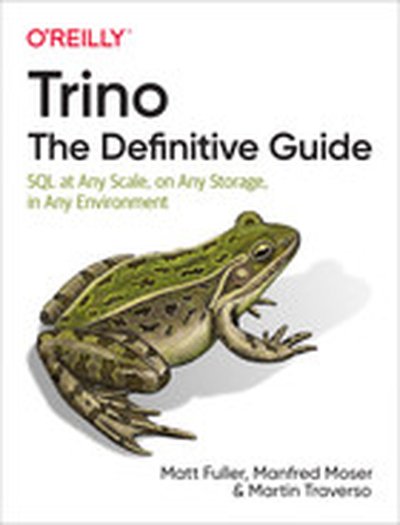
Trino: The Definitive Guide

Perform fast interactive analytics against different data sources using the Trino high-performance distributed SQL query engine. With this practical guide, you'll learn how to conduct analytics on data where it lives, whether it's Hive, Cassandra, a relational database, or a proprietary data store. Analysts, software engineers, and production engineers will learn how to manage, use, and even develop with Trino. Initially developed by Facebook, open source Trino is now used by Amazon, Google, LinkedIn, Lyft, Netflix, Pinterest, Salesforce, Shopify, and many other companies. Matt Fuller, Manfred Moser, and Martin Traverso show you how a single Trino query can combine data from multiple sources to allow for analytics across your entire organization. Get started: Explore Trino's use cases and learn about tools that will help you connect to Trino and query data Go deeper: Learn Trino's internal workings, including how to connect to and query data sources with support for SQL statements, operators, functions, and more Put Trino in production: Secure Trino, monitor workloads, tune queries, and connect more applications; learn how other organizations apply Trino

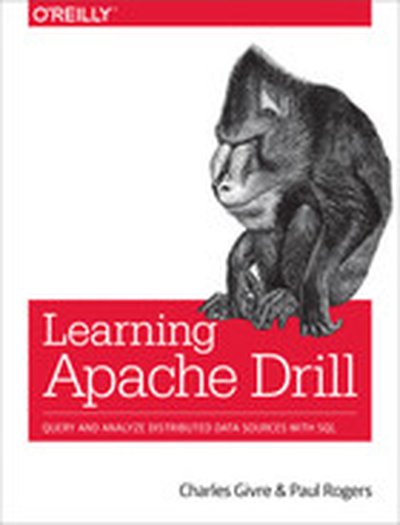
Learning Apache Drill

Get up to speed with Apache Drill, an extensible distributed SQL query engine that reads massive datasets in many popular file formats such as Parquet, JSON, and CSV. Drill reads data in HDFS or in cloud-native storage such as S3 and works with Hive metastores along with distributed databases such as HBase, MongoDB, and relational databases. Drill works everywhere: on your laptop or in your largest cluster. In this practical book, Drill committers Charles Givre and Paul Rogers show analysts and data scientists how to query and analyze raw data using this powerful tool. Data scientists today spend about 80% of their time just gathering and cleaning data. With this book, you’ll learn how Drill helps you analyze data more effectively to drive down time to insight. Use Drill to clean, prepare, and summarize delimited data for further analysis Query file types including logfiles, Parquet, JSON, and other complex formats Query Hadoop, relational databases, MongoDB, and Kafka with standard SQL Connect to Drill programmatically using a variety of languages Use Drill even with challenging or ambiguous file formats Perform sophisticated analysis by extending Drill’s functionality with user-defined functions Facilitate data analysis for network security, image metadata, and machine learning

Creating a Data-Driven Enterprise with DataOps

Many companies are busy collecting massive amounts of data, but few are taking advantage of this treasure horde to build a truly data insights-driven organization. To do so, the data team must democratize both data and the insights in a way that provides real-time access to all employees in the organization. This report explores DataOps, the process, culture, tools, and people required to scale big data pervasively across the enterprise. Just as DevOps has enabled organizations to improve coordination between developers and the operations team, DataOps closely connects everyone who handles data, including engineers, data scientists, analysts, and business users. Democratizing data with this approach requires removing barriers typical of siloed data, teams, and systems. In this report, Apache Hive creators Ashish Thusoo and Joydeep Sen Sarma examine the characteristics of a data-driven organization that supports a self-service model. Explore related topics such as data lakes, metadata, cloud architecture, and data-infrastructure-as-a-service Examine conclusions from a survey of more than 400 senior executives whose companies are in various stages of data maturity Learn how data pioneers at Facebook, Uber, LinkedIn, Twitter, and eBay created data-driven cultures and self-service data infrastructures for their organizations

Scala: Guide for Data Science Professionals

Scala will be a valuable tool to have on hand during your data science journey for everything from data cleaning to cutting-edge machine learning About This Book Build data science and data engineering solutions with ease An in-depth look at each stage of the data analysis process — from reading and collecting data to distributed analytics Explore a broad variety of data processing, machine learning, and genetic algorithms through diagrams, mathematical formulations, and source code Who This Book Is For This learning path is perfect for those who are comfortable with Scala programming and now want to enter the field of data science. Some knowledge of statistics is expected. What You Will Learn Transfer and filter tabular data to extract features for machine learning Read, clean, transform, and write data to both SQL and NoSQL databases Create Scala web applications that couple with JavaScript libraries such as D3 to create compelling interactive visualizations Load data from HDFS and HIVE with ease Run streaming and graph analytics in Spark for exploratory analysis Bundle and scale up Spark jobs by deploying them into a variety of cluster managers Build dynamic workflows for scientific computing Leverage open source libraries to extract patterns from time series Master probabilistic models for sequential data In Detail Scala is especially good for analyzing large sets of data as the scale of the task doesn’t have any significant impact on performance. Scala’s powerful functional libraries can interact with databases and build scalable frameworks — resulting in the creation of robust data pipelines. The first module introduces you to Scala libraries to ingest, store, manipulate, process, and visualize data. Using real world examples, you will learn how to design scalable architecture to process and model data — starting from simple concurrency constructs and progressing to actor systems and Apache Spark. After this, you will also learn how to build interactive visualizations with web frameworks. Once you have become familiar with all the tasks involved in data science, you will explore data analytics with Scala in the second module. You’ll see how Scala can be used to make sense of data through easy to follow recipes. You will learn about Bokeh bindings for exploratory data analysis and quintessential machine learning with algorithms with Spark ML library. You’ll get a sufficient understanding of Spark streaming, machine learning for streaming data, and Spark graphX. Armed with a firm understanding of data analysis, you will be ready to explore the most cutting-edge aspect of data science — machine learning. The final module teaches you the A to Z of machine learning with Scala. You’ll explore Scala for dependency injections and implicits, which are used to write machine learning algorithms. You’ll also explore machine learning topics such as clustering, dimentionality reduction, Naïve Bayes, Regression models, SVMs, neural networks, and more. This learning path combines some of the best that Packt has to offer into one complete, curated package. It includes content from the following Packt products: Scala for Data Science, Pascal Bugnion Scala Data Analysis Cookbook, Arun Manivannan Scala for Machine Learning, Patrick R. Nicolas Style and approach A complete package with all the information necessary to start building useful data engineering and data science solutions straight away. It contains a diverse set of recipes that cover the full spectrum of interesting data analysis tasks and will help you revolutionize your data analysis skills using Scala. Downloading the example code for this book. You can download the example code files for all Packt books you have purchased from your account at http://www.PacktPub.com. If you purchased this book elsewhere, you can visit http://www.PacktPub.com/support and register to have the code file.