talk-data.com talk-data.com

Topic

Hive

Apache Hive

data_warehouse sql hadoop

41

tagged

Activity Trend

9 peak/qtr
2020-Q1 2026-Q1

Activities

Showing filtered results

Filtering by: O'Reilly Data Engineering Books ×
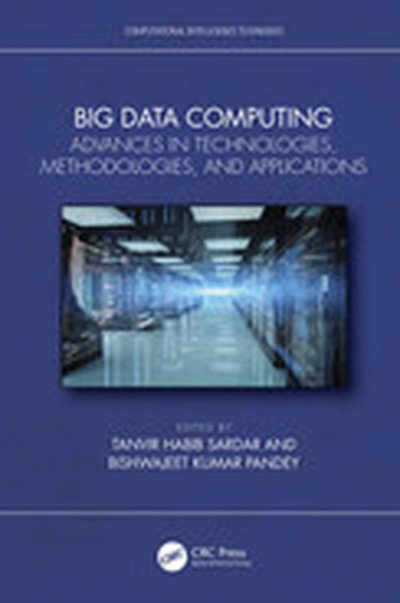
Big Data Computing

This book primarily aims to provide an in-depth understanding of recent advances in big data computing technologies, methodologies, and applications along with introductory details of big data computing models such as Apache Hadoop, MapReduce, Hive, Pig, Mahout in-memory storage systems, NoSQL databases, and big data streaming services.

Trino: The Definitive Guide, 2nd Edition

Perform fast interactive analytics against different data sources using the Trino high-performance distributed SQL query engine. In the second edition of this practical guide, you'll learn how to conduct analytics on data where it lives, whether it's a data lake using Hive, a modern lakehouse with Iceberg or Delta Lake, a different system like Cassandra, Kafka, or SingleStore, or a relational database like PostgreSQL or Oracle. Analysts, software engineers, and production engineers learn how to manage, use, and even develop with Trino and make it a critical part of their data platform. Authors Matt Fuller, Manfred Moser, and Martin Traverso show you how a single Trino query can combine data from multiple sources to allow for analytics across your entire organization. Explore Trino's use cases, and learn about tools that help you connect to Trino for querying and processing huge amounts of data Learn Trino's internal workings, including how to connect to and query data sources with support for SQL statements, operators, functions, and more Deploy and secure Trino at scale, monitor workloads, tune queries, and connect more applications Learn how other organizations apply Trino successfully

Introducing .NET for Apache Spark: Distributed Processing for Massive Datasets

Get started using Apache Spark via C# or F# and the .NET for Apache Spark bindings. This book is an introduction to both Apache Spark and the .NET bindings. Readers new to Apache Spark will get up to speed quickly using Spark for data processing tasks performed against large and very large datasets. You will learn how to combine your knowledge of .NET with Apache Spark to bring massive computing power to bear by distributed processing of extremely large datasets across multiple servers. This book covers how to get a local instance of Apache Spark running on your developer machine and shows you how to create your first .NET program that uses the Microsoft .NET bindings for Apache Spark. Techniques shown in the book allow you to use Apache Spark to distribute your data processing tasks over multiple compute nodes. You will learn to process data using both batch mode and streaming mode so you can make the right choice depending on whether you are processing an existing dataset or are working against new records in micro-batches as they arrive. The goal of the book is leave you comfortable in bringing the power of Apache Spark to your favorite .NET language. What You Will Learn Install and configure Spark .NET on Windows, Linux, and macOS Write Apache Spark programs in C# and F# using the .NET bindings Access and invoke the Apache Spark APIs from .NET with the same high performance as Python, Scala, and R Encapsulate functionality in user-defined functions Transform and aggregate large datasets Execute SQL queries against files through Apache Hive Distribute processing of large datasets across multiple servers Create your own batch, streaming, and machine learning programs Who This Book Is For .NETdevelopers who want to perform big data processing without having to migrate to Python, Scala, or R; and Apache Spark developers who want to run natively on .NET and take advantage of the C# and F# ecosystems

Learning Spark, 2nd Edition

Data is bigger, arrives faster, and comes in a variety of formatsâ??and it all needs to be processed at scale for analytics or machine learning. But how can you process such varied workloads efficiently? Enter Apache Spark. Updated to include Spark 3.0, this second edition shows data engineers and data scientists why structure and unification in Spark matters. Specifically, this book explains how to perform simple and complex data analytics and employ machine learning algorithms. Through step-by-step walk-throughs, code snippets, and notebooks, youâ??ll be able to: Learn Python, SQL, Scala, or Java high-level Structured APIs Understand Spark operations and SQL Engine Inspect, tune, and debug Spark operations with Spark configurations and Spark UI Connect to data sources: JSON, Parquet, CSV, Avro, ORC, Hive, S3, or Kafka Perform analytics on batch and streaming data using Structured Streaming Build reliable data pipelines with open source Delta Lake and Spark Develop machine learning pipelines with MLlib and productionize models using MLflow

Beginning Apache Spark Using Azure Databricks: Unleashing Large Cluster Analytics in the Cloud

Analyze vast amounts of data in record time using Apache Spark with Databricks in the Cloud. Learn the fundamentals, and more, of running analytics on large clusters in Azure and AWS, using Apache Spark with Databricks on top. Discover how to squeeze the most value out of your data at a mere fraction of what classical analytics solutions cost, while at the same time getting the results you need, incrementally faster. This book explains how the confluence of these pivotal technologies gives you enormous power, and cheaply, when it comes to huge datasets. You will begin by learning how cloud infrastructure makes it possible to scale your code to large amounts of processing units, without having to pay for the machinery in advance. From there you will learn how Apache Spark, an open source framework, can enable all those CPUs for data analytics use. Finally, you will see how services such as Databricks provide the power of Apache Spark, without you having to know anything aboutconfiguring hardware or software. By removing the need for expensive experts and hardware, your resources can instead be allocated to actually finding business value in the data. This book guides you through some advanced topics such as analytics in the cloud, data lakes, data ingestion, architecture, machine learning, and tools, including Apache Spark, Apache Hadoop, Apache Hive, Python, and SQL. Valuable exercises help reinforce what you have learned. What You Will Learn Discover the value of big data analytics that leverage the power of the cloud Get started with Databricks using SQL and Python in either Microsoft Azure or AWS Understand the underlying technology, and how the cloud and Apache Spark fit into the bigger picture See how these tools are used in the real world Run basic analytics, including machine learning, on billions of rows at a fraction of a cost or free Who This Book Is For Data engineers, data scientists, and cloud architects who want or need to run advanced analytics in the cloud. It is assumed that the reader has data experience, but perhaps minimal exposure to Apache Spark and Azure Databricks. The book is also recommended for people who want to get started in the analytics field, as it provides a strong foundation.

Big Data Simplified
"Big Data Simplified blends technology with strategy and delves into applications of big data in specialized areas, such as recommendation engines, data science and Internet of Things (IoT) and enables a practitioner to make the right technology choice. The steps to strategize a big data implementation are also discussed in detail. This book presents a holistic approach to the topic, covering a wide landscape of big

data technologies like Hadoop 2.0 and package implementations, such as Cloudera. In-depth discussion of associated technologies, such as MapReduce, Hive, Pig, Oozie, ApacheZookeeper, Flume, Kafka, Spark, Python and NoSQL databases like Cassandra, MongoDB, GraphDB, etc., is also included.

Hands-On Big Data Analytics with PySpark

Dive into the exciting world of big data analytics with 'Hands-On Big Data Analytics with PySpark'. This practical guide offers you the tools and knowledge to tackle massive datasets using PySpark. By exploring real-world examples, you'll learn to unleash the power of distributed systems to analyze and manipulate data at scale. What this Book will help me do Master using PySpark to handle large and complex datasets efficiently and effectively. Develop skills to optimize Spark programs using best practices like reducing shuffle operations. Learn to set up a PySpark environment, process data from platforms like HDFS, Hive, and S3. Enhance your data analytics capabilities by implementing powerful SQL queries and data visualizations. Understand testing and debugging techniques to build reliable, production-quality data pipelines. Author(s) Authored by Rudy Lai and Bartłomiej Potaczek, both seasoned data engineers and authors in the big data field. Rudy and Bartłomiej bring their extensive experience working with distributed systems and scalable data architectures into this book. Their approach is hands-on, focusing on real-world applications and best practices. Who is it for? This book is tailored for data scientists, engineers, and developers eager to advance their big data analytics capabilities. Whether you're new to big data or experienced with other analytics frameworks, this book will equip you with practical knowledge to utilize PySpark for scalable data solutions.

Practical Apache Spark: Using the Scala API

Work with Apache Spark using Scala to deploy and set up single-node, multi-node, and high-availability clusters. This book discusses various components of Spark such as Spark Core, DataFrames, Datasets and SQL, Spark Streaming, Spark MLib, and R on Spark with the help of practical code snippets for each topic. Practical Apache Spark also covers the integration of Apache Spark with Kafka with examples. You’ll follow a learn-to-do-by-yourself approach to learning – learn the concepts, practice the code snippets in Scala, and complete the assignments given to get an overall exposure. On completion, you’ll have knowledge of the functional programming aspects of Scala, and hands-on expertise in various Spark components. You’ll also become familiar with machine learning algorithms with real-time usage. What You Will Learn Discover the functional programming features of Scala Understand the completearchitecture of Spark and its components Integrate Apache Spark with Hive and Kafka Use Spark SQL, DataFrames, and Datasets to process data using traditional SQL queries Work with different machine learning concepts and libraries using Spark's MLlib packages Who This Book Is For Developers and professionals who deal with batch and stream data processing.

Apache Hadoop 3 Quick Start Guide

Dive into the world of distributed data processing with the 'Apache Hadoop 3 Quick Start Guide.' This comprehensive resource equips you with the knowledge needed to handle large datasets effectively using Apache Hadoop. Learn how to set up and configure Hadoop, work with its core components, and explore its powerful ecosystem tools. What this Book will help me do Understand the fundamental concepts of Apache Hadoop, including HDFS, MapReduce, and YARN, and use them to store and process large datasets. Set up and configure Hadoop 3 in both developer and production environments to suit various deployment needs. Gain hands-on experience with Hadoop ecosystem tools like Hive, Kafka, and Spark to enhance your big data processing capabilities. Learn to manage, monitor, and troubleshoot Hadoop clusters efficiently to ensure smooth operations. Analyze real-time streaming data with tools like Apache Storm and perform advanced data analytics using Apache Spark. Author(s) The author of this guide, Vijay Karambelkar, brings years of experience working with big data technologies and Apache Hadoop in real-world applications. With a passion for teaching and simplifying complex topics, Vijay has compiled his expertise to help learners confidently approach Hadoop 3. His detailed, example-driven approach makes this book a practical resource for aspiring data professionals. Who is it for? This book is ideal for software developers, data engineers, and IT professionals who aspire to dive into the field of big data. If you're new to Apache Hadoop or looking to upgrade your skills to include version 3, this guide is for you. A basic understanding of Java programming is recommended to make the most of the topics covered. Embark on this journey to enhance your career in data-intensive industries.

Apache Hive Essentials - Second Edition

"Apache Hive Essentials" provides a focused guide to mastering the essential techniques of processing and analyzing big data with Apache Hive. What this Book will help me do Set up and configure a Hive environment for big data analysis. Compose effective queries using Hive's SQL-like language to extract insights. Optimize Hive performance to handle complex datasets efficiently. Implement data security and user-defined functions to extend capabilities. Integrate Hive with Hadoop tools for comprehensive data solutions. Author(s) Dayong Du, the author of "Apache Hive Essentials," has years of experience working with big data technologies and tools. With hands-on expertise in Hadoop and the entire ecosystem, he brings a practical and informed perspective to this complex field. His approach is to make these technologies accessible to developers and analysts of all levels. Who is it for? This book is perfect for data analysts, developers, or professionals familiar with SQL who are looking to start with Apache Hive for big data processing. It is suitable for those acquainted with Hadoop and its environment and want to expand their skills into efficient data querying and management. Readers should have an interest in how to leverage big data tools for real-world solutions.

Moving Hadoop to the Cloud

Until recently, Hadoop deployments existed on hardware owned and run by organizations. Now, of course, you can acquire the computing resources and network connectivity to run Hadoop clusters in the cloud. But there’s a lot more to deploying Hadoop to the public cloud than simply renting machines. This hands-on guide shows developers and systems administrators familiar with Hadoop how to install, use, and manage cloud-born clusters efficiently. You’ll learn how to architect clusters that work with cloud-provider features—not just to avoid pitfalls, but also to take full advantage of these services. You’ll also compare the Amazon, Google, and Microsoft clouds, and learn how to set up clusters in each of them. Learn how Hadoop clusters run in the cloud, the problems they can help you solve, and their potential drawbacks Examine the common concepts of cloud providers, including compute capabilities, networking and security, and storage Build a functional Hadoop cluster on cloud infrastructure, and learn what the major providers require Explore use cases for high availability, relational data with Hive, and complex analytics with Spark Get patterns and practices for running cloud clusters, from designing for price and security to dealing with maintenance

Sams Teach Yourself Hadoop in 24 Hours

Apache Hadoop is the technology at the heart of the Big Data revolution, and Hadoop skills are in enormous demand. Now, in just 24 lessons of one hour or less, you can learn all the skills and techniques you'll need to deploy each key component of a Hadoop platform in your local environment or in the cloud, building a fully functional Hadoop cluster and using it with real programs and datasets. Each short, easy lesson builds on all that's come before, helping you master all of Hadoop's essentials, and extend it to meet your unique challenges. Apache Hadoop in 24 Hours, Sams Teach Yourself covers all this, and much more: Understanding Hadoop and the Hadoop Distributed File System (HDFS) Importing data into Hadoop, and process it there Mastering basic MapReduce Java programming, and using advanced MapReduce API concepts Making the most of Apache Pig and Apache Hive Implementing and administering YARN Taking advantage of the full Hadoop ecosystem Managing Hadoop clusters with Apache Ambari Working with the Hadoop User Environment (HUE) Scaling, securing, and troubleshooting Hadoop environments Integrating Hadoop into the enterprise Deploying Hadoop in the cloud Getting started with Apache Spark Step-by-step instructions walk you through common questions, issues, and tasks; Q-and-As, Quizzes, and Exercises build and test your knowledge; "Did You Know?" tips offer insider advice and shortcuts; and "Watch Out!" alerts help you avoid pitfalls. By the time you're finished, you'll be comfortable using Apache Hadoop to solve a wide spectrum of Big Data problems.

Practical Data Science with Hadoop® and Spark: Designing and Building Effective Analytics at Scale

The Complete Guide to Data Science with Hadoop—For Technical Professionals, Businesspeople, and Students Demand is soaring for professionals who can solve real data science problems with Hadoop and Spark. is your complete guide to doing just that. Drawing on immense experience with Hadoop and big data, three leading experts bring together everything you need: high-level concepts, deep-dive techniques, real-world use cases, practical applications, and hands-on tutorials. Practical Data Science with Hadoop® and Spark The authors introduce the essentials of data science and the modern Hadoop ecosystem, explaining how Hadoop and Spark have evolved into an effective platform for solving data science problems at scale. In addition to comprehensive application coverage, the authors also provide useful guidance on the important steps of data ingestion, data munging, and visualization. Once the groundwork is in place, the authors focus on specific applications, including machine learning, predictive modeling for sentiment analysis, clustering for document analysis, anomaly detection, and natural language processing (NLP). This guide provides a strong technical foundation for those who want to do practical data science, and also presents business-driven guidance on how to apply Hadoop and Spark to optimize ROI of data science initiatives. Learn What data science is, how it has evolved, and how to plan a data science career How data volume, variety, and velocity shape data science use cases Hadoop and its ecosystem, including HDFS, MapReduce, YARN, and Spark Data importation with Hive and Spark Data quality, preprocessing, preparation, and modeling Visualization: surfacing insights from huge data sets Machine learning: classification, regression, clustering, and anomaly detection Algorithms and Hadoop tools for predictive modeling Cluster analysis and similarity functions Large-scale anomaly detection NLP: applying data science to human language

Practical Hadoop Ecosystem: A Definitive Guide to Hadoop-Related Frameworks and Tools

Learn how to use the Apache Hadoop projects, including MapReduce, HDFS, Apache Hive, Apache HBase, Apache Kafka, Apache Mahout, and Apache Solr. From setting up the environment to running sample applications each chapter in this book is a practical tutorial on using an Apache Hadoop ecosystem project. While several books on Apache Hadoop are available, most are based on the main projects, MapReduce and HDFS, and none discusses the other Apache Hadoop ecosystem projects and how they all work together as a cohesive big data development platform. What You Will Learn: Set up the environment in Linux for Hadoop projects using Cloudera Hadoop Distribution CDH 5 Run a MapReduce job Store data with Apache Hive, and Apache HBase Index data in HDFS with Apache Solr Develop a Kafka messaging system Stream Logs to HDFS with Apache Flume Transfer data from MySQL database to Hive, HDFS, and HBase with Sqoop Create a Hive table over Apache Solr Develop a Mahout User Recommender System Who This Book Is For: Apache Hadoop developers. Pre-requisite knowledge of Linux and some knowledge of Hadoop is required.

Hadoop: Data Processing and Modelling

Unlock the power of your data with Hadoop 2.X ecosystem and its data warehousing techniques across large data sets About This Book Conquer the mountain of data using Hadoop 2.X tools The authors succeed in creating a context for Hadoop and its ecosystem Hands-on examples and recipes giving the bigger picture and helping you to master Hadoop 2.X data processing platforms Overcome the challenging data processing problems using this exhaustive course with Hadoop 2.X Who This Book Is For This course is for Java developers, who know scripting, wanting a career shift to Hadoop - Big Data segment of the IT industry. So if you are a novice in Hadoop or an expert, this book will make you reach the most advanced level in Hadoop 2.X. What You Will Learn Best practices for setup and configuration of Hadoop clusters, tailoring the system to the problem at hand Integration with relational databases, using Hive for SQL queries and Sqoop for data transfer Installing and maintaining Hadoop 2.X cluster and its ecosystem Advanced Data Analysis using the Hive, Pig, and Map Reduce programs Machine learning principles with libraries such as Mahout and Batch and Stream data processing using Apache Spark Understand the changes involved in the process in the move from Hadoop 1.0 to Hadoop 2.0 Dive into YARN and Storm and use YARN to integrate Storm with Hadoop Deploy Hadoop on Amazon Elastic MapReduce and Discover HDFS replacements and learn about HDFS Federation In Detail As Marc Andreessen has said "Data is eating the world," which can be witnessed today being the age of Big Data, businesses are producing data in huge volumes every day and this rise in tide of data need to be organized and analyzed in a more secured way. With proper and effective use of Hadoop, you can build new-improved models, and based on that you will be able to make the right decisions. The first module, Hadoop beginners Guide will walk you through on understanding Hadoop with very detailed instructions and how to go about using it. Commands are explained using sections called "What just happened" for more clarity and understanding. The second module, Hadoop Real World Solutions Cookbook, 2nd edition, is an essential tutorial to effectively implement a big data warehouse in your business, where you get detailed practices on the latest technologies such as YARN and Spark. Big data has become a key basis of competition and the new waves of productivity growth. Hence, once you get familiar with the basics and implement the end-to-end big data use cases, you will start exploring the third module, Mastering Hadoop. So, now the question is if you need to broaden your Hadoop skill set to the next level after you nail the basics and the advance concepts, then this course is indispensable. When you finish this course, you will be able to tackle the real-world scenarios and become a big data expert using the tools and the knowledge based on the various step-by-step tutorials and recipes. Style and approach This course has covered everything right from the basic concepts of Hadoop till you master the advance mechanisms to become a big data expert. The goal here is to help you learn the basic essentials using the step-by-step tutorials and from there moving toward the recipes with various real-world solutions for you. It covers all the important aspects of Hadoop from system designing and configuring Hadoop, machine learning principles with various libraries with chapters illustrated with code fragments and schematic diagrams. This is a compendious course to explore Hadoop from the basics to the most advanced techniques available in Hadoop 2.X.

Practical Hive: A Guide to Hadoop's Data Warehouse System

Dive into the world of SQL on Hadoop and get the most out of your Hive data warehouses. This book is your go-to resource for using Hive: authors Scott Shaw, Ankur Gupta, David Kjerrumgaard, and Andreas Francois Vermeulen take you through learning HiveQL, the SQL-like language specific to Hive, to analyze, export, and massage the data stored across your Hadoop environment. From deploying Hive on your hardware or virtual machine and setting up its initial configuration to learning how Hive interacts with Hadoop, MapReduce, Tez and other big data technologies, Practical Hive gives you a detailed treatment of the software. In addition, this book discusses the value of open source software, Hive performance tuning, and how to leverage semi-structured and unstructured data. What You Will Learn Install and configure Hive for new and existing datasets Perform DDL operations Execute efficient DML operations Use tables, partitions, buckets, and user-defined functions Discover performance tuning tips and Hive best practices Who This Book Is For Developers, companies, and professionals who deal with large amounts of data and could use software that can efficiently manage large volumes of input. It is assumed that readers have the ability to work with SQL.

Pro Spark Streaming: The Zen of Real-Time Analytics Using Apache Spark

Learn the right cutting-edge skills and knowledge to leverage Spark Streaming to implement a wide array of real-time, streaming applications. This book walks you through end-to-end real-time application development using real-world applications, data, and code. Taking an application-first approach, each chapter introduces use cases from a specific industry and uses publicly available datasets from that domain to unravel the intricacies of production-grade design and implementation. The domains covered in Pro Spark Streaming include social media, the sharing economy, finance, online advertising, telecommunication, and IoT. In the last few years, Spark has become synonymous with big data processing. DStreams enhance the underlying Spark processing engine to support streaming analysis with a novel micro-batch processing model. Pro Spark Streaming by Zubair Nabi will enable you to become a specialist of latency sensitive applications by leveraging the key features of DStreams, micro-batch processing, and functional programming. To this end, the book includes ready-to-deploy examples and actual code. Pro Spark Streaming will act as the bible of Spark Streaming. What You'll Learn Discover Spark Streaming application development and best practices Work with the low-level details of discretized streams Optimize production-grade deployments of Spark Streaming via configuration recipes and instrumentation using Graphite, collectd, and Nagios Ingest data from disparate sources including MQTT, Flume, Kafka, Twitter, and a custom HTTP receiver Integrate and couple with HBase, Cassandra, and Redis Take advantage of design patterns for side-effects and maintaining state across the Spark Streaming micro-batch model Implement real-time and scalable ETL using data frames, SparkSQL, Hive, and SparkR Use streaming machine learning, predictive analytics, and recommendations Mesh batch processing with stream processing via the Lambda architecture Who This Book Is For Data scientists, big data experts, BI analysts, and data architects.

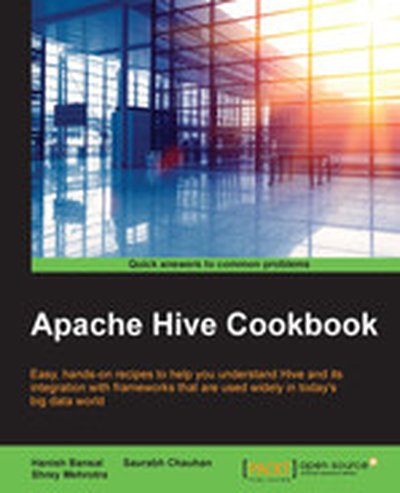
Apache Hive Cookbook

Apache Hive Cookbook is a comprehensive resource for mastering Apache Hive, a tool that bridges the gap between SQL and Big Data processing. Through guided recipes, you'll acquire essential skills in Hive query development, optimization, and integration with modern big data frameworks. What this Book will help me do Design efficient Hive query structures for big data analytics. Optimize data storage and query execution using partitions and buckets. Integrate Hive seamlessly with frameworks like Spark and Hadoop. Understand and utilize the HiveQL syntax to perform advanced analytical processing. Implement practical solutions to secure, maintain, and scale Hive environments. Author(s) Hanish Bansal, Saurabh Chauhan, and Shrey Mehrotra bring their extensive expertise in big data technologies and Hive to this cookbook. With years of practical experience and deep technical knowledge, they offer a collection of solutions and best practices that reflect real-world use cases. Their commitment to clarity and depth makes this book an invaluable resource for exploring Hive to its fullest potential. Who is it for? This book is perfect for data professionals, engineers, and developers looking to enhance their capabilities in big data analytics using Hive. It caters to those with a foundational understanding of big data frameworks and some familiarity with SQL. Whether you're planning to optimize data handling or integrate Hive with other data tools, this guide helps you achieve your goals. Step into the world of efficient data analytics with Apache Hive through structured learning paths.

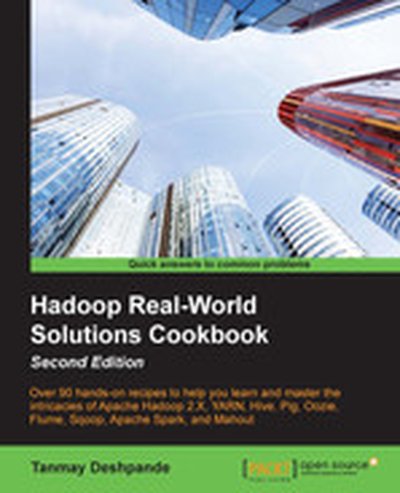
Hadoop Real-World Solutions Cookbook - Second Edition

Master the full potential of big data processing using Hadoop with this comprehensive guide. Featuring over 90 practical recipes, this book helps you streamline data workflows and implement machine learning models with tools like Spark, Hive, and Pig. By the end, you'll confidently handle complex data problems and optimize big data solutions effectively. What this Book will help me do Install and manage a Hadoop 2.x cluster efficiently to suit your data processing needs. Explore and utilize advanced tools like Hive, Pig, and Flume for seamless big data analysis. Master data import/export processes with Sqoop and workflows automation using Oozie. Implement machine learning and analytics tasks using Mahout and Apache Spark. Store and process data flexibly across formats like Parquet, ORC, RC, and more. Author(s) None Deshpande is an expert in big data processing and analytics with years of hands-on experience in implementing Hadoop-based solutions for real-world problems. Known for a clear and pragmatic writing style, None brings actionable wisdom and best practices to the forefront, helping readers excel in managing and utilizing big data systems. Who is it for? Designed for technical enthusiasts and professionals, this book is ideal for those familiar with basic big data concepts. If you are looking to expand your expertise in Hadoop's ecosystem and implement data-driven solutions, this book will guide you through essential skills and advanced techniques to efficiently manage complex big data projects.

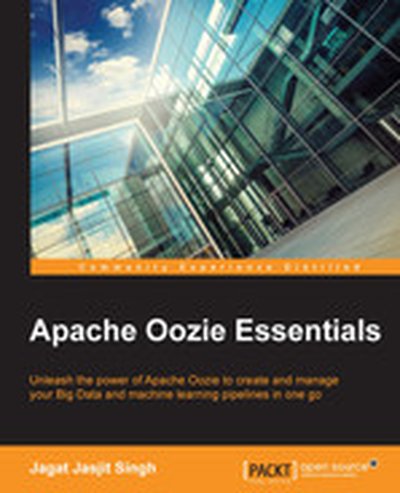
Apache Oozie Essentials

Apache Oozie Essentials serves as your guide to mastering Apache Oozie, a powerful workflow scheduler for Hadoop environments. Through lucid explanations and practical examples, you will learn how to create, schedule, and enhance workflows for data ingestion, processing, and machine learning tasks using Oozie. What this Book will help me do Install and configure Apache Oozie in your Hadoop environment to start managing workflows. Develop seamless workflows that integrate tools like Hive, Pig, and Sqoop to automate data operations. Set up coordinators to handle timed and dependent job executions efficiently. Deploy Spark jobs within your workflows for machine learning on large datasets. Harness Oozie security features to improve your system's reliability and trustworthiness. Author(s) Authored by None Singh, a seasoned developer with a deep understanding of big data processing and Apache Oozie. With their practical experience, the book intersperses technical detail with real-world examples for an effective learning experience. The author's goal is to make Oozie accessible and useful to professionals. Who is it for? This book is ideal for data engineers and Hadoop professionals looking to streamline their workflow management using Apache Oozie. Whether you're a novice to Oozie or aiming to implement complex data and ML pipelines, the book offers comprehensive guidance tailored to your needs.