talk-data.com talk-data.com

Topic

IoT

Internet of Things (IoT)

connected_devices sensors data_collection

11

tagged

Activity Trend

11 peak/qtr
2020-Q1 2026-Q1

Activities

Showing filtered results

Filtering by: O'Reilly Data Science Books ×
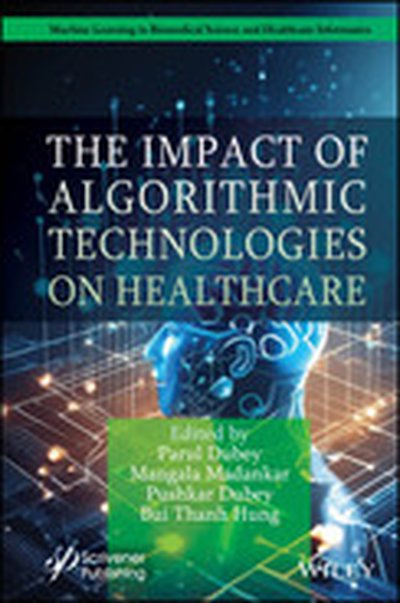
The Impact of Algorithmic Technologies on Healthcare

The book explores the fundamental principles and transformative advancements in cutting-edge algorithmic technologies, detailing their application and impact on revolutionizing healthcare. This book provides an in-depth account of how technologies such as artificial intelligence (AI), machine learning (ML), and the Internet of Things (IoT) are reshaping healthcare, transitioning from traditional diagnostic and treatment approaches to data-driven solutions that improve predictive accuracy and patient outcomes. The text also addresses the challenges and considerations associated with adopting these technologies, including ethical implications, data security concerns, and the need for human-centered approaches in algorithmic medicine. After introducing digital twin technology and its potential to enhance healthcare delivery, the book examines the broader effects of digital technology on the healthcare system. Subsequent chapters explore topics such as innovations in medical imaging, predictive analytics for improved patient outcomes, and deep learning algorithms for brain tumor detection. Other topics include generative adversarial networks (GANs), convolutional neural networks (CNNs), smart wearables for remote patient monitoring, effective IoT solutions, telemedicine advancements, and blockchain security for healthcare systems. The integration of biometric systems driven by AI, securing cyber-physical systems in healthcare, and digitizing wellness through electronic health records (EHRs) and electronic medical records (EMRs) are also discussed. The book concludes with an extensive case study comparing the impacts of various healthcare applications, offering insights and encouraging further research and innovation in this dynamic field. Audience This book is suitable for academicians and professionals in health informatics, bioinformatics, biomedical science and engineering, artificial intelligence, as well as clinicians, IT specialists, and policymakers in healthcare.
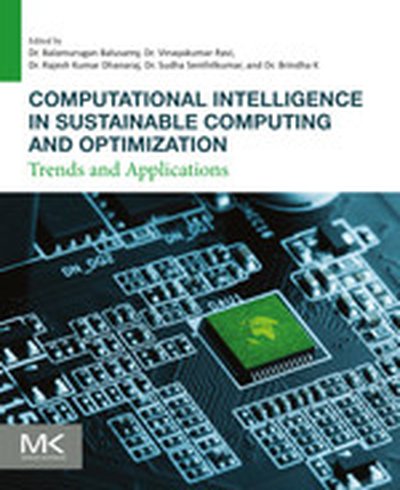
Computational Intelligence in Sustainable Computing and Optimization

Computational Intelligence in Sustainable Computing and Optimization: Trends and Applications focuses on developing and evolving advanced computational intelligence algorithms for the analysis of data involved in applications, such as agriculture, biomedical systems, bioinformatics, business intelligence, economics, disaster management, e-learning, education management, financial management, and environmental policies. The book presents research in sustainable computing and optimization, combining methods from engineering, mathematics, artificial intelligence, and computer science to optimize environmental resources Computational intelligence in the field of sustainable computing combines computer science and engineering in applications ranging from Internet of Things (IoT), information security systems, smart storage, cloud computing, intelligent transport management, cognitive and bio-inspired computing, and management science. In addition, data intelligence techniques play a critical role in sustainable computing. Recent advances in data management, data modeling, data analysis, and artificial intelligence are finding applications in energy networks and thus making our environment more sustainable. Presents computational, intelligence–based data analysis for sustainable computing applications such as pattern recognition, biomedical imaging, sustainable cities, sustainable transport, sustainable agriculture, and sustainable financial management Develops research in sustainable computing and optimization, combining methods from engineering, mathematics, and computer science to optimize environmental resources Includes three foundational chapters dedicated to providing an overview of computational intelligence and optimization techniques and their applications for sustainable computing

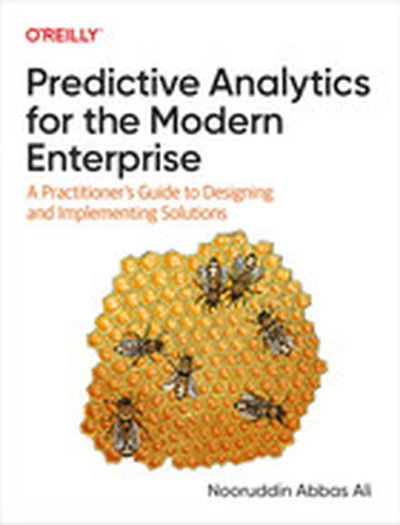
Predictive Analytics for the Modern Enterprise

The surging predictive analytics market is expected to grow from $10.5 billion today to $28 billion by 2026. With the rise in automation across industries, the increase in data-driven decision-making, and the proliferation of IoT devices, predictive analytics has become an operational necessity in today's forward-thinking companies. If you're a data professional, you need to be aligned with your company's business activities more than ever before. This practical book provides the background, tools, and best practices necessary to help you design, implement, and operationalize predictive analytics on-premises or in the cloud. Explore ways that predictive analytics can provide direct input back to your business Understand mathematical tools commonly used in predictive analytics Learn the development frameworks used in predictive analytics applications Appreciate the role of predictive analytics in the machine learning process Examine industry implementations of predictive analytics Build, train, and retrain predictive models using Python and TensorFlow

Healthcare Big Data Analytics

This book highlights how optimized big data applications can be used for patient monitoring and clinical diagnosis. In fact, IoT-based applications are data-driven and mostly employ modern optimization techniques. The book also explores challenges, opportunities, and future research directions, discussing the stages of data collection and pre-processing, as well as the associated challenges and issues in data handling and setup.

Big Data Analytics and Machine Intelligence in Biomedical and Health Informatics

BIG DATA ANALYTICS AND MACHINE INTELLIGENCE IN BIOMEDICAL AND HEALTH INFORMATICS Provides coverage of developments and state-of-the-art methods in the broad and diversified data analytics field and applicable areas such as big data analytics, data mining, and machine intelligence in biomedical and health informatics. The novel applications of Big Data Analytics and machine intelligence in the biomedical and healthcare sector is an emerging field comprising computer science, medicine, biology, natural environmental engineering, and pattern recognition. Biomedical and health informatics is a new era that brings tremendous opportunities and challenges due to the plentifully available biomedical data and the aim is to ensure high-quality and efficient healthcare by analyzing the data. The 12 chapters in??Big Data Analytics and Machine Intelligence in Biomedical and Health Informatics??cover the latest advances and developments in health informatics, data mining, machine learning, and artificial intelligence. They have been organized with respect to the similarity of topics addressed, ranging from issues pertaining to the Internet of Things (IoT) for biomedical engineering and health informatics, computational intelligence for medical data processing, and Internet of Medical Things??(IoMT). New researchers and practitioners working in the field will benefit from reading the book as they can quickly ascertain the best performing methods and compare the different approaches. Audience Researchers and practitioners working in the fields of biomedicine, health informatics, big data analytics, Internet of Things, and machine learning.

IoT-enabled Smart Healthcare Systems, Services and Applications

IoT-Enabled Smart Healthcare Systems, Services and Applications Explore the latest healthcare applications of cutting-edge technologies In IoT-Enabled Smart Healthcare Systems, Services and Applications, an accomplished team of researchers delivers an insightful and comprehensive exploration of the roles played by cutting-edge technologies in modern healthcare delivery. The distinguished editors have included resources from a diverse array of learned experts in the field that combine to create a broad examination of a rapidly developing field. With a particular focus on Internet of Things (IoT) technologies, readers will discover how new technologies are impacting healthcare applications from remote monitoring systems to entire healthcare delivery methodologies. After an introduction to the role of emerging technologies in smart health care, this volume includes treatments of ICN-Fog computing, edge computing, security and privacy, IoT architecture, vehicular ad-hoc networks (VANETs), and patient surveillance systems, all in the context of healthcare delivery. Readers will also find: A thorough introduction to ICN-Fog computing for IoT based healthcare, including its architecture and challenges Comprehensive explorations of Internet of Things enabled software defined networking for edge computing in healthcare Practical discussions of a review of e-healthcare systems in India and Thailand, as well as the security and privacy issues that arise through the use of smart healthcare systems using Internet of Things devices In-depth examinations of the architecture and applications of an Internet of Things based healthcare system Perfect for healthcare practitioners and allied health professionals, hospital administrators, and technology professionals, IoT-Enabled Smart Healthcare Systems, Services and Applications is an indispensable addition to the libraries of healthcare regulators and policymakers seeking a one-stop resource that explains cutting-edge technologies in modern healthcare.

IoT-Based Data Analytics for the Healthcare Industry

IoT Based Data Analytics for the Healthcare Industry: Techniques and Applications explores recent advances in the analysis of healthcare industry data through IoT data analytics. The book covers the analysis of ubiquitous data generated by the healthcare industry, from a wide range of sources, including patients, doctors, hospitals, and health insurance companies. The book provides AI solutions and support for healthcare industry end-users who need to analyze and manipulate this vast amount of data. These solutions feature deep learning and a wide range of intelligent methods, including simulated annealing, tabu search, genetic algorithm, ant colony optimization, and particle swarm optimization. The book also explores challenges, opportunities, and future research directions, and discusses the data collection and pre-processing stages, challenges and issues in data collection, data handling, and data collection set-up. Healthcare industry data or streaming data generated by ubiquitous sensors cocooned into the IoT requires advanced analytics to transform data into information. With advances in computing power, communications, and techniques for data acquisition, the need for advanced data analytics is in high demand. Provides state-of-art methods and current trends in data analytics for the healthcare industry Addresses the top concerns in the healthcare industry using IoT and data analytics, and machine learning and deep learning techniques Discusses several potential AI techniques developed using IoT for the healthcare industry Explores challenges, opportunities, and future research directions, and discusses the data collection and pre-processing stages

Intelligence at the Edge

Explore powerful SAS analytics and the Internet of Things! The world that we live in is more connected than ever before. The Internet of Things (IoT) consists of mechanical and electronic devices connected to one another and to software through the internet. Businesses can use the IoT to quickly make intelligent decisions based on massive amounts of data gathered in real time from these connected devices. IoT increases productivity, lowers operating costs, and provides insights into how businesses can serve existing markets and expand into new ones. Intelligence at the Edge: Using SAS with the Internet of Things is for anyone who wants to learn more about the rapidly changing field of IoT. Current practitioners explain how to apply SAS software and analytics to derive business value from the Internet of Things. The cornerstone of this endeavor is SAS Event Stream Processing, which enables you to process and analyze continuously flowing events in real time. With step-by-step guidance and real-world scenarios, you will learn how to apply analytics to streaming data. Each chapter explores a different aspect of IoT, including the analytics life cycle, monitoring, deployment, geofencing, machine learning, artificial intelligence, condition-based maintenance, computer vision, and edge devices.

Business in Real-Time Using Azure IoT and Cortana Intelligence Suite: Driving Your Digital Transformation

Learn how today’s businesses can transform themselves by leveraging real-time data and advanced machine learning analytics. This book provides prescriptive guidance for architects and developers on the design and development of modern Internet of Things (IoT) and Advanced Analytics solutions. In addition, Business in Real-Time Using Azure IoT and Cortana Intelligence Suite offers patterns and practices for those looking to engage their customers and partners through Software-as-a-Service solutions that work on any device. Whether you're working in Health & Life Sciences, Manufacturing, Retail, Smart Cities and Buildings or Process Control, there exists a common platform from which you can create your targeted vertical solutions. Business in Real-Time Using Azure IoT and Cortana Intelligence Suite uses a reference architecture as a road map. Building on Azure’s PaaS services, you'll see how a solution architecture unfolds that demonstrates a complete end-to-end IoT and Advanced Analytics scenario. What You'll Learn: Automate your software product life cycle using PowerShell, Azure Resource Manager Templates, and Visual Studio Team Services Implement smart devices using Node.JS and C# Use Azure Streaming Analytics to ingest millions of events Provide both "Hot" and "Cold" path outputs for real-time alerts, data transformations, and aggregation analytics Implement batch processing using Azure Data Factory Create a new form of Actionable Intelligence (AI) to drive mission critical business processes Provide rich Data Visualizations across a wide variety of mobile and web devices Who This Book is For: Solution Architects, Software Developers, Data Architects, Data Scientists, and CIO/CTA Technical Leadership Professionals

Think Like a Data Scientist

Think Like a Data Scientist presents a step-by-step approach to data science, combining analytic, programming, and business perspectives into easy-to-digest techniques and thought processes for solving real world data-centric problems. About the Technology Data collected from customers, scientific measurements, IoT sensors, and so on is valuable only if you understand it. Data scientists revel in the interesting and rewarding challenge of observing, exploring, analyzing, and interpreting this data. Getting started with data science means more than mastering analytic tools and techniques, however; the real magic happens when you begin to think like a data scientist. This book will get you there. About the Book Think Like a Data Scientist teaches you a step-by-step approach to solving real-world data-centric problems. By breaking down carefully crafted examples, you'll learn to combine analytic, programming, and business perspectives into a repeatable process for extracting real knowledge from data. As you read, you'll discover (or remember) valuable statistical techniques and explore powerful data science software. More importantly, you'll put this knowledge together using a structured process for data science. When you've finished, you'll have a strong foundation for a lifetime of data science learning and practice. What's Inside The data science process, step-by-step How to anticipate problems Dealing with uncertainty Best practices in software and scientific thinking About the Reader Readers need beginner programming skills and knowledge of basic statistics. About the Author Brian Godsey has worked in software, academia, finance, and defense and has launched several data-centric start-ups. Quotes Explains difficult concepts and techniques concisely and approachably. - Jenice Tom, CVS Health Goes beyond simple tools and techniques and helps you to conceptualize and solve challenging, real-world data science problems. - Casimir Saternos, Synchronoss Technologies A successful attempt to put the mind of a data scientist on paper. - David Krief, Altansia The book that changed my career path! - Nicolas Boulet-Lavoie, DL Innov

Strategies in Biomedical Data Science

An essential guide to healthcare data problems, sources, and solutions Strategies in Biomedical Data Science provides medical professionals with much-needed guidance toward managing the increasing deluge of healthcare data. Beginning with a look at our current top-down methodologies, this book demonstrates the ways in which both technological development and more effective use of current resources can better serve both patient and payer. The discussion explores the aggregation of disparate data sources, current analytics and toolsets, the growing necessity of smart bioinformatics, and more as data science and biomedical science grow increasingly intertwined. You'll dig into the unknown challenges that come along with every advance, and explore the ways in which healthcare data management and technology will inform medicine, politics, and research in the not-so-distant future. Real-world use cases and clear examples are featured throughout, and coverage of data sources, problems, and potential mitigations provides necessary insight for forward-looking healthcare professionals. Big Data has been a topic of discussion for some time, with much attention focused on problems and management issues surrounding truly staggering amounts of data. This book offers a lifeline through the tsunami of healthcare data, to help the medical community turn their data management problem into a solution. Consider the data challenges personalized medicine entails Explore the available advanced analytic resources and tools Learn how bioinformatics as a service is quickly becoming reality Examine the future of IOT and the deluge of personal device data The sheer amount of healthcare data being generated will only increase as both biomedical research and clinical practice trend toward individualized, patient-specific care. Strategies in Biomedical Data Science provides expert insight into the kind of robust data management that is becoming increasingly critical as healthcare evolves.