
talk-data.com talk-data.com

Topic

Kafka

Apache Kafka

distributed_streaming message_queue event_streaming

17

tagged

Activity Trend

20 peak/qtr
2020-Q1 2026-Q1

Activities

Showing filtered results

Filtering by: Databricks DATA + AI Summit 2023 ×
Practical Pipelines: A Houseplant Alerting System with ksqlDB

Taking care of houseplants can be difficult; in many cases, over-watering and under-watering can have the same symptoms. Remove the guesswork involved in caring for your houseplants while also gaining valuable experience in building a practical, event-driven pipeline in your own home! This session explores the process of building a houseplant monitoring and alerting system using a Raspberry Pi and Apache Kafka. Moisture and temperature readings are captured from sensors in the soil and streamed into Kafka. From there, we use stream processing to transform the data, create a summary view of the current state, and drive real-time push alerts through Telegram.

In this session, we will talk about how to ingest the data followed by the tools, including ksqlDB and Kafka Connect, that help transform the raw data into useful information, and finally, You'll be shown how to use Kafka Producers and Consumers to make the entire application more interactive. By the end of this session, you’ll have everything you need to start building practical streaming pipelines in your own home. Roll up your sleeves – let’s get our hands dirty!

Talk by: Danica Fine

Here’s more to explore: Big Book of Data Engineering: 2nd Edition: https://dbricks.co/3XpPgNV The Data Team's Guide to the Databricks Lakehouse Platform: https://dbricks.co/46nuDpI

Connect with us: Website: https://databricks.com Twitter: https://twitter.com/databricks LinkedIn: https://www.linkedin.com/company/databricks Instagram: https://www.instagram.com/databricksinc Facebook: https://www.facebook.com/databricksinc
Optimizing Batch and Streaming Aggregations

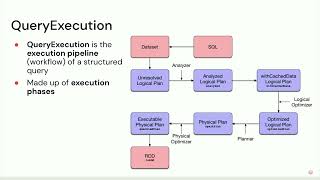
A client recently asked to optimize their batch and streaming workloads. It happened to be aggregations using DataFrame.groupby operation with a custom Scala UDAF over a data stream from Kafka. Just a single simple-looking request that turned itself up into a a-few-month-long hunt to find a more performant query execution planning than ObjectHashAggregateExec that kept falling back to a sort-based aggregation (i.e., the worst possible aggregation runtime performance). It quickly taught us that an aggregation using a custom Scala UDAF cannot be planned other than ObjectHashAggregateExec but at least tasks don't always have to fall back. And that's just batch workloads. When you throw in streaming semantics and think of the different output modes, windowing and streaming watermark optimizing aggregation can take a long time to do right.

Talk by: Jacek Laskowski

Here’s more to explore: Big Book of Data Engineering: 2nd Edition: https://dbricks.co/3XpPgNV The Data Team's Guide to the Databricks Lakehouse Platform: https://dbricks.co/46nuDpI

Connect with us: Website: https://databricks.com Twitter: https://twitter.com/databricks LinkedIn: https://www.linkedin.com/company/databricks Instagram: https://www.instagram.com/databricksinc Facebook: https://www.facebook.com/databricksinc
How Coinbase Built and Optimized SOON, a Streaming Ingestion Framework

Data with low latency is important for real-time incident analysis and metrics. Though we have up-to-date data in OLTP databases, they cannot support those scenarios. Data need to be replicated to a data warehouse to serve queries using GroupBy and Join across multiple tables from different systems. At Coinbase, we designed SOON (Spark cOntinuOus iNgestion) based on Kafka, Kafka Connect, and Apache Spark™ as an incremental table replication solution to replicate tables of any size from any database to Delta Lake in a timely manner. It also supports Kafka events ingestion naturally.

SOON incrementally ingests Kafka events as appends, updates, and deletes to an existing table on Delta Lake. The events are grouped into two categories: CDC (change data capture) events generated by Kafka Connect source connectors, and non-CDC events by the frontend or backend services. Both types can be appended or merged into the Delta Lake. Non-CDC events can be in any format, but CDC events must be in the standard SOON CDC schema. We implemented Kafka Connect SMTs to transform raw CDC events into this standardized format. SOON unifies all streaming ingestion scenarios such that users only need to learn one onboarding experience and the team only needs to maintain one framework.

We care about the ingestion performance. The biggest append-only table onboarded has ingress traffic at hundreds of thousands events per second; the biggest CDC-merge table onboarded has a snapshot size of a few TBs and CDC update traffic at hundreds of thousands events per second. A lot of innovative ideas are incorporated in SOON to improve its performance, such as min-max range merge optimization, KMeans merge optimization, no-update merge for deduplication, generated columns as partitions, etc.

Talk by: Chen Guo

Here’s more to explore: Big Book of Data Engineering: 2nd Edition: https://dbricks.co/3XpPgNV The Data Team's Guide to the Databricks Lakehouse Platform: https://dbricks.co/46nuDpI

Connect with us: Website: https://databricks.com Twitter: https://twitter.com/databricks LinkedIn: https://www.linkedin.com/company/databricks Instagram: https://www.instagram.com/databricksinc Facebook: https://www.facebook.com/databricksinc
Real-Time Reporting and Analytics for Construction Data Powered by Delta Lake and DBSQL

Procore is a construction project management software that helps construction professionals efficiently manage their projects and collaborate with their teams. Our mission is to connect everyone in construction on a global platform.

Procore is the system of record for all construction projects. Our customers need to access the data in near real-time for construction insights. Enhanced reporting is a self-service operational reporting module that allows quick data access with consistency to thousands of tables and reports.

Procore data platform rebuilt the module (originally built on the relational database) using Databricks and Delta lake. We used Apache Spark™ streaming to maintain the consistent state on the ingestion side from Kafka and plan to leverage the fully capable functionalities of DBSQL using the serverless SQL warehouse to read the medallion models (built via DBT) in Delta Lake. In addition, the Unity Catalog and the Delta share features helped us share the data across regions seamlessly. This design enabled us to improve the p95 and p99 read time by xx% (which were initially timing out).

Attend this session to hear about the learnings and experience of building a Data Lakehouse architecture.

Talk by: Jay Yang and Hari Rajaram

Connect with us: Website: https://databricks.com Twitter: https://twitter.com/databricks LinkedIn: https://www.linkedin.com/company/databricks Instagram: https://www.instagram.com/databricksinc Facebook: https://www.facebook.com/databricksinc
Taking Your Cloud Vendor to the Next Level: Solving Complex Challenges with Azure Databricks

Akamai's content delivery network (CDN) processes about 30% of the internet's daily traffic, resulting in a massive amount of data that presents engineering challenges, both internally and with cloud vendors. In this session, we will discuss the barriers faced while building a data infrastructure on Azure, Databricks, and Kafka to meet strict SLAs, hitting the limits of some of our cloud vendors’ services. We will describe the iterative process of re-architecting a massive scale data platform using the aforementioned technologies.

We will also delve into how today, Akamai is able to quickly ingest and make available to customers terabytes of data, as well as efficiently query Petabytes of data and return results within 10 seconds for most queries. This discussion will provide valuable insights for attendees and organizations seeking to effectively process and analyze large amounts of data.

High Volume Intelligent Streaming with Sub-Minute SLA for Near Real-Time Data Replication

Attend this session and learn about an innovative solution built around Databricks structured streaming and Delta Live Tables (DLT) to replicate thousands of tables from on-premises to cloud-based relational databases. A highly desirable pattern for many enterprises across the industries to replicate on-premises data to cloud-based data lakes and data stores in near real time for consumption.

This powerful architecture can offload legacy platform workloads and accelerate cloud journey. The intelligent cost-efficient solution leverages thread-pools, multi-task jobs, Kafka, Apache Spark™ structured streaming and DLT. This session will go into detail about problems, solutions, lessons-learned and best practices.

Talk by: Suneel Konidala and Murali Madireddi

Connect with us: Website: https://databricks.com Twitter: https://twitter.com/databricks LinkedIn: https://www.linkedin.com/company/databricks Instagram: https://www.instagram.com/databricksinc Facebook: https://www.facebook.com/databricksinc
Taking Your Cloud Vendor to the Next Level: Solving Complex Challenges with Azure Databricks

Akamai's content delivery network (CDN) processes about 30% of the internet's daily traffic, resulting in a massive amount of data that presents engineering challenges, both internally and with cloud vendors. In this session, we will discuss the barriers faced while building a data infrastructure on Azure, Databricks, and Kafka to meet strict SLAs, hitting the limits of some of our cloud vendors’ services. We will describe the iterative process of re-architecting a massive scale data platform using the aforementioned technologies.

We will also delve into how today, Akamai is able to quickly ingest and make available to customers terabytes of data, as well as efficiently query Petabytes of data and return results within 10 seconds for most queries. This discussion will provide valuable insights for attendees and organizations seeking to effectively process and analyze large amounts of data.

Talk by: Tomer Patel and Itai Yaffe

Connect with us: Website: https://databricks.com Twitter: https://twitter.com/databricks LinkedIn: https://www.linkedin.com/company/databricks Instagram: https://www.instagram.com/databricksinc Facebook: https://www.facebook.com/databricksinc
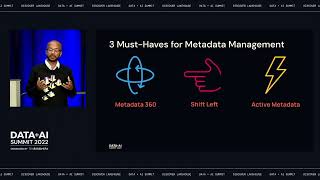
Connecting the Dots with DataHub: Lakehouse and Beyond

You’ve successfully built your data lakehouse. Congratulations! But what happens when your operational data stores, streaming systems like Apache Kafka or data ingestion systems produce bad data into the lakehouse? Can you be proactive when it comes to preventing bad data from affecting your business? How can you take advantage of automation to ensure that raw data assets become well maintained data products (clear ownership, documentation and sensitivity classification) without requiring people to do redundant work across operational, ingestion and lakehouse systems? How do you get live and historical visibility into your entire data ecosystem (schemas, pipelines, data lineage, models, features and dashboards) within and across your production services, ingestion pipelines and data lakehouse? Data engineers struggle with data quality and data governance issues constantly interrupting their day and limiting their upside impact on the business.

In this talk, we will share how data engineers from our 3K+ strong DataHub community are using DataHub to track lineage, understand data quality, and prevent failures from impacting their important dashboards, ML models and features. The talk will include details of how DataHub extracts lineage automatically from Spark, schema and statistics from Delta Lake and shift-left strategies for developer-led governance.

Connect with us: Website: https://databricks.com Facebook: https://www.facebook.com/databricksinc Twitter: https://twitter.com/databricks LinkedIn: https://www.linkedin.com/company/data... Instagram: https://www.instagram.com/databricksinc/
Improving Apache Spark Application Processing Time by Configurations, Code Optimizations, etc.

In this session, we'll go over several use-cases and describe the process of improving our spark structured streaming application micro-batch time from ~55 to ~30 seconds in several steps.

Our app is processing ~ 700 MB/s of compressed data, it has very strict KPIs, and it is using several technologies and frameworks such as: Spark 3.1, Kafka, Azure Blob Storage, AKS and Java 11.

We'll share our work and experience in those fields, and go over a few tips to create better Spark structured streaming applications.

The main areas that will be discussed are: Spark Configuration changes, code optimizations and the implementation of the Spark custom data source.

Connect with us: Website: https://databricks.com Facebook: https://www.facebook.com/databricksinc Twitter: https://twitter.com/databricks LinkedIn: https://www.linkedin.com/company/data... Instagram: https://www.instagram.com/databricksinc/
Near Real-Time Analytics with Event Streaming, Live Tables, and Delta Sharing

Microservices is an increasingly popular architecture much loved by application teams, for it allows services to be developed and scaled independently. Data teams, though, often need a centralized repository where all data from different services come together to join and aggregate. The data platform can serve as a single source of company facts, enable near real time analytics, and secure sharing of massive data sets across clouds.

A viable microservices ingestion pattern is Change Data Capture, using AWS Database Migration Services or Debezium. CDC proves to be a scalable solution ideal for stable platforms, but it has several challenges for evolving services: Frequent schema changes, complex, unsupported DDL during migration, and automated deployments are but a few. An event streaming architecture can address these challenges.

Confluent, for example, provides a schema registry service where all services can register their event schemas. Schema registration helps with verifying that the events are being published based on the agreed contracts between data producers and consumers. It also provides a separation between internal service logic and the data consumed downstream. The services write their events to Kafka using the registered schemas with a specific topic based on the type of the event.

Data teams can leverage Spark jobs to ingest Kafka topics into Bronze tables in the Delta Lake. On ingestion, the registered schema from schema registry is used to validate the schema based on the provided version. A merge operation is sometimes called to translate events into final states of the records per business requirements.

Data teams can take advantage of Delta Live Tables on streaming datasets to produce Silver and Gold tables in near real time. Each input data source also has a set of expectations to ensure data quality and business rules. The pipeline allows Engineering and Analytics to collaborate by mixing Python and SQL. The refined data sets are then fed into Auto ML for discovery and baseline modeling.

To expose Gold tables to more consumers, especially non spark users across clouds, data teams can implement Delta Sharing. Recipients can accesses Silver tables from a different cloud and build their own analytics data sets. Analytics teams can also access Gold tables via pandas Delta Sharing client and BI tools.

Connect with us: Website: https://databricks.com Facebook: https://www.facebook.com/databricksinc Twitter: https://twitter.com/databricks LinkedIn: https://www.linkedin.com/company/data... Instagram: https://www.instagram.com/databricksinc/

Optimizing Speed and Scale of User-Facing Analytics Using Apache Kafka and Pinot

Apache Kafka is the de facto standard for real-time event streaming, but what do you do if you want to perform user-facing, ad-hoc, real-time analytics too? That's where Apache Pinot comes in.

Apache Pinot is a realtime distributed OLAP datastore, which is used to deliver scalable real time analytics with low latency. It can ingest data from batch data sources (S3, HDFS, Azure Data Lake, Google Cloud Storage) as well as streaming sources such as Kafka. Pinot is used extensively at LinkedIn and Uber to power many analytical applications such as Who Viewed My Profile, Ad Analytics, Talent Analytics, Uber Eats and many more serving 100k+ queries per second while ingesting 1Million+ events per second.

Apache Kafka's highly performant, distributed, fault-tolerant, real-time publish-subscribe messaging platform powers big data solutions at Airbnb, LinkedIn, MailChimp, Netflix, the New York Times, Oracle, PayPal, Pinterest, Spotify, Twitter, Uber, Wikimedia Foundation, and countless other businesses.

Come hear from Neha Power, Founding Engineer at a StarTree and PMC and committer of Apache Pinot, and Karin Wolok, Head of Developer Community at StarTree, on an introduction to both systems and a view of how they work together.

Connect with us: Website: https://databricks.com Facebook: https://www.facebook.com/databricksinc Twitter: https://twitter.com/databricks LinkedIn: https://www.linkedin.com/company/data... Instagram: https://www.instagram.com/databricksinc/
Backfill Streaming Data Pipelines in Kappa Architecture

Streaming data pipelines can fail due to various reasons. Since the source data, such as Kafka topics, often have limited retention, prolonged job failures can lead to data loss. Thus, streaming jobs need to be backfillable at all times to prevent data loss in case of failures. One solution is to increase the source's retention so that backfilling is simply replaying source streams, but extending Kafka retention is very costly for Netflix's data sizes. Another solution is to utilize source data stored in DWH, commonly known as the Lambda architecture. However, this method introduces significant code duplication, as it requires engineers to maintain a separate equivalent batch job. At Netflix, we have created the Iceberg Source Connector to provide backfilling capabilities to Flink streaming applications. It allows Flink to stream data stored in Apache Iceberg while mirroring Kafka's ordering semantics, enabling us to backfill large-scale stateful Flink pipelines at low retention cost.

Connect with us: Website: https://databricks.com Facebook: https://www.facebook.com/databricksinc Twitter: https://twitter.com/databricks LinkedIn: https://www.linkedin.com/company/data... Instagram: https://www.instagram.com/databricksinc/
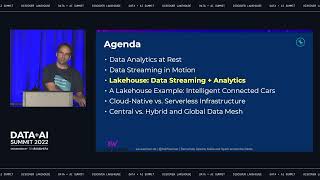
Serverless Kafka and Apache Spark in a Multi-Cloud Data Lakehouse Architecture

Apache Kafka in conjunction with Apache Spark became the de facto standard for processing and analyzing data. Both frameworks are open, flexible, and scalable. Unfortunately, the latter makes operations a challenge for many teams. Ideally, teams can use serverless SaaS offerings to focus on business logic. However, hybrid and multi-cloud scenarios require a cloud-native platform that provides automated and elastic tooling to reduce the operations burden.

This post explores different architecture to build serverless Kafka and Spark multi-cloud architectures across regions and continents. We start from the analytics perspective of a data lake and explore its relation to a fully integrated data streaming layer with Kafka to build a modern data lakehouse. Real-world use cases show the joint value and explore the benefit of the "delta lake" integration.

Connect with us: Website: https://databricks.com Facebook: https://www.facebook.com/databricksinc Twitter: https://twitter.com/databricks LinkedIn: https://www.linkedin.com/company/data... Instagram: https://www.instagram.com/databricksinc/
Streaming Data into Delta Lake with Rust and Kafka

Scribd's data architecture was originally batch-oriented, but in the last couple years, we introduced streaming data ingestion to provide near-real-time ad hoc query capability, mitigate the need for more batch processing tasks, and set the foundation for building real-time data applications.

Kafka and Delta Lake are the two key components of our streaming ingestion pipeline. Various applications and services write messages to Kafka as events are happening. We were tasked with getting these messages into Delta Lake quickly and efficiently.

Our first solution was to deploy Spark Structured Streaming jobs. This got us off the ground quickly, but had some downsides.

Since Delta Lake and the Delta transaction protocol are open source, we kicked off a project to implement our own Rust ingestion daemon. We were confident we could deliver a Rust implementation since our ingestion jobs are append only. Rust offers high performance with a focus on code safety and modern syntax.

In this talk I will describe Scribd's unique approach to ingesting messages from Kafka topics into Delta Lake tables. I will describe the architecture, deployment model, and performance of our solution, which leverages the kafka-delta-ingest Rust daemon and the delta-rs crate hosted in auto-scaling ECS services. I will discuss foundational design aspects for achieving data integrity such as distributed locking with DynamoDb to overcome S3's lack of "PutIfAbsent" semantics, and avoiding duplicates or data loss when multiple concurrent tasks are handling the same stream. I'll highlight the reliability and performance characteristics we've observed so far. I'll also describe the Terraform deployment model we use to deliver our 70-and-growing production ingestion streams into AWS.

Connect with us: Website: https://databricks.com Facebook: https://www.facebook.com/databricksinc Twitter: https://twitter.com/databricks LinkedIn: https://www.linkedin.com/company/data... Instagram: https://www.instagram.com/databricksinc/
Auditing Your Data and Answering the Lifelong Question—Is It the End of the Day Yet?

Huge volumes of data flow through a robust Kafka architecture, into several ETLs, receiving, transforming and storing the data. We clearly understood our ETLs’ workflow and our data architecture, from source to destination.

But how much did we know about the way our data makes though our systems? And what about the life long question, is it the end of the day yet?

In this talk I’m going to present to you the design process behind our Data Auditing system, Life Line. From tracking and producing, to analyzing and storing auditing information, using technologies such as Kafka, Avro, Spark, Lambda functions and complex SQL queries. We’re going to cover: * AVRO Audit header * Auditing heart beat - designing your metadata * Designing and optimizing your auditing table - what does this data look like anyway? * Creating an alert based monitoring system * Answering the most important question of all - is it the end of the day yet?

Connect with us: Website: https://databricks.com Facebook: https://www.facebook.com/databricksinc Twitter: https://twitter.com/databricks LinkedIn: https://www.linkedin.com/company/data... Instagram: https://www.instagram.com/databricksinc/
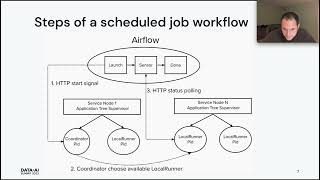
Elixir: The Wickedly Awesome Batch and Stream Processing Language You Should Have in Your Toolbox

Elixir is an Erlang-VM bytecode-compatible programming language that is growing in popularity.

In this session I will show how you can apply Elixir towards solving data engineering problems in novel ways.

Examples include: • How to leverage Erlang's lightweight distributed process coordination to run clusters of workers across docker containers and perform data ingestion. • A framework that hooks Elixir functions as steps into Airflow graphs. • How to consume and process Kafka events directly within Elixir microservices.

For each of the above I'll show real system examples and walk through the key elements step by step. No prior familiarity with Erlang or Elixir will be required.

Connect with us: Website: https://databricks.com Facebook: https://www.facebook.com/databricksinc Twitter: https://twitter.com/databricks LinkedIn: https://www.linkedin.com/company/data... Instagram: https://www.instagram.com/databricksinc/
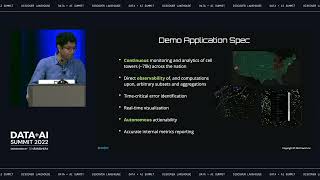
Automating Business Decisions Using Event Streams

Today's real-time solutions demand continuousness, autonomy, and observability. Data streams have evolved to guarantee only continuousness; thus, streams alone will never satisfy this demand. Industries instead crave a properly end-to-end streaming architecture backing their applications and services -- a concept that has narrowly evaded realization until now.

In this session, Rohit Bose will demonstrate how such architectures cleanly solve complex problems. This will require two parts:

  1. Building an industry-specific application that continuously generates insights and reports them over dynamically-scoped real-time streams
  2. Discussing the advantages and generalizations of the application's design

The demo will utilize the Swim platform to expose thousands of streaming APIs seeded by an Apache Kafka firehose, enabling both real-time map visualizations and decision-making clients to instantly observe changes across distributed entities with zero unnecessary subscriptions.

Connect with us: Website: https://databricks.com Facebook: https://www.facebook.com/databricksinc Twitter: https://twitter.com/databricks LinkedIn: https://www.linkedin.com/company/data... Instagram: https://www.instagram.com/databricksinc/