talk-data.com talk-data.com

Topic

Linux

operating_system open_source unix_like

287

tagged

Activity Trend

20 peak/qtr
2020-Q1 2026-Q2

Activities

287 activities · Newest first

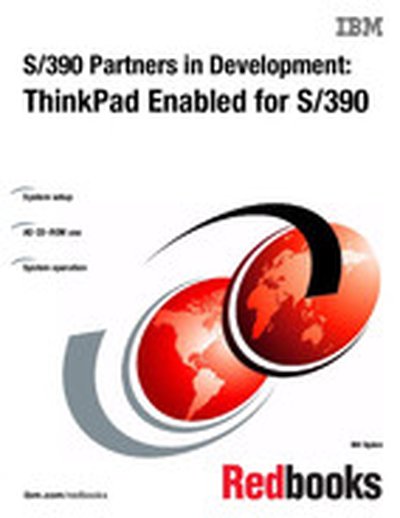
S/390 Partners in Development: ThinkPad Enabled for S/390

A ThinkPad Enabled for S/390, generally known as a ThinkPad/EFS system, is the smallest S/390 currently available, and is intended for development and demonstration purposes. It is based on an IBM ThinkPad running Linux, and the S/390 emulation product FLEX-ES. FLEX-ES is a product of Fundamental Software, Incorporated (FSI) of Fremont, California. This package (the ThinkPad, Linux, and FLEX-ES) can run all current S/390 operating systems. This IBM Redbooks publication introduces the ThinkPad/EFS system, describes the setup process of the system in some detail, and then describes the installation and use of an OS/390 package known as the OS/390 AD CD-ROM system. While this publication is primarily directed at members of the IBM S/390 Partners in Development program (also known as PartnerWorld), most of the content applies to any ThinkPad/EFS system.

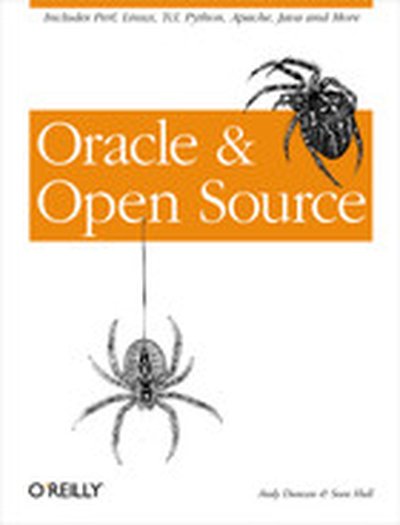
Oracle and Open Source

Oracle & Open Source is the first book to tie together the commercial world of Oracle and the free-wheeling world of open source software. As this book reveals, these two worlds are not as far apart as they may seem. Today, there are many excellent and freely available software tools that Oracle developers and database administrators can use, at no cost, to improve their own coding productivity and their system's performance. Moreover, many of the finest Oracle developers are now making their source code freely available so their peers can build upon this code base. Oracle Corporation is even porting its RDBMS to Linux and starting to incorporate a growing number of open source tools in the company's own software. Oracle & Open Source describes close to 100 open source tools you can use for Oracle development and database administration, from large and widely known open source systems (like Linux, Perl, Apache, TCL/Tk and Python) to more Oracle-specific tools (like Orasoft, Orac, OracleTool, and OraSnap). You'll learn how to obtain the software and how to adapt it to best advantage. The book abounds with code examples, download and installation instructions, and helpful usage hints. Not only does it tell you how to find and use existing open source code; Oracle & Open Source gives you the details and the motivation to build your own open source contributions and release them to the Oracle community. You'll learn all about tools like the Oracle Call Interface (OCI) and Perl-DBI (Database Interface), which provide the glue allowing new open source tools to link into commercial Oracle software. With Oracle & Open Source as a guide, you'll discover an enormous number of highly effective open source tools, while getting involved with the thriving community of open source development.

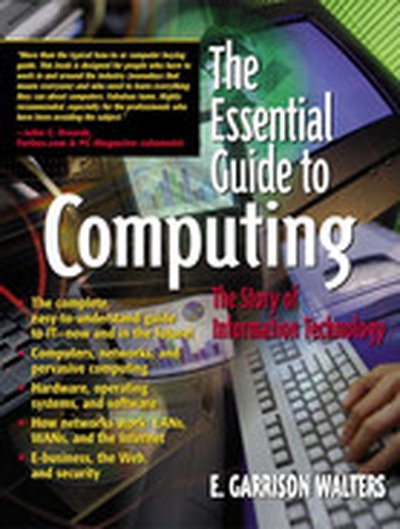
Essential Guide to Computing: The Story of Information Technology, The

The complete, easy-to-understand guide to IT—now and in the future! Computers, networks, and pervasive computing Hardware, operating systems, and software How networks work: LANs, WANs, and the Internet E-business, the Web, and security The guide for ANYONE who needs to understand the key technologies driving today's economy and high tech industries! You can't afford not to understand the information revolution that's sweeping the world-but who's got time for all the acronyms and hype most technology books give you? The Essential Guide to Computing demystifies the digital society we live in with an intelligent, thorough, and up-to-date explanation of computer, networking, and Internet technologies. It's perfect for smart professionals who want to get up to speed, but don't have computer science or engineering degrees! You'll find up-to-the-minute coverage on all of today's hottest technologies including: The evolution of computing: from the room-sized "monoliths" of the 1950s to today's global Internet Preview of the next revolution: "pervasive computing" Computer hardware: microprocessors, memory, storage, I/O, displays, and architecture Windows, Macintosh, UNIX/Linux, DOS, NetWare, Palm: what operating systems do, and how they compare Programming languages: from machine language to advanced object-oriented technologies Key software applications: databases, spreadsheets, word processing, voice recognition, and beyond Microsoft and the software industry: where they stand, where they're headed How networks work: LANs, WANs, packet switching, hardware, media, and more The Internet, e-commerce, and security Enterprise applications: data warehousing, Web-centered development, and groupware Whether you're a consumer, investor, marketer, or executive, this is your start-to-finish briefing on the information technologies that have changed the world-and the coming technologies that will transform it yet again!

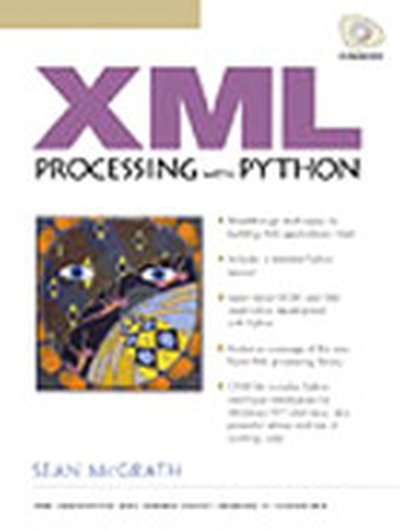
XML Processing with Python

Breakthrough techniques for building XML applications — fast! Includes a detailed Python tutorial Learn about DOM and SAX application development with Python Exclusive coverage of the new Pyxie XML processing library CD-ROM includes Python and Pyxie distributions for Windows NT and Linux—plus powerful utilities and lots of working code "XML processing is the newest required skill for webmasters and application developers. The Python language and Sean McGrath's book make it fun to learn and easy to do." — Charles F. Goldfarb When it comes to XML processing, Python is in a league of its own. If you're doing XML development without Python, you're wasting time! Python offers outstanding productivity — especially in the areas that matter most to XML developers, such as XML parsing, DOM/SAX implementations, string processing, and Internet APIs. And now there's Pyxie — the new open source library that makes Python XML processing even easier and more powerful. In XML Processing with Python, top XML developer Sean McGrath delivers the hands-on explanations and examples you need to get results with Python and Pyxie fast — even if you've never used them before! Install Python and the Pyxie XML package Learn the fundamentals of Python: control structures, classes, nested lists, dictionaries, and regular rexpresions Process XML with regular expression-driven, event-driven, and tree-driven techniques Understand Python's support for DOM and SAX APIs Explore the power of Python/XML through worked examples of GUI development, database integration, and an XML query-by-example implementation. Elegant, easy, powerful and fun, Python helps you build world-class XML applications in less time than you ever imagined. If you know XML, one book has all the techniques, code, and tools you'll need to process it: XML Processing with Python. CD-ROM INCLUDED The accompanying CD-ROM contains everything you need to develop XML applications with Python — including complete Python distributions for Windows and Linux the Pyxie open-source libraries powerful utility programs an extensive library of sample source code tested on both Windows NT and Linux

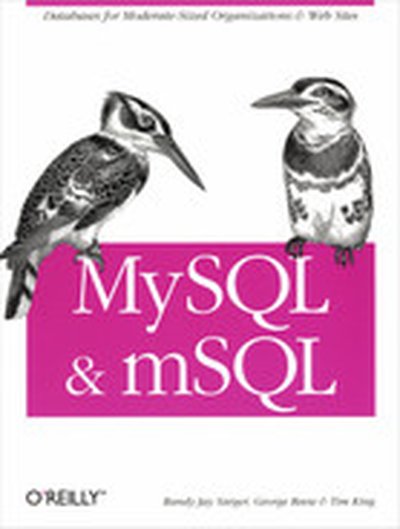
MySQL and mSQL

MySQL and mSQL are popular and robust database products that support key subsets of SQL on both Linux and Unix systems. Both products are free for nonprofit use and cost a small amount for commercial use. Even a small organization or web site has uses for a database. Perhaps you keep track of all your customers and find that your information is outgrowing the crude, flat-file format you started with. Or you want to ask your web site's visitors for their interests and preferences and put up a fresh web page that tallies the results. Unlike commercial databases, MySQL and mSQL are affordable and easy to use. If you know basic C, Java, Perl, or Python, you can quickly write a program to interact with your database. In addition, you can embed queries and updates right in an HTML file so that a web page becomes its own interface to the database. This book is all you need to make use of MySQL or mSQL. It takes you through the whole process from installation and configuration to programming interfaces and basic administration. Includes reference chapters and ample tutorial material. Topics include: Introductions to simple database design and SQL Building, installation, and configuration Basic programming APIs for C, C++, Java (JDBC), Perl, and Python CGI programming with databases in C and Perl Web interfaces: PHP, W3-mSQL, Lite, and mSQLPerl

Build Bigger With Small Ai: Running Small Models Locally

It's finally possible to bring the awesome power of Large Language Models (LLMs) to your laptop. This talk will explore how to run and leverage small, openly available LLMs to power common tasks involving data, including selecting the right models, practical use cases for running small models, and best practices for deploying small models effectively alongside databases.

Bio: Jeffrey Morgan is the founder of Ollama, an open-source tool to get up and run large language models. Prior to founding Ollama, Jeffrey founded Kitematic, which was acquired by Docker and evolved into Docker Desktop. He has previously worked at companies including Docker, Twitter, and Google.

➡️ Follow Us LinkedIn: https://www.linkedin.com/company/small-data-sf/ X/Twitter : https://twitter.com/smalldatasf Website: https://www.smalldatasf.com/

Discover how to run large language models (LLMs) locally using Ollama, the easiest way to get started with small AI models on your Mac, Windows, or Linux machine. Unlike massive cloud-based systems, small open source models are only a few gigabytes, allowing them to run incredibly fast on consumer hardware without network latency. This video explains why these local LLMs are not just scaled-down versions of larger models but powerful tools for developers, offering significant advantages in speed, data privacy, and cost-effectiveness by eliminating hidden cloud provider fees and risks.

Learn the most common use case for small models: combining them with your existing factual data to prevent hallucinations. We dive into retrieval augmented generation (RAG), a powerful technique where you augment a model's prompt with information from a local data source. See a practical demo of how to build a vector store from simple text files and connect it to a model like Gemma 2B, enabling you to query your own data using natural language for fast, accurate, and context-aware responses.

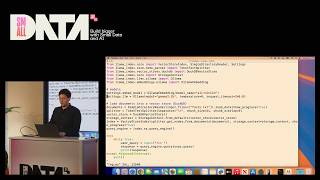
Explore the next frontier of local AI with small agents and tool calling, a new feature that empowers models to interact with external tools. This guide demonstrates how an LLM can autonomously decide to query a DuckDB database, write the correct SQL, and use the retrieved data to answer your questions. This advanced tutorial shows you how to connect small models directly to your data engineering workflows, moving beyond simple chat to create intelligent, data-driven applications.

Get started with practical applications for small models today, from building internal help desks to streamlining engineering tasks like code review. This video highlights how small and large models can work together effectively and shows that open source models are rapidly catching up to their cloud-scale counterparts. It's never been a better time for developers and data analysts to harness the power of local AI.