Anu Srivastava, Sr. Staff Technical Marketing Manager, NVIDIA - Anu leads open model marketing at NVIDIA, working with partners like Meta, Google DeepMind, and Microsoft to grow the public AI ecosystem.
 talk-data.com
Topic
Marketing
advertising
branding
customer_acquisition
743
tagged
Activity Trend
49
peak/qtr
2020-Q1
2026-Q2
Top Events
O'Reilly Data Science Books
103
O'Reilly Data Engineering Books
57
The Pragmatic Engineer
46
Making Data Simple
35
DataFramed
32
How Music Charts
31
Data Engineering Podcast
30
Data + AI Summit 2025
29
The Analytics Power Hour
28
Google Cloud Next '24
23
Databricks DATA + AI Summit 2023
23
The Future of Data Podcast | conversation with leaders, influencers, and change makers in the World of Data & Analytics
18
Hoe ver zijn we in Nederland met AI in marketing? Laat je meenemen in de nieuwste inzichten uit het DDMO 2025: hét jaarlijkse onderzoek van de DDMA naar datagedreven marketing. Met een scherpe analyse van waar de sector staat en waar kansen liggen om te versnellen. In deze sessie ontdek je waarom de kloof tussen voorlopers en achterblijvers groeit. En hoe je voorkomt dat jouw organisatie de aansluiting mist.
Data speelt een steeds grotere rol binnen het voetbal, niet alleen op het veld, maar ook in de business van de club. Hoe zorg je ervoor dat afdelingen zoals marketing, ticketing en commercie mee kunnen in deze datagedreven aanpak? In deze sessie gaan we in gesprek over hoe je de business binnen een voetbalorganisatie meeneemt in data en AI.
Hoe zorg je dat marketing en data écht samenwerken? Bij Transavia bouwden we een Composable Customer Data Platform waarmee we sneller ML-gebaseerde personalisatie toepassen op website en app. In deze sessie delen we hoe deze aanpak helpt om flexibeler te werken, klantgerichter te acteren en de samenwerking tussen teams te versterken.
Centraal Beheer werkt al meer dan 10 jaar met verschillende attributie modellen. Tijdens deze sessie neemt Tjaard je mee in de Marketing Attributie reis van Centraal Beheer. Wat zijn de lessons learned in de afgelopen 10 jaar? En wat zijn mogelijke valkuilen? Waar moet je beginnen? En hoe maak je de 'juiste' keuze in de totstandkoming van je modellen? Verschillende technieken komen aan bod, waaronder multi-touch attributiemodellen (MTA), marketing- of media-mix modellen (MMM) en experimenten, en we onderzoeken hoe deze methoden kunnen bijdragen aan het optimaliseren van marketingstrategieën. Een aantal mythes over Marketing Attributie zullen worden ontkracht en er wordt ingegaan op het belang van data, kennis en context bij het bouwen van effectieve modellen.
TomTom’s Sales & Marketing teams made a fundamental shift — from intuition-based decisions to data-driven steering. In this session, TomTom shares how commercial data was centralised, cleaned, governed, visualised, and translated into actionable insights, resulting in tangible impact on both culture and performance.
Brought to You By: • Statsig — The unified platform for flags, analytics, experiments, and more. Statsig built a complete set of data tools that allow engineering teams to measure the impact of their work. This toolkit is SO valuable to so many teams, that OpenAI - who was a huge user of Statsig - decided to acquire the company, the news announced last week. Talk about validation! Check out Statsig. • Linear – The system for modern product development. Here’s an interesting story: OpenAI switched to Linear as a way to establish a shared vocabulary between teams. Every project now follows the same lifecycle, uses the same labels, and moves through the same states. Try Linear for yourself. — The Pragmatic Engineer Podcast is back with the Fall 2025 season. Expect new episodes to be published on most Wednesdays, looking ahead. Code Complete is one of the most enduring books on software engineering. Steve McConnell wrote the 900-page handbook just five years into his career, capturing what he wished he’d known when starting out. Decades later, the lessons remain relevant, and Code Complete remains a best-seller. In this episode, we talk about what has aged well, what needed updating in the second edition, and the broader career principles Steve has developed along the way. From his “career pyramid” model to his critique of “lily pad hopping,” and why periods of working in fast-paced, all-in environments can be so rewarding, the emphasis throughout is on taking ownership of your career and making deliberate choices. We also discuss: • Top-down vs. bottom-up design and why most engineers default to one approach • Why rewriting code multiple times makes it better • How taking a year off to write Code Complete crystallized key lessons • The 3 areas software designers need to understand, and why focusing only on technology may be the most limiting • And much more! Steve rarely gives interviews, so I hope you enjoy this conversation, which we recorded in Seattle. — Timestamps (00:00) Intro (01:31) How and why Steve wrote Code Complete (08:08) What code construction is and how it differs from software development (11:12) Top-down vs. bottom-up design approach (14:46) Why design documents frustrate some engineers (16:50) The case for rewriting everything three times (20:15) Steve’s career before and after Code Complete (27:47) Steve’s career advice (44:38) Three areas software designers need to understand (48:07) Advice when becoming a manager, as a developer (53:02) The importance of managing your energy (57:07) Early Microsoft and why startups are a culture of intense focus (1:04:14) What changed in the second edition of Code Complete (1:10:50) AI’s impact on software development: Steve’s take (1:17:45) Code reviews and GenAI (1:19:58) Why engineers are becoming more full-stack (1:21:40) Could AI be the exception to “no silver bullets?” (1:26:31) Steve’s advice for engineers on building a meaningful career — The Pragmatic Engineer deepdives relevant for this episode: • What changed in 50 years of computing • The past and future of modern backend practices • The Philosophy of Software Design – with John Ousterhout • AI tools for software engineers, but without the hype – with Simon Willison (co-creator of Django) • TDD, AI agents and coding – with Kent Beck — Production and marketing by https://penname.co/. For inquiries about sponsoring the podcast, email [email protected].
Get full access to The Pragmatic Engineer at newsletter.pragmaticengineer.com/subscribe
Veel organisaties hebben de data en tools, maar missen volwassen regie. Volgens het DDMO 2025 blijven marketingteams steken in adolescentie: ambitieus, maar stuurloos. Lucas Bos 'laat zien hoe data door structuur, discipline en cultuur wel het gewenste resultaat oplevert – aan de hand van praktijkvoorbeelden en tips waar je direct mee aan de slag kunt.
Send us a text 🎙️ This week on Making Data Simple: Fred Joyal — you may know him from the iconic 1-800-DENTIST commercials. Today, Fred takes us beyond marketing genius into the art of being BOLD. Show Notes 02:20 – Brand Fred Joyal19:20 – Monetization Strategy20:58 – Boldness as a Superpower23:18 – Just Show Up26:15 – Step Up with Exercises27:00 – Failures are Steps Up: Take Another Swing38:50 – 5 Steps to Lowering Anxiety41:50 – How to Better Network💡 Boldness, resilience, and practical strategies you can use today — this episode is packed with insights that will help you step up in work, leadership, and life. Find Fred Joyal @ https://fredjoyal.com/ LinkedIn: linkedin.com/in/fredjoyal Twitter: fredjoyal
Want to be featured as a guest on Making Data Simple? Reach out to us at [email protected] and tell us why you should be next. The Making Data Simple Podcast is hosted by Al Martin, WW VP Technical Sales, IBM, where we explore trending technologies, business innovation, and leadership ... while keeping it simple & fun.
The line between human work and AI capabilities is blurring in today's business environment. AI agents are now handling autonomous tasks across customer support, data management, and sales prospecting with increasing sophistication. But how do you effectively integrate these agents into your existing workflows? What's the right approach to training and evaluating AI team members? With data quality being the foundation of successful AI implementation, how can you ensure your systems have the unified context they need while maintaining proper governance and privacy controls? Karen Ng is the Head of Product at HubSpot, where she leads product strategy, design, and partnerships with the mission of helping millions of organizations grow better. Since joining in 2022, she has driven innovation across Smart CRM, Operations Hub, Breeze Intelligence, and the developer ecosystem, with a focus on unifying structured and unstructured data to make AI truly useful for businesses. Known for leading with clarity and “AI speed,” she pushes HubSpot to stay ahead of disruption and empower customers to thrive. Previously, Karen held senior product leadership roles at Common Room, Google, and Microsoft. At Common Room, she built the product and data science teams from the ground up, while at Google she directed Android’s product frameworks like Jetpack and Jetpack Compose. During more than a decade at Microsoft, she helped shape the company’s .NET strategy and launched the Roslyn compiler platform. Recognized as a Product 50 Winner and recipient of the PM Award for Technical Strategist, she also advises and invests in high-growth technology companies. In the episode, Richie and Karen explore the evolving role of AI agents in sales, marketing, and support, the distinction between chatbots, co-pilots, and autonomous agents, the importance of data quality and context, the concept of hybrid teams, the future of AI-driven business processes, and much more. Links Mentioned in the Show: Hubspot Breeze AgentsConnect with KarenWebinar: Pricing & Monetizing Your AI Products with Sam Lee, VP of Pricing Strategy & Product Operations at HubSpotRelated Episode: Enterprise AI Agents with Jun Qian, VP of Generative AI Services at OracleRewatch RADAR AI New to DataCamp? Learn on the go using the DataCamp mobile appEmpower your business with world-class data and AI skills with DataCamp for business
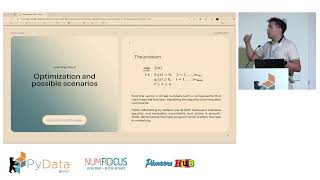
Traditional budget planners chase the highest predicted return and hope for the best. Bayesian models take the opposite route: they quantify uncertainty first, then let us optimize budgets with that uncertainty fully on display. In this talk we’ll show how posterior distributions become a set of possible futures, and how risk‑aware loss functions convert those probabilities into spend decisions that balance upside with resilience. Whether you lead marketing, finance, or product, you’ll learn a principled workflow for turning probabilistic insight into capital allocation that’s both aggressive and defensible—no black‑box magic, just transparent Bayesian reasoning and disciplined risk management.

Consumer choice models are an important part of product innovation and market strategy. In this talk we'll see how they can be used to learn about substitution goods and market shares in competitive markets using PyMC marketing's new consumer choice module.
Data science continues to evolve in the age of AI, but is it still the 'sexiest job of the 21st century'? While generative AI has transformed the landscape, it hasn't replaced data scientists—instead, it's created more demand for their skills. Data professionals now incorporate AI into their workflows to boost efficiency, analyze data faster, and communicate insights more effectively. But with these technological advances come questions: How should you adapt your skills to stay relevant? What's the right balance between traditional data science techniques and new AI capabilities? And as roles like analytics engineer and machine learning engineer emerge, how do you position yourself for success in this rapidly changing field? Dawn Choo is the Co-Founder of Interview Master, a platform designed to streamline technical interview preparation. With a foundation in data science, financial analysis, and product strategy, she brings a cross-disciplinary lens to building data-driven tools that improve hiring outcomes. Her career spans roles at leading tech firms, including ClassDojo, Patreon, and Instagram, where she delivered insights to support product development and user engagement. Earlier, Dawn held analytical and engineering positions at Amazon and Bank of America, focusing on business intelligence, financial modeling, and risk analysis. She began her career at Facebook as a marketing analyst and continues to be a visible figure in the data science community—offering practical guidance to job seekers navigating technical interviews and career transitions. In the episode, Richie and Dawn explore the evolving role of data scientists in the age of AI, the impact of generative AI on workflows, the importance of foundational skills, and the nuances of the hiring process in data science. They also discuss the integration of AI in products and the future of personalized AI models, and much more. Links Mentioned in the Show: Interview MasterConnect with DawnDawn’s Newsletter: Ask Data DawnGet Certified: AI Engineer for Data Scientists Associate CertificationRelated Episode: How To Get Hired As A Data Or AI Engineer with Deepak Goyal, CEO & Founder at Azurelib AcademyRewatch RADAR AI New to DataCamp? Learn on the go using the DataCamp mobile appEmpower your business with world-class data and AI skills with DataCamp for business
Brought to You By: • WorkOS — The modern identity platform for B2B SaaS. • Statsig — The unified platform for flags, analytics, experiments, and more. • Sonar — Code quality and code security for ALL code. — In this episode of The Pragmatic Engineer, I sit down with Peter Walker, Head of Insights at Carta, to break down how venture capital and startups themselves are changing. We go deep on the numbers: why fewer companies are getting funded despite record VC investment levels, how hiring has shifted dramatically since 2021, and why solo founders are on the rise even though most VCs still prefer teams. We also unpack the growing emphasis on ARR per FTE, what actually happens in bridge and down rounds, and why the time between fundraising rounds has stretched far beyond the old 18-month cycle. We cover what all this means for engineers: what to ask before joining a startup, how to interpret valuation trends, and what kind of advisor roles startups are actually looking for. If you work at a startup, are considering joining one, or just want a clearer picture of how venture-backed companies operate today, this episode is for you. — Timestamps (00:00) Intro (01:21) How venture capital works and the goal of VC-backed startups (03:10) Venture vs. non-venture backed businesses (05:59) Why venture-backed companies prioritize growth over profitability (09:46) A look at the current health of venture capital (13:19) The hiring slowdown at startups (16:00) ARR per FTE: The new metric VCs care about (21:50) Priced seed rounds vs. SAFEs (24:48) Why some founders are incentivized to raise at high valuations (29:31) What a bridge round is and why they can signal trouble (33:15) Down rounds and how optics can make or break startups (36:47) Why working at startups offers more ownership and learning (37:47) What the data shows about raising money in the summer (41:45) The length of time it takes to close a VC deal (44:29) How AI is reshaping startup formation, team size, and funding trends (48:11) Why VCs don’t like solo founders (50:06) How employee equity (ESOPs) work (53:50) Why acquisition payouts are often smaller than employees expect (55:06) Deep tech vs. software startups: (57:25) Startup advisors: What they do, how much equity they get (1:02:08) Why time between rounds is increasing and what that means (1:03:57) Why it’s getting harder to get from Seed to Series A (1:06:47) A case for quitting (sometimes) (1:11:40) How to evaluate a startup before joining as an engineer (1:13:22) The skills engineers need to thrive in a startup environment (1:16:04) Rapid fire round — The Pragmatic Engineer deepdives relevant for this episode:
— See the transcript and other references from the episode at https://newsletter.pragmaticengineer.com/podcast — Production and marketing by https://penname.co/. For inquiries about sponsoring the podcast, email [email protected].
Get full access to The Pragmatic Engineer at newsletter.pragmaticengineer.com/subscribe
What does it mean to be agentic? Is there a spectrum of agency? In this episode of The Analytics Engineering Podcast, Tristan Handy talks to Sean Falconer, senior director of AI strategy at Confluent, about AI agents. They discuss what truly makes software "agentic," where agents are successfully being deployed, and how to conceptualize and build agents within enterprise infrastructure. Sean shares practical ideas about the changing trends in AI, the role of basic models, and why agents may be better for businesses than for consumers. This episode will give you a clear, practical idea of how AI agents can change businesses, instead of being a vague marketing buzzword. For full show notes and to read 6+ years of back issues of the podcast's companion newsletter, head to https://roundup.getdbt.com. The Analytics Engineering Podcast is sponsored by dbt Labs.
Thinking about swapping your 9‑to‑5 for client work, but worried that a long German–style notice period will kill your chances? In this live interview, seven‑year data‑freelance veteran Dimitri walks through his experience of taking his freelance career to the next level.
About the Speaker: Dimitri Visnadi is an independent data consultant with a focus on data strategy. He has been consulting companies leading the marketing data space such as Unilever, Ferrero, Heineken, and Red Bull.
He has lived and worked in 6 countries across Europe in both corporate and startup organizations. He was part of data departments at Hewlett-Packard (HP) and a Google partnered consulting firm where he was working on data products and strategy.
Having received a Masters in Business Analytics with Computer Science from University College London and a Bachelor in Business Administration from John Cabot University, Dimitri still has close ties to academia and holds a mentor position in entrepreneurship at both institutions.
🕒 TIMECODES00:00 Dimitri’s journey from corporate to freelance data specialist05:41 Job tenure trends, tech career shifts, and freelance types10:50 Freelancing challenges, success, and finding clients17:33 Freelance market trends and Dimitri’s job board23:51 Starting points, top freelance skills, and market insights32:48 Building a lifestyle business: scaling and work-life balance45:30 Data Freelancer course and marketing for freelancers48:33 Subscription services and managing client relationships56:47 Pricing models and transitioning advice1:01:02 Notice periods, networking, and risks in freelancing transition
🔗 CONNECT WITH DataTalksClub
Join the community - https://datatalks.club/slack.html
Subscribe to our Google calendar to have all our events in your calendar - https://calendar.google.com/calendar/...
Check other upcoming events - https://lu.ma/dtc-events
LinkedIn - / datatalks-club
Twitter - / datatalksclub
Website - https://datatalks.club/
🔗 CONNECT WITH DIMITRI
Linkedin - https://www.linkedin.com/in/visnadi/
Supported by Our Partners • Statsig — The unified platform for flags, analytics, experiments, and more. • Graphite — The AI developer productivity platform. — There’s no shortage of bold claims about AI and developer productivity, but how do you separate signal from noise? In this episode of The Pragmatic Engineer, I’m joined by Laura Tacho, CTO at DX, to cut through the hype and share how well (or not) AI tools are actually working inside engineering orgs. Laura shares insights from DX’s research across 180+ companies, including surprising findings about where developers save the most time, why devs don’t use AI at all, and what kinds of rollouts lead to meaningful impact. We also discuss: • The problem with oversimplified AI headlines and how to think more critically about them • An overview of the DX AI Measurement framework • Learnings from Booking.com’s AI tool rollout • Common reasons developers aren’t using AI tools • Why using AI tools sometimes decreases developer satisfaction • Surprising results from DX’s 180+ company study • How AI-generated documentation differs from human-written docs • Why measuring developer experience before rolling out AI is essential • Why Laura thinks roadmaps are on their way out • And much more! — Timestamps (00:00) Intro (01:23) Laura’s take on AI overhyped headlines (10:46) Common questions Laura gets about AI implementation (11:49) How to measure AI’s impact (15:12) Why acceptance rate and lines of code are not sufficient measures of productivity (18:03) The Booking.com case study (20:37) Why some employees are not using AI (24:20) What developers are actually saving time on (29:14) What happens with the time savings (31:10) The surprising results from the DORA report on AI in engineering (33:44) A hypothesis around AI and flow state and the importance of talking to developers (35:59) What’s working in AI architecture (42:22) Learnings from WorkHuman’s adoption of Copilot (47:00) Consumption-based pricing, and the difficulty of allocating resources to AI (52:01) What DX Core 4 measures (55:32) The best outcomes of implementing AI (58:56) Why highly regulated industries are having the best results with AI rollout (1:00:30) Indeed’s structured AI rollout (1:04:22) Why migrations might be a good use case for AI (and a tip for doing it!) (1:07:30) Advice for engineering leads looking to get better at AI tooling and implementation (1:08:49) Rapid fire round — The Pragmatic Engineer deepdives relevant for this episode: • AI Engineering in the real world • Measuring software engineering productivity • The AI Engineering stack • A new way to measure developer productivity – from the creators of DORA and SPACE — See the transcript and other references from the episode at https://newsletter.pragmaticengineer.com/podcast — Production and marketing by https://penname.co/. For inquiries about sponsoring the podcast, email [email protected].
Get full access to The Pragmatic Engineer at newsletter.pragmaticengineer.com/subscribe
Supported by Our Partners • WorkOS — The modern identity platform for B2B SaaS. • Statsig — The unified platform for flags, analytics, experiments, and more. • Sonar — Code quality and code security for ALL code. — Steve Yegge is known for his writing and “rants”, including the famous “Google Platforms Rant” and the evergreen “Get that job at Google” post. He spent 7 years at Amazon and 13 at Google, as well as some time at Grab before briefly retiring from tech. Now out of retirement, he’s building AI developer tools at Sourcegraph—drawn back by the excitement of working with LLMs. He’s currently writing the book Vibe Coding: Building Production-Grade Software With GenAI, Chat, Agents, and Beyond. In this episode of The Pragmatic Engineer, I sat down with Steve in Seattle to talk about why Google consistently failed at building platforms, why AI coding feels easy but is hard to master, and why a new role, the AI Fixer, is emerging. We also dig into why he’s so energized by today’s AI tools, and how they’re changing the way software gets built. We also discuss: • The “interview anti-loop” at Google and the problems with interviews • An inside look at how Amazon operated in the early days before microservices • What Steve liked about working at Grab • Reflecting on the Google platforms rant and why Steve thinks Google is still terrible at building platforms • Why Steve came out of retirement • The emerging role of the “AI Fixer” in engineering teams • How AI-assisted coding is deceptively simple, but extremely difficult to steer • Steve’s advice for using AI coding tools and overcoming common challenges • Predictions about the future of developer productivity • A case for AI creating a real meritocracy • And much more! — Timestamps (00:00) Intro (04:55) An explanation of the interview anti-loop at Google and the shortcomings of interviews (07:44) Work trials and why entry-level jobs aren’t posted for big tech companies (09:50) An overview of the difficult process of landing a job as a software engineer (15:48) Steve’s thoughts on Grab and why he loved it (20:22) Insights from the Google platforms rant that was picked up by TechCrunch (27:44) The impact of the Google platforms rant (29:40) What Steve discovered about print ads not working for Google (31:48) What went wrong with Google+ and Wave (35:04) How Amazon has changed and what Google is doing wrong (42:50) Why Steve came out of retirement (45:16) Insights from “the death of the junior developer” and the impact of AI (53:20) The new role Steve predicts will emerge (54:52) Changing business cycles (56:08) Steve’s new book about vibe coding and Gergely’s experience (59:24) Reasons people struggle with AI tools (1:02:36) What will developer productivity look like in the future (1:05:10) The cost of using coding agents (1:07:08) Steve’s advice for vibe coding (1:09:42) How Steve used AI tools to work on his game Wyvern (1:15:00) Why Steve thinks there will actually be more jobs for developers (1:18:29) A comparison between game engines and AI tools (1:21:13) Why you need to learn AI now (1:30:08) Rapid fire round — The Pragmatic Engineer deepdives relevant for this episode: • The full circle of developer productivity with Steve Yegge • Inside Amazon’s engineering culture • Vibe coding as a software engineer • AI engineering in the real world • The AI Engineering stack • Inside Sourcegraph’s engineering culture— See the transcript and other references from the episode at https://newsletter.pragmaticengineer.com/podcast — Production and marketing by https://penname.co/. For inquiries about sponsoring the podcast, email [email protected].
Get full access to The Pragmatic Engineer at newsletter.pragmaticengineer.com/subscribe
Session led by Amber Roberts, Staff Technical Marketing Manager at Databricks
Supported by Our Partners • Statsig — The unified platform for flags, analytics, experiments, and more. • Graphite — The AI developer productivity platform. • Augment Code — AI coding assistant that pro engineering teams love. — Steve Huynh spent 17 years at Amazon, including four as a Principal Engineer. In this episode of The Pragmatic Engineer, I join Steve in his studio for a deep dive into what the Principal role actually involves, why the path from Senior to Principal is so tough, and how even strong engineers can get stuck. Not because they’re unqualified, but because the bar is exceptionally high. We discuss what’s expected at the Principal level, the kind of work that matters most, and the trade-offs that come with the title. Steve also shares how Amazon’s internal policies shaped his trajectory, and what made the Principal Engineer community one of the most rewarding parts of his time at the company. We also go into: • Why being promoted from Senior to Principal is one of the hardest jumps in tech • How Amazon’s freedom of movement policy helped Steve work across multiple teams, from Kindle to Prime Video • The scale of Amazon: handling 10k–100k+ requests per second and what that means for engineering • Why latency became a company-wide obsession—and the research that tied it directly to revenue • Why companies should start with a monolith, and what led Amazon to adopt microservices • What makes the Principal Engineering community so special • Amazon’s culture of learning from its mistakes, including COEs (correction of errors) • The pros and cons of the Principal Engineer role • What Steve loves about the leadership principles at Amazon • Amazon’s intense writing culture and 6-pager format • Why Amazon patents software and what that process looks like • And much more! — Timestamps (00:00) Intro (01:11) What Steve worked on at Amazon, including Kindle, Prime Video, and payments (04:38) How Steve was able to work on so many teams at Amazon (09:12) An overview of the scale of Amazon and the dependency chain (16:40) Amazon’s focus on latency and the tradeoffs they make to keep latency low at scale (26:00) Why companies should start with a monolith (26:44) The structure of engineering at Amazon and why Amazon’s Principal is so hard to reach (30:44) The Principal Engineering community at Amazon (36:06) The learning benefits of working for a tech giant (38:44) Five challenges of being a Principal Engineer at Amazon (49:50) The types of managing work you have to do as a Principal Engineer (51:47) The pros and cons of the Principal Engineer role (54:59) What Steve loves about Amazon’s leadership principles (59:15) Amazon’s intense focus on writing (1:01:11) Patents at Amazon (1:07:58) Rapid fire round — The Pragmatic Engineer deepdives relevant for this episode: • Inside Amazon’s engineering culture — See the transcript and other references from the episode at https://newsletter.pragmaticengineer.com/podcast — Production and marketing by https://penname.co/. For inquiries about sponsoring the podcast, email [email protected].
Get full access to The Pragmatic Engineer at newsletter.pragmaticengineer.com/subscribe