talk-data.com talk-data.com

Topic

microsoft-power-platform

116

tagged

Activity Trend

1 peak/qtr
2020-Q1 2026-Q1

Activities

116 activities · Newest first

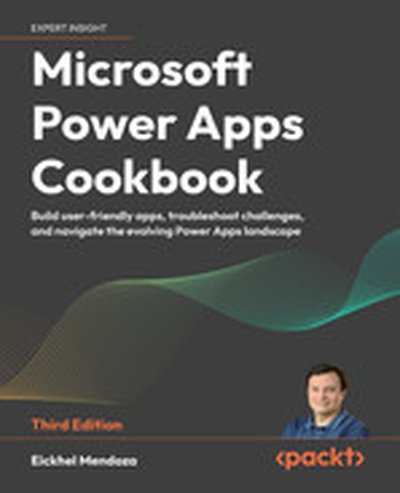
Microsoft Power Apps Cookbook - Third Edition

Microsoft Power Apps Cookbook is a comprehensive guide to harnessing the full potential of Microsoft Power Apps, a powerful low-code platform for building business applications. Packed with practical recipes, this book details how to develop scalable, efficient apps, automate workflows with RPA, and utilize new capabilities like AI-powered Microsoft Copilot and the Power Apps Component Framework. What this Book will help me do Create and deploy scalable canvas and model-driven apps using Microsoft Power Apps. Utilize AI-powered features like Copilot to speed up app creation and development. Implement robust data management strategies with Microsoft Dataverse. Extend app functionalities using the Power Apps Component Framework for custom components. Design and build secure external-facing websites with Microsoft Power Pages. Author(s) Eickhel Mendoza is an experienced Microsoft Power Platform developer and educator who has helped numerous organizations enhance their capabilities through low-code app development. Authoring from extensive hands-on experience, their teaching style bridges technical theory and practical application. Eickhel is passionate about empowering users to achieve more with modern app development tools. Who is it for? This book is ideal for information workers and developers looking to streamline their application development processes with Microsoft's low-code solutions. It is particularly targeted toward users with a foundational understanding of the Power Platform looking to deepen their knowledge. Readers will benefit most if they are eager to learn how to create innovative solutions efficiently. Traditional developers aiming to explore a new paradigm of rapid application development will also find it highly beneficial.
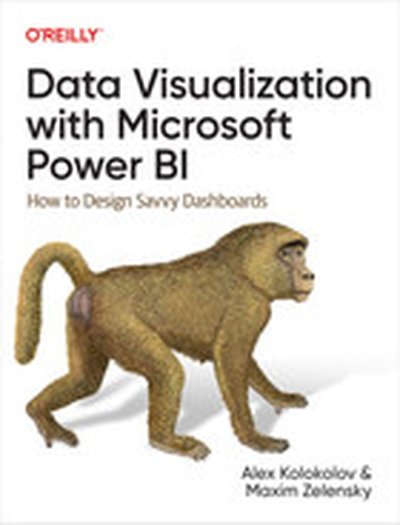
Data Visualization with Microsoft Power BI

The sheer volume of business data has reached an all-time high. Using visualizations to transform this data into useful and understandable information can facilitate better decision-making. This practical book shows data analysts as well as professionals in finance, sales, and marketing how to quickly create visualizations and build savvy dashboards. Alex Kolokolov from Data2Speak and Maxim Zelensky from Intelligent Business explain in simple and clear language how to create brilliant charts with Microsoft Power BI and follow best practices for corporate reporting. No technical background is required. Step-by-step guides help you set up any chart in a few clicks and avoid common mistakes. Also, experienced data analysts will find tips and tricks on how to enrich their reports with advanced visuals. This book helps you understand: The basic rules for classic charts that are used in 90% of business reports Exceptions to general rules based on real business cases Best practices for dashboard design How to properly set up interactions How to prepare data for advanced visuals How to avoid pitfalls with eye-catching charts

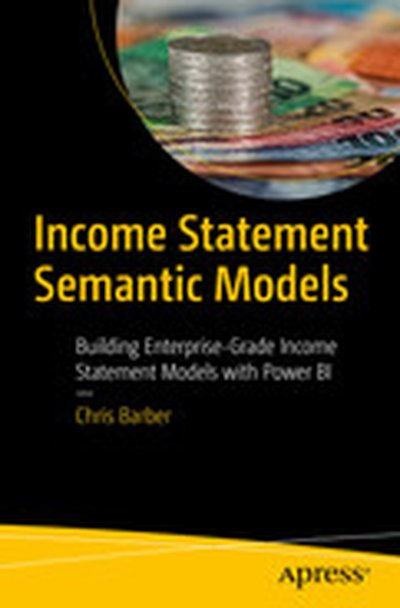
Income Statement Semantic Models: Building Enterprise-Grade Income Statement Models with Power BI

This comprehensive guide will teach you how to build an income statement semantic model, also known as the profit and loss (P&L) statement. Author Chris Barber— a business intelligence (BI) consultant, Microsoft MVP, and chartered accountant (ACMA, CGMA)—helps you master everything from designing conceptual models to building semantic models based on these designs. You will learn how to build a re-usable solution based on the trial balance and how to expand upon this to build enterprise-grade solutions. If you want to leverage the Microsoft BI platform to understand profit within your organization, this is the resource you need. What You Will Learn Modeling and the income statement: Learn what modelling the income statement entails, why it is important, and how income statements are constructed Calculating account balances: Learn how to optimally calculate account balances using a Star Schema Producing external income statement semantic models: Learn how to produce external income statement semantic models as they enable income statements to be analyzed from a range of perspectives and can be explored to reveal the underlying accounts and journal entries Producing internal income statement semantic models: Learn how to create multiple income statement layouts and further contextualize financial information by including percentages and non-financial information, and learn about the various security and self-service considerations Who This Book Is For Technical users (solution architects, Microsoft Fabric developers, Power BI developers) who require a comprehensive methodology for income statement semantic models because of the modeling complexities and knowledge needed of the accounting process; and finance (management accountants) who have hit the limits of Excel and have started using Power BI, but are unsure how income statement semantic models are built

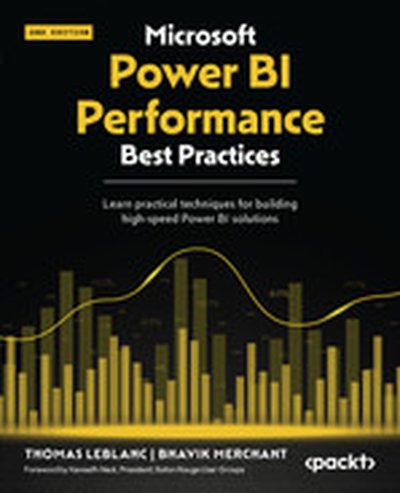
Microsoft Power BI Performance Best Practices - Second Edition

Microsoft Power BI Performance Best Practices is your comprehensive guide to designing, optimizing, and scaling Power BI solutions. By understanding data modeling, DAX formulation, and report design, you will be able to enhance the efficiency and performance of your Power BI systems, ensuring that they meet the demands of modern data-driven decision-making. What this Book will help me do Understand and apply techniques for high-efficient data modeling to enhance Power BI performance and manage large datasets. Identify and resolve performance bottlenecks in Power BI reports and dashboards using tools like DAX Studio and VertiPaq Analyzer. Implement governance and monitoring strategies for Power BI performance to ensure robust and scalable systems. Gain expertise in leveraging Power BI Premium and Azure for handling larger scale data and integrations. Adopt best practices for designing, implementing row-level security, and optimizing queries for efficient operations. Author(s) Thomas LeBlanc and Bhavik Merchant are experienced professionals in the field of Business Intelligence and Power BI. Thomas brings over 30 years of IT expertise as a Business Intelligence Architect, ensuring practical and effective solutions for BI challenges. Bhavik is a recognized expert in enterprise-grade Power BI implementation. Together, they share actionable insights and strategies to make Power BI solutions advanced and highly performant. Who is it for? This book is ideal for data analysts, BI developers, and data professionals seeking to elevate their Power BI implementations. If you are proficient with the essentials of Power BI and aim to excel in optimizing its performance and scalability, this book will guide you to achieve those goals efficiently and effectively.

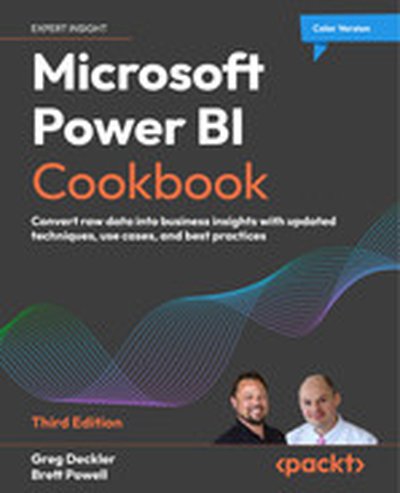
Microsoft Power BI Cookbook - Third Edition

Discover how to harness the full potential of Microsoft Power BI in "Microsoft Power BI Cookbook". Through its recipe-based structure, this book offers step-by-step guidance on mastering data integration, crafting impactful visualizations, and utilizing Power BI's latest features like Hybrid tables and enhanced scorecards. This edition equips you with the skills to transform raw data into actionable insights for your organization. What this Book will help me do Turn business data into actionable insights by utilizing Microsoft Data Fabric effectively. Create engaging and clear visualizations through Hybrid tables and advanced reporting techniques. Gain competence in managing real-time data accuracy and implementing dynamic analytics in Power BI. Ensure robust data compliance and governance integrated seamlessly into business reporting workflows. Leverage cutting-edge Power BI features to prepare for emerging trends in data intelligence. Author(s) Greg Deckler and None Powell, both esteemed professionals in the Power BI and data analytics domain, co-author this comprehensive guide. With decades of experience, they bring vast knowledge and practical skills to this work, presenting it in a structured and approachable manner. Both are dedicated to empowering learners of all levels to excel with Power BI. Who is it for? This book is ideal for professionals like data analysts, business intelligence developers, and IT specialists focused on reporting. It suits readers with a basic familiarity with Power BI, looking to deepen their understanding. If you aim to stay current with Power BI's most modern practices and features, this book will help you achieve that. Additionally, it supports those aiming to enhance business decision-making through better visualizations and advanced analysis.

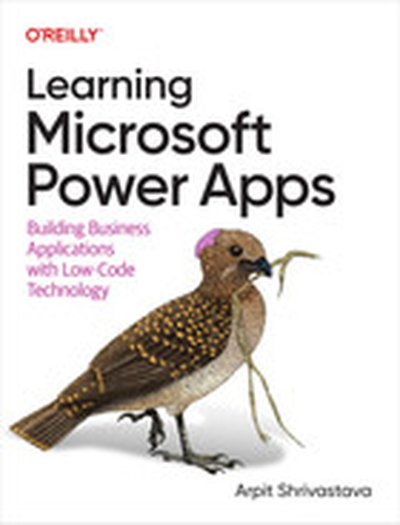
Learning Microsoft Power Apps

In today's fast-paced world, more and more organizations require rapid application development with reduced development costs and increased productivity. This practical guide shows application developers how to use PowerApps, Microsoft's no-code/low-code application framework that helps developers speed up development, modernize business processes, and solve tough challenges. Author Arpit Shrivastava provides a comprehensive overview of designing and building cost-effective applications with Microsoft Power Apps. You'll learn fundamental concepts behind low-code and no-code development, how to build applications using pre-built and blank templates, how to design an app using Copilot AI and drag and drop PowerPoint-like controls, use Excel-like expressions to write business logic for an app, and integrate apps with external data sources. With this book, you'll: Learn the importance of no-code/low-code application development Design mobile/tablet (canvas apps) applications using pre-built and blank templates Design web applications (model-driven apps) using low-code, no-code, and pro-code components Integrate PowerApps with external applications Learn basic coding concepts like JavaScript, Power Fx, and C# Apply best practices to customize Dynamics 365 CE applications Dive into Azure DevOps and ALM concepts to automate application deployment

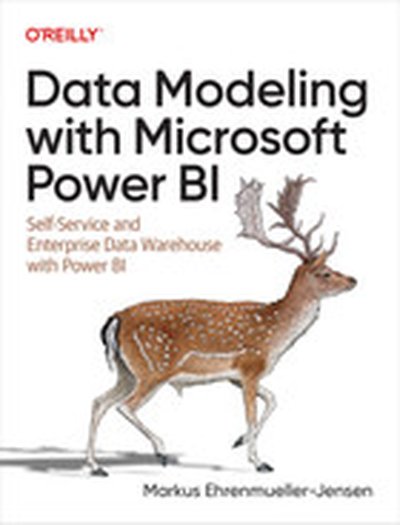
Data Modeling with Microsoft Power BI

Data modeling is the single most overlooked feature in Power BI Desktop, yet it's what sets Power BI apart from other tools on the market. This practical book serves as your fast-forward button for data modeling with Power BI, Analysis Services tabular, and SQL databases. It serves as a starting point for data modeling, as well as a handy refresher. Author Markus Ehrenmueller-Jensen, founder of Savory Data, shows you the basic concepts of Power BI's semantic model with hands-on examples in DAX, Power Query, and T-SQL. If you're looking to build a data warehouse layer, chapters with T-SQL examples will get you started. You'll begin with simple steps and gradually solve more complex problems. This book shows you how to: Normalize and denormalize with DAX, Power Query, and T-SQL Apply best practices for calculations, flags and indicators, time and date, role-playing dimensions and slowly changing dimensions Solve challenges such as binning, budget, localized models, composite models, and key value with DAX, Power Query, and T-SQL Discover and tackle performance issues by applying solutions in DAX, Power Query, and T-SQL Work with tables, relations, set operations, normal forms, dimensional modeling, and ETL

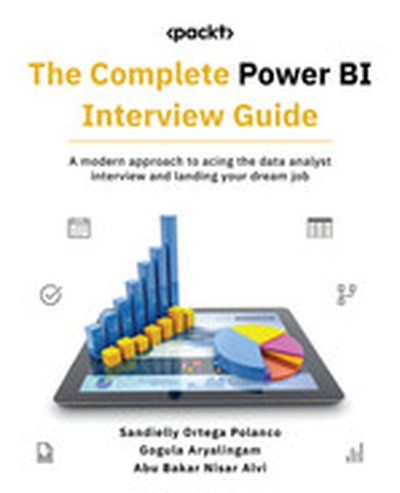
The Complete Power BI Interview Guide

The Complete Power BI Interview Guide is your companion to mastering Power BI roles and acing data analyst interviews. With hands-on skills, expert tips, and targeted preparation strategies, this resource equips you to excel in interviews and certifications while navigating the competitive job market. What this Book will help me do Create a powerful professional brand to optimize your resume and online presence. Master essential Power BI skills including data modeling, DAX programming, and visualization. Prepare effectively for interviews with industry-relevant questions, answers, and insights. Gain an edge in the market by understanding hiring procedures and negotiation tactics. Develop comprehensive analytics solutions exemplified with real-world case studies. Author(s) Sandielly Ortega Polanco, Gogula Aryalingam, and Abu Bakar Nisar Alvi bring years of collective experience in data analytics, Power BI, and career mentorship. Their insights are drawn from extensive professional practice and their passion for empowering future data analysts. Together, they provide an approachable and practical guide to securing roles in the competitive landscape of data analytics. Who is it for? This book is ideal for aspiring data analysts, business intelligence developers, or those shifting into Power BI roles who wish to enhance their knowledge and refine their strategies for interview success. It speaks to both newcomers to the field and seasoned professionals aiming to elevate their expertise.

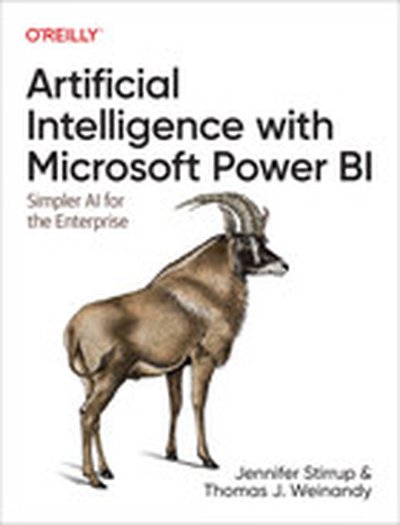
Artificial Intelligence with Microsoft Power BI

Advance your Power BI skills by adding AI to your repertoire at a practice level. With this practical book, business-oriented software engineers and developers will learn the terminologies, practices, and strategy necessary to successfully incorporate AI into your business intelligence estate. Jen Stirrup, CEO of AI and BI leadership consultancy Data Relish, and Thomas Weinandy, research economist at Upside, show you how to use data already available to your organization. Springboarding from the skills that you already possess, this book adds AI to your organization's technical capability and expertise with Microsoft Power BI. By using your conceptual knowledge of BI, you'll learn how to choose the right model for your AI work and identify its value and validity. Use Power BI to build a good data model for AI Demystify the AI terminology that you need to know Identify AI project roles, responsibilities, and teams for AI Use AI models, including supervised machine learning techniques Develop and train models in Azure ML for consumption in Power BI Improve your business AI maturity level with Power BI Use the AI feedback loop to help you get started with the next project

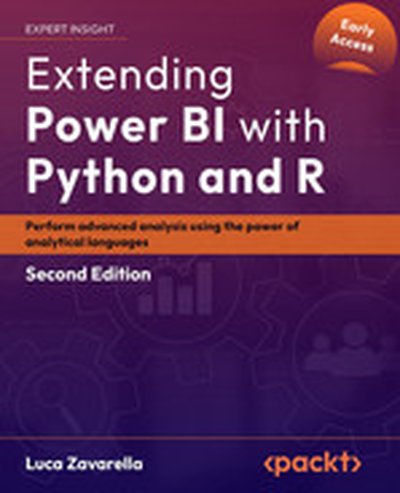
Extending Power BI with Python and R - Second Edition

In "Extending Power BI with Python and R," you'll learn how to enhance your Power BI reports and analyses by leveraging the advanced analytical capabilities of Python and R. From working with large datasets to creating sophisticated visuals, this book provides practical instructions on powerful techniques that unlock new possibilities in Power BI. What this Book will help me do Configure and optimize Python and R integration in Power BI for enhanced performance. Implement advanced data transformation techniques to overcome Power BI limitations. Develop advanced visualizations using the Grammar of Graphics in Python and R. Analyze data leveraging powerful Python and R algorithms, including machine learning models. Secure your Power BI data with anonymization and pseudonymization techniques. Author(s) None Zavarella is a data analytics expert with years of practical experience in business intelligence and data analytics. With a passion for enhancing data tools with programming languages like Python and R, they bring practical knowledge and technical acumen to this comprehensive resource. They aim to make complex concepts approachable to their readers. Who is it for? This book is aimed at professionals such as business analysts, business intelligence specialists, and data scientists who leverage Power BI for their data solutions. Readers should have a working knowledge of Power BI basics and a desire to extend its capabilities. A familiarity with Python and R programming basics is also beneficial for following the advanced techniques presented.

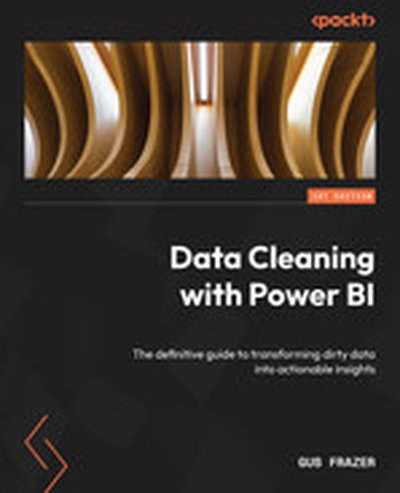
Data Cleaning with Power BI

Delve into the powerful world of data cleaning with Microsoft Power BI in this detailed guide. You'll learn how to connect, transform, and optimize data from various sources, setting a strong foundation for insightful data-driven decisions. Equip yourself with the skills to master data quality, leverage DAX and Power Query, and produce actionable insights with improved efficiency. What this Book will help me do Master connecting to various data sources and importing data effectively into Power BI. Learn to use the Query Editor to clean and transform data efficiently. Understand how to use the M language to perform advanced data transformations. Gain expertise in creating optimized data models and handling relationships within Power BI. Explore insights-driven exploratory data analysis using Power BI's powerful tools. Author(s) None Frazer is an experienced data professional with a deep knowledge of business intelligence tools and analytics processes. With a strong background in data science and years of hands-on experience using Power BI, Frazer brings practical advice to help users improve their data preparation and analysis skills. Known for creating resources that are both comprehensive and approachable, Frazer is dedicated to empowering readers in their data journey. Who is it for? This book is ideal for data analysts, business intelligence professionals, and business analysts who work regularly with data. If you are someone with a basic understanding of BI tools and concepts looking to deepen their skills, especially in Power BI, this book will guide you effectively. It will also help data scientists and other professionals interested in data cleaning to build a robust basis for data quality and analysis. Whether you're addressing common data challenges or seeking to enhance your BI capabilities, this guide is tailored to accommodate your needs.

Extending Dynamics 365 Finance and Operations Apps with Power Platform

This book, "Extending Dynamics 365 Finance and Operations Apps with Power Platform", is your comprehensive guide to mastering the integration of Power Platform tools with Dynamics 365 Finance and Operations (F&O). Dive into practical scenarios and learn how to leverage tools like Power Automate, Power Apps, and Power BI to maximize efficiency and streamline operations. What this Book will help me do Learn to extend Dynamics 365 F&O functionalities using Dataverse and other Power Platform tools. Understand practical integration techniques including dual-write and virtual tables. Explore automation of workflows and tasks with Power Automate in an F&O context. Utilize Power BI for creating insightful reports with Azure Data Lake Storage. Gain insights into governance and lifecycle management for the Power Platform in your F&O projects. Author(s) Adrià Ariste Santacreu, a seasoned expert in Power Platform and Microsoft Dynamics, shares his rich industry experience through this book. He has implemented numerous real-world solutions integrating Power Platform with Dynamics 365, and his expertise is evident in the clear and actionable guidance provided herein. Adrià's approach helps both novices and experts discover the true potential of these technologies. Who is it for? This book is ideal for Dynamics 365 Finance & Operations consultants and Power Platform professionals seeking to extend their knowledge and capabilities. It is particularly suitable for technical and solutions architects who aim to implement innovative solutions for business requirements using the Power Platform. If you aim to leverage low-code/no-code tools for dynamics projects, this book has you covered.

A Power BI Compendium: Answers to 65 Commonly Asked Questions on Power BI

Are you a reasonably competent Power BI user but still struggling to generate reports that truly tell the story of your data? Or do you simply want to extend your knowledge of Power BI by exploring more complex areas of visualizations, data modelling, DAX, and Power Query? If so, this book is for you. This book serves as a comprehensive resource for users to implement more challenging visuals, build better data models, use DAX with more confidence, and execute more complex queries so they can find and share important insights into their data. The contents of the chapters are in a question-and-answer format that explore everyday data analysis scenarios in Power BI. These questions have been generated from the author’s own client base and from commonly sought-for information from the Power BI community. They cover a wide and diverse range of topics that many Power BI users often struggle to get to grips with or don’t fully understand. Examples of suchquestions are: How can I generate dynamic titles for visuals? How can I control subtotals in a Matrix visual? Why do I need a date dimension? How can I show the previous N month’s sales in a column chart?Why do I need a Star Schema? Why aren't my totals correct? How can I bin measures into numeric ranges? Can I import a Word document? Can I dynamically append data from different source files? Solutions to these questions and many more are presented in non-technical and easy-to-follow explanations negating the requirement to perform tiresome and fruitless “google” searches. There are also companion Power BI Desktop files that set out the answers to each question so you can follow along with the examples given in the book.. After working through this book, you will have extended your knowledge of Power BI to an expert level, alleviating your existing frustrations and so enabling you to design Power BI reports where you are no longer limited by your lack of knowledge or experience. Who is This Book For: Power BI users who can build reports and now want to extend their knowledge of Power BI.

Automate Testing for Power Apps

Are you looking to step up your Power Apps development game? "Automate Testing for Power Apps" is your comprehensive guide to leveraging low-code automation testing tools and techniques. Learn practical steps to integrate these methods into your workflow, ensuring your Power Apps are efficient, effective, and top-notch in quality. What this Book will help me do Master automation testing principles tailored specifically for Power Apps applications. Leverage tools like Test Studio and Test Engine to efficiently test Canvas apps. Learn advanced automation testing techniques for PCF components and model-driven apps. Incorporate robust testing procedures into software deployment for improved workflows. Enhance Power Apps quality and efficiency, reducing emergency fixes and improving user satisfaction. Author(s) César Calvo and Carlos de Huerta have deep expertise in Power Apps development and testing. With years of industry experience, they have honed their skills in creating robust apps and ensure quality through advanced testing techniques. Their approachable teaching style ensures learners grasp complex concepts effectively. Who is it for? This book is for Power Apps developers and IT professionals aiming to enhance their testing knowledge. Whether you're a beginner looking to grasp the basics or an advanced user exploring new automation possibilities, you'll find this guide invaluable. A basic understanding of Power Apps and Power Platform concepts will be beneficial.

Beginning Power BI for Business Users

Discover the utility of your organization’s data with Microsoft Power BI In Beginning Power BI for Business Users: Learning to Turn Data into Insights, accomplished data professional and business intelligence expert Paul Fuller delivers an intuitive and accessible handbook for professionals seeking to use Microsoft’s Power BI to access, analyze, understand, report, and act on the data available to their organizations. In the book, you’ll discover Power BI’s robust feature set, learn to ingest and model data, visualize and report on that data, and even use the DAX scripting language to unlock still more utility from Microsoft’s popular program. Beginning with general principles geared to readers with no or little experience with reporting or data analytics tools, the author walks you through how to manipulate common, publicly available data sources—including Excel files and relational databases. You’ll also learn to: Use the included and tested sample code to work through the helpful examples included by the author Conduct data orchestration and visualization to better understand and gain insights from your data An essential resource for business analysts and Excel power users reaching the limits of that program’s capabilities, Beginning Power BI for Business Users will also benefit data analysts who seek to prepare reports for their organizations using Microsoft’s flexible and intuitive software.

Learn Microsoft Power Apps - Second Edition

Learn Microsoft Power Apps is your complete guide to building personalized business applications using Microsoft's low-code platform. You'll discover how to create interactive, secure apps tailored to your needs, with the help of detailed examples, best practices, and progressive tutorials. Unleash the power of tools like AI Builder and Dataverse to add cutting-edge functionality to your applications. What this Book will help me do Understand the Power Apps ecosystem and its licensing to make informed decisions. Create canvas applications to address specific business challenges effectively. Incorporate integration with SharePoint, Power Automate, and other Microsoft tools for enhanced app capabilities. Use Dataverse for data storage and employ model-driven approaches for robust applications. Leverage artificial intelligence features like AI Builder and Copilot to accelerate and improve development. Author(s) Matthew Weston and Elisa Bárcena Martín are seasoned professionals in the Microsoft and business solutions field. Their combined experience includes decades of expertise in developing applications, consulting, and teaching others how to harness Power Platform technologies. They excel in breaking down complex topics into understandable, actionable content, and their supportive tone makes learning enjoyable and productive. Who is it for? This book is ideal for business analysts, IT professionals, and solution developers seeking to streamline business processes through custom applications. Whether you're a seasoned developer looking to expand into low-code platforms or a beginner eager to tackle real-world problems, this book guides you step by step. A basic understanding of Microsoft 365 is all that's needed to get started, giving non-developers and tech enthusiasts alike the confidence to create impactful applications.

Learning Microsoft Power Automate

Processing information efficiently is critical to the successful operation of modern organizations. One particularly helpful tool is Microsoft Power Automate, a low-code/no-code development platform designed to help tech-savvy users create and implement workflows. This practical book explains how small-business and enterprise users can replace manual work that takes days with an automated process you can set up in a few hours using Power Automate. Paul Papanek Stork, principal architect at Don't Pa..Panic Consulting, provides a concise yet comprehensive overview of the foundational skills required to understand and work with Power Automate. You'll learn how to use these workflows, or flows, to automate repetitive tasks or complete business processes without manual intervention. Whether you're transferring form responses to a list, managing document approvals, sending automatic reminders for overdue tasks, or archiving emails and attachments, these skills will help you: Design and build flows with templates or from scratch Select triggers and actions to automate a process Add actions to a flow to retrieve and process information Use functions to transform information Control the logic of a process using conditional actions, loops, or parallel branches Implement error checking to avoid potential problems

Extending Microsoft Business Central with Power Platform

Unlock the full potential of Microsoft Business Central by integrating it with the Power Platform through this practical and hands-on guide. With step-by-step tutorials, you'll learn how to combine the capabilities of tools like Power Apps, Power Automate, and Dataverse to build scalable and efficient business solutions. By the end of the book, you'll be equipped to streamline business processes and add significant value. What this Book will help me do Effectively deploy Power Platform functionalities for Microsoft Business Central projects. Seamlessly connect Business Central with cloud and on-premises services. Leverage Dataverse and virtual tables to enhance data modeling and accessibility. Build custom applications using Power Apps and automate workflows with Power Automate. Generate advanced visual reports with Power BI directly integrated with Business Central. Author(s) Kim Congleton and Shawn Sissenwein are industry professionals with extensive experience in ERP systems and Microsoft technologies. With a deep knowledge of Business Central and the Power Platform, they bring practical insights into maximizing business value through technological advancements. Their teaching approach focuses on hands-on learning, real-world application, and empowering readers with actionable skills. Who is it for? This book is ideal for Business Central users, consultants, and solution architects aiming to enhance Business Central's capabilities through the Power Platform. If you're familiar with Business Central's basics and seek to optimize and extend its functionality without requiring extensive programming knowledge, then this guide is tailored for you.

Pro Power BI Architecture: Development, Deployment, Sharing, and Security for Microsoft Power BI Solutions

This book provides detailed guidance around architecting and deploying Power BI reporting solutions, including help and best practices for sharing and security. You’ll find chapters on dataflows, shared datasets, composite model and DirectQuery connections to Power BI datasets, deployment pipelines, XMLA endpoints, and many other important features related to the overall Power BI architecture that are new since the first edition. You will gain an understanding of what functionality each of the Power BI components provide (such as Dataflow, Shared Dataset, Datamart, thin reports, and paginated reports), so that you can make an informed decision about what components to use in your solution. You will get to know the pros and cons of each component, and how they all work together within the larger Power BI architecture. Commonly encountered problems you will learn to handle include content unexpectedly changing while users are in the process of creating reports and building analyses, methods of sharing analyses that don’t cover all the requirements of your business or organization, and inconsistent security models. Detailed examples help you to understand and choose from among the different methods available for sharing and securing Power BI content so that only intended recipients can see it. The knowledge provided in this book will allow you to choose an architecture and deployment model that suits the needs of your organization. It will also help ensure that you do not spend your time maintaining your solution, but on using it for its intended purpose: gaining business value from mining and analyzing your organization’s data. What You Will Learn Architect Power BI solutions that are reliable and easy to maintain Create development templates and structures in support of reusability Set up and configure the Power BI gateway as a bridge between on-premises data sourcesand the Power BI cloud service Select a suitable connection type—Live Connection, DirectQuery, Scheduled Refresh, or Composite Model—for your use case Choose the right sharing method for how you are using Power BI in your organization Create and manage environments for development, testing, and production Secure your data using row-level and object-level security Save money by choosing the right licensing plan Who This Book Is For Data analysts and developers who are building reporting solutions around Power BI, as well as architects and managers who are responsible for the big picture of how Power BI meshes with an organization’s other systems, including database and data warehouse systems.

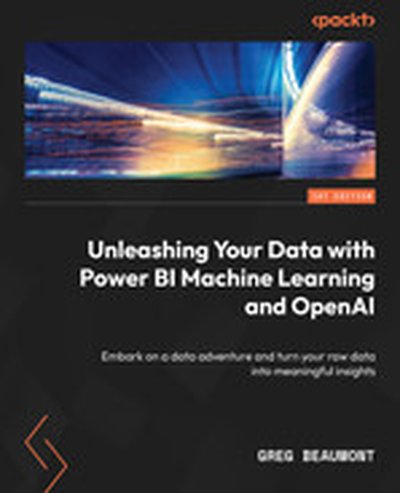
Power BI Machine Learning and OpenAI

Microsoft Power BI Machine Learning and OpenAI offers a comprehensive exploration into advanced data analytics and artificial intelligence using Microsoft Power BI. Through hands-on, workshop-style examples, readers will discover the integration of machine learning models and OpenAI features to enhance business intelligence. This book provides practical examples, real-world scenarios, and step-by-step guidance. What this Book will help me do Learn to apply machine learning capabilities within Power BI to create predictive analytics Understand how to integrate OpenAI services to build enhanced analytics workflows Gain hands-on experience in using R and Python for advanced data visualization in Power BI Master the skills needed to build and deploy SaaS auto ML models within Power BI Leverage Power BI's AI visuals and features to elevate data storytelling Author(s) Greg Beaumont, an expert in data science and business intelligence, brings years of experience in Power BI and analytics to this book. With a focus on practical applications, Greg empowers readers to harness the power of AI and machine learning to elevate their data solutions. As a consultant and trainer, he shares his deep knowledge to help readers unlock the full potential of their tools. Who is it for? This book is ideal for data analysts, BI professionals, and data scientists who aim to integrate machine learning and OpenAI into their workflows. If you're familiar with Power BI's fundamentals and are eager to explore its advanced capabilities, this guide is tailored for you. Perfect for professionals looking to elevate their analytics to a new level, combining data science concepts with Power BI's features.