Discussion on Auto-Governance in ML Systems with speakers Jürgen Stary and Sebastian Folz.
 talk-data.com
Topic
MLOps
machine_learning
devops
ai
233
tagged
Activity Trend
26
peak/qtr
2020-Q1
2026-Q2
Top Events
Databricks DATA + AI Summit 2023
47
DataTalks.Club
42
Data + AI Summit 2025
13
O'Reilly AI & ML Books
8
Google Cloud Next '25
7
Data Engineering Podcast
7
DataTopics: All Things Data, AI & Tech
6
PyConDE & PyData Berlin 2023
6
Google Cloud Next '24
6
Big Data LDN 2025
6
DataFramed
6
O'Reilly Data Engineering Books
5
Discussion on upgrading and tuning Grammarly's ML training platform to a scalable system. Topics include moving away from a custom architecture due to hardware shortages, key requirements and architectural challenges, MLOps best practices for scalability, and lessons learned from transitioning from a single-region AWS setup to a cross-region, multi-cloud cluster compute deployment.
Harrison Chase is the CEO and Co-founder of LangChain, a company formed around the popular open-source Python/Typescript packages. After studying stats and computer science at Harvard, Harrison also went on to lead the machine learning team at Robust Intelligence (an MLOps company) and the entity linking team at Kensho (a fintech startup).
In this fireside chat, he will discuss how LangChain is making it easier to use large language models (LLMs) to develop context-aware reasoning applications. Leveraging the Google ecosystem, they are testing, evaluating, and observing common patterns for building more complex state machines and agents.
Click the blue “Learn more” button above to tap into special offers designed to help you implement what you are learning at Google Cloud Next 25.
Explore 130+ models on Model Garden and learn how Vertex AI supports innovation of new generative AI apps. Learn how to optimize MLOps practices, assess different prompts and model responses, and compare different model variants.
Click the blue “Learn more” button above to tap into special offers designed to help you implement what you are learning at Google Cloud Next 25.

Overview of deploying LLM products at GetYourGuide with a focus on scalability and reliability.
Send us a text Welcome to the cozy corner of the tech world where ones and zeros mingle with casual chit-chat. Datatopics Unplugged is your go-to spot for relaxed discussions around tech, news, data, and society. Dive into conversations that should flow as smoothly as your morning coffee (but don't), where industry insights meet laid-back banter. Whether you're a data aficionado or just someone curious about the digital age, pull up a chair, relax, and let's dive into episode #36 titled "Altman's Chips, Mojo Gets Fast and TUIs", featuring Nemanja Radojkovic, an MLOps Lead and Educator, as our special guest. In this episode, we explore a variety of cutting-edge topics: Text-based User Interfaces (TUIs) Rediscovered: Delving into the resurgence of TUIs with Ratatui and gping. Are we witnessing a TUI renaissance? Ratatui | gpingThe Surprising Length of ChatGPT's System Prompt: Unpacking the implications of a 1700 token system prompt. Is there more than meets the eye? Reddit discussionMojo Outpaces Rust in DNA Sequence Parsing: A closer look at how Mojo outperforms Rust by 50% in benchmarks. Is Mojo the new king? Modular's blog postSam Altman's Vision for the Future of Chips and AI: Examining Altman's ambitious plan to reshape the business of chips and AI with trillions of dollars. WSJ article | Reuters on Microsoft's AI chipsThe Real Challenge in Generating Code: Discussing the misconception that generating code is the hard part, with insights into the complexities of software engineering beyond code generation. Nick Scialli's blog Follow Nemanja on LinkedIn and check out his courses. Intro music courtesy of fesliyanstudios.com
We are in a Generative AI hype cycle. Every executive looking at the potential generative AI today is probably thinking about how they can allocate their department's budget to building some AI use cases. However, many of these use cases won't make it into production. In a similar vein, the hype around machine learning in the early 2010s led to lots of hype around the technology, but a lot of the value did not pan out. Four years ago, VentureBeat showed that 87% of data science projects did not make it into production. And in a lot of ways, things haven’t gotten much better. And if we don't learn why that is the case, generative AI could be destined to a similar fate. Eric Siegel, Ph.D., is a leading consultant and former Columbia University professor who helps companies deploy machine learning. He is the founder of the long-running Machine Learning Week conference series and its new sister, Generative AI World, the instructor of the acclaimed online course “Machine Learning Leadership and Practice – End-to-End Mastery,” executive editor of The Machine Learning Times, and a frequent keynote speaker. He wrote the bestselling Predictive Analytics: The Power to Predict Who Will Click, Buy, Lie, or Die, as well as The AI Playbook: Mastering the Rare Art of Machine Learning Deployment. Eric’s interdisciplinary work bridges the stubborn technology/business gap. At Columbia, he won the Distinguished Faculty award when teaching graduate computer science courses in ML and AI. Later, he served as a business school professor at UVA Darden. Eric also publishes op-eds on analytics and social justice. In the episode, Adel and Eric explore the reasons why machine learning projects don't make it into production, the BizML Framework or how to bring business stakeholders into the room when building machine learning use cases, the skill gap between business stakeholders and data practitioners, use cases of organizations have leveraged machine learning for operational improvements, what the previous machine learning hype cycle can teach us about generative AI and a lot more. Links Mentioned in the Show: The AI Playbook: Mastering the Rare Art of Machine Learning Deployment by Eric SiegelGenerating ROI with AIBizML Cheat SheetGooderSurvey: Machine Learning Projects Still Routinely Fail to Deploy[Skill Track] MLOps Fundamentals
Most statistics in the industry indicate that a significant numbers of AI projects are not generating ROI. In this presentation, Media.Monks experts Julien Coquet and Ahmed Tarek will discuss common errors and pitfalls encountered in AI project: using ML model out of context to the business model, no clear activation strategy, data quality and consistancy issues, lack of infrastructure to deploy models, no MLOps or model monitoring after deployment, etc.). Julien and Ahmed will offer solutions to these pAIn points.
We talked about:
Nemanja’s background
When Nemanja first work as a data person Typical problems that ML Ops folks solve in the financial sector What Nemanja currently does as an ML Engineer The obstacle of implementing new things in financial sector companies Going through the hurdles of DevOps Working with an on-premises cluster “ML Ops on a Shoestring” (You don’t need fancy stuff to start w/ ML Ops) Tactical solutions Platform work and code work Programming and soft skills needed to be an ML Engineer The challenges of transitioning from and electrical engineering and sales to ML Ops The ML Ops tech stack for beginners Working on projects to determine which skills you need
Links:
LinkedIn: https://www.linkedin.com/in/radojkovic/
Free Data Engineering course: https://github.com/DataTalksClub/data-engineering-zoomcamp
Join DataTalks.Club: https://datatalks.club/slack.html Our events: https://datatalks.club/events.html
Talk on MLOps in the finance sector, focusing on machine learning engineering in finance, Python coding standards for financial applications, and practitioner perspectives from teaching Data Science and ML.
Send us a text Welcome to the cozy corner of the tech world where ones and zeros mingle with casual chit-chat. Datatopics Unplugged is your go-to spot for relaxed discussions around tech, news, data, and society.
Dive into conversations that should flow as smoothly as your morning coffee (but don't), where industry insights meet laid-back banter. Whether you're a data aficionado or just someone curious about the digital age, pull up a chair, relax, and let's get into the heart of data, unplugged style!
In today's episode Murilo & Bart discuss:
AI and Software Insights Introducing Gemini: Google's latest AI modelGoogle BlogFireship Dev TweetTechCrunch Article on Gemini DemoCommunication and Collaboration in Tech 6 tiny wording tweaks to level up your communication as a software engineerCareer CutlerMLOps and Model Development Navigating the chaos: why you don’t need another MLOps toolOpenLayer BlogChatGPT's performance on Julia vs. Python and R for LLM Code GenerationStochastic LifestyleEmerging Tech and Fun Finds JSONB in SQLiteSQLite ForumWizard Zines for a touch of geekinessWizard ZinesSports Illustrated's AI author sagaThe Verge ArticleMonaspace: A superfamily of fonts for codeMonaspaceHot Takes Paper: You Want My Password or a Dead Patient?Cohost ArticleIntro music courtesy of fesliyanstudios.com Check out the episode on YouTube.
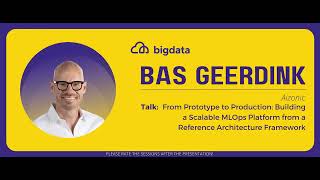
Join Bas Geerdink in this informative session as he guides you on a journey 'From Prototype to Production,' sharing insights on building a scalable MLOps platform from a reference architecture. 🤖🏭 Discover how MLOps practices can streamline your machine learning workflows, reduce time-to-market, and enhance the reliability of your machine learning systems. 🚀📈 #MLOps #MachineLearning #automation
✨ H I G H L I G H T S ✨
🙌 A huge shoutout to all the incredible participants who made Big Data Conference Europe 2023 in Vilnius, Lithuania, from November 21-24, an absolute triumph! 🎉 Your attendance and active participation were instrumental in making this event so special. 🌍
Don't forget to check out the session recordings from the conference to relive the valuable insights and knowledge shared! 📽️
Once again, THANK YOU for playing a pivotal role in the success of Big Data Conference Europe 2023. 🚀 See you next year for another unforgettable conference! 📅 #BigDataConference #SeeYouNextYear
I recap two events from this week - Matillion's Data Unlocked and the first MLOps Community event in Silicon Valley, hosted at Coactive.ai's office. Lots to unpack in 8 minutes, so let's get going.
by
Matt Fornito
Curious about the world of #artificialintelligence (#AI)? How is it helping #evolve the #data #industry and #organizations in it? And what #career paths should people be considering when looking into the #technology industry? Find the answer to these questions and more as Matt Fornito '#TheAIGuy,' as dubbed by #NVIDIA #Executives, joins us on this #podcast #episode of Data Unchained!
AIAdvisor #fortune500 #Fortune100 #organizations #business #robotics #NLP #machinelearning #python #PHD #Phsycology #growth #autoML #MLOps #scientist #engineers #datascientists #datascience #dataengineers
Cyberpunk by jiglr | https://soundcloud.com/jiglrmusic Music promoted by https://www.free-stock-music.com Creative Commons Attribution 3.0 Unported License https://creativecommons.org/licenses/by/3.0/deed.en_US Hosted on Acast. See acast.com/privacy for more information.
Four experts (two from Capital One and two from leading startups) lead roundtable conversations about best practices for building ML platforms, shipping AI products, challenges and opportunities, and the future of AI in financial services.
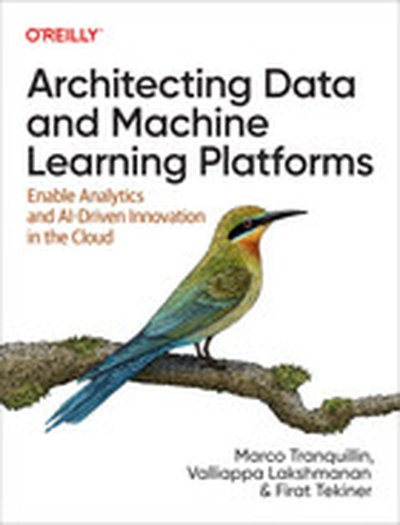
All cloud architects need to know how to build data platforms that enable businesses to make data-driven decisions and deliver enterprise-wide intelligence in a fast and efficient way. This handbook shows you how to design, build, and modernize cloud native data and machine learning platforms using AWS, Azure, Google Cloud, and multicloud tools like Snowflake and Databricks. Authors Marco Tranquillin, Valliappa Lakshmanan, and Firat Tekiner cover the entire data lifecycle from ingestion to activation in a cloud environment using real-world enterprise architectures. You'll learn how to transform, secure, and modernize familiar solutions like data warehouses and data lakes, and you'll be able to leverage recent AI/ML patterns to get accurate and quicker insights to drive competitive advantage. You'll learn how to: Design a modern and secure cloud native or hybrid data analytics and machine learning platform Accelerate data-led innovation by consolidating enterprise data in a governed, scalable, and resilient data platform Democratize access to enterprise data and govern how business teams extract insights and build AI/ML capabilities Enable your business to make decisions in real time using streaming pipelines Build an MLOps platform to move to a predictive and prescriptive analytics approach
Many companies at some point have a need to have an ML Platform to accelerate ML adoption. How can you get one and make sure your team can maintain it in the long run? This talk will give you a practical guide on how to approach ML Platform building: What options do we have, and what are the drawbacks? How do you ensure the stability of your ML Platform in a world where new MLOps tools pop up every week and make your ML Platform usable by Data Scientists?
We talked about:
Maria's background Marvelous MLOps Maria's definition of MLOps Alternate team setups without a central MLOps team Pragmatic vs non-pragmatic MLOps Must-have ML tools (categories) Maturity assessment What to start with in MLOps Standardized MLOps Convincing DevOps to implement Understanding what the tools are used for instead of knowing all the tools Maria's next project plans Is LLM Ops a thing? What Ahold Delhaize does Resource recommendations to learn more about MLOps The importance of data engineering knowledge for ML engineers
Links:
LinkedIn: https://www.linkedin.com/company/marvelous-mlops/
Website: https://marvelousmlops.substack.com/
Free MLOps course: https://github.com/DataTalksClub/mlops-zoomcamp Join DataTalks.Club: https://datatalks.club/slack.html Our events: https://datatalks.club/events.html
We talked about:
Aleksander's background Aleksander as a Causal Ambassador Using causality to make decisions Counterfactuals and and Judea Pearl Meta-learners vs classical ML models Average treatment effect Reducing causal bias, the super efficient estimator, and model uplifting Metrics for evaluating a causal model vs a traditional ML model Is the added complexity of a causal model worth implementing? Utilizing LLMs in causal models (text as outcome) Text as treatment and style extraction The viability of A/B tests in causal models Graphical structures and nonparametric identification Aleksander's resource recommendations
Links:
The Book of Why: https://amzn.to/3OZpvBk Causal Inference and Discovery in Python: https://amzn.to/46Pperr Book's GitHub repo: https://github.com/PacktPublishing/Causal-Inference-and-Discovery-in-Python The Battle of Giants: Causality vs NLP (PyData Berlin 2023): https://www.youtube.com/watch?v=Bd1XtGZhnmw New Frontiers in Causal NLP (papers repo): https://bit.ly/3N0TFTL
Free MLOps course: https://github.com/DataTalksClub/mlops-zoomcamp Join DataTalks.Club: https://datatalks.club/slack.html Our events: https://datatalks.club/events.html