 talk-data.com
Topic
MLOps
233
tagged
Activity Trend
Top Events
Demetrios Brinkmann is the co-founder of the massively global MLOps Community. We chat about AI hype vs reality, building a global tech community, and ROI of AI projects, and much more.
LinkedIn: https://www.linkedin.com/in/dpbrinkm/
MLOps Community: https://mlops.community/
Prepare-se para uma experiência inovadora e disruptiva ! No primeiro episódio do Podcast Data Hackers dublado por AI, vamos explorar os debates mais atuais e relevantes entre MLOps vs LLMOps. Este episódio marca uma nova era no nosso podcast, trazendo conteúdos em português com a precisão e naturalidade das vozes geradas por inteligência artificial.
Neste episódio do Data Hackers — a maior comunidade de AI e Data Science do Brasil-, conheçam Demetrios Brinkmann, Co-FounderCo-Founder MLOps Community , vai compartilhar suas experiências e insights sobre como o dia a dia nesse campo evoluiu ao longo do tempo. Discutimos as principais diferenças técnicas entre MLOps e LLMOps, e o que isso significa para os profissionais que atuam ou desejam atuar nessa área.
Se você é apaixonado pela área de dados, quer entender as últimas tendências e se atualizar sobre o futuro do MLOps, não pode perder este episódio!
Lembrando que você pode encontrar todos os podcasts da comunidade Data Hackers no Spotify, iTunes, Google Podcast, Castbox e muitas outras plataformas. Caso queira, você também pode ouvir o episódio aqui no post mesmo!
Nossa Bancada Data Hackers:
Paulo Vasconcellos — Co-founder da Data Hackers e Principal Data Scientist na Hotmart. Monique Femme — Head of Community Management na Data Hackers Gabriel Lages — Co-founder da Data Hackers e Data & Analytics Sr. Director na Hotmart.
Referências no Medium.
In this podcast episode, we talked with Guillaume Lemaître about navigating scikit-learn and imbalanced-learn.
🔗 CONNECT WITH Guillaume Lemaître LinkedIn - https://www.linkedin.com/in/guillaume-lemaitre-b9404939/ Twitter - https://x.com/glemaitre58 Github - https://github.com/glemaitre Website - https://glemaitre.github.io/
🔗 CONNECT WITH DataTalksClub Join the community - https://datatalks-club.slack.com/join/shared_invite/zt-2hu0sjeic-ESN7uHt~aVWc8tD3PefSlA#/shared-invite/email Subscribe to our Google calendar to have all our events in your calendar - https://calendar.google.com/calendar/u/0/r?cid=ZjhxaWRqbnEwamhzY3A4ODA5azFlZ2hzNjBAZ3JvdXAuY2FsZW5kYXIuZ29vZ2xlLmNvbQ Check other upcoming events - https://lu.ma/dtc-events LinkedIn - https://www.linkedin.com/company/datatalks-club/ Twitter - https://twitter.com/DataTalksClub Website - https://datatalks.club/
🔗 CONNECT WITH ALEXEY Twitter - https://twitter.com/Al_Grigor Linkedin - https://www.linkedin.com/in/agrigorev/
🎙 ABOUT THE PODCAST At DataTalksClub, we organize live podcasts that feature a diverse range of guests from the data field. Each podcast is a free-form conversation guided by a prepared set of questions, designed to learn about the guests’ career trajectories, life experiences, and practical advice. These insightful discussions draw on the expertise of data practitioners from various backgrounds.
We stream the podcasts on YouTube, where each session is also recorded and published on our channel, complete with timestamps, a transcript, and important links.
You can access all the podcast episodes here - https://datatalks.club/podcast.html
📚Check our free online courses ML Engineering course - http://mlzoomcamp.com Data Engineering course - https://github.com/DataTalksClub/data-engineering-zoomcamp MLOps course - https://github.com/DataTalksClub/mlops-zoomcamp Analytics in Stock Markets - https://github.com/DataTalksClub/stock-markets-analytics-zoomcamp LLM course - https://github.com/DataTalksClub/llm-zoomcamp Read about all our courses in one place - https://datatalks.club/blog/guide-to-free-online-courses-at-datatalks-club.html
👋🏼 GET IN TOUCH If you want to support our community, use this link - https://github.com/sponsors/alexeygrigorev
If you're a company and want to support us, contact at [email protected]
The role of the data scientist is changing. Some organizations are splitting the role into more narrowly focused jobs, while others are broadening it. The latter approach, known as the Full Stack Data Scientist, is derived from the concept of a full stack software engineer, with this role often including software engineering tasks. In particular, one of the key functions of a full stack data scientist is to take machine learning models and get them into production inside software. So, what separates projects from production? Savin Goyal is the Co-Founder & CTO at Outerbounds. In addition to his work at Outerbounds, Savin is the creator of the open source machine learning management platform Metaflow. Previously Savin has worked as a Software Engineer at Netflix and LinkedIn. In the episode, Richie and Savin explore the definition of production in data science, steps to move from internal projects to production, the lifecycle of a machine learning project, success stories in data science, challenges in quality control, Metaflow, scalability and robustness in production, AI and MLOps, advice for organizations and much more. Links Mentioned in the Show: OuterboundsMetaflowConnect with Savin on Linkedin[Course] Developing Machine Learning Models for ProductionRelated Episode: Why ML Projects Fail, and How to Ensure Success with Eric Siegel, Founder of Machine Learning Week, Former Columbia Professor, and Bestselling AuthorRewatch sessions from RADAR: AI Edition New to DataCamp? Learn on the go using the DataCamp mobile appEmpower your business with world-class data and AI skills with DataCamp for business
We stream the podcasts on YouTube, where each session is also recorded and published on our channel, complete with timestamps, a transcript, and important links.
You can access all the podcast episodes here - https://datatalks.club/podcast.html
📚Check our free online courses ML Engineering course - http://mlzoomcamp.com Data Engineering course - https://github.com/DataTalksClub/data-engineering-zoomcamp MLOps course - https://github.com/DataTalksClub/mlops-zoomcamp Analytics in Stock Markets - https://github.com/DataTalksClub/stock-markets-analytics-zoomcamp LLM course - https://github.com/DataTalksClub/llm-zoomcamp Read about all our courses in one place - https://datatalks.club/blog/guide-to-free-online-courses-at-datatalks-club.html
👋🏼 GET IN TOUCH If you want to support our community, use this link - https://github.com/sponsors/alexeygrigorev
If you’re a company, support us at [email protected]
NCR Voyix Retail Analytics AI team offers ML products for retailers while embracing Airflow as its MLOps Platform. As the team is small and there have been twice as many data scientists as engineers, we encountered challenges in making Airflow accessible to the scientists: As they come from diverse programming backgrounds, we needed an architecture enabling them to develop production-ready ML workflows without prior knowledge of Airflow. Due to dynamic product demands, we had to implement a mechanism to interchange Airflow operators effortlessly. As workflows serve multiple customers, they should be easily configurable and simultaneously deployable. We came up with the following architecture to deal with the above: Enabling our data scientists to formulate ML workflows as structured Python files. Seamlessly converting the workflows into Airflow DAGs while aggregating their steps to be executed on different Airflow operators. Deploying DAGs via CI/CD’s UI to the DAGs folder for all customers while considering definitions for each in their configuration files. In this session, we will cover Airflow’s evolution in our team and review the concepts of our architecture.
This talk will explore ASAPP’s use of Apache Airflow to streamline and optimize our machine learning operations (MLOps). Key highlights include: Integrating with our custom Spark solution for achieving speedup, efficiency, and cost gains for generative AI transcription, summarization and intent categorization pipelines Different design patterns of integrating with efficient LLM servers - like TGI/vllm/tensor-RT for Summarization pipelines with/without Spark. An overview of batched LLM inference using Airflow as opposed to real time inference outside of it [Tentative] Possible extension of this scaffolding to Reinforcement Learning from Human Feedback (RLHF) and Reinforcement Learning from AI Feedback (RLAIF) for fine-tuning LLMs, using Airflow as the orchestrator. Additionally, the talk will cover ASAPP’s MLOps journey with Airflow over the past few years, including an overview of our cloud infrastructure, various data backends, and sources. The primary focus will be on the machine learning workflows at ASAPP, rather than the data workflows, providing a detailed look at how Airflow enhances our MLOps processes.
Every data team out there is being asked from their business stakeholders about Generative AI. Taking LLM centric workloads to production is not a trivial task. At the foundational level, there are a set of challenges around data delivery, data quality, and data ingestion that mirror traditional data engineering problems. Once you’re past those, there’s a set of challenges related to the underlying use case you’re trying to solve. Thankfully, because of how Airflow was already being used at these companies for data engineering and MLOps use cases, it has become the defacto orchestration layer behind many GenAI use cases for startups and Fortune 500s. This talk will be a tour of various methods, best practices, and considerations used in the Airflow community when taking GenAI use cases to production. We’ll focus on 4 primary use cases; RAG, fine tuning, resource management, and batch inference and take a walk through patterns different members in the community have used to productionize this new, exciting technology.
In the last few years Large Language Models (LLMs) have risen to prominence as outstanding tools capable of transforming businesses. However, bringing such solutions and models to the business-as-usual operations is not an easy task. In this session, we delve into the operationalization of generative AI applications using MLOps principles, leading to the introduction of foundation model operations (FMOps) or LLM operations using Apache Airflow. We further zoom into aspects of expected people and process mindsets, new techniques for model selection and evaluation, data privacy, and model deployment. Additionally, know how you can use the prescriptive features of Apache Airflow to aid your operational journey. Whether you are building using out of the box models (open-source or proprietary), creating new foundation models from scratch, or fine-tuning an existing model, with the structured approaches described you can effectively integrate LLMs into your operations, enhancing efficiency and productivity without causing disruptions in the cloud or on-premises.
There are 3 certainties in life: death, taxes, and data pipelines failing. Pipelines may fail for a number of reasons: you may run out of memory, your credentials may expire, an upstream data source may not be reliable, etc. But there are patterns we can learn from! Join us as we walk through an analysis we’ve done on a massive dataset of Airflow failure logs. We’ll show how we used natural language processing and dimensionality reduction methods to explore the latent space of Airflow task failures in order to cluster, visualize, and understand failures. We’ll conclude the talk by walking through mitigation methods for common task failure reasons, and walk through how we can use Airflow to build an MLOps platform to turn this one-time analysis into a reliable, recurring activity.
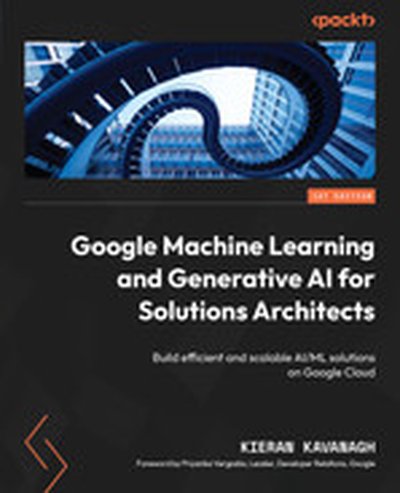
This book teaches solutions architects how to effectively design and implement AI/ML solutions utilizing Google Cloud services. Through detailed explanations, examples, and hands-on exercises, you will understand essential AI/ML concepts, tools, and best practices while building advanced applications. What this Book will help me do Build robust AI/ML solutions using Google Cloud tools such as TensorFlow, BigQuery, and Vertex AI. Prepare and process data efficiently for machine learning workloads. Establish and apply an MLOps framework for automating ML model lifecycle management. Implement cutting-edge generative AI solutions using best practices. Address common challenges in AI/ML projects with insights from expert solutions. Author(s) Kieran Kavanagh is a seasoned principal architect with nearly twenty years of experience in the tech industry. He has successfully led teams in designing, planning, and governing enterprise cloud strategies, and his wealth of experience is distilled into the practical approaches and insights in this book. Who is it for? This book is ideal for IT professionals aspiring to design AI/ML solutions, particularly in the role of solutions architects. It assumes a basic knowledge of Python and foundational AI/ML concepts but is suitable for both beginners and seasoned practitioners. If you're looking to deepen your understanding of state-of-the-art AI/ML applications on Google Cloud, this resource will guide you.
DevOps and MLOps are both software development strategies that focus on collaboration between developers, operations, and data science teams. In this session, learn how to build modern, secure MLOps using AWS services and tools for infrastructure and network isolation, data protection, authentication and authorization, detective controls, and compliance. Discover how AWS customer PathAI, a leading digital pathology and AI company, uses seamless DevOps and MLOps strategies to run their AISight intelligent image management system and embedded AI products to support anatomic pathology labs and biopharma partners globally.
Learn more about AWS re:Inforce at https://go.aws/reinforce.
Subscribe: More AWS videos: http://bit.ly/2O3zS75 More AWS events videos: http://bit.ly/316g9t4
ABOUT AWS Amazon Web Services (AWS) hosts events, both online and in-person, bringing the cloud computing community together to connect, collaborate, and learn from AWS experts.
AWS is the world's most comprehensive and broadly adopted cloud platform, offering over 200 fully featured services from data centers globally. Millions of customers—including the fastest-growing startups, largest enterprises, and leading government agencies—are using AWS to lower costs, become more agile, and innovate faster.
reInforce2024 #CloudSecurity #AWS #AmazonWebServices #CloudComputing
In today's fast-paced digital world, managing IT operations is more complex than ever. With the rise of cloud services, microservices, and constant software deployments, the pressure on IT teams to keep everything running smoothly is immense. But how do you keep up with the ever-growing flood of data and ensure your systems are always available? AIOps is the use of artificial intelligence to automate and scale IT operations. But what exactly is AIOps, and how can it transform your IT operations? Assaf Resnick is the CEO and Co-Founder of BigPanda. Before founding BigPanda, Assaf was an investor at Sequoia Capital, where he focused on early and growth-stage investing in software, internet, and mobile sectors. Assaf’s time at Sequoia gave him a front-row seat to the challenges of IT scale, complexity, and velocity faced by Operations teams in rapidly scaling and accelerating organizations. This is the problem that Assaf founded BigPanda to solve. In the episode, Richie and Assaf explore AIOps, how AIOps helps manage increasingly complex IT operations, how AIOps differs from DevOps and MLOps, examples of AIOps projects, a real world application of AIOps, the key benefits of AIOps, how to implement AIOps, excitement in the space, how GenAI is improving AIOps and much more. Links Mentioned in the Show: BigPandaGartner: Market Guide for AIOps Platforms[Course] Implementing AI Solutions in BusinessRelated Episode: Adding AI to the Data Warehouse with Sridhar Ramaswamy, CEO at SnowflakeSign up to RADAR: AI Edition New to DataCamp? Learn on the go using the DataCamp mobile app Empower your business with world-class data and AI skills with DataCamp for business
Send us a text Welcome to the cozy corner of the tech world where ones and zeros mingle with casual chit-chat. Datatopics Unplugged is your go-to spot for relaxed discussions around tech, news, data, and society.
Dive into conversations that should flow as smoothly as your morning coffee (but don't), where industry insights meet laid-back banter. Whether you're a data aficionado or just someone curious about the digital age, pull up a chair, relax, and let's get into the heart of data, unplugged style!
In this episode, we're joined by special guest Vitale Sparacello, an MLflow Ambassador, to delve into a myriad of topics shaping the current and future landscape of AI and software development: MLflow Deep Dive: Exploring the MLflow Ambassador program, MLflow's role in promoting MLOps practices, and its expansion to support generative AI technologies.Introducing Llama 3: Discussing Meta's newest language model, Llama 3, its capabilities, and the nuanced policy of its distribution, featured on platforms like Groq. Read more here.Emerging AI Tools: Evaluating Open-Parse for advanced text parsing and debating the longevity of PDF documents in the age of advanced AI technologies.OpenTofu vs. Terraform Drama: Analyzing the ongoing legal dispute between Terraform and OpenTofu, with discussions around code ethics and links to OpenTofu's LinkedIn, and their official blog response.The Future of AI Devices: Are smartphones the endgame, or is there a future for specialized AI wearables? Speculating on the evolution of AI devices, focusing on the Human AI Pin review, Rabbit R1 and Dot Computer Go check out the Youtube video after so you don't miss out Murilo in that suit he promised (with a duck tie of course).
Continuous Deployment can be a roadblock in the MLOps lifecycle, often requiring custom pipelines and complex configurations. Solution? The new integrations of Google Cloud Deploy and Vertex AI revolutionizes machine learning (ML) deployment by automating the entire process, and makes it easy to roll back through idempotent releases. The groundbreaking integration of Cloud Deploy and Vertex AI lets you test, validate, and deploy your ML models in minutes, without writing a single line of code.
Click the blue “Learn more” button above to tap into special offers designed to help you implement what you are learning at Google Cloud Next 25.
Application development in continuously breaking down silos. From Dev, DevTest, DevOps, DevSecOps, MLOps, Analytics, to… DevAI? Developers are now being thrust into the dynamic arena of real-time analytics and generative AI (GenAI): two forces shaping the next iteration of technology. This session dives deep into this intersection, demonstrating how developers can leverage these revolutionary tools to not only build applications, but craft game-changing business strategies.
Click the blue “Learn more” button above to tap into special offers designed to help you implement what you are learning at Google Cloud Next 25.
The emergence of foundation models and generative AI has introduced a new era for building AI systems. Selecting the right model from a range of architectures and sizes, curating data, engineering optimal prompts, tuning models for specific tasks, grounding model outputs in real-world data, optimizing hardware – these are just a few of the novel challenges that large models introduce. Delve into the fundamental tenets of MLOps, the necessary adaptations required for generative AI, and capabilities within Vertex AI to support this new workflow.
Click the blue “Learn more” button above to tap into special offers designed to help you implement what you are learning at Google Cloud Next 25.
If you’re a data engineer, MLOps engineer or procurement officer planning to purchase third-party AI models, you won’t want to miss this. Learn how you can speed assessment, facilitate procurement, and simplify governance of AI models (including generative AI) on Google Cloud Marketplace. Explore how to easily procure and deploy third-party AI models and frameworks to both Vertex AI and Google Kubernetes Engine. Finally, you’ll learn from Anthropic, who dive into how their solution deploys via Marketplace to Vertex AI.
Click the blue “Learn more” button above to tap into special offers designed to help you implement what you are learning at Google Cloud Next 25.
Big Data Europe Onsite and online on 22-25 November in 2022 Learn more about the conference: https://bit.ly/3BlUk9q
Join our next Big Data Europe conference on 22-25 November in 2022 where you will be able to learn from global experts giving technical talks and hand-on workshops in the fields of Big Data, High Load, Data Science, Machine Learning and AI. This time, the conference will be held in a hybrid setting allowing you to attend workshops and listen to expert talks on-site or online.