talk-data.com talk-data.com

Topic

NoSQL

databases big_data non_relational

151

tagged

Activity Trend

7 peak/qtr
2020-Q1 2026-Q1

Activities

151 activities · Newest first

Sams Teach Yourself NoSQL with MongoDB in 24 Hours

NoSQL database usage is growing at a stunning 50% per year, as organizations discover NoSQL's potential to address even the most challenging Big Data and real-time database problems. Every NoSQL database is different, but one is the most popular by far: MongoDB. Now, in just 24 lessons of one hour or less, you can learn how to leverage MongoDB's immense power. Each short, easy lesson builds on all that's come before, teaching NoSQL concepts and MongoDB techniques from the ground up. Sams Teach Yourself NoSQL with MongoDB in 24 Hours covers all this, and much more: Learning how NoSQL is different, when to use it, and when to use traditional RDBMSes instead Designing and implementing MongoDB databases of diverse types and sizes Storing and interacting with data via Java, PHP, Python, and Node.js/Mongoose Choosing the right NoSQL distribution model for your application Installing and configuring MongoDB Designing MongoDB data models, including collections, indexes, and GridFS Balancing consistency, performance, and durability Leveraging the immense power of Map-Reduce Administering, monitoring, securing, backing up, and repairing MongoDB databases Mastering advanced techniques such as sharding and replication Optimizing performance
Pro Couchbase Server

The NoSQL movement has fundamentally changed the database world in recent years. Influenced by the growing needs of web-scale applications, NoSQL databases such as Couchbase Server provide new approaches to scalability, reliability, and performance. With the power and flexibility of Couchbase Server, you can model your data however you want, and easily change the data model any time you want. Pro Couchbase Server is a hands-on guide for developers and administrators who want to take advantage of the power and scalability of Couchbase Server in their applications. This book takes you from the basics of NoSQL database design, through application development, to Couchbase Server administration. Never have document databases been so powerful and performant. Pro Couchbase Server shows what is possible and helps you take full advantage of Couchbase Server and all the performance and scalability that it offers. Helps you design and develop a document database using Couchbase Server. Takes you through deploying and maintaining Couchbase Server. Gives you the tools to scale out your application as needed.

Mastering DynamoDB

"Mastering DynamoDB" will guide you through the advanced usage and operational subtleties of DynamoDB, Amazon's fully managed NoSQL database solution. By mastering the topics in this book, readers will unlock the tools to efficiently build scalable and high-performance applications using DynamoDB, leveraging its unique architecture and features. What this Book will help me do Gain a deep understanding of DynamoDB's data model and how it supports scalable performance. Master advanced DynamoDB architecture concepts for reliability and data handling. Learn to integrate DynamoDB securely with other AWS services to build a comprehensive ecosystem. Use tools and libraries to automate processes like autoscaling, testing, and data backups for DynamoDB. Develop mobile and web applications using DynamoDB as a backend, ensuring high availability and speedy operations. Author(s) None Deshpande, the author of "Mastering DynamoDB", is an experienced cloud computing and database professional. With a strong background in AWS technologies and particular expertise in DynamoDB, None brings hands-on knowledge to the forefront. The author is dedicated to making complex concepts accessible and practical for learners, aiding in their professional growth. Who is it for? This book is ideal for developers and IT professionals who want to deepen their expertise in cloud-based NoSQL databases. Readers should ideally have intermediate experience with programming, AWS services, and an interest in enhancing their skills around scalable database systems. Those seeking practical insights for advanced database integration and application development will benefit the most. If you aim to build robust, high-performance applications, "Mastering DynamoDB" is for you.

Understanding Big Data Scalability: Big Data Scalability Series, Part I

Get Started Scaling Your Database Infrastructure for High-Volume Big Data Applications “Understanding Big Data Scalability presents the fundamentals of scaling databases from a single node to large clusters. It provides a practical explanation of what ‘Big Data’ systems are, and fundamental issues to consider when optimizing for performance and scalability. Cory draws on many years of experience to explain issues involved in working with data sets that can no longer be handled with single, monolithic relational databases.... His approach is particularly relevant now that relational data models are making a comeback via SQL interfaces to popular NoSQL databases and Hadoop distributions.... This book should be especially useful to database practitioners new to scaling databases beyond traditional single node deployments.” —Brian O’Krafka, software architect presents a solid foundation for scaling Big Data infrastructure and helps you address each crucial factor associated with optimizing performance in scalable and dynamic Big Data clusters. Understanding Big Data Scalability Database expert Cory Isaacson offers practical, actionable insights for every technical professional who must scale a database tier for high-volume applications. Focusing on today’s most common Big Data applications, he introduces proven ways to manage unprecedented data growth from widely diverse sources and to deliver real-time processing at levels that were inconceivable until recently. Isaacson explains why databases slow down, reviews each major technique for scaling database applications, and identifies the key rules of database scalability that every architect should follow. You’ll find insights and techniques proven with all types of database engines and environments, including SQL, NoSQL, and Hadoop. Two start-to-finish case studies walk you through planning and implementation, offering specific lessons for formulating your own scalability strategy. Coverage includes Understanding the true causes of database performance degradation in today’s Big Data environments Scaling smoothly to petabyte-class databases and beyond Defining database clusters for maximum scalability and performance Integrating NoSQL or columnar databases that aren’t “drop-in” replacements for RDBMSes Scaling application components: solutions and options for each tier Recognizing when to scale your data tier—a decision with enormous consequences for your application environment Why data relationships may be even more important in non-relational databases Why virtually every database scalability implementation still relies on sharding, and how to choose the best approach How to set clear objectives for architecting high-performance Big Data implementations The Big Data Scalability Series is a comprehensive, four-part series, containing information on many facets of database performance and scalability. is the first book in the series. Understanding Big Data Scalability Learn more and join the conversation about Big Data scalability at bigdatascalability.com.
Geographical Information Systems

Web services, cloud computing, location based services, NoSQLdatabases, and Semantic Web offer new ways of accessing, analyzing, and elaborating geo-spatial information in both real-world and virtual spaces. This book explores the how-to of the most promising recurrent technologies and trends in GIS, such as Semantic GIS, Web GIS, Mobile GIS, NoSQL Geographic Databases, Cloud GIS, Spatial Data Warehousing-OLAP, and Open GIS. The text discusses and emphasizes the methodological aspects of such technologies and their applications in GIS.

Beginning Hibernate, Third Edition

Beginning Hibernate, Third Edition is ideal if you're experienced in Java with databases (the traditional, or "connected," approach), but new to open-source, lightweight Hibernate, a leading object-relational mapping and database-oriented application development framework. This book packs in information about the release of the Hibernate 4.x persistence layer and provides a clear introduction to the current standard for object-relational persistence in Java. And since the book keeps its focus on Hibernate without wasting time on nonessential third-party tools, you'll be able to immediately start building transaction-based engines and applications. Experienced authors Joseph Ottinger with Dave Minter and Jeff Linwood provide more in-depth examples than any other book for Hibernate beginners. The authors also present material in a lively, example-based manner—not a dry, theoretical, hard-to-read fashion. What you'll learn How to build enterprise Java-based transaction-type applications that access complex data with Hibernate How to work with Hibernate 4 Where to integrate into the persistence life cycle How to map using annotations, Hibernate XML files, and more How to search and query with the new version of Hibernate How to integrate with MongoDB using NoSQL Who this book is for This book is for Java developers who want to learn about Hibernate.

Solr in Action

Solr in Action is a comprehensive guide to implementing scalable search using Apache Solr. This clearly written book walks you through well-documented examples ranging from basic keyword searching to scaling a system for billions of documents and queries. It will give you a deep understanding of how to implement core Solr capabilities. About the Technology About the Book Whether you're handling big (or small) data, managing documents, or building a website, it is important to be able to quickly search through your content and discover meaning in it. Apache Solr is your tool: a ready-to-deploy, Lucene-based, open source, full-text search engine. Solr can scale across many servers to enable real-time queries and data analytics across billions of documents. Solr in Action teaches you to implement scalable search using Apache Solr. This easy-to-read guide balances conceptual discussions with practical examples to show you how to implement all of Solr's core capabilities. You'll master topics like text analysis, faceted search, hit highlighting, result grouping, query suggestions, multilingual search, advanced geospatial and data operations, and relevancy tuning. What's Inside How to scale Solr for big data Rich real-world examples Solr as a NoSQL data store Advanced multilingual, data, and relevancy tricks Coverage of versions through Solr 4.7 About the Reader This book assumes basic knowledge of Java and standard database technology. No prior knowledge of Solr or Lucene is required. About the Authors Trey Grainger is a director of engineering at CareerBuilder. Timothy Potter is a senior member of the engineering team at LucidWorks. The authors work on the scalability and reliability of Solr, as well as on recommendation engine and big data analytics technologies. Quotes The knowledge and techniques you need. - From the Foreword by Yonik Seeley, Creator of Solr Readable and immediately applicable ... an excellent book. - John Viviano, InterCorp, Inc. The go-to guide for Solr ... a definitive resource for both beginners and experts. - Scott Anthony, Business Instruments A well-dosed combination of deep technical knowledge and real-world experience. - Alexandre Madurell, Piksel, Inc.

Data Just Right: Introduction to Large-Scale Data & Analytics

Making Big Data Work: Real-World Use Cases and Examples, Practical Code, Detailed Solutions Large-scale data analysis is now vitally important to virtually every business. Mobile and social technologies are generating massive datasets; distributed cloud computing offers the resources to store and analyze them; and professionals have radically new technologies at their command, including NoSQL databases. Until now, however, most books on “Big Data” have been little more than business polemics or product catalogs. is different: It’s a completely practical and indispensable guide for every Big Data decision-maker, implementer, and strategist. Data Just Right Michael Manoochehri, a former Google engineer and data hacker, writes for professionals who need practical solutions that can be implemented with limited resources and time. Drawing on his extensive experience, he helps you focus on building applications, rather than infrastructure, because that’s where you can derive the most value. Manoochehri shows how to address each of today’s key Big Data use cases in a cost-effective way by combining technologies in hybrid solutions. You’ll find expert approaches to managing massive datasets, visualizing data, building data pipelines and dashboards, choosing tools for statistical analysis, and more. Throughout, the author demonstrates techniques using many of today’s leading data analysis tools, including Hadoop, Hive, Shark, R, Apache Pig, Mahout, and Google BigQuery. Coverage includes Mastering the four guiding principles of Big Data success—and avoiding common pitfalls Emphasizing collaboration and avoiding problems with siloed data Hosting and sharing multi-terabyte datasets efficiently and economically “Building for infinity” to support rapid growth Developing a NoSQL Web app with Redis to collect crowd-sourced data Running distributed queries over massive datasets with Hadoop, Hive, and Shark Building a data dashboard with Google BigQuery Exploring large datasets with advanced visualization Implementing efficient pipelines for transforming immense amounts of data Automating complex processing with Apache Pig and the Cascading Java library Applying machine learning to classify, recommend, and predict incoming information Using R to perform statistical analysis on massive datasets Building highly efficient analytics workflows with Python and Pandas Establishing sensible purchasing strategies: when to build, buy, or outsource Previewing emerging trends and convergences in scalable data technologies and the evolving role of the Data Scientist

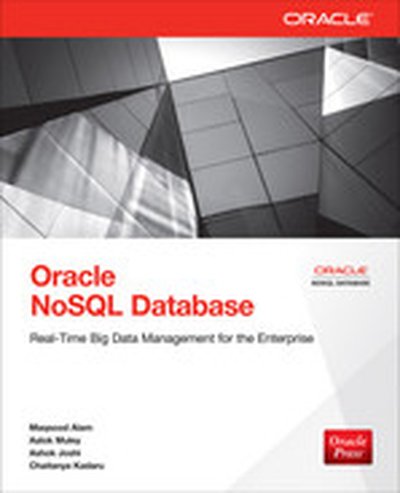
Oracle NoSQL Database

Master Oracle NoSQL Database Enable highly reliable, scalable, and available data. Oracle NoSQL Database: Real-Time Big Data Management for the Enterprise shows you how to take full advantage of this cost-effective solution for storing, retrieving, and updating high-volume, unstructured data. The book covers installation, configuration, application development, capacity planning and sizing, and integration with other enterprise data center products. Real-world examples illustrate the concepts presented in this Oracle Press guide. Understand Oracle NoSQL Database architecture and the underlying data storage engine, Oracle Berkeley DB Install and configure Oracle NoSQL Database for optimal performance Develop complex, distributed applications using a rich set of APIs Read and write data into the Oracle NoSQL Database key-value store Apply an Avro schema to the value portion of the key-value pair using Avro bindings Learn best practices for capacity planning and sizing an enterpriselevel Oracle NoSQL Database deployment Integrate Oracle NoSQL Database with Oracle Database, Oracle Event Processing, and Hadoop Code examples from the book are available for download at www.OraclePressBooks.com.

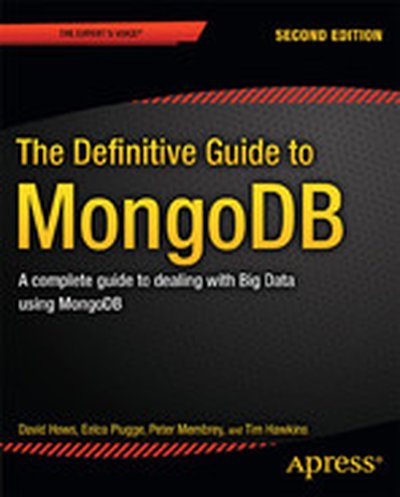
The Definitive Guide to MongoDB: A complete guide to dealing with Big Data using MongoDB, Second Edition

The Definitive Guide to MongoDB, Second Edition, is updated for the latest version and includes all of the latest MongoDB features, including the aggregation framework introduced in version 2.2 and hashed indexes in version 2.4. MongoDB is the most popular of the "Big Data" NoSQL database technologies, and it's still growing. David Hows from 10gen, along with experienced MongoDB authors Peter Membrey and Eelco Plugge, provide their expertise and experience in teaching you everything you need to know to become a MongoDB pro. The Definitive Guide to MongoDB, Second Edition, starts with the basics, including how to install on Windows, Linux, and OS X, and how MongoDB handles your data. Then you'll learn how to develop with MongoDB with both PHP and Python, including an example application using a PHP driver to create a blog application. Finally, you'll dig into more advanced but extremely important MongoDB features, including optimization, replication, and sharding -- load-balancing that makes MongoDB ideal for dealing with Big Data. If you're dealing with data, MongoDB should be on your must-learn list. The Definitive Guide to MongoDB, Second Edition, is just the book you need. What you'll learn Set up MongoDB on all major server platforms, including Windows, Linux, OS X, and cloud platforms like Rackspace, Azure, and Amazon EC2 Work with GridFS and the new aggregation framework Work with your data using non-SQL commands Write applications using either PHP or Python Optimize MongoDB Master MongoDB administration, including replication, replication tagging, and tag-aware sharding Who this book is for Database admins and developers who need to get up to speed on MongoDB and its Big Data, NoSQL approach to dealing with data management.

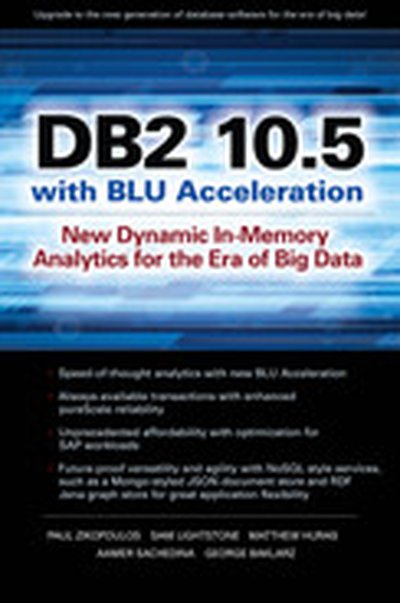
DB2 10.5 with BLU Acceleration

UPGRADE TO THE NEW GENERATION OF DATABASE SOFTWARE FOR THE ERA OF BIG DATA! If big data is an untapped natural resource, how do you find the gold hidden within? Leaders realize that big data means all data, and are moving quickly to extract more value from both structured and unstructured application data. However, analyzing this data can prove costly and complex, especially while protecting the availability, performance and reliability of essential business applications. In the new era of big data, businesses require data systems that can blend always-available transactions with speed-of-thought analytics. DB2 10.5 with BLU Acceleration provides this speed, simplicity, and affordability while making it easier to build next-generation applications with NoSQL features, such as a mongo-styled JSON document store, a graph store, and more. Dynamic in-memory columnar processing and other innovations deliver faster insights from more data, and enhanced pureScale clustering technology delivers high-availability transactions with application-transparent scalability for business continuity. With this book, you'll learn about the power and flexibility of multiworkload, multi-platform database software. Use the comprehensive knowledge from a team of DB2 developers and experts to get started with the latest DB2 trial version you can download at ibm.com/developerworks/downloads/im/db2/. Stay up to date on DB2 by visiting ibm.com/db2/.

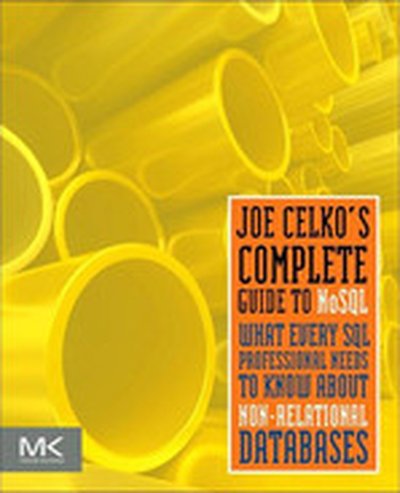
Joe Celko’s Complete Guide to NoSQL

Joe Celko's Complete Guide to NoSQL provides a complete overview of non-relational technologies so that you can become more nimble to meet the needs of your organization. As data continues to explode and grow more complex, SQL is becoming less useful for querying data and extracting meaning. In this new world of bigger and faster data, you will need to leverage non-relational technologies to get the most out of the information you have. Learn where, when, and why the benefits of NoSQL outweigh those of SQL with Joe Celko's Complete Guide to NoSQL. This book covers three areas that make today's new data different from the data of the past: velocity, volume and variety. When information is changing faster than you can collect and query it, it simply cannot be treated the same as static data. Celko will help you understand velocity, to equip you with the tools to drink from a fire hose. Old storage and access models do not work for big data. Celko will help you understand volume, as well as different ways to store and access data such as petabytes and exabytes. Not all data can fit into a relational model, including genetic data, semantic data, and data generated by social networks. Celko will help you understand variety, as well as the alternative storage, query, and management frameworks needed by certain kinds of data. Gain a complete understanding of the situations in which SQL has more drawbacks than benefits so that you can better determine when to utilize NoSQL technologies for maximum benefit Recognize the pros and cons of columnar, streaming, and graph databases Make the transition to NoSQL with the expert guidance of best-selling SQL expert Joe Celko

Oracle Big Data Handbook

Transform Big Data into Insight "In this book, some of Oracle's best engineers and architects explain how you can make use of big data. They'll tell you how you can integrate your existing Oracle solutions with big data systems, using each where appropriate and moving data between them as needed." -- Doug Cutting, co-creator of Apache Hadoop Cowritten by members of Oracle's big data team, Oracle Big Data Handbook provides complete coverage of Oracle's comprehensive, integrated set of products for acquiring, organizing, analyzing, and leveraging unstructured data. The book discusses the strategies and technologies essential for a successful big data implementation, including Apache Hadoop, Oracle Big Data Appliance, Oracle Big Data Connectors, Oracle NoSQL Database, Oracle Endeca, Oracle Advanced Analytics, and Oracle's open source R offerings. Best practices for migrating from legacy systems and integrating existing data warehousing and analytics solutions into an enterprise big data infrastructure are also included in this Oracle Press guide. Understand the value of a comprehensive big data strategy Maximize the distributed processing power of the Apache Hadoop platform Discover the advantages of using Oracle Big Data Appliance as an engineered system for Hadoop and Oracle NoSQL Database Configure, deploy, and monitor Hadoop and Oracle NoSQL Database using Oracle Big Data Appliance Integrate your existing data warehousing and analytics infrastructure into a big data architecture Share data among Hadoop and relational databases using Oracle Big Data Connectors Understand how Oracle NoSQL Database integrates into the Oracle Big Data architecture Deliver faster time to value using in-database analytics Analyze data with Oracle Advanced Analytics (Oracle R Enterprise and Oracle Data Mining), Oracle R Distribution, ROracle, and Oracle R Connector for Hadoop Analyze disparate data with Oracle Endeca Information Discovery Plan and implement a big data governance strategy and develop an architecture and roadmap

Making Sense of NoSQL

Making Sense of NoSQL clearly and concisely explains the concepts, features, benefits, potential, and limitations of NoSQL technologies. Using examples and use cases, illustrations, and plain, jargon-free writing, this guide shows how you can effectively assemble a NoSQL solution to replace or augment the traditional RDBMS you have now. About the Technology About the Book If you want to understand and perhaps start using the new data storage and analysis technologies that go beyond the SQL database model, this book is for you. Written in plain language suitable for technical managers and developers, and using many examples, use cases, and illustrations, this book explains the concepts, features, benefits, potential, and limitations of NoSQL. Making Sense of NoSQL starts by comparing familiar database concepts to the new NoSQL patterns that augment or replace them. Then, you'll explore case studies on big data, search, reliability, and business agility that apply these new patterns to today's business problems. You'll see how NoSQL systems can leverage the resources of modern cloud computing and multiple-CPU data centers. The final chapters show you how to choose the right NoSQL technologies for your own needs. What's Inside NoSQL data architecture patterns NoSQL for big data Search, high availability, and security Choosing an architecture About the Reader Managers and developers will welcome this lucid overview of the potential and capabilities of NoSQL technologies. About the Authors Dan McCreary and Ann Kelly lead an independent training and consultancy firm focused on NoSQL solutions and are cofounders of the NoSQL Now! Conference. Quotes Easily digestible, practical advice for technical managers, architects, and developers. - From the Foreword by Tony Shaw, CEO of DATAVERSITY Cuts through the jargon and gives you the information you need to know. - Craig Smith, Unbound DNA A concise yet thorough description of the many facets of NoSQL, from big data to search. - John Guthrie, Pivotal Brings common sense to the world of NoSQL. - Ignacio Lopez Vellon, Atos Worldgrid Get ahead of your peers ... fast-track to NoSQL now! - Ian Stirk, Stirk Consultancy, Ltd

Pro Hibernate and MongoDB

Hibernate and MongoDB are a powerful combination of open source persistence and NoSQL technologies for today's Java-based enterprise and cloud application developers. Hibernate is the leading open source Java-based persistence, object relational management engine, recently repositioned as an object grid management engine. MongoDB is a growing, popular open source NoSQL framework, especially popular among cloud application and big data developers. With these two, enterprise and cloud developers have a "complete out of the box" solution. Pro Hibernate and MongoDB shows you how to use and integrate Hibernate and MongoDB. More specifically, this book guides you through the bootstrap; building transactions; handling queries and query entities; and mappings. Then, this book explores the principles and techniques for taking these application principles to the cloud, using the OpenShift Platform as a Service (PaaS) and more. In this book, you get two case studies: An enterprise application using Hibernate and MongoDB. then, A cloud application (OpenShip) migrated from the enterprise application case study After reading or using this book, you come away with the experience from two case studies that give you possible frameworks or templates that you can apply to your own specific application or cloud application building context. What you'll learn How to use and integrate Hibernate and MongoDB to be your "complete out of the box" solution for database driven enterprise and cloud applications How to bootstrap; run in supported environments; do transactions; handle queries and query entities; and mappings How to build an enterprise application case study using Hibernate and MongoDB What are the principles and techniques for taking applications to the Cloud, using the OpenShift Platform as a Service (PaaS) and more How to build a cloud-based app or application (OpenShip) Who this book is for This book is for experienced Java, enterprise Java programmers who may have some experience with Hibernate and/or MongoDB.

Redis in Action

Redis in Action introduces Redis and walks you through examples that demonstrate how to use it effectively. You'll begin by getting Redis set up properly and then exploring the key-value model. Then, you'll dive into real use cases including simple caching, distributed ad targeting, and more. You'll learn how to scale Redis from small jobs to massive datasets. Experienced developers will appreciate chapters on clustering and internal scripting to make Redis easier to use. About the Technology When you need near-real-time access to a fast-moving data stream, key-value stores like Redis are the way to go. Redis expands on the key-value pattern by accepting a wide variety of data types, including hashes, strings, lists, and other structures. It provides lightning-fast operations on in-memory datasets, and also makes it easy to persist to disk on the fly. Plus, it's free and open source. About the Book What's Inside Redis from the ground up Preprocessing real-time data Managing in-memory datasets Pub/sub and configuration Persisting to disk About the Reader Written for developers familiar with database concepts. No prior exposure to Redis or other NoSQL databases required. Appropriate for systems administrators comfortable with programming. About the Author Dr. Josiah L. Carlson is a seasoned database professional and an active contributor to the Redis community. Quotes A great addition to the Redis ecosystem. - From the Foreword by Salvatore Sanfilippo, Creator of Redis The examples, taken from real-world use cases, are one of the major strengths of the book. - Filippo Pacini, SG Consulting From beginner to expert with real and comprehensive examples. - Felipe Gutierrez, VMware/Spring Source Excellent in-depth analysis ... insightful real-world examples. - Bobby Abraham, Integri LLC Pure gold! - Leo Cassarani, Unboxed Consulting

MongoDB: The Definitive Guide, 2nd Edition

Manage the huMONGOus amount of data collected through your web application with MongoDB. This authoritative introduction—written by a core contributor to the project—shows you the many advantages of using document-oriented databases, and demonstrates how this reliable, high-performance system allows for almost infinite horizontal scalability. This updated second edition provides guidance for database developers, advanced configuration for system administrators, and an overview of the concepts and use cases for other people on your project. Ideal for NoSQL newcomers and experienced MongoDB users alike, this guide provides numerous real-world schema design examples. Get started with MongoDB core concepts and vocabulary Perform basic write operations at different levels of safety and speed Create complex queries, with options for limiting, skipping, and sorting results Design an application that works well with MongoDB Aggregate data, including counting, finding distinct values, grouping documents, and using MapReduce Gather and interpret statistics about your collections and databases Set up replica sets and automatic failover in MongoDB Use sharding to scale horizontally, and learn how it impacts applications Delve into monitoring, security and authentication, backup/restore, and other administrative tasks

Data Warehousing in the Age of Big Data

Data Warehousing in the Age of the Big Data will help you and your organization make the most of unstructured data with your existing data warehouse. As Big Data continues to revolutionize how we use data, it doesn't have to create more confusion. Expert author Krish Krishnan helps you make sense of how Big Data fits into the world of data warehousing in clear and concise detail. The book is presented in three distinct parts. Part 1 discusses Big Data, its technologies and use cases from early adopters. Part 2 addresses data warehousing, its shortcomings, and new architecture options, workloads, and integration techniques for Big Data and the data warehouse. Part 3 deals with data governance, data visualization, information life-cycle management, data scientists, and implementing a Big Data–ready data warehouse. Extensive appendixes include case studies from vendor implementations and a special segment on how we can build a healthcare information factory. Ultimately, this book will help you navigate through the complex layers of Big Data and data warehousing while providing you information on how to effectively think about using all these technologies and the architectures to design the next-generation data warehouse. Learn how to leverage Big Data by effectively integrating it into your data warehouse. Includes real-world examples and use cases that clearly demonstrate Hadoop, NoSQL, HBASE, Hive, and other Big Data technologies Understand how to optimize and tune your current data warehouse infrastructure and integrate newer infrastructure matching data processing workloads and requirements

MongoDB Applied Design Patterns

Whether you’re building a social media site or an internal-use enterprise application, this hands-on guide shows you the connection between MongoDB and the business problems it’s designed to solve. You’ll learn how to apply MongoDB design patterns to several challenging domains, such as ecommerce, content management, and online gaming. Using Python and JavaScript code examples, you’ll discover how MongoDB lets you scale your data model while simplifying the development process. Many businesses launch NoSQL databases without understanding the techniques for using their features most effectively. This book demonstrates the benefits of document embedding, polymorphic schemas, and other MongoDB patterns for tackling specific big data use cases, including: Operational intelligence: Perform real-time analytics of business data Ecommerce: Use MongoDB as a product catalog master or inventory management system Content management: Learn methods for storing content nodes, binary assets, and discussions Online advertising networks: Apply techniques for frequency capping ad impressions, and keyword targeting and bidding Social networking: Learn how to store a complex social graph, modeled after Google+ Online gaming: Provide concurrent access to character and world data for a multiplayer role-playing game

Developing with Couchbase Server

Today’s highly interactive websites pose a challenge for traditional SQL databases—the ability to scale rapidly and serve loads of concurrent users. With this concise guide, you’ll learn how to build web applications on top of Couchbase Server 2.0, a NoSQL database that can handle websites and social media where hundreds of thousands of users read and write large volumes of information. Using food recipe information as examples, this book demonstrates how to take advantage of Couchbase’s document-oriented database design, and how to store and query data with various CRUD operations. Discover why Couchbase is better than SQL databases with memcached tiers for managing data from the most interactive portions of your application. Learn about Couchbase Server’s cluster-based architecture and how it differs from SQL databases Choose a client library for Java, .NET, Ruby, Python, PHP, or C, and connect to a cluster Structure data in a variety of formats, from serialized objects, a stream of raw bytes, or as JSON documents Learn core storage and retrieval methods, including document IDs, expiry times, and concurrent updates Create views with map/reduce and learn Couchbase mechanisms for querying and selection