talk-data.com talk-data.com

Topic

Python

programming_language data_science web_development

151

tagged

Activity Trend

185 peak/qtr
2020-Q1 2026-Q1

Activities

Showing filtered results

Filtering by: O'Reilly Data Engineering Books ×
The Definitive Guide to MongoDB: A complete guide to dealing with Big Data using MongoDB, Third Edition

The Definitive Guide to MongoDB, Third Edition, is updated for MongoDB 3 and includes all of the latest MongoDB features, including the aggregation framework introduced in version 2.2 and hashed indexes in version 2.4. The Third Edition also now includes Node.js along with Python. MongoDB is the most popular of the "Big Data" NoSQL database technologies, and it's still growing. David Hows from 10gen, along with experienced MongoDB authors Peter Membrey and Eelco Plugge, provide their expertise and experience in teaching you everything you need to know to become a MongoDB pro.

Python Geospatial Analysis Cookbook

Explore the fascinating world of geospatial analysis with "Python Geospatial Analysis Cookbook". This guide offers practical, recipe-based solutions for common spatial analysis tasks using Python, helping you tackle real-world spatial challenges effectively. From data preparation to topology checks and network analysis, the book ensures you're equipped to create powerful geospatial applications. What this Book will help me do Understand the projection and coordinate system details of geospatial data to ensure accurate analysis. Transform and manipulate spatial data formats for diverse analysis requirements and projects. Leverage the capabilities of PostGIS within Python for advanced geospatial operations. Apply vector and raster data analysis techniques to solve practical spatial problems. Develop a functional geospatial web application using GeoDjango to demonstrate analysis outputs. Author(s) None Diener is an accomplished professional in the field of geospatial analysis utilizing Python. With years of experience in coding and implementing geospatial systems, Diener bridges the gap between theoretical techniques and practical applications. Their writing is aimed at beginners and professionals alike, delivering clear and precise guidance for building geospatial solutions. Who is it for? This book is perfect for GIS analysts, programmers, data scientists, and researchers with a baseline understanding of geospatial concepts who are looking to enhance their skills. Beginners eager to explore Python's utility in geospatial analysis will also benefit. Whether you're solving intricate spatial problems or building web-based GIS applications, this guide has you covered.

Essential SQLAlchemy, 2nd Edition

Dive into SQLAlchemy, the popular, open-source code library that helps Python programmers work with relational databases such as Oracle, MySQL, PostgresSQL, and SQLite. Using real-world examples, this practical guide shows you how to build a simple database application with SQLAlchemy, and how to connect to multiple databases simultaneously with the same metadata. SQL is a powerful language for querying and manipulating data, but it’s tough to integrate it with your application. SQLAlchemy helps you map Python objects to database tables without substantially changing your existing Python code. If you’re an intermediate Python developer with knowledge of basic SQL syntax and relational theory, this book serves as both a learning tool and a handy reference. Essential SQLAlchemy includes several sections: SQLAlchemy Core: Provide database services to your applications in a Pythonic way with the SQL Expression Language SQLAlchemy ORM: Use the object relational mapper to bind database schema and operations to data objects in your application Alembic: Use this lightweight database migration tool to handle changes to the database as your application evolves Cookbook: Learn how to use SQLAlchemy with web frameworks like Flask and libraries like SQLAcodegen

Hadoop with Python

Hadoop is mostly written in Java, but that doesn't exclude the use of other programming languages with this distributed storage and processing framework, particularly Python. With this concise book, you’ll learn how to use Python with the Hadoop Distributed File System (HDFS), MapReduce, the Apache Pig platform and Pig Latin script, and the Apache Spark cluster-computing framework. Authors Zachary Radtka and Donald Miner from the data science firm Miner & Kasch take you through the basic concepts behind Hadoop, MapReduce, Pig, and Spark. Then, through multiple examples and use cases, you'll learn how to work with these technologies by applying various Python tools. Use the Python library Snakebite to access HDFS programmatically from within Python applications Write MapReduce jobs in Python with mrjob, the Python MapReduce library Extend Pig Latin with user-defined functions (UDFs) in Python Use the Spark Python API (PySpark) to write Spark programs with Python Learn how to use the Luigi Python workflow scheduler to manage MapReduce jobs and Pig scripts Zachary Radtka, a platform engineer at Miner & Kasch, has extensive experience creating custom analytics that run on petabyte-scale data sets.

Big Data for Chimps

Finding patterns in massive event streams can be difficult, but learning how to find them doesn’t have to be. This unique hands-on guide shows you how to solve this and many other problems in large-scale data processing with simple, fun, and elegant tools that leverage Apache Hadoop. You’ll gain a practical, actionable view of big data by working with real data and real problems. Perfect for beginners, this book’s approach will also appeal to experienced practitioners who want to brush up on their skills. Part I explains how Hadoop and MapReduce work, while Part II covers many analytic patterns you can use to process any data. As you work through several exercises, you’ll also learn how to use Apache Pig to process data. Learn the necessary mechanics of working with Hadoop, including how data and computation move around the cluster Dive into map/reduce mechanics and build your first map/reduce job in Python Understand how to run chains of map/reduce jobs in the form of Pig scripts Use a real-world dataset—baseball performance statistics—throughout the book Work with examples of several analytic patterns, and learn when and where you might use them

Redis Essentials

Redis Essentials is your go-to guide for understanding and mastering Redis, the leading in-memory data structure store. In this book, you will explore the powerful features offered by Redis, such as real-time data processing, highly scalable architectures, and practical implementations for web applications. You'll complete the journey equipped to handle and optimize Redis for your development projects. What this Book will help me do Design analytics applications with advanced data structures like Bitmaps and HyperLogLogs. Scale your application infrastructure using Redis Sentinel, Twemproxy, and Redis Cluster. Develop custom Redis commands and extend its functionality with the Lua scripting language. Implement robust security measures for Redis, including SSL encryption and firewall rules. Master the usage of Redis client libraries in PHP, Python, Node.js, and Ruby for seamless development. Author(s) Maxwell Dayvson da Silva is an experienced software engineer and author with expertise in designing high-performance systems. With a strong focus on practical knowledge and hands-on solutions, Maxwell brings over a decade of experience using Redis to this book. His approachable teaching style ensures learners grasp complex topics easily while emphasizing their practical application to real-world challenges. Who is it for? Redis Essentials is aimed at developers looking to enhance their system's performance and scalability using Redis. Whether you're moderately familiar with key-value stores or new to Redis, this book will provide the explanations and hands-on examples you need. Recommended for developers with experience in data architectures, the book bridges the gap between understanding Redis features and their real-world application. Start here to bring high-performance in-memory data solutions to your projects.

Programming ArcGIS with Python Cookbook, Second Edition

Dive into 'Programming ArcGIS with Python Cookbook, Second Edition,' an essential guide for automating your ArcGIS for Desktop tasks with hands-on Python recipes. Through this book, you will understand how to effectively handle GIS data, automate geoprocessing tasks, and extend ArcGIS functionalities to streamline your workflows and boost your productivity. What this Book will help me do Master the management of map documents, layer files, feature classes, and tables using Python. Automate common ArcGIS tasks such as map production, printing, and creating PDF map books programmatically. Learn to find and correct broken data links and make your datasets reliable. Develop custom geoprocessing tools and share them efficiently among your team or projects. Expand your knowledge by leveraging advanced practices such as Python scripting for ArcGIS Pro and REST API integration. Author(s) Eric Pimpler is an accomplished GIS professional and Python programmer with years of practical experience in geospatial science and technology. He specializes in teaching GIS automation using Python and aims to simplify complex concepts into approachable recipes for learners. Eric's writing is marked by clarity and a methodical approach, ensuring that readers can apply their new knowledge effectively. Who is it for? This book is aimed at GIS professionals, cartographers, or analysts who routinely work with ArcGIS and want to streamline their workflow. If you have foundational experience with ArcGIS and basic Python programming skills, this book will build upon them, offering practical recipes to extend your capabilities. It's perfect for those looking to enhance their efficiency and automate their GIS tasks. By the end of this book, readers will have skills valuable to GIS experts and data analysts alike.

Spark Cookbook

Spark Cookbook is your practical guide to mastering Apache Spark, encompassing a comprehensive set of patterns and examples. Through its over 60 recipes, you will gain actionable insights into using Spark Core, Spark SQL, Spark Streaming, MLlib, and GraphX effectively for your big data needs. What this Book will help me do Understand how to install and configure Apache Spark in various environments. Build data pipelines and perform real-time analytics with Spark Streaming. Utilize Spark SQL for interactive data querying and reporting. Apply machine learning workflows using MLlib, including supervised and unsupervised models. Develop optimized big data solutions and integrate them into enterprise platforms. Author(s) None Yadav, the author of Spark Cookbook, is an experienced data engineer and technical expert with deep insights into big data processing frameworks. Yadav has spent years working with Spark and its ecosystem, providing practical guidance to developers and data scientists alike. This book reflects their commitment to sharing actionable knowledge. Who is it for? This book is designed for data engineers, developers, and data scientists who work with big data systems and wish to utilize Apache Spark effectively. Whether you're looking to optimize existing Spark applications or explore its libraries for new use cases, this book will provide the guidance you need. A basic familiarity with big data concepts and programming in languages like Java or Python is recommended to make the most out of this book.

Building web applications with Python and Neo4j

Expand your Python web development expertise by integrating Neo4j into your applications. Through this book, you'll journey from understanding Neo4j's fundamentals to building powerful Python-based applications using tools like Flask, Py2neo, and Django. Learn how to model, query, and update graph data effectively. What this Book will help me do Gain an in-depth understanding of Neo4j installation, licensing, and tools. Master using Cypher for querying and modifying graph data models. Learn how to integrate Python with Neo4j effectively using Py2neo. Build RESTful services with Flask leveraging Neo4j for structured data. Create robust Django applications using graph-based data models with Neomodel. Author(s) Sumit Gupta is a seasoned Python developer with a strong background in graph database design and integration. He has extensive experience using Neo4j to create efficient, scalable applications for real-world problems. His hands-on approach combines practical examples with the depth of knowledge required to develop expertise. Who is it for? This book is ideal for Python developers with an interest in enhancing their applications through graph database technology. If you possess a moderate understanding of Python and wish to explore Neo4j for creating smarter, more interconnected data-driven solutions, this book is for you. You should be comfortable with basic programming concepts to fully benefit from this book.

Neo4j Cookbook

Dive into Neo4j and uncover how to harness its powerful capabilities in graph data analysis with the Neo4j Cookbook. Across 75 well-structured recipes, you'll learn to apply practical techniques in modeling, querying, and visualizing graph databases, enabling you to address real-world challenges efficiently. What this Book will help me do Access Neo4j from popular programming languages such as Java, Python, and Scala, enabling easier integration into your projects. Migrate data seamlessly from various data stores, including SQL and NoSQL, into Neo4j, maintaining data consistency. Use best practices for data modeling with Neo4j to optimize performance and scalability for your applications. Analyze social data from sources like Facebook and Twitter, revealing valuable insights from connections and relationships. Integrate geospatial data to enable location-based queries and nearest-point searches, opening up advanced application features. Author(s) Ankur Goel, the author of Neo4j Cookbook, is an experienced technologist with an extensive background in handling database solutions and applications. Passionate about simplifying complex systems, Ankur excels in teaching essential database concepts through clear and actionable recipes. His writing is rooted in practical insights, reflecting his hands-on experience in the industry. Who is it for? This book is ideal for developers and data engineers who currently use or plan to integrate Neo4j into their workflows. If you are migrating from a traditional database system or delving into graph databases for the first time, this book offers structured guidance. Readers should have a fundamental understanding of programming and familiarity with database concepts for the best experience. It caters to individuals aiming to build or enhance data-driven applications using Neo4j's robust graph modeling.

Advanced Analytics with Spark

In this practical book, four Cloudera data scientists present a set of self-contained patterns for performing large-scale data analysis with Spark. The authors bring Spark, statistical methods, and real-world data sets together to teach you how to approach analytics problems by example. You’ll start with an introduction to Spark and its ecosystem, and then dive into patterns that apply common techniques—classification, collaborative filtering, and anomaly detection among others—to fields such as genomics, security, and finance. If you have an entry-level understanding of machine learning and statistics, and you program in Java, Python, or Scala, you’ll find these patterns useful for working on your own data applications.

ArcPy and ArcGIS: Geospatial Analysis with Python

"ArcPy and ArcGIS: Geospatial Analysis with Python" introduces you to streamlining geospatial analysis using the ArcPy library in Python. You'll learn to automate repetitive GIS tasks, enhance your workflow in ArcGIS, and handle geospatial data programmatically to achieve efficient and accurate results in your projects. What this Book will help me do Master the use of the ArcPy library to automate and optimize GIS workflows. Learn techniques to efficiently handle geospatial data updates and analysis in Python. Understand how to use Python scripting to dynamically create and manage maps and analyses. Gain the skills to enhance repetitive GIS tasks into custom Python tools to increase productivity. Explore advanced geospatial analysis topics using Python's ArcPy module for complex problem-solving. Author(s) Silas Toms is a seasoned GIS professional with extensive experience in Python programming for geospatial applications. With years of hands-on work in automating GIS processes and teaching others, Silas excels at making technical concepts relatable and useful for real-world applications. His practical writing style ensures readers can effectively apply what they learn. Who is it for? This book is ideal for GIS students and professionals who wish to enhance their efficiency by automating tasks in ArcGIS using Python. It also suits Python developers keen on exploring geospatial data analysis and management workflows. Suitable for those with basic GIS knowledge, the book bridges the gap to advanced GIS automation techniques. It's perfect if you aim to streamline repetitive tasks and integrate programming into your geospatial projects.

PostgreSQL Server Programming - Second Edition

Delve into the concepts and practices of PostgreSQL server-side programming with this practical and insightful guide. Learn how to extend PostgreSQL functionality through user-defined functions, various procedural languages, and effective debugging techniques. Gain a deeper understanding of PostgreSQL 9.4's features to optimize your database's capabilities. What this Book will help me do Master PostgreSQL's PL/pgSQL and other procedural languages for server-side programming. Craft powerful user-defined functions to provide database functionality specific to your needs. Explore debugging techniques and tools, including PL/pgSQL debugging extensions and NOTIFY. Scale and optimize databases effectively using tools like PL/Proxy. Leverage new features in PostgreSQL 9.4, such as event triggers, to enhance database performance. Author(s) The book is authored by experienced PostgreSQL professionals None Dar, None Krosing, and Jim Mlodgenski. Together, they bring years of expertise in database design, architecture, and development. Their combined backgrounds ensure a comprehensive and practical learning experience for readers. They aim to share practical insights and structured knowledge for database enthusiasts. Who is it for? This book is ideal for database professionals with a moderate to advanced understanding of PostgreSQL. Readers should have experience with SQL, query optimization concepts, and basic programming in languages like Python, Perl, or C. If you are aiming to enhance your knowledge of PostgreSQL in-depth capabilities and get hands-on with advanced features such as server programming and database scale optimization, this book is suitable for you.

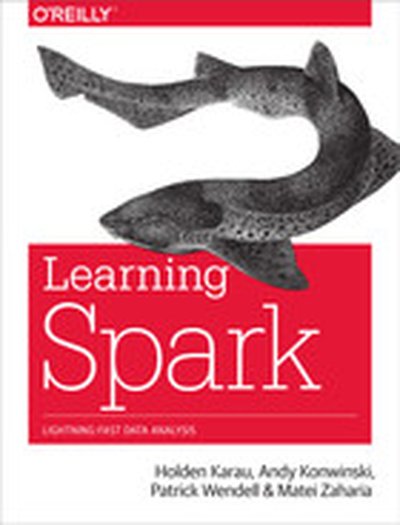
Learning Spark

Data in all domains is getting bigger. How can you work with it efficiently? Recently updated for Spark 1.3, this book introduces Apache Spark, the open source cluster computing system that makes data analytics fast to write and fast to run. With Spark, you can tackle big datasets quickly through simple APIs in Python, Java, and Scala. This edition includes new information on Spark SQL, Spark Streaming, setup, and Maven coordinates.

Apache ZooKeeper Essentials

Apache ZooKeeper Essentials is your comprehensive guide to understanding and utilizing Apache ZooKeeper for coordinating services in distributed systems. This book offers a clear and practical approach to ZooKeeper's architecture and programming, focusing on its application in real-world scenarios. What this Book will help me do Understand the architecture and operational design of Apache ZooKeeper. Effectively use ZooKeeper to coordinate distributed systems. Implement ZooKeeper programming using languages such as Java, C, or Python. Administer and manage ZooKeeper servers and clusters. Utilize tools like Apache Curator to enhance your ZooKeeper experience. Author(s) None Haloi, the author of Apache ZooKeeper Essentials, brings extensive experience in distributed systems and software development. Their expertise ensures a clear and approachable style, ideal for technical learners. Their passion for sharing knowledge is evident through practical examples and focus on real-world applications. Who is it for? This book is ideal for software developers, system architects, and engineers who are looking to enhance their knowledge of distributed systems. Readers should have foundational programming knowledge in languages like Java, C, or Python. While prior experience with ZooKeeper isn't necessary, familiarity with distributed computing will enable you to gain the most from this guide. If you're interested in learning how to leverage ZooKeeper effectively, this book is for you.

ElasticSearch Cookbook - Second Edition

The "ElasticSearch Cookbook - Second Edition" is a hands-on guide featuring over 130 advanced recipes to help you harness the power of ElasticSearch, a leading search and analytics engine. Through insightful examples and practical guidance, you'll learn to implement efficient search solutions, optimize queries, and manage ElasticSearch clusters effectively. What this Book will help me do Design and configure ElasticSearch topologies optimized for your specific deployment needs. Develop and utilize custom mappings to optimize your data indexes. Execute advanced queries and filters to refine and retrieve search results effectively. Set up and monitor ElasticSearch clusters for optimal performance. Extend ElasticSearch capabilities through plugin development and integrations using Java and Python. Author(s) Alberto Paro is a technology expert with years of experience working with ElasticSearch, Big Data solutions, and scalable cloud architecture. He has authored multiple books and technical articles on ElasticSearch, leveraging his extensive knowledge to provide practical insights. His approachable and detail-oriented style makes complex concepts accessible to technical professionals. Who is it for? This book is best suited for software developers and IT professionals looking to use ElasticSearch in their projects. Readers should be familiar with JSON, as well as basic programming skills in Java. It is ideal for those who have an understanding of search applications and want to deepen their expertise. Whether you're integrating ElasticSearch into a web application or optimizing your system's search capabilities, this book will provide the skills and knowledge you need.

Practical Neo4j

" Why have developers at places like Facebook and Twitter increasingly turned to graph databases to manage their highly connected big data? The short answer is that graphs offer superior speed and flexibility to get the job done. It’s time you added skills in graph databases to your toolkit. In Practical Neo4j, database expert Greg Jordan guides you through the background and basics of graph databases and gets you quickly up and running with Neo4j, the most prominent graph database on the market today. Jordan walks you through the data modeling stages for projects such as social networks, recommendation engines, and geo-based applications. The book also dives into the configuration steps as well as the language options used to create your Neo4j-backed applications. Neo4j runs some of the largest connected datasets in the world, and developing with it offers you a fast, proven NoSQL database option. Besides those working for social media, database, and networking companies of all sizes, academics and researchers will find Neo4j a powerful research tool that can help connect large sets of diverse data and provide insights that would otherwise remain hidden. Using Practical Neo4j, you will learn how to harness that power and create elegant solutions that address complex data problems. This book: Explains the basics of graph databases Demonstrates how to configure and maintain Neo4j Shows how to import data into Neo4j from a variety of sources Provides a working example of a Neo4j-based application using an array of language of options including Java, .Net, PHP, Python, Spring, and Ruby As you’ll discover, Neo4j offers a blend of simplicity and speed while allowing data relationships to maintain first-class status. That’s one reason among many that such a wide range of industries and fields have turned to graph databases to analyze deep, dense relationships. After reading this book, you’ll have a potent, elegant tool you can use to develop projects profitably and improve your career options.

Beginning Apache Cassandra Development

Beginning Apache Cassandra Development introduces you to one of the most robust and best-performing NoSQL database platforms on the planet. Apache Cassandra is a document database following the JSON document model. It is specifically designed to manage large amounts of data across many commodity servers without there being any single point of failure. This design approach makes Apache Cassandra a robust and easy-to-implement platform when high availability is needed. Apache Cassandra can be used by developers in Java, PHP, Python, and JavaScript—the primary and most commonly used languages. In Beginning Apache Cassandra Development, author and Cassandra expert Vivek Mishra takes you through using Apache Cassandra from each of these primary languages. Mishra also covers the Cassandra Query Language (CQL), the Apache Cassandra analog to SQL. You'll learn to develop applications sourcing data from Cassandra, query that data, and deliver it at speed to your application's users. Cassandra is one of the leading NoSQL databases, meaning you get unparalleled throughput and performance without the sort of processing overhead that comes with traditional proprietary databases. Beginning Apache Cassandra Development will therefore help you create applications that generate search results quickly, stand up to high levels of demand, scale as your user base grows, ensure operational simplicity, and—not least—provide delightful user experiences.

MongoDB Basics

Need a quick and easy to understand introduction to MongoDB and NoSQL databases? MongoDB Basics, from The Definitive Guide to MongoDB, 2E, shows you how a document-oriented database system differs from a relational database, and how to install and get started using it. You'll also learn MongoDB design basics, including geospatial indexing, how to navigate, view, and query your database, and how to use GridFS with a bit of Python.

Oracle Enterprise Manager 12c Command-Line Interface

Oracle Enterprise Manager 12c Command-Line Interface shows how to use Enterprise Manager’s powerful scripting language to automate your database administration work and save time by scripting routine tasks, and then executing those scripts across collections of databases and instances in your environment. This book is chock full of ready-made scripting examples contributed by the authors and leading members of the community. For example, you'll find scripts and examples of commands to: Remove an Enterprise Manager agent and its related targets Quickly create administrator accounts that are fully-configured with pre-expired passwords and all needed roles Invoke batch files to execute sequences of related commands with consistency against multiple targets Batch create large groups of user logins with a single command and more! The Enterprise Manager Command Line Interface (EM CLI) is the administrator's key to unlocking the power of Enterprise Manager 12c (EM12c) with scalability, repeatability, and confidence. In previous versions, most administrators ventured into the command-line interface only with the assistance of Oracle Support. But now there are many features in EM12c that are accessible only from the command-line. This is far from a disadvantage! Enterprise Manager is now a powerful tool for automation in the hands of a skilled database administrator. Enterprise Manager scripting offers potential for all administrators who manage Oracle’s enterprise-level products in their environment. You can automate from the smallest, single-instance configuration all the way up to a broadly distributed enterprise-level rollout having database instances strewn across broad geographical distributions. The power of the EM CLI returns the administrator to the golden age, where the entire environment, from database to application to infrastructure, can often be managed from this powerful command line tool secured by the robust Enterprise Manager framework. Brings a golden-age of automation to Oracle Database administrators Provides ready-made scripts contributed by leading members of the community Covers advanced techniques involving Jython and Python