talk-data.com talk-data.com

Topic

Python

programming_language data_science web_development

1446

tagged

Activity Trend

185 peak/qtr
2020-Q1 2026-Q1

Activities

1446 activities · Newest first

21 Recipes for Mining Twitter

Millions of public Twitter streams harbor a wealth of data, and once you mine them, you can gain some valuable insights. This short and concise book offers a collection of recipes to help you extract nuggets of Twitter information using easy-to-learn Python tools. Each recipe offers a discussion of how and why the solution works, so you can quickly adapt it to fit your particular needs. The recipes include techniques to: Use OAuth to access Twitter data Create and analyze graphs of retweet relationships Use the streaming API to harvest tweets in realtime Harvest and analyze friends and followers Discover friendship cliques Summarize webpages from short URLs This book is a perfect companion to O’Reilly's Mining the Social Web.

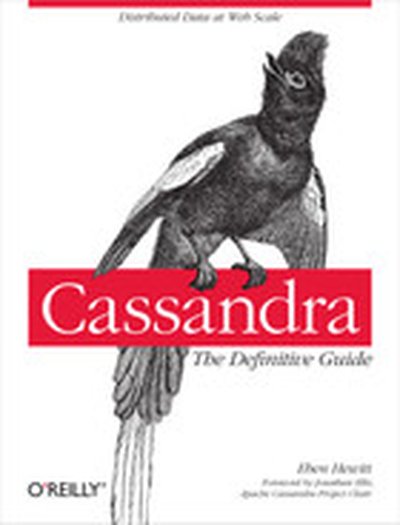
Cassandra: The Definitive Guide

What could you do with data if scalability wasn't a problem? With this hands-on guide, you'll learn how Apache Cassandra handles hundreds of terabytes of data while remaining highly available across multiple data centers -- capabilities that have attracted Facebook, Twitter, and other data-intensive companies. Cassandra: The Definitive Guide provides the technical details and practical examples you need to assess this database management system and put it to work in a production environment. Author Eben Hewitt demonstrates the advantages of Cassandra's nonrelational design, and pays special attention to data modeling. If you're a developer, DBA, application architect, or manager looking to solve a database scaling issue or future-proof your application, this guide shows you how to harness Cassandra's speed and flexibility. Understand the tenets of Cassandra's column-oriented structure Learn how to write, update, and read Cassandra data Discover how to add or remove nodes from the cluster as your application requires Examine a working application that translates from a relational model to Cassandra's data model Use examples for writing clients in Java, Python, and C# Use the JMX interface to monitor a cluster's usage, memory patterns, and more Tune memory settings, data storage, and caching for better performance

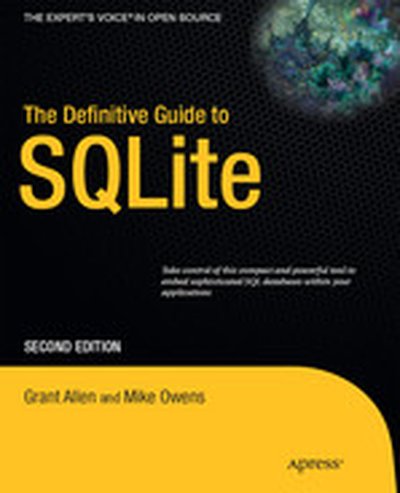
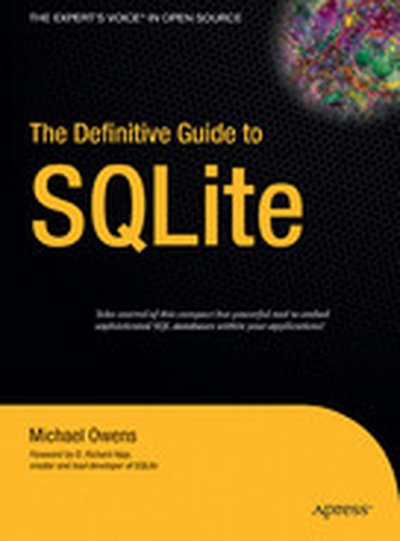
The Definitive Guide to SQLite, Second Edition

Outside of the world of enterprise computing, there is one database that enables a huge range of software and hardware to flex relational database capabilities, without the baggage and cost of traditional database management systems. That database is SQLite—an embeddable database with an amazingly small footprint, yet able to handle databases of enormous size. SQLite comes equipped with an array of powerful features available through a host of programming and development environments. It is supported by languages such as C, Java, Perl, PHP, Python, Ruby, TCL, and more. The Definitive Guide to SQLite, Second Edition is devoted to complete coverage of the latest version of this powerful database. It offers a thorough overview of SQLite's capabilities and APIs. The book also uses SQLite as the basis for helping newcomers make their first foray into database development. In only a short time you can be writing programs as diverse as a server-side browser plug-in or the next great iPhone or Android application! Learn about SQLite extensions for C, Java, Perl, PHP, Python, Ruby, and Tcl. Get solid coverage of SQLite internals. Explore developing iOS (iPhone) and Android applications with SQLite. SQLite is the solution chosen for thousands of products around the world, from mobile phones and GPS devices to set-top boxes and web browsers. You almost certainly use SQLite every day without even realizing it!

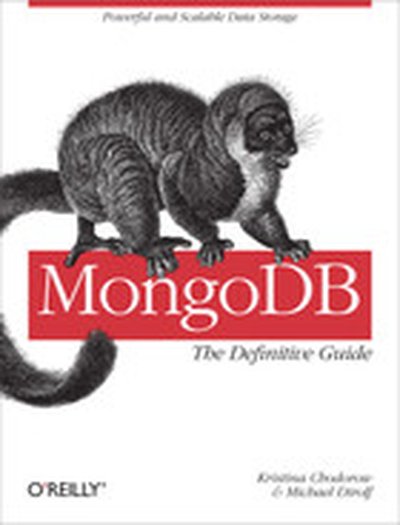
MongoDB: The Definitive Guide

How does MongoDB help you manage a huMONGOus amount of data collected through your web application? With this authoritative introduction, you'll learn the many advantages of using document-oriented databases, and discover why MongoDB is a reliable, high-performance system that allows for almost infinite horizontal scalability. Written by engineers from 10gen, the company that develops and supports this open source database, MongoDB: The Definitive Guide provides guidance for database developers, advanced configuration for system administrators, and an overview of the concepts and use cases for other people on your project. Learn how easy it is to handle data as self-contained JSON-style documents, rather than as records in a relational database. Explore ways that document-oriented storage will work for your project Learn how MongoDB’s schema-free data model handles documents, collections, and multiple databases Execute basic write operations, and create complex queries to find data with any criteria Use indexes, aggregation tools, and other advanced query techniques Learn about monitoring, security and authentication, backup and repair, and more Set up master-slave and automatic failover replication in MongoDB Use sharding to scale MongoDB horizontally, and learn how it impacts applications Get example applications written in Java, PHP, Python, and Ruby

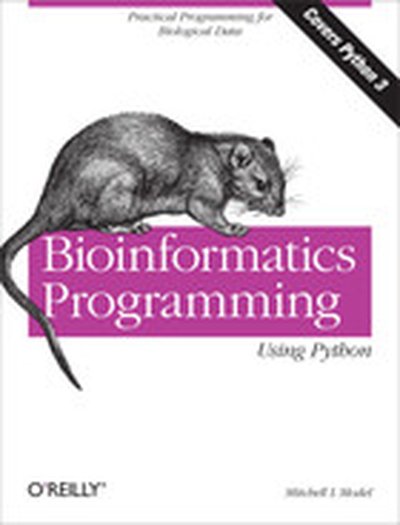
Bioinformatics Programming Using Python

Powerful, flexible, and easy to use, Python is an ideal language for building software tools and applications for life science research and development. This unique book shows you how to program with Python, using code examples taken directly from bioinformatics. In a short time, you'll be using sophisticated techniques and Python modules that are particularly effective for bioinformatics programming. Bioinformatics Programming Using Python is perfect for anyone involved with bioinformatics -- researchers, support staff, students, and software developers interested in writing bioinformatics applications. You'll find it useful whether you already use Python, write code in another language, or have no programming experience at all. It's an excellent self-instruction tool, as well as a handy reference when facing the challenges of real-life programming tasks. Become familiar with Python's fundamentals, including ways to develop simple applications Learn how to use Python modules for pattern matching, structured text processing, online data retrieval, and database access Discover generalized patterns that cover a large proportion of how Python code is used in bioinformatics Learn how to apply the principles and techniques of object-oriented programming Benefit from the "tips and traps" section in each chapter

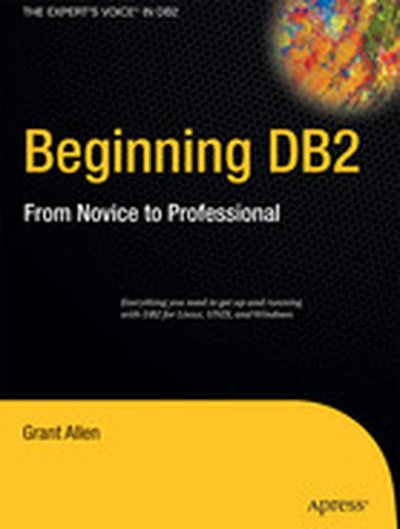
Beginning DB2: From Novice to Professional

IBM's DB2 Express Edition is one of the most capable of the free database platforms available in today's marketplace. In Beginning DB2, author Grant Allen gets you started using DB2 Express Edition for web sites, desktop applications, and more. The author covers the basics of DB2 for developers and database administrators, shows you how to manage data in both XML and relational form, and includes numerous code examples so that you are never in doubt as to how things work. In this book, you'll find: A friendly introduction to DB2 Express Edition, an industrial-strength, relational database from IBM Dozens of examples so that you are never in doubt as to how things work Coverage of important language interfaces, such as from PHP, Ruby, C#, Python, and more The book is aimed at developers who want a robust database to back their applications.

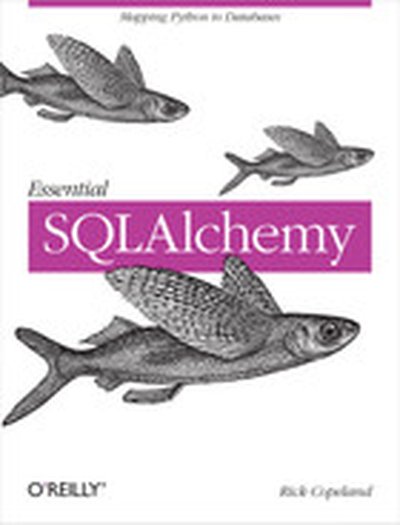
Essential SQLAlchemy

Essential SQLAlchemy introduces a high-level open-source code library that makes it easier for Python programmers to access relational databases such as Oracle, DB2, MySQL, PostgreSQL, and SQLite. SQLAlchemy has become increasingly popular since its release, but it still lacks good offline documentation. This practical book fills the gap, and because a developer wrote it, you get an objective look at SQLAlchemy's tools rather than an advocate's description of all the "cool" features. SQLAlchemy includes both a database server-independent SQL expression language and an object-relational mapper (ORM) that lets you map "plain old Python objects" (POPOs) to database tables without substantially changing your existing Python code. Essential SQLAlchemy demonstrates how to use the library to create a simple database application, walks you through simple queries, and explains how to use SQLAlchemy to connect to multiple databases simultaneously with the same Metadata. You also learn how to: Create custom types to be used in your schema, and when it's useful to use custom rather than built-in types Run queries, updates, and deletes with SQLAlchemy's SQL expression language Build an object mapper with SQLAlchemy, and understand the differences between this and active record patterns used in other ORMs Create objects, save them to a session, and flush them to the database Use SQLAlchemy to model object oriented inheritance Provide a declarative, active record pattern for use with SQLAlchemy using the Elixir extension Use the SQLSoup extension to provide an automatic metadata and object model based on database reflection In addition, you'll learn how and when to use other extensions to SQLAlchemy, including AssociationProxy, OrderingList, and more. Essential SQLAlchemy is the much-needed guide for every Python developer using this code library. Instead of a feature-by-feature documentation, this book takes an "essentials" approach that gives you exactly what you need to become productive with SQLAlchemy right away.

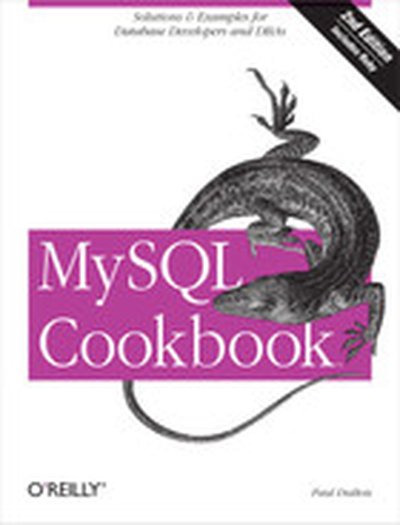
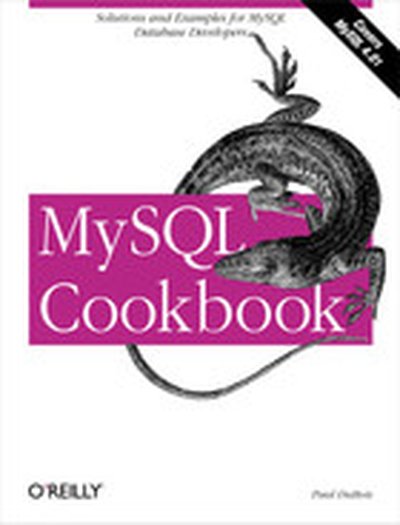
MySQL Cookbook, 2nd Edition

Along with MySQL's popularity has come a flood of questions about solving specific problems, and that's where this Cookbook is essential. Designed as a handy resource when you need quick solutions or techniques, the book offers dozens of short, focused pieces of code and hundreds of worked-out examples for programmers of all levels who don't have the time (or expertise) to solve MySQL problems from scratch. The new edition covers MySQL 5.0 and its powerful new features, as well as the older but still widespread MySQL 4.1. One major emphasis of this book is how to use SQL to formulate queries for particular kinds of questions, using the mysql client program included in MySQL distributions. The other major emphasis is how to write programs that interact with the MySQL server through an API. You'll find plenty of examples using several language APIs in multiple scenarios and situations, including the use of Ruby to retrieve and format data. There are also many new examples for using Perl, PHP, Python, and Java as well. Other recipes in the book teach you to: Access data from multiple tables at the same time Use SQL to select, sort, and summarize rows Find matches or mismatches between rows in two tables Determine intervals between dates or times, including age calculations Store images into MySQL and retrieve them for display in web pages Get LOAD DATA to read your data files properly or find which values in the file are invalid Use strict mode to prevent entry of bad data into your database Copy a table or a database to another server Generate sequence numbers to use as unique row identifiers Create database events that execute according to a schedule And a lot more MySQL Cookbook doesn't attempt to develop full-fledged, complex applications. Instead, it's intended to assist you in developing applications yourself by helping you get past problems that have you stumped.

The Definitive Guide to SQLite

Traditional relational databases and embedded databases both have shortcomings that can leave a developer perplexed. So for many people, the solution resides in an open source embeddable database with an amazingly small footprint (less than 250 kilobytes). SQLite packs a powerful array of features and can handle databases as large as 2 terabytes. It offers a flexible set of datatypes and the ability to perform transactions, and it is supported by languages like C, PHP, Perl, and Python. And because SQLite's databases are completely file based, privileges are granted at the operating system level, allowing for easy and fast user management. The Definitive Guide to SQLite is the first book to devote complete coverage to this powerful database. It offers you a thorough overview of SQLite capabilities and APIs, while remaining cognizant of newcomers who may be making their first foray into a database environment with SQLite. This book serves as both a first-time tutorial and future reference guide.

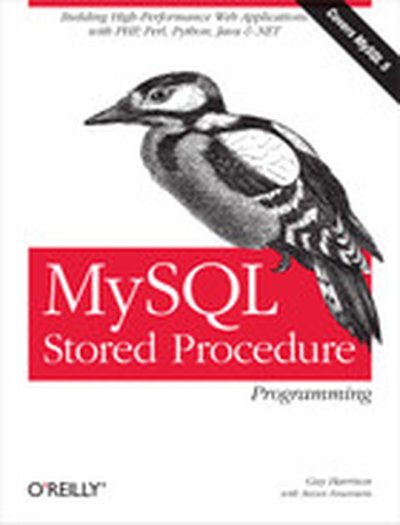
MySQL Stored Procedure Programming

The implementation of stored procedures in MySQL 5.0 a hugemilestone -- one that is expected to lead to widespread enterprise adoption ofthe already extremely popular MySQL database. If you are serious aboutbuilding the web-based database applications of the future, you need toget up to speed quickly on how stored procedures work -- and how tobuild them the right way. This book, destined to be the bible of storedprocedure development, is a resource that no real MySQL programmer canafford to do without. In the decade since MySQL burst on the scene, it has become thedominant open source database, with capabilities and performancerivaling those of commercial RDBMS offerings like Oracle and SQLServer. Along with Linux and PHP, MySQL is at the heart of millions ofapplications. And now, with support for stored procedures, functions,and triggers in MySQL 5.0, MySQL offers the programming power neededfor true enterprise use. MySQL's new procedural language has a straightforward syntax, making iteasy to write simple programs. But it's not so easy to write secure,easily maintained, high-performance, and bug-free programs. Few in theMySQL world have substantial experience yet with stored procedures, butGuy Harrison and Steven Feuerstein have decades of combined expertise. In MySQL Stored Procedure Programming, they putthat hard-won experience to good use. Packed with code examples and coveringeverything from language basics to application building to advancedtuning and best practices, this highly readable book is the one-stopguide to MySQL development. It consists of four major sections: MySQL stored programming fundamentals -- tutorial, basicstatements, SQL in stored programs, and error handling Building MySQL stored programs -- transaction handling,built-in functions, stored functions, and triggers MySQL stored programs in applications -- using storedprograms with PHP, Java, Perl, Python, and .NET (C# and VB.NET) Optimizing MySQL stored programs -- security, basic andadvanced SQL tuning, optimizing stored program code, and programmingbest practices A companion web site contains many thousands of lines of code, that youcan put to use immediately. Guy Harrison is Chief Architect of Database Solutions at Quest Softwareand a frequent speaker and writer on MySQL topics. Steven Feuerstein isthe author of Oracle PL/SQL Programming, the classic reference for Oracle stored programming for more than ten years. Both have decades of experience as database developers, and between them they have authored a dozen books.

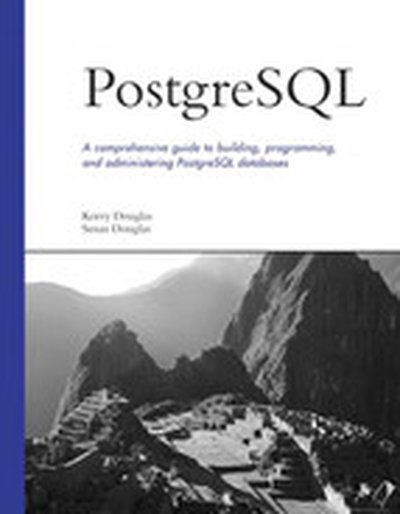
PostgreSQL

PostgreSQL is the world¿s most advanced open-source database. PostgreSQL is the most comprehensive, in-depth, and easy-to-read guide to this award-winning database. This book starts with a thorough overview of SQL, a description of all PostgreSQL data types, and a complete explanation of PostgreSQL commands. If you are a developer or an administrator, you¿ll love the chapter that explores PostgreSQL performance. The authors explain how PostgreSQL stores data on disk (and in memory) and how to measure and influence the effectiveness of PostgreSQL¿s caching mechanisms. You¿ll also learn how PostgreSQL generates and evaluates execution plans. The authors explain all of the query operators that can appear in the results of an EXPLAIN command, describing the performance implications of each operator as well as the conditions which will cause PostgreSQL to use that operator. PostgreSQL is also a complete guide for the developer. Whether you¿re developing with C, C++, ODBC, Embedded SQL, Java, Tcl/Tk, Perl, Python or PHP, you¿ll find a comprehensive description of the PostgreSQL API for your language of choice. Easy to follow exercises will walk you through the development of working applications that fully demonstrate the features offered by each API. You will also find a chapter that describes the PL/pgSQL server-side procedural language, learning how to build triggers, functions, and stored-procedures. The authors have even included a chapter that walks you through the process of extending the PostgreSQL server with custom-written C functions and new data types. The accompanying web site, www.conjectrix.com, contains downloadable versions of all of the sample code and a wealth of PostgreSQL-related resources. The last section of PostgreSQL was written for the PostgreSQL administrator. You will learn how to install PostgreSQL on Windows, Linux, and Unix systems, from source code or from pre-compiled installers. The authors have described all of the PostgreSQL configuration options (compile-time, startup, and on-the-fly). The chapter on PostgreSQL security describes all of the authentication protocols that you can choose from and describes how to secure your database, both internally and externally. If you have to support a multi-national environment, you will find the chapter on internationalization and localization to be invaluable. You won¿t find a more complete guide to PostgreSQL anywhere. The authors have made PostgreSQL approachable by leading the reader from basic concepts to advanced features. Whether you¿re a database beginner or an advanced user, you will find this book a valuable addition to your library.

MySQL Cookbook

While MySQL has turned up among high profile users such as Yahoo!, NASA and the U.S. Census Bureau, the rising popularity of this open source database is especially keen among users with little database experience. These days, even a small organization or web site has uses for a database, and MySQL is an obvious choice. Affordable and easy to use, MySQL packs the power, speed and efficiency that enable it to rival expensive, proprietary database solutions. Yet, even if you know the basics, anyone without practical MySQL experience--novices and skilled DBAs alike--might stumble over common database-related tasks. Fortunately, there's a sensible shortcut. MySQL Cookbook provides a unique problem-and-solution format that offers practical examples for everyday programming dilemmas. For every problem addressed in the book, there's a worked-out solution or "recipe"--short, focused pieces of code that you can insert directly into your applications. But MySQL Cookbook is more than a collection of cut-and-paste code. You also get explanations of how and why the code works, so you can learn to adapt the techniques to similar situations. The book covers a lot of ground. Solutions for typical MySQL dilemmas range from simple ways to find all records that contain a given string, to more difficult problems, such as finding matching/non-matching records in two tables. Whether you use MySQL on Unix, Linux, Windows or the Mac OS X platform, the book will show you how to: Import data from external sources Export data for use by external programs Access MySQL from your web server Use scripts with MySQL to read queries from a file Access MySQL from within client programs that use Perl, PHP, Java, Python and other languages Construct queries that solve commonly-occurring questions Interact with the server This learn-as-you-go resource will help users of all levels exploit MySQL more fully. MySQL Cookbook supplies you with an armory of ready-made techniques for specific problems so that, even if you're an experienced MySQL user, you don't have to write everything from scratch.

Managing & Using MySQL, 2nd Edition

MySQL is a popular and robust open source database product that supports key subsets of SQL on both Linux and Unix systems. MySQL is free for nonprofit use and costs a small amount for commercial use. Unlike commercial databases, MySQL is affordable and easy to use. This book includes introductions to SQL and to relational database theory. If you plan to use MySQL to build web sites or other Linux or Unix applications, this book teaches you to do that, and it will remain useful as a reference once you understand the basics. Ample tutorial material and examples are included throughout. This book has all you need to take full advantage of this powerful database management system. It takes you through the whole process from installation and configuration to programming interfaces and database administration. This second edition has a greatly enhanced administration chapter that includes information on administrative tools, server configuration, server startup and shutdown, log file management, database backup and restore, and database administration and repair. In addition, a new chapter on security describes data, server, and client-server security, while a chapter on extending MySQL provides an overview of MySQL internals and describes the use of MySQL user-defined functions. If you know C/C++, Java, Perl, PHP, or Python, you can write programs to interact with your MySQL database. In addition, you can embed queries and updates directly in an HTML file so that a web page becomes its own interface to the database. Managing and Using MySQL includes chapters on the programming language interfaces, and it also includes a complete reference section with specific function calls for each language. Also included in the reference section are references to the SQL language, and details of the MySQL system variables, programs, and utilities. New to the second edition is a reference to the internal MySQL tables, which will be of particular interest to those who want to work extensively with MySQL security.

PostgreSQL Developer's Handbook

PostgreSQL is an object-relational database server that is widely considered to be the world¿s most advanced open-source database system. It is ANSI SQL-compatible, and it offers powerful features to enable more complex software design than would be possible with relational databases that are not object-oriented. PostgreSQL is extremely modular, it supports a large number of datatypes, and programming interfaces for PostgreSQL are available for all important programming languages, including C, Perl, Python, Tcl, Java, and PHP. PostgreSQL Developer¿s Handbook provides a complete overview of the PostgreSQL database server and extensive coverage of its core features, including object orientation, PL/pgSQL, and the most important programming interfaces. The book introduces the reader to the language and syntax of PostgreSQL and then moves quickly into advanced programming topics.

Programming Web Services with XML-RPC

Have you ever needed to share processing between two or more computers running programs written in different languages on different operating systems? Or have you ever wanted to publish information on the Web so that programs other than browsers could work with it? XML-RPC, a system for remote procedure calls built on XML and the ubiquitous HTTP protocol, is the solution you've been looking for. Programming Web Services with XML-RPC introduces the simple but powerful capabilities of XML-RPC, which lets you connect programs running on different computers with a minimum of fuss, by wrapping procedure calls in XML and establishing simple pathways for calling functions. With XML-RPC, Java programs can talk to Perl scripts, which can talk to Python programs, ASP applications, and so on. You can provide access to procedure calls without having to worry about the system on the other end, so it's easy to create services that are available on the Web.XML-RPC isn't the only solution for web services; the Simple Object Access Protocol (SOAP) is another much-hyped protocol for implementing web services. While XML-RPC provides fewer capabilities than SOAP, it also has far fewer interoperability problems and its capabilities and limitations are much better understood. XML-RPC is also stable, with over 30 implementations on a wide variety of platforms, so you can start doing real work with it immediately. Programming Web Services with XML-RPC covers the details of five XML-RPC implementations, so you can get started developing distributed applications in Java, Perl, Python, ASP, or PHP. The chapters on these implementations contain code examples that you can use as the basis for your own work. This book also provides in-depth coverage of the XML-RPC specification, which is helpful for low-level debugging of XML-RPC clients and servers. And if you want to build your own XML-RPC implementation for another environment, the detailed explanations in this book will serve as a foundation for that work.

Oracle and Open Source

Oracle & Open Source is the first book to tie together the commercial world of Oracle and the free-wheeling world of open source software. As this book reveals, these two worlds are not as far apart as they may seem. Today, there are many excellent and freely available software tools that Oracle developers and database administrators can use, at no cost, to improve their own coding productivity and their system's performance. Moreover, many of the finest Oracle developers are now making their source code freely available so their peers can build upon this code base. Oracle Corporation is even porting its RDBMS to Linux and starting to incorporate a growing number of open source tools in the company's own software. Oracle & Open Source describes close to 100 open source tools you can use for Oracle development and database administration, from large and widely known open source systems (like Linux, Perl, Apache, TCL/Tk and Python) to more Oracle-specific tools (like Orasoft, Orac, OracleTool, and OraSnap). You'll learn how to obtain the software and how to adapt it to best advantage. The book abounds with code examples, download and installation instructions, and helpful usage hints. Not only does it tell you how to find and use existing open source code; Oracle & Open Source gives you the details and the motivation to build your own open source contributions and release them to the Oracle community. You'll learn all about tools like the Oracle Call Interface (OCI) and Perl-DBI (Database Interface), which provide the glue allowing new open source tools to link into commercial Oracle software. With Oracle & Open Source as a guide, you'll discover an enormous number of highly effective open source tools, while getting involved with the thriving community of open source development.

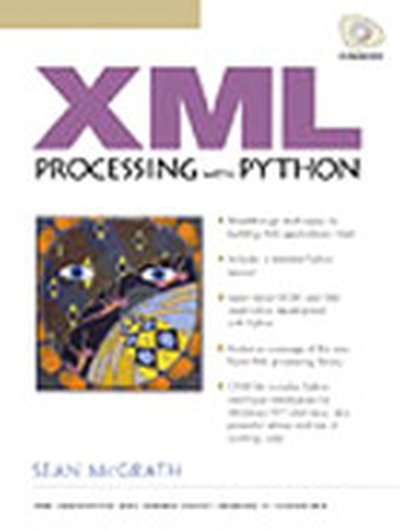
XML Processing with Python

Breakthrough techniques for building XML applications — fast! Includes a detailed Python tutorial Learn about DOM and SAX application development with Python Exclusive coverage of the new Pyxie XML processing library CD-ROM includes Python and Pyxie distributions for Windows NT and Linux—plus powerful utilities and lots of working code "XML processing is the newest required skill for webmasters and application developers. The Python language and Sean McGrath's book make it fun to learn and easy to do." — Charles F. Goldfarb When it comes to XML processing, Python is in a league of its own. If you're doing XML development without Python, you're wasting time! Python offers outstanding productivity — especially in the areas that matter most to XML developers, such as XML parsing, DOM/SAX implementations, string processing, and Internet APIs. And now there's Pyxie — the new open source library that makes Python XML processing even easier and more powerful. In XML Processing with Python, top XML developer Sean McGrath delivers the hands-on explanations and examples you need to get results with Python and Pyxie fast — even if you've never used them before! Install Python and the Pyxie XML package Learn the fundamentals of Python: control structures, classes, nested lists, dictionaries, and regular rexpresions Process XML with regular expression-driven, event-driven, and tree-driven techniques Understand Python's support for DOM and SAX APIs Explore the power of Python/XML through worked examples of GUI development, database integration, and an XML query-by-example implementation. Elegant, easy, powerful and fun, Python helps you build world-class XML applications in less time than you ever imagined. If you know XML, one book has all the techniques, code, and tools you'll need to process it: XML Processing with Python. CD-ROM INCLUDED The accompanying CD-ROM contains everything you need to develop XML applications with Python — including complete Python distributions for Windows and Linux the Pyxie open-source libraries powerful utility programs an extensive library of sample source code tested on both Windows NT and Linux

MySQL and mSQL

MySQL and mSQL are popular and robust database products that support key subsets of SQL on both Linux and Unix systems. Both products are free for nonprofit use and cost a small amount for commercial use. Even a small organization or web site has uses for a database. Perhaps you keep track of all your customers and find that your information is outgrowing the crude, flat-file format you started with. Or you want to ask your web site's visitors for their interests and preferences and put up a fresh web page that tallies the results. Unlike commercial databases, MySQL and mSQL are affordable and easy to use. If you know basic C, Java, Perl, or Python, you can quickly write a program to interact with your database. In addition, you can embed queries and updates right in an HTML file so that a web page becomes its own interface to the database. This book is all you need to make use of MySQL or mSQL. It takes you through the whole process from installation and configuration to programming interfaces and basic administration. Includes reference chapters and ample tutorial material. Topics include: Introductions to simple database design and SQL Building, installation, and configuration Basic programming APIs for C, C++, Java (JDBC), Perl, and Python CGI programming with databases in C and Perl Web interfaces: PHP, W3-mSQL, Lite, and mSQLPerl

A/B testing is a powerful technique used in data-driven decision-making to evaluate the impact of changes or interventions. In this comprehensive workshop, you will gain a deep understanding of A/B testing principles, learn how to design effective experiments, and analyze the results using statistical methods.

Workshop Curriculum:

Module 1: Introduction to A/B Testing Module 2: Formulating Hypotheses and Experiment Design Module 3: Statistical Analysis Techniques Module 4: Interpreting and Presenting Results Module 5: A/B Testing in Practice with Python

Prerequisites:

  • Basic understanding of statistics and hypothesis testing
  • Familiarity with basic concepts of data analysis
  • Familiarity with Python

Agenda:

7:45 pm - 7:50 pm Arrival, socializing, and Opening 7:50 pm - 9:45 pm Dr. Yasin Ceran, "AB Testing Workshop Mastering Experimentation and Statistical Analysis" 9:45 pm - 9:50 pm Q&A

About Dr. Yasin Ceran:

Yasin Ceran is passionate about all things data and holds a vast experience in data analysis, mathematical modeling and Apache Spark, and in SQL, Python and R. He is currently an associate professor at KAIST, South Korea, as well as teaching at San Jose State University at the heart of Silicon Valley. Yasin has worked rigorously on an array of data-related projects encompassing data mining, statistics, modeling, and is dedicated to sharing his experience and expertise with learners.