talk-data.com talk-data.com

Topic

RAG

Retrieval Augmented Generation (RAG)

ai machine_learning llm

369

tagged

Activity Trend

83 peak/qtr
2020-Q1 2026-Q1

Activities

369 activities · Newest first

Join us for a hands-on workshop showcasing the latest Azure SQL innovations to supercharge your applications. Learn how to harness generative AI alongside Azure SQL Database to elevate your data strategies with AI concepts like language models, prompt engineering, Retrieval Augmented Generation (RAG) and streamline with Microsoft Copilot. Whether you're a developer, architect, or IT professional, this workshop is your ticket to mastering SQL and AI to stay ahead in the data-driven landscape.

Please RSVP and arrive at least 5 minutes before the start time, at which point remaining spaces are open to standby attendees.

Looking to add on-device AI to your apps? Not sure how to get started? Join our lab to learn how to integrate local AI capabilities into your Windows apps using Windows AI APIs. Discover how to implement Semantic Search and Retrieval-Augmented Generation (RAG) to power intelligent information retrieval, and use Phi Silica for on-device text processing. This lab will walk you through key APIs, and best practices to build on-device AI solutions for Copilot+ PCs. Developers of all levels welcome.

Please RSVP and arrive at least 5 minutes before the start time, at which point remaining spaces are open to standby attendees.

In this hands-on lab, you’ll build a Knowledge Base using agentic RAG, the next evolution of retrieval in Azure AI Search. Connect your agentic retrieval engine to your data through smart source selection across multiple indexes and storage systems. Learn how to enhance planning using natural language guidance and generate grounded responses with citations or extractive answers tailored to your use case. By the end, you’ll have a fully functional Knowledge Base that responds over enterprise data.

Please RSVP and arrive at least 5 minutes before the start time, at which point remaining spaces are open to standby attendees.

Learn how to build an advanced AI agent using Azure Database for PostgreSQL and the new Microsoft Agent Framework. This hands-on lab walks you through integrating Retrieval-Augmented Generation (RAG), semantic re-ranking, Semantic Operators, and GraphRAG (using Apache AGE) to enable intelligent legal question-answering using real case data. Gain practical AI implementation skills with your own PostgreSQL-backed applications.

Please RSVP and arrive at least 5 minutes before the start time, at which point remaining spaces are open to standby attendees.

In this hands-on workshop, you’ll learn to build domain-specific AI agents with Foundry Agent Service. Starting from a simple agent, you’ll add system prompts, custom instructions, and knowledge with RAG. You’ll extend it with tool calling (like a pizza calculator) and connect external services via MCP for live menu and order handling. By the end, you’ll have a working Contoso PizzaBot that can answer questions, recommend pizzas, and manage orders.

Please RSVP and arrive at least 5 minutes before the start time, at which point remaining spaces are open to standby attendees.

This hands-on workshop teaches how to build and deploy intelligent AI agents for enterprise research using AI-Q NVIDIA Blueprint and NVIDIA Nemotron on Azure Kubernetes Service (AKS). Learn to leverage AI reasoning, multimodal data extraction, and retrieval-augmented generation to uncover actionable insights from enterprise data. Ideal for developers aiming to accelerate AI-driven knowledge discovery and decision-making.

Please RSVP and arrive at least 5 minutes before the start time, at which point remaining spaces are open to standby attendees.

Join Microsoft’s product team for a hands-on lab where you'll design and deploy an AI-powered application using SQL Database in Microsoft Fabric. This session dives into HTAP capabilities, enabling seamless transactional and analytical processing. You'll provision a SaaS-native SQL Database, use Copilot to generate schema and queries, and implement advanced patterns like RAG with vector search. Walk away with practical skills and a working solution you can apply immediately.

Please RSVP and arrive at least 5 minutes before the start time, at which point remaining spaces are open to standby attendees.

Looking to add on-device AI to your apps? Not sure how to get started? Join our lab to learn how to integrate local AI capabilities into your Windows apps using Windows AI APIs. Discover how to implement Semantic Search and Retrieval-Augmented Generation (RAG) to power intelligent information retrieval, and use Phi Silica for on-device text processing. This lab will walk you through key APIs, and best practices to build on-device AI solutions for Copilot+ PCs. Developers of all levels welcome.

Please RSVP and arrive at least 5 minutes before the start time, at which point remaining spaces are open to standby attendees.

Learn to deploy Enterprise-grade Retrieval-Augmented Generation (RAG) agents using NVIDIA Nemotron and NIM microservices on Azure Kubernetes Service (AKS). This hands-on lab walks you through building scalable, GPU-accelerated AI pipelines powered by Azure and NVIDIA AI Enterprise.

Please RSVP and arrive at least 5 minutes before the start time, at which point remaining spaces are open to standby attendees.

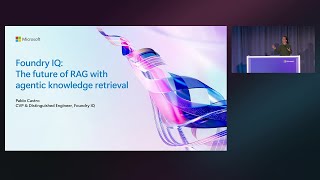
Foundry IQ: the future of RAG with knowledge retrieval and AI Search

Agents need context. How should we connect data to our agents for optimal context? In this session we will introduce Foundry IQ, the knowledge layer for agents, and the latest developments from Azure AI Search and Microsoft Foundry. Learn about multi-source RAG orchestration, retrieval steering, dynamic security controls and agentic RAG.

Join us for a hands-on workshop showcasing the latest Azure SQL innovations to supercharge your applications. Learn how to harness generative AI alongside Azure SQL Database to elevate your data strategies with AI concepts like language models, prompt engineering, Retrieval Augmented Generation (RAG) and streamline with Microsoft Copilot. Whether you're a developer, architect, or IT professional, this workshop is your ticket to mastering SQL and AI to stay ahead in the data-driven landscape.

Please RSVP and arrive at least 5 minutes before the start time, at which point remaining spaces are open to standby attendees.

Learn how to build an advanced AI agent using Azure Database for PostgreSQL and the new Microsoft Agent Framework. This hands-on lab walks you through integrating Retrieval-Augmented Generation (RAG), semantic re-ranking, Semantic Operators, and GraphRAG (using Apache AGE) to enable intelligent legal question-answering using real case data. Gain practical AI implementation skills with your own PostgreSQL-backed applications.

Please RSVP and arrive at least 5 minutes before the start time, at which point remaining spaces are open to standby attendees.

Join Microsoft’s product team for a hands-on lab where you'll design and deploy an AI-powered application using SQL Database in Microsoft Fabric. This session dives into HTAP capabilities, enabling seamless transactional and analytical processing. You'll provision a SaaS-native SQL Database, use Copilot to generate schema and queries, and implement advanced patterns like RAG with vector search. Walk away with practical skills and a working solution you can apply immediately.

Please RSVP and arrive at least 5 minutes before the start time, at which point remaining spaces are open to standby attendees.

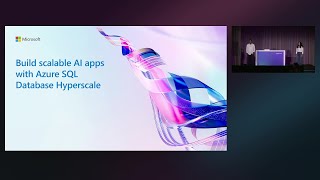
Build scalable AI apps with Azure SQL Database Hyperscale
breakout
by Ravi Mantena , Anna Hoffman (Azure Data) , Ross Jenkins (Hexagon ALI / Octave) , Aditya Badramraju (Microsoft) , Britt Ewen (BlackRock) , Dmitry Borodin (Hexagon Asset Lifecycle Intelligence)

Build AI apps that run securely and scale with your needs with Azure SQL Database Hyperscale. We’ll cover native vector indexes for semantic search, read scale out for low latency RAG, and secure model invocation with Microsoft Foundry, using the model of your choice, from T SQL. Hear directly from global technology company Hexagon and investment firm BlackRock who will join us to share their experience along with best practices, demos and more!

In this hands-on lab, you’ll build a Knowledge Base using agentic RAG, the next evolution of retrieval in Azure AI Search. Connect your agentic retrieval engine to your data through smart source selection across multiple indexes and storage systems. Learn how to enhance planning using natural language guidance and generate grounded responses with citations or extractive answers tailored to your use case. By the end, you’ll have a fully functional Knowledge Base that responds over enterprise data.

Please RSVP and arrive at least 5 minutes before the start time, at which point remaining spaces are open to standby attendees.

In this hands-on workshop, you’ll learn to build domain-specific AI agents with Foundry Agent Service. Starting from a simple agent, you’ll add system prompts, custom instructions, and knowledge with RAG. You’ll extend it with tool calling (like a pizza calculator) and connect external services via MCP for live menu and order handling. By the end, you’ll have a working Contoso PizzaBot that can answer questions, recommend pizzas, and manage orders.

Please RSVP and arrive at least 5 minutes before the start time, at which point remaining spaces are open to standby attendees.

Join us for a hands-on workshop showcasing the latest Azure SQL innovations to supercharge your applications. Learn how to harness generative AI alongside Azure SQL Database to elevate your data strategies with AI concepts like language models, prompt engineering, Retrieval Augmented Generation (RAG) and streamline with Microsoft Copilot. Whether you're a developer, architect, or IT professional, this workshop is your ticket to mastering SQL and AI to stay ahead in the data-driven landscape.

Please RSVP and arrive at least 5 minutes before the start time, at which point remaining spaces are open to standby attendees.

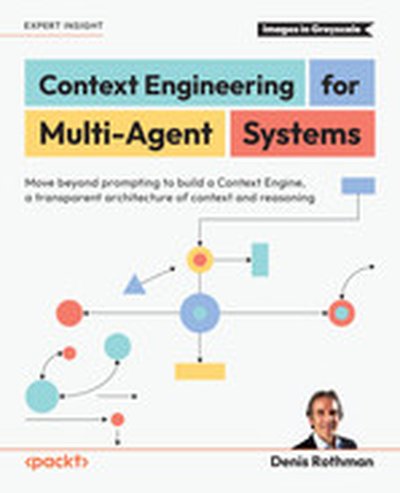
Context Engineering for Multi-Agent Systems

Build AI that thinks in context using semantic blueprints, multi-agent orchestration, memory, RAG pipelines, and safeguards to create your own Context Engine Free with your book: DRM-free PDF version + access to Packt's next-gen Reader Key Features Design semantic blueprints to give AI structured, goal-driven contextual awareness Orchestrate multi-agent workflows with MCP for adaptable, context-rich reasoning Engineer a glass-box Context Engine with high-fidelity RAG, trust, and safeguards Book Description Generative AI is powerful, yet often unpredictable. This guide shows you how to turn that unpredictability into reliability by thinking beyond prompts and approaching AI like an architect. At its core is the Context Engine, a glass-box, multi-agent system you’ll learn to design and apply across real-world scenarios. Written by an AI guru and author of various cutting-edge AI books, this book takes you on a hands-on journey from the foundations of context design to building a fully operational Context Engine. Instead of relying on brittle prompts that give only simple instructions, you’ll begin with semantic blueprints that map goals and roles with precision, then orchestrate specialized agents using the Model Context Protocol. As the engine evolves, you’ll integrate memory and high-fidelity retrieval with citations, implement safeguards against data poisoning and prompt injection, and enforce moderation to keep outputs aligned with policy. You’ll also harden the system into a resilient architecture, then see it pivot across domains, from legal compliance to strategic marketing, proving its domain independence. By the end of this book, you’ll be equipped with the skills to engineer an adaptable, verifiable architecture you can repurpose across domains and deploy with confidence. Email sign-up and proof of purchase required What you will learn Develop memory models to retain short-term and cross-session context Craft semantic blueprints and drive multi-agent orchestration with MCP Implement high-fidelity RAG pipelines with verifiable citations Apply safeguards against prompt injection and data poisoning Enforce moderation and policy-driven control in AI workflows Repurpose the Context Engine across legal, marketing, and beyond Deploy a scalable, observable Context Engine in production Who this book is for This book is for AI engineers, software developers, system architects, and data scientists who want to move beyond ad hoc prompting and learn how to design structured, transparent, and context-aware AI systems. It will also appeal to ML engineers and solutions architects with basic familiarity with LLMs who are eager to understand how to orchestrate agents, integrate memory and retrieval, and enforce safeguards.

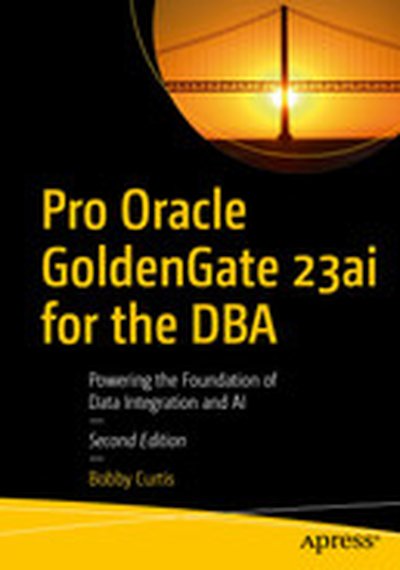
Pro Oracle GoldenGate 23ai for the DBA: Powering the Foundation of Data Integration and AI

Transform your data replication strategy into a competitive advantage with Oracle GoldenGate 23ai. This comprehensive guide delivers the practical knowledge DBAs and architects need to implement, optimize , and scale Oracle GoldenGate 23ai in production environments. Written by Oracle ACE Director Bobby Curtis, it blends deep technical expertise with real-world business insights from hundreds of implementations across manufacturing, financial services, and technology sectors. Beyond traditional replication, this book explores the groundbreaking capabilities that make GoldenGate 23ai essential for modern AI initiatives. Learn how to implement real-time vector replication for RAG systems, integrate with cloud platforms like GCP and Snowflake, and automate deployments using REST APIs and Python. Each chapter offers proven strategies to deliver measurable ROI while reducing operational risk. Whether you're upgrading from Classic GoldenGate , deploying your first cloud data pipeline, or building AI-ready data architectures, this book provides the strategic guidance and technical depth to succeed. With Bobby's signature direct approach, you'll avoid common pitfalls and implement best practices that scale with your business. What You Will Learn Master the microservices architecture and new capabilities of Oracle GoldenGate 23ai Implement secure, high-performance data replication across Oracle, PostgreSQL, and cloud databases Configure vector replication for AI and machine learning workloads, including RAG systems Design and build multi-master replication models with automatic conflict resolution Automate deployments and management using RESTful APIs and Python Optimize performance for sub-second replication lag in production environments Secure your replication environment with enterprise-grade features and compliance Upgrade from Classic to Microservices architecture with zero downtime Integrate with cloud platforms including OCI, GCP, AWS, and Azure Implement real-time data pipelines to BigQuery , Snowflake, and other cloud targets Navigate Oracle licensing models and optimize costs Who This Book Is For Database administrators, architects, and IT leaders working with Oracle GoldenGate —whether deploying for the first time, migrating from Classic architecture, or enabling AI-driven replication—will find actionable guidance on implementation, performance tuning, automation, and cloud integration. Covers unidirectional and multi-master replication and is packed with real-world use cases.

Summary  In this episode Preeti Somal, EVP of Engineering at Temporal, talks about the durable execution model and how it reshapes the way teams build reliable, stateful systems for data and AI. She explores Temporal’s code‑first programming model—workflows, activities, task queues, and replay—and how it eliminates hand‑rolled retry, checkpoint, and error‑handling scaffolding while letting data remain where it lives. Preeti shares real-world patterns for replacing DAG-first orchestration, integrating application and data teams through signals and Nexus for cross-boundary calls, and using Temporal to coordinate long-running, human-in-the-loop, and agentic AI workflows with full observability and auditability. Shee also discusses heuristics for choosing Temporal alongside (or instead of) traditional orchestrators, managing scale without moving large datasets, and lessons from running durable execution as a cloud service. 

Announcements  Hello and welcome to the Data Engineering Podcast, the show about modern data managementData teams everywhere face the same problem: they're forcing ML models, streaming data, and real-time processing through orchestration tools built for simple ETL. The result? Inflexible infrastructure that can't adapt to different workloads. That's why Cash App and Cisco rely on Prefect. Cash App's fraud detection team got what they needed - flexible compute options, isolated environments for custom packages, and seamless data exchange between workflows. Each model runs on the right infrastructure, whether that's high-memory machines or distributed compute. Orchestration is the foundation that determines whether your data team ships or struggles. ETL, ML model training, AI Engineering, Streaming - Prefect runs it all from ingestion to activation in one platform. Whoop and 1Password also trust Prefect for their data operations. If these industry leaders use Prefect for critical workflows, see what it can do for you at dataengineeringpodcast.com/prefect.Data migrations are brutal. They drag on for months—sometimes years—burning through resources and crushing team morale. Datafold's AI-powered Migration Agent changes all that. Their unique combination of AI code translation and automated data validation has helped companies complete migrations up to 10 times faster than manual approaches. And they're so confident in their solution, they'll actually guarantee your timeline in writing. Ready to turn your year-long migration into weeks? Visit dataengineeringpodcast.com/datafold today for the details. Composable data infrastructure is great, until you spend all of your time gluing it together. Bruin is an open source framework, driven from the command line, that makes integration a breeze. Write Python and SQL to handle the business logic, and let Bruin handle the heavy lifting of data movement, lineage tracking, data quality monitoring, and governance enforcement. Bruin allows you to build end-to-end data workflows using AI, has connectors for hundreds of platforms, and helps data teams deliver faster. Teams that use Bruin need less engineering effort to process data and benefit from a fully integrated data platform. Go to dataengineeringpodcast.com/bruin today to get started. And for dbt Cloud customers, they'll give you $1,000 credit to migrate to Bruin Cloud.Your host is Tobias Macey and today I'm interviewing Preeti Somal about how to incorporate durable execution and state management into AI application architectures Interview   IntroductionHow did you get involved in the area of data management?Can you describe what durable execution is and how it impacts system architecture?With the strong focus on state maintenance and high reliability, what are some of the most impactful ways that data teams are incorporating tools like Temporal into their work?One of the core primitives in Temporal is a "workflow". How does that compare to similar primitives in common data orchestration systems such as Airflow, Dagster, Prefect, etc.?  What are the heuristics that you recommend when deciding which tool to use for a given task, particularly in data/pipeline oriented projects? Even if a team is using a more data-focused orchestration engine, what are some of the ways that Temporal can be applied to handle the processing logic of the actual data?AI applications are also very dependent on reliable data to be effective in production contexts. What are some of the design patterns where durable execution can be integrated into RAG/agent applications?What are some of the conceptual hurdles that teams experience when they are starting to adopt Temporal or other durable execution frameworks?What are the most interesting, innovative, or unexpected ways that you have seen Temporal/durable execution used for data/AI services?What are the most interesting, unexpected, or challenging lessons that you have learned while working on Temporal?When is Temporal/durable execution the wrong choice?What do you have planned for the future of Temporal for data and AI systems? Contact Info   LinkedIn Parting Question   From your perspective, what is the biggest gap in the tooling or technology for data management today? Closing Announcements   Thank you for listening! Don't forget to check out our other shows. Podcast.init covers the Python language, its community, and the innovative ways it is being used. The AI Engineering Podcast is your guide to the fast-moving world of building AI systems.Visit the site to subscribe to the show, sign up for the mailing list, and read the show notes.If you've learned something or tried out a project from the show then tell us about it! Email [email protected] with your story. Links   TemporalDurable ExecutionFlinkMachine Learning EpochSpark StreamingAirflowDirected Acyclic Graph (DAG)Temporal NexusTensorZeroAI Engineering Podcast Episode The intro and outro music is from The Hug by The Freak Fandango Orchestra / CC BY-SA