talk-data.com talk-data.com

Topic

RDBMS

Relational Database Management System (RDBMS)

databases sql data_storage

134

tagged

Activity Trend

5 peak/qtr
2020-Q1 2026-Q1

Activities

Showing filtered results

Filtering by: O'Reilly Data Engineering Books ×
Oracle Database Application Security: With Oracle Internet Directory, Oracle Access Manager, and Oracle Identity Manager

Focus on the security aspects of designing, building, and maintaining a secure Oracle Database application. Starting with data encryption, you will learn to work with transparent data, back-up, and networks. You will then go through the key principles of audits, where you will get to know more about identity preservation, policies and fine-grained audits. Moving on to virtual private databases, you’ll set up and configure a VPD to work in concert with other security features in Oracle, followed by tips on managing configuration drift, profiles, and default users. Shifting focus to coding, you will take a look at secure coding standards, multi-schema database models, code-based access control, and SQL injection. Finally, you’ll cover single sign-on (SSO), and will be introduced to Oracle Internet Directory (OID), Oracle Access Manager (OAM), and Oracle Identity Management (OIM) by installing and configuring them to meet your needs. Oracle databases hold the majority of the world’s relational data, and are attractive targets for attackers seeking high-value targets for data theft. Compromise of a single Oracle Database can result in tens of millions of breached records costing millions in breach-mitigation activity. This book gets you ready to avoid that nightmare scenario. What You Will Learn Work with Oracle Internet Directory using the command-line and the console Integrate Oracle Access Manager with different applications Work with the Oracle Identity Manager console and connectors, while creating your own custom one Troubleshooting issues with OID, OAM, and OID Dive deep into file system and network security concepts Who This Book Is For Oracle DBAs and developers. Readers will need a basic understanding of Oracle RDBMS and Oracle Application Server to take complete advantage of this book.
Data Warehousing with Greenplum, 2nd Edition

Data professionals are confronting the most disruptive change since relational databases appeared in the 1980s. SQL is still a major tool for data analytics, but conventional relational database management systems can’t handle the increasing size and complexity of today’s datasets. This updated edition teaches you best practices for Greenplum Database, the open source massively parallel processing (MPP) database that accommodates large sets of nonrelational and relational data. Marshall Presser, field CTO at Pivotal, introduces Greenplum’s approach to data analytics and data-driven decisions, beginning with its shared-nothing architecture. IT managers, developers, data analysts, system architects, and data scientists will all gain from exploring data organization and storage, data loading, running queries, and learning to perform analytics in the database. Discover how MPP and Greenplum will help you go beyond the traditional data warehouse. This ebook covers: Greenplum features, use case examples, and techniques for optimizing use Four Greenplum deployment options to help you balance security, cost, and time to usability Why each networked node in Greenplum’s architecture includes an independent operating system, memory, and storage Additional tools for monitoring, managing, securing, and optimizing query responses in the Pivotal Greenplum commercial database

Fifty Years of Data Management and Beyond

Every decade since the 1960s, researchers at companies like IBM, Amazon, and many others have introduced major new frameworks and techniques to handle rising data management problems. This concise ebook explains how these new systems helped data science evolve quickly—from hierarchical and relational databases to big data and cloud computing to streaming and graph data. Computer scientist Paco Nathan shows members of your data science team how major companies created each of these data management systems not just to deal with new data types but also to take full advantage of the opportunities the data presented. Their efforts over the years have propelled an entire industry. This report covers the historical progression of data management topics including: Hierarchical databases—1960s mainframe batch systems are still used in finance, healthcare, manufacturing, energy, and other industries. Relational databases—these enabled faster transactions, mathematical optimization, and budgeting guarantees for many businesses. Big data—this includes relatively cheap horizontal scale-out systems for collecting huge amounts of customer data. Cloud computing—large companies began managing reliable, scalable, cost-effective data centers; Amazon turned the concept into a business. Cluster schedulers—managing horizontal clusters was difficult before schedulers such as Apache Mesos appeared. Streaming data—data continuously generated by different sources requires responses in "real time"—generally milliseconds.

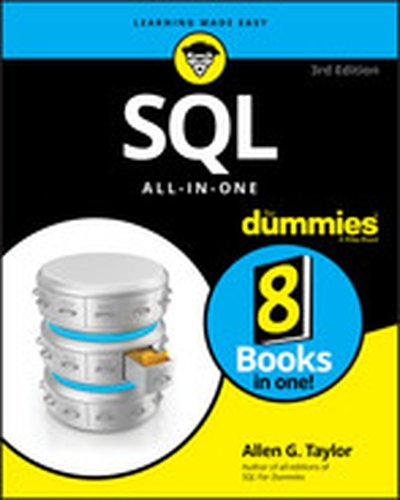
SQL All-In-One For Dummies, 3rd Edition

The latest on SQL databases SQL All -In-One For Dummies, 3rd Edition, is a one-stop shop for everything you need to know about SQL and SQL-based relational databases. Everyone from database administrators to application programmers and the people who manage them will find clear, concise explanations of the SQL language and its many powerful applications. With the ballooning amount of data out there, more and more businesses, large and small, are moving from spreadsheets to SQL databases like Access, Microsoft SQL Server, Oracle databases, MySQL, and PostgreSQL. This compendium of information covers designing, developing, and maintaining these databases. Cope with any issue that arises in SQL database creation and management Get current on the newest SQL updates and capabilities Reference information on querying SQL-based databases in the SQL language Understand relational databases and their importance to today’s organizations SQL All-In-One For Dummies is a timely update to the popular reference for readers who want detailed information about SQL databases and queries.

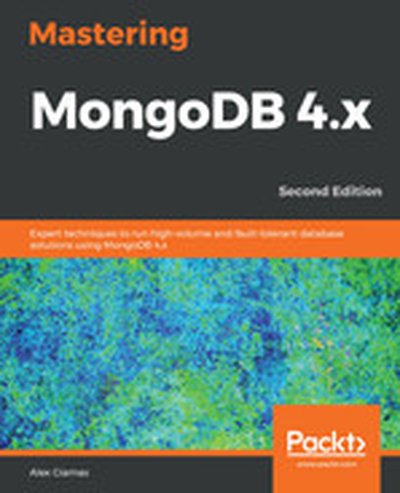
Mastering MongoDB 4.x - Second Edition

This book, Mastering MongoDB 4.x, provides an in-depth exploration of MongoDB's features and capabilities, empowering readers to create high-performance and fault-tolerant database solutions. Through practical examples and clear explanations, you will learn how to implement complex queries, optimize database performance, manage large-scale clusters, and ensure robust failover and backup strategies. What this Book will help me do Understand advanced querying techniques and best practices in data indexing and management. Effectively configure and monitor MongoDB instances for scalability and optimized performance. Master techniques for replication and sharding to support high-availability systems. Deploy MongoDB-based applications seamlessly across on-premise and cloud environments. Learn to integrate MongoDB with modern technologies like big data platforms, containers, and IoT applications. Author(s) Alex Giamas is a seasoned database administrator and developer with significant experience in working with both relational and non-relational databases. Having authored numerous articles and given lectures on MongoDB and other data management technologies, Alex brings practical insights to his writing. He emphasizes real-world applications with examples drawn from his extensive career. Who is it for? This book is designed for developers and database administrators already familiar with MongoDB and basic database concepts, who are looking to enhance their expertise for implementing advanced MongoDB solutions. It is also suitable for professionals aspiring to earn MongoDB certifications and expand their skills to manage large, high-performance database systems efficiently.

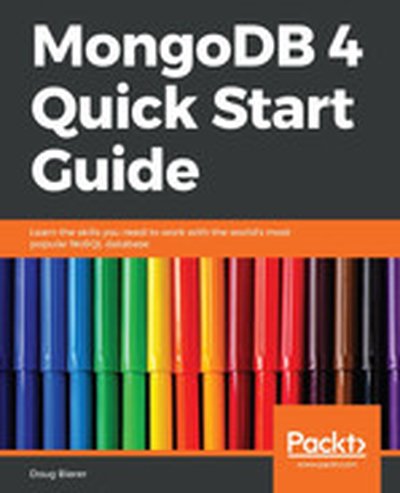
MongoDB 4 Quick Start Guide

"MongoDB 4 Quick Start Guide" is your gateway into understanding and utilizing MongoDB, the world's leading NoSQL database alternative. Through this approachable guide, you will quickly learn how to install, secure, and effectively perform database operations using MongoDB Version 4. What this Book will help me do Master the installation and configuration of MongoDB to prepare for secure database setups. Execute CRUD operations seamlessly to manage your data through the MongoDB shell. Construct queries using the aggregation pipeline for robust data analysis. Implement replication and sharding to ensure data safety and scaleability. Use the PHP MongoDB driver to integrate MongoDB effectively with web applications. Author(s) None Bierer is an expert in database technologies with extensive experience in NoSQL solutions, particularly MongoDB. Their passion for teaching developers new and efficient ways to work with databases shines through in this practical and hands-on guide. Who is it for? This book is perfect for web developers looking to enhance their understanding of modern databases, IT professionals interested in NoSQL solutions, and DBAs transitioning from relational databases to document-oriented databases. Prior experience with databases can be helpful, but this guide is accessible even for enthusiastic beginners seeking to learn MongoDB.

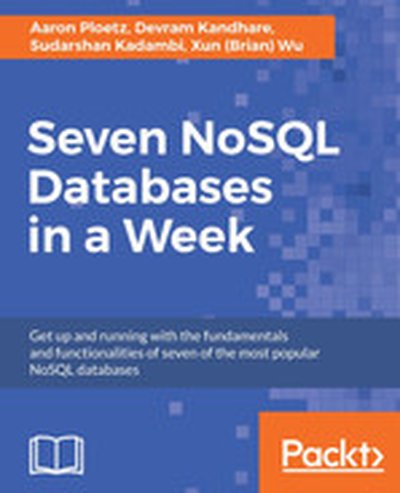
Seven NoSQL Databases in a Week

Learn the fundamentals of seven essential NoSQL databases in just one week with this book. Covering MongoDB, DynamoDB, Redis, Cassandra, Neo4j, InfluxDB, and HBase, you'll explore their functionalities and practical applications. Designed to give you a working understanding of NoSQL database types, this guide helps aspiring DBAs and developers comprehend and utilize modern data solutions. What this Book will help me do Master the fundamentals of MongoDB, including high-performance, high-availability, and scaling features. Gain hands-on experience with Neo4j to perform database queries and integrate with Python and Java applications. Learn efficient querying with Redis for storage and retrieval tasks. Understand Cassandra's powerful solution for scalable and fault-tolerant systems. Get well-versed with HBase for creating tables, and reading and writing data efficiently. Author(s) Sudarshan Kadambi and Xun (Brian) Wu bring a wealth of experience in database technologies. They have worked extensively in the software development and database management fields. With their practical and concise teaching approach, the authors make complex topics accessible for readers. Who is it for? This book is ideal for budding DBAs and developers looking to understand NoSQL databases. It is particularly useful for those transitioning from relational databases who want to learn about modern database technologies. Suitable for both beginners and those with some database knowledge, it aims to bridge skill gaps and expand the reader's technical expertise.

Teradata Cookbook

Are you ready to master Teradata, one of the leading relational database management systems for data warehousing? In the "Teradata Cookbook," you will find over 85 recipes covering vital tasks like querying, performance tuning, and administrative operations. With clear and practical instructions, this book will equip you with the skills necessary to optimize data storage and analytics in your organization. What this Book will help me do Master Teradata's advanced features for efficient data warehousing applications. Understand and employ Teradata SQL for effective data manipulation and analytics. Explore practical solutions for Teradata administration tasks, including user and security management. Learn performance tuning techniques to enhance the efficiency of your queries and processes. Acquire detailed knowledge about Teradata's architecture and its unique capabilities. Author(s) The authors of "Teradata Cookbook" are experienced professionals in database management and data warehousing. With a deep understanding of Teradata's architecture and use in real-world applications, they bring a wealth of knowledge to each of the book's recipes. Their focus is to provide practical, actionable insights to help you tackle challenges you may face. Who is it for? This book is ideal for database administrators, data analysts, and professionals working with data warehousing who want to leverage the power of Teradata. Whether you are new to this database management system or looking to enhance your expertise, this cookbook provides practical solutions and in-depth insights, making it an essential resource.

Learning PostgreSQL 10 - Second Edition

Dive into the world of PostgreSQL 10, one of the most widely used open-source database systems. This comprehensive guide will teach you the essential features and functionalities of PostgreSQL, enabling you to develop, manage, and optimize database systems with confidence and efficiency. What this Book will help me do Gain a foundational understanding of relational databases and PostgreSQL. Learn how to install, set up, and configure a PostgreSQL database system. Master SQL query writing, data manipulation, and advanced queries with PostgreSQL. Understand server-side programming with PL/pgSQL and define advanced schema objects. Optimize database performance, leverage advanced data types, and connect PostgreSQL with Python applications. Author(s) None Juba and None Volkov are seasoned experts in database management and software development. Their extensive experience with PostgreSQL ensures that each concept is explained practically and effectively. They aim to simplify complex topics for beginners and provide tips that are valuable for practitioners at various levels. Who is it for? This book is ideal for students, developers, and IT professionals who are new to PostgreSQL or wish to deepen their understanding of database technology. It caters to beginners looking to acquire foundational skills and database enthusiasts aiming to master PostgreSQL functionalities. Whether you're exploring database management for the first time or refining your existing skills, this guide is tailored for your needs.

Data Warehousing with Greenplum

Relational databases haven’t gone away, but they are evolving to integrate messy, disjointed unstructured data into a cleansed repository for analytics. With the execution of massively parallel processing (MPP), the latest generation of analytic data warehouses is helping organizations move beyond business intelligence to processing a variety of advanced analytic workloads. These MPP databases expose their power with the familiarity of SQL. This report introduces the Greenplum Database, recently released as an open source project by Pivotal Software. Lead author Marshall Presser of Pivotal Data Engineering takes you through the Greenplum approach to data analytics and data-driven decisions, beginning with Greenplum’s shared-nothing architecture. You’ll explore data organization and storage, data loading, running queries, as well as performing analytics in the database. You’ll learn: How each networked node in Greenplum’s architecture features an independent operating system, memory, and storage Four deployment options to help you balance security, cost, and time to usability Ways to organize data, including distribution, storage, partitioning, and loading How to use Apache MADlib for in-database analytics, and GPText to process and analyze free-form text Tools for monitoring, managing, securing, and optimizing query responses available in the Pivotal Greenplum commercial database

Learning Apache Cassandra - Second Edition

Learning Apache Cassandra is an engaging and in-depth guide to understanding the concepts and practical applications of Apache Cassandra, one of the most robust distributed NoSQL databases available. By the end of this book, you will have the necessary skills to design and manage scalable, high-performance database solutions tailored for modern applications. What this Book will help me do Set up Apache Cassandra and its multi-node clusters confidently and efficiently. Master schema design principles, including the use of composite keys, collections, and user-defined types. Implement efficient query strategies with secondary indexes and materialized views. Understand data distribution strategies and tune consistency levels for different application requirements. Dive into advanced topics like user-defined functions, batch operations, and Java client optimizations for scalable database architecture. Author(s) None Yarabarla brings practical expertise and deep knowledge to the subject of Apache Cassandra. With hands-on industry experience designing scalable database solutions, the author ensures complex topics are presented through clear and actionable insights. This is coupled with real-world scenarios to help you apply your learning effectively. Who is it for? This book is ideal for developers and IT professionals interested in learning Apache Cassandra from scratch or enhancing their NoSQL database expertise. It is particularly suited for those transitioning from relational databases to NoSQL systems. Even without prior coding experience, readers can expect to follow along and achieve practical results.

Designing Data-Intensive Applications

Data is at the center of many challenges in system design today. Difficult issues need to be figured out, such as scalability, consistency, reliability, efficiency, and maintainability. In addition, we have an overwhelming variety of tools, including relational databases, NoSQL datastores, stream or batch processors, and message brokers. What are the right choices for your application? How do you make sense of all these buzzwords? In this practical and comprehensive guide, author Martin Kleppmann helps you navigate this diverse landscape by examining the pros and cons of various technologies for processing and storing data. Software keeps changing, but the fundamental principles remain the same. With this book, software engineers and architects will learn how to apply those ideas in practice, and how to make full use of data in modern applications. Peer under the hood of the systems you already use, and learn how to use and operate them more effectively Make informed decisions by identifying the strengths and weaknesses of different tools Navigate the trade-offs around consistency, scalability, fault tolerance, and complexity Understand the distributed systems research upon which modern databases are built Peek behind the scenes of major online services, and learn from their architectures

Exam Ref 70-762 Developing SQL Databases

Prepare for Microsoft Exam 70-762, Developing SQL Databases –and help demonstrate your real-world mastery of skills for building and implementing databases across organizations. Designed for database professionals who build and implement databases across organizations and who ensure high levels of data availability, Exam Ref focuses on the critical-thinking and decision-making acumen needed for success at the MCSA level. Focus on the expertise measured by these objectives: Design and implement database objects Implement programmability objects Manage database concurrency Optimize database objects and SQL infrastructure This Microsoft Exam Ref: Organizes its coverage by exam objectives Features strategic, what-if scenarios to challenge you Assumes you have working knowledge of Microsoft Windows, Transact-SQL, and relational databases About the Exam Exam 70-762 focuses on skills and knowledge for building and implementing databases across organizations and ensuring high levels of data availability. About Microsoft Certification Passing this exam earns you credit toward a Microsoft Certified Solutions Associate (MCSA) certification that demonstrates your mastery of modern database development. Exam 70-761 (Querying Data with Transact-SQL) is also required for MCSA: SQL 2016 Database Development. See full details at: microsoft.com/learning

Hadoop: Data Processing and Modelling

Unlock the power of your data with Hadoop 2.X ecosystem and its data warehousing techniques across large data sets About This Book Conquer the mountain of data using Hadoop 2.X tools The authors succeed in creating a context for Hadoop and its ecosystem Hands-on examples and recipes giving the bigger picture and helping you to master Hadoop 2.X data processing platforms Overcome the challenging data processing problems using this exhaustive course with Hadoop 2.X Who This Book Is For This course is for Java developers, who know scripting, wanting a career shift to Hadoop - Big Data segment of the IT industry. So if you are a novice in Hadoop or an expert, this book will make you reach the most advanced level in Hadoop 2.X. What You Will Learn Best practices for setup and configuration of Hadoop clusters, tailoring the system to the problem at hand Integration with relational databases, using Hive for SQL queries and Sqoop for data transfer Installing and maintaining Hadoop 2.X cluster and its ecosystem Advanced Data Analysis using the Hive, Pig, and Map Reduce programs Machine learning principles with libraries such as Mahout and Batch and Stream data processing using Apache Spark Understand the changes involved in the process in the move from Hadoop 1.0 to Hadoop 2.0 Dive into YARN and Storm and use YARN to integrate Storm with Hadoop Deploy Hadoop on Amazon Elastic MapReduce and Discover HDFS replacements and learn about HDFS Federation In Detail As Marc Andreessen has said "Data is eating the world," which can be witnessed today being the age of Big Data, businesses are producing data in huge volumes every day and this rise in tide of data need to be organized and analyzed in a more secured way. With proper and effective use of Hadoop, you can build new-improved models, and based on that you will be able to make the right decisions. The first module, Hadoop beginners Guide will walk you through on understanding Hadoop with very detailed instructions and how to go about using it. Commands are explained using sections called "What just happened" for more clarity and understanding. The second module, Hadoop Real World Solutions Cookbook, 2nd edition, is an essential tutorial to effectively implement a big data warehouse in your business, where you get detailed practices on the latest technologies such as YARN and Spark. Big data has become a key basis of competition and the new waves of productivity growth. Hence, once you get familiar with the basics and implement the end-to-end big data use cases, you will start exploring the third module, Mastering Hadoop. So, now the question is if you need to broaden your Hadoop skill set to the next level after you nail the basics and the advance concepts, then this course is indispensable. When you finish this course, you will be able to tackle the real-world scenarios and become a big data expert using the tools and the knowledge based on the various step-by-step tutorials and recipes. Style and approach This course has covered everything right from the basic concepts of Hadoop till you master the advance mechanisms to become a big data expert. The goal here is to help you learn the basic essentials using the step-by-step tutorials and from there moving toward the recipes with various real-world solutions for you. It covers all the important aspects of Hadoop from system designing and configuring Hadoop, machine learning principles with various libraries with chapters illustrated with code fragments and schematic diagrams. This is a compendious course to explore Hadoop from the basics to the most advanced techniques available in Hadoop 2.X.

Architecting for Access

Fragmented, disparate backend data systems have become the norm in today’s enterprise, where you’ll find a mix of relational databases, Hadoop stores, and NoSQL engines, with access and analytics tools bolted on every which way. This mishmash of options presents a real challenge when it comes to choosing frontend analytics and visualization tools. How did we get here? In this O’Reilly report, IT veteran Rich Morrow takes you through the rapid changes to both backend storage and frontend analytics over the past decade, and provides a pragmatic list of requirements for an analytics stack that will centralize access to all of these data systems. You’ll examine current analytics platforms, including Looker—a new breed of analytics and visualization tools built specifically to handle our fragmented data space. Understand why and how data became so fractured so quickly Explore the tangled web of data and backend tools in today’s enterprises Learn the tool requirements for accessing and analyzing the full spectrum of data Examine the relative strengths of popular analytics and visualization tools, including Looker, Tableau, and MicroStrategy Inspect Looker’s unique focus on both the frontend and backend

In Search of Database Nirvana

The database pendulum is in full swing. Ten years ago, web-scale companies began moving away from proprietary relational databases to handle big data use cases with NoSQL and Hadoop. Now, for a variety of reasons, the pendulum is swinging back toward SQL-based solutions. What many companies really want is a system that can handle all of their operational, OLTP, BI, and analytic workloads. Could such an all-in-one database exist? This O’Reilly report examines this quest for database nirvana, or what Gartner recently dubbed Hybrid Transaction/Analytical Processing (HTAP). Author Rohit Jain takes an in-depth look at the possibilities and the challenges for companies that long for a single query engine to rule them all. With this report, you’ll explore: The challenges of having one query engine support operational, BI, and analytical workloads Efforts to produce a query engine that supports multiple storage engines Attempts to support multiple data models with the same query engine Why an HTAP database engine needs to provide enterprise-caliber capabilities, including high availability, security, and manageability How to assess various options for meeting workload requirements with one database engine, or a combination of query and storage engines

Practical Hadoop Migration: How to Integrate Your RDBMS with the Hadoop Ecosystem and Re-Architect Relational Applications to NoSQL

Re-architect relational applications to NoSQL, integrate relational database management systems with the Hadoop ecosystem, and transform and migrate relational data to and from Hadoop components. This book covers the best-practice design approaches to re-architecting your relational applications and transforming your relational data to optimize concurrency, security, denormalization, and performance. Winner of IBM's 2012 Gerstner Award for his implementation of big data and data warehouse initiatives and author of Practical Hadoop Security, author Bhushan Lakhe walks you through the entire transition process. First, he lays out the criteria for deciding what blend of re-architecting, migration, and integration between RDBMS and HDFS best meets your transition objectives. Then he demonstrates how to design your transition model. Lakhe proceeds to cover the selection criteria for ETL tools, the implementation steps for migration with SQOOP- and Flume-based data transfers, and transition optimization techniques for tuning partitions, scheduling aggregations, and redesigning ETL. Finally, he assesses the pros and cons of data lakes and Lambda architecture as integrative solutions and illustrates their implementation with real-world case studies. Hadoop/NoSQL solutions do not offer by default certain relational technology features such as role-based access control, locking for concurrent updates, and various tools for measuring and enhancing performance. Practical Hadoop Migration shows how to use open-source tools to emulate such relational functionalities in Hadoop ecosystem components. What You'll Learn Decide whether you should migrate your relational applications to big data technologies or integrate them Transition your relational applications to Hadoop/NoSQL platforms in terms of logical design and physical implementation Discover RDBMS-to-HDFS integration, data transformation, and optimization techniques Consider when to use Lambda architecture and data lake solutions Select and implement Hadoop-based components and applications to speed transition, optimize integrated performance, and emulate relational functionalities Who This Book Is For Database developers, database administrators, enterprise architects, Hadoop/NoSQL developers, and IT leaders. Its secondary readership is project and program managers and advanced students of database and management information systems.

The Language of SQL, Second Edition

The Language of SQL, Second Edition Many SQL texts attempt to serve as an encyclopedic reference on SQL syntax -- an approach that is often counterproductive, because that information is readily available in online references published by the major database vendors. For SQL beginners, it’s more important for a book to focus on general concepts and to offer clear explanations and examples of what various SQL statements can accomplish. This is that book. A number of features make The Language of SQL unique among introductory SQL books. First, you will not be required to download software or sit with a computer as you read the text. The intent of this book is to provide examples of SQL usage that can be understood simply by reading. Second, topics are organized in an intuitive and logical sequence. SQL keywords are introduced one at a time, allowing you to grow your understanding as you encounter new terms and concepts. Finally, this book covers the syntax of three widely used databases: Microsoft SQL Server, MySQL, and Oracle. Special “Database Differences” sidebars clearly show you any differences in syntax among these three databases, and instructions are included on how to obtain and install free versions of the databases. This is the only book you need to gain a quick working knowledge of SQL and relational databases. Learn How To... Use SQL to retrieve data from relational databases Apply functions and calculations to data Group and summarize data in a variety of useful ways Use complex logic to retrieve only the data you need Update data and create new tables Design relational databases so that data retrieval is easy and intuitive Use spreadsheets to transform your data into meaningful displays Retrieve data from multiple tables via joins, subqueries, views, and set logic Create, modify, and execute stored procedures Install Microsoft SQL Server, MySQL, or Oracle Contents at a Glance 1 Relational Databases and SQL 2 Basic Data Retrieval 3 Calculated Fields and Aliases 4 Using Functions 5 Sorting Data 6 Selection Criteria 7 Boolean Logic 8 Conditional Logic 9 Summarizing Data 10 Subtotals and Crosstabs 11 Inner Joins 12 Outer Joins 13 Self Joins and Views 14 Subqueries 15 Set Logic 16 Stored Procedures and Parameters 17 Modifying Data 18 Maintaining Tables 19 Principles of Database Design 20 Strategies for Displaying Data A Getting Started with Microsoft SQL Server B Getting Started with MySQL C Getting Started with Oracle

Beginning SQL Queries: From Novice to Professional, Second Edition

Get started on mastering the one language binding the entire database industry. That language is SQL, and how it works is must-have knowledge for anyone involved with relational databases, and surprisingly also for anyone involved with NoSQL databases. SQL is universally used in querying and reporting on large data sets in order to generate knowledge to drive business decisions. Good knowledge of SQL is crucial to anyone working with databases, because it is with SQL that you retrieve data, manipulate data, and generate business results. Every relational database supports SQL for its expressiveness in writing queries underlying reports and business intelligence dashboards. Knowing how to write good queries is the foundation for all work done in SQL, and it is a foundation that Clare Churcher's book, , 2nd Edition, lays well. Beginning SQL Queries What You Will Learn Write simple queries to extract data from a single table Combine data from many tables into one business result using set operations Translate natural language questions into database queries providing meaningful information to the business Avoid errors associated with duplicated and null values Summarize data with amazing ease using the newly-added feature of window functions Tackle tricky queries with confidence that you are generating correct results Investigate and understand the effects of indexes on the efficiency of queries Who This Book Is For Beginning SQL Queries, 2nd Edition is aimed at intelligent laypeople who need to extract information from a database, and at developers and other IT professionals who are new to SQL. The book is especially useful for business intelligence analysts who must ask more complex questions of their database than their GUI—based reporting software supports. Such people might be business owners wanting to target specific customers, scientists and students needing to extract subsets of their research data, or end users wanting to make the best use of databases for their clubs and societies.

Relational Database Programming: A Set-Oriented Approach

Learn the best way of writing code to run inside a relational database. This book shows how a holistic and set-oriented approach to database programming can far exceed the performance of the row-by-row model that is too often used by developers who haven't been shown a better way. Two styles of programming are encountered in the database world. Classical programming as taught in many universities leads to an atomic, row-oriented, and procedural style inspired by the structured models of programming. In short, many application developers write in the relational database exactly like in the user interface. The other style of programming is holistic, data set oriented, and coded mainly in SQL. This is the style of the database developer. The set based and holistic style of development is not promoted enough in universities, and many application developers are not fully aware of it. There are many performance issues all over the world in relational databases due to the use of the atomic and inappropriate style of programming. This book compares the two styles, and promotes the holistic style of development as the most suitable one. Examples are given to demonstrate the superiority of a set-based and holistic approach. Compares the two styles of development Shows the performance advantages of set-based development Solves example problems using both approaches Who This Book Is For is aimed at application developers willing to adapt their programming styles in return for better-performing applications. It's for students and new developers wanting to position themselves as having database expertise and build a reputation for developing highly-performant database applications. Two Styles of Database Development