talk-data.com talk-data.com

Topic

Redis

database caching in_memory

52

tagged

Activity Trend

3 peak/qtr
2020-Q1 2026-Q1

Activities

52 activities · Newest first

Smarter AI Agents with Azure Managed Redis

What if your AI agents could remember, learn and collaborate at lightning speed? Discover how Azure Managed Redis, Mem0, and Agent Framework turn stateless agents into intelligent systems. Redis enables real-time collaboration, long-term learning, and semantic routing. Mem0 adds persistent memory across sessions, while Agent Framework powers reasoning and planning. Together, they build smarter, scalable multi-agent systems ready for any domain.

Local mutexes synchronise access to data within a single process, but many real-world systems need to coordinate access to shared resources such as databases or queues. This talk examines how the Redlock algorithm, built on Redis, enables Go services to manage concurrency safely and efficiently across multiple instances.

Python is at the core of our analytics platform, which processes over 8,000 game records daily, each approximately 500 MB in size. Over the past two years, we have accumulated more than 200 TB of data, equivalent to 1,600 years of game time from over 7 million players—and our goal is to increase this user count tenfold. This talk will cover how we transitioned from Go and C++ parsers connected via PyBind to data frames in Python, how our analyses evolved from Pandas to Polars, and why we migrated our backend from Django to FastAPI. Finally, we will share our real-world experience with performance optimization, leveraging RabbitMQ, Redis, and process monitoring in an environment where Python bridges the worlds of game data and AI analysis.

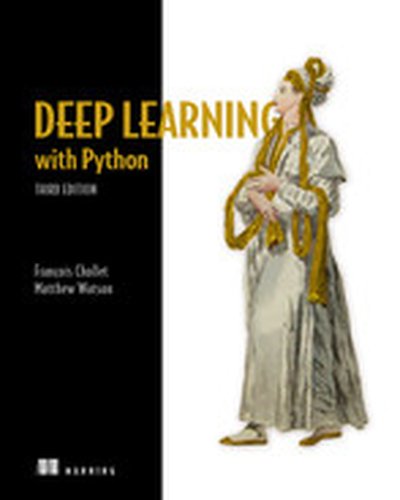
Deep Learning with Python, Third Edition

The bestselling book on Python deep learning, now covering generative AI, Keras 3, PyTorch, and JAX! Deep Learning with Python, Third Edition puts the power of deep learning in your hands. This new edition includes the latest Keras and TensorFlow features, generative AI models, and added coverage of PyTorch and JAX. Learn directly from the creator of Keras and step confidently into the world of deep learning with Python. In Deep Learning with Python, Third Edition you’ll discover: Deep learning from first principles The latest features of Keras 3 A primer on JAX, PyTorch, and TensorFlow Image classification and image segmentation Time series forecasting Large Language models Text classification and machine translation Text and image generation—build your own GPT and diffusion models! Scaling and tuning models With over 100,000 copies sold, Deep Learning with Python makes it possible for developers, data scientists, and machine learning enthusiasts to put deep learning into action. In this expanded and updated third edition, Keras creator François Chollet offers insights for both novice and experienced machine learning practitioners. You'll master state-of-the-art deep learning tools and techniques, from the latest features of Keras 3 to building AI models that can generate text and images. About the Technology In less than a decade, deep learning has changed the world—twice. First, Python-based libraries like Keras, TensorFlow, and PyTorch elevated neural networks from lab experiments to high-performance production systems deployed at scale. And now, through Large Language Models and other generative AI tools, deep learning is again transforming business and society. In this new edition, Keras creator François Chollet invites you into this amazing subject in the fluid, mentoring style of a true insider. About the Book Deep Learning with Python, Third Edition makes the concepts behind deep learning and generative AI understandable and approachable. This complete rewrite of the bestselling original includes fresh chapters on transformers, building your own GPT-like LLM, and generating images with diffusion models. Each chapter introduces practical projects and code examples that build your understanding of deep learning, layer by layer. What's Inside Hands-on, code-first learning Comprehensive, from basics to generative AI Intuitive and easy math explanations Examples in Keras, PyTorch, JAX, and TensorFlow About the Reader For readers with intermediate Python skills. No previous experience with machine learning or linear algebra required. About the Authors François Chollet is the co-founder of Ndea and the creator of Keras. Matthew Watson is a software engineer at Google working on Gemini and a core maintainer of Keras. Quotes Perfect for anyone interested in learning by doing from one of the industry greats. - Anthony Goldbloom, Founder of Kaggle A sharp, deeply practical guide that teaches you how to think from first principles to build models that actually work. - Santiago Valdarrama, Founder of ml.school The most up-to-date and complete guide to deep learning you’ll find today! - Aran Komatsuzaki, EleutherAI Masterfully conveys the true essence of neural networks. A rare case in recent years of outstanding technical writing. - Salvatore Sanfilippo, Creator of Redis

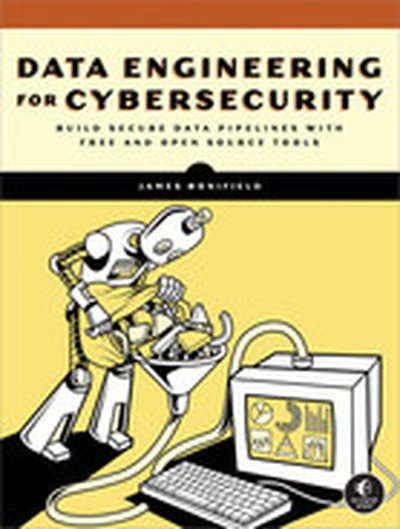
Data Engineering for Cybersecurity

Security teams rely on telemetry—the continuous stream of logs, events, metrics, and signals that reveal what’s happening across systems, endpoints, and cloud services. But that data doesn’t organize itself. It has to be collected, normalized, enriched, and secured before it becomes useful. That’s where data engineering comes in. In this hands-on guide, cybersecurity engineer James Bonifield teaches you how to design and build scalable, secure data pipelines using free, open source tools such as Filebeat, Logstash, Redis, Kafka, and Elasticsearch and more. You’ll learn how to collect telemetry from Windows including Sysmon and PowerShell events, Linux files and syslog, and streaming data from network and security appliances. You’ll then transform it into structured formats, secure it in transit, and automate your deployments using Ansible. You’ll also learn how to: Encrypt and secure data in transit using TLS and SSH Centrally manage code and configuration files using Git Transform messy logs into structured events Enrich data with threat intelligence using Redis and Memcached Stream and centralize data at scale with Kafka Automate with Ansible for repeatable deployments Whether you’re building a pipeline on a tight budget or deploying an enterprise-scale system, this book shows you how to centralize your security data, support real-time detection, and lay the groundwork for incident response and long-term forensics.

Have you ever asked yourself how parameters for an LLM are counted, or wondered why Gemma 2B is actually closer to a 3B model? You have no clue about what a KV-Cache is? (And, before you ask: no, it's not a Redis fork.) Do you want to find out how much GPU VRAM you need to run your model smoothly?

If your answer to any of these questions was "yes", or you have another doubt about inference with LLMs - such as batching, or time-to-first-token - this talk is for you. Well, except for the Redis part.

Summary In this episode of the Data Engineering Podcast Roman Gershman, CTO and founder of Dragonfly DB, explores the development and impact of high-speed in-memory databases. Roman shares his experience creating a more efficient alternative to Redis, focusing on performance gains, scalability, and cost efficiency, while addressing limitations such as high throughput and low latency scenarios. He explains how Dragonfly DB solves operational complexities for users and delves into its technical aspects, including maintaining compatibility with Redis while innovating on memory efficiency. Roman discusses the importance of cost efficiency and operational simplicity in driving adoption and shares insights on the broader ecosystem of in-memory data stores, future directions like SSD tiering and vector search capabilities, and the lessons learned from building a new database engine.

Announcements Hello and welcome to the Data Engineering Podcast, the show about modern data managementData migrations are brutal. They drag on for months—sometimes years—burning through resources and crushing team morale. Datafold's AI-powered Migration Agent changes all that. Their unique combination of AI code translation and automated data validation has helped companies complete migrations up to 10 times faster than manual approaches. And they're so confident in their solution, they'll actually guarantee your timeline in writing. Ready to turn your year-long migration into weeks? Visit dataengineeringpodcast.com/datafold today for the details.Your host is Tobias Macey and today I'm interviewing Roman Gershman about building a high-speed in-memory database and the impact of the performance gains on data applicationsInterview IntroductionHow did you get involved in the area of data management?Can you describe what DragonflyDB is and the story behind it?What is the core problem/use case that is solved by making a "faster Redis"?The other major player in the high performance key/value database space is Aerospike. What are the heuristics that an engineer should use to determine whether to use that vs. Dragonfly/Redis?Common use cases for Redis involve application caches and queueing (e.g. Celery/RQ). What are some of the other applications that you have seen Redis/Dragonfly used for, particularly in data engineering use cases?There is a piece of tribal wisdom that it takes 10 years for a database to iron out all of the kinks. At the same time, there have been substantial investments in commoditizing the underlying components of database engines. Can you describe how you approached the implementation of DragonflyDB to arive at a functional and reliable implementation?What are the architectural elements that contribute to the performance and scalability benefits of Dragonfly?How have the design and goals of the system changed since you first started working on it?For teams who migrate from Redis to Dragonfly, beyond the cost savings what are some of the ways that it changes the ways that they think about their overall system design?What are the most interesting, innovative, or unexpected ways that you have seen Dragonfly used?What are the most interesting, unexpected, or challenging lessons that you have learned while working on DragonflyDB?When is DragonflyDB the wrong choice?What do you have planned for the future of DragonflyDB?Contact Info GitHubLinkedInParting Question From your perspective, what is the biggest gap in the tooling or technology for data management today?Closing Announcements Thank you for listening! Don't forget to check out our other shows. Podcast.init covers the Python language, its community, and the innovative ways it is being used. The AI Engineering Podcast is your guide to the fast-moving world of building AI systems.Visit the site to subscribe to the show, sign up for the mailing list, and read the show notes.If you've learned something or tried out a project from the show then tell us about it! Email [email protected] with your story.Links DragonflyDBRedisElasticacheValKeyAerospikeLaravelSidekiqCelerySeastar FrameworkShared-Nothing Architectureio_uringmidi-redisDunning-Kruger EffectRustThe intro and outro music is from The Hug by The Freak Fandango Orchestra / CC BY-SA

AWS re:Invent 2024 - [NEW LAUNCH] Improve resiliency using Amazon MemoryDB Multi-Region (DAT426-NEW)

Join this session to learn about Amazon MemoryDB Multi-Region, an active-active, multi-Region database providing up to 99.999% availability and increased application resiliency. Amazon MemoryDB is a Valkey- and Redis OSS-compatible, durable, in-memory database service with microsecond read and single-digit millisecond write latency and high throughput. In this session, deep dive into the innovative architecture of MemoryDB Multi-Region, showing how it can improve your applications’ resiliency to support your end users across the globe. Explore use cases that will benefit most from MemoryDB Multi-Region.

Learn more: AWS re:Invent: https://go.aws/reinvent. More AWS events: https://go.aws/3kss9CP

Subscribe: More AWS videos: http://bit.ly/2O3zS75 More AWS events videos: http://bit.ly/316g9t4

About AWS: Amazon Web Services (AWS) hosts events, both online and in-person, bringing the cloud computing community together to connect, collaborate, and learn from AWS experts. AWS is the world's most comprehensive and broadly adopted cloud platform, offering over 200 fully featured services from data centers globally. Millions of customers—including the fastest-growing startups, largest enterprises, and leading government agencies—are using AWS to lower costs, become more agile, and innovate faster.

AWSreInvent #AWSreInvent2024

Azure Managed Redis: Designed to supercharge your GenAI Apps | BRK206

Discover the future of AI optimization! AI is revolutionizing businesses, but scaling AI from proof-of-concept to production uncovers challenges in cost and performance. Enter ""semantic caching,"" a game-changer that reduces LLM costs while boosting response times. This session covers Azure Managed Redis as a vector database, its use as a semantic cache for Azure OpenAI Service, and more! Learn best practices and real-world examples to supercharge your GenAI apps with Azure Managed Redis.

𝗦𝗽𝗲𝗮𝗸𝗲𝗿𝘀: * Balan Subramanian * Kyle Teegarden

𝗦𝗲𝘀𝘀𝗶𝗼𝗻 𝗜𝗻𝗳𝗼𝗿𝗺𝗮𝘁𝗶𝗼𝗻: This is one of many sessions from the Microsoft Ignite 2024 event. View even more sessions on-demand and learn about Microsoft Ignite at https://ignite.microsoft.com

BRK206 | English (US) | Data

MSIgnite

Azure Managed Redis: Fully Managed Redis for the Hyperscale Cloud | BRK189

Introducing Azure Managed Redis, a fully managed, hyperscale-ready Redis solution that integrates the latest Redis innovations. It delivers up to 99.999% availability while ensuring a cost-effective total cost of ownership. With advanced features available across all four tiers, it empowers users to optimize key use cases like vector similarity search, session management, and pub/sub messaging. Join our session with product leaders to discover best practices and learn how to get started today.

𝗦𝗽𝗲𝗮𝗸𝗲𝗿𝘀: * Scott Hunter * Benjamin Renaud

𝗦𝗲𝘀𝘀𝗶𝗼𝗻 𝗜𝗻𝗳𝗼𝗿𝗺𝗮𝘁𝗶𝗼𝗻: This is one of many sessions from the Microsoft Ignite 2024 event. View even more sessions on-demand and learn about Microsoft Ignite at https://ignite.microsoft.com

BRK189 | English (US) | Data

MSIgnite

Using various operators to perform daily routines. Integration with Technologies: Redis: Acts as a caching mechanism to optimize data retrieval and processing speed, enhancing overall pipeline performance. MySQL: Utilized for storing metadata and managing task state information within Airflow’s backend database. Tableau: Integrates with Airflow to generate interactive visualizations and dashboards, providing valuable insights into the processed data. Amazon Redshift: Panasonic leverages Redshift for scalable data warehousing, seamlessly integrating it with Airflow for data loading and analytics. Foundry: Integrated with Airflow to access and process data stored within Foundry’s data platform, ensuring data consistency and reliability. Plotly Dashboards: Employed for creating custom, interactive web-based dashboards to visualize and analyze data processed through Airflow pipelines. GitLab CI/CD Pipelines: Utilized for version control and continuous integration/continuous deployment (CI/CD) of Airflow DAGs (Directed Acyclic Graphs), ensuring efficient development and deployment of workflows.

Learn common architecture patterns that customers use with Memorystore to supercharge their most demanding use-cases such as caching, generative AI, leaderboards, real-time analytics, and others. We'll also dive into how Memorystore’s readily available and resilient architecture combined with its zero-downtime scalability provides 99.99% uptime and submillisecond performance.

Click the blue “Learn more” button above to tap into special offers designed to help you implement what you are learning at Google Cloud Next 25.

Learn what’s new with Memorystore, including a deep dive into its latest generative AI launches and integrations. Dig into the latest Google Cloud Next launch announcements and how top customers are leveraging Memorystore for Redis Cluster for its speed, reliability, and ease of use. Discover how zero-downtime scaling (both in and out) can empower developers to start small and scale out as their applications grow – always ensuring reliability and performance for their most critical workloads.

Click the blue “Learn more” button above to tap into special offers designed to help you implement what you are learning at Google Cloud Next 25.

Designing Robust Processing System With Redis by Paško Pajdek

Big Data Europe Onsite and online on 22-25 November in 2022 Learn more about the conference: https://bit.ly/3BlUk9q

Join our next Big Data Europe conference on 22-25 November in 2022 where you will be able to learn from global experts giving technical talks and hand-on workshops in the fields of Big Data, High Load, Data Science, Machine Learning and AI. This time, the conference will be held in a hybrid setting allowing you to attend workshops and listen to expert talks on-site or online.

The GenAI landscape is evolving fast. But as it matures, we're seeing more obstacles. The scaling challenges with web apps are soon to be felt by the new wave of GenAI apps. Learn how you can go beyond vector search with trusted Redis use cases like caching and session management to avoid these challenges with your GenAI apps. By attending this session, your contact information may be shared with the sponsor for relevant follow up for this event only.

Click the blue “Learn more” button above to tap into special offers designed to help you implement what you are learning at Google Cloud Next 25.

Launching a game is hard, but the pressure intensifies when your players are also fans of beloved franchises, such as Dragon Ball, Tekken, and My Hero. Delivering a perfect experience from day one requires a robust and scalable cloud infrastructure. Explore how Bandai Namco leveraged Google Cloud products like Redis, Memorystore, Google Kubernetes Engine, Spanner, and open-source games solutions to launch multiple gaming titles flawlessly. Whether you're a game developer, publisher, or platform provider, this presentation and panel discussion is about delivering high-scale consumer experiences.

Click the blue “Learn more” button above to tap into special offers designed to help you implement what you are learning at Google Cloud Next 25.

Overview of the Azure Container Apps Landing Zone Accelerator: a repeatable landing zone with best practices for production-grade infrastructure, aimed at increasing time to value and accelerating move to the cloud, and container apps that minimize Kubernetes operations overhead.

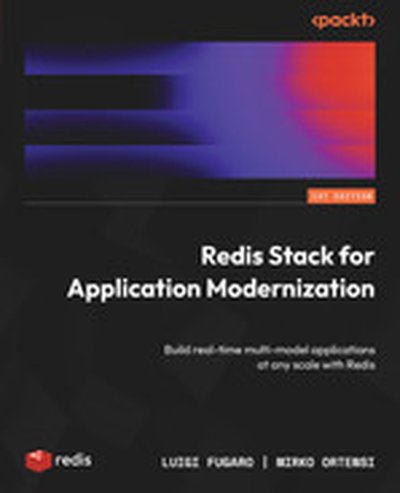
Redis Stack for Application Modernization

In "Redis Stack for Application Modernization," you will explore how the Redis Stack extends traditional Redis capabilities, allowing you to innovate in building real-time, scalable, multi-model applications. Through practical examples and hands-on sessions, this book equips you with skills to manage, implement, and optimize data flows and database features. What this Book will help me do Learn how to use Redis Stack for handling real-time data with JSON, hash, and other document types. Discover modern techniques for performing vector similarity searches and hybrid workflows. Become proficient in integrating Redis Stack with programming languages like Java, Python, and Node.js. Gain skills to configure Redis Stack server for scalability, security, and high availability. Master RedisInsight for data visualization, analysis, and efficient database management. Author(s) Luigi Fugaro and None Ortensi are experienced software professionals with deep expertise in database systems and application architecture. They bring years of experience working with Redis and developing real-world applications. Their hands-on approach to teaching and real-world examples make this book a valuable resource for professionals in the field. Who is it for? This book is ideal for database administrators, developers, and architects looking to leverage Redis Stack for real-time multi-model applications. It requires a basic understanding of Redis and any programming language such as Python or Java. If you wish to modernize your applications and efficiently manage databases, this book is for you.

Ravi Bhatt: Deep Dive - Architecting for Million Operations Per Second!

Dive deep into the world of high-performance architecture with Ravi Bhatt as he unveils the secrets of achieving millions of operations per second and handling massive data influx! 🚀💾 Explore cloud-native strategies using Memorystore Redis and Cloud Functions, and discover optimization techniques for PoCs, System Design, or sheer curiosity. 💻📈 #HighPerformance #architecture

✨ H I G H L I G H T S ✨

🙌 A huge shoutout to all the incredible participants who made Big Data Conference Europe 2023 in Vilnius, Lithuania, from November 21-24, an absolute triumph! 🎉 Your attendance and active participation were instrumental in making this event so special. 🌍

Don't forget to check out the session recordings from the conference to relive the valuable insights and knowledge shared! 📽️

Once again, THANK YOU for playing a pivotal role in the success of Big Data Conference Europe 2023. 🚀 See you next year for another unforgettable conference! 📅 #BigDataConference #SeeYouNextYear